

The DOI matches its Crossref record; 3 of the 3 references it cites were found in a registry or an index.
Lubricin’s Mucin Domain Has Strong Polyproline Type II Helical Character
Open accessPublished version of a preprint
Abstract
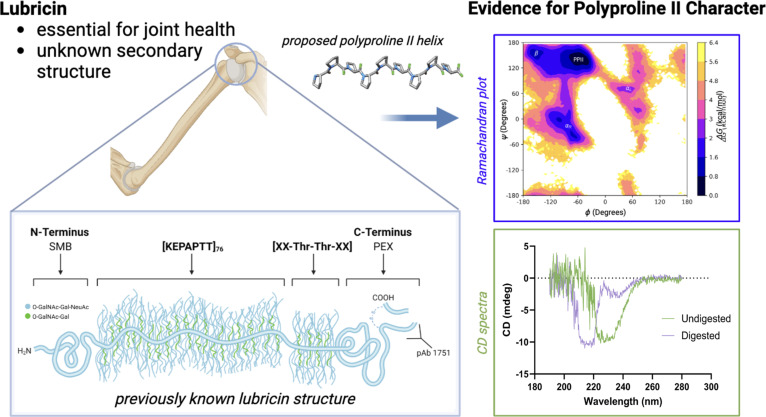
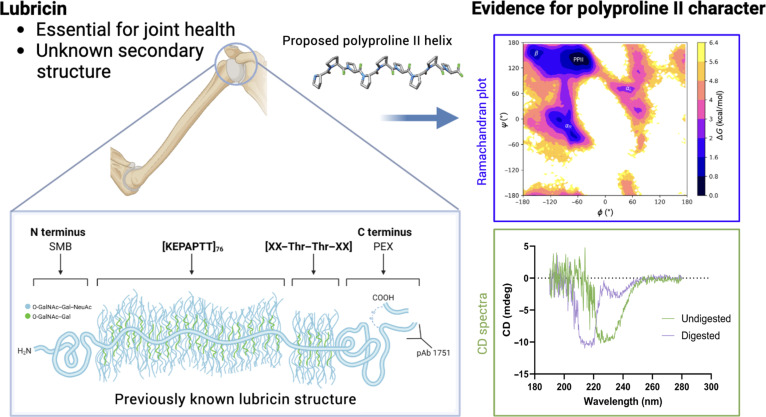
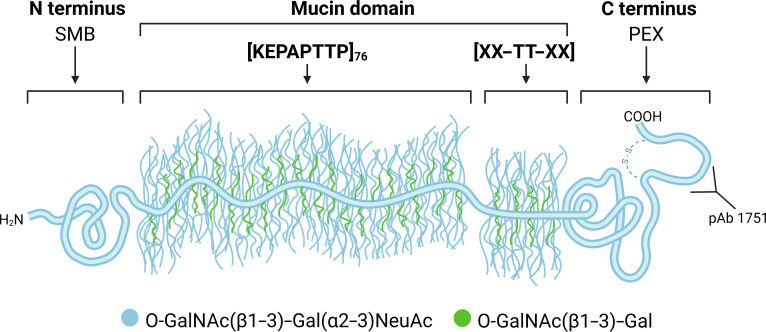
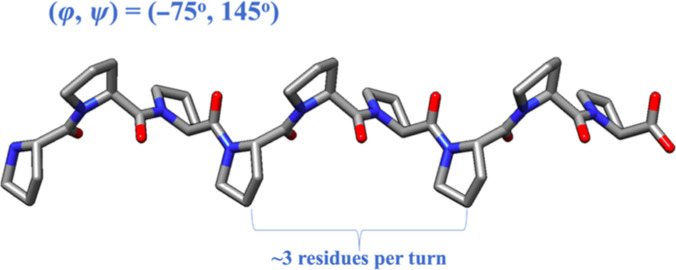
Lubricin is a glycoprotein that is crucial for maintaining joint health by preventing joint wear through reducing joint friction in the boundary mode. Lubricin was recently observed to hinder the formation of uric acid crystals in the joint and prevent a form of gouty arthritis. However, despite lubricin’s great physiological importance, our current understanding of the molecular origins of lubricin’s beneficial properties is limited by a lack of detailed structural information regarding its central mucin domain: Lubricin’s large size (227.5 kDa) and numerous glycosylations pose a substantial obstacle to conventional experimental methods for solving protein structures. In this work, we use a combination of physics-based replica exchange molecular dynamics simulations and circular dichroism experiments to shed light on the structure of lubricin’s central mucin domain. Using replica exchange molecular dynamics, we model [KEPAPTTP] 2 , an amino acid repeat found throughout the mucin domain, and find that the mucin domain is likely to exhibit polyproline type II helices, which are further stabilized by O-linked oligosaccharide chains. Motivated by these simulation results, we performed circular dichroism spectroscopy on fragments of the mucin domain that also show clear polyproline type II helical character, corroborating our computational findings. Altogether, this work provides strong evidence of a lubricin mucin domain with evidence of polyproline type II content. As polyproline helices are often also found in other glycoproteins with antifreeze properties, this work may also explain the atomistic underpinnings of their interfacial functions, including lubrication and competition with crystal formation.
Overview
The claims and statistics of this paper haven’t been checked yet.
Run the check — free, no account needed. It reads the open-access text and checks the sources it cites.
Integrity signals
Registry
Cites
Statistics
Figures
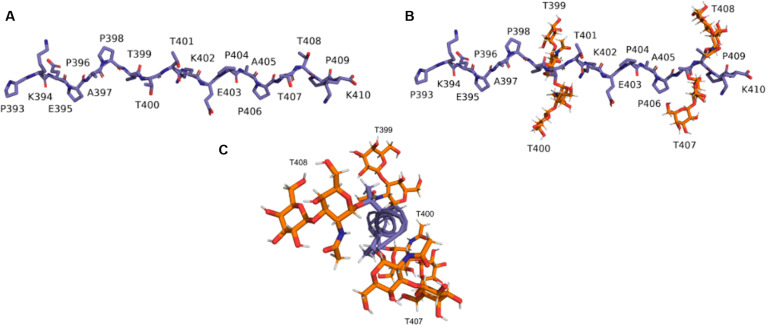
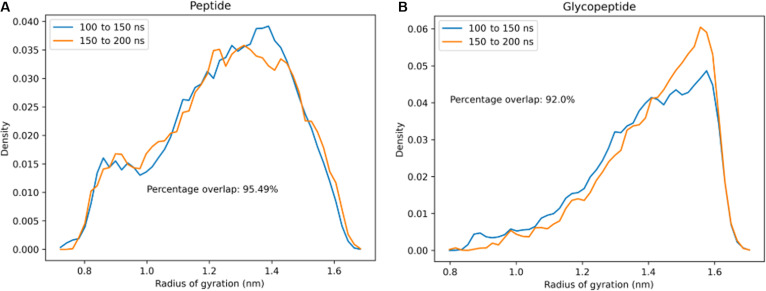
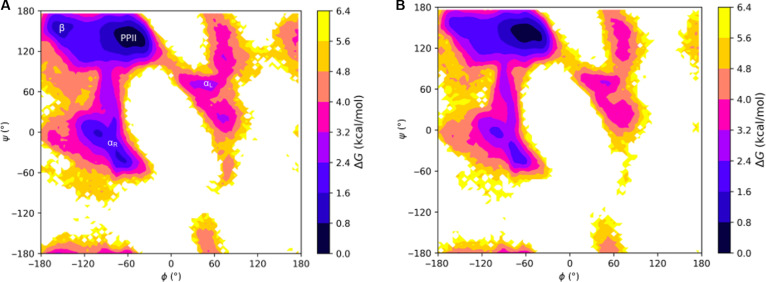
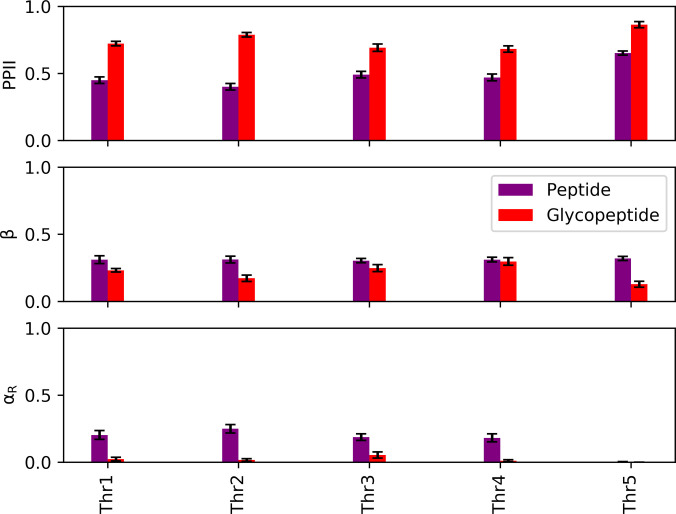
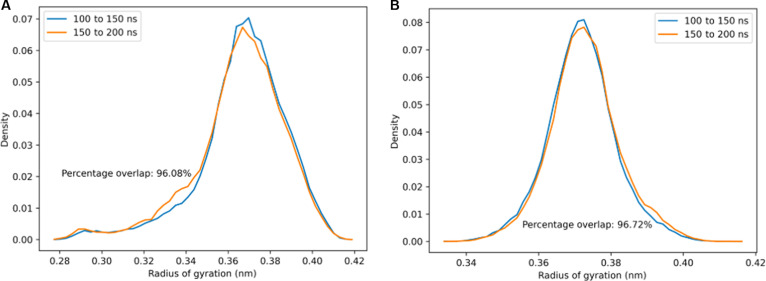
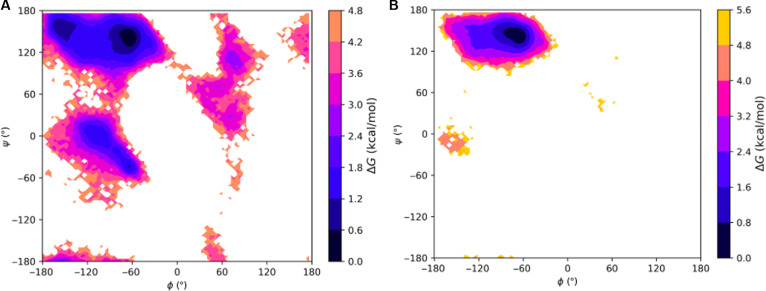
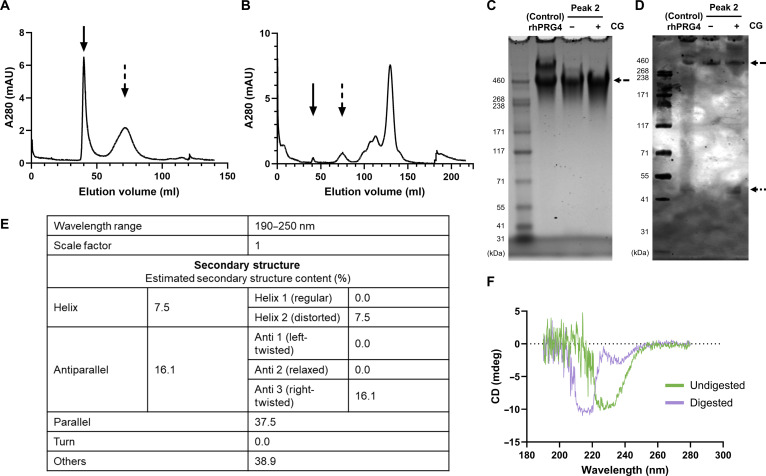
Verification
Claims the paper makes
The claims and statistics of this paper haven’t been checked yet.
Run the check — free, no account needed. It reads the open-access text and checks the sources it cites.
Self-check
Percentages, sums and reported differences re-computed from the paper’s own numbers.
The self-check needs the paper’s full text.
Citations
Cites
Highly accurate protein structure prediction with AlphaFold
Jumper, J., Evans, R., Pritzel, A., Green, T., Figurnov, M., Ronneberger, O., Tunyasuvunakool, K., Bates, R., Žídek, A., Potapenko, A., et al. (2021) · Nature · doi:10.1038/s41586-021-03819-2 · Cited by 43,764 · cited 1×
“…although recently developed deep-learning-based methods such as AlphaFold have made major breakthroughs in accurately determining protein structures that are difficult to solve via experimental means, these methods currently struggle with heavily glycosylated proteins such as lubricin [ 8 , 9 ].”
Accurate structure prediction of biomolecular interactions with AlphaFold 3
Abramson, J., Adler, J., Dunger, J., Evans, R., Green, T., Pritzel, A., Ronneberger, O., Willmore, L., Ballard, A. J., Bambrick, J., et al. (2024) · Nature · doi:10.1038/s41586-024-07487-w · Cited by 15,861 · cited 1×
“…although recently developed deep-learning-based methods such as AlphaFold have made major breakthroughs in accurately determining protein structures that are difficult to solve via experimental means, these methods currently struggle with heavily glycosylated proteins such as lubricin [ 8 , 9 ].”
Zappone, B., Ruths, M., Greene, G. W., Jay, G. D., & Israelachvili, J. N. (2007) · Biophysical Journal · doi:10.1529/biophysj.106.088799 · Cited by 341
Self-citation
Research works printed but not linked: 46
- Jay GD, Britt DE, Cha CJ. Lubricin is a product of megakaryocyte stimulating factor gene expression by human synovial fibroblasts. J Rheumatol. 2000;27(3):594–600.
- Jay GD, Tantravahi U, Britt DE, Barrach HJ, Cha C-J. Homology of lubricin and superficial zone protein (SZP): Products of megakaryocyte stimulating factor (MSF) gene expression by human synovial fibroblasts and articular chondrocytes localized to chromosome 1q25. J Orthop Res. 2001;19(4):677–687. · DOI
- Flannery CR, Hughes CE, Schumacher BL, Tudor D, Aydelotte MB, Kuettner KE, Caterson B. Articular cartilage superficial zone protein (SZP) is homologous to megakaryocyte stimulating factor precursor and is a multifunctional proteoglycan with potential growth-promoting, cytoprotective, and lubricating properties in cartilage metabolism. Biochem Biophys Res Commun. 1999;254(3):535–541. · DOI
- Greene GW, Martin LL, Tabor RF, Michalczyk A, Ackland LM, Horn R. Lubricin: A versatile, biological anti-adhesive with properties comparable to polyethylene glycol. Biomaterials. 2015;53:127–136. · DOI
- Qadri M, Jay GD, Zhang LX, Wong W, Reginato AM, Sun C, Schmidt TA, Elsaid KA. Recombinant human proteoglycan-4 reduces phagocytosis of urate crystals and downstream nuclear factor kappa B and inflammasome activation and production of cytokines and chemokines in human and murine macrophages. Arthritis Res Ther. 2018;20(1): Article 192. · DOI
- Elsaid K, Merriman TR, Rossitto L-A, Liu-Bryan R, Karsh J, Phipps-Green A, Jay GD, Elsayed S, Qadri M, Miner M, et al. Amplification of inflammation by lubricin deficiency implicated in incident, erosive gout independent of hyperuricemia. Arthritis Rheumatol. 2022;75(5):794–805. · DOI
- Jay GD, Torres JR, Rhee DK, Helminen HJ, Hytinnen MM, Cha C-J, Elsaid K, Kim K-S, Cui Y, Warman ML. Association between friction and wear in diarthrodial joints lacking lubricin. Arthritis Rheumatol. 2007;56(11):3662–3669. · DOI
- Chan SMT, Neu CP, DuRaine G, Komvopoulos K, Reddi AH. Tribological altruism: A sacrificial layer mechanism of synovial joint lubrication in articular cartilage. J Biomech. 2012;45(14):2426–2431. · DOI
- Schmidt TA, Sullivan DA, Knop E, Richards SM, Knop N, Liu S, Sahin A, Darabad RR, Morrison S, Kam WR, et al. Transcription, translation, and function of lubricin, a boundary lubricant, at the ocular surface. JAMA Ophthalmol. 2013;131(6):766–776. · DOI
- Wang J, Chen D, Sullivan DA, Xie H, Li Y, Liu Y. Expression of lubricin in the human amniotic membrane. Cornea. 2020;39(1):118–121. · DOI
- 10.1021/acs.biomac.3c01348 · DOI
- Pan S. Stereochemistry of polypeptide chain configurations. J Mol Biol. 1963;7:95–99. · DOI
- Li S-C, Goto NK, Williams KA, Deber CM. Alpha-helical, but not beta-sheet, propensity of proline is determined by peptide environment. Proc Natl Acad Sci USA. 1996;93(13):6676–6681. · DOI
- 10.1016/j.jmb.2013.03.018 · DOI
- Creamer TP, Campbell MN. Determinants of the polyproline II helix from modeling studies. Adv Protein Chem. 2002;62:263–282. · DOI
- 10.1021/bi3002924 · DOI
- 10.1021/acs.jpcb.7b08790 · DOI
- 10.1021/jacs.7b13630 · DOI
- 10.1021/acs.biomac.2c01487 · DOI
- Galashov A, di Gregorio E, Ponomareva P, Safferthal M, Kazakova E, Bechtella L, Pagel K, Pigaleva M, Joseph B, Seitz O. Impact of glycoclustering on stiffening of MUC5AC peptides revealed by high-efficiency synthesis. Angew Chem Int Ed Engl. 2025;137(44): Article e202508278. · DOI
- 10.1023/A:1006978818555 · DOI
- Jay GD, Bor-Shyue H. Characterization of a bovine synovial fluid lubricating factor. II. Comparison with purified ocular and salivary mucin. Connect Tissue Res. 1992;28(1–2):89–98.
- 10.1177/0363546516686965 · DOI
- Lambiase A, Sullivan BD, Schmidt TA, Sullivan DA, Jay GD, Tru-itt ER III, Bruscolini A, Sacchetti M, Mantelli F. A two-week, randomized, double-masked study to evaluate safety and efficacy of lubricin (150 μg/mL) eye drops versus sodium hyaluronate (HA) 0.18% eye drops (Vismed®) in patients with moderate dry eye disease. Ocul Surf. 2017;15(1):77–87. · DOI
- 10.1002/jcc.20084 · DOI
- Park S-J, Lee J, Qi Y, Kern NR, Lee HS, Jo S, Joung I, Joo K, Lee J, Im W. CHARMM-GUI glycan modeler for modeling and simulation of carbohydrates and glycoconjugates. Glycobiology. 2019;29(4):320–331. · DOI
- Ali L, Flowers SA, Jin C, Bennet EP, Ekwall A-KH, Karlsson NG. The O-glycomap of lubricin, a novel mucin responsible for joint lubrication, identified by site-specific glycopeptide analysis. Mol Cell Proteomics. 2014;13(12):3396–3409. · DOI
- Sugita Y, Okamoto Y. Replica-exchange molecular dynamics method for protein folding. Chem Phys Lett. 1999;314(1–2):141–151. · DOI
- 10.1016/j.bbagen.2014.10.019 · DOI · Paper page
- Liu P, Kim B, Friesner RA, Berne BJ. Replica exchange with solute tempering: A method for sampling biological systems in explicit water. Proc Natl Acad Sci USA. 2005;102(39):13749–13754. · DOI
- Qi R Wei G Ma B Nussinov R. Replica exchange molecular dynamics: A practical application protocol with solutions to common problems and a peptide aggregation and self-assembly example. In: Peptide self-assembly: Methods and protocols. New York (NY): Springer; 2018. p. 101–119. · DOI
- 10.1002/jcc.20291 · DOI
- Huang J, Rauscher S, Nawrocki G, Ran T, Feig M, De Groot BL, Grubmüller H, MacKerell AD Jr. CHARMM36m: An improved force field for folded and intrinsically disordered proteins. Nat Methods. 2017;14(1):71–73. · DOI
- Mark P, Nilsson L. Structure and dynamics of the TIP3P, SPC, and SPC/E water models at 298 K. Chem A Eur J. 2001;105(43):9954–9960.
- Abubacker S, Dorosz SG, Ponjevic D, Jay GD, Matyas JR, Schmidt TA. Full-length recombinant human proteoglycan 4 interacts with hyaluronan to provide cartilage boundary lubrication. Ann Biomed Eng. 2016;44(4):1128–1137. · DOI
- Samsom ML, Morrison S, Masala N, Sullivan BD, Sullivan DA, Shear-down H, Schmidt TA. Characterization of full-length recombinant human proteoglycan 4 as an ocular surface boundary lubricant. Exp Eye Res. 2014;127:14–19. · DOI
- Flowers SA, Thomsson KA, Ali L, Huang S, Mthembu Y, Regmi SC, Holgersson J, Schmidt TA, Rolfson O, Björkman L, et al. Decrease of core 2 O-glycans on synovial lubricin in osteoarthritis reduces galectin-3 mediated crosslinking. J Biol Chem. 2020;295(47):16023–16036. · DOI
- Huang S, Thomsson KA, Jin C, Alweddi S, Struglics A, Rolfson O, Björkman LI, Kalamajski S, Schmidt TA, Jay GD, et al. Cathepsin G degrades both glycosylated and unglycosylated regions of lubricin, a synovial mucin. Sci Rep. 2020;10(1):4215. · DOI
- 10.4049/jimmunol.1002292 · DOI
- 10.1038/nprot.2006.202 · DOI
- Micsonai A, Wien F, Kernya L, Lee Y-H, Goto Y, Réefrégiers M, Kardos J. Accurate secondary structure prediction and fold recognition for circular dichroism spectroscopy. Proc Natl Acad Sci USA. 2015;112(24):E3095–E3103. · DOI
- Best RB, Buchete N-V, Hummer G. Are current molecular dynamics force fields too helical? Biophys J. 2008;95(1):L07–L09. · DOI
- 10.1021/acs.jpcb.5b10022 · DOI
- Chen MM, Bartlett AI, Nerenberg PS, Friel CT, Hackenberger CP, Stultz CM, Radford SE, Imperiali B. Perturbing the folding energy landscape of the bacterial immunity protein Im7 by site-specific N-linked glycosylation. Proc Natl Acad Sci USA. 2010;107(52):22528–22533. · DOI
- Rhee DK, Marcelino J, Al-Mayouf S, Schelling DK, Bartels CF, Cui Y, Laxer R, Goldbach-Mansky R, Warman ML. Consequences of disease-causing mutations on Lubricin protein synthesis, secretion, and post-translational processing. J Biol Chem. 2005;280(35):31325–31332. · DOI
- Mishra B, Basu A, Shehadeh F, Felix L, Kollala SS, Chhonker YS, Naik MT, Dellis C, Zhang L, Ganesan N, et al. Antimicrobial peptide developed with machine learning sequence optimization targets drug resistant Staphylococcus aureus in mice. J Clin Investig. 2025;135(12): Article e185430. · DOI
Metadata
- Authors
- Feng, B. (., Marks, A. J., Kim, F. S., Naik, M., Schmidt, T. A., Elsaid, K. A., Jay, G. D., & Rubenstein, B. M.
- Affiliations
- Brown University (US)
- Department of Chemistry, Brown University, Providence, RI, USA.
- Department of Molecular Biology, Cell Biology, and Biochemistry
- UConn Health (US)
- Chapman University (US)
- Corresponding author
- Feng, Bibo (Noah)
- ORCID
- Venue
- Computational and Structural Biotechnology Journal
- Published
- 2026-03-01
- Volume
- 35
- Issue
- 1
- Pages
- 0021-0021
- ISSN
- 2001-0370 (ISSN-L)
- PMC
- PMC13067954
- OpenAlex
- W7135214897
- Cited by
- 0
- References
- 3
- FWCI
- 0.00
- Type
- journal article
- Language
- en
- Open access
- gold
- doi.org
- Locations
- Computational and Structural Biotechnology Journal (publishedVersion, cc-by)
- bioRxiv (Cold Spring Harbor Laboratory) (acceptedVersion, cc-by)
- PubMed Central (publishedVersion, cc-by)
- PubMed (publishedVersion)
- PubMed Central (submittedVersion, cc-by)
- DOAJ (DOAJ: Directory of Open Access Journals) (submittedVersion)
- Funders
- National Science Foundation (CTMC CAREER Award 2046744)
- National Institutes of Health (R01 AR067748)
- Topics
- Life Sciences › Biochemistry, Genetics and Molecular Biology › Molecular Biology › Protein Structure and Dynamics
- Physical Sciences › Physics and Astronomy › Atomic and Molecular Physics, and Optics › Force Microscopy Techniques and Applications
- Life Sciences › Biochemistry, Genetics and Molecular Biology › Molecular Biology › Glycosylation and Glycoproteins Research
- Keywords
- lubricin, mucin domain, polyproline type II helix, protein secondary structure, glycoprotein structure, O-linked oligosaccharides, joint lubrication, gout prevention, antifreeze proteins, circular dichroism, replica exchange molecular dynamics
About these checks
Registry, retraction, Cites and statistics results are computed, not judged, with one exception: a printed reference that no index lists is read once by a model before it counts as a citation error. Claims are extracted by a model and kept only when their quote appears verbatim in the text; each cited source is then checked, with a model’s help, for whether it says what the claim relies on. Those verdicts can be wrong — read the claim’s quote and the cited source before relying on one.
Statistics and arithmetic are recomputed, not judged.
Confidence bands are shown only for fields calibrated on our annotated test set. None is calibrated yet, so no band is shown.
What counts as a claim ›How we measure confidence ›How we check this ›
Are you an author, or do you see a problem with this page? Request a review
