

The DOI matches its Crossref record; 100 of the 100 references it cites were found in a registry or an index.
Role of prebiotics, probiotics, and synbiotics in management of inflammatory bowel disease: Current perspectives
Open accessAbstract
Inflammatory bowel disease (IBD) is a chronic inflammatory condition of gastrointestinal (GI) tract with dysregulated mucosal immune functions and disturbed commensal ecosystem of the intestinal lumen.IBD is categorized into two major subsets: Crohn's disease (CD) and ulcerative colitis (UC).Though advent of biologics has shifted the treatment with relatively longer remission compared to small molecule pharmaceuticals, patients still suffer from long-term complications.Since gutmicrobiome is now accepted as another human organ holding potential for long-lasting human health, probiotics, and its engineering hold great promises to treat several previously untreatable chronic inflammatory conditions including IBD.Several emerging biological engineering tools have unlimited potential to manipulate probiotic bacterial system.These can produce useful therapeutic biologics with a goal to either ameliorate and/or treat previously untreatable chronic inflammatory conditions.As gut-microbiome is diverse and vary in different ethnic, geographic, and cultural human population, it will be important to develop vision for personalized probiotic treatment and develop the technology thereof to make personalized probiotic options a reality.The aim of this review paper is to present an overview of the current knowledge on both pharmacological and nonpharmacological IBD treatment modalities with a special emphasis on probiotic strains that are developed through the probiotic engineering.These engineered probiotics contain the most anti-inflammatory cytokines found within the human immune response and are currently being used to treat the intestinal inflammation in IBD for the IBD treatment.
Overview
The claims and statistics of this paper haven’t been checked yet.
Run the check — free, no account needed. It reads the open-access text and checks the sources it cites.
Integrity signals
Registry
Cites
Statistics
Figures
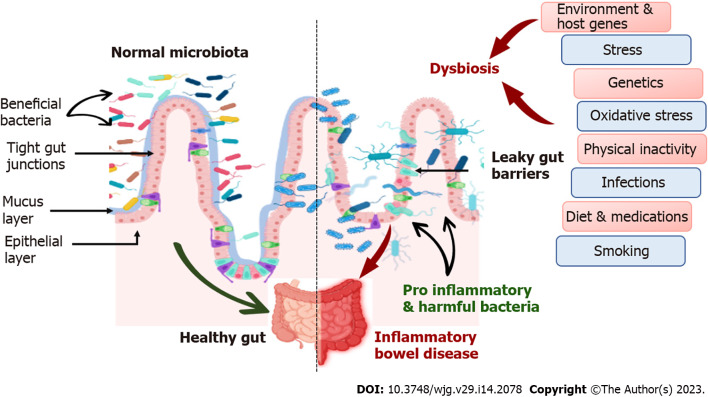
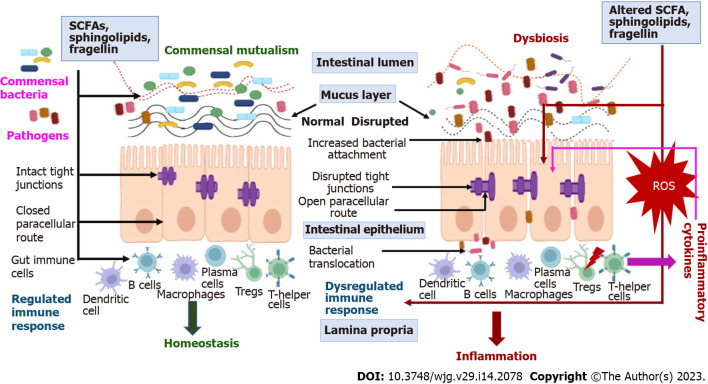
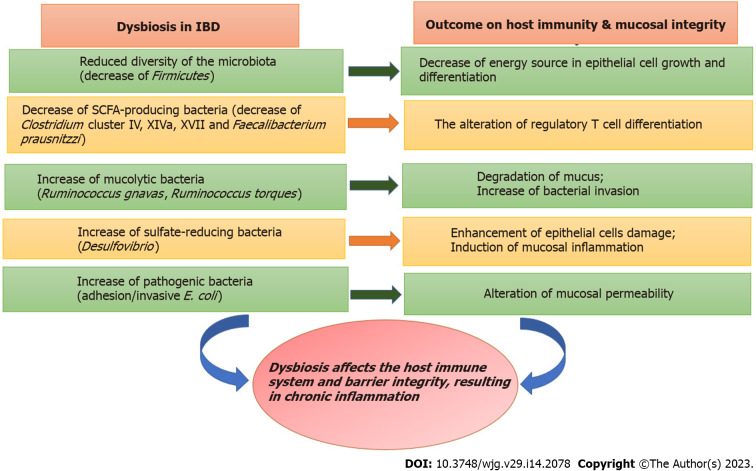
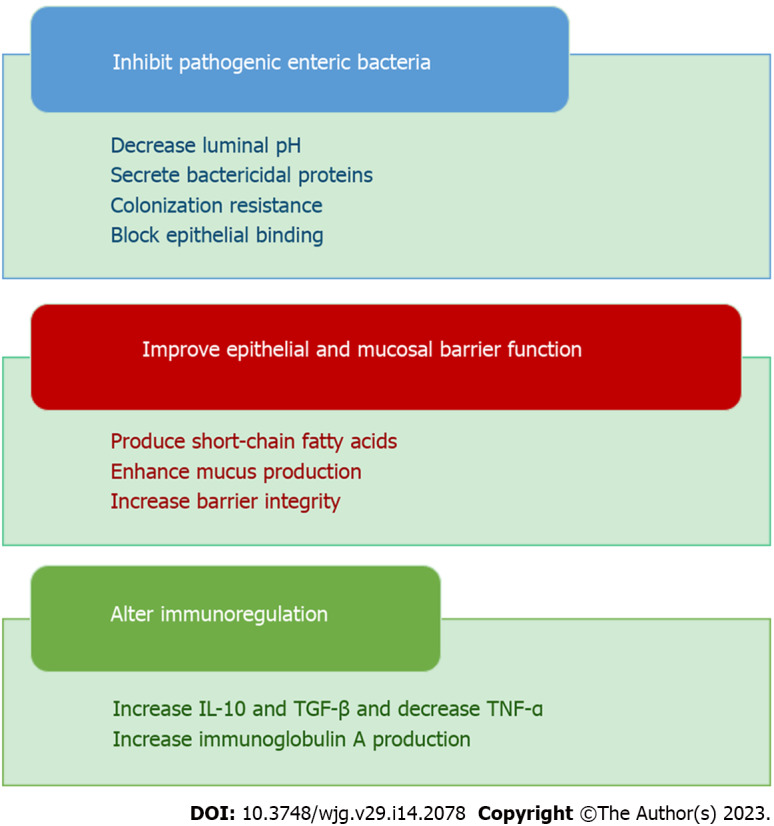
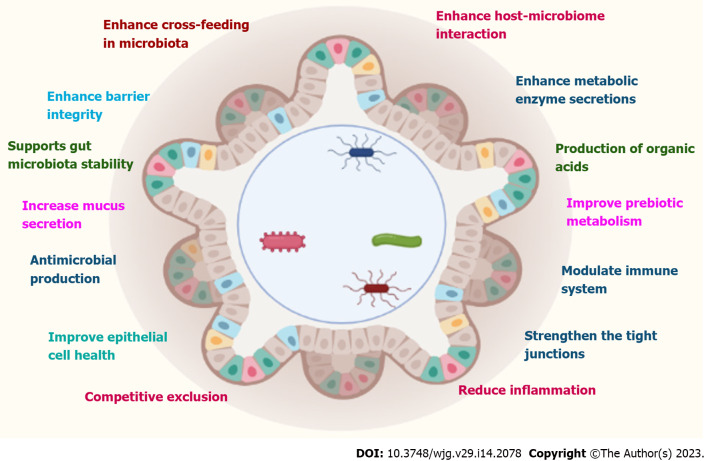
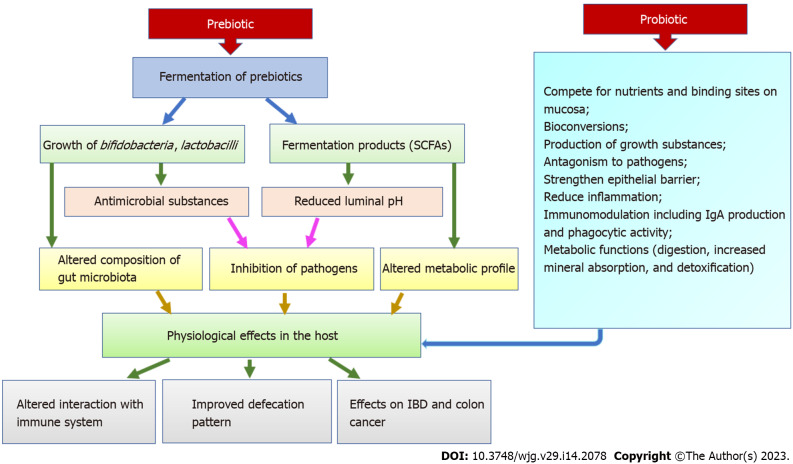
Verification
Claims the paper makes
The claims and statistics of this paper haven’t been checked yet.
Run the check — free, no account needed. It reads the open-access text and checks the sources it cites.
Claims other papers make about this one
Each is checked against this paper’s own text: does it say what the citing paper says it does?
The cited source says what the claim attributes to it.
In the citing paper
“Several pre‐clinical and clinical studies have shown the promising role of probiotics for IBD, particularly for UC and pouchitis. 6 , 7”
From Efficacy and safety of probiotics in IBD: An overview of systematic reviews and updated meta-analysis of randomized controlled trials. (2024) · cites this paper as [6]
The cited source says what the claim attributes to it.
In the citing paper
“The mechanisms underlying these outcomes are variable but most likely attributable to the production of butyrate, immunoglobulin A (IgA) and short‐chain fatty acid (SCFA, known to be trophic factors), upregulation of defensins and mucin‐2 expression, and downregulation of pro‐inflammatory cytokines. 6 , 8”
From Efficacy and safety of probiotics in IBD: An overview of systematic reviews and updated meta-analysis of randomized controlled trials. (2024) · cites this paper as [6]
Self-check
Percentages, sums and reported differences re-computed from the paper’s own numbers.
The self-check needs the paper’s full text.
Citations
Cites
Swanson, K. S., Gibson, G. R., Hutkins, R., Reimer, R. A., Reid, G., Verbeke, K., Scott, K. P., Holscher, H. D., Azad, M. B., Delzenne, N. M., et al. (2020) · Nature Reviews Gastroenterology & Hepatology · doi:10.1038/s41575-020-0344-2 · Cited by 2,196
Stojanov, S., Berlec, A., & Štrukelj, B. (2020) · Microorganisms · doi:10.3390/microorganisms8111715 · Cited by 1,967
Zhou, J., Li, M., Chen, Q., Li, X., Chen, L., Dong, Z., Zhu, W., Yang, Y., Liu, Z., & Chen, Q. (2022) · Nature Communications · doi:10.1038/s41467-022-31171-0 · Cited by 725
Shen, Z.-H., Zhu, C.-X., Quan, Y.-S., Yang, Z.-Y., Wu, S., Luo, W.-W., Tan, B., & Wang, X.-Y. (2018) · World Journal of Gastroenterology · doi:10.3748/wjg.v24.i1.5 · Cited by 646
Li, H., Zhou, D.-D., Gan, R., Huang, S., Zhao, C., Shang, A., Xu, X., & Li, H. (2021) · Nutrients · doi:10.3390/nu13093211 · Cited by 514
Mennigen, R. B., Nolte, K., Rijcken, E. J. M., Utech, M., Loeffler, B., Senninger, N. J., & Bruewer, M. (2009) · American Journal of Physiology-Gastrointestinal and Liver Physiology · doi:10.1152/ajpgi.90534.2008 · Cited by 484
Cui, L., Guan, X., Ding, W., Luo, Y., Wang, W., Bu, W., Song, J., Tan, X., Sun, E., Ning, Q. X., et al. (2020) · International Journal of Biological Macromolecules · doi:10.1016/j.ijbiomac.2020.10.259 · Cited by 469
Probiotics, prebiotics and synbiotics: Safe options for next-generation therapeutics
Yadav, M. K., Kumari, I., Singh, B., Sharma, K. K., & Tiwari, S. K. (2022) · Applied Microbiology and Biotechnology · doi:10.1007/s00253-021-11646-8 · Cited by 454
Jakubczyk, D., Leszczyńska, K., & Górska, S. (2020) · Nutrients · doi:10.3390/nu12071973 · Cited by 323
Jang, Y. J., Kim, W.-K., Han, D. H., Lee, K., & Ko, G. (2019) · Gut Microbes · doi:10.1080/19490976.2019.1589281 · Cited by 301
Research works printed but not linked: 1
- 10.21203/rs.3.rs-1742266/v1 · DOI
Cited by
Sorted by citations
A comprehensive review of probiotics and human health-current prospective and applications
Sarita, B., Samadhan, D., Hassan, M. Z., & Kovaleva, E. G. (2025) · Frontiers in Microbiology · doi:10.3389/fmicb.2024.1487641 · Cited by 250
Obayomi, O. V., Olaniran, A. F., & Owa, S. O. (2024) · Journal of Functional Foods · doi:10.1016/j.jff.2024.106337 · Cited by 214
Smolińska, S., Popescu, F., & Zemelka‐Wiącek, M. (2025) · Journal of Clinical Medicine · doi:10.3390/jcm14113673 · Cited by 198
Petrariu, O.-A., Barbu, I. C., Niculescu, A.-G., Constantin, M., Grigore, G. A., Cristian, R.-E., Mihăescu, G., & Vrâncianu, C. O. (2024) · Frontiers in Microbiology · doi:10.3389/fmicb.2023.1296447 · Cited by 155
Díez-Martín, E., Hernández-Suárez, L., Muñoz‐Villafranca, C., Martin–Souto, L., Astigarraga, E., Ramirez‐Garcia, A., & Barreda‐Gómez, G. (2024) · International Journal of Molecular Sciences · doi:10.3390/ijms25137062 · Cited by 121
Metadata
- Authors
- Roy, S., & Dhaneshwar, S.
- Affiliations
- Amity University (IN)
- Amity University Mumbai (IN)
- Venue
- World Journal of Gastroenterology
- Publisher
- Baishideng Publishing Group Inc.
- Published
- 2023-04-14
- Volume
- 29
- Issue
- 14
- Pages
- 2078-2100
- ISSN
- 1007-9327 (ISSN-L)
- PMC
- PMC10130969
- OpenAlex
- W4365152756
- Cited by
- 334
- References
- 100
- Citations by year
- 2026: 91 · 2025: 125 · 2024: 95 · 2023: 23
- FWCI
- 7.72
- Type
- journal article
- Language
- en
- Open access
- hybrid
- doi.org
- Licence
- cc-by-nc
- Locations
- World Journal of Gastroenterology (publishedVersion, cc-by-nc)
- PubMed Central (publishedVersion, cc-by-nc)
- PubMed (publishedVersion)
- Funders
- National Institutes of Health
- Topics
- Life Sciences › Agricultural and Biological Sciences › Food Science › Probiotics and Fermented Foods
- Health Sciences › Medicine › Gastroenterology › Inflammatory Bowel Disease
- Life Sciences › Biochemistry, Genetics and Molecular Biology › Molecular Biology › Gut microbiota and health
- Keywords
- inflammatory bowel disease, Crohn's disease, ulcerative colitis, probiotics, prebiotics, synbiotics, gut microbiota, probiotic engineering, engineered probiotics, anti-inflammatory cytokines, intestinal inflammation, mucosal immunity
- MeSH terms
- Humans, Inflammation, Inflammatory Bowel Diseases, Probiotics, Prebiotics, Synbiotics, Microbiota
About these checks
Registry, retraction, Cites and statistics results are computed, not judged, with one exception: a printed reference that no index lists is read once by a model before it counts as a citation error. Claims are extracted by a model and kept only when their quote appears verbatim in the text; each cited source is then checked, with a model’s help, for whether it says what the claim relies on. Those verdicts can be wrong — read the claim’s quote and the cited source before relying on one.
Statistics and arithmetic are recomputed, not judged.
Confidence bands are shown only for fields calibrated on our annotated test set. None is calibrated yet, so no band is shown.
What counts as a claim ›How we measure confidence ›How we check this ›
Are you an author, or do you see a problem with this page? Request a review
