

QRTEngine: An easy solution for running online reaction time experiments using Qualtrics
Open accessThe DOI matches its Crossref record; 19 of the 20 references it cites were found in a registry or an index.
Abstract
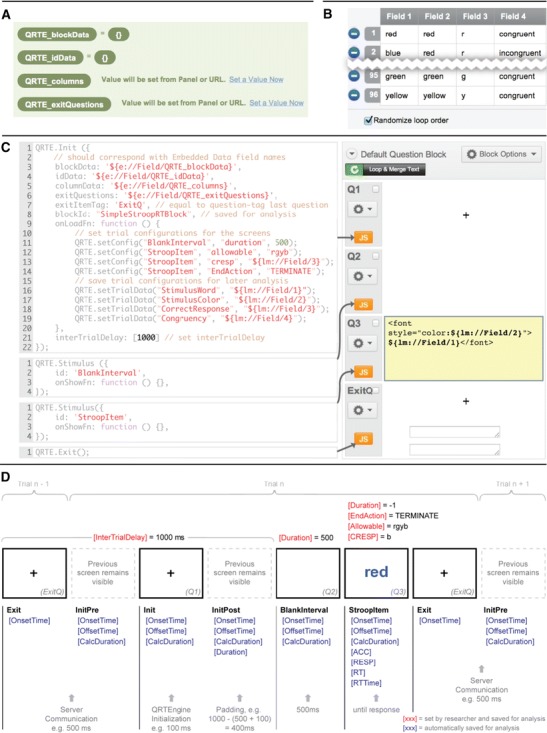
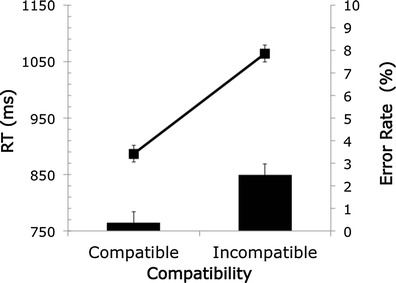
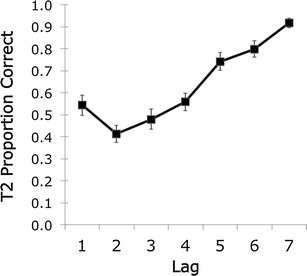
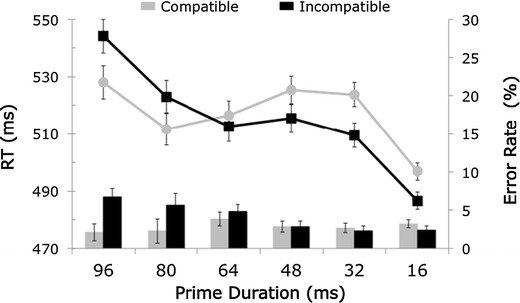
Performing online behavioral research is gaining increased popularity among researchers in psychological and cognitive science. However, the currently available methods for conducting online reaction time experiments are often complicated and typically require advanced technical skills. In this article, we introduce the Qualtrics Reaction Time Engine (QRTEngine), an open-source JavaScript engine that can be embedded in the online survey development environment Qualtrics. The QRTEngine can be used to easily develop browser-based online reaction time experiments with accurate timing within current browser capabilities, and it requires only minimal programming skills. After introducing the QRTEngine, we briefly discuss how to create and distribute a Stroop task. Next, we describe a study in which we investigated the timing accuracy of the engine under different processor loads using external chronometry. Finally, we show that the QRTEngine can be used to reproduce classic behavioral effects in three reaction time paradigms: a Stroop task, an attentional blink task, and a masked-priming task. These findings demonstrate that QRTEngine can be used as a tool for conducting online behavioral research even when this requires accurate stimulus presentation times.
Overview
The claims and statistics of this paper haven’t been checked yet.
Free: it reads the open-access text and checks the first 5 claims that cite a source we can check. Create a free account to check every claim.
Integrity signals
Registry
Cites
Statistics
Figures
Verification
Claims the paper makes
The claims and statistics of this paper haven’t been checked yet.
Free: it reads the open-access text and checks the first 5 claims that cite a source we can check. Create a free account to check every claim.
Claims other papers make about this one
Each is checked against this paper’s own text: does it say what the citing paper says it does?
The cited source says what the claim attributes to it.
In the citing paper
“Other researchers have demonstrated the usefulness of JavaScript-based online reaction time test engines [31].”
From Reduced cognitive function during a heat wave among residents of non-air-conditioned buildings: An observational study of young adults in the summer of 2016 (2018) · cites this paper as [31]
Self-check
Percentages, sums and reported differences re-computed from the paper’s own numbers.
The self-check needs the paper’s full text.
Citations
Cites
Studies of interference in serial verbal reactions
Stroop, J. R. (1935) · Journal of Experimental Psychology · doi:10.1037/h0054651 · Cited by 18,622
Amazon's Mechanical Turk: A New Source of Inexpensive, Yet High-Quality, Data?
Buhrmester, M., Kwang, T., & Gosling, S. D. (2011) · Perspectives on Psychological Science · doi:10.1177/1745691610393980 · Cited by 9,996
Half a century of research on the Stroop effect: An integrative review.
MacLeod, C. M. (1991) · Psychological Bulletin · doi:10.1037/0033-2909.109.2.163 · Cited by 5,500 · cited 2×
“A detailed introduction to using the QRTEngine is provided in the supplementary material as a step-by-step tutorial on how to create a simple Stroop task (MacLeod, 1991; Stroop, 1935).”
BackgroundMethodRunning experiments on Amazon Mechanical Turk
Paolacci, G., Chandler, J., & Ipeirotis, P. G. (2010) · Judgment and Decision Making · doi:10.1017/s1930297500002205 · Cited by 3,767 · cited 2×
“The growing interest in online behavioral research has led to numerous studies regarding the benefits and validity of such results, mostly focusing on data collected using AMT (Buhrmester et al., 2011; Germine et al., 2012; Paolacci et al., 2010).”
BackgroundJournal of Experimental Psychology: Human Perception and Performance.
Intons-Peterson, M. J. (1981) · Journal of Experimental Psychology: Human Perception and Performance · doi:10.1037/h0078016 · Cited by 3,183
Conducting behavioral research on Amazon’s Mechanical Turk
Mason, W., & Suri, S. (2012) · Behavior Research Methods · doi:10.3758/s13428-011-0124-6 · Cited by 3,172 · cited 2×
“The performance.now timer is independent from the system clock, and thus is not subject to system clock adjustments or system clock skew (Mann, 2012).”
BackgroundMethodOpenSesame: An open-source, graphical experiment builder for the social sciences
Mathôt, S., Schreij, D., & Theeuwes, J. (2012) · Behavior Research Methods · doi:10.3758/s13428-011-0168-7 · Cited by 2,586
Temporary suppression of visual processing in an RSVP task: An attentional blink?
Raymond, J. E., Shapiro, K. L., & Arnell, K. M. (1992) · Journal of Experimental Psychology: Human Perception and Performance · doi:10.1037//0096-1523.18.3.849 · Cited by 2,260
jsPsych: A JavaScript library for creating behavioral experiments in a Web browser
de Leeuw, J. R. (2015) · Behavior Research Methods · doi:10.3758/s13428-014-0458-y · Cited by 1,778
Evaluating amazon’s mechanical turk as a tool for experimental behavioral research
Crump, M. J. C., McDonnell, J. V., & Gureckis, T. M. (2013) · PLoS ONE · doi:10.1371/journal.pone.0057410 · Cited by 1,617 · cited 7×
“The experiment was based partly on the Stroop task used by Crump et al. (2013).”
MethodResultInfluential
Research works printed but not linked: 1
- Schneider W Eschman A Zuccolotto A E-Prime [Computer software] 2002 Pittsburgh Psychology Software Tools
Cited by
Gorilla in our midst: An online behavioral experiment builder
Anwyl-Irvine, A. L., Massonnié, J., Flitton, A., Kirkham, N., & Evershed, J. K. (2020) · Behavior Research Methods · doi:10.3758/s13428-019-01237-x · Cited by 1,862
Conducting Clinical Research Using Crowdsourced Convenience Samples
Chandler, J., & Shapiro, D. (2016) · Annual Review of Clinical Psychology · doi:10.1146/annurev-clinpsy-021815-093623 · Cited by 1,072
“2015), with most items functioning more-or-less equivalently across samples (Behrend et al. 2011).”
BackgroundResultInfluentialLange, K., Kühn, S., & Filevich, E. (2015) · PLOS ONE · doi:10.1371/journal.pone.0130834 · Cited by 474
“This limits the options available for study scripts, although, importantly, new tools are emerging that provide some of the functionality missing in the basic templates-most notably, QRTEngine provides precise timing control for Qualtrics-based JavaScripts [10].”
BackgroundRealistic precision and accuracy of online experiment platforms, web browsers, and devices
Anwyl-Irvine, A., Dalmaijer, E. S., Hodges, N., & Evershed, J. K. (2021) · Behavior Research Methods · doi:10.3758/s13428-020-01501-5 · Cited by 341
lab.js: A free, open, online study builder
Henninger, F., Shevchenko, Y., Mertens, U. K., Kieslich, P. J., & Hilbig, B. E. (2022) · Behavior Research Methods · doi:10.3758/s13428-019-01283-5 · Cited by 294
de Leeuw, J. R., & Motz, B. A. (2016) · Behavior Research Methods · doi:10.3758/s13428-015-0567-2 · Cited by 252
“This is relevant for researchers because it improves the estimate of when stimuli are actually drawn on the screen, thus removing some of the variability in response time measurements (Barnhoorn et al., 2014; Garaizar, Vadillo, & López-de-Ipiña, 2014).”
BackgroundMethodInfluentialThe Impact of Workload and Fatigue on Performance
Fan, J., & Smith, A. P. (2017) · Communications in computer and information science · doi:10.1007/978-3-319-61061-0_6 · Cited by 211
Cedeño Laurent, J. G., Williams, A., Oulhote, Y., Zanobetti, A., Allen, J. G., & Spengler, J. D. (2018) · PLoS Medicine · doi:10.1371/journal.pmed.1002605 · Cited by 205
Li, Q., Joo, S. J., Yeatman, J. D., & Reinecke, K. (2020) · Scientific Reports · doi:10.1038/s41598-019-57204-1 · Cited by 183
Collado-Boira, E. J., Ruiz-Palomino, E., Salas-Media, P., Folch-Ayora, A., Muriach, M., & Baliño, P. (2020) · Nurse Education Today · doi:10.1016/j.nedt.2020.104504 · Cited by 139
“Given the exceptional situation of the national emergency status, personal face-to-face interviews had to be substituted by the use of semistructured interviews through the Qualtrics platform (Barnhoorn et al., 2014) (Provo, Utah, USA).”
Online psychophysics: reaction time effects in cognitive experiments
Semmelmann, K., & Weigelt, S. (2017) · Behavior Research Methods · doi:10.3758/s13428-016-0783-4 · Cited by 163
“This concern was contradicted by Barnhoorn et al. (2014), who recorded the data of about 50 participants in three cognitive experiments each.”
BackgroundMethodResultInfluentialSMARTRIQS: A Simple Method Allowing Real-Time Respondent Interaction in Qualtrics Surveys
Molnár, A. (2019) · Journal of Behavioral and Experimental Finance · doi:10.1016/j.jbef.2019.03.005 · Cited by 155
Feeling hangry? When hunger is conceptualized as emotion.
MacCormack, J. K., & Lindquist, K. A. (2019) · Emotion · doi:10.1037/emo0000422 · Cited by 116
Rodd, J. M. (2023) · Journal of Memory and Language · doi:10.1016/j.jml.2023.104472 · Cited by 134
Cai, Z. G., Gilbert, R. A., Davis, M. H., Gaskell, M. G., Farrar, L., Adler, S., & Rodd, J. M. (2017) · Cognitive Psychology · doi:10.1016/j.cogpsych.2017.08.003 · Cited by 132
“The experiment was run using Qualtrics and the Qualtrics Reaction Time Engine (QRTE; Barnhoorn et al., 2015).”
Agyeiwaah, E., Adam, I., Dayour, F., & Badu‐Baiden, F. (2021) · Tourism Recreation Research · doi:10.1080/02508281.2021.1872263 · Cited by 113
“The data collection included a screening question to select students and workers of Macau Higher Education via Qualtrics (Barnhoorn et al., 2015).”
MethodA primer on running human behavioural experiments online
Grootswagers, T. (2020) · Behavior Research Methods · doi:10.3758/s13428-020-01395-3 · Cited by 107
Once more with feeling: Normative data for the aha experience in insight and noninsight problems
Webb, M. E., Little, D. R., & Cropper, S. J. (2017) · Behavior Research Methods · doi:10.3758/s13428-017-0972-9 · Cited by 106
Uittenhove, K. L., Jeanneret, S., & Vergauwe, E. (2023) · Journal of Cognition · doi:10.5334/joc.259 · Cited by 104
Factors Affecting 3D Printing Technology Adaptation in Construction
Besklubova, S., Skibniewski, M. J., & Zhang, X. (2021) · Journal of Construction Engineering and Management · doi:10.1061/(asce)co.1943-7862.0002034 · Cited by 97
Gorilla in our Midst: An online behavioral experiment builderPreprint
Anwyl-Irvine, A. L., Massonnié, J., Flitton, A., Kirkham, N. Z., & Evershed, J. (2018) · bioRxiv (Cold Spring Harbor Laboratory) · doi:10.1101/438242 · Cited by 92
Listeners and readers generalize their experience with word meanings across modalities.
Gilbert, R. A., Davis, M. H., Gaskell, M. G., & Rodd, J. M. (2018) · Journal of Experimental Psychology Learning Memory and Cognition · doi:10.1037/xlm0000532 · Cited by 91
“A comparison of model diagnostic plots (quantile-quantile, distribution of residuals) for the raw, log-transformed and inverse transformed RTs revealed that the log transformation best met the assumptions.”
BackgroundMethodInfluentialThe Endurance of Interpersonal Confrontations as a Prejudice Reduction Strategy
Chaney, K. E., & Sanchez, D. T. (2017) · Personality and Social Psychology Bulletin · doi:10.1177/0146167217741344 · Cited by 88
PageFocus: Using paradata to detect and prevent cheating on online achievement tests
Diedenhofen, B., & Musch, J. (2016) · Behavior Research Methods · doi:10.3758/s13428-016-0800-7 · Cited by 75
“Recent studies have shown that JavaScript can be used successfully and with sufficient precision in online studies for collecting reaction-time data (Barnhoorn, Haasnoot, Bocanegra, & Steenbergen, 2015; Chetverikov & Upravitelev, 2015; de Leeuw & Motz, 2016).”
MethodLange, K., Kühn, S., & Filevich, E. (2015) · PLoS ONE · doi:10.1371/journal.pone.0134073 · Cited by 73
Poort, E. D., & Rodd, J. M. (2017) · Acta Psychologica · doi:10.1016/j.actpsy.2017.08.008 · Cited by 72
The relationship between sentence comprehension and lexical-semantic retuning
Gilbert, R. A., Davis, M. H., Gaskell, M. G., & Rodd, J. M. (2020) · Journal of Memory and Language · doi:10.1016/j.jml.2020.104188 · Cited by 69
Kuroki, D. (2020) · Behavior Research Methods · doi:10.3758/s13428-020-01445-w · Cited by 73
Chaney, K. E., Sanchez, D. T., & Remedios, J. D. (2018) · Journal of Experimental Social Psychology · doi:10.1016/j.jesp.2018.09.005 · Cited by 66
Plant, R. R. (2015) · Behavior Research Methods · doi:10.3758/s13428-015-0577-0 · Cited by 59
“Indeed, this is how the authors of QRTEngine, an online experiment generator and delivery system (Barnhoorn, Haasnoot, Bocanegra & Steenbergen, 2014), validated its efficacy rather than using external chro-nometry to check presentation and response timings.”
BackgroundCrowdsourcing visual perception experiments: a case of contrast threshold
Sasaki, K., & Yamada, Y. (2019) · PeerJ · doi:10.7717/peerj.8339 · Cited by 56
“, 2015; Crump, McDonnell & Gureckis, 2013; Majima, 2017), attentional blink (Barnhoorn et al., 2015; Brown et al., 2014), flanker (Simcox & Fiez, 2014; Majima, 2017; Zwaan et al.”
The (Mis)Information Game: A social media simulator
Butler, L. H., Lamont, P. X., Wan, D. L. Y., Prike, T., Nasim, M., Walker, B., Fay, N., & Ecker, U. K. H. (2023) · Behavior Research Methods · doi:10.3758/s13428-023-02153-x · Cited by 57
Cross-language Neighborhood Effects in Learners Indicative of an Integrated Lexicon
Meade, G. F., Midgley, K. J., Dijkstra, T., & Holcomb, P. J. (2017) · Journal of Cognitive Neuroscience · doi:10.1162/jocn_a_01184 · Cited by 55
Pronk, T., Wiers, R. W. H. J., Molenkamp, B. E., & Murre, J. M. J. (2019) · Behavior Research Methods · doi:10.3758/s13428-019-01321-2 · Cited by 56
MacCormack, J. K., Henry, T. R., Davis, B. M., Oosterwijk, S., & Lindquist, K. A. (2021) · Emotion · doi:10.1037/emo0000699 · Cited by 52
van Steenbergen, H., Band, G. P. H., & Hommel, B. (2015) · Frontiers in Psychology · doi:10.3389/fpsyg.2015.00974 · Cited by 52
Dainer-Best, J., Lee, H. Y., Shumake, J. D., Yeager, D. S., & Beevers, C. G. (2018) · Psychological Assessment · doi:10.1037/pas0000602 · Cited by 50
Crump, M. J. C., Brosowsky, N. P., & Milliken, B. (2016) · Quarterly Journal of Experimental Psychology · doi:10.1080/17470218.2016.1206130 · Cited by 50
Angele, B., Baciero, A., Gómez, P., & Perea, M. (2022) · Behavior Research Methods · doi:10.3758/s13428-021-01742-y · Cited by 50
A thousand studies for the price of one: Accelerating psychological science with Pushkin
Hartshorne, J. K., de Leeuw, J. R., Goodman, N. D., Jennings, M. V., & O’Donnell, T. J. (2019) · Behavior Research Methods · doi:10.3758/s13428-018-1155-z · Cited by 49
Armitage, J. O., & Eerola, T. (2020) · Frontiers in Psychology · doi:10.3389/fpsyg.2019.02883 · Cited by 47
“However, recent research (Barnhoorn et al., 2015; de Leeuw and Motz, 2016; Hilbig, 2016) suggests that online reaction time data is perhaps more trustworthy than was previously thought, but these studies have not yet involved music as stimuli.”
Conducting Web-Based Experiments for Numerical Cognition Research
Kochari, A. R. (2019) · Journal of Cognition · doi:10.5334/joc.85 · Cited by 46
Garaizar, P., & Reips, U. (2018) · Behavior Research Methods · doi:10.3758/s13428-018-1126-4 · Cited by 47
The Holy Light of Cyberspace: Spiritual Experience in a Virtual Church
Mansour, N. (2022) · Religions · doi:10.3390/rel13020121 · Cited by 46
Discourse of renewal: Developing multiple-item measurement and analyzing effects on relationships
Xu, S. (2017) · Public Relations Review · doi:10.1016/j.pubrev.2017.09.005 · Cited by 44
Auditory presentation and synchronization in Adobe Flash and HTML5/JavaScript Web experiments
Reimers, S. J., & Stewart, N. (2016) · Behavior Research Methods · doi:10.3758/s13428-016-0758-5 · Cited by 42
Miller, R. E., Schmidt, K., Kirschbaum, C., & Enge, S. (2018) · Behavior Research Methods · doi:10.3758/s13428-018-1036-5 · Cited by 48
“With regard to the first aspect, most of the abovementioned studies (e.g., Barnhoorn et al., 2015; Crump et al., 2013; Simcox & Fiez, 2014) focused on differences in the central tendencies of laboratory- versus internet-assessed performance measures.”
ResultNegativity bias, personality and political ideology
Johnston, C. D., & Madson, G. (2022) · Nature Human Behaviour · doi:10.1038/s41562-022-01327-5 · Cited by 41
“Reassuringly, recent research strongly suggests that reaction time tasks conducted using web-and browser-based modes of delivery are comparable to laboratory-based studies in terms of their ability to reliably reproduce standard findings within the literature 51–54 .”
ResultWalker, S., Henderson, L. M., Fletcher, F. E., Knowland, V. C. P., Cairney, S. A., & Gaskell, M. G. (2019) · Royal Society Open Science · doi:10.1098/rsos.181842 · Cited by 41
“Barnhoorn JS, Haasnoot E, Bocanegra BR, van Steenbergen H. 2015 QRTEngine: an easy solution for running online reaction time experiments using Qualtrics.”
BackgroundMethodInfluentialAttridge, N., Keogh, E., & Eccleston, C. (2016) · Pain · doi:10.1097/j.pain.0000000000000627 · Cited by 40
“The study was run using Qualtrics34 with the switching tasks supported by the QRTEngine,5 to allow for accurate RT recording.”
MethodInfluentialMind the attention gap: how does digital advertising impact choice under low attention?
Santoso, I., Wright, M., Trinh, G. T., & Avis, M. (2021) · European Journal of Marketing · doi:10.1108/ejm-01-2021-0031 · Cited by 39
Episodic memory and sleep are involved in the maintenance of context-specific lexical information.
Mak, M. H., Curtis, A. J., Rodd, J. M., & Gaskell, M. G. (2023) · Journal of Experimental Psychology General · doi:10.1037/xge0001435 · Cited by 38
The Feasibility of a Japanese Crowdsourcing Service for Experimental Research in Psychology
Majima, Y. (2017) · SAGE Open · doi:10.1177/2158244017698731 · Cited by 36
“Experiment 1 followed the same stimuli, design, and procedure as that in Barnhoorn et al. (2015) and Crump et al.”
MethodResultInfluentialBlott, L. M. (2022) · PsyArXiv (OSF Preprints) · doi:10.31234/osf.io/u7s58 · Cited by 36
USING LEXICAL FEATURES TO INVESTIGATE SECOND LANGUAGE LEXICAL DECISION PERFORMANCE
Berger, C. M., Crossley, S. A., & Skalicky, S. (2019) · Studies in Second Language Acquisition · doi:10.1017/s0272263119000019 · Cited by 35
“Data from 256 participants (26,564 trials) was fi rst collected using the Qualtrics Reaction Time Engine (QRTE; Barnhoorn, Haasnoot, Bocanegra, & van Steenbergen, 2015), a JavaScript plug-in for the online survey service Qualtrics that allows for collection of reaction time data.”
MethodDifferential sensitivity to learning from positive and negative outcomes in cocaine users
Strickland, J. C., Bolin, B. L., Lile, J. A., Rush, C. R., & Stoops, W. W. (2016) · Drug and Alcohol Dependence · doi:10.1016/j.drugalcdep.2016.06.022 · Cited by 34
“METHODS AND MATERIALS: EXPERIMENT 2 5.1 Participants and Procedures Experimental tasks, hosted on mTurk, were programmed using the QRTEngine for Qualtrics (Qualtrics, Provo, UT), a previously validated method for collecting online response time data (Barnhoorn et al., 2015).”
MethodInfluentialEqual Quality for Online and Lab Data: A Direct Comparison from Two Dual-Task Paradigms
Sauter, M., Stefani, M., & Mack, W. (2022) · Open Psychology · doi:10.1515/psych-2022-0003 · Cited by 32
Hermann, C. A., Nunes, K. L., & Maimone, S. (2016) · Sexual Abuse · doi:10.1177/1079063216681560 · Cited by 32
Attentional accounting: Voluntary spatial attention increases budget category prioritization.
Mrkva, K., & Boven, L. V. (2017) · Journal of Experimental Psychology General · doi:10.1037/xge0000347 · Cited by 32
PONT: A Protocol for Online Neuropsychological Testing
Saban, W., & Ivry, R. B. (2021) · Journal of Cognitive Neuroscience · doi:10.1162/jocn_a_01767 · Cited by 29
Investigating Drivers of Customer Experience with Virtual Conversational Agents
Nguyen, T. T., Trivedi, R. H., Fukukawa, K., & Adomako, S. (2025) · Information Systems Frontiers · doi:10.1007/s10796-024-10572-0 · Cited by 28
“Demonstrations of AI-ena-bled chatbots (please see Appendices) were embedded in the Qualtrics-based survey, which has been cited as a reliable platform for online behavioral research (Barnhoorn et al., 2015).”
Pronk, T., Hirst, R. J., Wiers, R. W. H. J., & Murre, J. M. J. (2022) · Behavior Research Methods · doi:10.3758/s13428-022-01885-6 · Cited by 29
“…cognitive tasks via web applications inside and outside of the lab have generally replicated experimental effects found with these tasks (Barnhoorn et al., 2015; Bazilinskyy & de Winter, 2018; Crump et al., 2013; de Leeuw & Motz, 2016; Frank et al., 2016; Germine et al., 2012; Hilbig,…”
Methodvan Steenbergen, H., & Bocanegra, B. R. (2015) · Behavior Research Methods · doi:10.3758/s13428-015-0677-x · Cited by 27
“So, Plant here clearly misrepresented the method we used to validate the Qualtrics Reaction Time Engine (QRTEngine).”
BackgroundMethodInfluentialSelf-citationMak, M. H., O’Hagan, A., Horner, A. J., & Gaskell, M. G. (2023) · Royal Society Open Science · doi:10.1098/rsos.220595 · Cited by 27
Crowdsourced Measurement of Reaction Times to Audiovisual Stimuli With Various Degrees of Asynchrony
Bazilinskyy, P., & de Winter, J. (2018) · Human Factors The Journal of the Human Factors and Ergonomics Society · doi:10.1177/0018720818787126 · Cited by 27
Online Consumers’ Responses to Deal Popularity as an Extrinsic Cue
Kao, K. C., Hill, S. R., & Troshani, I. (2016) · Journal of Computer Information Systems · doi:10.1080/08874417.2016.1232997 · Cited by 27
“Participants completed the online experiment in a computer lab using Qualtrics, a popular tool for online experiments [3].”
MethodPoletiek, F. H., Conway, C. M., Ellefson, M. R., Lai, J., Bocanegra, B. R., & Christiansen, M. H. (2018) · Cognitive Science · doi:10.1111/cogs.12685 · Cited by 26
“The procedure was identical to Experiment 1b and was programmed using the QRTEn-gine (Barnhoorn, Haasnoot, Bocanegra, & van Steenbergen, 2015).”
MethodSelf-citationCan jurors be biased in their evaluation of third-party evidence within cases of rape?
Parsons, A., & Mojtahedi, D. (2022) · International Journal of Law and Psychiatry · doi:10.1016/j.ijlp.2022.101837 · Cited by 24
Cotton, K., Sandry, J. D., & Ricker, T. J. (2023) · Experimental Psychology (formerly Zeitschrift für Experimentelle Psychologie) · doi:10.1027/1618-3169/a000599 · Cited by 24
“This belief is supported by research suggesting that performance on some cognitive tasks is similar across contexts (Barnhoorn et al., 2015; Crump et al., 2013; Hilbig, 2016; Semmelmann & Weigelt, 2017; Uittenhove et al., 2023); however, this shift in environments may have yet unidentified effects…”
ResultCrowdsourcing in Cognitive and Systems Neuroscience
Johnson, B. P., Dayan, E., Censor, N., & Cohen, L. G. (2021) · The Neuroscientist · doi:10.1177/10738584211017018 · Cited by 24
Nguyen, M., Agarwal, R., Malik, A., & Pandey, R. (2025) · Journal of Enterprise Information Management · doi:10.1108/jeim-08-2024-0433 · Cited by 23
Turri, A., & Turri, J. (2019) · Synthese · doi:10.1007/s11229-018-02062-z · Cited by 21
Wang, X. (2021) · Journal of Language Teaching · doi:10.54475/jlt.2021.020 · Cited by 19
“Qualtrics (Barnhoorn et al., 2015) was used for multiple aspects of this this study.”
MethodExamining How Internet Users Trust and Access Electronic Health Record Patient Portals: Survey Study
Yin, R., Law, K. E., & Neyens, D. M. (2021) · JMIR Human Factors · doi:10.2196/28501 · Cited by 17
“The data obtained using Amazon Mechanical Turk have been considered reliable [25-27] and more representative of the general population [28] than the data obtained from convenience samples (eg, college students) and generally represent diverse backgrounds [29].”
MethodInfluentialWolfe, C. R. (2017) · Behavior Research Methods · doi:10.3758/s13428-017-0858-x · Cited by 16
“Over the years, researchers have also developed and shared a number of tools to aid investigators in developing sophisticated experimental designs for Internet-based research, including WEXTOR (Reips & Neuhaus, 2002), Visual DMDX (Garaizar & Reips, 2015), jsPsyc (de Leeuw, 2015), QRTEngine for Qualtrics (Barnhoorn, Ha…”
A cognitive approach to the decision to trust or distrust phishing emails
Arduin, P. (2021) · International Transactions in Operational Research · doi:10.1111/itor.12963 · Cited by 16
Cross-modal Transfer of Valence or Arousal from Music to Word Targets in Affective Priming?
Armitage, J. O., & Eerola, T. (2022) · Auditory Perception & Cognition · doi:10.1080/25742442.2022.2087451 · Cited by 15
Growns, B., Towler, A., Dunn, J. D., Salerno, J. M., Schweitzer, N. J., & Dror, I. E. (2022) · Cognitive Research Principles and Implications · doi:10.1186/s41235-022-00413-6 · Cited by 15
Pezzoli, P., Babchishin, K. M., Pullman, L. E., & Seto, M. C. (2022) · Archives of Sexual Behavior · doi:10.1007/s10508-022-02324-5 · Cited by 15
“Previous studies suggested that the built-in timer can be impacted by variation in noise due to the type of computers or browsers used and, as such, future studies could include Javascript or QRTEngine solutions that might offer more reliable measurement at the millisecond level (Barnhoorn et al., 2015).”
MethodWebb, M. E., Little, D. R., & Cropper, S. J. (2021) · Journal of Cognitive Psychology · doi:10.1080/20445911.2021.1929254 · Cited by 15
Toward Changing Users behavior with Emotion-based Adaptive Systems
Alipour, M., Moghaddam, M. T., Vaidhyanathan, K., & Kjærgaard, M. B. (2023) · ACM Conference on User Modeling, Adaptation and Personalization (UMAP) · doi:10.1145/3565472.3595614 · Cited by 14
The dynamic range of response set activation during action sequencing.
Behmer, L. P., & Crump, M. J. C. (2017) · Journal of Experimental Psychology Human Perception & Performance · doi:10.1037/xhp0000335 · Cited by 14
Trust and Approachability Mediate Social Decision Making in Human-Robot Interaction
Tulk, S., & Wiese, E. (2018) · Proceedings of the Human Factors and Ergonomics Society Annual Meeting · doi:10.1177/1541931218621160 · Cited by 15
Untapped Potential: Designed Digital Trace Data in Online Survey Experiments
Macke, E., Daviss, C., & Williams-Baron, E. (2024) · Sociological Methods & Research · doi:10.1177/00491241241268770 · Cited by 12
“…developed tools that can be incorporated into Qualtrics and other survey platforms through Javascript code, including tools that measure reaction time (Barnhoorn et al. 2015), mouse movements (Mathur and Reichling 2019), and whether a survey window is open (Permut, Fisher, and Oppenheimer 2019).”
Construing action abstractly and experiencing autonomy: Implications for physical activity and diet
Sweeney, A. M., & Freitas, A. L. (2017) · Motivation and Emotion · doi:10.1007/s11031-017-9645-3 · Cited by 12
Decoding domestic tourism customers’ emotional responses to covid-19: A segmentation approach
Adam, I., Agyeiwaah, E., & Dayour, F. (2021) · Journal of China Tourism Research · doi:10.1080/19388160.2021.1975006 · Cited by 11
Stratton, C. M., Krumrei-Mancuso, E. J., & Miller‐Perrin, C. (2022) · Psi Chi Journal of Psychological Research · doi:10.24839/2325-7342.jn27.2.113 · Cited by 10
Ebert, N., Scheppler, B., Ackermann, K. A., & Geppert, T. (2023) · CHI Conference on Human Factors in Computing Systems · doi:10.1145/3544548.3580780 · Cited by 10
“To address this need, this paper introduces the open-source QButterfly HCI toolkit, which allows non-tech-savvy users to de-sign controlled user interaction studies using the widely available Qualtrics and LimeSurvey platforms.”
MethodInfluentialRevisiting and extending a response latency measure of inclusion of the other in the self
Zickfeld, J., & Schubert, T. W. (2016) · Comprehensive Results in Social Psychology · doi:10.1080/23743603.2017.1298356 · Cited by 10
Precise display time measurement in JavaScript for web-based experiments
Lukács, G., & Gartus, A. (2022) · Behavior Research Methods · doi:10.3758/s13428-022-01835-2 · Cited by 10
“An often-repeated technical recommendation has been that the best precision is achieved by using the (RAF) native JS function (Barnhoorn et al., 2015; Gao et al., 2020; Garaizar et al., 2014; Pronk et al., 2020; Yung et al., 2015).”
The Cyborg Method: A Method to Identify Fraudulent Responses from Crowdsourced DataPreprint
Price, M., Hidalgo, J. E., Kim, J., Legrand, A. C., Brier, Z. M. F., van Stolk‐Cooke, K., Lansing, A. H., & Contractor, A. A. (2022) · PsyArXiv (OSF Preprints) · doi:10.1016/j.chb.2024.108253 · Cited by 10
Cristaldi, F. D. P., Granziol, U., Bariletti, I., & Mento, G. (2022) · Brain Sciences · doi:10.3390/brainsci12081061 · Cited by 9
“Nonetheless, several time-sensitive experimental effects, such as the Stroop effect or the above-mentioned attentional blink and masked-priming effects, have been replicated online [23].”
BackgroundKwan, K., Do-Reynoso, V., Zarate-Gonzalez, G., & Goldman-Mellor, S. J. (2017) · Evaluation and Program Planning · doi:10.1016/j.evalprogplan.2017.11.004 · Cited by 9
Using the Unconscious to Improve Detection of Managerial DeceptionPreprint
Rennekamp, K. M., Rupar, K., & Seybert, N. (2018) · SSRN Electronic Journal · doi:10.2139/ssrn.3100299 · Cited by 9
Thirkettle, M., Lewis, J., Langdridge, D., & Pike, G. E. (2018) · JMIR Serious Games · doi:10.2196/10519 · Cited by 8
“Large, diverse cohorts easily available to researchers are now accompanied by platforms capable of implementing complex tasks and accurately measuring performance [1,2].”
Moral Clarity in Narratives Elicits Greater Cooperation than Moral Ambiguity
Lewis, R. J., Grizzard, M., Mangus, J. M., Rashidian, P., & Weber, R. (2016) · Media Psychology · doi:10.1080/15213269.2016.1212714 · Cited by 8
A jsPsych touchscreen extension for behavioral research on touch-enabled interfaces
Strittmatter, Y., Spitzer, M., Ging-Jehli, N. R., & Musslick, S. (2024) · Behavior Research Methods · doi:10.3758/s13428-024-02454-9 · Cited by 8
“…to those of lab-based experiments (Crump et al., 2013; Buhrmester et al., 2011; Ramsey et al., 2016; Hilbig, 2016; de Leeuw & Motz, 2016; de Leeuw, 2015; de Leeuw et al., 2023; Semmelmann & Weigelt, 2018; Germine et al., 2012; Barnhoorn et al., 2014; March, 2021; Ratcliff & Hendrick-son, 2021).”
A framework for the acceptance of 3D printing technology in construction
Besklubova, S., Spicek, N., Zhong, R. Y., Kravchenko, E., & kibniewski, M. J. J. (2024) · International Journal of Applied Science and Engineering · doi:10.6703/ijase.202409_21(4).001 · Cited by 8
“C3DP expert opinions around the world were collected via the online survey on the Qualtrics ® online platform (Barnhoorn et al., 2015).”
The curve of control: Nonmonotonic effects of task difficulty on cognitive control.
Bognar, M., Gyurkovics, M., Aczél, B., & van Steenbergen, H. (2024) · Journal of Experimental Psychology General · doi:10.1037/xge0001637 · Cited by 7
Metadata
- Authors
- Barnhoorn, J. S., Haasnoot, E., Bocanegra, B. R., & van Steenbergen, H.
- Affiliations
- Leiden University (NL)
- Venue
- Behavior Research Methods
- Published
- 2014-11-19
- Volume
- 47
- Issue
- 4
- Pages
- 918-929
- ISSN
- 1554-351X (ISSN-L)
- 1554-3528
- PMC
- PMC4636512
- OpenAlex
- W2070332361
- Cited by
- 166
- References
- 20
- Citations by year
- 2026: 4 · 2025: 7 · 2024: 9 · 2023: 17 · 2022: 23 · 2021: 15 · 2020: 16 · 2019: 23 · 2018: 17 · 2017: 18 · 2016: 11 · 2015: 6
- FWCI
- 17.37
- Type
- journal article
- Language
- en
- Open access
- hybrid
- doi.org
- Locations
- Behavior Research Methods (publishedVersion, cc-by)
- Europe PMC (PubMed Central) (publishedVersion, cc-by)
- PubMed Central (publishedVersion, cc-by)
- PubMed (publishedVersion)
- University of Twente Research Information (publishedVersion)
- Leiden Repository (Leiden University) (submittedVersion, other-oa)
- EUR Research Repository (Erasmus University Rotterdam) (submittedVersion)
- Leiden Repository (Leiden University) (submittedVersion)
- OSF Preprints (OSF Preprints) (submittedVersion)
- Data Archiving and Networked Services (DANS) (submittedVersion, other-oa)
- University of Twente Research Information (submittedVersion)
- Topics
- Physical Sciences › Computer Science › Computer Science Applications › Mobile Crowdsensing and Crowdsourcing
- Life Sciences › Neuroscience › Cognitive Neuroscience › Neural and Behavioral Psychology Studies
- Social Sciences › Sociology and Political Science › Survey Methodology and Nonresponse
- Keywords
- JavaScript engines, online experiments, timing accuracy, Stroop task, attentional blink, masked priming, stimulus presentation timing, processor load, open source software
- MeSH terms
- Humans, Reaction Time, Internet, Behavioral Research
About these checks
Registry, retraction, Cites and statistics results are computed, not judged, with one exception: a printed reference that no index lists is read once by a model before it counts as a citation error. Claims are extracted by a model and kept only when their quote appears verbatim in the text; each cited source is then checked, with a model’s help, for whether it says what the claim relies on. Those verdicts can be wrong — read the claim’s quote and the cited source before relying on one.
Statistics and arithmetic are recomputed, not judged.
Confidence bands are shown only for fields calibrated on our annotated test set. None is calibrated yet, so no band is shown.
What counts as a claim ›How we measure confidence ›How we check this ›
Are you an author, or do you see a problem with this page? Request a review
Data sources
Bibliographic data: Semantic Scholar, OpenAlex, Crossref.
Contains information from the Semantic Scholar Academic Graph Datasets, made available under the ODC Attribution License (ODC-BY 1.0).
Semantic Scholar’s data is described in: Kinney, R., et al. (2023). The Semantic Scholar Open Data Platform. arXiv:2301.10140.
