

QRTEngine: An easy solution for running online reaction time experiments using Qualtrics
Open accessThe DOI matches its Crossref record; 19 of the 20 references it cites were found in a registry or an index.
Abstract
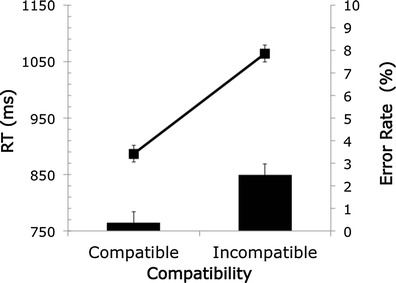
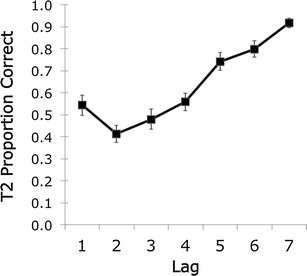
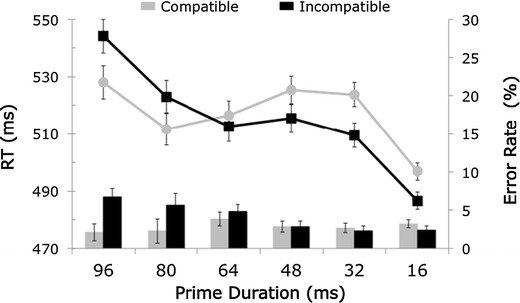
Performing online behavioral research is gaining increased popularity among researchers in psychological and cognitive science. However, the currently available methods for conducting online reaction time experiments are often complicated and typically require advanced technical skills. In this article, we introduce the Qualtrics Reaction Time Engine (QRTEngine), an open-source JavaScript engine that can be embedded in the online survey development environment Qualtrics. The QRTEngine can be used to easily develop browser-based online reaction time experiments with accurate timing within current browser capabilities, and it requires only minimal programming skills. After introducing the QRTEngine, we briefly discuss how to create and distribute a Stroop task. Next, we describe a study in which we investigated the timing accuracy of the engine under different processor loads using external chronometry. Finally, we show that the QRTEngine can be used to reproduce classic behavioral effects in three reaction time paradigms: a Stroop task, an attentional blink task, and a masked-priming task. These findings demonstrate that QRTEngine can be used as a tool for conducting online behavioral research even when this requires accurate stimulus presentation times.
Overview
The claims and statistics of this paper haven’t been checked yet.
Free: it reads the open-access text and checks the first 5 claims that cite a source we can check. Create a free account to check every claim.
Integrity signals
Registry
Cites
Statistics
Figures
Verification
Claims the paper makes
The claims and statistics of this paper haven’t been checked yet.
Free: it reads the open-access text and checks the first 5 claims that cite a source we can check. Create a free account to check every claim.
Claims other papers make about this one
Each is checked against this paper’s own text: does it say what the citing paper says it does?
The cited source says what the claim attributes to it.
In the citing paper
“Other researchers have demonstrated the usefulness of JavaScript-based online reaction time test engines [31].”
From Reduced cognitive function during a heat wave among residents of non-air-conditioned buildings: An observational study of young adults in the summer of 2016 (2018) · cites this paper as [31]
Self-check
Percentages, sums and reported differences re-computed from the paper’s own numbers.
The self-check needs the paper’s full text.
Citations
Cites
Studies of interference in serial verbal reactions
Stroop, J. R. (1935) · Journal of Experimental Psychology · doi:10.1037/h0054651 · Cited by 18,622
Amazon's Mechanical Turk: A New Source of Inexpensive, Yet High-Quality, Data?
Buhrmester, M., Kwang, T., & Gosling, S. D. (2011) · Perspectives on Psychological Science · doi:10.1177/1745691610393980 · Cited by 9,996
Half a century of research on the Stroop effect: An integrative review.
MacLeod, C. M. (1991) · Psychological Bulletin · doi:10.1037/0033-2909.109.2.163 · Cited by 5,500 · cited 2×
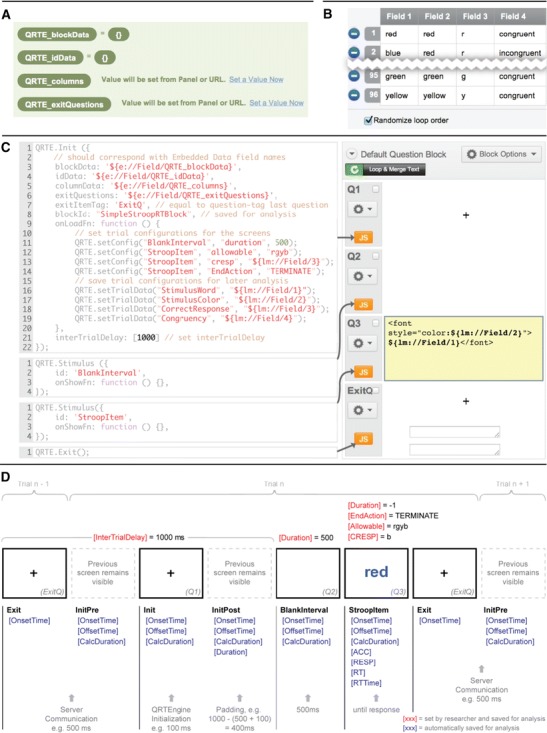
“A detailed introduction to using the QRTEngine is provided in the supplementary material as a step-by-step tutorial on how to create a simple Stroop task (MacLeod, 1991; Stroop, 1935).”
BackgroundMethodRunning experiments on Amazon Mechanical Turk
Paolacci, G., Chandler, J., & Ipeirotis, P. G. (2010) · Judgment and Decision Making · doi:10.1017/s1930297500002205 · Cited by 3,767 · cited 2×
“The growing interest in online behavioral research has led to numerous studies regarding the benefits and validity of such results, mostly focusing on data collected using AMT (Buhrmester et al., 2011; Germine et al., 2012; Paolacci et al., 2010).”
BackgroundJournal of Experimental Psychology: Human Perception and Performance.
Intons-Peterson, M. J. (1981) · Journal of Experimental Psychology: Human Perception and Performance · doi:10.1037/h0078016 · Cited by 3,183
Conducting behavioral research on Amazon’s Mechanical Turk
Mason, W., & Suri, S. (2012) · Behavior Research Methods · doi:10.3758/s13428-011-0124-6 · Cited by 3,172 · cited 2×
“The performance.now timer is independent from the system clock, and thus is not subject to system clock adjustments or system clock skew (Mann, 2012).”
BackgroundMethodOpenSesame: An open-source, graphical experiment builder for the social sciences
Mathôt, S., Schreij, D., & Theeuwes, J. (2012) · Behavior Research Methods · doi:10.3758/s13428-011-0168-7 · Cited by 2,586
Temporary suppression of visual processing in an RSVP task: An attentional blink?
Raymond, J. E., Shapiro, K. L., & Arnell, K. M. (1992) · Journal of Experimental Psychology: Human Perception and Performance · doi:10.1037//0096-1523.18.3.849 · Cited by 2,260
jsPsych: A JavaScript library for creating behavioral experiments in a Web browser
de Leeuw, J. R. (2015) · Behavior Research Methods · doi:10.3758/s13428-014-0458-y · Cited by 1,778
Evaluating amazon’s mechanical turk as a tool for experimental behavioral research
Crump, M. J. C., McDonnell, J. V., & Gureckis, T. M. (2013) · PLoS ONE · doi:10.1371/journal.pone.0057410 · Cited by 1,617 · cited 7×
“The experiment was based partly on the Stroop task used by Crump et al. (2013).”
MethodResultInfluential
Research works printed but not linked: 1
- Schneider W Eschman A Zuccolotto A E-Prime [Computer software] 2002 Pittsburgh Psychology Software Tools
Cited by
Items 101–200 of 203
Preferences for cervical cancer screening: The role of implicit associations
Korfage, I. J., de Kwaadsteniet, E. W., van Voorst, A. F. A., Stiggelbout, A. M., de Vries, M., & Pieterse, A. H. (2017) · Patient Education and Counseling · doi:10.1016/j.pec.2017.07.024 · Cited by 7
The Role of Sleep in Learning New Meanings for Familiar Words through Stories
Hulme, R. C., & Rodd, J. M. (2023) · Journal of Cognition · doi:10.5334/joc.282 · Cited by 7
Kim, D., Lowder, M. W., & Choi, W. (2021) · Frontiers in Psychology · doi:10.3389/fpsyg.2021.710663 · Cited by 7
“Indeed, webbased experiments still tend to show slower latencies with more variability compared to laboratory-based experiments; however, many studies have provided evidence that the response time data obtained from web-based experiments are sufficiently reliable (Barnhoorn et al., 2015; Reimers and Stewart, 2015; Mil…”
BackgroundKhalifa, M., Magrabi, F., & Gallego Luxan, B. (2020) · Journal of Medical Internet Research · doi:10.2196/15770 · Cited by 6
“This could be explained by the fact that the Qualtrics platform of the survey measures the task completion duration by subtracting the time of loading the page from the time of pushing the Next button after completing the task and not the actual time the participants spent active on the page, which is currently under…”
BackgroundJin, D. (2024) · Service Business · doi:10.1007/s11628-024-00562-2 · Cited by 6
“The customer respondents who were 18 years or older and had experience with a service problem with diverse backgrounds were recruited through the Qualtrics Panel in June 2023 (Barnhoorn et al. 2015).”
Croxford, S., Thomas, C. J., Horvath, D., Buultjens, M., Stirling, E., Larsen, A., Stasis, T. R., Radcliffe, J., Buultjens, P., McDonald, S. J., et al. (2019) · Journal of University Teaching and Learning Practice · doi:10.53761/1.16.1.5 · Cited by 6
“In the second phase of data collection, a short-answer survey was constructed from identified themes and distributed via Qualtrics research software (Barnhoorn et al. 2015).”
MethodPoort, E. D., & Rodd, J. M. (2017) · OSF Preprints (OSF Preprints) · doi:10.31219/osf.io/rvmz3 · Cited by 6
The emerging submission crisis in behavioral science
Spitzer, M. (2026) · Trends in Neuroscience and Education · doi:10.1016/j.tine.2026.100276 · Cited by 5
Can faces affect object-based attention? Evidence from online experiments
Xie, T., Fu, S., & Mento, G. (2022) · Attention Perception & Psychophysics · doi:10.3758/s13414-022-02473-8 · Cited by 5
“The previous literature has shown that online experiments might feature peculiar aspects, such as non-systematic noise in terms of timing (Barnhoorn et al., 2015), distraction by unpredictable factors (Sauter et al.”
BackgroundExperimentos en línea vs presenciales, un procedimiento de Igualación a la muestra
Rojas-Iturria, F., Vila, J., Bernal‐Gamboa, R., & Gámez, A. M. (2022) · Revista de Psicología y Ciencias del Comportamiento de la Unidad Académica de Ciencias Jurídicas y Sociales · doi:10.29059/rpcc.20221201-149 · Cited by 5
To Click or Not to Click? Deciding to Trust or Distrust Phishing Emails
Arduin, P. (2020) · Lecture notes in business information processing · doi:10.1007/978-3-030-46224-6_6 · Cited by 5
Automated Scoring of Clinical Expressive Language Evaluation Tasks
Wang, Y., Prud’hommeaux, E. T., Asgari, M., & Dolata, J. K. (2020) · Workshop on Innovative Use of NLP for Building Educational Applications · doi:10.18653/v1/2020.bea-1.18 · Cited by 5
“The participants were recruited on Amazon Mechanical Turk (AMT) and directed to take the test within the online survey platform Qualtrics (Barnhoorn et al., 2015), as required by the affiliated university’s Institutional Review Board.”
MethodUntangling Decision Routes in Moral Dilemmas: The Refugee Dilemma
Barqué-Duran, A., & Pothos, E. M. (2021) · The American Journal of Psychology · doi:10.5406/amerjpsyc.134.2.0143 · Cited by 5
The consequences of preparing for informative or distracting stimuli
Shoval, R., & Makovski, T. (2025) · Scientific Reports · doi:10.1038/s41598-025-02476-z · Cited by 4
The Shape of ROC Curves in Shooter Tasks: Implications for Best Practices in Analysis
Rotello, C. M., Kelly, L. J., & Heit, E. (2018) · Collabra Psychology · doi:10.1525/collabra.171 · Cited by 4
Kim, D., Lowder, M. W., & Choi, W. (2023) · Acta Psychologica · doi:10.1016/j.actpsy.2023.103944 · Cited by 5
Reaction time and cognition. Foreign literature review
Efimova, V. L., & Druzhinin, O. A. (2023) · Comprehensive Child Studies · doi:10.33910/2687-0223-2023-5-1-58-63 · Cited by 4
Escobar-Galindo, C. M. (2023) · Nottingham ePrints (University of Nottingham) · Cited by 4
Project Owner Satisfaction Forecasting through Longitudinal Monitoring of Project Team Attributes
Asadian, E., Leicht, R., Cheng, R., & Neuhauser, C. M. (2024) · Engineering Project Organization Journal · doi:10.25219/epoj.v11i1.20142 · Cited by 3
Testing individual differences in the preparation effect
Lindzen, K., Shoval, R., & Makovski, T. (2025) · Attention Perception & Psychophysics · doi:10.3758/s13414-025-03193-5 · Cited by 3
“However, online experiments might be characterized by non-systematic noise (Barnhoorn et al., 2015) and distraction due to unpredictable factors and variation in response timing across different devices, browsers, and operating systems (Anwyl-Irvine et al., 2021; Sauter et al., 2020).”
The Case of the Leiden “Lifestyle 2030” Study
Olfers, K. J. F., Band, G. P. H., Colzato, L. S., & Hommel, B. (2017) · Springer eBooks · doi:10.1007/978-3-319-57505-6_22 · Cited by 3
Factors influencing users’ perceived value of Electronic Health Record Patient Portals
Yin, R., Neyens, D. M., & Law, K. E. (2020) · Proceedings of the Human Factors and Ergonomics Society Annual Meeting · doi:10.1177/1071181320641377 · Cited by 3
Secondary task engagement drives the McCabe effect in long-term memory
Cotton, K., Sandry, J. D., & Ricker, T. J. (2023) · Memory & Cognition · doi:10.3758/s13421-023-01450-2 · Cited by 3
“Prior research has found that many basic attention and choice paradigms show similar patterns of performance both in-person and online (Barnhoorn et al., 2015; Crump et al., 2013; Hilbig, 2016; Semmelmann & Weigelt, 2017).”
APPLYING SOCIAL NETWORK ANALYSIS IN RESEARCHING CLASSROOM CONNECTEDNESS AT THE UNDERGRADUATE LEVEL
Nguyen, B. N., Nam, T. P., & Nam, L. H. (2020) · UED Journal of Social Sciences Humanities and Education · doi:10.47393/jshe.v10i2.910 · Cited by 3
Online action research in the Maldives amidst the Covid-19 pandemic: Unexpected challenges
Saeed, S. (2022) · Waikato journal of education · doi:10.15663/wje.v27i2.926 · Cited by 3
“The Qualtrics software enables the researcher to set up refined surveys, publish and collect the results efficiently (Barnhoorn et al., 2015).”
BackgroundAn integrated model of a prefabrication hub feasibility assessment: a Hong Kong case
Besklubova, S., Zhong, R. Y., & Tan, B. Q. (2024) · International Journal of Construction Management · doi:10.1080/15623599.2024.2411091 · Cited by 3
“The questionnaire was created and distributed using the Qualtrics online platform (Barnhoorn et al. 2015) and consisted of three sections.”
The representation of cognates and interlingual homographs in the bilingual lexicon
Poort, E. D. (2019) · UCL Discovery (University College London) · Cited by 3
The relationship between sentence comprehension and lexical-semantic retuningPreprint
Gilbert, R. A., Davis, M. H., Gaskell, M. G., & Rodd, J. M. (2019) · PsyArXiv (OSF Preprints) · doi:10.31234/osf.io/qvaud · Cited by 3
Watuwa, E., & Eilu, E. (2024) · IST-Africa Conference (IST-Africa) · doi:10.23919/ist-africa63983.2024.10569885 · Cited by 2
Does Conscious, Social, and Unconscious Bias Influence Employment Decisions about Military Veterans?
Cristina, R. D., Robert, C. F., & Henrique, C. (2023) · Emerald Group Publishing Limited eBooks · doi:10.1108/979-8-88730-186-020251008 · Cited by 2
One Eye on the Prize: The Impact of monocular vision on aiming responses
Sheppard, W. E. A., Wilkie, R. M., Baraas, R. C., Campagnoli, C., & Coats, R. O. (2025) · Scandinavian Journal of Optometry and Visual Science · doi:10.15626/sjovs.v18i1.4329 · Cited by 2
Asian Evasion: Identifying and Countering a Bias Toward Avoiding Asians With COVID-19
Li, W., Sedikides, C., Zhou, X., Du, F., & Gregg, A. P. (2025) · Journal of Cross-Cultural Psychology · doi:10.1177/00220221241273442 · Cited by 2
“We administered the survey via Qualtrics, with an add-on to facilitate the collection of trial-based data (QRTEngine; Barnhoorn et al., 2015).”
A GUI-based online experiment creation tool (lab.js)
Osugi, T., & Kobayashi, M. (2021) · The Japanese Journal of Cognitive Psychology · doi:10.5265/jcogpsy.19.1 · Cited by 2
Auditory feedback for automated driving
Bazilinskyy, P. (2018) · Research Repository (Delft University of Technology) · doi:10.4233/uuid:51dbba63-ba7c-4958-ab7d-d6dc182ec5b5 · Cited by 2
Virtually Sacred: Effect of Light on the Spiritual Experience in Virtual Sacred Architecture
Mansour, N. (2019) · OakTrust (Texas A&M University Libraries) · Cited by 2
Madison, G. (2020) · Psych · doi:10.3390/psych2030012 · Cited by 2
Web technology and the Internet
Semmelmann, K. (2017) · Dokumentenrepositorium der RUB (Ruhr University Bochum) · Cited by 2
Understanding Consumers’ Intentions to Purchase Technological Innovations in the Context of Sport
Selvaratnam, V. (2024) · UWSpace (University of Waterloo) · Cited by 2
Balatoni, M. (2025) · Nemzeti Közszolgálati Egyetem · doi:10.17625/nke.2025.054 · Cited by 2
Lukács, G., & Haasnoot, E. (2023) · Behavior Research Methods · doi:10.3758/s13428-023-02302-2 · Cited by 1
“…OSWeb , Mathôt & March, 2022; lab.js , Hen-ninger et al., 2022; Labvanced , Finger et al., 2017; Gorilla , Anwyl-Irvine et al., 2020; Qualtrics , Barnhoorn et al., 2015; some server-side solutions: JATOS , Lange et al., 2015; Pavlovia , Peirce et al., 2022) provide more or less intuitive…”
BackgroundSelf-citationThe Effect of Indecisiveness on Consumer Choice Processes
Mellema, H. N. (2015) · OhioLink ETD Center (Ohio Library and Information Network) · Cited by 1
Gone in sixty (milli)seconds: Disentangling the effects of location context on attention bias
Rubin, M., & Telch, M. J. (2018) · Scandinavian Journal of Psychology · doi:10.1111/sjop.12494 · Cited by 1
I’ll show you who’s the boss : subordinate rejection as a precursor of abusive supervision
Gulseren, D. B. (2021) · Saint Mary's University Institutional Repository (Saint Mary's University) · Cited by 1
Caregiving Fathers and the ‘Fatherhood Forfeit’
Kelland, J. (2022) · Springer eBooks · doi:10.1007/978-3-030-97971-3_2 · Cited by 1
Interaction Between Health Self-Efficacy and Race on Self-Reported Health Status
Berardi, J., Jobson, E., & Reinka, M. A. (2022) · Psi Chi Journal of Psychological Research · doi:10.24839/2325-7342.jn27.2.99 · Cited by 1
Is there a bilingual advantage: testing the role of language mode
Knyshev, E. A. (2018) · K-State Research Exchange (Kansas State University) · Cited by 1
Qin, Y. (2018) · Apollo (University of Cambridge) · doi:10.17863/cam.39610 · Cited by 1
Understanding individual differences in learning and consolidating new vocabulary
James, E. (2019) · White Rose eTheses Online (University of Leeds, The University of Sheffield, University of York) · Cited by 1
Kelland, J. (2019) · PEARL (University of Plymouth) · doi:10.24382/677 · Cited by 1
Cristaldi, F. D. P., Granziol, U., Bariletti, I., Borella, E., & Mento, G. (2022) · PsyArXiv (OSF Preprints) · doi:10.31234/osf.io/cn3dj · Cited by 1
A Tool to Support MOOC Teachers with Questionnaires, Adaptive Lessons, and Experimental ComparisonsPreprint
Savi, A. O. (2017) · OSF Preprints (OSF Preprints) · doi:10.31219/osf.io/q53jx · Cited by 1
Tulk, S., & Wiese, E. (2018) · PsyArXiv (OSF Preprints) · doi:10.31234/osf.io/4aj8v · Cited by 1
EDITORIAL: Introducing the Diversity Badge
Rouse, S. V. (2022) · Psi Chi Journal of Psychological Research · doi:10.24839/2325-7342.jn27.2.96 · Cited by 1
Fonctions exécutives et haut potentiel intellectuel chez l'enfant, l'adolescent et le jeune adulte
Hilscher, E. (2022) · theses.fr (ABES) · doi:10.70675/00ae26fdza2a2z4453z858dze7d3e15f2dd9 · Cited by 1
Khalifa, M., Magrabi, F., & Gallego, B. (2019) · arXiv (Cornell University) · doi:10.13140/rg.2.2.27775.15525 · Cited by 1
Affective Priming with Music: Cognitive, Psychoacoustic and Cultural Perspectives
Armitage, J. E. (2024) · Durham e-Theses (Durham University) · Cited by 1
Programming online experiments with jsPsych.
de Leeuw, J. R. (2015) · eScholarship (California Digital Library)
Brice, W. R. (2016) · Purdue e-Pubs (Purdue University System)
Leadership and the Social Psychology of Lean Enterprise
Almanzar, L. M. (2017) · Digital Commons (Providence College)
Examining Motherhood as a Force for Cognitive Plasticity
Mowery, A. J. (2015) · Scholars' Bank (University of Oregon)
Identifying and modifying negative self-referent cognition in individuals with depressive symptoms
Dainer‐Best, J. (2018) · Texas ScholarWorks (Texas Digital Library) · doi:10.15781/t27h1f588
Individual differences associated with insight and insight problem solving
Webb, M. E. (2018) · Minerva Access (University of Melbourne)
Towards an Idiographic EducationPreprint
Savi, A. O. (2019) · Thesis Commons (OSF Preprints) · doi:10.31237/osf.io/7gqhz
Editorial: Process tracing methods in social psychology
Evans, A. M., Fiedler, S., & Kogler, C. (2020) · Journal of Experimental Social Psychology · doi:10.1016/j.jesp.2020.104007
Persona Development for the Polar Park Mobile Application
O'Sullivan, A. R., Pérez, J. S., & Duulal, B. (2020) · Digital WPI
Assessing early word learning and early word knowledge with tablets: a web technology–based approach
Lo, C. H. (2021) · Nottingham ePrints (University of Nottingham)
Trust me and Click! A Pilot Study of Cognitive Walkthrough for Phishing Emails
Arduin, P., de Oliveira, K. M., & Kolski, C. (2021) · Conference on Human System Interactions · doi:10.1109/hsi52170.2021.9538649
“Data collection was managed with the online reaction time experiment software Qualtrics [5].”
MethodFarris, K. L., Martinson, M., Andelkovic, J., & Dye, L. A. (2022) · Communication Quarterly · doi:10.1080/01463373.2022.2036212
Listeners and Readers Generalise Their Experience With Word Meanings Across ModalitiesPreprint
Gilbert, R. A., Davis, M. H., Gaskell, M. G., & Rodd, J. M. (2018) · PsyArXiv (OSF Preprints) · doi:10.31234/osf.io/7492a
Miller, R. E., Schmidt, K., Enge, S., & Kirschbaum, C. (2018) · PsyArXiv (OSF Preprints) · doi:10.31234/osf.io/3wmnr
Revisiting and Extending a Response Latency Measure of Inclusion of the Other in the SelfPreprint
Zickfeld, J., & Schubert, T. W. (2017) · OSF Preprints (OSF Preprints) · doi:10.31219/osf.io/xv2f7
Examining the Efficacy of Using a Change Blindness Framework as a Novel Social Media Intervention
Misko, S., Hays, O., & Getz, L. M. (2022) · Psi Chi Journal of Psychological Research · doi:10.24839/2325-7342.jn27.2.124
النعیــم, ج. ب. ع. ا., & النعیم, م. ب. ع. ا. (2022) · مجلة التربية الخاصة والتأهيل · doi:10.21608/sero.2022.269668
“د دة ار ررا ارعن دإب ي ااثلدت نفد ةفب ار(Fraenkel et al, 2012; Barnhoorn et al, 2015).”
An online browser-based attentional blink replication using visual objects
Sharabas, D., Varlet, M., & Grootswagers, T. (2023) · PLoS ONE · doi:10.1371/journal.pone.0289623
Active tracking measures: Providing targets for youth alcohol use and health behavior interventions
Abar, C. C., Thomson, B. R., Miley, A., Halter, N., Turner, S., Jones, V., & Sarra, S. (2024) · Journal of Health Psychology · doi:10.1177/13591053241236029
“Interested students accessed the study through SONA and were directed to the survey in Qualtrics.”
ELIOT: A Hardware Focused Experiment BuilderPreprint
Hilgers, T., Schweiger, L., Müller, S., & Heim, H. (2024) · PsyArXiv (OSF Preprints) · doi:10.31234/osf.io/xnzkt
AME: The Autonomous Multimodal Experiment SystemPreprint
Yang, J., & Kita, S. (2024) · PsyArXiv (OSF Preprints) · doi:10.31234/osf.io/yxg3k
UN ESTUDIO CONDUCTUAL EN LINEA SOBRE LA ATENCION EN HUMANOS: REYNOLDS (1961) REVISITADO
Jiménez, R., Facultad de Estudios Superiores de Iztacala, U., Vila, J., Silva, H., Hernández, M., Sámano, E., Lara, J., Rosal, D. D., Hernández, S., Hernández, D., et al. (2024) · CONDUCTUAL · doi:10.59792/voqv5154
Bognar, M., Gyurkovics, M., Aczel, B., & van Steenbergen, H. (2024) · Journal of Experimental Psychology General · doi:10.1037/xge0001637.supp
Bonds, C. M. (2025) · University of North Texas Digital Library (University of North Texas) · doi:10.12794/metadc2443091
Individual Differences in Korean Word Recognition During Reading
Choi, W. (2025) · Springer eBooks · doi:10.1007/978-3-031-88087-2_10
Learning new words via reading: the influence of context and diversity
Mak, M. H. (2021) · Oxford University Research Archive (ORA) (University of Oxford) · doi:10.5287/ora-v0e5bdkdp
Health literacy amongst an undergraduate university student population : a comparative study
(2024) · UpSpace Institutional Repository (University of Pretoria) · doi:10.25403/upresearchdata.25225064
A influência da dinâmica do poder e da distância do poder na eficácia de nudges
Pal, B. (2024) · Portuguese National Funding Agency for Science, Research and Technology (RCAAP Project by FCT)
Maldivian primary teachers activate and shape their Social Studies pedagogies through reflection
Saeed, S. (2024) · Research Commons (University of Waikato)
Pronk, T. (2022) · UvA-DARE (University of Amsterdam)
Lierheimer, N. M. (2024) · Portuguese National Funding Agency for Science, Research and Technology (RCAAP Project by FCT)
Otto, J. (2024) · Portuguese National Funding Agency for Science, Research and Technology (RCAAP Project by FCT)
How Does Sense of Agency Develop Across Adolescence?
Slack, H. R. (2023) · Nottingham ePrints (University of Nottingham)
Skalicky, S. (2026) · Research methods in applied linguistics · doi:10.1075/rmal.15.14ska
Metadata
- Authors
- Barnhoorn, J. S., Haasnoot, E., Bocanegra, B. R., & van Steenbergen, H.
- Affiliations
- Leiden University (NL)
- Venue
- Behavior Research Methods
- Published
- 2014-11-19
- Volume
- 47
- Issue
- 4
- Pages
- 918-929
- ISSN
- 1554-351X (ISSN-L)
- 1554-3528
- PMC
- PMC4636512
- OpenAlex
- W2070332361
- Cited by
- 166
- References
- 20
- Citations by year
- 2026: 4 · 2025: 7 · 2024: 9 · 2023: 17 · 2022: 23 · 2021: 15 · 2020: 16 · 2019: 23 · 2018: 17 · 2017: 18 · 2016: 11 · 2015: 6
- FWCI
- 17.37
- Type
- journal article
- Language
- en
- Open access
- hybrid
- doi.org
- Locations
- Behavior Research Methods (publishedVersion, cc-by)
- Europe PMC (PubMed Central) (publishedVersion, cc-by)
- PubMed Central (publishedVersion, cc-by)
- PubMed (publishedVersion)
- University of Twente Research Information (publishedVersion)
- Leiden Repository (Leiden University) (submittedVersion, other-oa)
- EUR Research Repository (Erasmus University Rotterdam) (submittedVersion)
- Leiden Repository (Leiden University) (submittedVersion)
- OSF Preprints (OSF Preprints) (submittedVersion)
- Data Archiving and Networked Services (DANS) (submittedVersion, other-oa)
- University of Twente Research Information (submittedVersion)
- Topics
- Physical Sciences › Computer Science › Computer Science Applications › Mobile Crowdsensing and Crowdsourcing
- Life Sciences › Neuroscience › Cognitive Neuroscience › Neural and Behavioral Psychology Studies
- Social Sciences › Sociology and Political Science › Survey Methodology and Nonresponse
- Keywords
- JavaScript engines, online experiments, timing accuracy, Stroop task, attentional blink, masked priming, stimulus presentation timing, processor load, open source software
- MeSH terms
- Humans, Reaction Time, Internet, Behavioral Research
About these checks
Registry, retraction, Cites and statistics results are computed, not judged, with one exception: a printed reference that no index lists is read once by a model before it counts as a citation error. Claims are extracted by a model and kept only when their quote appears verbatim in the text; each cited source is then checked, with a model’s help, for whether it says what the claim relies on. Those verdicts can be wrong — read the claim’s quote and the cited source before relying on one.
Statistics and arithmetic are recomputed, not judged.
Confidence bands are shown only for fields calibrated on our annotated test set. None is calibrated yet, so no band is shown.
What counts as a claim ›How we measure confidence ›How we check this ›
Are you an author, or do you see a problem with this page? Request a review
Data sources
Bibliographic data: Semantic Scholar, OpenAlex, Crossref.
Contains information from the Semantic Scholar Academic Graph Datasets, made available under the ODC Attribution License (ODC-BY 1.0).
Semantic Scholar’s data is described in: Kinney, R., et al. (2023). The Semantic Scholar Open Data Platform. arXiv:2301.10140.
