

Propiedades psicométricas del PHQ-9 (Patient Health Questionnaire) en centros de atención primaria de Chile
Open accessThe DOI matches its Crossref record; 29 of the 29 references it cites were found in a registry or an index.
Abstract
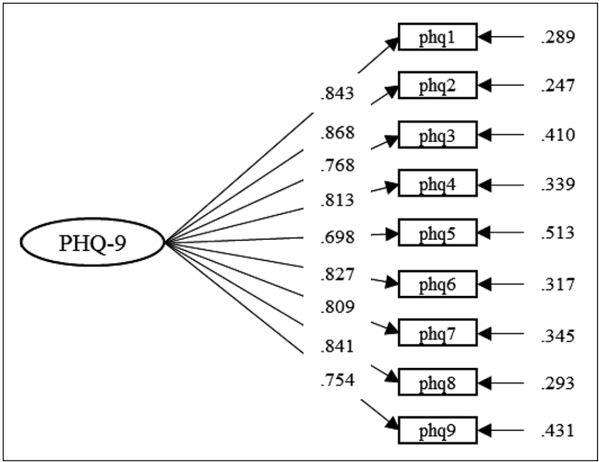
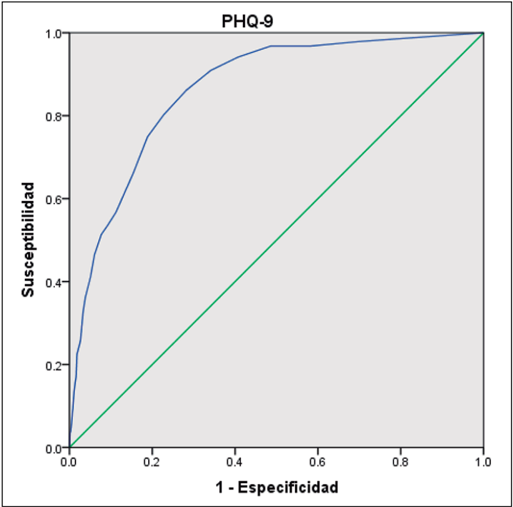
BACKGROUND: Simple and brief questionnaires with adequate psychometric properties are useful for the early detection of depressive disorders. AIM: To analyze the psychometric behavior of the Patient Health Questionnaire (PHQ-9) in Chile. MATERIAL AND METHODS: Data were collected from 1,738 adult patients, consulting in primary health care centers. The values obtained in the PHQ-9 were compared with those of the Composite International Diagnostic Interview (CIDI). RESULTS: The mean score of PHQ-9 was 4.85 ± 5.57. Internal consistency indices were high. McDonald's ω coefficient of was 0.90 and Cronbach alpha 0.89. A confirmatory factor analysis showed a good fit of the one-dimensional model. Using a cutoff score of seven determined with the receiver operating characteristic (ROC) curve, the sensitivity and specificity of the instrument were 0.8 and 0.7, when compared with CIDI diagnoses. CONCLUSIONS: PHQ-9 is a useful instrument for the screening of depressive disorders in primary health care centers in Chile.
Overview
The claims and statistics of this paper haven’t been checked yet.
Free: it reads the open-access text and checks the first 5 claims that cite a source we can check. Create a free account to check every claim.
Integrity signals
Registry
Cites
Statistics
Figures
Verification
Claims the paper makes
The claims and statistics of this paper haven’t been checked yet.
Free: it reads the open-access text and checks the first 5 claims that cite a source we can check. Create a free account to check every claim.
Claims other papers make about this one
Each is checked against this paper’s own text: does it say what the citing paper says it does?
The cited source says what the claim attributes to it.
In the citing paper
“The Spanish version (Diez-Quevedo et al., 2001) has been validated in Chile, showing good psychometric properties (Baader et al., 2012; Saldivia et al., 2019).”
From App-based intervention for reducing depressive symptoms in postpartum women: Protocol for a feasibility randomized controlled trial (2023) · cites this paper as Saldivia et al., 2019
Self-check
Percentages, sums and reported differences re-computed from the paper’s own numbers.
The self-check needs the paper’s full text.
Citations
Cites
Confirmatory factor analysis for applied research
(2007) · Choice Reviews Online · doi:10.5860/choice.44-2769 · Cited by 15,614
Vos, T., Barber, R. M., Bell, B., Bertozzi-Villa, A., Biryukov, S., Bolliger, I., Charlson, F., Davis, A., Degenhardt, L., Dicker, D., et al. (2015) · The Lancet · doi:10.1016/s0140-6736(15)60692-4 · Cited by 6,414
The PHQ-8 as a measure of current depression in the general population
Kroenke, K., Strine, T. W., Spitzer, R. L., Williams, J. B. W., Berry, J. T., & Mokdad, A. H. (2009) · Journal of Affective Disorders · doi:10.1016/j.jad.2008.06.026 · Cited by 5,121
Kroenke, K., Spitzer, R. L., Williams, J. B. W., & Löwe, B. (2010) · General Hospital Psychiatry · doi:10.1016/j.genhosppsych.2010.03.006 · Cited by 4,057
Diagnostic and Statistical Manual of Mental Disorders
Siegel, L. J., & Fletcher‐Janzen, E. (2014) · Encyclopedia of Special Education · doi:10.1002/9781118660584.ese0728 · Cited by 3,423
Haslwanter, T. (2016) · Statistics and Computing · doi:10.1007/978-3-319-28316-6_12 · Cited by 3,094
Robins, L. N. (1988) · Archives of General Psychiatry · doi:10.1001/archpsyc.1988.01800360017003 · Cited by 2,909
Health Measurement Scales: A Practical Guide to Their Development and Use
Vogelzang, J. L. (2015) · Journal of Nutrition Education and Behavior · doi:10.1016/j.jneb.2015.03.007 · Cited by 2,337
Manea, L., Gilbody, S., & McMillan, D. (2012) · Canadian Medical Association Journal · doi:10.1503/cmaj.110829 · Cited by 1,966
Clinical diagnosis of depression in primary care: a meta-analysis
Mitchell, A. J., Vaze, A., & Rao, S. (2009) · The Lancet · doi:10.1016/s0140-6736(09)60879-5 · Cited by 1,251
Research works printed but not linked: 9
- Cano A, Salguero JM, Wood C, Dongil E, Latorre JM. La sepresión en atención primaria: prevalencia, diagnóstico y tratamiento. Papeles del Psicólogo 2012; 33 (1): 2-11.
- Castañón SC, Pinto LJ. Mejorando la pesquisa de depre- sión posparto a través de un instrumento de tamizaje, la escala de depresión posparto de Edimburgo. Rev Med Chile 2008; 136: 851-8.
- Kroenke K, Spitzer RL, Williams JBW. The PHQ-9: Validity of a brief depression severity measure. J Gen Intern Med 2001 (16): 606-13.
- Baader T, Molina JL, Venezian S, Rojas C, Farías R, Fierro-Freixenet C, et al. Validación y utilidad de la encuesta PHQ-9 (Patient Health Questionnaire) en el diagnóstico de depresión en pacientes usuarios de aten- ción primaria en Chile. Rev Chil Neuro Psquiat 2012; 50 (1): 10-22.
- King M, Walker C, Levy G, Bottomley C, Royston P, Weich S, et al. Development and validation of an inter- national risk prediction algorithm for episodes of major depression in general practice attendees: the PredictD study. Arch Gen Psychiatry 2008; 65 (12): 1368-76.
- Saldivia S, Vicente B, Marston L, Melipillán R, Nazareth I, Bellón-Saameño J, et al. Desarrollo y validación de un algoritmo para predecir riesgo de depresión en consul- tantes de atención primaria en Chile. Rev Med Chile 2014; 142: 323-9.
- Vielma M, Vicente B, Rioseco P, Castro N, Torres S. Validación en Chile de la entrevista diagnóstica estan- darizada para estudios epidemiológicos CIDI. Revista de Psiquiatría 1992; 9 (1): 1039-49.
- Muthén LK, Muthén BO. Mplus User's Guide. Eighth Edition. Los Angeles, CA: Muthén & Muthén; 1998- 2017.
- Schantz K, Reighard C, Aikens JE, Aruquipa A, Pinto B, Valverde H, et al. Screening for depression in Andean Latin America: Factor structure and reliability of the CES-D short form and the PHQ-8 among Bolivian public hospital patients. Int J Psychiatry Med 2017; 52 (4-6): 315-27.
Cited by
Huarcaya-Victoria, J., Villarreal-Zegarra, D., Podestà, A., & Luna-Cuadros, M. A. (2022) · International Journal of Mental Health and Addiction · doi:10.1007/s11469-020-00354-5 · Cited by 185
Lamela, D. J. P. D. V., Soreira, C. S. S., Matos, P., & Morais, A. (2020) · Journal of Affective Disorders · doi:10.1016/j.jad.2020.06.066 · Cited by 165
Al-Hawary, S. I. S., & Syasneh, M. S. A. (2020) · Verslas teorija ir praktika · doi:10.3846/btp.2020.11895 · Cited by 153
Herrera, M. S., Elgueta, R., Fernández, M. B., Giacoman, C., Leal, D., Marshall, P., Acuña, M. R., & Bustamante, F. (2021) · BMC Geriatrics · doi:10.1186/s12877-021-02110-3 · Cited by 146
“This questionnaire has been validated in Chile in a sample of adults from primary care centers [30].”
MethodPaz, C., Mascialino, G., Adana-Díaz, L., Rodríguez-Lorenzana, A., Simbaña-Rivera, K., Gómez-Barreno, L., Troya, M., Paez, M. I., Cárdenas, J., Gerstner, R. M., et al. (2020) · PLOS ONE · doi:10.1371/journal.pone.0240008 · Cited by 60
“89) with the original version, was used in the present study [26].”
MethodMartinez, A. P., Teklu, S., Tahir, P., & Garcia, M. E. (2023) · JAMA Network Open · doi:10.1001/jamanetworkopen.2023.36529 · Cited by 62
Gender differences in positive screen for depression and diagnosis among older adults in Chile
Moreno, H., Jean Gajardo, J., & Monsalves, M. J. (2022) · BMC Geriatrics · doi:10.1186/s12877-022-02751-y · Cited by 56
“This instrument has performed well as a screening test for depression in primary care among adults [27] and older population [28] in Chile.”
MethodErrázuriz, A., Beltrán, R., Torres, R., & Passi‐Solar, Á. (2022) · International Journal of Environmental Research and Public Health · doi:10.3390/ijerph192113975 · Cited by 56
“Its psychometric properties and convergent validity with a structured clinical interview as a reference gold standard have been documented in clinical settings in Argentina [11,12], Colombia [13], Peru [14], and Chile [15,16] and its factor structure has been studied among several non-clinical subpopulations: college…”
BackgroundResultHuarcaya-Victoria, J., Elera-Fitzcarrald, C., Crisol-Deza, D. A., Villanueva-Zúñiga, L., Pacherres-López, A., Torres, A., Huertas, G., Calderón, D., Noriega-Baella, C., Astonitas, E., et al. (2021) · Revista Colombiana de Psiquiatría · doi:10.1016/j.rcp.2021.06.002 · Cited by 62
Varela, J. J., Hernández, C., Miranda, R., Barlett, C. P., & Rodríguez‐Rivas, M. E. (2022) · International Journal of Environmental Research and Public Health · doi:10.3390/ijerph19105886 · Cited by 51
“84 and a sensitivity and specificity of 88% and 92%, respectively [63].”
BackgroundPsychometric Properties of the Patient Health Questionnaire-9 in Elderly Chilean Primary Care Users
Aslan, J., Félix Cova, S., Saldivia, S., Bustos, C., Inostroza, C., Rincón, P., Ortiz, C., & Vasily Buhring, S. (2020) · Frontiers in Psychiatry · doi:10.3389/fpsyt.2020.555011 · Cited by 45
“However, it was slightly higher than that observed in the only Chilean epidemiological study of national scope, where the 12-month prevalence of MDD in the general population was 2.9% in those over 65 years of age, 1.6% among those of 65–75 and higher than 5.2% after 75 (4).”
BackgroundMethodInfluentialSelf-citationAjele, K. W., & Idemudia, E. S. (2025) · Discover Mental Health · doi:10.1007/s44192-025-00181-x · Cited by 40
“Various adaptations of the PHQ-9 were used, including English [4, 28, 45], Spanish [42, 48], Chinese [29, 31, 51], and Quechua [20, 34].”
Scoppetta, O., Cassiani-Miranda, C. A., Arocha-Díaz, K. N., Cabanzo-Arenas, D. F., & Campo‐Arias, A. (2020) · Journal of Affective Disorders · doi:10.1016/j.jad.2020.09.096 · Cited by 44
Huarcaya-Victoria, J., Barreto, J., Aire, L., Podestà, Á., Caqui, M., Guija-Igreda, R., Castillo, C., & Alarcon-Ruiz, C. A. (2021) · International Journal of Mental Health and Addiction · doi:10.1007/s11469-021-00659-z · Cited by 37
“In studies carried out in Latin America, PHQ-9 was proven as a valid and reliable tool to detect depressive symptoms in various types of populations (Cassiani-Miranda et al., 2017; Saldivia et al., 2019).”
MethodThe relationship between BMI and depression: a cross-sectional study
Cui, H., Xiong, Y., Wang, C., Ye, J., & Zhao, W. (2024) · Frontiers in Psychiatry · doi:10.3389/fpsyt.2024.1410782 · Cited by 36
Guerra, V., López-Núñez, C., Vaca, S., & Torres-Carrión, P. (2022) · Frontiers in Psychology · doi:10.3389/fpsyg.2022.813894 · Cited by 35
Varela, J. J., Hernández, C., Berger, C., de Souza, S. B., & Pacheco, E. (2022) · Computers in Human Behavior · doi:10.1016/j.chb.2022.107268 · Cited by 32
Rumbo-Rodríguez, L., Zaragoza-Martí, A., Sánchez‐SanSegundo, M., Ferrer‐Cascales, R., Laguna-Pérez, A., & Sánchez, J. A. H. (2022) · Nutrients · doi:10.3390/nu14224762 · Cited by 28
“The total score of the questionnaire ranges from 0 to 27, and the cut-off points of 5, 10, 15, and 20 allow the severity of the symptoms to be classified as follows: 0–4 (minimal), 5–9 (mild), 10–14 (moderate), 15–19 (moderate to severe), and 20–27 (severe) [27,28].”
BackgroundMora, M. N. C., Hoyos, C. A. A., Hurtado, A. F. V., & Velasco, S. J. J. (2022) · CES Medicina · doi:10.21615/cesmedicina.6700 · Cited by 24
Huarcaya-Victoria, J., Villarreal-Rao, B., Luna, M., Rojas-Mendoza, W. N., Alarcon-Ruiz, C. A., Villarreal‐Zegarra, D., Vilela-Estrada, A. L., & Ramírez, S. (2022) · International Journal of Environmental Research and Public Health · doi:10.3390/ijerph19095346 · Cited by 26
“Studies that use the PHQ-9 in Latin America have identified this as a valid and reliable tool for detecting depressive symptoms in various populations [36,37].”
MethodHuarcaya-Victoria, J., & Calle-Gonzáles, R. (2020) · Educación Médica · doi:10.1016/j.edumed.2020.01.006 · Cited by 23
Prevalencia de ansiedad, depresión y miedo a la COVID-19 en la población general salvadoreña
Chacón-Andrade, E. R., Lobos-Rivera, M. E., Cervigni, M., Gallegos, M., Martino, P., Caycho‐Rodríguez, T., Barés, I., Calandra, M., & Flores-Monterrosa, A. N. (2020) · Entorno · doi:10.5377/entorno.v0i70.10373 · Cited by 34
Valladares-Garrido, M. J., León‐Figueroa, D. A., Dawson, F. M., Burga-Cachay, S. C., Fernandez-Canani, M. A., Failoc‐Rojas, V. E., Pereira-Victorio, C. J., Valladares-Garrido, D., & Inga-Berrospi, F. (2023) · Frontiers in Psychiatry · doi:10.3389/fpsyt.2023.1169247 · Cited by 21
“Depressive symptomatology (PHQ-9) This questionnaire consists of 9 questions, each of which is evaluated on a Likert scale from 0 (never) to 1 (some days), 2 (more than half of the days) and 3 (almost every day), with a possible range of total scores from 0 to 27 (50, 51).”
BackgroundCjuno, J., Guerrero, F. C. J., Oruro, Y., Cruz-Mendoza, F., Auccatoma-Quispe, A., Hurtado, H. G., Peralta-Álvarez, F., & Bazo‐Alvarez, J. C. (2023) · Revista Peruana de Medicina Experimental y Salud Pública · doi:10.17843/rpmesp.2023.403.12571 · Cited by 19
Rosario-Hernández, E., Rovira-Millán, L. V., Merino‐Soto, C., & Angulo-Ramos, M. (2023) · Frontiers in Psychiatry · doi:10.3389/fpsyt.2023.1024676 · Cited by 20
“The results of this brief systematic review are unexpected in terms of estimators because there is literature that claims, for instance, that the WLSMV estimator performs better when there are inter-item polychoric correlations when items are treated as categorical variables [e.g., (39, 40)].”
MethodResultPérez, J. C., Fernández, O., Cáceres, C., Carrasco, A. S., Moessner, M., Bauer, S., Espinosa-Duque, D., Gloger, S., & Krause, M. (2021) · JMIR Mental Health · doi:10.2196/26814 · Cited by 19
Fernández, M. B., & Rosell, J. (2021) · Journal of Religion and Health · doi:10.1007/s10943-021-01442-z · Cited by 18
Gutiérrez, C., Nieto, L. R. D. L. R., Lárraga, L. V. L., & Treviño, M. G. E. V. (2024) · SANUS · doi:10.36789/revsanus.vi1.399 · Cited by 16
Quiñonez-Freire, C., Vara, M. D., Tomás, J. M., & Baños, R. M. (2022) · Revista Latinoamericana de Psicología · doi:10.14349/rlp.2021.v53.23 · Cited by 21
Bazo‐Alvarez, J. C., Aparicio, A. R. O., Robles-Mariños, R., Guerrero, F. C. J., Hurtado, H. G., Bazo-Alvarez, O. A., & Cjuno, J. (2024) · BMC Public Health · doi:10.1186/s12889-023-17566-8 · Cited by 17
“The conclusion of optimal reliability reported here is consistent with the findings from other studies in Spanish speakers -with a similar sociocultural context—such as Peru α = 0.870 and ω = 0.870 [1], Ecuador α = 0.852 and ω = 0.855 [37] or Chile α = 0.891 and ω = 0.896 [38].”
ResultInfluentialVillalón, F., Moreno, M. I., Rivera, R. M., Venegas, W. G., C., J. V. A., Soto, A., & Pemjean, A. (2023) · Mindfulness · doi:10.1007/s12671-023-02159-8 · Cited by 15
“It has been translated and validated in Spanish and Chilean populations (Baader et al., 2012; Saldivia et al., 2019).”
MethodNew cut-off points of PHQ-9 and its variants, in Costa Rica: a nationwide observational study
González-Sánchez, A., Moreno, R. O., Barahona, G. V., Vargas, E. C., Arias‐LeClaire, H., & Vicente‐Galindo, P. (2023) · Scientific Reports · doi:10.1038/s41598-023-41560-0 · Cited by 13
Huarcaya-Victoria, J., Alarcon-Ruiz, C. A., Barzola-Farfán, W. A., Cruzalegui‐Bazán, C., Cabrejos-Espinoza, M., Aspilcueta-Montoya, G., Cornero-Quispe, F., Salazar-Bellido, J., & Villarreal, B. (2022) · Quality of Life Research · doi:10.1007/s11136-022-03208-w · Cited by 15
“We considered moderate, moderately severe, or severe depression symptoms as clinically relevant depression symptoms [30, 31].”
BackgroundHuarcaya-Victoria, J., Elera‐Fitzcarrald, C., Crisol-Deza, D. A., Villanueva-Zúñiga, L., Pacherres-López, A., Torres, A., Huertas, G., Calderón-Solano, D., Noriega-Baella, C., Astonitas, E., et al. (2023) · Revista Colombiana de Psiquiatría (English ed ) · doi:10.1016/j.rcpeng.2021.06.014 · Cited by 16
Pérez-Herrera, L. C., Moreno, S., Peñaranda, D., García, I. C. P., García, E., Rojas, G. F. C., Chapman, E., & Augusto Peñaranda, S. (2021) · International Forum of Allergy & Rhinology · doi:10.1002/alr.22831 · Cited by 10
Fortunatti, C. P., Silva, N. R., Palmeiro-Silva, Y. K., Canales, D. M., Veloso, G. G., Acuña, J. E., & Dois, A. (2023) · Intensive and Critical Care Nursing · doi:10.1016/j.iccn.2023.103386 · Cited by 10
Agyapong, B., Shalaby, R., Eboreime, E., Hay, K., Pattison, R., Korthuis, M., Wei, Y., & Agyapong, V. I. O. (2024) · Journal of Clinical Medicine · doi:10.3390/jcm13020580 · Cited by 10
“With respect to psychometric properties of the self-rated scales, the following Cronbach’s alpha has been reported: GAD-7 scale (0.77 for university students) [31], PHQ-9 (0.89 for the general public) [32], PCL-C (>0.70 for adolescents) [33] and BRS (0.78 for health workers) [34].”
MethodInfluentialMarcos-Escobar, G., Gómez, M. E., & Unanue, W. (2025) · Frontiers in Psychology · doi:10.3389/fpsyg.2025.1668518 · Cited by 9
“Additional Chilean studies have further supported its psychometric performance, including Saldivia et al. (2019) in primary care patients and Borghero et al. (2018) in adolescents ( α = 0.86).”
InfluentialCompte, E. J., Cruzat‐Mandich, C., Ríos, L. P., Vásquez, S. R., Gómez, N., & Trujillo, E. (2022) · International Journal of Eating Disorders · doi:10.1002/eat.23860 · Cited by 8
Siteneski, A., Mieles, V. S. G., Riaño, P. A. R., Escobar, K. M., Lapo‐Talledo, G. J., Dueñas-Rodriguez, A. V., Cedeño, M. A. P., Lascano, Y. C. V., & Zurita, L. (2024) · International Journal of Social Psychiatry · doi:10.1177/00207640241260017 · Cited by 8
Romero-Cabrera, A. B., Lindo-Cavero, A., Villarreal‐Zegarra, D., Rodriguez, V., Luna-Matos, M., Rojas-Mendoza, W. N., Huarcaya-Victoria, J., Cuzcano-Gonzales, K. V., Gonzales-Gavancho, C., & Alarcon-Ruiz, C. A. (2023) · Heliyon · doi:10.1016/j.heliyon.2023.e23327 · Cited by 9
“Depressive symptoms are categorized into five categories: Normal (0 – 4 points), Mild (5 – 9 points), Moderate (10 – 14 points), Moderate - severe (15 – 19 points), and Severe (20 – 27 points) [34,35].”
Vaccarezza, S., Opazo, S., Mundt, A. P., Cortázar, A., & Errázuriz, P. (2024) · Counselling and Psychotherapy Research · doi:10.1002/capr.12866 · Cited by 7
Gendered patterns of mental health in STEM higher education: A cluster and regression approach
Valenzuela, F. E. B. (2025) · British Educational Research Journal · doi:10.1002/berj.4214 · Cited by 8
Efectos psicológicos del confinamiento social por COVID-19 en la población hondureña
Abate-Flores, C., Urtecho-Osorto, Ó. R., & Agüero-Flores, M. (2020) · Revista Ciencia y Tecnología · doi:10.5377/rct.v13i25.10409 · Cited by 7
“Este instrumento está basado en los criterios del DSM-IV para diagnosticar el episodio depresivo mayor (Saldivia et al. 2019).”
BackgroundFranco, P., Olhaberry, M., Cuijpers, P., Kelders, S., & Muzard, A. (2023) · Internet Interventions · doi:10.1016/j.invent.2023.100616 · Cited by 6
Peña-Roa, P., González, S. V., Cancino, M., & Terán-Mendoza, O. (2024) · Enfermería Global · doi:10.6018/eglobal.573161 · Cited by 11
Püschel, K., Arancibia, V., Rioseco, A., Paz, S., Soto, M. G., Martínez-Gutiérrez, J., Faundez, M., Acevedo, F., Biase, F. D., Emery, J. D., et al. (2025) · BMJ Open · doi:10.1136/bmjopen-2024-097015 · Cited by 6
Landa–Blanco, M., Mejía-Sánchez, R., Echenique, Y., Reyes-Murillo, D., Recarte, L. M. M., Neves, C., Mendoza, E. M. F., & Castillo-Díaz, M. A. (2025) · Behavioral Sciences · doi:10.3390/bs15111546 · Cited by 6
“Studies in Latin America have found it is a reliable instrument to use in this population (López-Guerra et al., 2022; Errazuriz et al., 2022; Campo-Arias et al., 2023; Saldivia et al., 2019).”
Psychological Distress in the Galapagos Islands During the COVID-19 Pandemic
Paz, C., Abiuso, T., Díaz, L. A., Rodríguez‐Lorenzana, A., Jaramillo-Vivanco, T., Ortiz‐Prado, E., Monge, I. P., & Mascialino, G. (2022) · International Journal of Public Health · doi:10.3389/ijph.2022.1604366 · Cited by 6
Chequeo preventivo basado en la evidencia
Plaza, M., Galán, S. M., & Cordero, M. J. (2021) · Revista Médica Clínica Las Condes · doi:10.1016/j.rmclc.2021.06.002 · Cited by 8
Huarcaya-Victoria, J., Podestà, Á., & Rojas-Mendoza, W. N. (2022) · International Journal of Mental Health and Addiction · doi:10.1007/s11469-022-00804-2 · Cited by 7
“In studies carried out in Latin America, PHQ-9 has been proven to be a valid and reliable tool for detecting depressive symptoms in various types of populations (Cassiani-Miranda et al., 2017; Saldivia et al., 2019).”
MethodRegional and gender disparities in depression and late life expectancy in Chile
Rueda-Salazar, S., Miranda‐Castillo, C., & Araya, A.-X. (2025) · Social Psychiatry and Psychiatric Epidemiology · doi:10.1007/s00127-025-02883-7 · Cited by 5
González-Alcorta, C. B., Alcorta-Garza, A., Sánchez, D. R., Soto-Martínez, B. A., Alcorta-Núñez, F., Reynoso, I. L. G., Sierra, P. A. L., González-Guerrero, J. F., & Vidal-Gutiérrez, Ó. (2025) · Frontiers in Medicine · doi:10.3389/fmed.2025.1584141 · Cited by 5
Castañeda, C. D. D. L., & Diaz‐Castro, L. (2025) · Frontiers in Psychology · doi:10.3389/fpsyg.2025.1634804 · Cited by 5
Cuestionario de Salud del Paciente (PHQ-9): Evidencias psicométricas en universitarios piuranos
Vilela, G. L. A., & Zapata, V. N. V. N. T. (2021) · PSIQUEMAG/ Revista Científica Digital de Psicología · doi:10.18050/psiquemag.v10i1.2745 · Cited by 5
Augusto Peñaranda, S., García, E., Pérez-Herrera, L. C., Trojan, A., Peñaranda, D., Molina, J. D. D., & Moreno, S. (2022) · BMC Psychiatry · doi:10.1186/s12888-022-04337-9 · Cited by 6
Effects of Transition from Remote to In-Person Learning in University Students: A Longitudinal Study
Siteneski, A., de la Cruz-Velez, M., Escobar, K. M., Ospina, P. D., Fonseca–Restrepo, C., Barreiro-Linzán, M. D., García, G. A. C., & Gil‐Mohapel, J. (2024) · European Journal of Investigation in Health Psychology and Education · doi:10.3390/ejihpe14060118 · Cited by 5
Olhaberry, M., Morán, J., Sieverson, C., Costa‐Cordella, S., Muzard, A., Honorato, C., León, M. J., & Leyton, F. (2024) · Infant Mental Health Journal · doi:10.1002/imhj.22154 · Cited by 5
Inostroza, C., Concha, Á., Saldivia, S., Félix Cova, S., Bustos, C., & Aslan, J. (2023) · Terapia psicológica · doi:10.4067/s0718-48082023000200233 · Cited by 8
Self-citationGilsbach, S., Leuchtenberger, J., Herpertz‐Dahlmann, B., Voderholzer, U., Konrad, K., von Polier, G. G., Seitz, J., & Fichter, M. (2025) · Eating and Weight Disorders - Studies on Anorexia Bulimia and Obesity · doi:10.1007/s40519-025-01713-8 · Cited by 6
“Other mental pathologies were excluded by administering parts of the SCID-I [26] and the German version of the Patient Health Questionnaire [27].”
Jindal, M., Jambunathan, P., Patra, P., & Madhusudan, T. (2020) · Journal of Marine Medical Society · doi:10.4103/jmms.jmms_44_20 · Cited by 5
Barriers to Obstetric Prenatal Care Among Pregnant Women at Risk for Dual Pathology
Caro‐Cañizares, I., Camacho, R. C., Mariño, C. V., Carpintero, N. L., & Baca‐García, E. (2022) · International Journal of Mental Health and Addiction · doi:10.1007/s11469-022-00829-7 · Cited by 5
Rojas, F., Bravo, C., Miranda, R., Varela, J., & Pacheco, E. (2024) · Revista médica de Chile · doi:10.4067/s0034-98872024000400435 · Cited by 3
Gallardo-Peralta, L. P., & Fernández, M. B. (2022) · Religions · doi:10.3390/rel13010076 · Cited by 3
“This questionnaire has been validated in Chile for a sample of adults at primary care centres (Saldivia et al. 2019).”
MethodVaquero, C., González‐Sánchez, J., Alonso‐Domínguez, R., Garcia-Yu, I. A., Sánchez‐Aguadero, N., Sedano, A. C., Rihuete-Galve, M. I., & Recio-Rodriguez, J. I. (2025) · BMJ Open · doi:10.1136/bmjopen-2025-103094 · Cited by 2
Bravo-Rojas, G., Castellucci, H. I., Fuentes‐García, A., & Méndez, I. (2026) · BMC Public Health · doi:10.1186/s12889-025-25787-2 · Cited by 2
Toro, S. M. C., Jurado-Delgado, J., Meneses-Bernal, J. F., Escudero, J. M. S., & Santamaría‐García, H. A. (2023) · Journal of Alzheimer s Disease · doi:10.3233/jad-230266 · Cited by 2
Propiedades psicométricas del cuestionario de salud del paciente (PHQ-9) en universitarios de Lima
Gómez, J. C. A., Calderón, N. G. C., Talla, K., & Conza, B. B. B. (2023) · Revista de Psicología · doi:10.36901/psicologia.v12i2.1573 · Cited by 2
Martínez, F. T., Taramasco, C., Espinoza, M., Acevedo, J., Goic, C., & Nervi, B. (2024) · Diagnostics · doi:10.3390/diagnostics14060619 · Cited by 2
“EQ-5D [27,28] PHQ-9 [29] Allows for self-perception of health reporting through measures validated in Patient-Reported Outcome Measures (PROMs) and Patient-Reported Experience Measures (PREMs).”
MethodDesvelando la Depresión post-COVID: Un estudio de caso sobre la cara oculta de la pandemia
Universidad Laica Eloy Alfaro de Manabí, M., Mero, N. A. V., Borroto, C. E. H., Integra Médica S.A. Santiago de Chile, C., Plana, Y. M., Universidad Laica Eloy Alfaro de Manabí, M., Solórzano, V. A. F., Universidad Laica Eloy Alfaro de Manabí, M., Reinado, K. V. C., & Universidad Laica Eloy Alfaro de Manabí, M. (2024) · Polo del Conocimiento · doi:10.23857/pc.v9i8.7843 · Cited by 2
Augusto Peñaranda, S., Moreno, S., Peñaranda, D., & Pérez-Herrera, L. C. (2022) · Frontiers in Public Health · doi:10.3389/fpubh.2022.735073 · Cited by 2
Dillon, C., Leis, A., Castro, D. M., García, V., Zegarra, C., Leguizamon, P. P., Feldman, M. L., Laspiur, S. D., Viaggio, M. B., & Peralta, C. (2022) · Neurología Argentina · doi:10.1016/j.neuarg.2022.06.001 · Cited by 1
Castro, V. D. C. B., Lagos, S. C., Mendoza, C. H., Retamal, A. E., Vera, Y., & Mariñám, V. T. (2023) · Intervención · doi:10.53689/int.v13i1.171 · Cited by 1
Ramírez, J., Lermanda, V., Aguirre, A., Villarroel, S., Burrone, M. S., Carrera, V., Castañeda, F., Alvarado, R., & Bedregal, P. (2024) · Medwave · doi:10.5867/medwave.2024.07.2952 · Cited by 1
Valladares-Garrido, M. J., Culquichicón, C., Reto, M. S., Valladares-Garrido, D., Vera-Ponce, V. J., Pereira-Victorio, C. J., Failoc‐Rojas, V. E., Zila-Velasque, J. P., Díaz-Vélez, C., & Acuña, W. L. (2025) · Frontiers in Psychiatry · doi:10.3389/fpsyt.2025.1616381 · Cited by 1
Depresión, insomnio y consumo de sustancias psicoactivas en personal de enfermería de área COVID-19
Gutiérrez, C. A. C., Nieto, L. R. D. L. R., Treviño, M. G. E. V., Lárraga, L. V. L., Santos, F. C., & Méndez-Ruíz, M. D. (2025) · Horizonte Sanitario · doi:10.19136/hs.a24.1.5853 · Cited by 1
Borbor-Cordova, M. J., Searles, M. P., Roa-López, H., Cornejo-Rodriguez, M. D. P., Castillo, K., Orellana‐Manzano, A., & Campagna, C. D. (2026) · PLoS ONE · doi:10.1371/journal.pone.0343239 · Cited by 2
Paulina Sofía Arango, U., Martín, C. S., & Vergara, R. C. (2026) · Journal of Mental Health Research in Intellectual Disabilities · doi:10.1080/19315864.2026.2681448 · Cited by 2
Bravo-Rojas, G., Castellucci, H. I., Fuentes‐García, A., & Méndez, J. I. (2026) · Frontiers in Public Health · doi:10.3389/fpubh.2026.1917074 · Cited by 1
“The main outcomes of interest were depressive symptoms, psychological distress, and perceived workplace discrimination, assessed as follows: .5 Depressive symptoms Depressive symptoms were assessed using the Patient Health Questionnaire-9 (PHQ-9), which has been previously validated in Chile (14).”
Reinel, M., Quevedo, Y., Hernández, C., Miño, V., & Rojas, A. (2022) · Journal of Substance Use · doi:10.1080/14659891.2021.2018730 · Cited by 1
“Importantly, 32% of the sample scored 7 or more in the PHQ9, which is the cutoff of the instrument for the Chilean population (Saldivia et al., 2019).”
BackgroundFernández, M. B., Miranda‐Castillo, C., Rosell, J., & Herrera, M. S. (2024) · International Journal of Care and Caring · doi:10.1332/23978821y2024d000000026 · Cited by 3
Huarcaya-Victoria, J., Carrillo, J. F. S., Cabrejos-Espinoza, M., Ponce-Pantigoso, M., Broncano-Rivera, K., & Loarte-Cabrera, A. (2025) · BMC Psychiatry · doi:10.1186/s12888-025-06480-5 · Cited by 1
Díaz, B. C., Gallardo-Peralta, L. P., Araya, A.-X., Herrera, M. S., Pedrero, V., & Daza, D. S. (2025) · Geriatric Nursing · doi:10.1016/j.gerinurse.2025.01.040 · Cited by 2
Mejoras psicométricas en la evaluación de la salud pública: depresión en Costa Rica
Sánchez, A. G. (2023) · Gredos (University of Salamanca) · doi:10.14201/gredos.158237 · Cited by 1
Editorial – Mutually holding on in critical times
Pellitteri, M. (2020) · Mutual Images Journal · doi:10.32926/2020.8.pel.edito
Pilataxi, D., Velasco, L., & Fierro, M. (2021) · Revista GICOS
Subsoil effects on superficial fungal growth
Adan, O. C. G. (1991) · TU/e Research Portal
Vitriol, V. G., Cancino, A., Sciolla, A., Guínez-Molinos, S., Calvo, J. V., Ormazábal, M., Kreither, J., Ballesteros, S., & Aylwin, M. D. L. L. (2022) · F1000Research · doi:10.12688/f1000research.75764.1
Revista de psicología volumen 12, número 2, julio - diciembre 2022
Pablo, U. C. S. (2024) · Revista de Psicología · doi:10.36901/psicologia.v12i2.1579
Sistema para el mapeo, control y monitoreo de síntomas depresivos en escolares
Cieza, A. E. G., & Monteza, G. C. (2023) · Universidad Peruana de Ciencias Aplicadas (UPC) · doi:10.19083/tesis/671051
Jiménez, O. G., García, N. B., & González, M. M. L. (2024) · Revista Colombiana de Psiquiatría (English ed ) · doi:10.1016/j.rcp.2024.09.007
García, E. H., Aguirre, M. F. P., & Blitchtein-Winicki, D. (2024) · Investigación e Innovación Clínica y Quirúrgica Pediátrica · doi:10.59594/iicqp.2024.v2n2.88
Garabito, S., & García, F. E. (2024) · Salud Ciencia y Tecnología · doi:10.56294/saludcyt20251237
Funcionalidad familiar y frecuencia de depresión en adultos con obesidad
Estrada, L., Aldaba, M. D. L., Acosta, M. E. H., Mota, J. C., Figueroa, R. I. A., & Ramírez, D. L. C. (2025) · Archivos en Medicina Familiar · doi:10.62514/amf.v27i1.114
Evidencias psicométricas de la versión peruana del Patient Health Questionnaire (PHQ-9)
Quispilaya-Capcha, K. L., Salazar-Álvarez, G., & Robles, E. D. A. (2025) · Revista Psicológica Herediana · doi:10.20453/rph.v16i2.6252
Faúndez, O. A., & Méndez-Bustos, P. (2025) · Cogent Psychology · doi:10.1080/23311908.2025.2480418
Galecio, F. M. D., & Cadenas, A. A. M. (2025) · Universidad Científica del Sur · doi:10.21142/tl.2025.4109
Relationship between Depression and Distress with Age and Gender in Patients with Type 2 Diabetes
Carlos, F. L., Bertha, R. D. R., Santiago, R. S., & Zarkin, E. S. (2025) · Advances in Social Sciences Research Journal · doi:10.14738/assrj.1210.19451
The presence of depression in young people in rural area of northern Sinaloa
Gámez, N. W., Gámez, A. W., Serrano, E. E. V., & Herrera, K. (2025) · Región Científica · doi:10.58763/rc2025521
Algunas alteraciones en la salud mental de docentes mexicanos en condiciones de confinamiento
Almazán, O. M., & González, G. G. (2025) · Psicología Educativa · doi:10.22201/fpsic.24486957e.2025.13.148
Metadata
- Authors
- Saldivia, S., Aslan, J., Cova, F., Vicente, B., Inostroza, C., & Rincón, P.
- Affiliations
- University of Concepción (CL)
- Venue
- Revista médica de Chile
- Published
- 2019
- Volume
- 147
- Issue
- 1
- Pages
- 53-60
- ISSN
- 0034-9887 (ISSN-L)
- OpenAlex
- W2918575569
- Semantic Scholar
- bf8144aa2748e9ce48e4581944445cfc82c1a5a6
- Cited by
- 99
- References
- 27
- Citations by year
- 2026: 8 · 2025: 20 · 2024: 17 · 2023: 15 · 2022: 19 · 2021: 9 · 2020: 10
- FWCI
- 11.19
- Type
- journal article
- Language
- en
- Open access
- diamond
- doi.org
- Licence
- cc-by
- Locations
- Revista médica de Chile (publishedVersion, cc-by)
- PubMed (publishedVersion)
- LA Referencia (Red Federada de Repositorios Institucionales de Publicaciones Científicas) (publishedVersion, other-oa)
- Americanae (AECID Library) (submittedVersion, cc-by)
- Topics
- Social Sciences › Psychology › Experimental and Cognitive Psychology › Anxiety, Depression, Psychometrics, Treatment, Cognitive Processes
- Social Sciences › Decision Sciences › Management Science and Operations Research › Psychometric Methodologies and Testing
- Health Sciences › Medicine › Psychiatry and Mental health › Mental Health Treatment and Access
- Keywords
- PHQ-9, Patient Health Questionnaire, depression screening, depressive disorders, psychometric properties, primary care, Composite International Diagnostic Interview, internal consistency, diagnostic accuracy
- MeSH terms
- Patient Health Questionnaire, Adolescent, Adult, Aged, Depressive Disorder, Factor Analysis, Statistical, Female, Humans, Male, Middle Aged, Primary Health Care, Psychiatric Status Rating Scales, Psychometrics, Reference Values, Sensitivity and Specificity, Severity of Illness Index, Reproducibility of Results, Young Adult
About these checks
Registry, retraction, Cites and statistics results are computed, not judged, with one exception: a printed reference that no index lists is read once by a model before it counts as a citation error. Claims are extracted by a model and kept only when their quote appears verbatim in the text; each cited source is then checked, with a model’s help, for whether it says what the claim relies on. Those verdicts can be wrong — read the claim’s quote and the cited source before relying on one.
Statistics and arithmetic are recomputed, not judged.
Confidence bands are shown only for fields calibrated on our annotated test set. None is calibrated yet, so no band is shown.
What counts as a claim ›How we measure confidence ›How we check this ›
Are you an author, or do you see a problem with this page? Request a review
Data sources
Bibliographic data: Semantic Scholar, OpenAlex, Crossref.
Contains information from the Semantic Scholar Academic Graph Datasets, made available under the ODC Attribution License (ODC-BY 1.0).
Semantic Scholar’s data is described in: Kinney, R., et al. (2023). The Semantic Scholar Open Data Platform. arXiv:2301.10140.
