

REMOVAL OF METHYLENE BLUE FROM AQUEOUS SOLUTION USING ACTIVATED RICE HUSK BIOCHAR: ADSORPTION ISOTHERMS, KINETICS AND ERROR ANALYSIS
Open accessThe DOI matches its Crossref record; 9 of the 9 references it cites were found in a registry or an index.
Abstract
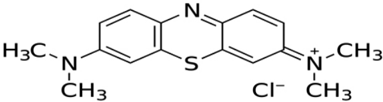
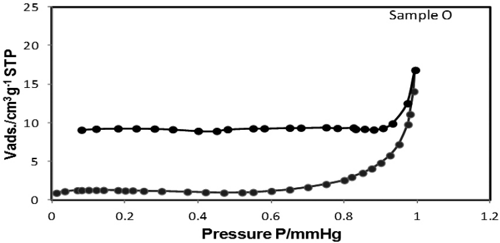
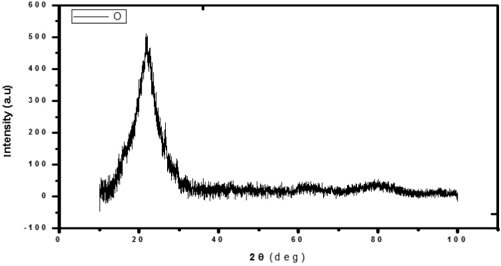
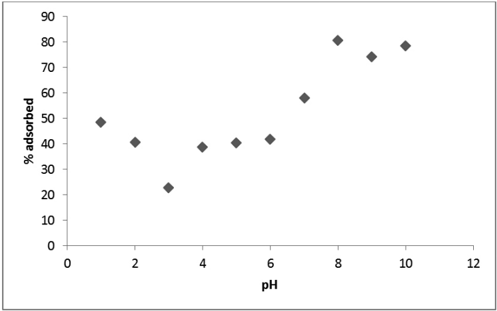
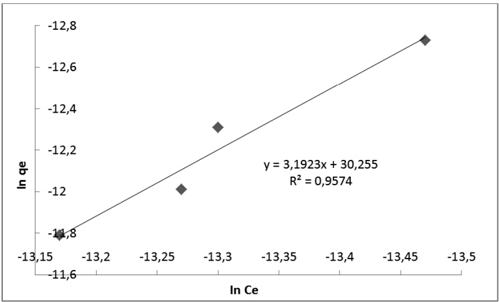
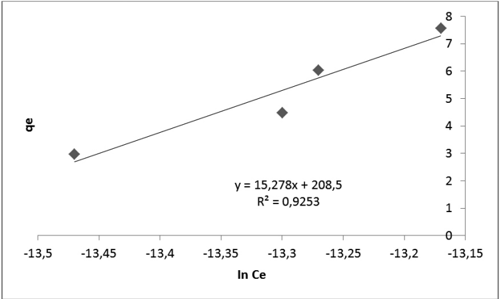
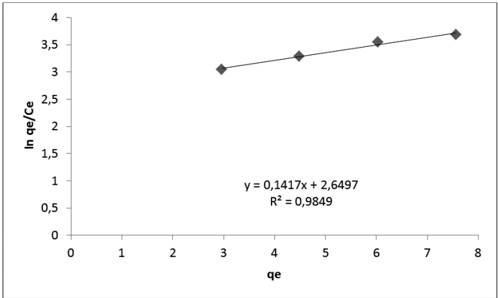
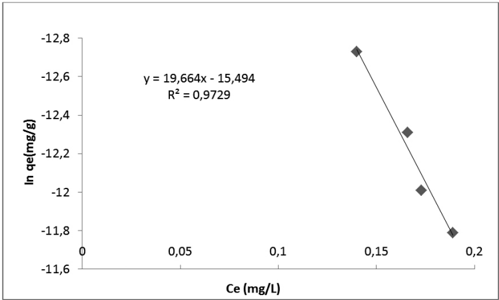
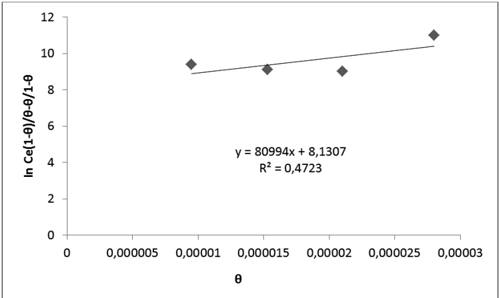
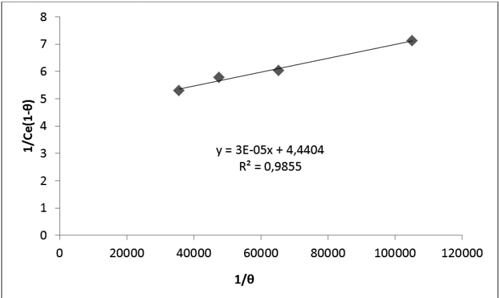
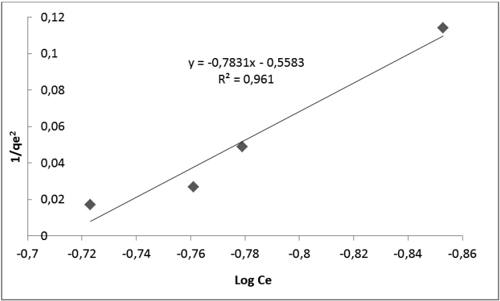
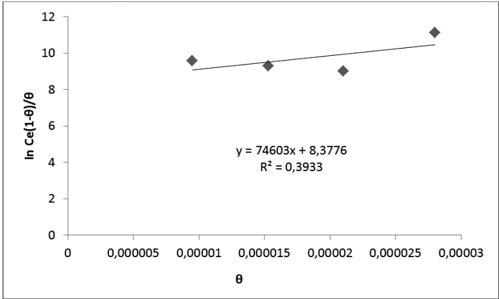
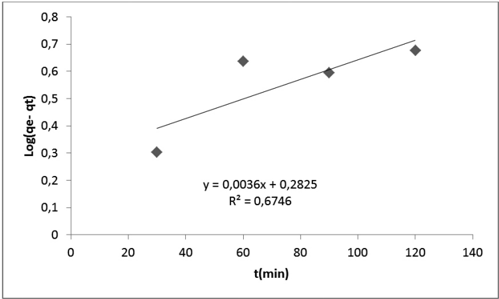
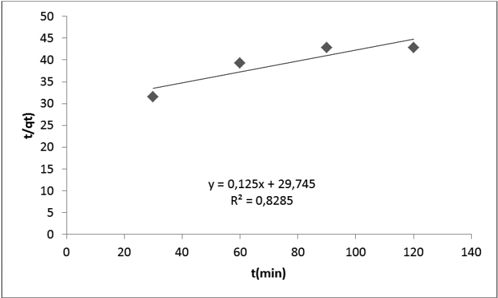
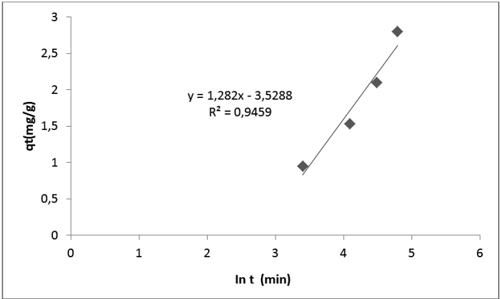
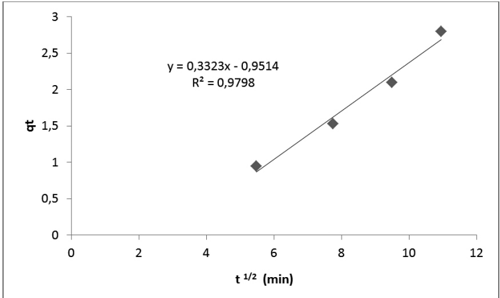
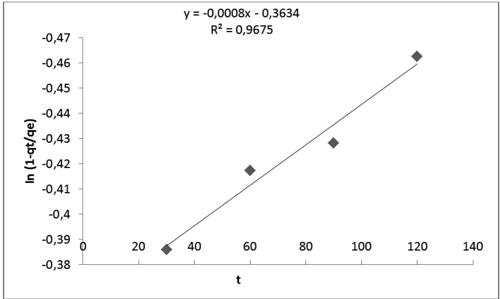
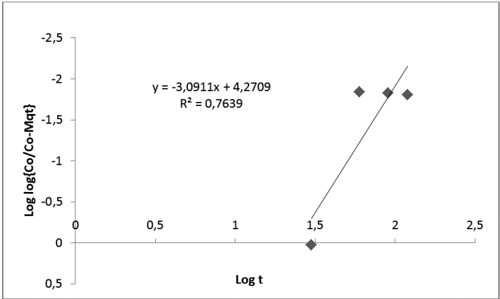
Removal efficiency of methylene blue (MEB) from aqueous media was studied under different experimental conditions of pH, contact time and initial concentration of the adsorbate.Activated rice husk biochar (ARHB) was characterized using BET surface area and XRD.The XRD diffraction indicated amorphous nature of the biochar with pore size (cc/g) and pore surface area (m2/g) of 9.369 and 27.32 respectively from BET surface area plot.Equilibrium isotherm based on coefficient of non-determination indicated the following order as best fit model: Hill ˃ Kiselev ˃Elovic ˃Flory-Huggins > Langmuir > Jovanovic > Harkin-Jura >Freundlich > Henry > Temkin >Redlich Peterson>Durbinin-Kaganer Redushkevich >Hill-de Boer > Fowler-Guggenheim.Based on the highest correlation coefficient and the lowest values of the error functions applied to the kinetic models, Weber and Morris intra-particle diffusion and liquid film diffusion were noted to be in control of the sorption rate.The MEB sorption capacity of the activated biochar was 356.99 mmolkg -1 which was in the range of commercially available activated carbons and other biosorbents.
Overview
The claims and statistics of this paper haven’t been checked yet.
Free: it reads the open-access text and checks the first 5 claims that cite a source we can check. Create a free account to check every claim.
Integrity signals
Registry
Cites
Statistics
Figures
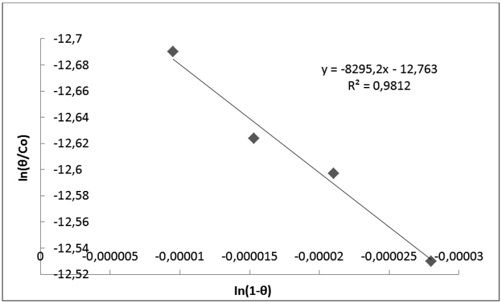
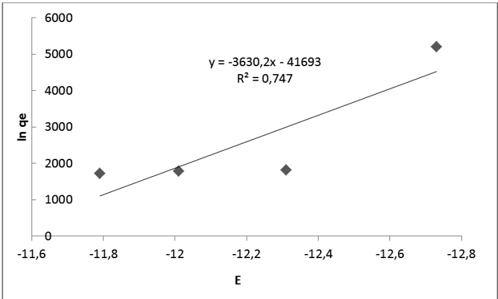
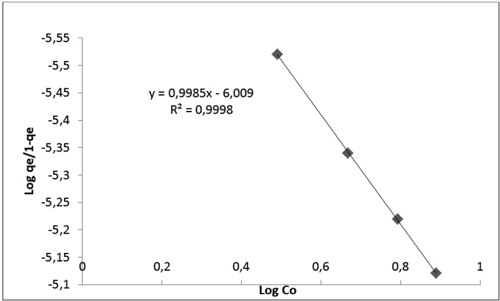
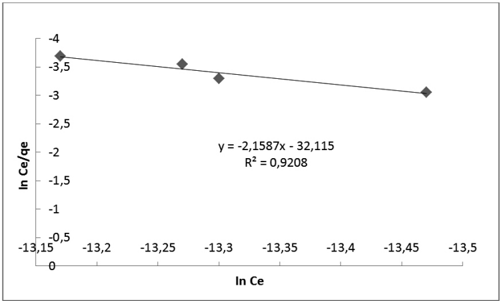
Verification
Claims the paper makes
The claims and statistics of this paper haven’t been checked yet.
Free: it reads the open-access text and checks the first 5 claims that cite a source we can check. Create a free account to check every claim.
Claims other papers make about this one
Each is checked against this paper’s own text: does it say what the citing paper says it does?
The source backs part of the claim, not all of it — or backs it for a different population, condition or comparison.
In the citing paper
“The indiscriminate discharge of heavy metals such as zinc, lead, cadmium through anthropogenic means into the environment has been reported as the major cause of water and soil pollution [1-3].”
From Equilibrium and Kinetic Studies for The Adsorptive Removal of Lead (II) Ions from Aqueous Solution Using Activated Plantain Peel Biochar (2020) · cites this paper as [3]
Experimental — accuracy not yet measuredThe check wasn’t confident either way, so it gives no verdict — never disputed.
In the citing paper
“The decrease could be that the adsorptive sites are saturated until no more exposed surface resulting from intermolecular hydrogen bonding and hence regress in the amount adsorbed [3].”
From Equilibrium and Kinetic Studies for The Adsorptive Removal of Lead (II) Ions from Aqueous Solution Using Activated Plantain Peel Biochar (2020) · cites this paper as [3]
Experimental — accuracy not yet measured
Self-check
Percentages, sums and reported differences re-computed from the paper’s own numbers.
The self-check needs the paper’s full text.
Citations
Cites
Dairy-Manure Derived Biochar Effectively Sorbs Lead and Atrazine
Cao, X., Ma, L., Gao, B., & Harris, W. (2009) · Environmental Science & Technology · doi:10.1021/es803092k · Cited by 1,251
Journal of Analytical and Applied Pyrolysis
Cramers, C. A. (1980) · Journal of Chromatography A · doi:10.1016/s0021-9673(00)81510-1 · Cited by 723
Yao, Y., Gao, B., Inyang, M., Zimmerman, A. R., Cao, X., Pullammanappallil, P., & Yang, L. (2011) · Journal of Hazardous Materials · doi:10.1016/j.jhazmat.2011.03.083 · Cited by 614
International Journal on Environmental Sciences
(2021) · International Journal on Environmental Sciences · doi:10.53390/ijes · Cited by 481
International Journal of Energy and Environment
(2022) · International Journal of Energy and Environment · doi:10.46300/91012 · Cited by 443
International Journal of Environmental Science and Development
(2015) · International Journal of Environmental Science and Development · doi:10.7763/ijesd · Cited by 304
Bulletin de la Société Royale des Sciences de Liège
(2022) · Bulletin de la Société Royale des Sciences de Liège · doi:10.25518/0037-9565 · Cited by 117
British Journal of Applied Science & Technology
(2017) · British Journal of Applied Science & Technology · doi:10.9734/bjast · Cited by 45
The holistic approach to environment
(2019) · The holistic approach to environment · doi:10.33765/thate · Cited by 34
Research works printed but not linked: 11
- S.Banerjee, S, M.C, Chattopadyaya. Arabian Journal of Chemistry. 10,S1629, 2017
- B. Badis, Z. Benmaamar, O. Benkortbi, H. Boutoumi, H. Hamitouche, A. Aggoun, Chemistry Journal of Moldova. General, industrial and Ecological Chemistry. 11,74, 2016.
- N.B. Prakash, V. Sockan, P. Jayakaran. International Journal of Engineering Science and Innovative Technology. 3,479, 2014..
- A. Cesaro, V. Naddeo, V. Belgiorno. Journal of Bioremediation and Biodegradation. 4, 1,2013.
- N.T. Abdel-Ghani, G.A. El-Chaghaby, F.S. Helal. Global Journal of Environmental Science and Mnagement. 2, 209,2016.
- N. Ayawei, A.N. Ebelegi, D. Wankasi. Journal of Chemistry. 3039817. 2017.
- Q. Hamdaoui, E. Naffrechoux. Journal of Hazardous Materials. 147, 381,2007.
- S. Idris, Y.A. Iyaka, M.M. Ndamitso, E.B. Mohammed, M.T. Umar. American Journal of Chemistry. 1, 47.,2017
- C. Chen. The open chem Engineer Journal. 7,24,2013
- T. Elmorsi, Journal of Environmental Protection. 2,362, 2007.
- M. Uchimiya, S. Chang, K.T. Klasson. Journal of Hazard Mater., 190, 432, 2011.
Cited by
Pathak, H. K., Seth, C. S., Chauhan, P. K., Dubey, G., Singh, G., Jain, D., Upadhyay, S. K., Dwivedi, P., & Khoo, K. S. (2024) · Environmental Research · doi:10.1016/j.envres.2024.119136 · Cited by 114
Adsorption of methylene blue (MB) dye on ozone, purified and sonicated sawdust biochars
Eldeeb, T. M., Aigbe, U. O., Ukhurebor, K. E., Onyancha, R. B., El-Nemr, M. A., Hassaan, M. A., Ragab, S., Osibote, O. A., & Nemr, A. E. (2022) · Biomass Conversion and Biorefinery · doi:10.1007/s13399-022-03015-w · Cited by 102
Review of adsorption isotherms models
Danat, B., Wuana, R. A., Chahul, H. F., & Iorungwa, M. S. (2026) · Applied Water Science · doi:10.1007/s13201-025-02682-0 · Cited by 124
“The MEB sorption capacity of the activated biochar was 356.99 mmolkg −1 which was in the range of commercially available activated carbons and other biosorbents (Nworie et al. 2019a, b).”
InfluentialAdsorption of crystal violet dye onto olive leaves powder: Equilibrium and kinetic studiesPreprint
International, C. C. (2021) · OSF Preprints (OSF Preprints) · doi:10.31219/osf.io/c4uqx · Cited by 66
Phytoremediative adsorption methodologies to decontaminate water from dyes and organic pollutants
Kanwal, A., Rehman, R., Imran, M., Samin, G., Jahangir, M. M., & Ali, S. (2023) · RSC Advances · doi:10.1039/d3ra02104a · Cited by 66
Ahmed, H. R., Kayani, K. F., Ealias, A. M., & Aziz, K. H. H. (2025) · Water Air & Soil Pollution · doi:10.1007/s11270-025-07982-4 · Cited by 73
“(12) The Harkin-Jura isotherm model suggests that absor-bents with a heterogeneous pore distribution may exhibit multilayer adsorption on their surface (Nworie et al., 2019).”
Viswanathan, S. P., Neelamury, S. P., Parakkuzhiyil, S., Njazhakunnathu, G. V., Sebastian, A., Padmakumar, B., & Ambatt, T. P. (2020) · Biomass Conversion and Biorefinery · doi:10.1007/s13399-020-00877-w · Cited by 61
Nworie, F. S., Mgbemena, N., Ike-Amadi, A. C., & Ebunoha, J. (2022) · Journal of Human Earth and Future · doi:10.28991/hef-2022-03-03-09 · Cited by 51
Self-citationOkpara, O. G., Ogbeide, O. M., Ike, O. C., Menechukwu, K. C., & Ejike, E. C. (2020) · Toxin Reviews · doi:10.1080/15569543.2020.1802596 · Cited by 49
“Moreover, both positive and negative values of AHJ and BHJ calculated correspond to that reported by Nworie et al. (2019) and Lin et al. (2019).”
ResultUğraşkan, V., Işık, B., & Yazıcı, Ö. (2021) · Chemical Engineering Communications · doi:10.1080/00986445.2021.1948406 · Cited by 46
“According to this energy value, information can be obtained about whether adsorption will take place spontaneously or not (Rangabhashiyam et al. 2018; Nworie et al. 2019).”
BackgroundBiosorption of acid brown 14 dye to mandarin-CO-TETA derived from mandarin peels
Eldeeb, T. M., Aigbe, U. O., Ukhurebor, K. E., Onyancha, R. B., El-Nemr, M. A., Hassaan, M. A., Osibote, O. A., Ragab, S., Okundaye, B., Balogun, V. A., et al. (2022) · Biomass Conversion and Biorefinery · doi:10.1007/s13399-022-02664-1 · Cited by 59
“The TMN model studies the biosorb-ent and pollutant interaction as a chemical adsorption process [75, 85, 86].”
Barman, S. R., Das, P., & Mukhopadhayay, A. (2021) · Fuel · doi:10.1016/j.fuel.2021.121623 · Cited by 43
Lach, J., & Okoniewska, E. (2024) · Molecules · doi:10.3390/molecules29112418 · Cited by 53
“Analysis of the coefficients of different isotherms can provide very different information for characterising adsorption [31,32].”
BackgroundGranular waterworks sludge-biochar composites: Characterization and dye removal application
Nuanhchamnong, C., Kositkanawuth, K., & Wantaneeyakul, N. (2022) · Results in Engineering · doi:10.1016/j.rineng.2022.100451 · Cited by 43
Lach, J., Ociepa-Kubicka, A., & Mrowiec, M. (2021) · Energies · doi:10.3390/en14123481 · Cited by 40
Hawash, H. B. I., Hagar, M., Elkady, M. F., Moneer, A. A., Galhoum, A. A., Attia, N. F., & Kassem, T. S. (2023) · Chemical Engineering Journal · doi:10.1016/j.cej.2023.146019 · Cited by 38
Ghzal, Q., Javed, T., & Batool, M. (2023) · Environmental Science Water Research & Technology · doi:10.1039/d3ew00392b · Cited by 48
Matheri, A. N., Eloko, N. S., Ntuli, F., & Ngila, J. C. (2020) · Case Studies in Chemical and Environmental Engineering · doi:10.1016/j.cscee.2020.100018 · Cited by 37
Ighalo, J. O., & Adeniyi, A. (2020) · Materials International · doi:10.33263/materials22.111116 · Cited by 21
“maize cob [6], rice husk [8, 11] and sawdust [12].”
BackgroundMethodInfluentialUkhurebor, K. E., Hossain, I., Pal, K., Jokthan, G. E., Osang, F. B., Ebrima, F., & Katal, D. (2023) · Topics in Catalysis · doi:10.1007/s11244-023-01817-4 · Cited by 45
Biochar Derived from Water Hyacinth Biomass Chemically Activated for Dye Removal in Aqueous Solution
Carneiro, M. T., Morais, A. Í. S., Melo, A. L. F. D. C., Ferreira, F. J. L., dos Santos, F. E. P., Viana, B. C., Osajima, J. A., Bezerra, R. D. S., Orta, M. M., Peña-Garcia, R. R., et al. (2023) · Sustainability · doi:10.3390/su151914578 · Cited by 32
Yılmaz, M., Koçyiğit, A., Aydoğan, Ş., İncekara, Ü., Şahin, Y., & Kaçuş, H. (2020) · Applied Physics A · doi:10.1007/s00339-020-03828-4 · Cited by 29
Gürkan, E. H., İlyas, B., & Tibet, Y. (2021) · International Journal of Environmental & Analytical Chemistry · doi:10.1080/03067319.2021.1873314 · Cited by 30
Nasir, G., Batool, F., Noreen, S., Gondal, H. Y., Mustaqeem, M., Saeed, Z., Gul, Y., Rehman, M. F. U., & Ali, H. M. (2024) · Scientific Reports · doi:10.1038/s41598-024-71172-1 · Cited by 33
Sadegh, F., Πολιτάκος, Ν., Román, E. G. D. S., Sánz, O., Modarresi‐Alam, A. R., & Tomovská, R. (2021) · Scientific Reports · doi:10.1038/s41598-021-97712-7 · Cited by 30
Methacrylate-Based Polymeric Sorbents for Recovery of Metals from Aqueous Solutions
Nastasović, A. B., Marković, B. M., Suručić, L. T., & Onjia, A. E. (2022) · Metals · doi:10.3390/met12050814 · Cited by 29
Li, C., Yu, H., Huang, B., Liu, G., Guo, Y., Zhu, H., & Yu, B. (2023) · Membranes · doi:10.3390/membranes13030364 · Cited by 25
“The degradation efficiency η (%) can be calculated using Equation (4) [32]”
MethodMechanisms of emerging contaminants removal by novel neem chip biochar
Manoharan, T., Ganeshalingam, S., & Nadarajah, K. (2021) · Environmental Advances · doi:10.1016/j.envadv.2021.100158 · Cited by 26
Rahman, N. A., Linus, A. A., Jol, C. J., Jalal, N. S. A., Ming, C. K., Borhan, W. W. S. W., Baharudin, N., Samsul, S. N. A., & Mutalip, N. A. (2023) · Journal of environmental chemical engineering · doi:10.1016/j.jece.2023.109559 · Cited by 24
Adsorptive Performance of Walnut Shells Modified with Urea and Surfactant for Cationic Dye Removal
Shkliarenko, Y., Halysh, V., & Nesterenko, A. (2023) · Water · doi:10.3390/w15081536 · Cited by 20
Batool, F., Kanwal, S., Kanwal, H., Noreen, S., Hodhod, M. S., Mustaqeem, M., Sharif, G., Naeem, H. K., Zahid, J., & Gaafar, A.-R. Z. (2023) · Molecules · doi:10.3390/molecules28207124 · Cited by 21
“Raw rice husk gives 80 to 90% removal of Acid Blue 25 with 2 g of adsorbent added, by increasing time”
BackgroundHigh-efficiency removal of lead (II) and methylene blue by MnO2-decorated oxidized biochar
El‐Sayed, N. S., Kamal, K. H., El-Sakhawy, M., Hassan, E. B., & Kamel, S. M. (2025) · Journal of Water Process Engineering · doi:10.1016/j.jwpe.2025.107478 · Cited by 18
Cyanobacterial Biomass as a Potential Biosorbent for the Removal of Recalcitrant Dyes from Water
Díaz‐Uribe, C., Angulo, B., Patiño-Camelo, K., Hernández, V., Vallejo, W., Gallego‐Cartagena, E., Bohórquez, A. R. R., Zárate, X., & Schott, E. (2021) · Water · doi:10.3390/w13223176 · Cited by 17
Gunawardhana, T., Hong, J. G., Choi, Y., Siddiqui, S. I., Nguyen, H. T., & Oh, S. (2023) · Environmental Geochemistry and Health · doi:10.1007/s10653-023-01738-x · Cited by 18
“…R 2 for the Langmuir model indicated the presence of a monolayer of homogeneous adsorbate molecules on the adsorbent rather than the more complex multilayered coverage that is often observed for heterogeneous adsorbates and that is associated with intermolecular interactions (Nworie et al., 2019).”
BackgroundKelle, H. I., Ogoko, E. C., Akintola, O. O., & Garg, R. (2023) · Biomass Conversion and Biorefinery · doi:10.1007/s13399-023-04947-7 · Cited by 19
“For example, the adsorption of MBD dye by activated rice husk was noted to increase linearly up to a certain concentration before becoming steady [82].”
Nama, M., Satasiya, G. V., Sahoo, T. P., Moradeeya, P. G., Sadukha, S., Singhal, K., Saravaia, H. T., Dineshkumar, R., & Kumar, M. A. (2024) · Chemosphere · doi:10.1016/j.chemosphere.2024.141639 · Cited by 16
Aldemır, A., Turan, A., Kul, A. R., & Koyuncu, H. (2022) · International Journal of Environmental Science and Technology · doi:10.1007/s13762-022-04456-6 · Cited by 17
“They have all been tested and proposed for the removal of numerous dyes from wastewaters (Benmessaoud et al. 2020; Deniz and Karaman 2011; Nworie et al. 2019).”
BackgroundIbrahim, S. A., Hasan, M. B., Al-Tameemi, I. M., Ibrahim, T. A., & Abbas, M. N. (2021) · Innovative Infrastructure Solutions · doi:10.1007/s41062-021-00564-3 · Cited by 32
“The cooperative functions of the adsorbed surface and adsorbate ions lead to significant effects in the adsorption process and the amount of adsorbed material [24].”
BackgroundKul, A. R., Koyuncu, H., Turan, A., & Aldemır, A. (2023) · Water Air & Soil Pollution · doi:10.1007/s11270-023-06392-8 · Cited by 16
“Considering these assumptions of the isotherm, it is seen that it is similar to the Freundlich isotherm model (Aboelenin et al., 2017; Nworie et al., 2019).”
Awad, A. A. S. (2024) · Results in Engineering · doi:10.1016/j.rineng.2024.102311 · Cited by 17
Structural Adaptive, Self-Separating Material for Removing Ibuprofen from Waters and Sewage
Skwierawska, A. M., Nowacka, D., Nowicka, P., Rosa, S., & Kozłowska-Tylingo, K. (2021) · Materials · doi:10.3390/ma14247697 · Cited by 11
Yang, S., Yang, C., Hu, X., Ding, Z., Zhou, R., Wei, H., & Wang, L. (2024) · Environmental Pollutants and Bioavailability · doi:10.1080/26395940.2024.2311675 · Cited by 11
“Therefore, boundary layer control may be involved, consistent with the previous reports [52].”
Alamier, W. M., Imran, M., Ali, S. K., Almashnowi, M. Y. A., & Bakry, A. M. (2025) · Inorganic Chemistry Communications · doi:10.1016/j.inoche.2025.113991 · Cited by 9
Ndekei, A., Gitita, M., Njomo, N. B., & Mbui, D. N. (2021) · International Research Journal of Pure and Applied Chemistry · doi:10.9734/irjpac/2021/v22i430402 · Cited by 15
“The Langmuir is a monolayer adsorption isotherm which is based on the assumption that all the adsorption sites are equals and during adsorption of the adsorbate onto the adsorbent surface, each metal ion occupies a single adsorption site therefore, no interactions between adsorbed species, and no transmigration of ads…”
BackgroundKarim, M. A., Najibullah, M., Ahmed, S., Dipti, S. S., & Salam, S. M. A. (2025) · Biomass Conversion and Biorefinery · doi:10.1007/s13399-024-05986-4 · Cited by 8
“It has been seen from Table 2 that the ω value is negative, which indicates attractiveness and interaction between the adsorbed molecules [66].”
Nworie, F., Oroke, E., Ikelle, II, & Nworu, J. (2020) · Acta Chemica Malaysia · doi:10.2478/acmy-2020-0002 · Cited by 8
“The decrease could be that the adsorptive sites are saturated until no more exposed surface resulting from intermolecular hydrogen bonding and hence regress in the amount adsorbed [3].”
BackgroundInfluentialSelf-citationDevelopment of Nano-adsorbent for Heavy Metals Removal from Wastewater
Nworie, F. S. (2024) · Environmental science and engineering · doi:10.1007/978-3-031-56642-4_9 · Cited by 11
Self-citationFunctionalized Bioadsorbent Application on Methylene Blue Removal From Wastewater—A Review
Mougnol, J. B. B., & Rathilal, S. (2024) · Advances in Materials Science and Engineering · doi:10.1155/2024/5704096 · Cited by 10
Kinetics, statics and thermodynamics of ampicillin adsorption on microporous carbon sorbents
Lach, J. (2024) · Desalination and Water Treatment · doi:10.1016/j.dwt.2024.100144 · Cited by 9
Rafak, S. H., & Jasim, L. S. (2024) · International Journal of Environmental & Analytical Chemistry · doi:10.1080/03067319.2024.2356711 · Cited by 11
Adsorption of sulfacetamide on commercial activated carbons: statistics and kinetics of adsorption
Lach, J. (2022) · Desalination and Water Treatment · doi:10.5004/dwt.2022.28913 · Cited by 8
Valle, B., Corro, E., Palos, R., Crespo, I., Antxustegi, M. M., Fatehi, P., & Alriols, M. G. (2024) · Fuel · doi:10.1016/j.fuel.2024.130994 · Cited by 7
“…of these models provide insights into the involvement of liquid film diffusion and intraparticle diffusion mechanisms in the adsorption process [70,71]. being Q e the adsorption capacity at equilibrium (mg g (cid:0) 1 ), Q t the adsorption capacity (mg g (cid:0) 1 ) at time t (min) and K LF…”
Zhang, Z., Zhou, M., Liu, J., Li, J., Yang, J., & Chang, H. (2021) · Royal Society Open Science · doi:10.1098/rsos.202209 · Cited by 6
Piombini, C. R., Silva, L. L. S., da Fonseca, F. V., & Campos, J. C. (2021) · Water Science & Technology · doi:10.2166/wst.2021.318 · Cited by 6
Dangwang, J. M. D., Djinsi, G. V., & Cornelius, T. (2022) · EKUILIBIUM · doi:10.20961/equilibrium.v6i1.61211 · Cited by 6
Biochar‐based Water Treatment Systems for Clean Water Provision
Sasongko, D., Gunawan, D., & Indarto, A. (2021) · Wiley eBooks · doi:10.1002/9781119670391.ch4 · Cited by 7
Nyamato, G. S., Kabogo, I. T., Maqinana, S., Ogunah, J. A., & Ojwach, S. O. (2025) · Water Practice & Technology · doi:10.2166/wpt.2025.141 · Cited by 5
Ranjan, R., Bhatt, S. B., Rai, R., Sharma, S. K., Ranjan, R., Bharti, A., & Dhar, P. (2024) · RSC Advances · doi:10.1039/d4ra00862f · Cited by 5
Malarvizhi, T., Muthukumaran, K., & Thamarai, P. (2022) · Desalination and Water Treatment · doi:10.5004/dwt.2022.27952 · Cited by 6
Molecular imprinted based microcryogels for thrombin purification
Özbek, M. A., Özgür, E., Bereli, N., & Denizli, A. (2023) · Journal of Chromatography B · doi:10.1016/j.jchromb.2023.123848 · Cited by 6
Smagulova, G. T., Imash, A., Baltabay, A., Keneshbekova, A., Abdisattar, A., Kazhdanbekov, R., Lesbayev, A., & Mansurov, Z. (2025) · C – Journal of Carbon Research · doi:10.3390/c11040083 · Cited by 3
“Bangham’s kinetic model is employed to elucidate the mechanisms of adsorption, particularly in circumstances where pore diffusion and micropore accessibility are taken into account [83,84].”
Nworie, F. S., Nwabue, F. I., Oti, W., Obasi, C. C., Ejim, C., & Nwafor, B. (2020) · Nova Biotechnologica et Chimica · doi:10.36547/nbc.v19i2.636 · Cited by 3
“The samples were carbonized following the procedure reported elsewhere (Nworie et al. 2019) at 550 and 580 °C for plantain peels and rice husk respectively in a N2 environment.”
BackgroundMethodSelf-citationAbdullah, A. R., & Jasim, L. S. (2024) · International Journal of Environmental & Analytical Chemistry · doi:10.1080/03067319.2024.2361335 · Cited by 4
Synthesis of PS/RB-Cs and its use in the treatment of water polluted with heavy metals
Al‐Senani, G. M., Alshabanat, M., Al‐Kadhi, N. S., Alotaibi, R., Almutairi, B. R., Althuwaini, N. M., Almuzaini, A. A., & Hazazi, W. K. (2023) · Journal of Saudi Chemical Society · doi:10.1016/j.jscs.2023.101693 · Cited by 3
Khan, P., & Halder, G. (2025) · Separation and Purification Technology · doi:10.1016/j.seppur.2025.134706 · Cited by 2
Nasaruddin, R. R. (2022) · Malaysian Catalysis-An International Journal · doi:10.22452/mcij.vol1no2.2 · Cited by 3
Amin, M. A., Ahmad, U. B., Aliyu, A. M., Adam, I. A., & Aliyu, R. W. (2023) · South Asian Research Journal of Agriculture and Fisheries · doi:10.36346/sarjaf.2023.v05i01.001 · Cited by 2
Bougdah, N., Messikh, N., Bousba, S., Djazi, F., Magri, P., & Rogalski, M. (2021) · Desalination and Water Treatment · doi:10.5004/dwt.2021.27490 · Cited by 4
Althomali, R. H., Alamry, K. A., Hussein, M. A., & Abdel-Fadeel, M. A. (2024) · New Journal of Chemistry · doi:10.1039/d4nj02164a · Cited by 1
Pathiraja, A. S., Dulanjana, K. D. A., Rajapaksa, G., & Samarasekere, P. W. (2026) · RSC Advances · doi:10.1039/d5ra09019a · Cited by 2
Ucheana, I. A., Nwoke, S. U., Obiagwu, C. F., Ndububa, H. C., Oluwasola, H. O., Ezeofor, C. C., & Akpomie, K. G. (2026) · Nanotechnology for Environmental Engineering · doi:10.1007/s41204-026-00523-2 · Cited by 1
Ullah, A., Mahmood, T., Ali, R., & Momin, S. (2026) · Water Conservation Science and Engineering · doi:10.1007/s41101-026-00502-3 · Cited by 1
Toptaş, Y., & Toptaş, M. (2026) · Chemical Engineering Communications · doi:10.1080/00986445.2026.2700772 · Cited by 1
Nworie, F. S., Oti, W., & Nwali, U. (2021) · World Scientific News · Cited by 1
Self-citationGherbia, A. (2024) · Journal of Dispersion Science and Technology · doi:10.1080/01932691.2024.2420888 · Cited by 1
“[11,54,55]”
Kinetic Study of Ammonia Removal using Activated Rice Husk
Chan, M. K., & Yeow, A. T. Z. (2021) · IOP Conference Series Materials Science and Engineering · doi:10.1088/1757-899x/1092/1/012073
Sadegh, F., Πολιτάκος, Ν., Sánz, O., Modarresi‐Alam, A. R., & Tomovská, R. (2021) · Research Square · doi:10.21203/rs.3.rs-442264/v1
Understanding the Mechanism of Emerging Contaminant Removal by Novel Neem Chip BiocharPreprint
Manoharan, T., Ganeshalingam, S., & Nadarajah, K. (2021) · SSRN Electronic Journal · doi:10.2139/ssrn.3955877
Awad, A. A. (2024) · SSRN Electronic Journal · doi:10.2139/ssrn.4777529
Vigyan, N. N., Ruhela, R., Bairwa, K. K., & Singh, D. K. (2025) · Separation Science and Technology · doi:10.1080/01496395.2025.2575313
“[18]”
Gamal, M. M. E., Anouti, F. A., Mohammad, A. F., & Dghaim, R. (2025) · International Journal of Sustainable Engineering · doi:10.1080/19397038.2025.2580723 · Cited by 2
“The experimental equilibrium data ( C ₑ , q ₑ ) were analysed using the Langmuir (Equation 10) and Freundlich (Equation 11) models (Nworie et al. 2019): Where q m ₐₓ (mg g − 1 ) is the maximum monolayer adsorption capacity, i.e. the theoretical upper limit of MB that can be adsorbed per gram of…”
استخدام مخلفات نبات اللسلس الجاف كمادة مازة جديدة لصبغة الميثيلين الأزرق: دراسة تجريبية ونمذجة
عبجه, س. ع., الهليب, ع. م., سويب, خ. ع., التكروني, ه. ج., اشكاب, س. ع., الخراز, ع. م., & الشريف, خ. م. (2024) · Journal of Basic Sciences · doi:10.59743/jbs.v37i1.250
Muraro, P. C. L., GONZÁLEZ, R. G. P., Laniella, M. V., GULARTE, M. C., Oviedo, L. R., de Oliveira, J. S., da Silva, W. L., & Baldez, R. N. L. (2025) · Journal of Molecular Liquids · doi:10.1016/j.molliq.2025.129174 · Cited by 3
Kelle, H. I., Ogoko, E. C., & Garg, R. (2023) · Research Square · doi:10.21203/rs.3.rs-2786365/v1
Bio-based surfactants modified phosphogypsum for cationic dye wastewater treatment
Ning, G., & Jiang, J. (2026) · Journal of Dispersion Science and Technology · doi:10.1080/01932691.2026.2632717
Biogenic Calcium Oxide Nanoparticles: Green Synthesis, Hemocompatibility and Dye Adsorption Studies
Malarvizhi, A., Packiam, C. S., Joyce, M. I. D. M., Sankar, M. G., & Christy, H. K. S. (2026) · Asian Journal of Chemistry · doi:10.14233/ajchem.2026.35250
An overview on future aspects of low-cost biochar adsorbents for dyes removal from water
Srivastav, A. L., Rani, L., Sharda, P., Madhav, S., Sharma, P., & Urmaliya, D. N. (2026) · Environment Development and Sustainability · doi:10.1007/s10668-026-07651-4
Goswami, M., Kagra, A., Srivastava, A., Sar, P., Bhattarai, A., & Bansal, S. (2026) · ChemPlusChem · doi:10.1002/cplu.70174
Atba, W., Chérifi, M., Hazourli, S., Mecibah, W., Laefer, D. F., Boutemine, N., & Sabah, A. (2026) · Journal of the Indian Chemical Society · doi:10.1016/j.jics.2026.102741
Metadata
- Authors
- Nworie, F. S., Nwabue, F. I., Oti, W., Mbam, E., & Nwali, B. U.
- Affiliations
- Ebonyi State University (NG)
- Venue
- Journal of the Chilean Chemical Society
- Published
- 2019-03
- Volume
- 64
- Issue
- 1
- Pages
- 4365-4376
- ISSN
- 0717-9324 (ISSN-L)
- 0717-9707
- OpenAlex
- W2937414108
- Cited by
- 89
- References
- 8
- Citations by year
- 2026: 10 · 2025: 9 · 2024: 18 · 2023: 16 · 2022: 10 · 2021: 19 · 2020: 7
- FWCI
- 3.26
- Type
- journal article
- Language
- en
- Open access
- diamond
- doi.org
- Licence
- cc-by-nc
- Locations
- Journal of the Chilean Chemical Society (publishedVersion, cc-by-nc)
- Americanae (AECID Library) (publishedVersion, other-oa)
- LA Referencia (Red Federada de Repositorios Institucionales de Publicaciones Científicas) (publishedVersion, other-oa)
- Topics
- Physical Sciences › Environmental Science › Water Science and Technology › Adsorption and biosorption for pollutant removal
- Physical Sciences › Environmental Science › Water Science and Technology › Coagulation and Flocculation Studies
- Physical Sciences › Chemistry › Physical and Theoretical Chemistry › Adsorption, diffusion, and thermodynamic properties of materials
- Keywords
- methylene blue, dye adsorption, adsorption isotherms, adsorption kinetics, intraparticle diffusion, liquid film diffusion, biosorption, sorption capacity, wastewater treatment, biochar characterization
About these checks
Registry, retraction, Cites and statistics results are computed, not judged, with one exception: a printed reference that no index lists is read once by a model before it counts as a citation error. Claims are extracted by a model and kept only when their quote appears verbatim in the text; each cited source is then checked, with a model’s help, for whether it says what the claim relies on. Those verdicts can be wrong — read the claim’s quote and the cited source before relying on one.
Statistics and arithmetic are recomputed, not judged.
Confidence bands are shown only for fields calibrated on our annotated test set. None is calibrated yet, so no band is shown.
What counts as a claim ›How we measure confidence ›How we check this ›
Are you an author, or do you see a problem with this page? Request a review
Data sources
Bibliographic data: Semantic Scholar, OpenAlex, Crossref.
Contains information from the Semantic Scholar Academic Graph Datasets, made available under the ODC Attribution License (ODC-BY 1.0).
Semantic Scholar’s data is described in: Kinney, R., et al. (2023). The Semantic Scholar Open Data Platform. arXiv:2301.10140.
