

Marco de Referencia de la Aplicación de Manufactura Esbelta en la Industria
Open accessThe DOI matches its Crossref record; 35 of the 35 references it cites were found in a registry or an index; 1 of the 35 sources its claims cite were checked for support.
Abstract
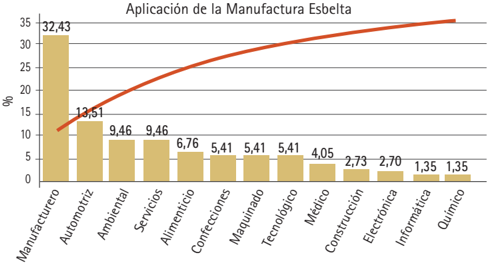
Actualmente las empresas que aplican las herramientas de Manufactura Esbelta cometen el error de implementarlas de manera aislada para cubrir las necesidades de mejora a un corto plazo, por lo que obtienen beneficios limitados. Se presenta una revision de litera tura relacionada con la implementacion de herramientas de Manufactura Esbelta en la Industria... Se visualiza que las 5'S, el VSM, Kaizen, Kanban y TPM son las mas utilizadas en el ramo Manufacturero con un 9,46%, 8.1%, 6,75%, 5,4% y 4,05% respectivamente, y SMED con un 4,05% y JET con un 6,76% en el sector Automotriz...
Overview
CoChat Summary
## TL;DR
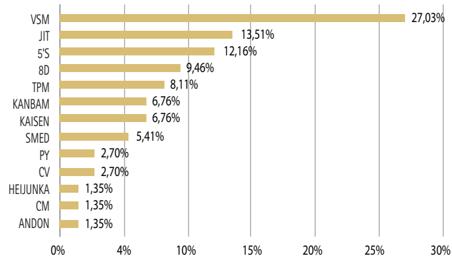
El artículo es una revisión de literatura sobre la aplicación de herramientas de Manufactura Esbelta en la industria y sostiene que su uso aislado produce beneficios limitados, mientras que su integración puede generar mejoras más estables. Reporta que VSM es la herramienta más aplicada en el sector industrial (27,03%) y que 5S, VSM, Kaizen, Kanban y TPM son de las más usadas, mientras que Células de Manufactura, Heijunka y Andon son de las menos utilizadas (1,35%).
## Key findings
- En la revisión, el sector con mayor aplicación de herramientas de Manufactura Esbelta fue el manufacturero, con 32,43% de los casos.
- La herramienta más aplicada fue VSM, con 27,03% de ocurrencia; en las conclusiones también se menciona como la más aplicada en el sector industrial.
- Entre las herramientas más usadas se reportan 5S (9,46%), VSM (8,1% o 27,03% según la sección), Kaizen (6,75%/6,76%), Kanban (5,4%/6,76%) y TPM (4,05%/8,11%); las herramientas menos utilizadas fueron Células de Manufactura, Heijunka y Andon (1,35%).
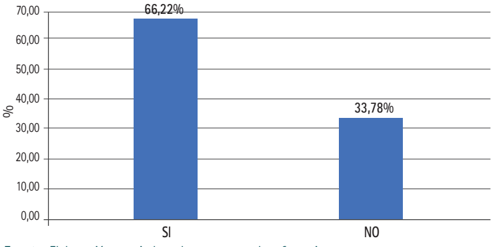
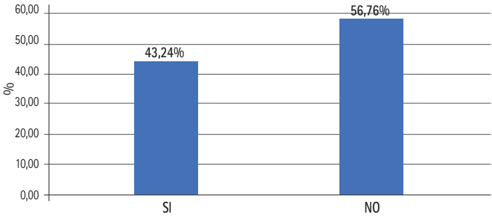
- La revisión encontró que 66,22% de los casos combinan herramientas de Manufactura Esbelta con otras metodologías, y que 43,24% de los procesos de fabricación integran dos o más herramientas esbeltas.
## Methods
- El estudio es una revisión de literatura sobre la implementación de herramientas de Manufactura Esbelta en la industria, analizando su uso individual y combinado.
- La revisión se basa en casos aplicados en el sector industrial y en la recopilación de porcentajes de uso por sector y por herramienta, tal como se muestra en las figuras y conclusiones.
- El análisis principal consiste en resumir y comparar frecuencias de aplicación de herramientas como 5S, VSM, Kaizen, Kanban, TPM, SMED, JIT, Poka-Yoke, Heijunka y Andon, así como su combinación con otras metodologías.
## Limitations
- La propia conclusión señala que muchas herramientas se toman de manera aislada, con beneficios de corto plazo y sin mantenerlos a largo plazo; esto es una limitación de la práctica observada en la literatura.
- El texto hace evidente que se trata de una revisión literaria sin un diseño experimental propio ni muestra primaria original; por tanto, sus resultados dependen de los estudios revisados.
- El artículo no detalla de forma explícita el criterio de selección, el tamaño total de la base de artículos ni el procedimiento completo de codificación de la revisión; esto es una limitación evidente del texto.
Model-written summary. Check it against the paper before relying on it.
Integrity signals
Registry
Cites
Statistics
Figures
Verification
Claims the paper makes
1 Valid · 0 Not valid · 28 Not checked · 17 Own results and interpretations
A result the paper reports from its own data — it cites no other source for it, so there is none to check. The quote shows it is in the paper.
In the paper
“Se visualiza que las 5'S, el VSM, Kaizen, Kanban y TPM son las más utilizadas en el ramo Manufacturero con un 9,46%, 8.1%, 6,75%, 5,4% y 4,05% respectivamente, y SMED con un 4,05% y JIT con un 6,76% en el sector Automotriz; caso contrario, las Células de Manufactura, Heijunka y Andon son las menos utilizadas (en 1,35%).”
plain- Asserted: passes — The authors put it forward as true.
- Checkable: passes — It can be checked against evidence.
- Load-bearing: unclear — It is unclear whether the paper’s conclusions depend on it.
- Based: passes — The paper gives a reason why it holds.
None of the sources cited for this claim could be matched to a paper, so there is nothing to check it against.
In the paper
“encontrando que VSM (Mapa de flujo de valor), sobresale en frecuencia de uso sobre las demás herramientas en un 27.03%.”
What the sources say
- Not matchedcites Engelund et al 63
This doesn’t read as a citation we can look up.
- Not matchedcites Zahraee et al61
This doesn’t read as a citation we can look up.
- Not matchedcites Verma y Sharma 64
This doesn’t read as a citation we can look up.
plain- Asserted: passes — The authors put it forward as true.
- Checkable: passes — It can be checked against evidence.
- Load-bearing: unclear — It is unclear whether the paper’s conclusions depend on it.
- Based: passes — The paper gives a reason why it holds.
- Rests on an assumption not shown here.
- Not matched
A result the paper reports from its own data — it cites no other source for it, so there is none to check. The quote shows it is in the paper.
In the paper
“tales como 5's, Kanban, VSM, TPM, SMED y JIT en un 66,22% de los casos.”
plain- Asserted: passes — The authors put it forward as true.
- Checkable: passes — It can be checked against evidence.
- Load-bearing: unclear — It is unclear whether the paper’s conclusions depend on it.
- Based: passes — The paper gives a reason why it holds.
- Rests on an assumption not shown here.
None of the sources cited for this claim could be matched to a paper, so there is nothing to check it against.
In the paper
“Se observa que esta técnica tiene 12,16% de aplicación.”
What the sources say
- Not matchedcites Arrieta 12
This doesn’t read as a citation we can look up.
- Not matchedcites Wilches et al 14
This doesn’t read as a citation we can look up.
plain- Asserted: passes — The authors put it forward as true.
- Checkable: passes — It can be checked against evidence.
- Load-bearing: unclear — It is unclear whether the paper’s conclusions depend on it.
- Based: passes — The paper gives a reason why it holds.
- Rests on an assumption not shown here.
- Not matched
A result the paper reports from its own data — it cites no other source for it, so there is none to check. The quote shows it is in the paper.
In the paper
“El 43,24% de los procesos de fabricación, conjunta dos o más de éstas”
- Also stated in: § CONCLUSIONES · plain
“se observa que la ME tiene 43,24% de integración con las herramientas de esta misma en procesos industriales para la mejora continua.”
plain- Asserted: passes — The authors put it forward as true.
- Checkable: passes — It can be checked against evidence.
- Load-bearing: passes — The paper’s conclusions depend on it.
- Based: passes — The paper gives a reason why it holds.
- Rests on an assumption not shown here.
- Also stated in: § CONCLUSIONES · plain
12 more claims
Create a free account to see all 46 claims and every source verdict.
- It may state two separate claims as one. 25
- Probably not a substantial claim. 12
Self-check
Percentages, sums and reported differences re-computed from the paper’s own numbers.
Each contradiction between two passages listed here was confirmed by an independent check.
Rated major: it would touch a result — a value a result rests on, reported and recomputed p-values on opposite sides of the significance level, two passages that conflict with no sign which is right, or a cited work retracted before this paper was published.
In the paper
§ RESUMEN
“Kaizen, Kanban y TPM son las más utilizadas en el ramo Manufacturero con un 9,46%, 8.1%, 6,75%, 5,4% y 4,05% respectivamente”
§ CONCLUSIONES
“esta herramienta tiene un 8,11% de aplicación”
Citations
Cites
(2004) · Cited by 3,245
Lean manufacturing: context, practice bundles, and performance
Shah, R., & Ward, P. T. (2003) · Journal of Operations Management · doi:10.1016/s0272-6963(02)00108-0 · Cited by 2,897
(1991) · HarperPerennial eBooks · Cited by 2,372
Lean Thinking—Banish Waste and Create Wealth in your Corporation
Womack, J. P., & Jones, D. T. (1997) · Journal of the Operational Research Society · doi:10.1057/palgrave.jors.2600967 · Cited by 2,122
Decoding the DNA of the Toyota Production System
Spear, S. J., & Bowen, H. K. (1999) · Harvard business review · Cited by 1,321
(2009) · Cited by 671
The Toyota Product Development System: Integrating People, Process, and Technology
Morgan, J. M., & Liker, J. Κ. (2006) · Cited by 587
The impact of lean methods and tools on the operational performance of manufacturing organisations
Belekoukias, I., Garza-Reyes, J. A., & Kumar, V. (2014) · International Journal of Production Research · doi:10.1080/00207543.2014.903348 · Cited by 474
The Japanese Automobile Industry: Technology and Management at Nissan and Toyota
Cole, R. E., & Cusumano, M. A. (1987) · Journal of Japanese Studies · doi:10.2307/132606 · Cited by 294
Toyota production system : an integrated approach to just-in-time
門田, 安. (2012) · Medical Entomology and Zoology · Cited by 240
Research works printed but not linked: 16
- [5]Slack N, Lewis M. Operations Strategy: What is Operations Strategy. 2nd ed. Harlow: Prentice Hall/Financial Times; 2008.
- [11]Hossain M., Uddin M. An Approach to Improve the Process Cycle Efficiency and Reduce the Lead Time of a Mango Juice Processing Line by Using Lean Tools: A Case Study. IJSER. 2015; 6(1):1442-1452.
- [12]Arrieta K. Diseño de una metodología que relaciona las técnicas de manufactura esbelta con la gestión de la innovación: Una investigación en el sector de confecciones de Cartagena (Colombia). Universidad y Empresa. 2015; 17(28):127-145.
- [17]Vinodha S, Vasanth K, Vimal K. Implementing lean sigma in an Indian rotary switches manufacturing organization. Prod Plan Control. 2014; 25(4):288302.
- [20]Mehta RK, Mehta D, Mehta NK. An Exploratory Study on Implementation of Lean Manufacturing Practices (with Special Reference to Automobile Sector Industry). Yönetim ve Ekonomi. 2012; 19(2):289-299.
- [30]Mehta P, Butkewitsch-Choze S, Seaman C. Data analytics framework for semicontinuous manufacturing process -Implementation vision with a use case. J Manuf Syst. 2017; 44(2):273-279.
- [35]Shingo S. Zero Quality: Source Inspection and the Poka-Yoke system. Stanford: Productivity Press; 1986.
- [36]The Lean Enterprise Institute. Lean Lexicon: A Graphical Glossary for Lean Thinkers. 4th ed. Cambridge: The Lean Enterprise Institute; 2008.
- [39]Liker J, Rother M. Why lean programs fail [on line]. Cambridge: Lean Enterprise Institute; 201 1-2013 [cited 2017 Mar]. Available from: https://www.lean.org/ Search/Documents/352.pdf.
- [40]Maurer, R. The spirit of Kaizen creating lasting excellence on small step at a time. New York: McGraw-Hill Education; 2012.
- [41]Imai M. Gemba Kaizen: A Commonsense Approach to a Continuous Improvement Strategy. 2nd ed. Pennsylvania: McGraw-Hill Professional Publishing; 2012.
- [49]Espin F. Técnica SMED. Reducción del tiempo de preparación. 3C Tecnología. 2013; 22(1):1-1 1.
- [51]Moreira A, Garcez P. Implementation of the single minute Exchange of die (SMED) methodology in small to medium-sized enterprises: A Portuguese casa study. Int J Manag. 2013; 30(1):66-87.
- [52]Hopp W, Spearman M. Factory physics. New York: McGraw-Hill; 2000.
- [54]Rahman CML, Hoque MA, Uddin SM. Assessment of total productive maintenance implementation in a semiautomated manufacturing company through downtime and mean downtime analysis. s (Case study: a Semiautomated Manufacturing Company of Bangladesh). IOSRJEN. 2014; 4(9):38-47.
- [67]Rivera L. Justificación conceptual de un modelo de implementación de Lean Manufacturing. Heurística 15. 2013; 15(1):91-106.
Cited by
Andrade, Y., Cardenas, L., Viacava, G., Raymundo, C., & Domínguez, F. (2019) · Advances in intelligent systems and computing · doi:10.1007/978-3-030-20444-0_39 · Cited by 66
Manufactura esbelta: una revisión sistemática en la industria de alimentos
Cuggia-Jiménez, C., Orozco‐Acosta, E., & Mendoza, D. J. (2020) · Información tecnológica · doi:10.4067/s0718-07642020000500163 · Cited by 55
Lean Manufacturing: Literature review and implementation analysis
Centeno, F. H., & Huayanay, W. S. (2022) · Journal of Scientific and Technological Research Industrial · doi:10.47422/jstri.v3i2.29 · Cited by 6
Roman, E. J. D., Usquiano, E. A. L., Olivos, G. S. M., et al. (2023) · doi:10.18687/laccei2023.1.1.489 · Cited by 5
Lean Manufacturing as a Strategy for Continuous Improvement in Organizations
Quinteros, M. M. S., Márquez, C. Z., López, L. A. Á., & Carrillo-Gutiérrez, T. (2021) · IntechOpen eBooks · doi:10.5772/intechopen.96427 · Cited by 8
Metadata
- Authors
- Tapia Coronado, J., Escobedo Portillo, T., Barrón López, E., Martínez Moreno, G., & Estebané Ortega, V.
- Venue
- Ciencia & trabajo
- Published
- 2017-12
- Volume
- 19
- Issue
- 60
- Pages
- 171-178
- ISSN
- 0718-0306 (ISSN-L)
- 0718-2449
- OpenAlex
- W2792142757
- Cited by
- 22
- References
- 31
- Citations by year
- 2026: 1 · 2024: 2 · 2023: 4 · 2022: 5 · 2021: 3 · 2020: 5 · 2019: 1 · 2018: 1
- FWCI
- 3.27
- Type
- journal article
- Language
- en
- Open access
- diamond
- doi.org
- Licence
- cc-by-nc
- Locations
- Ciencia & trabajo (publishedVersion, cc-by-nc)
- LA Referencia (Red Federada de Repositorios Institucionales de Publicaciones Científicas) (publishedVersion, other-oa)
- Americanae (AECID Library) (submittedVersion, other-oa)
- Topics
- Social Sciences › Business, Management and Accounting › Management Information Systems › Quality and Supply Management
- Social Sciences › Business, Management and Accounting › Strategy and Management › Management and Optimization Techniques
- Physical Sciences › Engineering › Industrial and Manufacturing Engineering › Digital Transformation in Industry
- Keywords
- lean manufacturing, lean implementation framework, takt time, 5S, visual control, manufacturing cells, poka-yoke, Heijunka, Jidoka, Kaizen, Kanban, SMED, total productive maintenance, just-in-time, value stream mapping, continuous improvement
About these checks
Registry, retraction, Cites and statistics results are computed, not judged, with one exception: a printed reference that no index lists is read once by a model before it counts as a citation error. Claims are extracted by a model and kept only when their quote appears verbatim in the text; each cited source is then checked, with a model’s help, for whether it says what the claim relies on. Those verdicts can be wrong — read the claim’s quote and the cited source before relying on one.
The claim verdicts this report counts are experimental: their accuracy is not yet measured.
A language model drew the claims from the paper on 2026-10-10, under version 3 of the claim definition (model deepseek-v4.1-flash, prompt extract-v3).
A second model labelled each claim on 2026-10-10 (model jev-1.13-20260917, definition revision gold-guideline-v0.2).
Statistics and arithmetic are recomputed, not judged.
Confidence bands are shown only for fields calibrated on our annotated test set. None is calibrated yet, so no band is shown.
What counts as a claim ›How we measure confidence ›How we check this ›
Are you an author, or do you see a problem with this page? Request a review
How to cite
Cite CoChat for the checks on this page, and the paper for its own findings.
- This page
- CoChat. (2026). Citation check: Marco de Referencia de la Aplicación de Manufactura Esbelta en la Industria. https://app.cochat.ai/papers/10.4067/s0718-24492017000300171
- The paper
- Tapia Coronado, J., Escobedo Portillo, T., Barrón López, E., Martínez Moreno, G., & Estebané Ortega, V. (2017). Marco de Referencia de la Aplicación de Manufactura Esbelta en la Industria. Ciencia & trabajo. https://doi.org/10.4067/s0718-24492017000300171
Data sources
Bibliographic data: Semantic Scholar, OpenAlex, Crossref.
Contains information from the Semantic Scholar Academic Graph Datasets, made available under the ODC Attribution License (ODC-BY 1.0).
Semantic Scholar’s data is described in: Kinney, R., et al. (2023). The Semantic Scholar Open Data Platform. arXiv:2301.10140.
