

Duration of casual sunlight exposure necessary for adequate Vitamin D status in Indian Men
Open accessThe DOI matches its Crossref record; 26 of the 26 references it cites were found in a registry or an index.
Abstract
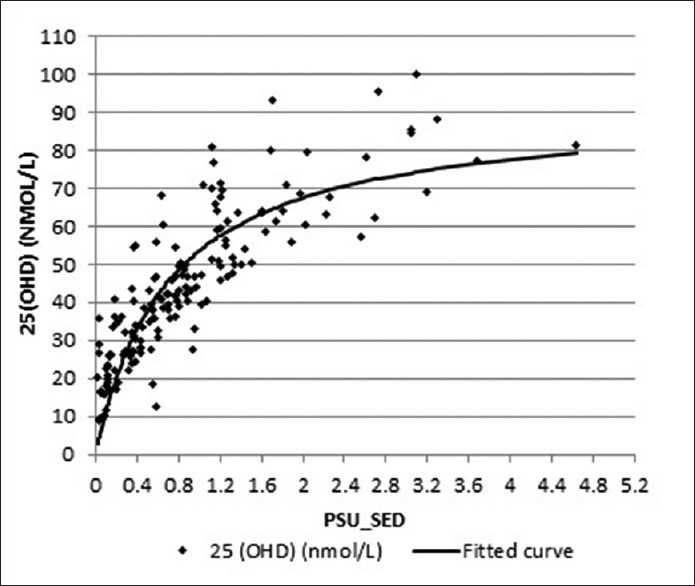
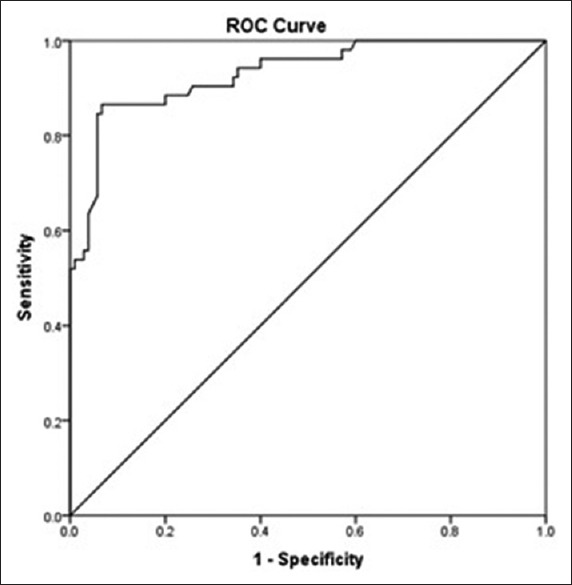
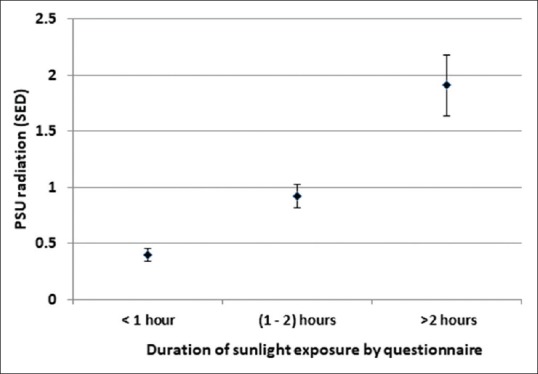
Objectives: To investigate the duration of casual sunlight ultraviolet-B (UVB) exposure required to maintain optimal Vitamin D status (25-hydroxyvitamin-D [25(OH)D]) >50 nmol/L in urban Indian men, using polysulfone (PSU) dosimeters and a sunlight exposure questionnaire. Methods: In healthy men (aged 40–60 years) from Pune (18.52° N, 73.86° E), India, serum 25(OH)D was measured using enzyme-linked immunosorbent assay. Sunlight exposure was assessed using PSU dosimeter and by questionnaire. Results: Of 160 men (48.3 ± 5.6 years), 26.8% were deficient and 40.6% had insufficient Vitamin D concentrations. A hyperbolic function for the relationship between PSU measured sunlight exposure in standard erythema dose (SED) and serum 25(OH)D concentrations (r = 0.87, P < 0.01) revealed that daily exposure of 1 SED was sufficient to maintain serum 25(OH)D concentrations over 50 nmol/L. The curve plateaued around 5 SED (80 nmol/L) and extrapolation of the curve (>5 SED) did not increase 25(OH)D concentrations above 90 nmol/L. Receiver operating curve analysis confirmed that 1 SED-UV exposure was sufficient to maintain 25(OH)D concentrations over 50 nmol/L. Based on the questionnaire data, >1 h of midday casual sunlight exposure was required to maintain serum 25(OH)D concentrations above 50 nmol/L. Duration of sunlight exposure assessed by questionnaire and PSU dosimeter showed a significant correlation (r = 0.517, P < 0.01). Conclusion: In urban Indian men, >1 h of casual midday sunlight exposure daily was required to maintain serum 25(OH)D concentrations above 50 nmol/L, and >2 h of casual sunlight exposure was needed to maintain 25(OH)D concentrations above 75 nmol/L. Excess sunlight did not increase 25(OH)D linearly. The sunlight exposure questionnaire was validated for use in clinical studies and surveys.
Overview
The claims and statistics of this paper haven’t been checked yet.
Free: it reads the open-access text and checks the first 5 claims that cite a source we can check. Create a free account to check every claim.
Integrity signals
Registry
Cites
Statistics
Figures
Verification
Claims the paper makes
The claims and statistics of this paper haven’t been checked yet.
Free: it reads the open-access text and checks the first 5 claims that cite a source we can check. Create a free account to check every claim.
Claims other papers make about this one
Each is checked against this paper’s own text: does it say what the citing paper says it does?
The source backs part of the claim, not all of it — or backs it for a different population, condition or comparison.
In the citing paper
“Although there was a significant difference between the groups regarding the length of sun exposure, the length of sun exposure in both groups was close to the recommended length (1 h) that is required to maintain the optimum 25(OH)D level pointed out by a previous study conducted in South Asia (30).”
From Impacts of people at-risk of either cow milk allergies or lactose intolerance on their daily calcium intake and bone mineral density (2024) · cites this paper as [30]
Experimental — accuracy not yet measured
Self-check
Percentages, sums and reported differences re-computed from the paper’s own numbers.
The self-check needs the paper’s full text.
Citations
Cites
Holick, M. F. (2007) · New England Journal of Medicine · doi:10.1056/nejmra070553 · Cited by 13,720 · cited 1×
“[2] Avoidance of sun exposure may also partially explain the observed Vitamin D deficiency in Indians and also throughout the world.[3]”
BackgroundSources and measurement of ultraviolet radiation
Diffey, B. L. (2002) · Methods · doi:10.1016/s1046-2023(02)00204-9 · Cited by 703
Low Vitamin D Status despite Abundant Sun Exposure
Binkley, N., Novotny, R., Krueger, D., Kawahara, T., Daida, Y. G., Lensmeyer, G., Hollis, B. W., & Drezner, M. K. (2007) · The Journal of Clinical Endocrinology & Metabolism · doi:10.1210/jc.2006-2250 · Cited by 471
The Cutaneous Photosynthesis of Previtamin D3: A Unique Photoendocrine System
Holick, M. F. (1981) · Journal of Investigative Dermatology · doi:10.1111/1523-1747.ep12479237 · Cited by 379
Calculated Ultraviolet Exposure Levels for a Healthy Vitamin D Status
Webb, A. R., & Engelsen, O. (2006) · Photochemistry and Photobiology · doi:10.1111/j.1751-1097.2006.tb09833.x · Cited by 335
Self-citationInitial management of a major burn: II—assessment and resuscitation
Hettiaratchy, S., & Papini, R. (2004) · BMJ · doi:10.1136/bmj.329.7457.101 · Cited by 330
Engelsen, O., Brustad, M., Aksnes, L., & Lund, E. (2005) · Photochemistry and Photobiology · doi:10.1562/2004-11-19-rn-375 · Cited by 304
Brot, C., Vestergaard, P., Kolthoff, N., Gram, J., Hermann, A. P., & Sørensen, O. H. (2001) · British Journal of Nutrition · doi:10.1079/bjn2001345 · Cited by 272
Presence of 25(OH) D deficiency in a rural North Indian village despite abundant sunshine.
Goswami, R., Kochupillai, N., Gupta, N., Goswami, D., Singh, N., & Dudha, A. (2008) · PubMed · Cited by 147
McCarty, C. A. (2008) · American Journal of Clinical Nutrition · doi:10.1093/ajcn/87.4.1097s · Cited by 140
Cited by
Skin Exposure to Narrow Band Ultraviolet (UVB) Light Modulates the Human Intestinal Microbiome
Bosman, E. S., Albert, A. Y., Lui, H., Dutz, J. P., & Vallance, B. A. (2019) · Frontiers in Microbiology · doi:10.3389/fmicb.2019.02410 · Cited by 143
Analytical methods for 25-hydroxyvitamin D: advantages and limitations of the existing assays
Tripathi, A., Ansari, M., Dandekar, P. P., & Jain, R. D. (2022) · The Journal of Nutritional Biochemistry · doi:10.1016/j.jnutbio.2022.109123 · Cited by 51
Padhi, S., Suvankar, S., Panda, V. K., Pati, A., & Panda, A. K. (2020) · International Immunopharmacology · doi:10.1016/j.intimp.2020.107001 · Cited by 41
Parnell, A. A., Nobrega, A. K. D., & Lyons, L. C. (2020) · Cellular Signalling · doi:10.1016/j.cellsig.2020.109904 · Cited by 38
Bhat, G., Ireland, A., Shah, N. B., Gondhalekar, K. M., Mandlik, R. M., Kajale, N., Katapally, T. R., Bhawra, J., Damle, R., & Khadilkar, A. (2024) · PLOS Global Public Health · doi:10.1371/journal.pgph.0003553 · Cited by 37
Self-citationVitamin D3 and B12 supplementation in pregnancy
Bhowmik, B., Siddiquee, T., Mdala, I., Nesa, L. Q., Jahan, S., Hassan, Z., Moreira, N. C. D. V., Jahan, I., Khan, A. K. A., Hitman, G. A., et al. (2021) · Diabetes Research and Clinical Practice · doi:10.1016/j.diabres.2021.108728 · Cited by 25
“In urban Indian men, >1 h of casual midday sunlight exposure daily was required to maintain serum 25(OH)D concentrations above 50 nmol/L, and >2 h of occasional sunlight exposure was needed to maintain 25(OH)D concentrations above 75 nmol/L [21].”
Vitamin D status in Kancheepuram District, Tamil Nadu, India
Mechenro, J., Venugopal, G., Buvnesh Kumar, M., Balakrishnan, D., & Ramakrishna, B. S. (2018) · BMC Public Health · doi:10.1186/s12889-018-6244-5 · Cited by 19
Prevalence of vitamin D deficiency among South Indian pregnant women
Ravinder, S. S., Padmavathi, R., Kuppusamy, M., Mohankumar, M., Maruthy, K. N., Sankar, S., & Balakrishnan, K. (2022) · Journal of Family Medicine and Primary Care · doi:10.4103/jfmpc.jfmpc_1819_21 · Cited by 12
“Under optimal conditions, a minimum of 15 min of daily exposure of the hands and face to the sun is required to produce adequate vitamin D.[19]”
BackgroundKongpharm, K., Nakklay, P., Kongtong, C., Tanapumchai, P., Prapkree, L., Rueangsri, N., & Singhato, A. (2024) · Frontiers in Nutrition · doi:10.3389/fnut.2024.1421275 · Cited by 10
Thejaswi, S. G., Koirala, P., Pradhan, U., Papanaik, H., & Bhuyan, S. (2023) · International Journal of Preventive Medicine · doi:10.4103/ijpvm.ijpvm_180_22 · Cited by 12
“[9] Morning fasting venous blood sample was obtained from participants of both groups, as per institutional guidelines.”
MethodPiccolo, B. D., Hall, L. M., Stephensen, C. B., Gertz, E., & Loan, M. D. V. (2019) · Current Developments in Nutrition · doi:10.1093/cdn/nzz065 · Cited by 10
Mekonnen, W., Feleke, Y., Desalegn, Y., Tarekegne, G., Wamisho, B. L., Haidar, J., & Zewede, T. (2020) · BMC Nutrition · doi:10.1186/s40795-020-00404-0 · Cited by 8
Determinants of vitamin D levels from sun exposure
Grant, W. B., Bhattoa, H. P., & Płudowski, P. (2023) · Elsevier eBooks · doi:10.1016/b978-0-323-91338-6.00006-9 · Cited by 11
Bhat, G., Ireland, A., Shah, N. B., Gondhalekar, K. M., & Khadilkar, A. (2025) · Archives of Osteoporosis · doi:10.1007/s11657-025-01547-y · Cited by 4
“Data on other lifestyle related factors including smoking/tobacco habits and sunlight exposure [25], were assessed using validated questionnaires.”
Self-citationA cross-sectional analysis of serum vitamin D and immunoglobulin E in allergic disorders
Alswailmi, F. K., Shah, S. I. A., Al-Mazaideh, G. M., & Sikandar, M. Z. (2021) · The Annals of Clinical and Analytical Medicine · doi:10.4328/acam.20439 · Cited by 4
“The role of sun exposure in allergic conditions needs to be evaluated since endogenous vitamin D synthesis occurs under the influence of ultraviolet rays from the sun, and adequacy of dietary vitamin D intake and sun exposure have been shown to be associated with reduction in respiratory allergies [17, 24].”
BackgroundPeris, C. H., Selvam, S., Swaminathan, S., Rangarajan, R., Raj, T. D. S., & Thankachan, P. (2025) · Scientific Reports · doi:10.1038/s41598-025-27321-1 · Cited by 6
“Sun exposure was assessed using a structured questionnaire adapted from Patwardhan et al. 27 .”
Sikandar, M. Z., Haider, S. M. B., Maqbool, I., Ain, Q., Naeem, S., Naeem, A., & Sulehri, F. U. (2023) · Cureus · doi:10.7759/cureus.46034 · Cited by 9
Contribution of Vitamin D Metabolites to Vitamin D Concentrations of Families Residing in Pune City
Mandlik, R. M., Ladkat, D., & Khadilkar, A. V. (2023) · Nutrients · doi:10.3390/nu15082003 · Cited by 5
“From our earlier study [20], we found that the highest 25OHD concentrations attainable naturally, without supplementation, are 100 nmol/L.”
BackgroundSelf-citationSakamoto, K., Miyamori, T., Someya, Y., Nagao, M., Ishihara, Y., Kobayashi, Y., Shimasaki, Y., Imai, J., Ono, T., Ikeda, H., et al. (2024) · BMC Sports Science Medicine and Rehabilitation · doi:10.1186/s13102-024-00938-x · Cited by 2
“In addition, a study investigating the relationship between sunlight exposure and blood 25-OHD concentrations in adult males living in urban India found that blood 25-OHD concentrations increased with increasing sunlight exposure [25].”
BackgroundPatil, S., Shah, N. B., Ireland, A., Patwardhan, V. G., Sanwalka, N. J., Kajale, N., More, C., Gondhalekar, K. M., & Khadilkar, A. V. (2025) · Bone · doi:10.1016/j.bone.2025.117685 · Cited by 2
Self-citationPractical tips for maintaining optimal vitamin D levels
Jafri, L., Majid, H., & Afzal, N. (2025) · Elsevier eBooks · doi:10.1016/b978-0-443-34037-6.00002-9 · Cited by 1
Relationship between Lifestyle and Residence Area with 25(OH)D Levels in Older Adults
Isidório, U. D. A., de Assis, E. V., Lacerda, S. N. B., Feitosa, A. D. N. A., Alves, B. D. C. A., Gascón, T. M., da Veiga, G. L., & Fonseca, F. L. A. (2022) · International Journal of Environmental Research and Public Health · doi:10.3390/ijerph20010407 · Cited by 1
“Since excess sunlight does not linearly increase vitamin D production, sun exposure greater than 1 h daily can keep serum vitamin D levels above 50 nmol/L [32].”
BackgroundDeterminants of sun exposure time among Sri Lankan pregnant women
Kaneshapillai, A., Hettiaratchi, U. P. K., Prathapan, S., & Liyanage, G. (2022) · Ceylon Medical Journal · doi:10.4038/cmj.v67i4.9743 · Cited by 1
Pradhan, M., Hedaoo, R. P., Joseph, A., & Jain, R. (2024) · Cureus · doi:10.7759/cureus.63744 · Cited by 6
“Moreover, it increases vitamin D levels, known to influence the insulin sensitivity of cells and regulate glucose metabolism [55].”
BackgroundBinna, S., Kodali, P. B., Sharma, H., & Nair, P. M. K. (2024) · Journal of Diabetology · doi:10.4103/jod.jod_62_24 · Cited by 1
Acherjya, G. K., Ali, M., Tarafder, K., & Yeasmin, S. (2020) · Indian Journal of Endocrinology and Metabolism · doi:10.4103/ijem.ijem_312_19 · Cited by 1
“In the recent study, we have found that more sun exposed participant have less hypovitaminosis D and more than 2 h sun exposure is needed to reduce vitamin D deficiency, the result is similar to the other study.[18,19]”
Goswami, S., Agrawal, N., Sengupta, N., Baidya, A., & Sahana, P. K. (2022) · Cureus · doi:10.7759/cureus.22107 · Cited by 1
“found a hyperbolic relationship between sunlight exposure and serum 25(OH)D levels: >1 hour of casual midday sunlight exposure daily maintained serum 25(OH)D concentrations above 20 ng/mL, and >2 hours of casual sunlight exposure maintained 25(OH)D concentrations above 30 ng/mL, with excess sunlight not increasing 25(…”
BackgroundVitamin D Level in Healthy Bangladeshi Adults- A Pilot Study
Yadav, A., Selim, S., Haq, T., Shah, A. K., Morshed, M. S., Ghani, M. H., Faisal, I., Khan, M. A., Mustari, M., Rajib, M. H., et al. (2022) · Journal of Medicine · doi:10.3329/jom.v23i2.60631 · Cited by 1
Chakraborty, S., Pal, R., Begum, F., Naskar, T. K., Das, N., & Basu, B. R. (2024) · Research Square · doi:10.21203/rs.3.rs-5417644/v1 · Cited by 1
Exposure to Sunlight and Vitamin D Synthesis
Munigoti, S. P. (2018) · Indian Journal of Endocrinology and Metabolism · doi:10.4103/ijem.ijem_406_18
Insolation of the premise as a factor of vitamin d producing radiation in bedridden patient
", S. I., Akimenko, V. Y., Serheichuk, O. V., Voznesens'kyĭ, S. O., & Steblii, N. M. (2022) · Environment & Health · doi:10.32402/dovkil2022.01.031
A Generational Study on Vitmamin D Status of Selected Type 2 Diabetics
Mohankumar, J. B. (2023) · Journal of Clinical Peadiatrics and Care · doi:10.58489/2836-8630/003
Sakamoto, K., Miyamori, T., Someya, Y., Nagao, M., Ishihara, Y., Kobayashi, Y., Shimasaki, Y., Imai, J., Ono, T., Ikeda, H., et al. (2024) · Research Square · doi:10.21203/rs.3.rs-4266903/v1
Vitamin D levels among adults in a tertiary care hospital in Wayanad
Raj, A., Cherian, S., & Srinivasan, S. (2022) · Journal of Current Research in Scientific Medicine · doi:10.4103/jcrsm.jcrsm_81_21
Jin, Y., Li, M., Ding, W., & Wu, H. (2024) · Journal of Medical Biochemistry · doi:10.5937/jomb0-48471
“…were compared, and it was found that the sunshine duration in infants with abnormal BMD was greatly shorter than that in infants with normal BMD. Outdoor exercise with adequate sunshine duration can greatly improve the absorption of calcium and phosphorus by VD in the body, increasing BMD (25, 26).”
BackgroundTiwari, P., Kaur, H., & Kaur, H. (2024) · Journal of Orthopaedic Diseases and Traumatology · doi:10.4103/jodp.jodp_31_23
Wellness and its correlation with vitamin D
Nimbhorkar, P., Thamke, R., & Lade, J. (2024) · MGM Journal of Medical Sciences · doi:10.4103/mgmj.mgmj_150_24
Relationship of Serum Vitamin D Levels to the Severity of Migraine
Ozomma, S. I., Oparah, S. K., Danesi, M. A., Ojini, F. I., & Anyanwu, R. (2024) · Nigerian Journal of Medicine · doi:10.4103/njm.njm_45_24
Nair, P. M. K., Silwal, K., Keswani, J., Tewani, S., Kochar, M., Sreedhar, C., Inbaraj, G., Pai, V., Sathwik, M., Ajit, N. D., et al. (2025) · Journal of Lifestyle Medicine · doi:10.15280/jlm.2025.15.2.48
“Studies from India have traditionally suggested that the period between 11 am and 2 pm is ideal for vitamin D synthesis due to the high solar zenith angle, which ensures maximal ultraviolet B radiation reaching the skin [17,19].”
Bhat, G., Ireland, A., Shah, N., Gondhalekar, K. M., Kajale, N., & Khadilkar, A. (2025) · Archives of Osteoporosis · doi:10.1007/s11657-025-01623-3
“Sunlight exposure was assessed using a validated questionnaire [19].”
Self-citationSakamoto, K., Miyamori, T., Someya, Y., Nagao, M., Ishihara, Y., Kobayashi, Y., Shimasaki, Y., Imai, J., Ono, T., Ikeda, H., et al. (2024) · Figshare · doi:10.6084/m9.figshare.26157197
Chiplonkar, S. A., & Date, J. S. (2026) · Elsevier eBooks · doi:10.1016/b978-0-443-44751-8.00003-8
Self-citationJonnalagadda, M., Bhumkar, S., Ozarkar, S., & Ashma, R. (2026) · American Journal of Human Biology · doi:10.1002/ajhb.70228
“…sun exposure, skin pigmentation, and vitamin D 3 levels (Carlberg 2022; Jiang et al. 2018; Lowe and Bhojani 2017; Nimitphong and Holick 2013; Patwardhan et al. 2018; Ramnemark et al. 2015; Rossberg et al. 2016; Saternus et al. 2015; Sham et al. 2015; Wacker and Holick 2013; Wang et al.…”
Peris, C. H., Selvam, S., Swaminathan, S., Rangarajan, R., Kurpad, A. V., Raj, T., & Thankachan, P. (2026) · Nutrients · doi:10.3390/nu18091476
“Indian studies have shown that relatively prolonged midday sun exposure (e.g., >1 h per day) may be required to maintain serum 25(OH)D concentrations ≥ 50 nmol/L in urban populations [30].”
Islam, M. R., Sahabuddin, M., Sheba, N. H., & Hossain, Z. Z. (2026) · Heliyon · doi:10.1016/j.heliyon.2026.e45499
Metadata
- Authors
- Khadilkar, A., Patwardhan, V., Mughal, Z., Chiplonkar, S., Webb, A., Kift, R., Khadilkar, V., & Padidela, R.
- Affiliations
- Jehangir Hospital (IN)
- Corresponding author
- Khadilkar, AnuradhaV
- Khadilkar, VamanV
- Venue
- Indian Journal of Endocrinology and Metabolism
- Published
- 2018
- Volume
- 22
- Issue
- 2
- Pages
- 249
- ISSN
- 2230-8210 (ISSN-L)
- PMC
- PMC5972483
- OpenAlex
- W2803181396
- Semantic Scholar
- 8521aad74ae0e43cf37e7a730fd2c056666dc6f9
- Cited by
- 45
- References
- 26
- Citations by year
- 2026: 4 · 2025: 6 · 2024: 12 · 2023: 5 · 2022: 8 · 2021: 2 · 2020: 4 · 2019: 2 · 2018: 2
- FWCI
- 1.90
- Type
- journal article
- Language
- en
- Open access
- diamond
- doi.org
- Licence
- cc-by-nc-sa
- Locations
- Indian Journal of Endocrinology and Metabolism (publishedVersion, cc-by-nc-sa)
- Europe PMC (PubMed Central) (publishedVersion, cc-by-nc-sa)
- PubMed Central (publishedVersion, cc-by-nc-sa)
- PubMed (publishedVersion)
- Research Explorer (The University of Manchester) (publishedVersion, other-oa)
- DOAJ (DOAJ: Directory of Open Access Journals) (submittedVersion, cc-by-sa)
- Topics
- Health Sciences › Medicine › Endocrinology, Diabetes and Metabolism › Vitamin D Research Studies
- Health Sciences › Medicine › Dermatology › Skin Protection and Aging
- Health Sciences › Medicine › Public Health, Environmental and Occupational Health › Nutrition and Health Studies
- Keywords
- vitamin D status, 25-hydroxyvitamin D, sun exposure, UV-B radiation, vitamin D deficiency, vitamin D insufficiency, exposure duration
About these checks
Registry, retraction, Cites and statistics results are computed, not judged, with one exception: a printed reference that no index lists is read once by a model before it counts as a citation error. Claims are extracted by a model and kept only when their quote appears verbatim in the text; each cited source is then checked, with a model’s help, for whether it says what the claim relies on. Those verdicts can be wrong — read the claim’s quote and the cited source before relying on one.
Statistics and arithmetic are recomputed, not judged.
Confidence bands are shown only for fields calibrated on our annotated test set. None is calibrated yet, so no band is shown.
What counts as a claim ›How we measure confidence ›How we check this ›
Are you an author, or do you see a problem with this page? Request a review
Data sources
Bibliographic data: Semantic Scholar, OpenAlex, Crossref.
Contains information from the Semantic Scholar Academic Graph Datasets, made available under the ODC Attribution License (ODC-BY 1.0).
Semantic Scholar’s data is described in: Kinney, R., et al. (2023). The Semantic Scholar Open Data Platform. arXiv:2301.10140.
