

Clinical Practice Guidelines for the Use of Electroconvulsive Therapy
Open accessThe DOI matches its Crossref record; 29 of the 29 references it cites were found in a registry or an index; 8 of the 34 sources its claims cite were checked for support.
Abstract
INTRODUCTION Electroconvulsive therapy (ECT) is a clinical procedure where a small dose of electric current is passed through the brain for a brief period to induce seizures for therapeutic purposes in psychiatric (and certain neurological) conditions. Modified ECT is the modern form of ECT where the electrical stimulus is given under general anesthesia and muscle relaxation. This is one of the most effective treatments for many psychiatric conditions. Modern modified ECT is a safe treatment when practiced with adequate knowledge, skills, and expertise. Following the basic standards of ECT practice is necessary for better clinical outcomes including minimal cognitive adversities. This guideline document is aimed at enabling consistent, safe, and effective practice of ECT in patients in applicable psychiatric disorders. METHODS These guidelines are developed as part of the initiative of Clinical Practice Guidelines (CPG) subcommittee of Indian Psychiatric Society. The initial draft guideline was developed by the authors. The information was sourced from key research articles, national/international guidelines on psychiatric care, and ECT. No formal systematic literature search was conducted. The current guideline was prepared to suit the existing Indian mental health care system and legislations. The draft was further presented and discussed in the in-person workshop of CPG-2022. The draft was revised following the discussion in the workshop based on the consensus-based recommendation method. This guideline is not a directive or mandatory instruction but a guidance document for professional practitioners administering ECT. This is not a full and complete review of ECT procedure. But it is intended to improve patient outcomes by facilitating best practice standards by maximizing benefits and minimizing adversities. USE OF ELECTROCONVULSIVE THERAPY Indications Table 1 shows the indications for ECT. Evidence exists for the efficacy of ECT in depressive episodes, manic episodes, and acute exacerbations of psychosis in schizophrenia. Treatment-resistant depression, mania, and schizophrenia, including clozapine-resistant schizophrenia, are well-recognized indications,[1-6] with evidence from comparative trials (comparison across types of ECT or with waitlisted patients). ECT should not be withheld until the failure of several medication/psychotherapy trials in severe depression. Health economics suggest that it is beneficial to consider ECT as a second or third line agent in severe depression. ECT is considered as first-line (primary) treatment for emergency psychiatric conditions across diagnoses. These include high suicidality, catatonia, excitement, aggression, poor oral intake, acute psychotic symptom exacerbations, and severe physical debilitation secondary to psychiatric disorders.[7-13] The rigor of the evidence base is limited for such indications due to ethical and pragmatic considerations in conducting sham-controlled trials in these emergency life-threatening transdiagnostic situations. It may be noted that almost all international standard guidelines suggest ECT as a first-line treatment option for these indications.[8-13]Table 1: Indications of ECTPredictors of response In general, older age, psychotic symptoms, and shorter episode duration are predictors of response to ECT. Melancholic features and greater baseline depressive symptom severity are also associated with better ECT response. Past good response to ECT is considered a good predictor of response for the current episode. Continuation/Maintenance (C/M) ECT should be considered for patients with a history of severe, recurrent episodes who have failed to remain well on medications.[14] ECT is a first-line treatment when rapid and/or definitive response to avert harm to self/others is needed. Acute suicidal risk, agitation, catatonia, and deteriorating physical status secondary to psychiatric conditions are some of such situations. After an acute course of ECT, C/M treatment with pharmacotherapy and/or psychotherapy is needed. All the indications mentioned above have to be individualized and should be based on the clinical needs, patient’s preferences, and putative risk of adverse effects. ECT staffing ECT without anesthesia and muscle relaxation is now prohibited under the Mental Health Care Act, 2017. Hence, the staffing shown in Table 2 is advisable for administering modified ECT.Table 2: Staffing for ECTTreatment site and equipment The treatment suite ideally involves three distinct areas, but which are nearby or closely connected:[9,10] a. Waiting/preparation room: should have the following facilities: i. Waiting area for patients and caregivers ii. Space for assessment: for interviewing, examining, verifying the records, and to ensure adequate preparation iii. Sphygmomanometer and stethoscope b. ECT administration room i. ECT apparatus including bite block, electroencephalogram (EEG) monitor, and ECG monitor ii. Anesthetic agents (e.g., th
Overview
CoChat Summary
TL;DR
This Indian Psychiatric Society clinical practice guideline summarizes best-practice standards for modified electroconvulsive therapy (ECT) in psychiatric and selected neurological conditions, emphasizing safe, individualized use under anesthesia and muscle relaxation. It covers indications, staffing, consent, evaluation, seizure monitoring, dosing, adverse effects, and special populations, while noting that recommendations are consensus-based rather than from a formal systematic review.
Key findings
- ECT has evidence for depressive episodes, manic episodes, and acute exacerbations of psychosis in schizophrenia; treatment-resistant depression, mania, schizophrenia including clozapine-resistant schizophrenia are well-recognized indications, and ECT should not be withheld until several medication/psychotherapy trials fail in severe depression.
- ECT is first-line for emergency transdiagnostic conditions such as high suicidality, catatonia, excitement, aggression, poor oral intake, acute psychotic symptom exacerbations, and severe physical debilitation secondary to psychiatric disorders.
- For acute courses, if satisfactory improvement is not observed, a minimum of 8–12 ECT sessions should be provided before considering failure of response; continuation ECT may be used up to 6 months of remission, and maintenance ECT after 6 months is usually given at one session every 1–12 weeks.
- Dosing recommendations include marginally suprathreshold charge (1.5 × seizure threshold) for bilateral brief-pulse ECT, 4–6 times seizure threshold for right unilateral brief-pulse ECT, and markedly suprathreshold (6 × seizure threshold) for ultrabrief right unilateral ECT in depression; ultrabrief bilateral ECT is described as less effective and not advisable with existing evidence.
Methods
- These guidelines were developed as part of the Clinical Practice Guidelines subcommittee initiative of the Indian Psychiatric Society; the initial draft was developed by the authors using key research articles and national/international guidelines on psychiatric care and ECT.
- No formal systematic literature search was conducted; the draft was presented and discussed in the in-person CPG-2022 workshop and revised using a consensus-based recommendation method.
- The guideline was prepared to suit the existing Indian mental health care system and legislations, and is described as a guidance document rather than a directive or mandatory instruction.
Limitations
- Stated: no formal systematic literature search was conducted; the document is not a full and complete review of ECT procedure and is not a directive or mandatory instruction.
- Stated: evidence rigor is limited for emergency indications because ethical and pragmatic considerations make sham-controlled trials difficult in life-threatening transdiagnostic situations; evidence for unilateral ECT efficacy is available only for depression, not schizophrenia or mania.
- Stated: literature on ECT in children and adolescents is limited, with no evidence for differential efficacy or safety in that group; the text also notes that more studies are needed on dose increment methods and that most studies used default device increments, so the guideline should be read with caution.
Model-written summary. Check it against the paper before relying on it.
Integrity signals
Registry
Cites
Statistics
Figures

Verification
Claims the paper makes
4 Valid · 0 Not valid · 9 Not checked · 7 Own results and interpretations
The cited sources support only part of this claim — read each source’s verdict below.
In the paper
“It may be noted that almost all international standard guidelines suggest ECT as a first-line treatment option for these indications.[8-13]”
§ Clinical Practice Guidelines for the Use of Electroconvulsive Therapy > USE OF ELECTROCONVULSIVE THERAPY > Indications
What the sources say
- Not matchedcites [8] Abrams Richard ed. Electroconvulsive therapy Fourth Edition New York Oxford University Press 2002
Its entry has no title and year that we can search by.
- Not matchedcites [9] American Psychiatric Association The Practice of Electroconvulsive Therapy-Recommendations for Treatment, Training, and Privileging (A Task Force Report of the American Psychiatric Association) Second Edition Washington, DC American Psychiatric Press 2001
Its entry has no title and year that we can search by.
- Not matchedcites [10] Sundar AS Viswanath B Gangadhar BN Kumar CN Thirthalli J Keshavan M Handbook of Electroconvulsive Therapy Bangalore NIMHANS 2015
Its entry has no title and year that we can search by.
- Not checked — no full text of the sourcecites [11] Ferrier I Waite J The ECT Handbook 4th ed Cambridge Cambridge University Press 2019 doi:10.1017/9781911623175 source
- Not checked — no full text of the sourcecites [12] Kellner CH Obbels J Sienaert P When to consider electroconvulsive therapy (ECT) Acta Psychiatr Scand 2020 141 304 15 Epub 2019 Dec 23 31774547 source
- Partly supportedcites [13] Weiss A Hussain S Ng B Sarma S Tiller J Waite S Loo C Royal Australian and New Zealand College of Psychiatrists professional practice guidelines for the administration of electroconvulsive therapy Aust N Z J Psychiatr 2019 53 609 23 Epub 2019 Apr 10 30966782 sourceExperimental — accuracy not yet measured
In “Depressive disorders including major depression,” the guideline says ECT is potentially a first-line treatment in severe depression when rapid improvement is needed, including cases involving inadequate oral intake or high suicide risk. This supports the recommendation for some urgent indications, but this single guideline does not establish that almost all international guidelines make the same recommendation. (LLM, conf=0.84)
hedged- Asserted: passes — The authors put it forward as true.
- Checkable: passes — It can be checked against evidence.
- Load-bearing: passes — The paper’s conclusions depend on it.
- Based: passes — The paper gives a reason why it holds.
- Not matched
The cited sources support only part of this claim — read each source’s verdict below.
In the paper
“ECT is considered as first-line (primary) treatment for emergency psychiatric conditions across diagnoses. These include high suicidality, catatonia, excitement, aggression, poor oral intake, acute psychotic symptom exacerbations, and severe physical debilitation secondary to psychiatric disorders.[7-13]”
§ Clinical Practice Guidelines for the Use of Electroconvulsive Therapy > USE OF ELECTROCONVULSIVE THERAPY > Indications
What the sources say
- Not checked — no full text of the sourcecites [7] Leroy A Naudet F Vaiva G Francis A Thomas P Amad A Is electroconvulsive therapy an evidence-based treatment for catatonia?A systematic review and meta-analysis Eur Arch Psychiatry Clin Neurosci 2018 268 675 87 Epub 2017 Jun 21 28639007 source
- Not matchedcites [8] Abrams Richard ed. Electroconvulsive therapy Fourth Edition New York Oxford University Press 2002
Its entry has no title and year that we can search by.
- Not matchedcites [9] American Psychiatric Association The Practice of Electroconvulsive Therapy-Recommendations for Treatment, Training, and Privileging (A Task Force Report of the American Psychiatric Association) Second Edition Washington, DC American Psychiatric Press 2001
Its entry has no title and year that we can search by.
- Not matchedcites [10] Sundar AS Viswanath B Gangadhar BN Kumar CN Thirthalli J Keshavan M Handbook of Electroconvulsive Therapy Bangalore NIMHANS 2015
Its entry has no title and year that we can search by.
- Not checked — no full text of the sourcecites [11] Ferrier I Waite J The ECT Handbook 4th ed Cambridge Cambridge University Press 2019 doi:10.1017/9781911623175 source
- Not checked — no full text of the sourcecites [12] Kellner CH Obbels J Sienaert P When to consider electroconvulsive therapy (ECT) Acta Psychiatr Scand 2020 141 304 15 Epub 2019 Dec 23 31774547 source
- Partly supportedcites [13] Weiss A Hussain S Ng B Sarma S Tiller J Waite S Loo C Royal Australian and New Zealand College of Psychiatrists professional practice guidelines for the administration of electroconvulsive therapy Aust N Z J Psychiatr 2019 53 609 23 Epub 2019 Apr 10 30966782 sourceExperimental — accuracy not yet measured
In the section on depressive disorders (page unavailable), the guideline says ECT is potentially first-line for severe depression with inadequate oral intake or high suicide risk, and also mentions acute psychosis and catatonia. It does not present ECT as first-line for every listed emergency condition across diagnoses: it describes a possible role for agitation and aggression in dementia subject to specialist consultation, and the passages do not identify severe physical debilitation as a first-line indication. (LLM, conf=0.89)
plain- Asserted: passes — The authors put it forward as true.
- Checkable: passes — It can be checked against evidence.
- Load-bearing: passes — The paper’s conclusions depend on it.
- Based: passes — The paper gives a reason why it holds.
A conclusion the paper draws from its own results — it cites no other source for it, so there is none to check. The quote shows it is in the paper.
In the paper
“The rigor of the evidence base is limited for such indications due to ethical and pragmatic considerations in conducting sham-controlled trials in these emergency life-threatening transdiagnostic situations.”
§ Clinical Practice Guidelines for the Use of Electroconvulsive Therapy > USE OF ELECTROCONVULSIVE THERAPY > Indications
plainstates a cause- Asserted: passes — The authors put it forward as true.
- Checkable: passes — It can be checked against evidence.
- Load-bearing: passes — The paper’s conclusions depend on it.
- Based: passes — The paper gives a reason why it holds.
A conclusion the paper draws from its own results — it cites no other source for it, so there is none to check. The quote shows it is in the paper.
In the paper
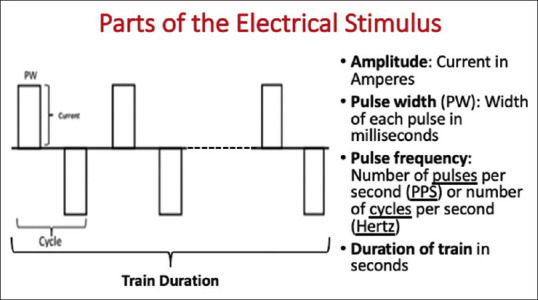
“But as “crowding of pulses” is inefficient in eliciting seizure, the number of pulses by itself may not be a good indicator for setting electrical parameters.”
§ Clinical Practice Guidelines for the Use of Electroconvulsive Therapy > TREATMENT PROCEDURE
hedged- Asserted: passes — The authors put it forward as true.
- Checkable: passes — It can be checked against evidence.
- Load-bearing: unclear — It is unclear whether the paper’s conclusions depend on it.
- Based: passes — The paper gives a reason why it holds.
3 references still to check
A free account verifies the references that are still open.
- It may state two separate claims as one. 9
- Probably not a substantial claim. 10
Self-check
Percentages, sums and reported differences re-computed from the paper’s own numbers.
Each contradiction between two passages listed here was confirmed by an independent check.
Rated minor: it would not touch a result — a value no result rests on, a p-value that stays on the same side of the significance level, or a conflict that is clerical, resolved elsewhere in the paper, or outside its own findings.
In the paper
§ Clinical Practice Guidelines for the Use of Electroconvulsive Therapy > TREATMENT PROCEDURE > Seizure monitoring
“Good quality EEG seizure will have four phases [Figure 5]:”
§ Clinical Practice Guidelines for the Use of Electroconvulsive Therapy > TREATMENT PROCEDURE > Seizure monitoring
“Phase 5: The last phase is recovery from delta to theta to alpha waveform.”
Citations
Cites
Clinical Practice Guidelines for the management of Depression
Grover, S., Gautam, S., Jain, A., Gautam, M., & Vahia, V. (2017) · Indian Journal of Psychiatry · doi:10.4103/0019-5545.196973 · Cited by 269
When to consider electroconvulsive therapy (ECT)
Kellner, C. H., Obbels, J., & Sienaert, P. (2020) · Acta Psychiatrica Scandinavica · doi:10.1111/acps.13134 · Cited by 239
Adverse effects of electroconvulsive therapy
Andrade, C., Arumugham, S. S., & Thirthalli, J. (2016) · Psychiatric Clinics of North America · doi:10.1016/j.psc.2016.04.004 · Cited by 216 · cited 1×
“[28,29] 1.”
Self-citationElectroconvulsive Therapy Stimulus Parameters: Rethinking Dosage
Peterchev, A. V., Rosa, M. A., Deng, Z.-D., Prudic, J., & Lisanby, S. H. (2010) · The Journal of ECT · doi:10.1097/yct.0b013e3181e48165 · Cited by 213 · cited 1×
“[18,19] i. Electrical Parameters A brief or ultrabrief pulse is strongly recommended and should be administered with a constant current device.”
Weiss, A., Hussain, S., Ng, B., Sarma, S., Tiller, J., Waite, S., & Loo, C. (2019) · Australian & New Zealand Journal of Psychiatry · doi:10.1177/0004867419839139 · Cited by 167
Key updates in the clinical application of electroconvulsive therapy
Weiner, R. D., & Reti, I. M. (2017) · International Review of Psychiatry · doi:10.1080/09540261.2017.1309362 · Cited by 166 · cited 2×
“[28,29] 1.”
Clinical practice guidelines for management of bipolar disorder
Shah, N., Grover, S., & Rao, G. (2017) · Indian Journal of Psychiatry · doi:10.4103/0019-5545.196974 · Cited by 124
ECT in schizophrenia:a review of the evidence
Grover, S., Sahoo, S., Rabha, A., & Koirala, R. (2019) · Acta Neuropsychiatrica · doi:10.1017/neu.2018.32 · Cited by 122
Clinical practice guidelines for management of depression in elderly
Avasthi, A., & Grover, S. (2018) · Indian Journal of Psychiatry · doi:10.4103/0019-5545.224474 · Cited by 99
Phutane, V. H., Thirthalli, J., Muralidharan, K., Naveen Kumar, C., Keshav Kumar, J., & Gangadhar, B. N. (2013) · Brain Stimulation · doi:10.1016/j.brs.2012.04.002 · Cited by 85
Self-citation
Research works printed but not linked: 3
- Abrams Richard ed. Electroconvulsive therapy Fourth Edition New York Oxford University Press 2002
- American Psychiatric Association The Practice of Electroconvulsive Therapy-Recommendations for Treatment, Training, and Privileging (A Task Force Report of the American Psychiatric Association) Second Edition Washington, DC American Psychiatric Press 2001
- Gill SP A review of evidence of 0.5ms pulse width ECT SEN Conference, 2018 2018 Available from: https://www.ranzcp.org/RANZCP/media/Conference-presentations/Section%20of%20Electroconvulsive%20Therapy%202018/Shane-Gill.pdf Last accessed on 10 Jul 2022
Cited by
Waris, A., Siraj, M., Khan, A. A., Lin, J., Asim, M., & Alhumaydhi, F. A. (2024) · ACS Pharmacology & Translational Science · doi:10.1021/acsptsci.4c00494 · Cited by 36
Odermatt, J., Sarlon, J., Schaefer, N., Ulrich, S., Ridder, M., Schneider, E., Lang, U. E., Liwinski, T., & Brühl, A. B. (2025) · Neuroscience Applied · doi:10.1016/j.nsa.2025.105520 · Cited by 19
Electroconvulsive therapy in South Asia: Past, present, and future
Menon, V., Kar, S. K., Gupta, S., Baminiwatta, A., Mustafa, A. B., Sharma, P., Abhijita, B., & Arafat, S. M. Y. (2023) · Asian Journal of Psychiatry · doi:10.1016/j.ajp.2023.103875 · Cited by 13
Sahoo, S., Mishra, E., & Premkumar, M. (2024) · Journal of Clinical and Experimental Hepatology · doi:10.1016/j.jceh.2024.101390 · Cited by 13
Relapse Following Electroconvulsive Therapy for Schizophrenia: A Systematic Review and Meta-analysis
Aoki, N., Tajika, A., Suwa, T., Kawashima, H., Yasuda, K., Shimizu, T., Uchinuma, N., Tominaga, H., Tan, X. W., Koh, A. H. K., et al. (2024) · Schizophrenia Bulletin · doi:10.1093/schbul/sbae169 · Cited by 15
Electroconvulsive therapy saves lives—an evidence-based response to WHO
Cooper, J. J., Kellner, C. H., Gligorovic, P. V., Weiner, R. D., Prudic, J., Kirov, G., & Braithwaite, R. (2025) · The Lancet Psychiatry · doi:10.1016/s2215-0366(25)00125-7 · Cited by 13
Menon, S. N., Torrico, T. J., Luber, B. M., Gindoff, B., Cullins, L. M., Regenold, W. T., & Lisanby, S. H. (2024) · Frontiers in Psychiatry · doi:10.3389/fpsyt.2024.1397102 · Cited by 11
Shi, Z.-M., Lan, X.-J., Chen, Q., Chen, J., Su, Z. Z., Huang, X., Ning, Y.-P., Yang, X.-H., Wei, X., & Zheng, W. (2024) · Journal of Affective Disorders · doi:10.1016/j.jad.2024.11.034 · Cited by 9
Newer Neuromodulation Techniques for Psychiatric Disorders: A 2023 Update
Kar, S. K., & Vidya, K. L. (2023) · Indian Journal of Clinical Psychiatry. · doi:10.54169/ijocp.v3i01.70 · Cited by 6
Aunjitsakul, W., Anantapong, K., Werachattawan, N., Jongbovonwiwat, K., Kalayasiri, R., Aniwattanapong, D., Chompoosri, P., Tay, A. T. S., Cheng, S. E. T., Sasidharan, S. N., et al. (2025) · Asian Journal of Psychiatry · doi:10.1016/j.ajp.2025.104597 · Cited by 6
Tolerability and Clinical Outcomes With Anesthesia Dose Reduction During Electroconvulsive Therapy
Espinola, C. W., Kaster, T. S., Prillo, J., Zapf, L., Lee, H. H., Foley, K., Ma, M., Rensburg, A. V., & Blumberger, D. M. (2025) · JAMA Network Open · doi:10.1001/jamanetworkopen.2024.62054 · Cited by 6
Underutilization of Electroconvulsive Therapy (ECT): A Call for Urgent Attention
Thirthalli, J. (2025) · Indian Journal of Psychological Medicine · doi:10.1177/02537176251317677 · Cited by 6
Self-citationUse of Muscle Relaxants in Emergency Medicine: A Review
Radkowski, P., Szewczyk, M., Grażewicz, M., Sobolewski, K., & Onichimowski, D. (2025) · Medical Science Monitor · doi:10.12659/msm.949876 · Cited by 5
Roy, N., Ithal, D., Mehta, U. M., Basavaraju, R., Bharath, R. D., Bolo, N. R., Thirthalli, J., Gangadhar, B. N., & Keshavan, M. S. (2025) · Biological Psychiatry Global Open Science · doi:10.1016/j.bpsgos.2025.100494 · Cited by 3
Self-citationJan, N., Arshad, I., Fayaz, A., Najib, R., ul-Haq, I., Rather, Y. H., & Malla, A. A. (2025) · Middle East Current Psychiatry · doi:10.1186/s43045-025-00553-7 · Cited by 4
Sinha, P., Sreeraj, V. S., Arumugham, S. S., & Thirthalli, J. (2025) · BMC Psychiatry · doi:10.1186/s12888-025-07109-3 · Cited by 3
Self-citationKezuka, D., Haruyama, A., Suzuki, E., & Sakuma, K. (2024) · Psychiatry and Clinical Neurosciences Reports · doi:10.1002/pcn5.221 · Cited by 2
Spangemacher, M., Karl, S., Aksay, S. S., Lamadé, E. K., Plemper, J., Sartorius, A., & Petrozzi, B. P. (2024) · Biomarkers in Neuropsychiatry · doi:10.1016/j.bionps.2024.100115 · Cited by 2
Pantoji, M., Balachander, S., Prajapati, P., Arumugham, S. S., Venkatasubramanian, G., & Thirthalli, J. (2025) · Schizophrenia Research · doi:10.1016/j.schres.2025.08.018 · Cited by 3
Self-citationArumugham, S. S., Thirthalli, J., & Reddy, Y. C. J. (2023) · Journal of Affective Disorders · doi:10.1016/j.jad.2023.10.052 · Cited by 2
Self-citationInterventional Psychiatry in India: Bridging Treatment Gaps and Expanding Horizons in Mental Health
Joseph, J. T., & Praharaj, S. K. (2024) · Indian Journal of Psychological Medicine · doi:10.1177/02537176241294146 · Cited by 4
Giri, Y., Fürst, P., Loo, C. K. A., Clark, S. R., & Tibrewal, P. (2026) · Australian & New Zealand Journal of Psychiatry · doi:10.1177/00048674261450390 · Cited by 2
Danilov, I. V. (2024) · OBM Neurobiology · doi:10.21926/obm.neurobiol.2404260 · Cited by 4
Shi, Z.-M., Huang, X., Zhou, Y., Ning, Y., Ungvari, G. S., Xiang, Y., & Zheng, W. (2025) · Frontiers in Psychiatry · doi:10.3389/fpsyt.2025.1582312 · Cited by 1
McDonnell, K., Jelovac, A., Mohan, C., Whooley, E., Igoe, A., McCaffrey, C., Thompson, S. E., & McLoughlin, D. M. (2025) · Brain stimulation · doi:10.1016/j.brs.2025.08.015 · Cited by 3
Clinical practice guideline for assessment and management of depression in India
Tripathi, A., Shukla, R., Kar, S. K., Gupta, S., Saran, P., Pattojoshi, A., & Rao, T. (2026) · Indian Journal of Psychiatry · doi:10.4103/indianjpsychiatry_1321_25 · Cited by 5
Shi, Z.-M., Su, Z. Z., Ning, T., & Zheng, W. (2024) · Asian Journal of Psychiatry · doi:10.1016/j.ajp.2024.104336 · Cited by 1
Min, J., Zhu, T., Liu, M., Zhang, J., Yan, T., Zhu, S., Yang, Y., Zhu, X., Yu, R., Huang, Y., et al. (2025) · Psychiatry Research · doi:10.1016/j.psychres.2025.116845 · Cited by 1
Mahmood, S., Tan, X. W., Chen, B., & Phern Chern, T. O. R. (2026) · Journal of Ect · doi:10.1097/yct.0000000000001207
Mahato, A. N., Singh, P., Kaur, H., & Kakkar, R. (2024) · Asian Journal of Psychiatry · doi:10.1016/j.ajp.2024.104095
Elektrokonvulsionstherapie in der klinischen Praxis
Strube, W., & Sartorius, A. (2026) · InFo Neurologie + Psychiatrie · doi:10.1007/s15005-026-4680-9
Effectiveness of Electroconvulsive Therapy in Postpartum Psychosis: A Systematic Review
Herrera-Barrón, O., Cepeda, X. C., López-García, C., Paez‐Mayorga, J., & Baca-De-Anda, A. (2025) · Journal of Ect · doi:10.1097/yct.0000000000001188
Najda, P., Rdzanek, O., Kamizela, E., Sauermann, J., Niedobylski, S., & Próchnicki, M. (2026) · Current Problems of Psychiatry · doi:10.12923/2353-8627/2025-0018
Anghel, C. E., Bacila, C. I., Vintilă, B. I., Cornea, M., Grama, A. M., Macavei, B.-M., Lomnășan, A., Roman-Filip, I., & Roman-Filip, C. (2026) · Journal of Clinical Medicine · doi:10.3390/jcm15155890 · Cited by 2
Kumari, A., Saha, A., & Agrawal, A. K. (2026) · Journal of Ect · doi:10.1097/yct.0000000000001246
Electroconvulsive therapy research in India: A scoping review
Pathak, H., Baliga, S. P., Shibu, A., & Thirthalli, J. (2026) · Indian Journal of Psychiatry · doi:10.4103/indianjpsychiatry_1264_25
Self-citationNeuromodulation strategies in postburn care for pain rehabilitation and scar remodelling
Li, T., zhang, Q., Hou, X., Zhou, F., Xie, J., Shu, B., Li, S., & Zhu, J. (2026) · Communications Medicine · doi:10.1038/s43856-026-01696-2
Perception and Facts Regarding Electroconvulsive Therapy at Benazir Bhutto Hospital, Rawalpindi
Rao, M. A., Minhas, F. A., Tasleem, S., Zaidi, S. N. B., Najeeb, B., & Ali, M. (2023) · Journal of Rawalpindi Medical College · doi:10.37939/jrmc.v27i4.2418 · Cited by 1
Wright, J. M., Appelbaum, L. G., Smith, S. L., Overath, T., Kaplan, S. J., Cooper, M. W., Ronen, O., Tobi, T., Peterchev, A. V., & Francis, H. W. (2026) · Hearing Research · doi:10.1016/j.heares.2026.109576
Fitzmartin, K., Khan, Z., James, C., & Faruki, A. A. (2026) · BMC Anesthesiology · doi:10.1186/s12871-026-03981-y
Alhassan, M. A., Alarabi, M., Albalawi, W. M., & AlRabiah, E. S. (2024) · Research Square · doi:10.21203/rs.3.rs-4586554/v1
Muhaisen, A. H. M. (2026) · The Egyptian Journal of Neurology Psychiatry and Neurosurgery · doi:10.1186/s41983-026-01221-1
Sepaskhah, M., Soltanipour, S., Shokrgozar, S., et al. (2025) · Journal of Clinical Research in Paramedical Sciences · doi:10.5812/jcrps-162847
Wolf, N. D., Jakobs, M., & Wolf, R. C. (2025) · General Hospital Psychiatry · doi:10.1016/j.genhosppsych.2025.10.014 · Cited by 1
Longitudinal characterization of inflammatory plasma protein signatures in ECT response
Belschner, H., Frank, J., Zillich, E., Sirignano, L., Kachel, K., Engelmann, J., Schneider, E., Karl, S., Petrozzi, B. P., Ziegler, N., et al. (2025) · Journal of Affective Disorders · doi:10.1016/j.jad.2025.120494 · Cited by 2
Exploring Laboratory Findings in Psychotic Patients
Yamani, I. A. J. (2024) · African Journal of Biomedical Research · doi:10.53555/ajbr.v27i3s.2770
Electroconvulsive Therapy: Historical Foundation and Ethical Realities in Lebanon
Nohra, E., Gebeily, J., Kassab, R., & Khalil, R. B. (2025) · Lebanese Journal of Mental Health · doi:10.4103/ljmh.ljmh_28_25
Sabra, M. A. A., Kamel, A. M. A., Alosta, M. R., & Othman, E. H. (2025) · The Egyptian Journal of Neurology Psychiatry and Neurosurgery · doi:10.1186/s41983-025-00998-x
A Review of Dexmedetomidine Use in Electroconvulsive Therapy
Chung, I. W., Kim, H. S., Lee, Y., Kang, H., Jeong, N., Joo, E.-J., & Kim, Y. S. (2026) · Journal of Korean Neuropsychiatric Association · doi:10.4306/jknpa.2026.65.1.19
Chithra, N. K., Jayasankar, P., Kanagarajan, S. S., Kulkarni, K. R., Kumar, V., Bhargav, P. H., & Yatham, L. N. (2026) · The Canadian Journal of Psychiatry · doi:10.1177/07067437261430236
Kayser, S., Plewnia, C., & Fallgatter, A. J. (2026) · European Archives of Psychiatry and Clinical Neuroscience · doi:10.1007/s00406-026-02387-8
Shen, T., Yin, X., Zhang, Y., Wang, F., Wang, H., Shi, X., 邱广淼, Li, J., & Du, X. (2026) · BMC Psychiatry · doi:10.1186/s12888-026-08202-x · Cited by 1
Bansal, V., Poddar, K., Kumar, S., Jaju, R., & Karim, H. M. R. (2024) · Cureus · doi:10.7759/cureus.73753
Noda, Y. (2026) · Expert Review of Medical Devices · doi:10.1080/17434440.2026.2717170
Hourani, L., Khalil, E., Sabalbal, A., Constantinos, F., Madi, M., Rouphael, C., & Khoury, R. (2026) · Psychiatry Research Case Reports · doi:10.1016/j.psycr.2026.100347
Treatment of psychogenic polydipsia with electroconvulsive therapy (ECT)- A case report
Shanmugalingam, A., Paul, S., & Murray, R. M. (2024) · Psychiatry Research Case Reports · doi:10.1016/j.psycr.2024.100224
Clinical practice guidelines for management of schizophrenia in India: A comprehensive overview
Sahoo, S., Sreeraj, V. S., Gopalakrishnan, G., Ameen, S., Cholera, R. M., Venkatasubramanian, G., & Malhotra, S. (2026) · Indian Journal of Psychiatry · doi:10.4103/indianjpsychiatry_1341_25 · Cited by 1
Self-citationMental healthcare act and electroconvulsive therapy: Making a case for review
Thirthalli, J., Ghadigaonkar, D. S., & Gangadhar, B. N. (2026) · Indian Journal of Psychiatry · doi:10.4103/indianjpsychiatry_695_26
Self-citationPatients Receiving 100 or More Electroconvulsive Therapy Treatments in a Nationwide Cohort
Hata, M., Miyazaki, Y., & Takahashi, S. (2026) · Acta Psychiatrica Scandinavica · doi:10.1111/acps.70137
Kar, N. (2024) · Odisha Journal of Psychiatry · doi:10.4103/ojp.ojp_17_24
Elefante, C., Fustini, C., Lepri, V., Chicca, M. D., Coccoglioniti, A., Grosso, M. G., D'Alessandro, G., Tidona, S., Medda, P., Lattanzi, L., et al. (2026) · Journal of Ect · doi:10.1097/yct.0000000000001162
Auer, G. A., Pruewasser, L., Scharinger, C., Laczkovics, C., Zesch, E., Plener, P. L., Antal, A., Koenig, J., & Konicar, L. (2025) · Neuroscience & Biobehavioral Reviews · doi:10.1016/j.neubiorev.2025.106258
Metadata
- Authors
- Thirthalli, J., Sinha, P., & Sreeraj, V. S.
- Affiliations
- National Institute of Mental Health and Neurosciences (IN)
- Venue
- Indian Journal of Psychiatry
- Published
- 2023-01-30
- Volume
- 65
- Issue
- 2
- Pages
- 258-269
- ISSN
- 0019-5545 (ISSN-L)
- 1998-3794
- PMC
- PMC10096214
- OpenAlex
- W4318455387
- Semantic Scholar
- 0765f0184cf4c31246275ac774aa6b4224149bf5
- Cited by
- 74
- References
- 29
- Citations by year
- 2026: 31 · 2025: 22 · 2024: 16 · 2023: 5
- FWCI
- 15.00
- Type
- journal article
- Language
- en
- Open access
- diamond
- doi.org
- Licence
- cc-by-nc-sa
- Locations
- Indian Journal of Psychiatry (publishedVersion, cc-by-nc-sa)
- PubMed Central (publishedVersion, cc-by-nc-sa)
- PubMed (publishedVersion)
- DOAJ (DOAJ: Directory of Open Access Journals) (submittedVersion, cc-by-sa)
- Topics
- Health Sciences › Medicine › Psychiatry and Mental health › Electroconvulsive Therapy Studies
- Health Sciences › Medicine › Clinical Neurology › Deep Brain Stimulation and Movement Disorders
- Health Sciences › Medicine › Pharmacology (medical) › Treatment of Major Depression
- Keywords
- electroconvulsive therapy, modified ECT, ECT indications, treatment-resistant depression, mania, schizophrenia, catatonia, ECT adverse effects, cognitive side effects, ECT safety, consensus recommendations, Indian Psychiatric Society
About these checks
Registry, retraction, Cites and statistics results are computed, not judged, with one exception: a printed reference that no index lists is read once by a model before it counts as a citation error. Claims are extracted by a model and kept only when their quote appears verbatim in the text; each cited source is then checked, with a model’s help, for whether it says what the claim relies on. Those verdicts can be wrong — read the claim’s quote and the cited source before relying on one.
The claim verdicts this report counts are experimental: their accuracy is not yet measured.
A language model drew the claims from the paper on 2026-10-11, under version 3 of the claim definition (model deepseek-v4.1-flash, prompt extract-v3).
A second model labelled each claim on 2026-10-11 (model jev-1.13-20260917, definition revision gold-guideline-v0.2).
Cited sources are checked with a language model’s help (gpt-6-sol).
Statistics and arithmetic are recomputed, not judged.
Confidence bands are shown only for fields calibrated on our annotated test set. None is calibrated yet, so no band is shown.
What counts as a claim ›How we measure confidence ›How we check this ›
Are you an author, or do you see a problem with this page? Request a review
Data sources
Bibliographic data: Semantic Scholar, OpenAlex, Crossref.
Contains information from the Semantic Scholar Academic Graph Datasets, made available under the ODC Attribution License (ODC-BY 1.0).
Semantic Scholar’s data is described in: Kinney, R., et al. (2023). The Semantic Scholar Open Data Platform. arXiv:2301.10140.
