

Cognitive Behavioral Therapy for Depression
Open accessThe DOI matches its Crossref record; 4 of the 4 references it cites were found in a registry or an index.
Abstract
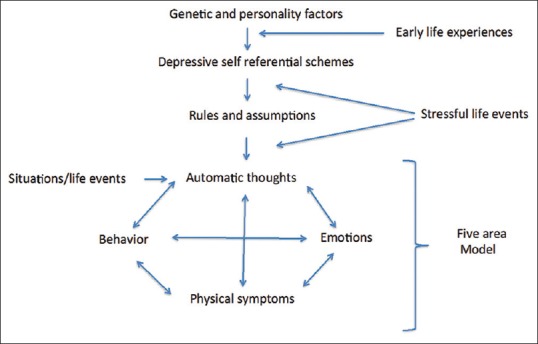
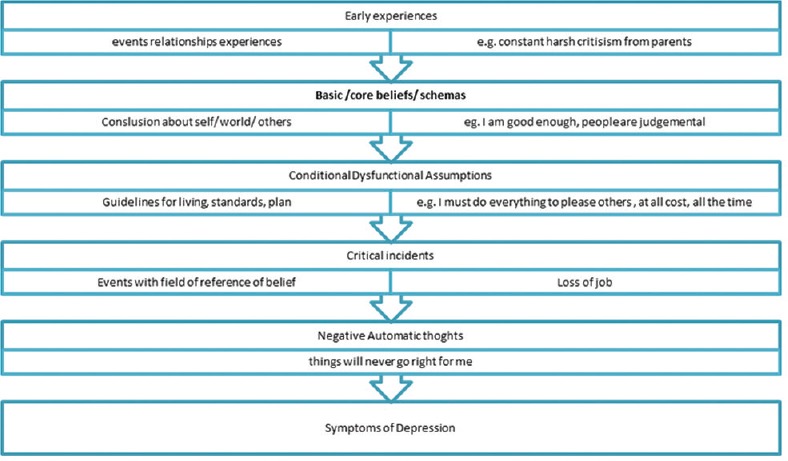
INTRODUCTION Depressive disorders are one of the most common psychiatric disorders that occur in people of all ages across all world regions. Although it may present at any age however adolescence to early adults is the most common age of onset, and females are affected two times more in comparison to the males. Depressive disorders can occur as heterogeneous conditions in clinical scenario ranging from transient minor symptoms to severe and debilitating clinical conditions, causing severe social and occupational impairments. Usually, it presents with constellations of cognitive, emotional, behavioral, physiological, interpersonal, social, and occupational symptoms. The illness can be of various severities, and a significant proportion of the patients can have recurrent illness. Depression is also highly comorbid with several psychiatric and medical illnesses such as anxiety disorders, substance use, obsessive–compulsive disorder, diabetes, hypertension, and cardiovascular illnesses. Major depressive disorders accounted for around 8.2% global years lived with disability (YLD) in 2010, and it was the second leading cause of the YLDs. In addition, they also contribute to the burden of several other disorders indirectly such as suicide and ischemic heart disease.[1] EVIDENCE BASE FOR COGNITIVE BEHAVIORAL THERAPY IN DEPRESSION Cognitive behavioral therapy (CBT) is one of the most evidence-based psychological interventions for the treatment of several psychiatric disorders such as depression, anxiety disorders, somatoform disorder, and substance use disorder. The uses are recently extended to psychotic disorders, behavioral medicine, marital discord, stressful life situations, and many other clinical conditions. A sufficient number of researches have been conducted and shown the efficacy of CBT in depressive disorders. A meta-analysis of 115 studies has shown that CBT is an effective treatment strategy for depression and combined treatment with pharmacotherapy is significantly more effective than pharmacotherapy alone.[2] Evidence also suggests that relapse rate of patient treated with CBT is lower in comparison to the patients treated with pharmacotherapy alone.[3] Treatment guidelines for the depression suggest that psychological interventions are effective and acceptable strategy for treatment. The psychological interventions are most commonly used for mild-to-moderate depressive episodes. As per the prevailing situations of India with regards to significant lesser availability of trained therapist in most of the places and patients preferences, the pharmacological interventions are offered as the first-line treatment modalities for treatment of depression. Indication for Cognitive behavior therapy as enlisted in table 1.Table 1: Indications for cognitive behavioral therapy (situations that can call for preferred use of the psychological interventions) areCONTRAINDICATIONS FOR COGNITIVE BEHAVIORAL THERAPY There is no absolute contraindication to CBT; however, it is often reported that clients with comorbid severe personality disorders such as antisocial personality disorders and subnormal intelligence are difficult to manage through CBT. Special training and expertise may be needed for the treatment of these clients. Patient with severe depression with psychosis and/or suicidality might be difficult to manage with CBT alone and need medications and other treatment before considering CBT. Organicity should be ruled out using clinical evaluation and relevant investigations, as and when required. There are many advantages of CBT in depression as given in table 2Table 2: Advantages of cognitive behavioral therapy in depressionCHOICE OF TREATMENT SETTINGS CBT can be done on an Out Patient Department (OPD) basis with regular planned sessions. Each session lasts for about 45 min–1 h depending on the suitability for both patients and therapists. In specific situations, the CBT can be delivered in inpatient settings along with treatment as usual such as adjuvant treatment in severe depression, high risk for self-harm or suicidal patients, patients with multiple medical or psychiatric comorbidities and in patients hospitalized due to social reasons. ASSESSMENT AND EVALUATION FOR THE THERAPY A detail diagnostic assessment is needed for the assessment of psychopathology, premorbid personality, diagnosis, severity, presence of suicidal ideations, and comorbidities. Baseline assessment of severity using a brief scale will be helpful in mutual understanding of severity before starting therapy and also to track the progress. Clients during depressive illness often fail to recognize early improvement and undermine any positive change. Objective rating scale hence helps in pointing out the progress and can also help in determining agenda during therapy process. Beck Depression Inventory (A. T. Beck, Steer, and Brown, 1996), the Depression Anxiety Stress Scales (Lovibond and Lovibond, 1995), Montgomery-Asberg Depression Rating
Overview
The claims and statistics of this paper haven’t been checked yet.
Free: it reads the open-access text and checks the first 5 claims that cite a source we can check. Create a free account to check every claim.
Integrity signals
Registry
Cites
Statistics
Figures
Verification
Claims the paper makes
The claims and statistics of this paper haven’t been checked yet.
Free: it reads the open-access text and checks the first 5 claims that cite a source we can check. Create a free account to check every claim.
Claims other papers make about this one
Each is checked against this paper’s own text: does it say what the citing paper says it does?
The source backs part of the claim, not all of it — or backs it for a different population, condition or comparison.
In the citing paper
“Our review also found that the effects on stress are consistent with the literature on mindfulness and CBT showing a positive effect on stress [88,93].”
From Psychological Interventions and Those With Elements of Positive Psychology for Child and Youth Mental Health During the COVID-19 Pandemic: Literature Review, Lessons Learned, and Areas for Future Knowledge Dissemination (2024) · cites this paper as [88]
Experimental — accuracy not yet measuredThe source backs part of the claim, not all of it — or backs it for a different population, condition or comparison.
In the citing paper
“Previous research has found that mindfulness and CBT are effective for anxiety and depression [85-88], confirming our findings.”
From Psychological Interventions and Those With Elements of Positive Psychology for Child and Youth Mental Health During the COVID-19 Pandemic: Literature Review, Lessons Learned, and Areas for Future Knowledge Dissemination (2024) · cites this paper as [88]
Experimental — accuracy not yet measured
Self-check
Percentages, sums and reported differences re-computed from the paper’s own numbers.
The self-check needs the paper’s full text.
Citations
Cites
Dimidjian, S., Hollon, S. D., Dobson, K. S., Schmaling, K. B., Kohlenberg, R. J., Addis, M. E., Gallop, R., McGlinchey, J. B., Markley, D. K., Gollan, J. K., et al. (2006) · Journal of Consulting and Clinical Psychology · doi:10.1037/0022-006x.74.4.658 · Cited by 1,607
Shapiro, D. A., Barkham, M., Rees, A., Hardy, G. E., Reynolds, S., & Startup, M. (1994) · Journal of Consulting and Clinical Psychology · doi:10.1037/0022-006x.62.3.522 · Cited by 485
Cognitive behaviour therapy for depressive disorders
Fennell, M. J. V. (2012) · doi:10.1093/med/9780199696758.003.0167 · Cited by 22 · cited 1×
“A meta-analysis of 115 studies has shown that CBT is an effective treatment strategy for depression and combined treatment with pharmacotherapy is significantly more effective than pharmacotherapy alone.[2] Evidence also suggests that relapse rate of patient treated with CBT is lower in comparison to the patients trea…”
Combined Pharmacotherapy and Psychological Treatment for Depression: A Systematic Review
Pampallona, S., Bollini, P., Tibaldi, G., Kupelnick, B., & Munizza, C. (2004) · Archives of General Psychiatry · doi:10.1001/archpsyc.61.7.714 · Cited by 5
Cited by
Items 101–143 of 143
Nancye, P. M., Husni, A., & Sawitri, D. R. (2023) · Psychiatry Nursing Journal (Jurnal Keperawatan Jiwa) · doi:10.20473/pnj.v5i2.48007 · Cited by 1
Cognitive Behavioral Therapy (CBT)
Martin, C. E. (2023) · Springer eBooks · doi:10.1007/978-3-031-38149-2_11
Tahvilian, M., Foroozandeh, E., & Banitaba, S. M. (2023) · Journal of Multidisciplinary Care · doi:10.34172/jmdc.1172 · Cited by 1
Netto, F. N., Nunes, S. A. N., Menuchi, M. R. T. P., & Fernandes, M. G. (2024) · Psicologia Argumento · doi:10.7213/psicolargum.42.116.ao12 · Cited by 1
Group Cognitive-Behavioral Therapy for Reducing Anxiety in Middle-Aged Women
Rinaldi, M. R., & Musawwamah, Q. A. (2024) · Tazkiya Journal of Psychology · doi:10.15408/tazkiya.v12i1.32225 · Cited by 1
Demystifying the Dementia Divide
Ione, A. (2024) · Springer eBooks · doi:10.1007/978-3-031-55440-7_4
Alsaid, H. M., Maher, A. A., Fahmy, E. M., Darwesh, A. A. E.-M., Abdelhakiem, N. M., Badawy, M. S., & Ragab, W. M. (2024) · Research Square · doi:10.21203/rs.3.rs-4213319/v1 · Cited by 1
HYPNOTHERAPY FOR MAJOR DEPRESSIVE DISORDER: A SYSTEMATIC REVIEW OF RANDOMIZED CLINICAL TRIALSPreprint
Souza, F. L., Moura, M., Elkins, G., & Silva, J. V. (2024) · medRxiv · doi:10.1101/2024.07.15.24310435
Samonte, M. J. C., Caluya, N. C. C., Competente, L. A. M., & Relayo, R. A. (2024) · International Conference on Computer and Communication Systems (ICCCS) · doi:10.1109/icccs61882.2024.10603248
Cognitive Behavioral Therapy of Depression
Keskin, R. D., & Bulut, M. (2024) · doi:10.69860/nobel.9786053359456.6
Obara-Gołębiowska, M. (2024) · Kwartalnik Pedagogiczny · doi:10.31338/2657-6007.kp.2024-1.1 · Cited by 1
Brain Insights and Resolution of Youth Depression through Neurotechnology
Ejaz, O., Hasan, M. A., Ashraf, M., & Qazi, S. A. (2024) · Clinical EEG and Neuroscience · doi:10.1177/15500594241304512
Individualized Psychotherapy: A Review
Uzun, N. B., & Yorulmaz, O. (2025) · Psikiyatride Guncel Yaklasimlar - Current Approaches in Psychiatry · doi:10.18863/pgy.1518900
Korupolu, R., Ratcliff, C. G., Andampour, A., Robinson‐Whelen, S., Lohiya, S., Cohen, A. S., Bakos‐Block, C., & Champagne‐Langabeer, T. (2025) · Journal of Spinal Cord Medicine · doi:10.1080/10790268.2025.2457807
Dechant, M., Lash, E., Shokr, S., & O’Driscoll, C. (2025) · doi:10.2196/preprints.74411
Non-pharmacologic Treatment for Musculoskeletal Conditions
Olivier, T. J., & Sharma, G. S. (2025) · Springer eBooks · doi:10.1007/978-3-031-86057-7_18
Bibliometric and visual analysis of overlooked fatigue in kidney transplantation: a narrative review
Zhu, X., Zhu, R., He, J., Zhang, H., Qi, H., Chen, B., Zhang, M., Gou, R., Zhu, Y., Mu, J., et al. (2025) · Annals of Medicine and Surgery · doi:10.1097/ms9.0000000000003657
The science behind non-pharmacological interventions
Ayoubkhan, A. A., Awan, S., Jindal, V., Murtuzapurwala, R., & Fereidouni, A. (2025) · Progress in brain research · doi:10.1016/bs.pbr.2025.08.020
Addressing Depression and Insomnia in Cognitive Behavioral Therapy
Bernstein, R. A., Dao, A., & Ezawa, I. D. (2025) · CBT: science into practice · doi:10.1007/978-3-031-92265-7_5
da Rocha, R. E. R., de Andrade, S. F., Alberti, A., Cruz, R. M., da Silva, F. N., Bridi, D. A., de Souza, J. T., Pitanga, F. H., Bianchi, R. A., Moro, A. C. L., et al. (2025) · Biomedicines · doi:10.3390/biomedicines13102354 · Cited by 1
“This may have helped modify thoughts and behaviors, enabling participants to face every day professional and personal challenges with greater emotional balance, reduced stress, and improved cognitive clarity [31].”
Interventions for Improving Psychological Symptoms of PCOS Women
Varma, A., & Srivastava, A. (2025) · BENTHAM SCIENCE PUBLISHERS eBooks · doi:10.2174/9798898810962125010023
Boran, P., Dönmez, M., Barış, E., Us, M. C., Altaş, Z. M., Nisar, A., Atif, N., Sikander, S., Hıdıroğlu, S., Save, D., et al. (2023) · Figshare · doi:10.6084/m9.figshare.22607983
Yokoyama, S., Kagawa, F., Takamura, M., Takagaki, K., Kambara, K., Mitsuyama, Y., Shimizu, A., Okada, G., & Okamoto, Y. (2023) · Figshare · doi:10.6084/m9.figshare.22612103
UK Medical Cannabis Registry: A two-year case series of clinical outcomes in depression
Lillywhite, E., Erridge, S., Clarke, E., McLachlan, K., Coomber, R., Asghar, M., Bhoskar, U., Crews, M., Angelis, A. D., Imran, M., et al. (2026) · Journal of Affective Disorders · doi:10.1016/j.jad.2025.121130
Rusch, A., Stilwell, S. M., Ammann, A., Choi, S. Y., & Smith, S. N. (2026) · School Mental Health · doi:10.1007/s12310-025-09838-y
Ip, V., Jegatheeswaran, S., Cheema, A. A., FitzGerald, M., Wakif, Z., Thind, J. K., Kyte, S., Yung, S., Raiker, R., Ansar, M. A., et al. (2026) · Cognitive Behaviour Therapy · doi:10.1080/16506073.2026.2623505 · Cited by 2
Psychosocial Predictors of Spinal Cord Injury Pain: The Canadian Spinal Cord Injury Pain Survey
Buren, R., Noguchi, K. S., Holtzman, S., & Ginis, K. A. M. (2026) · Archives of Physical Medicine and Rehabilitation · doi:10.1016/j.apmr.2026.04.003
Tang, Q., Yang, W., Liu, X., & Sun, X. (2026) · Current Psychology · doi:10.1007/s12144-026-09422-w
The virtue of temperance: a neurobiological perspective
Palacios, J., Gordon, L., & Messias, E. (2026) · Frontiers in Human Neuroscience · doi:10.3389/fnhum.2026.1674301
“However, many patients receive cognitive behavioral therapy (CBT) either independently or in combination with pharmacotherapy to gain tools for managing a wide array of conditions ranging from depression to substance use disorders (Gautam et al., 2020; Magill et al., 2023).”
Insuasti, J. P. B., Vargas, D. P. C., & Yánez, V. A. V. (2026) · Esprint Investigación · doi:10.61347/ei.v5i1.283
Barzegar, A., Pourasghar, M., Hashemi‐Soteh, M. B., Baki, B., & Ghalehnoei, H. (2026) · Neurochemical Journal · doi:10.1134/s1819712426700133
Kan, S., Li, X., Chen, N., & Zhang, Y. (2026) · Medicine · doi:10.1097/md.0000000000048780 · Cited by 1
Othman, S. M. E., Blekkenhorst, L. C., Akpan, A., Ngune, I., McKay, N., Kennedy, A. J., Armstrong, E., Hunter, M. L., Murray, K., Coleman, M., et al. (2026) · BJPsych Open · doi:10.1192/bjo.2026.12018
Li, K., Ma, M., Xu, S., Xie, X., Yang, C., Zhang, J.-Y., Huang, L., Wang, J., Wu, L., Feng, T., et al. (2026) · Psychology and Psychotherapy Theory Research and Practice · doi:10.1111/papt.70090
Navigating the storm: Understanding and managing depression during menopause in women
Saini, A., Verma, I., & Bhatia, R. (2026) · Scripta Medica · doi:10.5937/scriptamed57-61696
Self-efficacy effects in combined CBT-attention training for pediatric anxiety
Massac, L. A., Byrne, M. E., Bar‐Haim, Y., Pine, D. S., & Lewis, K. M. (2026) · Journal of Mood and Anxiety Disorders · doi:10.1016/j.xjmad.2026.100198
“Cognitive-behavioral therapy (CBT) is a well-supported, evidence-based psychological intervention for pediatric anxiety disorders [1,2].”
zad, E. P., Parvizifard, A., Foroughi, A., & Parvizifard, O. (2026) · Research Square · doi:10.21203/rs.3.rs-10417364/v1
Yang, A. Y., Zhang, Y., & Yang, S. (2026) · Frontiers in Psychology · doi:10.3389/fpsyg.2026.1816161
“It emphasizes the interactions between thoughts, feelings, and behaviors, aiming to reduce depressive symptoms and enhance coping abilities (Gautam et al., 2020; Miller and Campo, 2021).”
Unlocking New Avenues in Inpatient Care: The Digital Mental Health transformation in India
Devulkar, N., Ray, S. P., Nadaf, H. K., Nadaf, H., & Jabade, M. (2026) · Investigación y Educación en Enfermería · doi:10.17533/udea.iee.v44n2e06
Santos, B. U. S., de Pinho, L. G., Silva, L., Pires, R., Montesó‐Curto, P., & Sequeira, C. (2026) · International Nursing Review · doi:10.1111/inr.70220
Minglani, V. V., Patel, M. B., & Upadhyay, T. K. (2026) · DARU Journal of Pharmaceutical Sciences · doi:10.1007/s40199-026-00635-9 · Cited by 1
Sedaghati, F., Stetsenko, A., McMillan, I. O., Dana, Z., & Nagra, H. (2026) · Journal of Clinical Medicine · doi:10.3390/jcm15197677
Metadata
- Authors
- Gautam, M., Tripathi, A., Deshmukh, D., & Gaur, M.
- Affiliations
- King George's Medical University (IN)
- Mahatma Gandhi Mission Medical College and Hospital (IN)
- Corresponding author
- Gautam, Manaswi
- Venue
- Indian Journal of Psychiatry
- Published
- 2020
- Volume
- 62
- Issue
- 8
- Pages
- 223
- ISSN
- 0019-5545 (ISSN-L)
- PMC
- PMC7001356
- OpenAlex
- W3001927018
- Semantic Scholar
- 4da63a0acf08c3cfe23c4354ac7d48f7ee1f475d
- Cited by
- 142
- References
- 4
- Citations by year
- 2026: 22 · 2025: 30 · 2024: 36 · 2023: 35 · 2022: 14 · 2021: 4 · 2020: 1
- FWCI
- 13.06
- Type
- journal article
- Language
- en
- Open access
- diamond
- doi.org
- Licence
- cc-by-nc-sa
- Locations
- Indian Journal of Psychiatry (publishedVersion, cc-by-nc-sa)
- Europe PMC (PubMed Central) (publishedVersion, cc-by-nc-sa)
- PubMed Central (publishedVersion, cc-by-nc-sa)
- PubMed (publishedVersion)
- DOAJ (DOAJ: Directory of Open Access Journals) (submittedVersion)
- Topics
- Social Sciences › Psychology › Experimental and Cognitive Psychology › Anxiety, Depression, Psychometrics, Treatment, Cognitive Processes
- Social Sciences › Psychology › Clinical Psychology › Psychotherapy Techniques and Applications
- Social Sciences › Psychology › Clinical Psychology › Psychological Treatments and Assessments
- Keywords
- cognitive behavioral therapy, depression, major depressive disorder, psychological intervention, pharmacotherapy, relapse prevention, comorbidities, treatment guidelines, therapist availability, India, evidence-based treatment, adolescent depression
About these checks
Registry, retraction, Cites and statistics results are computed, not judged, with one exception: a printed reference that no index lists is read once by a model before it counts as a citation error. Claims are extracted by a model and kept only when their quote appears verbatim in the text; each cited source is then checked, with a model’s help, for whether it says what the claim relies on. Those verdicts can be wrong — read the claim’s quote and the cited source before relying on one.
Statistics and arithmetic are recomputed, not judged.
Confidence bands are shown only for fields calibrated on our annotated test set. None is calibrated yet, so no band is shown.
What counts as a claim ›How we measure confidence ›How we check this ›
Are you an author, or do you see a problem with this page? Request a review
Data sources
Bibliographic data: Semantic Scholar, OpenAlex, Crossref.
Contains information from the Semantic Scholar Academic Graph Datasets, made available under the ODC Attribution License (ODC-BY 1.0).
Semantic Scholar’s data is described in: Kinney, R., et al. (2023). The Semantic Scholar Open Data Platform. arXiv:2301.10140.
