

The DOI matches its Crossref record; 17 of the 17 references it cites were found in a registry or an index.
Telomere dynamics in induced pluripotent stem cells: Potentials for Human disease modeling
Overview
The claims and statistics of this paper haven’t been checked yet.
Run the check — free, no account needed. It reads the open-access text and checks the sources it cites.
Integrity signals
Registry
Cites
Statistics
Figures
Verification
Claims the paper makes
The claims and statistics of this paper haven’t been checked yet.
Run the check — free, no account needed. It reads the open-access text and checks the sources it cites.
Claims other papers make about this one
Each is checked against this paper’s own text: does it say what the citing paper says it does?
In the citing paper
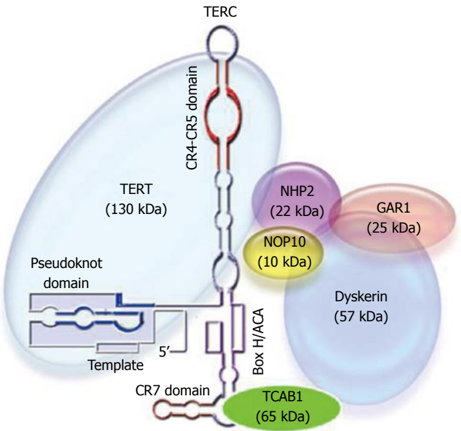
“Overall, the hTERT gene produces a 1132 amino acid polypeptide that is then converted into a functional 130 kilodalton protein called TERT [109].”
From Cell Immortality: In Vitro Effective Techniques to Achieve and Investigate Its Applications and Challenges (2024) · cites this paper as [109]
Self-check
Percentages, sums and reported differences re-computed from the paper’s own numbers.
The self-check needs the paper’s full text.
Citations
Cites
Suppression of induced pluripotent stem cell generation by the p53–p21 pathway
Hong, H., Takahashi, K., Ichisaka, T., Aoi, T., Kanagawa, O., Nakagawa, M., Okita, K., & Yamanaka, S. (2009) · Nature · doi:10.1038/nature08235 · Cited by 1,301
Somatic coding mutations in human induced pluripotent stem cells
Gore, A., Li, Z., Fung, H.-L., Young, J. E., Agarwal, S., Antosiewicz-Bourget, J., Canto, I., Giorgetti, A., Israel, M. A., Kiskinis, E., et al. (2011) · Nature · doi:10.1038/nature09805 · Cited by 1,273
Linking the p53 tumour suppressor pathway to somatic cell reprogramming
Kawamura, T., Suzuki, J., Wang, Y. V., Menendez, S., Morera, L. B., Raya, A., Wahl, G. M., & Belmonte, J. C. I. (2009) · Nature · doi:10.1038/nature08311 · Cited by 1,115
A p53-mediated DNA damage response limits reprogramming to ensure iPS cell genomic integrity
Marión, R. M., Strati, K., Li, H., Murga, M., Blanco, R., Ortega, S., Fernandez-Capetillo, O., Serrano, M., & Blasco, M. A. (2009) · Nature · doi:10.1038/nature08287 · Cited by 1,028
Heiss, N. S., Knight, S. W., Vulliamy, T. J., Klauck, S. M., Wiemann, S., Mason, P. J., Poustka, A., & Dokal, I. (1998) · Nature Genetics · doi:10.1038/ng0598-32 · Cited by 976
The RNA component of telomerase is mutated in autosomal dominant dyskeratosis congenita
Vulliamy, T., Marrone, A., Goldman, F., Dearlove, A., Bessler, M., Mason, P. J., & Dokal, I. (2001) · Nature · doi:10.1038/35096585 · Cited by 960
Laurent, L. C., Ulitsky, I., Slavin, I., Tran, H., Schork, A., Morey, R., Lynch, C., Harness, J. V., Lee, S., Barrero, M. J., et al. (2011) · Cell stem cell · doi:10.1016/j.stem.2010.12.003 · Cited by 890
Senescence impairs successful reprogramming to pluripotent stem cells
Banito, A., Rashid, S. T., Acosta, J. C., Li, S., Pereira, C. F., Geti, I., Pinho, S., Silva, J. C., Azuara, V., Walsh, M., et al. (2009) · Genes & Development · doi:10.1101/gad.1811609 · Cited by 642
Dyskeratosis congenita in all its forms
Dokal, I. (2000) · British Journal of Haematology · doi:10.1046/j.1365-2141.2000.02109.x · Cited by 575
A Human Telomerase Holoenzyme Protein Required for Cajal Body Localization and Telomere Synthesis
Venteicher, A. S., Abreu, E. B., Meng, Z., McCann, K. E., Terns, R. M., Veenstra, T. D., Terns, M. P., & Artandi, S. E. (2009) · Science · doi:10.1126/science.1165357 · Cited by 522
Research works printed but not linked: 64
- Olovnikov AM. A theory of marginotomy. The incomplete copying of template margin in enzymic synthesis of poly- nucleotides and biological significance of the phenomenon. J Theor Biol 1973; 41: 181-190
- Watson JD. Origin of concatemeric T7 DNA. Nat New Biol 1972; 239: 197-201
- Harley CB, Futcher AB, Greider CW. Telomeres shorten dur- ing ageing of human fibroblasts. Nature 1990; 345: 458-460
- Harley CB, Vaziri H, Counter CM, Allsopp RC. The telomere hypothesis of cellular aging. Exp Gerontol 1992; 27: 375-382
- HAYFLICK L. The limited in vitro lifetime of human diploid cell strains. Exp Cell Res 1965; 37: 614-636
- Autexier C, Lue NF. The structure and function of telomer- ase reverse transcriptase. Annu Rev Biochem 2006; 75: 493-517
- Chen JL, Greider CW. Telomerase RNA structure and func- tion: implications for dyskeratosis congenita. Trends Biochem Sci 2004; 29: 183-192
- Alter BP, Giri N, Savage SA, Rosenberg PS. Cancer in dyske- ratosis congenita. Blood 2009; 113: 6549-6557 11
- Alter BP, Baerlocher GM, Savage SA, Chanock SJ, Weksler BB, Willner JP, Peters JA, Giri N, Lansdorp PM. Very short telomere length by flow fluorescence in situ hybridization identifies patients with dyskeratosis congenita. Blood 2007; 110: 1439-1447
- Marrone A, Walne A, Dokal I. Dyskeratosis congenita: telomerase, telomeres and anticipation. Curr Opin Genet Dev 2005; 15: 249-257
- Mitchell JR, Wood E, Collins K. A telomerase component is defective in the human disease dyskeratosis congenita. Na- ture 1999; 402: 551-555
- Wong JM, Collins K. Telomerase RNA level limits telomere maintenance in X-linked dyskeratosis congenita. Genes Dev 2006; 20: 2848-2858
- Ding YG, Zhu TS, Jiang W, Yang Y, Bu DF, Tu P, Zhu XJ, Wang BX. Identification of a novel mutation and a de novo mutation in DKC1 in two Chinese pedigrees with Dyskera- tosis congenita. J Invest Dermatol 2004; 123: 470-473
- Heiss NS, Mégarbané A, Klauck SM, Kreuz FR, Makhoul E, Majewski F, Poustka A. One novel and two recurrent mis- sense DKC1 mutations in patients with dyskeratosis con- genita (DKC). Genet Couns 2001; 12: 129-136
- Hiramatsu H, Fujii T, Kitoh T, Sawada M, Osaka M, Koami K, Irino T, Miyajima T, Ito M, Sugiyama T, Okuno T. A novel missense mutation in the DKC1 gene in a Japanese family with X-linked dyskeratosis congenita. Pediatr Hematol Oncol 2002; 19: 413-419
- Kanegane H, Kasahara Y, Okamura J, Hongo T, Tanaka R, Nomura K, Kojima S, Miyawaki T. Identification of DKC1 gene mutations in Japanese patients with X-linked dyskera- tosis congenita. Br J Haematol 2005; 129: 432-434
- Knight SW, Heiss NS, Vulliamy TJ, Greschner S, Stavrides G, Pai GS, Lestringant G, Varma N, Mason PJ, Dokal I, Poustka A. X-linked dyskeratosis congenita is predominantly caused by missense mutations in the DKC1 gene. Am J Hum Genet 1999; 65: 50-58 21
- Knight SW, Vulliamy TJ, Morgan B, Devriendt K, Mason PJ, Dokal I. Identification of novel DKC1 mutations in patients with dyskeratosis congenita: implications for pathophysiol- ogy and diagnosis. Hum Genet 2001; 108: 299-303
- Lin JH, Lee JY, Tsao CJ, Chao SC. DKC1 gene mutation in a Taiwanese kindred with X-linked dyskeratosis congenita. Kaohsiung J Med Sci 2002; 18: 573-577
- Salowsky R, Heiss NS, Benner A, Wittig R, Poustka A. Basal transcription activity of the dyskeratosis congenita gene is mediated by Sp1 and Sp3 and a patient mutation in a Sp1 binding site is associated with decreased promoter activity. Gene 2002; 293: 9-19 25
- Vulliamy TJ, Knight SW, Heiss NS, Smith OP, Poustka A, Dokal I, Mason PJ. Dyskeratosis congenita caused by a 3' de- letion: germline and somatic mosaicism in a female carrier. Blood 1999; 94: 1254-1260
- He J, Navarrete S, Jasinski M, Vulliamy T, Dokal I, Bessler M, Mason PJ. Targeted disruption of Dkc1, the gene mutated in X-linked dyskeratosis congenita, causes embryonic lethality in mice. Oncogene 2002; 21: 7740-7744
- Carroll KA, Ly H. Telomere dysfunction in human diseases: the long and short of it! Int J Clin Exp Pathol 2009; 2: 528-543
- Venteicher AS, Artandi SE. TCAB1: driving telomerase to Cajal bodies. Cell Cycle 2009; 8: 1329-1331 34
- Gurdon JB, Melton DA. Nuclear reprogramming in cells. Science 2008; 322: 1811-1815
- Takahashi K, Yamanaka S. Induction of pluripotent stem cells from mouse embryonic and adult fibroblast cultures by defined factors. Cell 2006; 126: 663-676
- Meissner A, Wernig M, Jaenisch R. Direct reprogramming of genetically unmodified fibroblasts into pluripotent stem cells. Nat Biotechnol 2007; 25: 1177-1181
- Wernig M, Meissner A, Foreman R, Brambrink T, Ku M, Hochedlinger K, Bernstein BE, Jaenisch R. In vitro repro- gramming of fibroblasts into a pluripotent ES-cell-like state. Nature 2007; 448: 318-324 38
- Park IH, Zhao R, West JA, Yabuuchi A, Huo H, Ince TA, Le- rou PH, Lensch MW, Daley GQ. Reprogramming of human somatic cells to pluripotency with defined factors. Nature 2008; 451: 141-146
- Takahashi K, Tanabe K, Ohnuki M, Narita M, Ichisaka T, Tomoda K, Yamanaka S. Induction of pluripotent stem cells from adult human fibroblasts by defined factors. Cell 2007; 131: 861-872
- Yu J, Vodyanik MA, Smuga-Otto K, Antosiewicz-Bourget J, Frane JL, Tian S, Nie J, Jonsdottir GA, Ruotti V, Stewart R, Slukvin II, Thomson JA. Induced pluripotent stem cell lines derived from human somatic cells. Science 2007; 318: 1917-1920
- Li H, Collado M, Villasante A, Strati K, Ortega S, Cañamero M, Blasco MA, Serrano M. The Ink4/Arf locus is a barrier for iPS cell reprogramming. Nature 2009; 460: 1136-1139
- Shiels PG, Kind AJ, Campbell KH, Wilmut I, Waddington D, Colman A, Schnieke AE. Analysis of telomere length in Dolly, a sheep derived by nuclear transfer. Cloning 1999; 1: 119-125
- Shiels PG, Kind AJ, Campbell KH, Waddington D, Wilmut I, Colman A, Schnieke AE. Analysis of telomere lengths in cloned sheep. Nature 1999; 399: 316-317
- Schaetzlein S, Rudolph KL. Telomere length regulation during cloning, embryogenesis and ageing. Reprod Fertil Dev 2005; 17: 85-96 50
- Marion RM, Strati K, Li H, Tejera A, Schoeftner S, Ortega S, Serrano M, Blasco MA. Telomeres acquire embryonic stem cell characteristics in induced pluripotent stem cells. Cell Stem Cell 2009; 4: 141-154
- Yehezkel S, Rebibo-Sabbah A, Segev Y, Tzukerman M, Shaked R, Huber I, Gepstein L, Skorecki K, Selig S. Repro- gramming of telomeric regions during the generation of human induced pluripotent stem cells and subsequent dif- ferentiation into fibroblast-like derivatives. Epigenetics 2011; 6: 63-75
- Mathew R, Jia W, Sharma A, Zhao Y, Clarke LE, Cheng X, Wang H, Salli U, Vrana KE, Robertson GP, Zhu J, Wang S. Robust activation of the human but not mouse telomerase gene during the induction of pluripotency. FASEB J 2010; 24: 2702-2715 53
- Suhr ST, Chang EA, Rodriguez RM, Wang K, Ross PJ, Bey- han Z, Murthy S, Cibelli JB. Telomere dynamics in human cells reprogrammed to pluripotency. PLoS One 2009; 4: e8124 54
- Agarwal S, Loh YH, McLoughlin EM, Huang J, Park IH, Miller JD, Huo H, Okuka M, Dos Reis RM, Loewer S, Ng HH, Keefe DL, Goldman FD, Klingelhutz AJ, Liu L, Daley GQ. Telomere elongation in induced pluripotent stem cells from dyskeratosis congenita patients. Nature 2010; 464: 292-296
- Feuerhahn S, Iglesias N, Panza A, Porro A, Lingner J. TERRA biogenesis, turnover and implications for function. FEBS Lett 2010; 584: 3812-3818
- Deng Z, Norseen J, Wiedmer A, Riethman H, Lieberman PM. TERRA RNA binding to TRF2 facilitates heterochromatin for- mation and ORC recruitment at telomeres. Mol Cell 2009; 35: 403-413
- Ohi Y, Qin H, Hong C, Blouin L, Polo JM, Guo T, Qi Z, Downey SL, Manos PD, Rossi DJ, Yu J, Hebrok M, Ho- chedlinger K, Costello JF, Song JS, Ramalho-Santos M. Incom- plete DNA methylation underlies a transcriptional memory of somatic cells in human iPS cells. Nat Cell Biol 2011; 13: 541-549
- Kim K, Doi A, Wen B, Ng K, Zhao R, Cahan P, Kim J, Aryee MJ, Ji H, Ehrlich LI, Yabuuchi A, Takeuchi A, Cunniff KC, Hongguang H, McKinney-Freeman S, Naveiras O, Yoon TJ, Irizarry RA, Jung N, Seita J, Hanna J, Murakami P, Jaenisch R, Weissleder R, Orkin SH, Weissman IL, Feinberg AP, Daley GQ. Epigenetic memory in induced pluripotent stem cells. Nature 2010; 467: 285-290 59
- Hewitt KJ, Shamis Y, Hayman RB, Margvelashvili M, Dong S, Carlson MW, Garlick JA. Epigenetic and phenotypic profile of fibroblasts derived from induced pluripotent stem cells. PLoS One 2011; 6: e17128 60
- Park IH, Arora N, Huo H, Maherali N, Ahfeldt T, Shimam- ura A, Lensch MW, Cowan C, Hochedlinger K, Daley GQ. Disease-specific induced pluripotent stem cells. Cell 2008; 134: 877-886
- Batista LF, Pech MF, Zhong FL, Nguyen HN, Xie KT, Zaug AJ, Crary SM, Choi J, Sebastiano V, Cherry A, Giri N, Wernig M, Alter BP, Cech TR, Savage SA, Reijo Pera RA, Artandi SE. Telomere shortening and loss of self-renewal in dyskeratosis congenita induced pluripotent stem cells. Nature 2011; 474: 399-402
- Agarwal S, Daley GQ. Telomere dynamics in dyskeratosis congenita: the long and the short of iPS. Cell Res 2011; 21: 1157-1160
- Kiskinis E, Eggan K. Progress toward the clinical application of patient-specific pluripotent stem cells. J Clin Invest 2010; 120: 51-59
- Lister R, Pelizzola M, Kida YS, Hawkins RD, Nery JR, Hon G, Antosiewicz-Bourget J, O'Malley R, Castanon R, Klugman S, Downes M, Yu R, Stewart R, Ren B, Thomson JA, Evans RM, Ecker JR. Hotspots of aberrant epigenomic reprogramming in human induced pluripotent stem cells. Nature 2011; 471: 68-73
- Pasi CE, Dereli-Öz A, Negrini S, Friedli M, Fragola G, Lom- bardo A, Van Houwe G, Naldini L, Casola S, Testa G, Trono D, Pelicci PG, Halazonetis TD. Genomic instability in induced stem cells. Cell Death Differ 2011; 18: 745-753
- Hussein SM, Batada NN, Vuoristo S, Ching RW, Autio R, Närvä E, Ng S, Sourour M, Hämäläinen R, Olsson C, Lundin K, Mikkola M, Trokovic R, Peitz M, Brüstle O, Bazett-Jones DP, Alitalo K, Lahesmaa R, Nagy A, Otonkoski T. Copy October 26, 2011|Volume 3|Issue 10| WJSC|www.wjgnet.com number variation and selection during reprogramming to pluripotency. Nature 2011; 471: 58-62
- Robbins RD, Prasain N, Maier BF, Yoder MC, Mirmira RG. Inducible pluripotent stem cells: not quite ready for prime time? Curr Opin Organ Transplant 2010; 15: 61-67
- Pfannkuche K, Liang H, Hannes T, Xi J, Fatima A, Nguemo F, Matzkies M, Wernig M, Jaenisch R, Pillekamp F, Halbach M, Schunkert H, Sarić T, Hescheler J, Reppel M. Cardiac myocytes derived from murine reprogrammed fibroblasts: intact hormonal regulation, cardiac ion channel expression and development of contractility. Cell Physiol Biochem 2009; 24: 73-86
- Kuzmenkin A, Liang H, Xu G, Pfannkuche K, Eichhorn H, Fatima A, Luo H, Saric T, Wernig M, Jaenisch R, Hescheler J. Functional characterization of cardiomyocytes derived from murine induced pluripotent stem cells in vitro. FASEB J 2009; 23: 4168-4180 73
- Hanna J, Wernig M, Markoulaki S, Sun CW, Meissner A, Cassady JP, Beard C, Brambrink T, Wu LC, Townes TM, Jae- nisch R. Treatment of sickle cell anemia mouse model with iPS cells generated from autologous skin. Science 2007; 318: 1920-1923
- Raya A, Rodríguez-Pizà I, Guenechea G, Vassena R, Na- varro S, Barrero MJ, Consiglio A, Castellà M, Río P, Sleep E, González F, Tiscornia G, Garreta E, Aasen T, Veiga A, Verma IM, Surrallés J, Bueren J, Izpisúa Belmonte JC. Disease- corrected haematopoietic progenitors from Fanconi anaemia induced pluripotent stem cells. Nature 2009; 460: 53-59 75
- Taura D, Sone M, Homma K, Oyamada N, Takahashi K, Tamura N, Yamanaka S, Nakao K. Induction and isolation of vascular cells from human induced pluripotent stem cells-- brief report. Arterioscler Thromb Vasc Biol 2009; 29: 1100-1103
- Tateishi K, He J, Taranova O, Liang G, D'Alessio AC, Zhang Y. Generation of insulin-secreting islet-like clusters from hu- man skin fibroblasts. J Biol Chem 2008; 283: 31601-31607
- Osakada F, Jin ZB, Hirami Y, Ikeda H, Danjyo T, Watanabe K, Sasai Y, Takahashi M. In vitro differentiation of retinal cells from human pluripotent stem cells by small-molecule induc- tion. J Cell Sci 2009; 122: 3169-3179 78
- Buchholz DE, Hikita ST, Rowland TJ, Friedrich AM, Hinman CR, Johnson LV, Clegg DO. Derivation of functional retinal pigmented epithelium from induced pluripotent stem cells. Stem Cells 2009; 27: 2427-2434 79
- Dimos JT, Rodolfa KT, Niakan KK, Weisenthal LM, Mitsu- moto H, Chung W, Croft GF, Saphier G, Leibel R, Goland R, Wichterle H, Henderson CE, Eggan K. Induced pluripotent stem cells generated from patients with ALS can be differen- tiated into motor neurons. Science 2008; 321: 1218-1221
- Wernig M, Zhao JP, Pruszak J, Hedlund E, Fu D, Soldner F, Broccoli V, Constantine-Paton M, Isacson O, Jaenisch R. Neu- rons derived from reprogrammed fibroblasts functionally integrate into the fetal brain and improve symptoms of rats with Parkinson's disease. Proc Natl Acad Sci USA 2008; 105: 5856-5861
- Xu D, Alipio Z, Fink LM, Adcock DM, Yang J, Ward DC, Ma Y. Phenotypic correction of murine hemophilia A using an iPS cell-based therapy. Proc Natl Acad Sci USA 2009; 106: 808-813
Cited by
Chalak, M., Hesaraki, M., Mirbahari, S. N., Yeganeh, M., Abdi, S., Rajabi, S., & Hemmatzadeh, F. (2024) · Life · doi:10.3390/life14030417 · Cited by 66
Metadata
- Authors
- Ly, H.
- Venue
- World Journal of Stem Cells
- Publisher
- Baishideng Publishing Group Inc.
- Published
- 2011
- Volume
- 3
- Issue
- 10
- Pages
- 89
- ISSN
- 1948-0210
- Cited by
- 12
- References
- 17
- Language
- en
About these checks
Registry, retraction, Cites and statistics results are computed, not judged, with one exception: a printed reference that no index lists is read once by a model before it counts as a citation error. Claims are extracted by a model and kept only when their quote appears verbatim in the text; each cited source is then checked, with a model’s help, for whether it says what the claim relies on. Those verdicts can be wrong — read the claim’s quote and the cited source before relying on one.
Statistics and arithmetic are recomputed, not judged.
Confidence bands are shown only for fields calibrated on our annotated test set. None is calibrated yet, so no band is shown.
What counts as a claim ›How we measure confidence ›How we check this ›
Are you an author, or do you see a problem with this page? Request a review
How to cite
Cite CoChat for the checks on this page, and the paper for its own findings.
- This page
- CoChat. (2026). Citation check: Telomere dynamics in induced pluripotent stem cells: Potentials for Human disease modeling. https://app.cochat.ai/papers/10.4252/wjsc.v3.i10.89
- The paper
- Ly, H. (2011). Telomere dynamics in induced pluripotent stem cells: Potentials for Human disease modeling. World Journal of Stem Cells. https://doi.org/10.4252/wjsc.v3.i10.89
