

The DOI matches its DataCite record; the references it cites are not checked yet.
This is not a Dataset: A Large Negation Benchmark to Challenge Large Language Models
Open accessAbstract
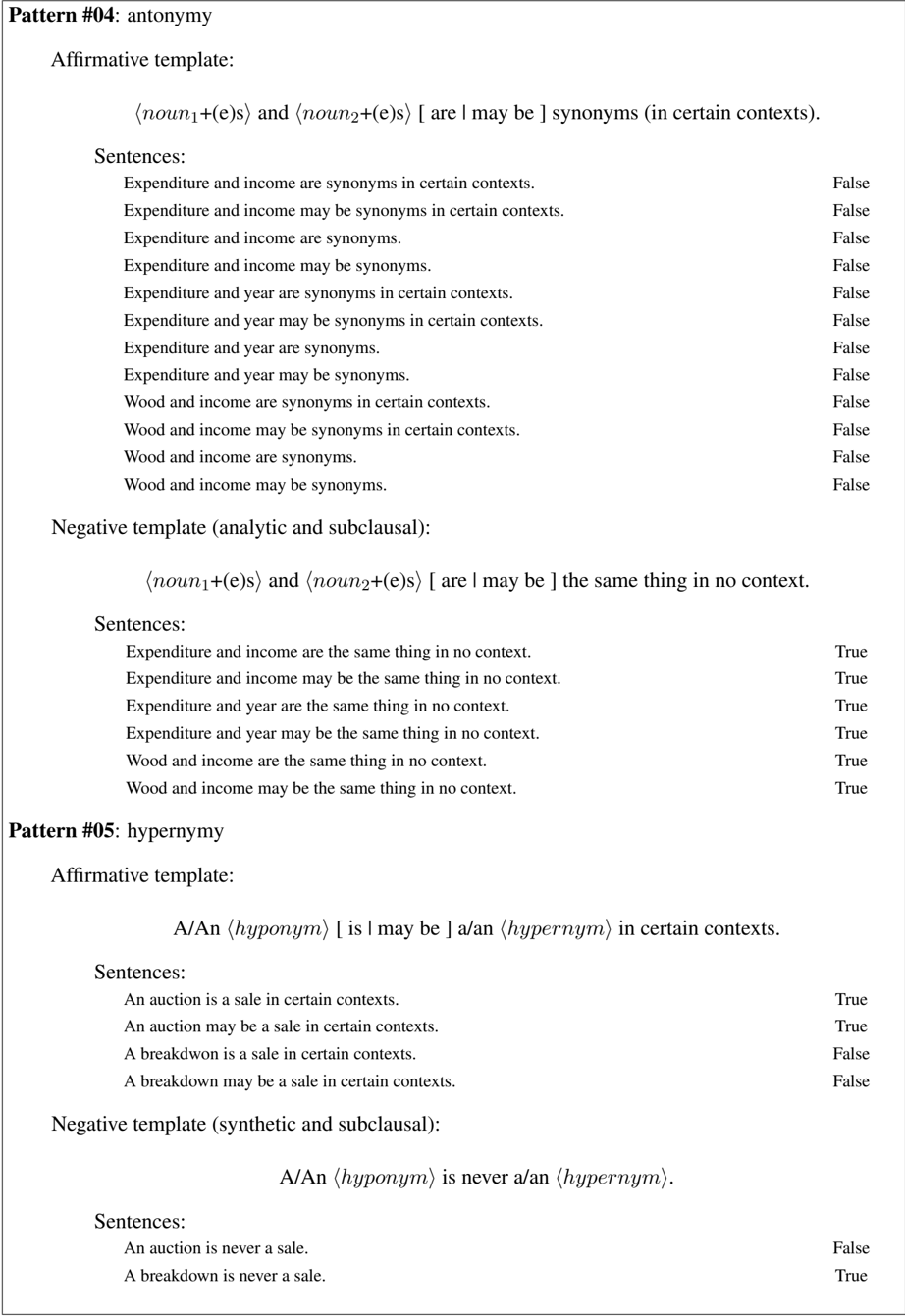
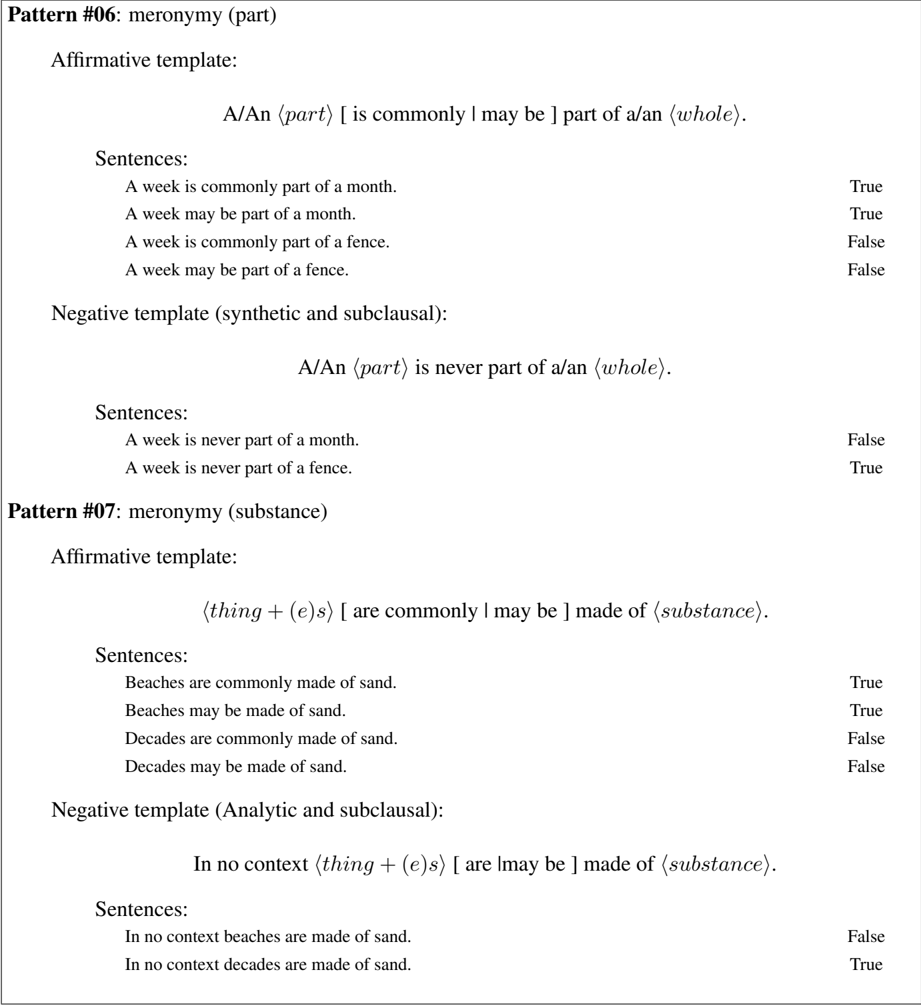
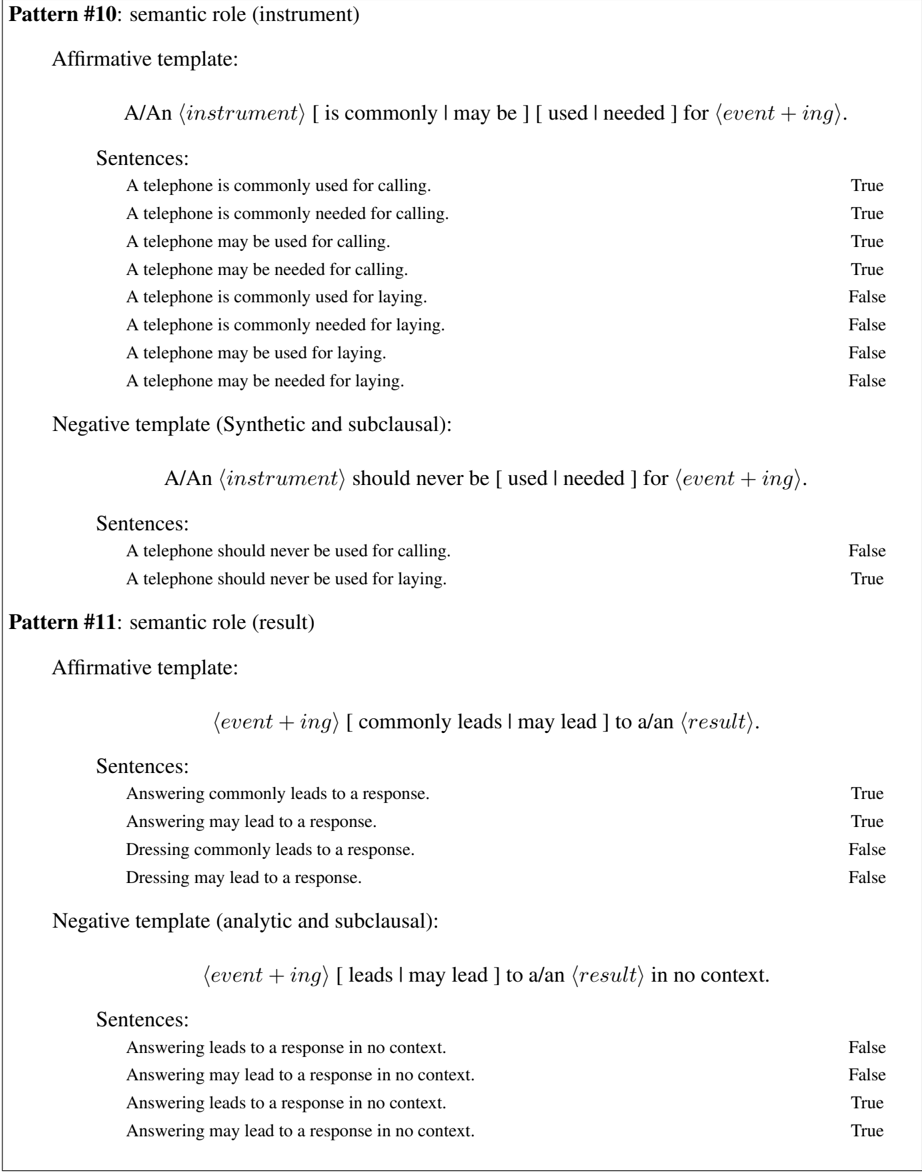
Although large language models (LLMs) have apparently acquired a certain level of grammatical knowledge and the ability to make generalizations, they fail to interpret negation, a crucial step in Natural Language Processing. We try to clarify the reasons for the sub-optimal performance of LLMs understanding negation. We introduce a large semi-automatically generated dataset of circa 400,000 descriptive sentences about commonsense knowledge that can be true or false in which negation is present in about 2/3 of the corpus in different forms. We have used our dataset with the largest available open LLMs in a zero-shot approach to grasp their generalization and inference capability and we have also fine-tuned some of the models to assess whether the understanding of negation can be trained. Our findings show that, while LLMs are proficient at classifying affirmative sentences, they struggle with negative sentences and lack a deep understanding of negation, often relying on superficial cues. Although fine-tuning the models on negative sentences improves their performance, the lack of generalization in handling negation is persistent, highlighting the ongoing challenges of LLMs regarding negation understanding and generalization. The dataset and code are publicly available.
Overview
The claims and statistics of this paper haven’t been checked yet.
Run the check — free, no account needed. It reads the open-access text and checks the sources it cites.
Integrity signals
Registry
Cites
Statistics
Figures
Verification
Claims the paper makes
The claims and statistics of this paper haven’t been checked yet.
Run the check — free, no account needed. It reads the open-access text and checks the sources it cites.
Claims other papers make about this one
Each is checked against this paper’s own text: does it say what the citing paper says it does?
In the citing paper
“A qualitative examination of responses with unsatisfied constraints suggests that LLMs often struggle with constraints involving numbers, negations, or long instructions with large number of constraints , which is consistent with findings from previous works (Sui et al., 2024; García-Ferrero et al., 2023; Truong et al., 2023; Jiang et al., 2024).”
From LLM Self-Correction with DeCRIM: Decompose, Critique, and Refine for Enhanced Following of Instructions with Multiple Constraints (2024) · cites this paper as García-Ferrero et al., 2023
Self-check
Percentages, sums and reported differences re-computed from the paper’s own numbers.
The self-check needs the paper’s full text.
Citations
The citation lists haven’t been fetched yet
References 29 · Cited by 18
Research works printed but not linked: 28
- Hiba Arnaout, Simon Razniewski, Gerhard Weikum, and Jeff Z. Pan. 2022. UnCommonSense: Informa- tive Negative Knowledge about Everyday Concepts. In Proceedings of the 31st ACM International Con- ference on Information & Knowledge Management, CIKM '22, pages 37--46, New York, NY, USA. Association for Computing Machinery. · DOI
- Jeremy Barnes, Erik Velldal, and Lilja Øvrelid. 2021. Improving sentiment analysis with multi-task learn- ing of negation. Natural Language Engineering, 27(2):249-269. · DOI
- Marco Baroni. 2020. Linguistic generalization and compositionality in modern artificial neural networks. Philosophical Transactions of the Royal Society B: Biological Sciences, 375(1791):20190307. · DOI
- Luisa Bentivogli, Arianna Bisazza, Mauro Cettolo, and Marcello Federico. 2016. Neural versus Phrase- Based Machine Translation Quality: a Case Study. In Proceedings of the 2016 Conference on Empirical Methods in Natural Language Processing, pages 257- 267, Austin, Texas. Association for Computational Linguistics. · DOI
- Luisa Bentivogli, Pamela Forner, Bernardo Magnini, and Emanuele Pianta. 2004. Revising the Word- net Domains Hierarchy: semantics, coverage and balancing. In Proc. of the Workshop on Multilin- gual Linguistic Resources, pages 94-101, Geneva, Switzerland. COLING.
- Stella Biderman, Hailey Schoelkopf, Quentin Anthony, Herbie Bradley, Kyle O'Brien, Eric Hallahan, Mo- hammad Aflah Khan, Shivanshu Purohit, USVSN Sai Prashanth, Edward Raff, Aviya Skowron, Lintang Sutawika, and Oskar van der Wal. 2023. Pythia: A Suite for Analyzing Large Language Models Across Training and Scaling. CoRR, abs/2304.01373. · DOI · Paper page
- Jordan Boyd-Graber, Christiane Fellbaum, Daniel Os- herson, and Robert Schapire. 2006. Adding dense, weighted connections to WordNet. In Proceedings of the third international WordNet conference, pages 29-36.
- Wendy W. Chapman, Will Bridewell, Paul Hanbury, Gregory F. Cooper, and Bruce G. Buchanan. 2001. A Simple Algorithm for Identifying Negated Findings and Diseases in Discharge Summaries. Journal of Biomedical Informatics, 34(5):301-310. · DOI
- Hyung Won Chung, Le Hou, Shayne Longpre, Barret Zoph, Yi Tay, William Fedus, Eric Li, Xuezhi Wang, Mostafa Dehghani, Siddhartha Brahma, Albert Web- son, Shixiang Shane Gu, Zhuyun Dai, Mirac Suz- gun, Xinyun Chen, Aakanksha Chowdhery, Sharan Narang, Gaurav Mishra, Adams Yu, Vincent Y. Zhao, Yanping Huang, Andrew M. Dai, Hongkun Yu, Slav Petrov, Ed H. Chi, Jeff Dean, Jacob Devlin, Adam Roberts, Denny Zhou, Quoc V. Le, and Jason Wei. 2022. Scaling instruction-finetuned language models. CoRR, abs/2210.11416. · DOI · Paper page
- Tim Dettmers, Mike Lewis, Younes Belkada, and Luke Zettlemoyer. 2022. LLM.int8(): 8-bit Ma- trix Multiplication for Transformers at Scale. CoRR, abs/2208.07339. · DOI · Paper page
- Tim Dettmers, Artidoro Pagnoni, Ari Holtzman, and Luke Zettlemoyer. 2023. QLoRA: Efficient Finetun- ing of Quantized LLMs. CoRR, abs/2305.14314. · DOI · Paper page
- C. Fellbaum, editor. 1998. WordNet: An Electronic Lexical Database. MIT Press.
- Christiane Fellbaum, Anne Osherson, and Peter E. Clark. 2009. Putting semantics into WordNet's "Mor- phosemantic" Links. In Zygmunt Vetulani and Hans Uszkoreit, editors, Human Language Technology. Challenges of the Information Society, LNAI 5603, pages 350-358. Springer.
- Andreas Grivas, Beatrice Alex, Claire Grover, Richard Tobin, and William Whiteley. 2020. Not a cute stroke: Analysis of Rule-and Neural Network-based Information Extraction Systems for Brain Radiology Reports. In Proceedings of the 11th International Workshop on Health Text Mining and Information Analysis, pages 24-37, Online. Association for Com- putational Linguistics. · DOI
- Md Mosharaf Hossain, Dhivya Chinnappa, and Eduardo Blanco. 2022. An Analysis of Negation in Natu- ral Language Understanding Corpora. In Proceed- ings of the 60th Annual Meeting of the Association for Computational Linguistics (Volume 2: Short Pa- pers), pages 716-723, Dublin, Ireland. Association for Computational Linguistics. · DOI
- Md Mosharaf Hossain, Venelin Kovatchev, Pranoy Dutta, Tiffany Kao, Elizabeth Wei, and Eduardo Blanco. 2020. An Analysis of Natural Language Inference Benchmarks through the Lens of Negation. In Proceedings of the 2020 Conference on Empirical Methods in Natural Language Processing (EMNLP), pages 9106-9118, Online. Association for Computa- tional Linguistics. · DOI
- Edward J. Hu, Yelong Shen, Phillip Wallis, Zeyuan Allen-Zhu, Yuanzhi Li, Shean Wang, Lu Wang, and Weizhu Chen. 2022. LoRA: Low-Rank Adaptation of Large Language Models. In The Tenth Inter- national Conference on Learning Representations, ICLR 2022, Virtual Event, April 25-29, 2022. Open- Review.net.
- Rubén Izquierdo, Armando Suárez, and German Rigau. 2007. Exploring the Automatic Selection of Ba- sic Level Concepts. In Proc. of the Int. Conf. on Recent Advances on Natural Language Processing (RANLP'07), volume 7.
- Jaap Jumelet and Dieuwke Hupkes. 2018. Do Lan- guage Models Understand Anything? On the Ability of LSTMs to Understand Negative Polarity Items. In Proceedings of the 2018 EMNLP Workshop Black- boxNLP: Analyzing and Interpreting Neural Net- works for NLP, pages 222-231, Brussels, Belgium. Association for Computational Linguistics. · DOI
- Nora Kassner and Hinrich Schütze. 2020. Negated and Misprimed Probes for Pretrained Language Models: Birds Can Talk, But Cannot Fly. In Proceedings of the 58th Annual Meeting of the Association for Computational Linguistics, pages 7811-7818, Online. Association for Computational Linguistics. · DOI
- Roser Morante and Walter Daelemans. 2012. ConanDoyle-neg: Annotation of negation cues and their scope in Conan Doyle stories. In Proceedings of the Eighth International Conference on Language Resources and Evaluation (LREC'12), pages 1563-1568, Istanbul, Turkey. European Language Resources Association (ELRA).
- Geoffrey K. Pullum, Rodney Huddleston, Rodney Hud- dleston, and Geoffrey K. Pullum. 2002. Negation, pages 785-850. Cambridge University Press. · DOI
- Jérémy Scheurer, Jon Ander Campos, Tomasz Kor- bak, Jun Shern Chan, Angelica Chen, Kyunghyun Cho, and Ethan Perez. 2023. Training Language Models with Language Feedback at Scale. CoRR, abs/2303.16755. · DOI · Paper page
- Gongbo Tang, Philipp Rönchen, Rico Sennrich, and Joakim Nivre. 2021. Revisiting Negation in Neural Machine Translation. Transactions of the Associa- tion for Computational Linguistics, 9:740-755. · DOI
- Hugo Touvron, Thibaut Lavril, Gautier Izacard, Xavier Martinet, Marie-Anne Lachaux, Timothée Lacroix, Baptiste Rozière, Naman Goyal, Eric Hambro, Faisal Azhar, Aurélien Rodriguez, Armand Joulin, Edouard Grave, and Guillaume Lample. 2023. LLaMA: Open and Efficient Foundation Language Models. CoRR, abs/2302.13971. · DOI · Paper page
- Thinh Hung Truong, Yulia Otmakhova, Timothy Bald- win, Trevor Cohn, Jey Han Lau, and Karin Verspoor. 2022. Not another Negation Benchmark: The NaN- NLI Test Suite for Sub-clausal Negation. In Pro- ceedings of the 2nd Conference of the Asia-Pacific Chapter of the Association for Computational Lin- guistics and the 12th International Joint Conference on Natural Language Processing (Volume 1: Long Papers), pages 883-894, Online only. Association for Computational Linguistics.
- David Vilares, Miguel A. Alonso, and Carlos Gómez- Rodríguez. 2015. On the usefulness of lexical and syntactic processing in polarity classification of Twit- ter messages. Journal of the Association for Informa- tion Science and Technology, 66(9):1799-1816. · DOI
- Can Xu, Qingfeng Sun, Kai Zheng, Xiubo Geng, Pu Zhao, Jiazhan Feng, Chongyang Tao, and Daxin Jiang. 2023. WizardLM: Empowering Large Lan- guage Models to Follow Complex Instructions. CoRR, abs/2304.12244. · DOI
Metadata
- Authors
- García-Ferrero, I., Altuna, B., Álvez, J., Gonzalez-Dios, I., & Rigau, G.
- Affiliations
- University of the Basque Country (ES)
- Venue
- arXiv
- Publisher
- arXiv
- Published
- 2023
- Pages
- 8596-8615
- arXiv
- 2310.15941
- OpenAlex
- W4389520812
- Cited by
- 18
- References
- 29
- Citations by year
- 2026: 8 · 2025: 7 · 2024: 3
- FWCI
- 3.19
- Type
- conference paper
- Language
- en
- Open access
- hybrid
- doi.org
- Licence
- Locations
- Conference on Empirical Methods in Natural Language Processing (EMNLP) (publishedVersion, cc-by)
- arXiv (Cornell University) (submittedVersion, cc-by-sa)
- arXiv (Cornell University)
- Funders
- European Commission
- Eusko Jaurlaritza
- Euskal Herriko Unibertsitatea (GIU21/044)
- Ministerio de Ciencia e Innovación (MCIN/AEI/10, 10.13039, / AEI/10, PID2020, MCIN /AEI /10.13039)
- European Regional Development Fund (MCIN/AEI/10, PID2020-112581GB-C22)
- Agencia Estatal de Investigación (13039, 10.13039, AEI/10, PCI2020-120717-2)
- Topics
- Physical Sciences › Computer Science › Artificial Intelligence › Topic Modeling
- Physical Sciences › Computer Science › Artificial Intelligence › Natural Language Processing Techniques
- Physical Sciences › Computer Science › Artificial Intelligence › Sentiment Analysis and Opinion Mining
- Keywords
- large language models, commonsense knowledge, descriptive sentences, zero-shot evaluation, fine-tuning, generalization, natural language understanding
About these checks
Registry, retraction, Cites and statistics results are computed, not judged, with one exception: a printed reference that no index lists is read once by a model before it counts as a citation error. Claims are extracted by a model and kept only when their quote appears verbatim in the text; each cited source is then checked, with a model’s help, for whether it says what the claim relies on. Those verdicts can be wrong — read the claim’s quote and the cited source before relying on one.
Statistics and arithmetic are recomputed, not judged.
Confidence bands are shown only for fields calibrated on our annotated test set. None is calibrated yet, so no band is shown.
What counts as a claim ›How we measure confidence ›How we check this ›
Are you an author, or do you see a problem with this page? Request a review
How to cite
Cite CoChat for the checks on this page, and the paper for its own findings.
- This page
- CoChat. (2026). Citation check: This is not a Dataset: A Large Negation Benchmark to Challenge Large Language Models. https://app.cochat.ai/papers/10.48550/arxiv.2310.15941
- The paper
- García-Ferrero, I., Altuna, B., Álvez, J., Gonzalez-Dios, I., & Rigau, G. (2023). This is not a Dataset: A Large Negation Benchmark to Challenge Large Language Models. arXiv. https://doi.org/10.48550/arxiv.2310.15941
