

Production and Characterization of the Properties of Soap using Alkali from Agricultural Waste
Open accessThe DOI matches its Crossref record; 10 of the 10 references it cites were found in a registry or an index; 1 of the 22 sources its claims cite were checked for support.
Abstract
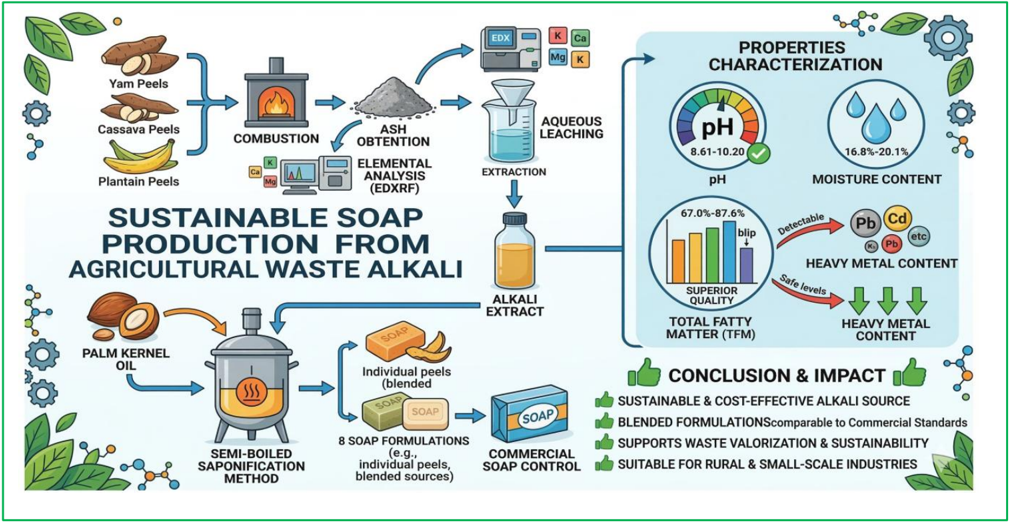
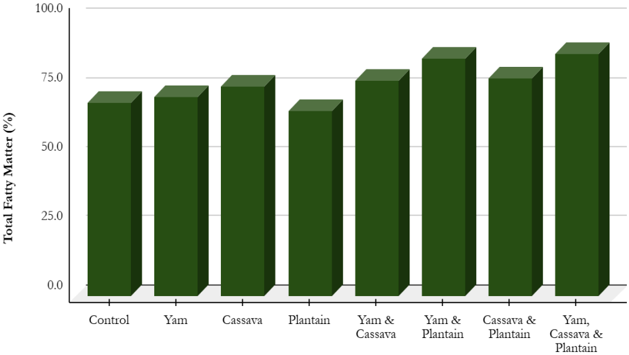
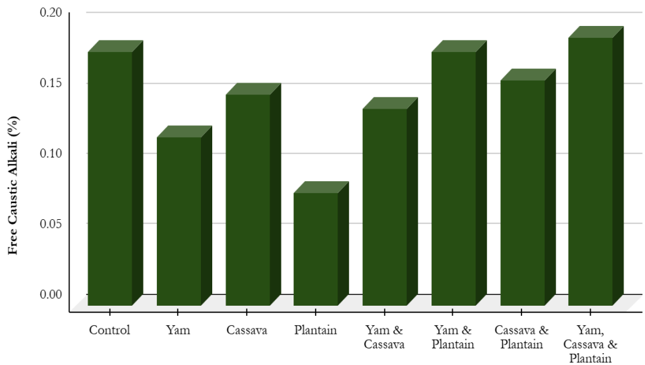
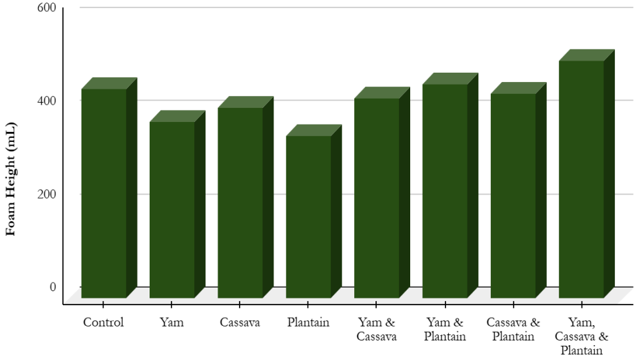
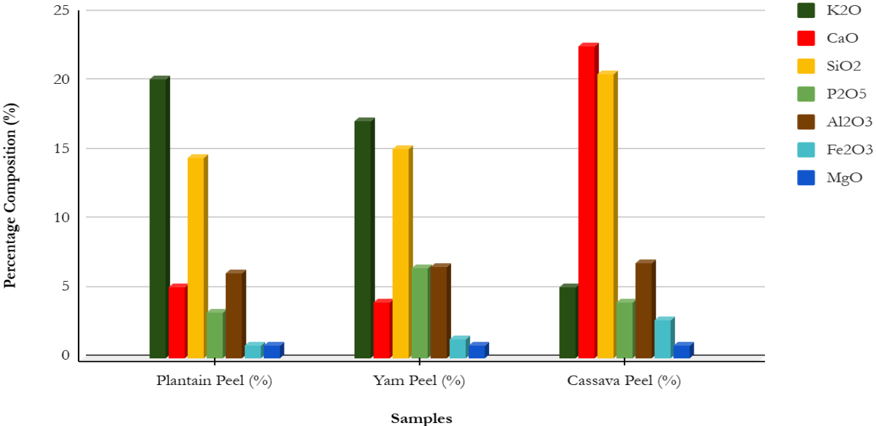
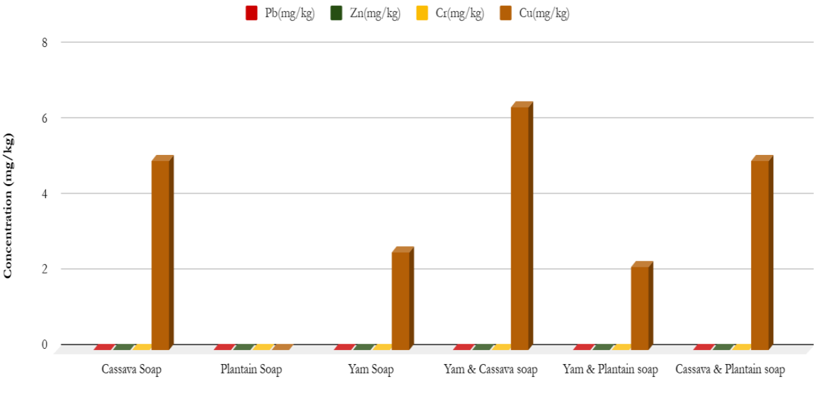
This study evaluated the potential of agricultural wastes, namely yam (Dioscorea rotundata), cassava (Manihot esculenta), and plantain (Musa paradisiaca) peels, as sustainable sources of alkali for soap production. The peels were dried, calcined, and subjected to aqueous extraction to obtain alkali-rich solutions for soap production using the semi-boiled method. Eight soap formulations, comprising single and blended alkali sources, were produced with palm kernel oil, while a commercial laundry soap (Canoe Soap) served as the control. The elemental composition of the ashes was determined using Energy Dispersive X-ray Fluorescence (EDXRF), and the soaps were evaluated for pH, moisture content, Total Fatty Matter (TFM), Free Caustic Alkali (FCA), Total Alkali, foam height, and heavy metal content. Data were analyzed using one-way Analysis of Variance (ANOVA) and Tukey's HSD test at p < 0.05. Plantain peel ash contained the highest potassium oxide (K₂O) content (20.30%), followed by yam (17.17%) and cassava (5.16%). Significant differences (p < 0.05) were observed among the formulations for all physicochemical properties. The ternary blend (yam–cassava–plantain) produced the best-quality soap, recording the highest TFM (87.63%), greatest foam height (510 mL), acceptable pH (10.00), and safe FCA (0.19%), outperforming the commercial control. Heavy metal analysis showed that although the raw ashes contained detectable concentrations of some metals, the finished soaps contained non-detectable levels of Pb, Zn, and Cr, indicating that the aqueous extraction and saponification processes effectively minimized heavy metal transfer. The formulated soaps complied with WHO and Standards Organisation of Nigeria (SON) safety requirements. These findings demonstrate that agricultural waste-derived alkalis, particularly blended formulations, provide a safe, sustainable, and cost-effective alternative to synthetic alkalis for producing high-quality soap while promoting agricultural waste utilization and environmental sustainability.
Overview
CoChat Summary
TL;DR
This study tested yam, cassava, and plantain peel ashes as alkali sources for soap making and found that blended ash formulations, especially the ternary blend, produced the best overall soap quality. The finished soaps had acceptable physicochemical properties and, after processing, non-detectable Pb, Zn, and Cr with low Cu, suggesting the method can yield safe, sustainable soap.
Key findings
- Plantain peel ash had the highest potassium oxide (K₂O) content at 20.30%, followed by yam peel ash at 17.17% and cassava peel ash at 5.16%.
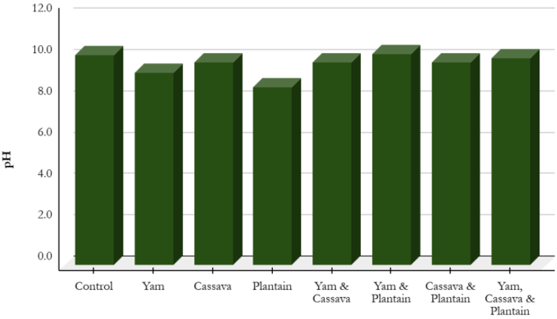
- Soap pH ranged from 8.61 to 10.20; plantain soap had the lowest pH (8.61), while the yam + plantain blend and the commercial control had the highest pH (10.20).
- The ternary blend (yam + cassava + plantain) produced the best soap performance, with TFM 87.63%, foam height 510 mL, pH 10.00, and FCA 0.19%; it outperformed the commercial control in TFM and foam height.
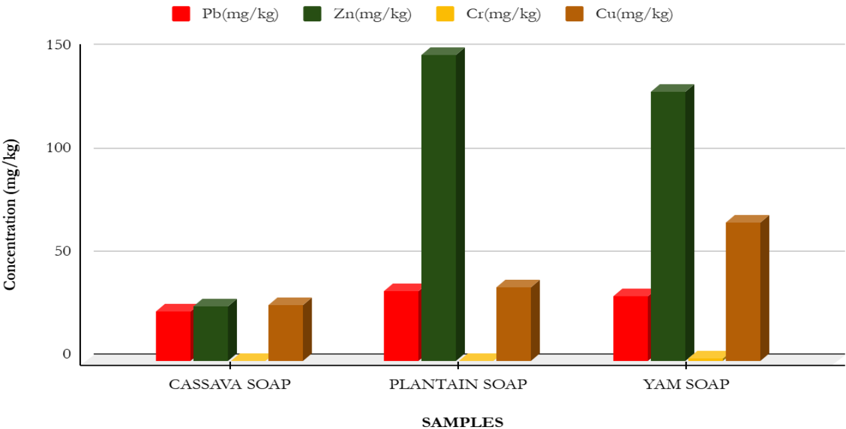
- Heavy metals were detected in raw ashes, e.g. Pb ranged from 24.4 ± 0.17 to 34.4 ± 0.98 mg/kg, but in finished soaps Pb, Zn, and Cr were below detection (<0.001 mg/kg); Cu remained low, from 2.60 mg/kg in yam soap to 6.46 mg/kg in yam + cassava soap.
Methods
- Experimental lab study using eight formulations: a commercial control plus soaps made from single-source alkalis (yam, cassava, plantain) and blends (yam+cassava, yam+plantain, cassava+plantain, yam+cassava+plantain).
- Agricultural peels were collected in Delta State, dried, combusted to ash, alkali was extracted by aqueous leaching, and soap was synthesized with palm kernel oil by the semi-boiled method.
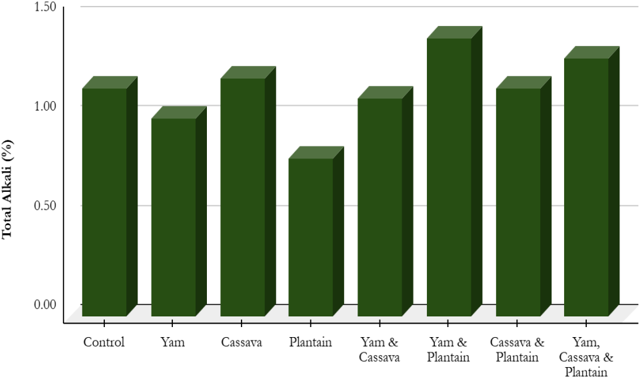
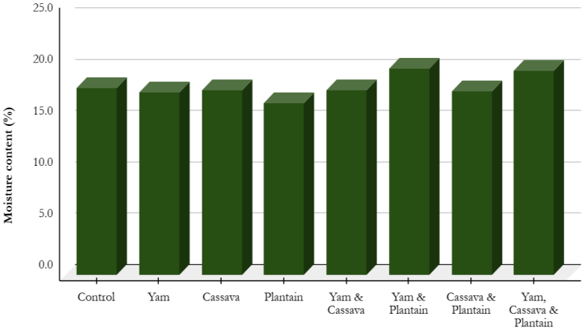
- Ashes were characterized by EDXRF, and soaps were tested for pH, moisture content, total fatty matter, free caustic alkali, total alkali, foam height, and heavy metals; results were analyzed with one-way ANOVA and Tukey’s HSD using triplicate measurements.
Limitations
- The paper states that there is a lack of adequate research into the safety and long-term impacts of agricultural-waste soaps on humans and the environment; this is presented as an open research gap.
- It also notes that the availability and quality of waste materials may differ across countries and that ash production must be well managed to maintain alkali levels.
- Evident from the text: the study reports triplicate lab measurements and compares only one oil source and one production route, so broader scalability or long-term real-world performance was not tested here.
Model-written summary. Check it against the paper before relying on it.
Integrity signals
Registry
Cites
Statistics
Figures
Verification
Claims the paper makes
0 Valid · 1 Not valid · 19 Not checked · 71 Own results and interpretations
The cited sources that could be checked couldn’t confirm or dispute this claim.
In the paper
“The improved foam production of the blended soaps is likely due to their higher Total Fatty Matter (TFM) content and the presence of potassium, which enhance foam formation and stability (Abdul et al., 2024).”
What the sources say
- Could not verifycites Abdul et al., 2024 matched to “Toilet Soap Formulation and Additives for Its Enhanced Physicochemical and Medicinal Properties” (2024) sourceExperimental — accuracy not yet measured
The Abstract (page unavailable) says the formulated soap had satisfactory foam stability, but does not explain its foam production. Searches for potassium and total fatty matter found no passage linking either to improved foam formation or stability; the indexed passages do not establish the claimed mechanism. (LLM, conf=0.72)
hedgedstates a possible cause- Asserted: passes — The authors put it forward as true.
- Checkable: passes — It can be checked against evidence.
- Load-bearing: passes — The paper’s conclusions depend on it.
- Based: passes — The paper gives a reason why it holds.
- Could not verify
A result the paper reports from its own data — it cites no other source for it, so there is none to check. The quote shows it is in the paper.
In the paper
“Yam peel ash also demonstrated strong suitability, with a K2O content of 17.2%, closely comparable to plantain.”
boosted- Asserted: passes — The authors put it forward as true.
- Checkable: passes — It can be checked against evidence.
- Load-bearing: passes — The paper’s conclusions depend on it.
- Based: passes — The paper gives a reason why it holds.
A result the paper reports from its own data — it cites no other source for it, so there is none to check. The quote shows it is in the paper.
In the paper
“Soap produced from plantain ash recorded the lowest pH (8.61), while the yam ash and cassava ash soaps exhibited pH values of 9.34 and 9.80, respectively.”
plain- Asserted: passes — The authors put it forward as true.
- Checkable: passes — It can be checked against evidence.
- Load-bearing: unclear — It is unclear whether the paper’s conclusions depend on it.
- Based: passes — The paper gives a reason why it holds.
A result the paper reports from its own data — it cites no other source for it, so there is none to check. The quote shows it is in the paper.
In the paper
“Significant differences were observed for K₂O (F(2,6) = 6728, p < 0.001), CaO (F(2,6) = 4366, p < 0.001), SiO₂ (F(2,6) = 315.8, p < 0.001), P₂O₅ (F(2,6) = 955.1, p < 0.001), and Fe₂O₃ (F(2,6) = 1598, p < 0.001), indicating that the botanical source significantly influenced the mineral composition of the ashes.”
plain- Asserted: passes — The authors put it forward as true.
- Checkable: passes — It can be checked against evidence.
- Load-bearing: unclear — It is unclear whether the paper’s conclusions depend on it.
- Based: passes — The paper gives a reason why it holds.
A result the paper reports from its own data — it cites no other source for it, so there is none to check. The quote shows it is in the paper.
In the paper
“The pH values of the formulated soaps ranged from 8.61 to 10.20.”
plain- Asserted: passes — The authors put it forward as true.
- Checkable: passes — It can be checked against evidence.
- Load-bearing: passes — The paper’s conclusions depend on it.
- Based: passes — The paper gives a reason why it holds.
55 more claims
Create a free account to see all 91 claims and every source verdict.
- It may state two separate claims as one. 25
- The quote only partly states this claim. 1
- Probably not a substantial claim. 7
Statistics recomputed
Every reported test result, recomputed from its test statistic and degrees of freedom. A result shows as not adding up only once an independent check has confirmed it.
- ConsistentF(7, 16) = 96.397reported p < .001 · recomputed p < .001
“F(7,16) = 96.397, p < .001”
- ConsistentF(7, 16) = 24.088reported p < .001 · recomputed p < .001
“F(7,16) = 24.088, p < .001”
- ConsistentF(7, 16) = 158.467reported p < .001 · recomputed p < .001
“F(7,16) = 158.467, p < .001”
- ConsistentF(7, 16) = 14.012reported p < .001 · recomputed p < .001
“F(7,16) = 14.012, p < .001”
- ConsistentF(7, 16) = 33.393reported p < .001 · recomputed p < .001
“F(7,16) = 33.393, p < .001”
7 more recomputed tests
Create a free account to see every test the Stats check recomputed.
Self-check
Percentages, sums and reported differences re-computed from the paper’s own numbers.
Self-check results appear here once an independent check has confirmed them.
Citations
Cites
The publisher hasn’t deposited this paper’s reference list.
Research works printed but not linked: 4
- [3]3. Adeyemi, S., Adebayo, A. O., and Afolabi, O. O. (2020). Extraction and characterization of alkali from agricultural residues for soap making. Nigerian Journal of Scientific Research, 19(2), 94 -102.
- [7]7. Aremu, M. O., Ibrahim, H., and Bamidele, T. O. (2015). Physicochemical characteristics of the oils extracted from Nigerian plant foods -A review. Chemical and Process Engineering Research, 2(1), 38-39.
- [8]8. Atiku, F. A., Fakai, I. M., Wara, A. A., Birnin-Yauri, A. U., and Musa, M. A. (2014). Production of soap using locally available alkaline extract from millet stalk: A study on physical and chemical properties of soap. International Journal of Advanced Research in Chemical Science, 1(7), 1-7.
- [11]11. Beetseh, C. I., and Anza, M. K. (2013). Chemical characterization of local black Soap (Chahul Mtse) made by using cassava peels ashes (alkali base) and palm oil in North Central Zone of Nigeria. Civil and Environmental Research, 3(4), 82 -93. <!-- image -->
Metadata
- Authors
- Afighor, O. A., Otobrise, C., & Akpomere, T.
- Affiliations
- Department of Industrial Chemistry, Dennis Osadebay University, Asaba, Nigeria
- Delta State University (NG)
- Department of Chemistry, Delta State University P.M.B 1, Abraka, Nigeria
- Venue
- International Journal of Research and Scientific Innovation
- Publisher
- RSIS International
- Published
- 2026
- Volume
- 13
- Issue
- 7
- Pages
- 5100-5120
- ISSN
- 2320-5520 (ISSN-L)
- 2321-2705
- OpenAlex
- W7203976078
- Cited by
- 0
- References
- 0
- FWCI
- 0.00
- Type
- journal article
- Language
- en
- Open access
- bronze
- doi.org
- Locations
- International journal of research and scientific innovation (publishedVersion)
- Topics
- Physical Sciences › Engineering › Building and Construction › Recycling and utilization of industrial and municipal waste in materials production
- Physical Sciences › Energy › Fuel Technology › Biodiesel Production and Applications
- Physical Sciences › Chemistry › Physical and Theoretical Chemistry › Surfactants and Colloidal Systems
- Keywords
- soap making, cassava peel ash, palm kernel oil, saponification, heavy metal content, potassium oxide, water extraction, waste valorization
About these checks
Registry, retraction, Cites and statistics results are computed, not judged, with one exception: a printed reference that no index lists is read once by a model before it counts as a citation error. Claims are extracted by a model and kept only when their quote appears verbatim in the text; each cited source is then checked, with a model’s help, for whether it says what the claim relies on. Those verdicts can be wrong — read the claim’s quote and the cited source before relying on one.
The claim verdicts this report counts are experimental: their accuracy is not yet measured.
A language model drew the claims from the paper on 2026-10-07, under version 3 of the claim definition (model deepseek-v4.1-flash, prompt extract-v3).
A second model labelled each claim on 2026-10-07 (model jev-1.13-20260917, definition revision gold-guideline-v0.2).
Cited sources are checked with a language model’s help (gpt-6-sol).
Statistics and arithmetic are recomputed, not judged.
Confidence bands are shown only for fields calibrated on our annotated test set. None is calibrated yet, so no band is shown.
What counts as a claim ›How we measure confidence ›How we check this ›
Are you an author, or do you see a problem with this page? Request a review
How to cite
Cite CoChat for the checks on this page, and the paper for its own findings.
- This page
- CoChat. (2026). Citation check: Production and Characterization of the Properties of Soap using Alkali from Agricultural Waste. https://app.cochat.ai/papers/10.51244/ijrsi.2026.1307000377
- The paper
- Afighor, O. A., Otobrise, C., & Akpomere, T. (2026). Production and Characterization of the Properties of Soap using Alkali from Agricultural Waste. International Journal of Research and Scientific Innovation. https://doi.org/10.51244/ijrsi.2026.1307000377
Data sources
Bibliographic data: Semantic Scholar, OpenAlex, Crossref.
Contains information from the Semantic Scholar Academic Graph Datasets, made available under the ODC Attribution License (ODC-BY 1.0).
Semantic Scholar’s data is described in: Kinney, R., et al. (2023). The Semantic Scholar Open Data Platform. arXiv:2301.10140.
