

The DOI matches its Crossref record; 24 of the 24 references it cites were found in a registry or an index.
Analysis of emission data from global commercial aviation: 2004 and 2006
Open accessPublished version of a preprint
Abstract
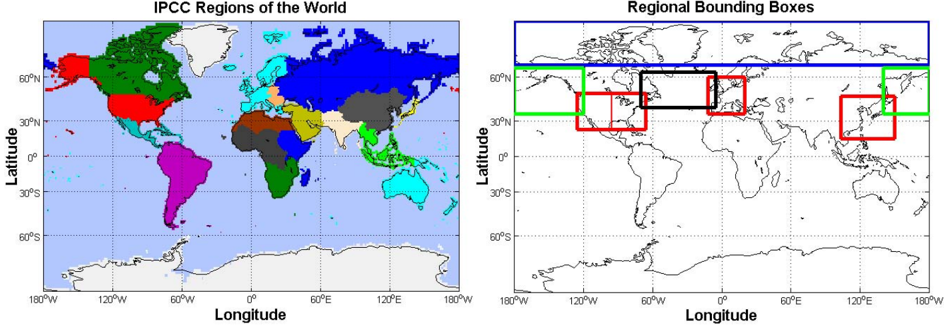
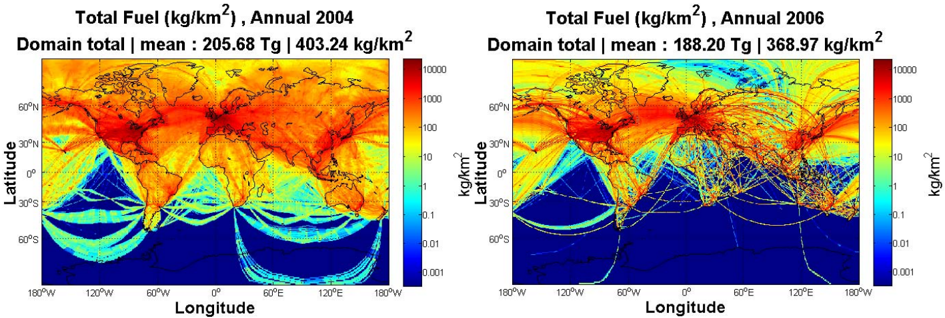
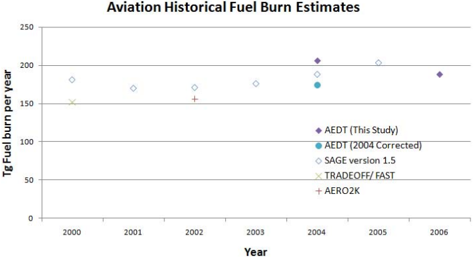
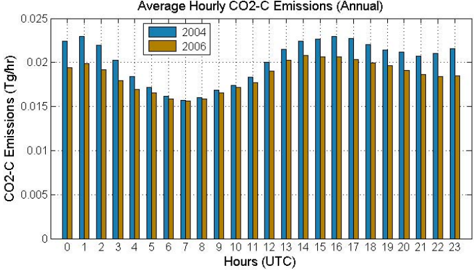
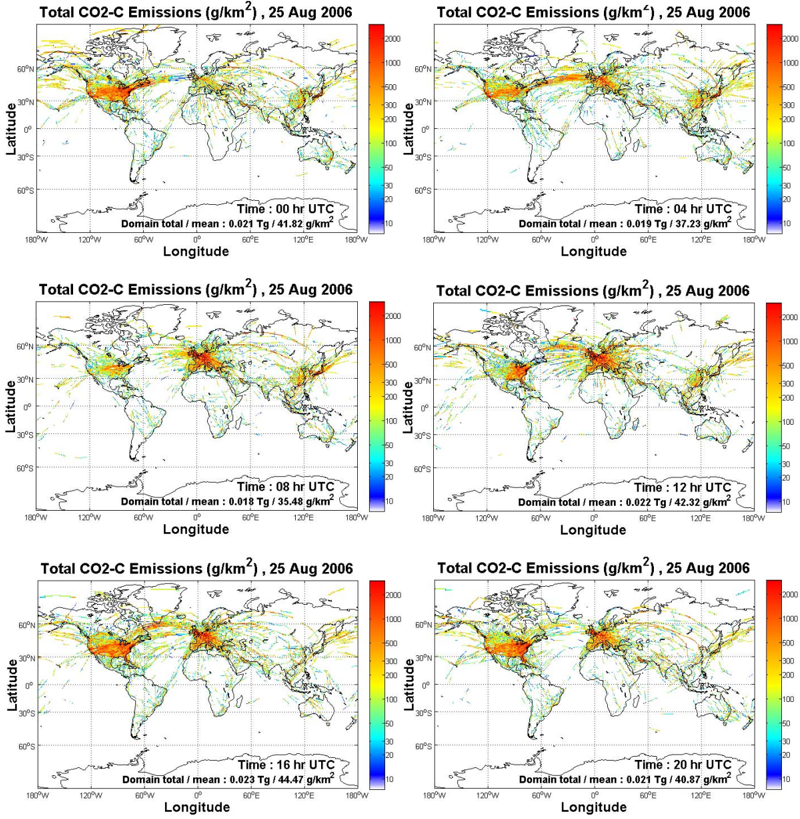
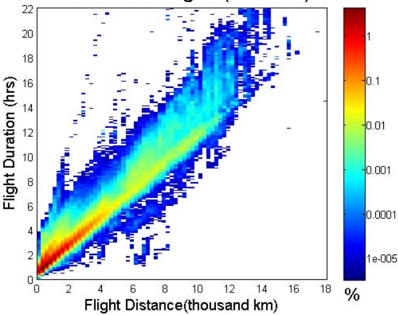
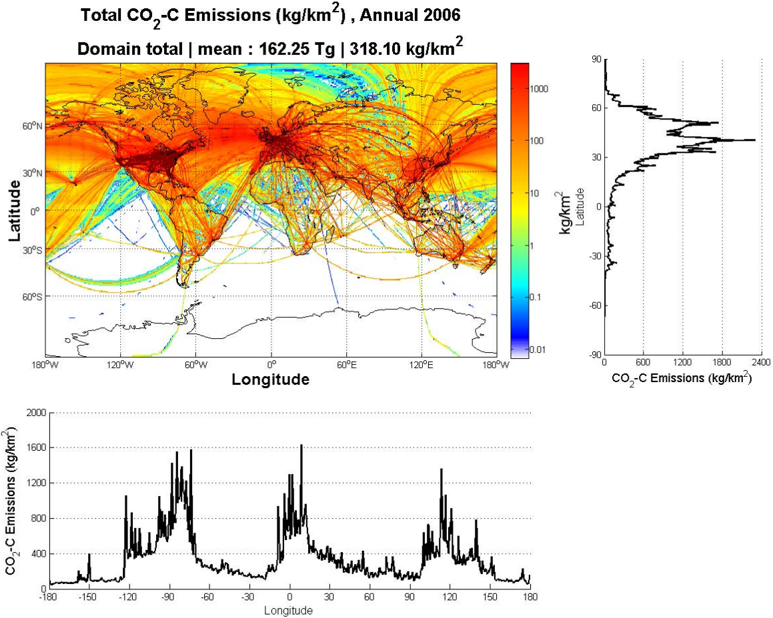
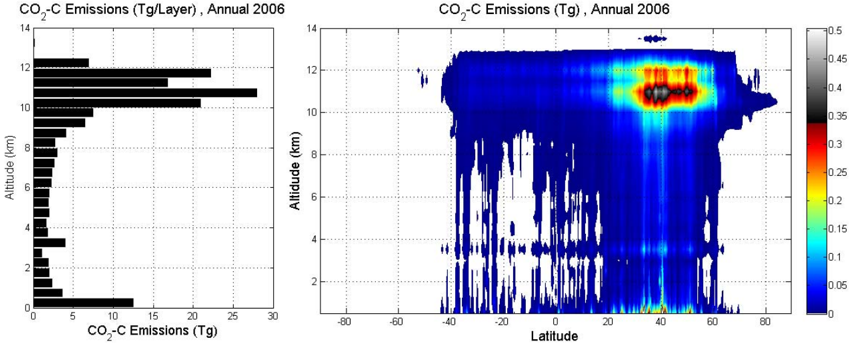
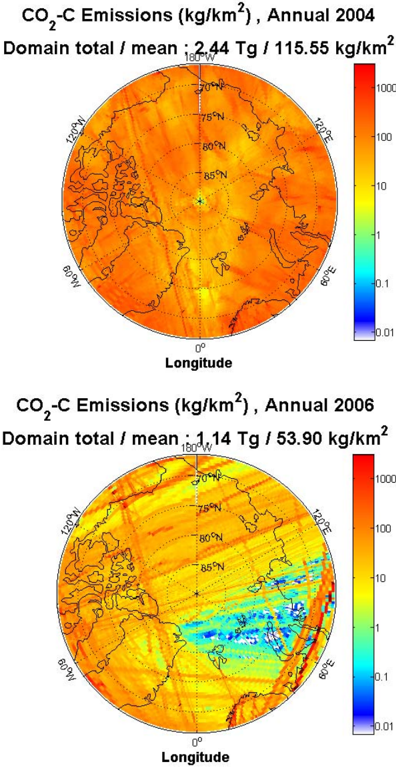
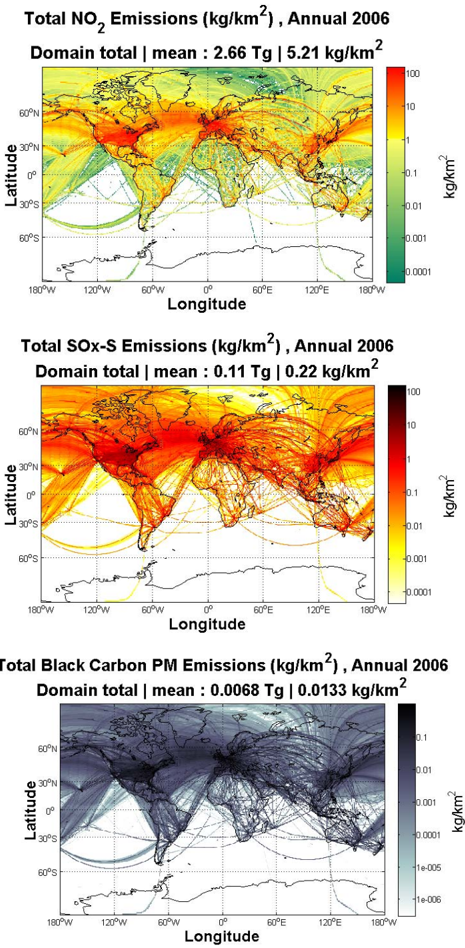
Abstract. The global commercial aircraft fleet in 2006 flew 31.26 million flights, burned 188.20 million metric tons of fuel, and covered 38.68 billion kilometers. This activity emitted substantial amounts of fossil-fuel combustion products within the upper troposphere and lower stratosphere that affect atmospheric composition and climate. The emissions products, such as carbon monoxide, carbon dioxide, oxides of nitrogen, sulfur compounds, and particulate matter, are not emitted uniformly over the Earth, so understanding the temporal and spatial distributions is important for modeling aviation's climate impacts. Global commercial aircraft emission data for 2004 and 2006, provided by the Volpe National Transportation Systems Center, were computed using the Federal Aviation Administration's Aviation Environmental Design Tool (AEDT). Continuous improvement in methodologies, including changes in AEDT's horizontal track methodologies, and an increase in availability of data make some differences between the 2004 and 2006 inventories incomparable. Furthermore, the 2004 inventory contained a significant over-count due to an imperfect data merge and daylight savings error. As a result, the 2006 emissions inventory is considered more representative of actual flight activity. Here, we analyze both 2004 and 2006 emissions, focusing on the latter, and provide corrected totals for 2004. Analysis of 2006 flight data shows that 92.5% of fuel was burned in the Northern Hemisphere, 69.0% between 30N and 60N latitudes, and 74.6% was burned above 7 km. This activity led to 162.25 Tg of carbon from CO2 emitted globally in 2006, more than half over three regions: the United States (25.5%), Europe (14.6), and East Asia (11.1). Despite receiving less than one percent of global emissions, the Arctic receives a uniformly dispersed concentration of emissions with 95.2% released at altitude where they have longer residence time than surface emissions. Finally, 85.2% of all flights by number in 2006 were short-haul missions, yet those flights were responsible for only 39.7% of total carbon from CO2. The following is a summary of these data which illustrates the global and regional aviation emissions footprints for 2004 and 2006, and provides temporal and spatial distribution statistics.
Overview
The claims and statistics of this paper haven’t been checked yet.
Run the check — free, no account needed. It reads the open-access text and checks the sources it cites.
Integrity signals
Registry
Cites
Statistics
Figures
Verification
Claims the paper makes
The claims and statistics of this paper haven’t been checked yet.
Run the check — free, no account needed. It reads the open-access text and checks the sources it cites.
Claims other papers make about this one
Each is checked against this paper’s own text: does it say what the citing paper says it does?
In the citing paper
“Short haul flights up to 1.5 to 3 h with utmost 100 passengers have the potential to be electrified according to Wilkerson et al. [91] and Mueller et al. [80].”
From Global Transportation Demand Development with Impacts on the Energy Demand and Greenhouse Gas Emissions in a Climate-Constrained World (2019) · cites this paper as [91]
Self-check
Percentages, sums and reported differences re-computed from the paper’s own numbers.
The self-check needs the paper’s full text.
Citations
Cites
CO2 emissions from fuel combustion: highlights
Eng, P. (2009) · Cited by 1,609
Transport impacts on atmosphere and climate: Aviation
Lee, D. S., Pitari, G., Grewe, V., Gierens, K., Penner, J. E., Petzold, A., Prather, M. J., Schumann, U., Bais, A., & Berntsen, T. (2010) · Atmospheric Environment · doi:10.1016/j.atmosenv.2009.06.005 · Cited by 765
Aviation radiative forcing in 2000: an update on IPCC (1999)
Sausen, R., Isaksen, I., Grewe, V., Hauglustaine, D., Lee, D. S., Myhre, G., Köhler, M. O., Pitari, G., Schumann, U., Stordal, F., et al. (2005) · Meteorologische Zeitschrift · doi:10.1127/0941-2948/2005/0049 · Cited by 318
Transport impacts on atmosphere and climate
SAUSEN, R. (2010) · Atmospheric Environment · doi:10.1016/j.atmosenv.2010.02.033 · Cited by 250
Scheduled civil aircraft emission inventories for 1992: Database development and analysis
Baughcum, S. L., Tritz, T. G., Henderson, S., & Pickett, D. C. (1996) · NASA Technical Reports Server (NASA) · Cited by 189
Image team, Eickhout, B., Mnv, & Lbg (2001) · Socio-Environmental Systems Modeling · Cited by 189
“Fuel Flow Method2” for Estimating Aircraft Emissions
DuBois, D., & Paynter, G. C. (2006) · SAE technical papers on CD-ROM/SAE technical paper series · doi:10.4271/2006-01-1987 · Cited by 166
Kim, B. Y., Fleming, G. G., Lee, J. J., Waitz, I. A., Clarke, J.-P., Balasubramanian, S., Malwitz, A., Klima, K., Locke, M., Holsclaw, C. A., et al. (2007) · Transportation Research Part D Transport and Environment · doi:10.1016/j.trd.2007.03.007 · Cited by 134
Self-citationImpact of aircraft NO x emissions on the atmosphere – tradeoffs to reduce the impact
Gauss, M., Isaksen, I. S. A., Lee, D. S., & Søvde, O. A. (2006) · Atmospheric chemistry and physics · doi:10.5194/acp-6-1529-2006 · Cited by 113
Methodology to Estimate Particulate Matter Emissions from Certified Commercial Aircraft Engines
Wayson, R. L., Fleming, G. G., & Iovinelli, R. (2009) · Journal of the Air & Waste Management Association · doi:10.3155/1047-3289.59.1.91 · Cited by 108
Self-citationAir Transport and the Environment
Daley, B. (2016) · Routledge eBooks · doi:10.4324/9781315566320 · Cited by 74
System for assessing Aviation’s Global Emissions (SAGE), Part 2: Uncertainty assessment
Lee, J. J., Waitz, I. A., Kim, B. Y., Fleming, G. G., Maurice, L. Q., & Holsclaw, C. A. (2007) · Transportation Research Part D Transport and Environment · doi:10.1016/j.trd.2007.03.006 · Cited by 57
Self-citationSpeciation and Chemical Evolution of Nitrogen Oxides in Aircraft Exhaust near Airports
Wood, E. C., Herndon, S. C., Timko, M. T., Yelvington, P. E., & Miake‐Lye, R. C. (2008) · Environmental Science & Technology · doi:10.1021/es072050a · Cited by 48
Military Aviation and the Environment: Historical Trends and Comparison to Civil Aviation
Waitz, I. A., Lukachko, S. P., & Lee, J. J. (2005) · Journal of Aircraft · doi:10.2514/1.6888 · Cited by 37
Jacobson, M. Z., Wilkerson, J. T., Naiman, A. D., & Lele, S. K. (2011) · Journal of Computational Physics · doi:10.1016/j.jcp.2011.03.031 · Cited by 36
Self-citationForster, C., Stohl, A., James, P., & Thouret, V. (2003) · Journal of Geophysical Research Atmospheres · doi:10.1029/2002jd002515 · Cited by 32
Zhao, Y., & Li, J. (2006) · Geophysical Research Letters · doi:10.1029/2006gl027287 · Cited by 25
Parameterization of subgrid plume dilution for use in large-scale atmospheric simulations
Naiman, A. D., Lele, S. K., Wilkerson, J. T., & Jacobson, M. Z. (2010) · Atmospheric chemistry and physics · doi:10.5194/acp-10-2551-2010 · Cited by 19
Self-citationSummarizing and Interpreting Aircraft Gaseous and Particulate Emissions Data
Waitz, I. A., Webb, S., Miake‐Lye, R. C., Timko, M. T., Thrasher, T. G., Whitefield, P. D., Lobo, P., Hagen, D. E., Taylor, C. P., Ratliff, G., et al. (2008) · National Academies Press eBooks · doi:10.17226/14197 · Cited by 16
Malwitz, A., Kim, B., Fleming, G. G., Lee, J. L., Balasubramanian, S. N., Waitz, I. A., Morales, Á., Klima, K., Locke, M., Holsclaw, C. A., et al. (2005) · Cited by 8
Self-citationKim, B., Fleming, G. G., Balasubramanian, S. N., Malwitz, A., Lee, J., Waitz, I. A., Klima, K., Locke, M., Holsclaw, C. A., Morales, A., et al. (2006) · ROSA P · Cited by 8
Self-citationSystem for Assessing Aviation's Global Emissions (SAGE), Version 1.5-Technical Manual
Kim, B., Fleming, G. G., Balasubramanian, S. N., Malwitz, A., Lee, J. J., Waitz, I. A., Klima, K., Stouffer, V. L., Lee, D., Kostiuk, P. F., et al. (2005) · Cited by 6
Self-citationParameterization of subgrid aircraft emission plumes for use in large-scale atmospheric simulationsPreprint
Naiman, A. D., Lele, S. K., Wilkerson, J. T., et al. (2009) · doi:10.5194/acpd-9-24755-2009 · Cited by 3
Self-citationFlight Movement Inventory: SAGE-AER02K
Michot, S., Elliff, T., Fleming, G. G., Kim, B., Holsclaw, C. A., Locke, M., & Morales, Á. (2004) · Air Traffic Control Quarterly · doi:10.2514/atcq.12.2.125 · Cited by 2
Self-citation
Research works printed but not linked: 3
- Kim, B. Y., Fleming, G. G., Balasubramanian, S., Malwitz, A., Lee, J. J., Ruggiero, J., Waitz, I. A., Klima, K., Locke, M., Holsclaw, C. A., Morales, A., McQueen, E., and Gillette, W.: System for assessing Aviation's Global Emissions (SAGE) Version 1.5: System Revision History, FAA, Ed., Office of Environment and Energy, 21, 2005a.
- MOCA, India Ministry of Civil Aviation; 2006–07 Annual Report: http://civilaviation.nic.in/reports/an_rep0607eng/Chapter-1.pdf (last access: 18 July 2009), 2007.
- OAG: Airlines Offer Record Number Of Seats In July, available online at: http://www.oag.com/oag/website/com/en/Press+Room/Press+Releases+2007/Airlines+Offer+Record+Number+Of+Seats+In+July, (last access: 27 May 2010), 2007.
Cited by
Sorted by citations
Masiol, M., & Harrison, R. M. (2014) · Atmospheric Environment · doi:10.1016/j.atmosenv.2014.05.070 · Cited by 544
Premature mortality related to United States cross-state air pollution
Dedoussi, I. C., Eastham, S. D., Monier, E., & Barrett, S. R. H. (2020) · Nature · doi:10.1038/s41586-020-1983-8 · Cited by 412
Khalili, S., Rantanen, E., Bogdanov, D., & Breyer, C. (2019) · Energies · doi:10.3390/en12203870 · Cited by 290
Jacobson, M. Z. (2014) · Journal of Geophysical Research Atmospheres · doi:10.1002/2014jd021861 · Cited by 264
Self-citationTeoh, R., Schumann, U., Majumdar, A., & Stettler, M. E. J. (2020) · Environmental Science & Technology · doi:10.1021/acs.est.9b05608 · Cited by 250
Metadata
- Authors
- Wilkerson, J. T., Jacobson, M. Z., Malwitz, A., Balasubramanian, S., Wayson, R., Fleming, G., Naiman, A. D., & Lele, S. K.
- Affiliations
- Stanford University (US)
- Volpe National Transportation Systems Center (US)
- Venue
- Atmospheric Chemistry and Physics
- Publisher
- Copernicus GmbH
- Published
- 2010-07-14
- Volume
- 10
- Issue
- 13
- Pages
- 6391-6408
- ISSN
- 1680-7316 (ISSN-L)
- 1680-7324
- OpenAlex
- W2097270364
- Cited by
- 275
- References
- 24
- Citations by year
- 2026: 9 · 2025: 11 · 2024: 23 · 2023: 17 · 2022: 28 · 2021: 27 · 2020: 28 · 2019: 17 · 2018: 8 · 2017: 11 · 2016: 15 · 2015: 13 · 2014: 17 · 2013: 24 · 2012: 12
- FWCI
- 14.69
- Type
- journal article
- Language
- en
- Open access
- gold
- doi.org
- Licence
- Locations
- Atmospheric chemistry and physics (publishedVersion, cc-by)
- DOAJ (DOAJ: Directory of Open Access Journals) (submittedVersion, cc-by-sa)
- Funders
- Federal Aviation Administration
- Topics
- Physical Sciences › Engineering › Aerospace Engineering › Advanced Aircraft Design and Technologies
- Physical Sciences › Environmental Science › Environmental Engineering › Maritime Transport Emissions and Efficiency
- Physical Sciences › Engineering › Automotive Engineering › Vehicle emissions and performance
- Keywords
- aviation emissions, commercial aircraft, CO2 emissions, aviation climate impact, emission inventory, upper troposphere and lower stratosphere, short-haul flights, fuel consumption, carbon monoxide, nitrogen oxides, sulfur compounds, particulate matter, spatial distribution of emissions, Aviation Environmental Design Tool
About these checks
Registry, retraction, Cites and statistics results are computed, not judged, with one exception: a printed reference that no index lists is read once by a model before it counts as a citation error. Claims are extracted by a model and kept only when their quote appears verbatim in the text; each cited source is then checked, with a model’s help, for whether it says what the claim relies on. Those verdicts can be wrong — read the claim’s quote and the cited source before relying on one.
Statistics and arithmetic are recomputed, not judged.
Confidence bands are shown only for fields calibrated on our annotated test set. None is calibrated yet, so no band is shown.
What counts as a claim ›How we measure confidence ›How we check this ›
Are you an author, or do you see a problem with this page? Request a review
