

Montreal Protocol's impact on the ozone layer and climate
Open accessPublished version of a preprint
The DOI matches its Crossref record; 46 of the 46 references it cites were found in a registry or an index.
Abstract
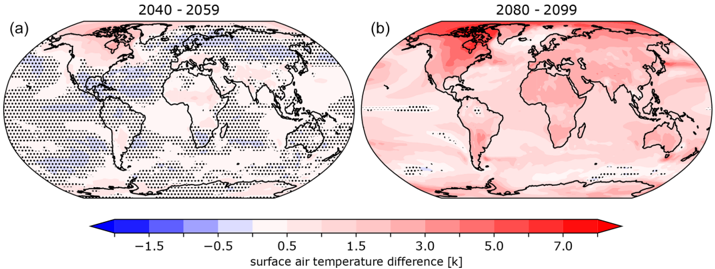
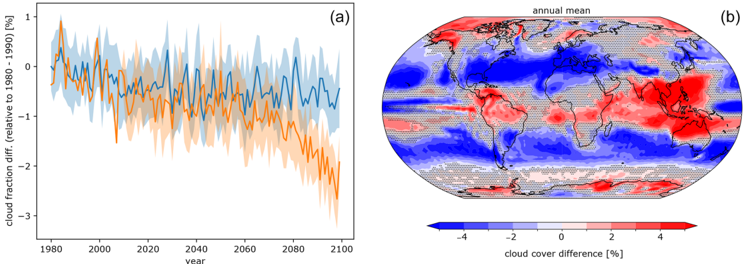
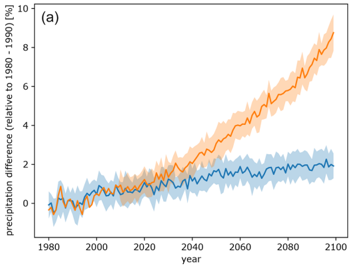
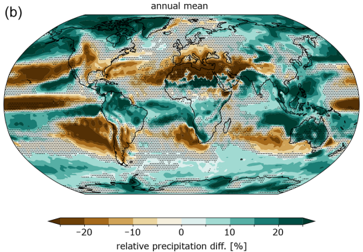
It is now recognized and confirmed that the ozone layer shields the biosphere from dangerous solar UV radiation and is also important for the global atmosphere and climate. The observed massive ozone depletion forced the introduction of limitations on the production of halogen-containing ozone-depleting substances (hODSs) by the Montreal Protocol and its amendments and adjustments (MPA). Previous research has demonstrated the success of the Montreal Protocol and increased public awareness of its necessity. In this study, we evaluate the benefits of the Montreal Protocol on climate and ozone evolution using the Earth system model (ESM) SOCOLv4.0 (modeling tools for studies of SOlar Climate Ozone Links) which includes dynamic modules for the ocean, sea ice, interactive ozone, and stratospheric aerosol. Here, we analyze the results of the numerical experiments performed with and without limitations on the ozone-depleting substance (ODS) emissions. In the experiments, we have used CMIP6 (Coupled Model Intercomparison Project) SSP2-4.5 and SSP5-8.5 (Shared Socioeconomic Pathway) scenarios for future forcing behavior. We confirm previous results regarding catastrophic ozone layer depletion and substantial climate warming in the case without MPA limitations. We show that the climate effects of MPA consist of additional global-mean warming by up to 2.5 K in 2100 caused by the direct radiative effect of the hODSs, which is comparable to large climate warming obtained with the SSP5-8.5 scenario. For the first time, we reveal the dramatic effects of MPA on chemical species and cloud cover. The response of surface temperature, precipitation, and sea-ice fields was demonstrated for the first time with the model that has interactive tropospheric and stratospheric chemistry. We have found some differences in the climate response compared to the model with prescribed ozone, which should be further addressed. Our research updates and complements previous modeling studies on the quantifying of MPA benefits for the terrestrial atmosphere and climate.
Overview
The claims and statistics of this paper haven’t been checked yet.
Free: it reads the open-access text and checks the first 5 claims that cite a source we can check. Create a free account to check every claim.
Integrity signals
Registry
Cites
Statistics
Figures
Verification
Claims the paper makes
The claims and statistics of this paper haven’t been checked yet.
Free: it reads the open-access text and checks the first 5 claims that cite a source we can check. Create a free account to check every claim.
Claims other papers make about this one
Each is checked against this paper’s own text: does it say what the citing paper says it does?
The cited source doesn’t support the claim as written.
In the citing paper
“According to the new studies [3, 4], continued emissions of ODS would have increased the average global surface temperature by 2.3 °C over the twenty-first century, with the strongest warming by up to 12 °C predicted over parts of the Arctic.”
From Environmental consequences of interacting effects of changes in stratospheric ozone, ultraviolet radiation, and climate: UNEP Environmental Effects Assessment Panel, Update 2024 (2025) · cites this paper as [4]
Checked by a reasoning model — may be wrong.
Experimental — accuracy not yet measuredThe source backs part of the claim, not all of it — or backs it for a different population, condition or comparison.
In the citing paper
“This would have also pushed the jet streams and climate zones equatorward in both hemispheres, leading to substantial changes in large-scale circulation and resulting in increased precipitation in the Arctic, the Amazon, Indonesia, India, the Sahel, Australia, the Southern Ocean and coastal areas of Antarctica, and decreased rainfall in the Rocky Mountains, Southern Europe, the Mediterranean, the”
From Environmental consequences of interacting effects of changes in stratospheric ozone, ultraviolet radiation, and climate: UNEP Environmental Effects Assessment Panel, Update 2024 (2025) · cites this paper as [4]
Experimental — accuracy not yet measuredThe source backs part of the claim, not all of it — or backs it for a different population, condition or comparison.
In the citing paper
“According to new single-model world-avoided studies based on the SSP2-4.5 scenario [3, 4], these large decreases in tropical ozone would have drastically cooled the tropical tropopause, thereby reducing the equator-to-pole temperature gradient and weakening the winter polar vortices in both hemispheres.”
From Environmental consequences of interacting effects of changes in stratospheric ozone, ultraviolet radiation, and climate: UNEP Environmental Effects Assessment Panel, Update 2024 (2025) · cites this paper as [4]
Experimental — accuracy not yet measured
Self-check
Percentages, sums and reported differences re-computed from the paper’s own numbers.
The self-check needs the paper’s full text.
Citations
Cites
Eyring, V., Bony, S., Meehl, G. A., Senior, C. A., Stevens, B., Stouffer, R. J., & Taylor, K. E. (2016) · Geoscientific Model Development · doi:10.5194/gmd-9-1937-2016 · Cited by 11,981
(IPCC), I. P. O. C. C. (2023) · doi:10.1017/9781009325844 · Cited by 10,921
(IPCC), I. P. O. C. C. (2023) · doi:10.1017/9781009157896 · Cited by 6,972
Stratospheric sink for chlorofluoromethanes: chlorine atom-catalysed destruction of ozone
Molina, M. J., & Rowland, F. S. (1974) · Nature · doi:10.1038/249810a0 · Cited by 4,332
Large losses of total ozone in Antarctica reveal seasonal ClOx/NOx interaction
Farman, J. C., Gardiner, B. G., & Shanklin, J. D. (1985) · Nature · doi:10.1038/315207a0 · Cited by 3,520
Stratospheric ozone depletion: A review of concepts and history
Solomon, S. (1999) · Reviews of Geophysics · doi:10.1029/1999rg900008 · Cited by 2,008 · cited 1×
“…for the massive southern polar ozone loss (see, e.g., Published by Copernicus Publications on behalf of the European Geosciences Union. review by Solomon, 1999) established the role of heterogeneous chemistry and previously suggested the impact of anthropogenic halogen-containing…”
BackgroundMauritsen, T., Bader, J., Becker, T., Behrens, J., Bittner, M., Brokopf, R., Brovkin, V., Claussen, M., Crueger, T., Esch, M., et al. (2019) · Journal of Advances in Modeling Earth Systems · doi:10.1029/2018ms001400 · Cited by 1,520
Numerical Investigation of Neutral and Unstable Planetary Boundary Layers
Deardorff, J. W. (1972) · Journal of the Atmospheric Sciences · doi:10.1175/1520-0469(1972)029<0091:nionau>2.0.co;2 · Cited by 933
Civil conflicts are associated with the global climate
Hsiang, S. M., Meng, K. C., & Cane, M. A. (2011) · Nature · doi:10.1038/nature10311 · Cited by 755
The importance of the Montreal Protocol in protecting climate
Velders, G. J. M., Andersen, S. O., Daniel, J. S., Fahey, D. W., & McFarland, M. (2007) · Proceedings of the National Academy of Sciences · doi:10.1073/pnas.0610328104 · Cited by 562 · cited 1×
“For the noMPA experiment, we applied the same boundary conditions except for the hODS, whose surface mixing ratio was increased by 3% per year since 1987 (Velders et al., 2007) for regulated species.”
MethodThe Max Planck Institute Grand Ensemble: Enabling the Exploration of Climate System Variability
Maher, N., Milinski, S., Suarez‐Gutierrez, L., Botzet, M., Dobrynin, M., Kornblueh, L., Kröger, J., Takano, Y., Ghosh, R., Hedemann, C., et al. (2019) · Journal of Advances in Modeling Earth Systems · doi:10.1029/2019ms001639 · Cited by 537
Arctic amplification of climate change: a review of underlying mechanisms
Previdi, M., Smith, K. L., & Polvani, L. M. (2021) · Environmental Research Letters · doi:10.1088/1748-9326/ac1c29 · Cited by 509
Nimbus 7 satellite measurements of the springtime Antarctic ozone decrease
Stolarski, R. S., Krueger, A. J., Schoeberl, M. R., McPeters, R. D., Newman, P. A., & Alpert, J. C. (1986) · Nature · doi:10.1038/322808a0 · Cited by 460
Ozone depletion, ultraviolet radiation, climate change and prospects for a sustainable future
Barnes, P. W., Williamson, C. E., Lucas, R. M., Robinson, S. A., Madronich, S., Paul, N. D., Bornman, J. F., Bais, A. F., Sulzberger, B., Wilson, S. R., et al. (2019) · Nature Sustainability · doi:10.1038/s41893-019-0314-2 · Cited by 360
Bais, A. F., Lucas, R. M., Bornman, J. F., Williamson, C. E., Sulzberger, B., Austin, A. T., Wilson, S. R., Andrady, A. L., Bernhard, G., McKenzie, R. L., et al. (2018) · Photochemical & Photobiological Sciences · doi:10.1039/c7pp90043k · Cited by 350 · cited 1×
“The ozone not only shields the biosphere from dangerous solar UV radiation but is also essential for the global atmosphere and cli- mate (e.g., Bais et al., 2018; Barnes et al., 2019; Neale et al., 2021).”
BackgroundEvidence for a continuous decline in lower stratospheric ozone offsetting ozone layer recovery
Ball, W. T., Alsing, J., Mortlock, D. J., Staehelin, J., Haigh, J. D., Peter, T., Tummon, F., Stübi, R., Stenke, A., Anderson, J., et al. (2018) · Atmospheric Chemistry and Physics · doi:10.5194/acp-18-1379-2018 · Cited by 350 · cited 2×
“models (Ball et al., 2018, 2019, Dietmüller et al. 2021). Several attempts have been made to estimate the efficiency of the MPA by comparing the future state of the ozone layer simulated under two hypothetical scenarios: with and without MPA limitations. The first estimates were made with relatively simple models (e.g…”
MethodSelf-citationThe increasing threat to stratospheric ozone from dichloromethane
Hossaini, R., Chipperfield, M. P., Montzka, S. A., Leeson, A. A., Dhomse, S. S., & Pyle, J. A. (2017) · Nature Communications · doi:10.1038/ncomms15962 · Cited by 250 · cited 1×
“Several newly discovered and unregulated hODSs (CFC112, CFC-112a, CFC-113a, CFC-114a, and HCFC-133a) have been introduced to the model chemistry scheme together with some additional chlorine-containing very shortlived substances (VSLSs: CHCl3, CH2Cl2, C2Cl4, C2HCl3, C2H4Cl2) that are not controlled by the MPA (Hossain…”
BackgroundJunge, C. E., & Manson, J. E. (1961) · Journal of Geophysical Research · doi:10.1029/jz066i007p02163 · Cited by 229
Neale, R. E., Barnes, P. W., Robson, T. M., Neale, P. J., Williamson, C. E., Zepp, R. G., Wilson, S. R., Madronich, S., Andrady, A. L., Heikkilä, A. M., et al. (2021) · Photochemical & Photobiological Sciences · doi:10.1007/s43630-020-00001-x · Cited by 225 · cited 3×
“Besides the direct consequences for human health, the increased surface UV radiation would also strongly affect the terrestrial and aquatic ecosystems (Neale et al., 2021) and biogeochemical cycles (Young et al., 2021).”
BackgroundWhat would have happened to the ozone layer if chlorofluorocarbons (CFCs) had not been regulated?
Newman, P. A., Oman, L. D., Douglass, A. R., Fleming, E. L., Frith, S. M., Hurwitz, M. M., Kawa, S. R., Jackman, C. H., Krotkov, N. A., Nash, E. R., et al. (2009) · Atmospheric Chemistry and Physics · doi:10.5194/acp-9-2113-2009 · Cited by 220
Rowland, F. S. (2006) · Philosophical Transactions of the Royal Society B: Biological Sciences · doi:10.1098/rstb.2005.1783 · Cited by 213 · cited 1×
“It means that the MPA not only protects the ozone layer but also helps to limit greenhouse warming (Velders et al., 2007) as described in IPCC (2013). Here, we analyze surface air temperature in more detail to illustrate the benefits of the MPA limitations for the surface climate.”
The Atlas of Environmental Migration
Ionesco, D., Mokhnacheva, D., & Gemenne, F. (2016) · doi:10.4324/9781315777313 · Cited by 205
Sheng, J., Weisenstein, D. K., Luo, B., Rozanov, E., Stenke, A., Anet, J., Bingemer, H., & Peter, T. (2015) · Journal of Geophysical Research: Atmospheres · doi:10.1002/2014jd021985 · Cited by 169
Self-citationQuantifying the ozone and ultraviolet benefits already achieved by the Montreal Protocol
Chipperfield, M. P., Dhomse, S. S., Feng, W., McKenzie, R. L., Velders, G. J. M., & Pyle, J. A. (2015) · Nature Communications · doi:10.1038/ncomms8233 · Cited by 150
Notz, D., Jahn, A., Holland, M. M., Hunke, E., Massonnet, F., Stroeve, J. C., Tremblay, B., & Vancoppenolle, M. (2016) · Geoscientific model development · doi:10.5194/gmd-9-3427-2016 · Cited by 147
Pawson, S., Stolarski, R. S., Douglass, A. R., Newman, P. A., Nielsen, J. E., Frith, S. M., & Gupta, M. L. (2008) · Journal of Geophysical Research: Atmospheres · doi:10.1029/2007jd009511 · Cited by 143
Stratospheric ozone trends for 1985–2018: sensitivity to recent large variability
Ball, W. T., Alsing, J., Staehelin, J., Davis, S., Froidevaux, L., & Peter, T. (2019) · Atmospheric chemistry and physics · doi:10.5194/acp-19-12731-2019 · Cited by 132 · cited 1×
“However, the widely expected future ozone recovery is now being questioned due to disagreement between models and observations and is inspiring a search for missing processes or unaccounted driving factors in models (Ball et al., 2018, 2019; Dietmüller et al., 2021).”
The World Avoided by the Montreal Protocol
Morgenstern, O., Braesicke, P., Hurwitz, M. M., O'Connor, F. M., Bushell, A. C., Johnson, C. E., & Pyle, J. A. (2008) · Geophysical Research Letters · doi:10.1029/2008gl034590 · Cited by 115 · cited 2×
“An improved understanding of the influence and importance of ozone on the climate led to the application of chemistry-climate models that can account for stratospheric changes related to the ozone evolution (Morgenstern et al., 2008; Newman et al., 2009; Egorova et al., 2013).”
BackgroundSubstantial twentieth-century Arctic warming caused by ozone-depleting substances
Polvani, L. M., Previdi, M., England, M. R., Chiodo, G., & Smith, K. L. (2020) · Nature Climate Change · doi:10.1038/s41558-019-0677-4 · Cited by 109
Revell, L. E., Tummon, F., Stenke, A., Sukhodolov, T., Coulon, A., Rozanov, E., Garny, H., Grewe, V., & Peter, T. (2015) · Atmospheric Chemistry and Physics · doi:10.5194/acp-15-5887-2015 · Cited by 103 · cited 1×
“NOy increase in the upper tropical troposphere is partly related to the enhanced lightning flashes frequency and convective activity in the warmer climate (e.g., Mareev and Volodin, 2014; Revell et al., 2015).”
BackgroundSelf-citationThe Montreal Protocol protects the terrestrial carbon sink
Young, P. J., Harper, A., Huntingford, C., PAUL, N. D., Morgenstern, O., Newman, P. A., Oman, L. D., Madronich, S., & García, R. R. (2021) · Nature · doi:10.1038/s41586-021-03737-3 · Cited by 102
Atmospheric Ozone and the History of Life
Ratner, M. I., & Walker, J. C. G. (1972) · Journal of the Atmospheric Sciences · doi:10.1175/1520-0469(1972)029<0803:aoatho>2.0.co;2 · Cited by 94
Reduction in surface climate change achieved by the 1987 Montreal Protocol
Goyal, R., England, M. H., Sen Gupta, A., & Jucker, M. (2019) · Environmental Research Letters · doi:10.1088/1748-9326/ab4874 · Cited by 86
Analysis of recent lower-stratospheric ozone trends in chemistry climate models
Dietmüller, S., Garny, H., Eichinger, R., & Ball, W. T. (2021) · Atmospheric chemistry and physics · doi:10.5194/acp-21-6811-2021 · Cited by 85
The ozone layer: the road not taken
Prather, M., Midgley, P., Rowland, F. S., & Stolarski, R. (1996) · Nature · doi:10.1038/381551a0 · Cited by 78
The sensitivity of stratospheric ozone changes through the 21st century to N 2 O and CH 4
Revell, L. E., Bodeker, G. E., Huck, P. E., Williamson, B. E., & Rozanov, E. (2012) · Atmospheric Chemistry and Physics · doi:10.5194/acp-12-11309-2012 · Cited by 67
Self-citationVariation of the global electric circuit and Ionospheric potential in a general circulation model
Mareev, E. A., & Volodin, E. M. (2014) · Geophysical Research Letters · doi:10.1002/2014gl062352 · Cited by 54 · cited 1×
“NOy increase in the tropical upper troposphere is partly related to the enhanced lightning flash frequency and convective activity in the warmer climate (e.g., Mareev and Volodin, 2014; Revell et al., 2015).”
BackgroundAtmosphere–ocean–aerosol–chemistry–climate model SOCOLv4.0: description and evaluation
Sukhodolov, T., Egorova, T., Stenke, A., Ball, W. T., Brodowsky, C., Chiodo, G., Feinberg, A., Friedel, M., Karagodin-Doyennel, A., Peter, T., et al. (2021) · Geoscientific Model Development · doi:10.5194/gmd-14-5525-2021 · Cited by 50
Self-citation“World avoided” simulations with the Whole Atmosphere Community Climate Model
Garcia, R. R., Kinnison, D. E., & Marsh, D. R. (2012) · Journal of Geophysical Research: Atmospheres · doi:10.1029/2012jd018430 · Cited by 49
Zubov, V., Rozanov, E., Egorova, T. A., Karol, I. L., & Schmutz, W. K. (2013) · Atmospheric chemistry and physics · doi:10.5194/acp-13-4697-2013 · Cited by 45
Self-citationMontreal Protocol Benefits simulated with CCM SOCOL
Egorova, T., Rozanov, E., Gröbner, J., Hauser, M., & Schmutz, W. (2013) · Atmospheric Chemistry and Physics · doi:10.5194/acp-13-3811-2013 · Cited by 44 · cited 4×
“For example, in Newman et al. (2009) and Egorova et al. (2013), the use of prescribed sea-surface temperature did not allow for considering tropospheric temperature response to halogen forcing or stratospheric changes.”
BackgroundResultInfluentialSelf-citationReappraisal of the Climate Impacts of Ozone‐Depleting Substances
Morgenstern, O., O'Connor, F. M., Johnson, B. T., Zeng, G., Mulcahy, J. P., Williams, J., Teixeira, J., Michou, M., Nabat, P., Horowitz, L. W., et al. (2020) · Geophysical Research Letters · doi:10.1029/2020gl088295 · Cited by 34
Assessment of the effect of the Montreal Protocol on atmospheric ozone
Egorova, T. A., Rozanov, E., Schlesinger, M. E., Andronova, N. G., Malyshev, S. L., Karol, I. L., & Zubov, V. A. (2001) · Geophysical Research Letters · doi:10.1029/2000gl012523 · Cited by 28 · cited 2×
“, 2019), the chemistry (Model for investigating ozone trends, MEZON) (Egorova et al., 2003), and the size-resolving sulfate aerosol microphysics (AER) (Sheng et al., 2015) modules. The chemical module treats more than 100 gas species linked by 216 gas-phase, 72 photolysis, and 16 heterogeneous reactions in/on aqueous…”
Self-citationStronger Arctic amplification from ozone-depleting substances than from carbon dioxide
Liang, Y., Polvani, L. M., Previdi, M., Smith, K. L., England, M., & Chiodo, G. (2022) · Environmental Research Letters · doi:10.1088/1748-9326/ac4a31 · Cited by 22
Montreal Protocol's impact on the ozone layer and climatePreprint
Egorova, T. A., Sedláčék, J., Sukhodolov, T., et al. (2022) · doi:10.5194/acp-2022-730 · Cited by 6
Self-citationMontreal Protocol's impact on the ozone layer and climate
Egorova, T. A., Sedláčék, J., Sukhodolov, T., et al. (2022) · Zenodo (CERN European Organization for Nuclear Research) · doi:10.5281/zenodo.7234665 · Cited by 4
Self-citation
Research works printed but not linked: 2
- Intergovernmental Panel on Climate Change (IPCC): Climate Change 2013: The Physical Science Basis. Contribution of Working Group I to the Fifth Assessment Report of the Inter- governmental Panel on Climate Change, edited by: Stocker, T. F., Qin, D., Plattner, G.-K., Tignor, M., Allen, S. K., Boschung, J., Nauels, A., Xia, Y., Bex, V., and Midgley, P. M., Cambridge University Press, Cambridge, United Kingdom and New York, NY, USA, 1535 pp., ISBN 978-1-107-05799-1, 2013.
- Lee, J.-Y., Marotzke, J., Bala, G., Cao, L., Corti, S., Dunne, J. P., Engelbrecht, F., Fischer, E., Fyfe, J. C., Jones, C., May- cock, A., Mutemi, J., Ndiaye, O., Panickal, S., and Zhou, T.: Future Global Climate: Scenario-Based Projections and Near- Term Information, in: Climate Change 2021: The Physical Sci- ence Basis. Contribution of Working Group I to the Sixth As- sessment Report of the Intergovernmental Panel on Climate Change, edited by: Masson-Delmotte, V., Zhai, P., Pirani, A., Connors, S. L., Péan, C., Berger, S., Caud, N., Chen, Y., Gold- farb, L., Gomis, M. I., Huang, M., Leitzell, K., Lonnoy, E., Matthews, J. B. R., Maycock, T. K., Waterfield, T., Yelekçi, O., Yu, R., and Zhou, B., Cambridge University Press, Cam- bridge, United Kingdom and New York, NY, USA, 553-672, https://doi.org/10.1029/JZ066i007p02163, 2021. · DOI · Paper page
Cited by
Neale, P. J., Hylander, S., Banaszak, A. T., Häder, D.-P., Rose, K. C., Vione, D., Wängberg, S.-Å., Jansen, M. A. K., Busquets, R., Andersen, M. P. S., et al. (2025) · Photochemical & Photobiological Sciences · doi:10.1007/s43630-025-00687-x · Cited by 32
Madronich, S., Bernhard, G. H., Neale, P. J., Heikkilä, A., Andersen, M. P. S., Andrady, A. L., Aucamp, P. J., Bais, A. F., Banaszak, A. T., Barnes, P. J., et al. (2024) · Photochemical & Photobiological Sciences · doi:10.1007/s43630-024-00577-8 · Cited by 15
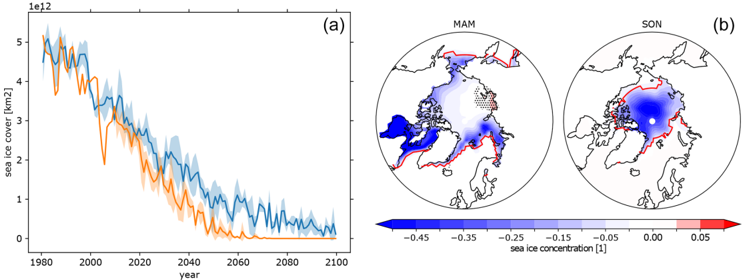
“Several studies find that the phase-out of ODSs will delay the appearance of an ice-free Arctic summer (defined as the first year with September sea ice extent smaller than 1 million km 2 ), by between 15 and even 40 years, depending on the model used [13, 14].”
The influence of future changes in springtime Arctic ozone on stratospheric and surface climate
Chiodo, G., Friedel, M., Seeber, S., Domeisen, D., Stenke, A., Sukhodolov, T., & Zilker, F. (2023) · Atmospheric Chemistry and Physics · doi:10.5194/acp-23-10451-2023 · Cited by 10
“…middle of the 21st century (WMO, 2022) Moreover, declining abundances of ODSs, which also act as greenhouse gases (GHGs), are expected to help mitigate climate change via a reduction in the projected warming (Goyal et al., 2019; Virgin and Smith, 2019; Egorova et al., 2023; Zilker et al., 2023 .”
BackgroundSelf-citationWang, L., Long, Z., Gu, T., Ju, F., Zhen, H., Luan, H., Xiu, G., & Tang, Z. (2025) · Sustainability · doi:10.3390/su17198559 · Cited by 8
Wells, C., Ramme, L., Smith, C., Breier, J., Muralidhar, A., Li, C., Gjermundsen, A., Schoenberg, W. A., Blanz, B., & Mauritzen, C. (2026) · Geoscientific model development · doi:10.5194/gmd-19-1429-2026 · Cited by 5
“Unlike for volcanic forcings, this variation is somewhat predictable on a roughly 11-year cycle, and so is imposed as a time-varying ERF throughout the whole simulation period, using the CMIP6 solar forcing timeseries for the historical and future period (Nicholls and Lewis, 2021).”
Metadata
- Authors
- Egorova, T., Sedlacek, J., Sukhodolov, T., Karagodin-Doyennel, A., Zilker, F., & Rozanov, E.
- Affiliations
- Physikalisch-Meteorologisches Observatorium Davos (CH)
- St Petersburg University (RU)
- ETH Zurich (CH)
- Corresponding author
- Egorova, Tatiana
- Venue
- Atmospheric Chemistry and Physics
- Publisher
- Copernicus GmbH
- Published
- 2023-05-05
- Volume
- 23
- Issue
- 9
- Pages
- 5135-5147
- ISSN
- 1680-7316 (ISSN-L)
- 1680-7324
- OpenAlex
- W4381845996
- Cited by
- 29
- References
- 45
- Citations by year
- 2026: 7 · 2025: 5 · 2024: 6 · 2023: 11
- FWCI
- 3.20
- Type
- journal article
- Language
- en
- Open access
- gold
- doi.org
- Licence
- Locations
- Atmospheric chemistry and physics (publishedVersion, cc-by)
- VU Research Portal (publishedVersion, other-oa)
- DOAJ (DOAJ: Directory of Open Access Journals) (submittedVersion, cc-by-sa)
- Repository for Publications and Research Data (ETH Zurich) (submittedVersion, cc-by)
- Data Archiving and Networked Services (DANS) (submittedVersion, other-oa)
- ETH Zürich Research Collection
- Funders
- Schweizerischer Nationalfonds zur Förderung der Wissenschaftlichen Forschung (200020-182239)
- Ministry of Science and Higher Education of the Russian Federation (075-15-2021-583)
- Topics
- Physical Sciences › Earth and Planetary Sciences › Atmospheric Science › Atmospheric Ozone and Climate
- Physical Sciences › Environmental Science › Global and Planetary Change › Climate variability and models
- Physical Sciences › Environmental Science › Global and Planetary Change › Climate Change and Geoengineering
- Keywords
- Montreal Protocol, ozone depletion, ozone-depleting substances, global warming, direct radiative effect, stratospheric chemistry, cloud cover, sea ice, precipitation, surface temperature, SSP2-4.5, SSP5-8.5, CMIP6
About these checks
Registry, retraction, Cites and statistics results are computed, not judged, with one exception: a printed reference that no index lists is read once by a model before it counts as a citation error. Claims are extracted by a model and kept only when their quote appears verbatim in the text; each cited source is then checked, with a model’s help, for whether it says what the claim relies on. Those verdicts can be wrong — read the claim’s quote and the cited source before relying on one.
Statistics and arithmetic are recomputed, not judged.
Confidence bands are shown only for fields calibrated on our annotated test set. None is calibrated yet, so no band is shown.
What counts as a claim ›How we measure confidence ›How we check this ›
Are you an author, or do you see a problem with this page? Request a review
Data sources
Bibliographic data: Semantic Scholar, OpenAlex, Crossref.
Contains information from the Semantic Scholar Academic Graph Datasets, made available under the ODC Attribution License (ODC-BY 1.0).
Semantic Scholar’s data is described in: Kinney, R., et al. (2023). The Semantic Scholar Open Data Platform. arXiv:2301.10140.
