

Investigating processes influencing simulation of local Arctic wintertime anthropogenic pollution in Fairbanks, Alaska, during ALPACA-2022
Open accessPublished version of a preprint
The DOI matches its Crossref record; 69 of the 69 references it cites were found in a registry or an index.
Abstract
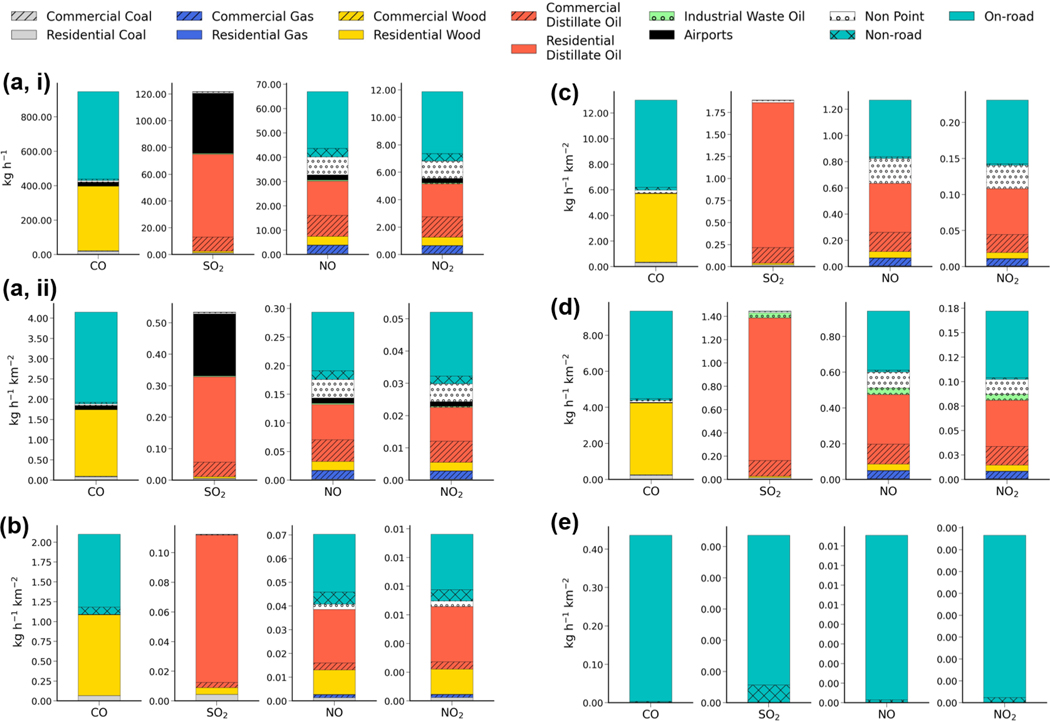
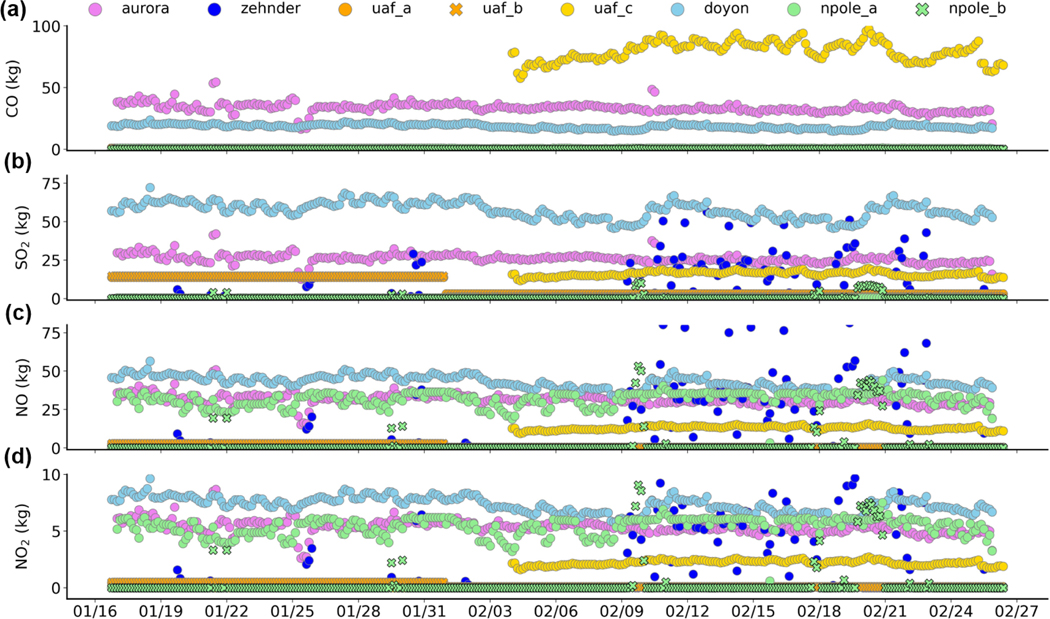
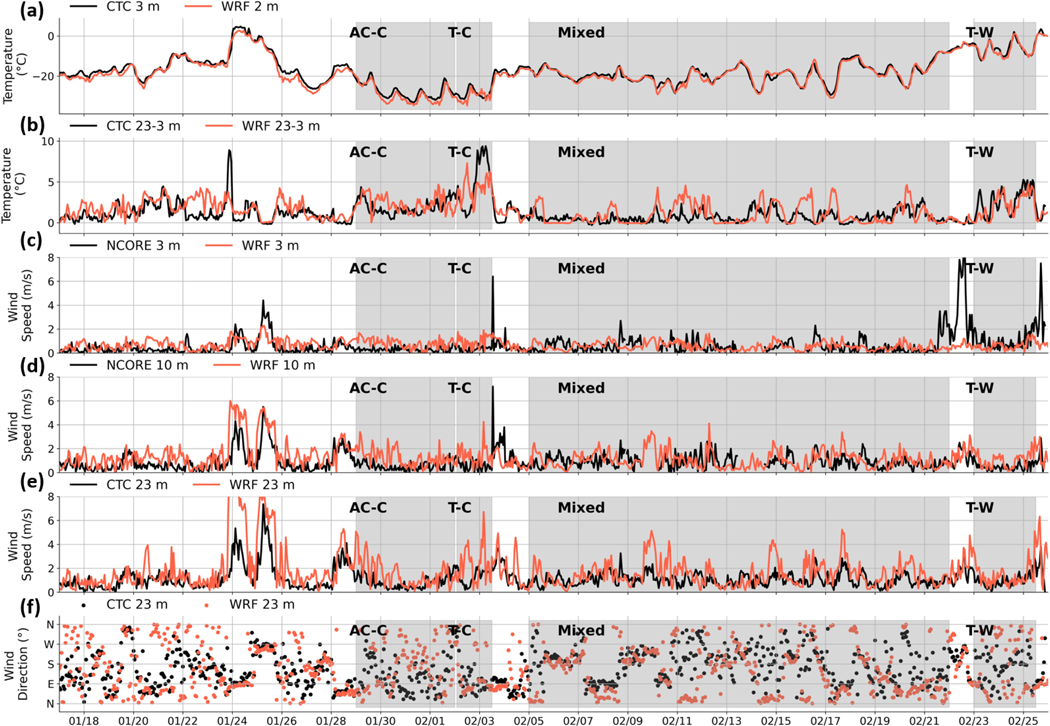
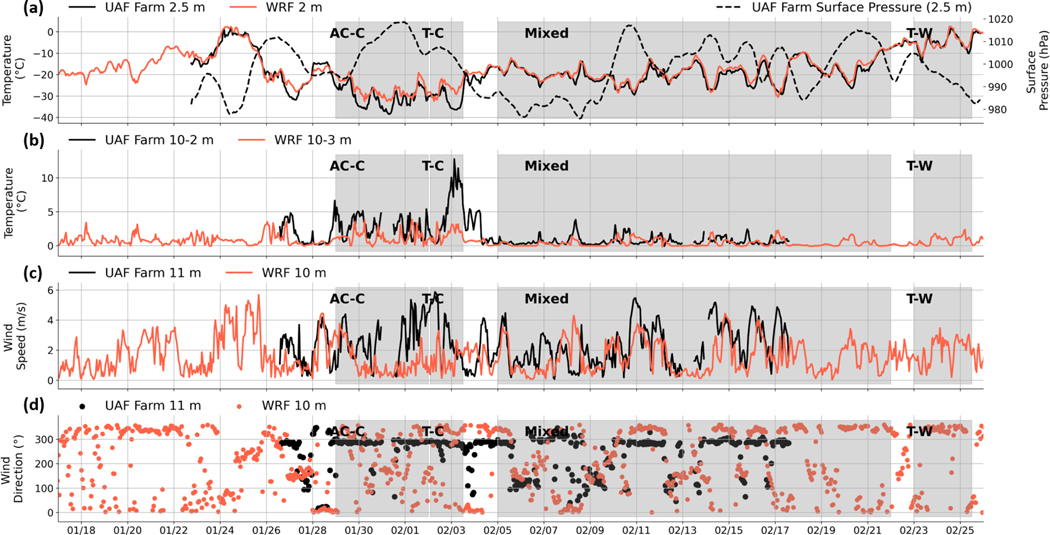
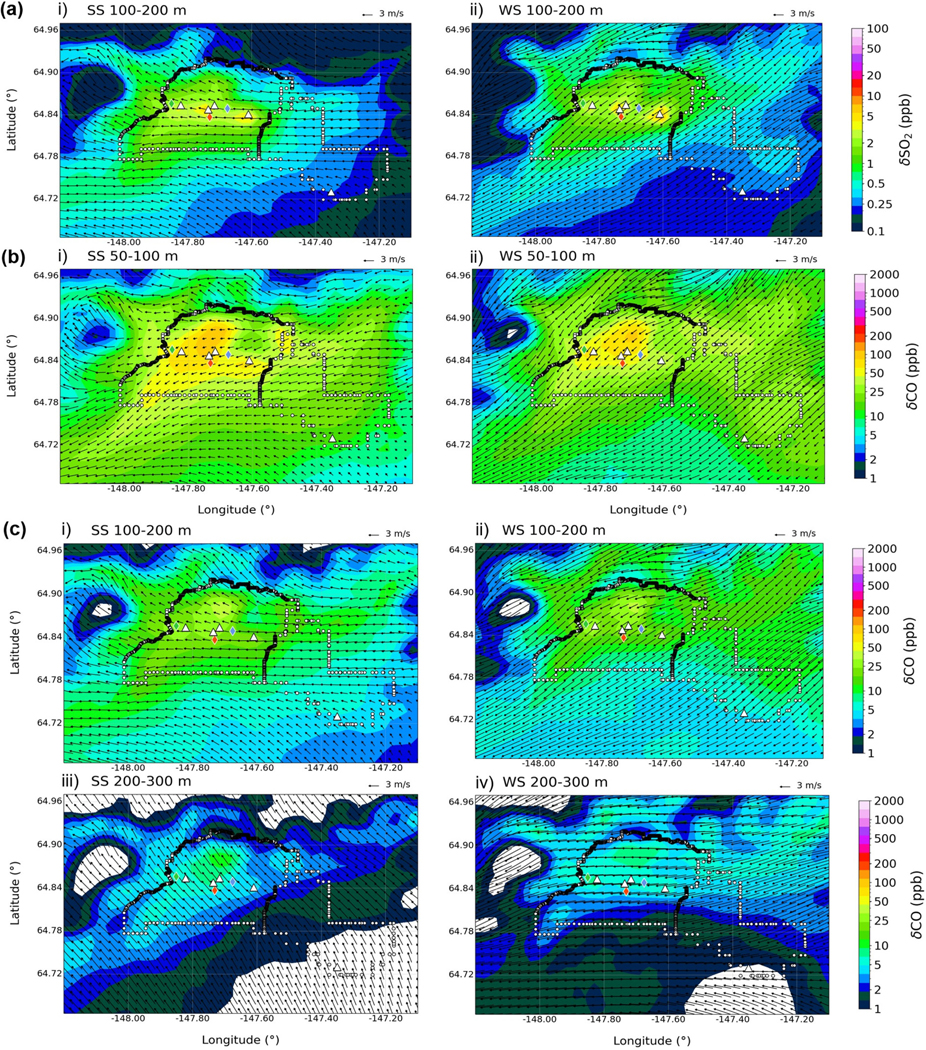
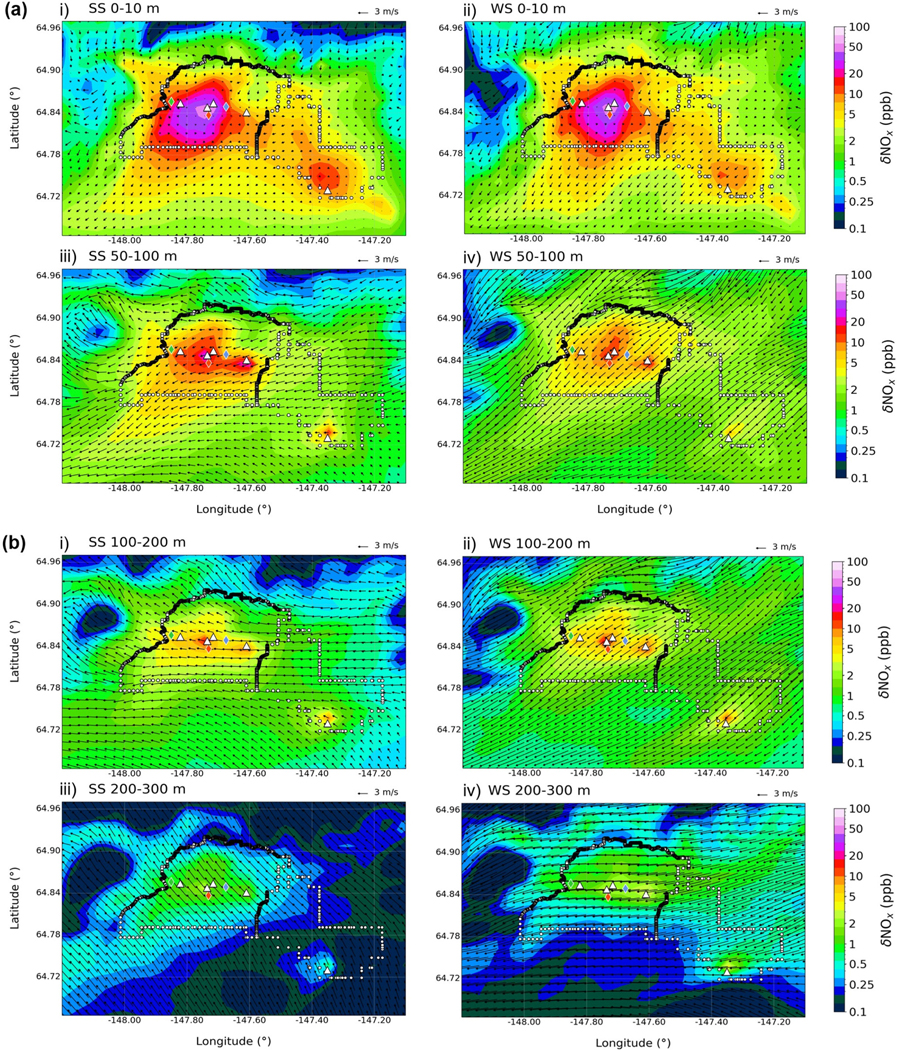
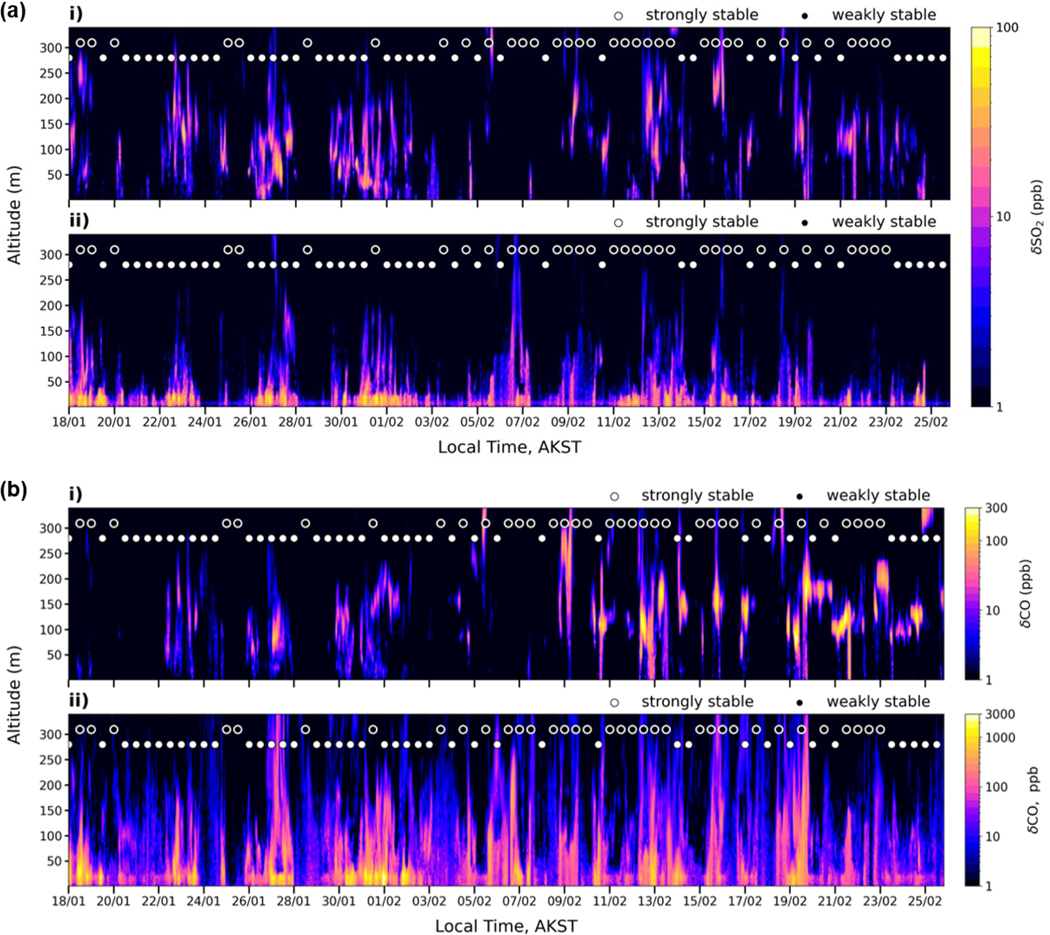
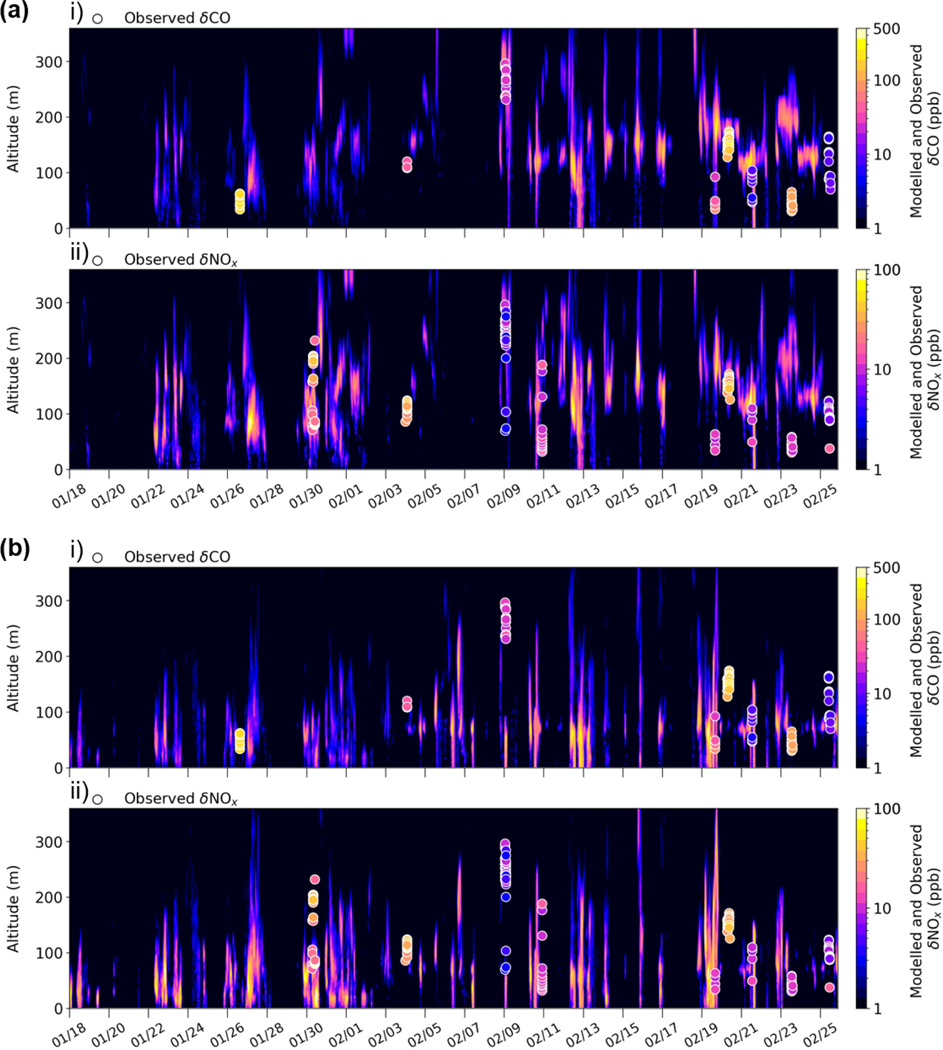
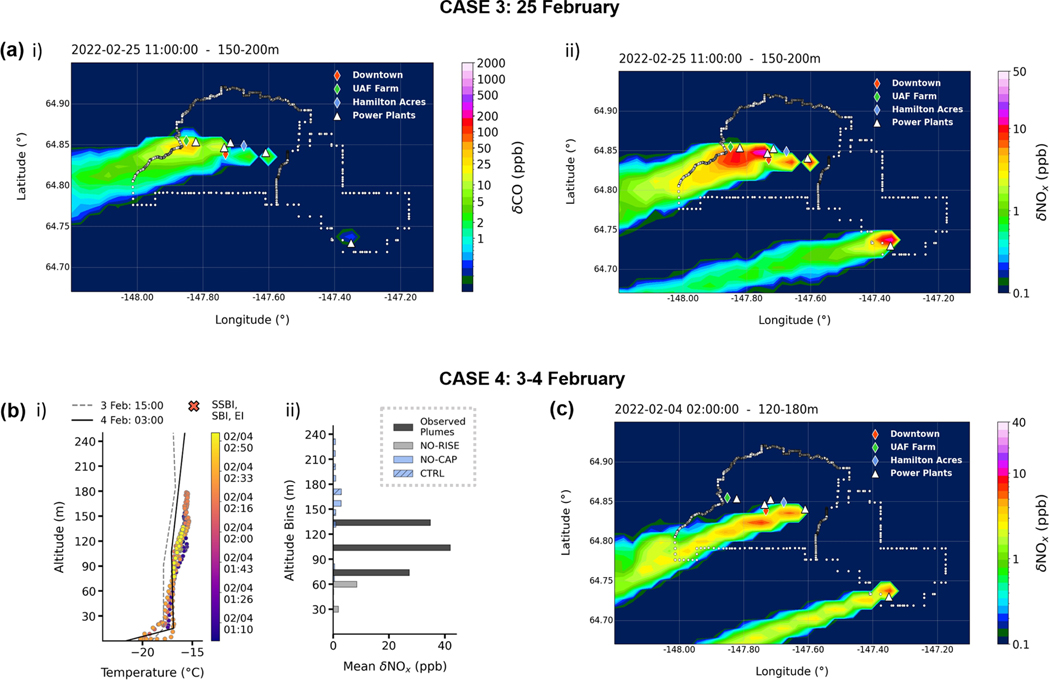
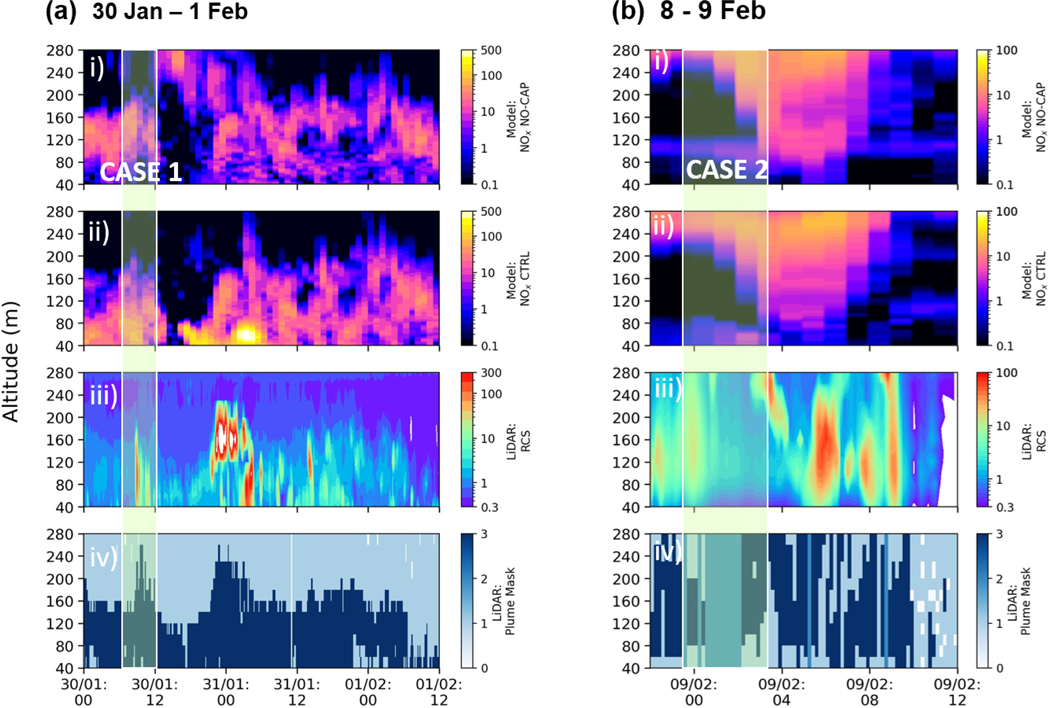
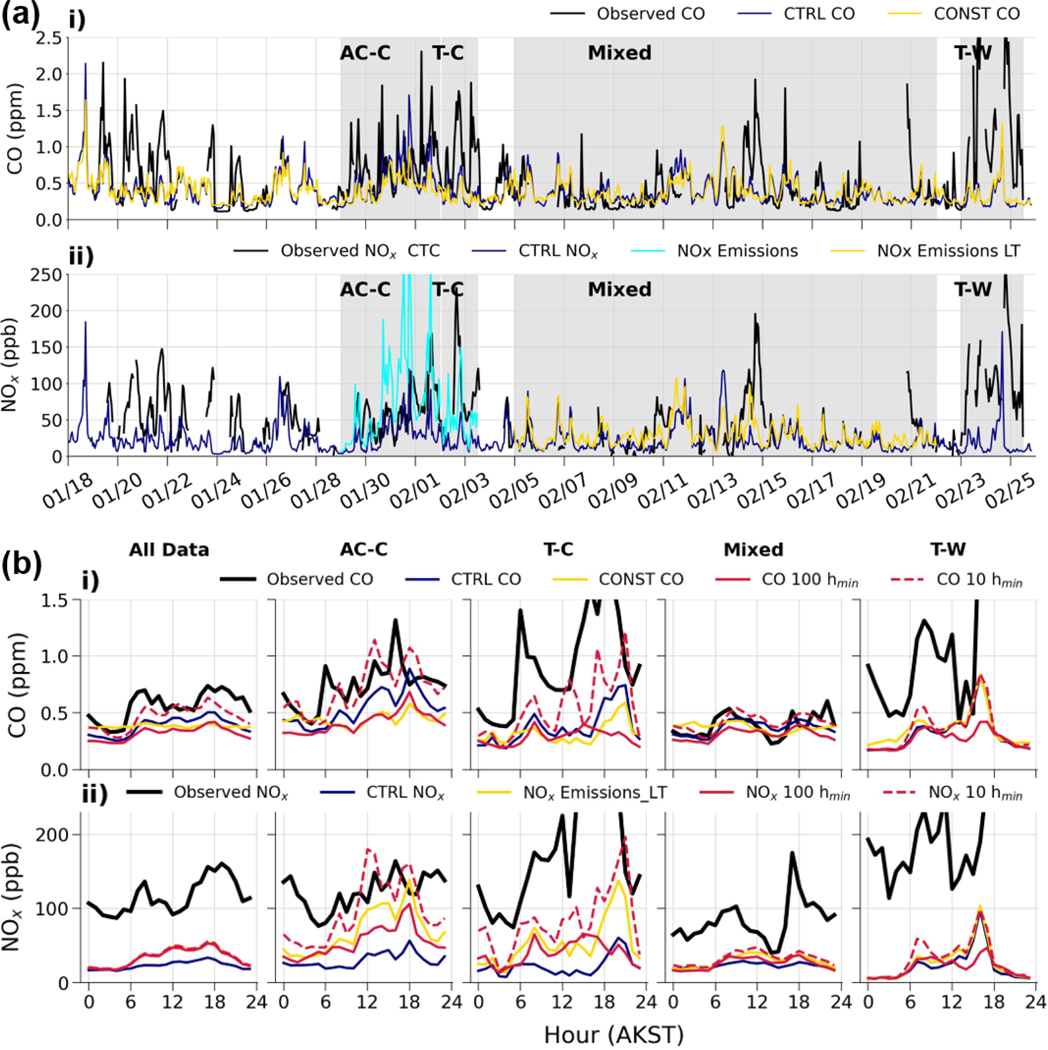
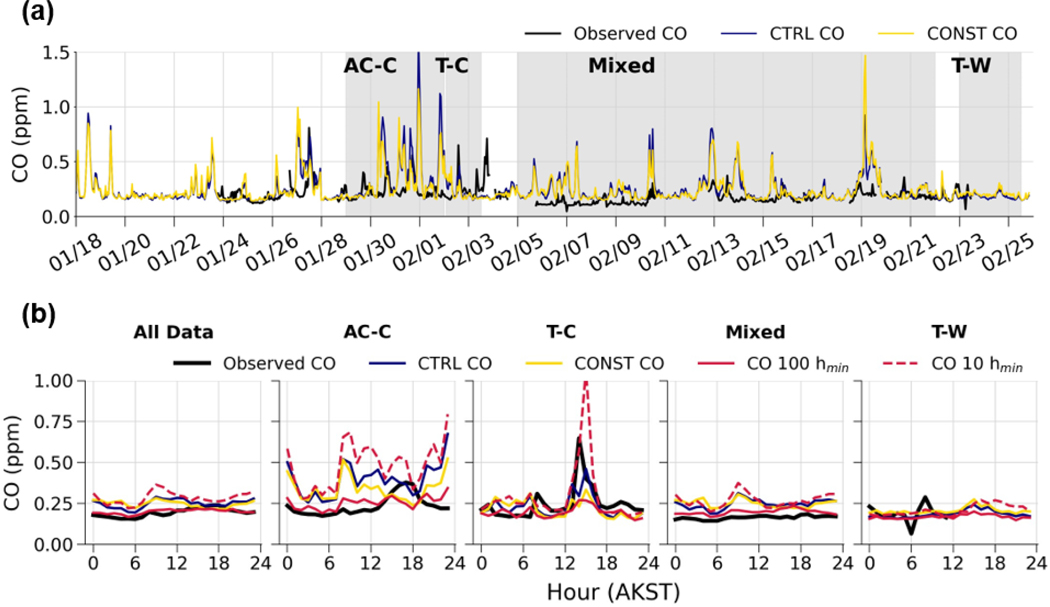
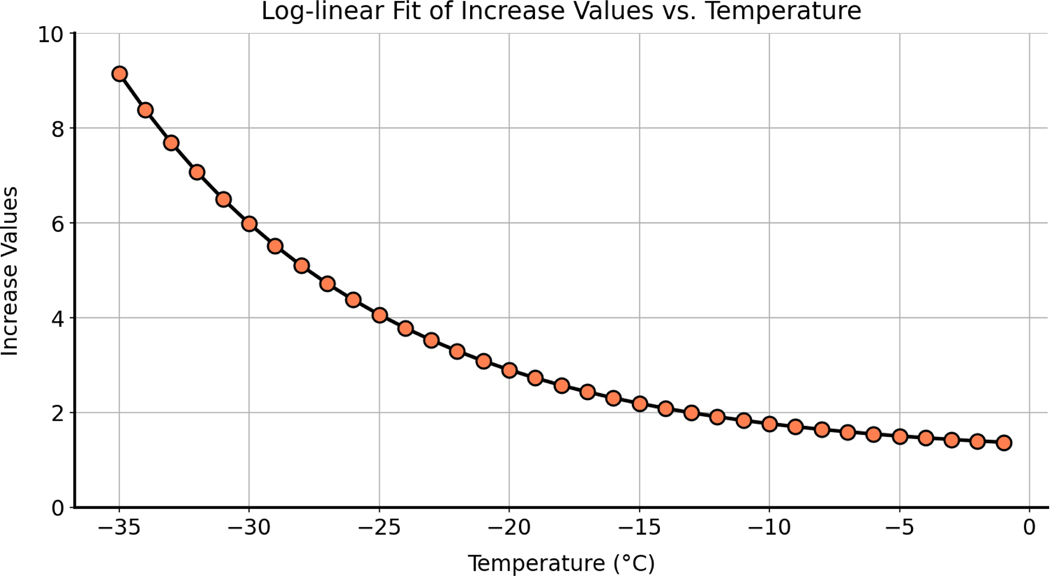
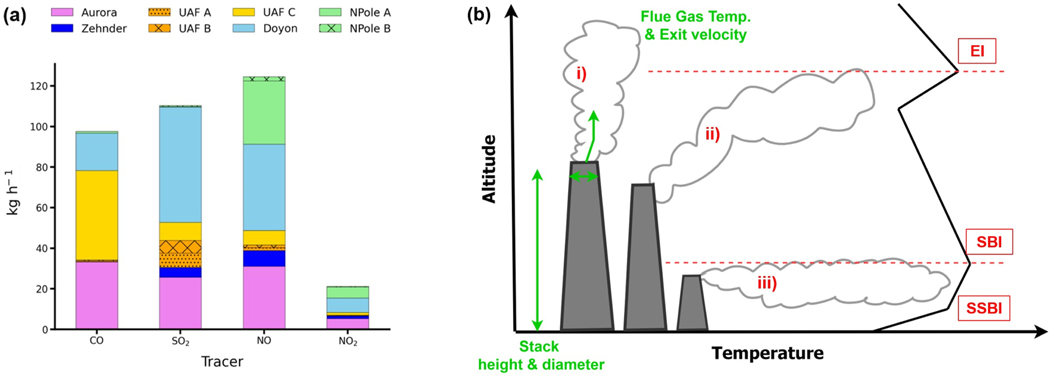
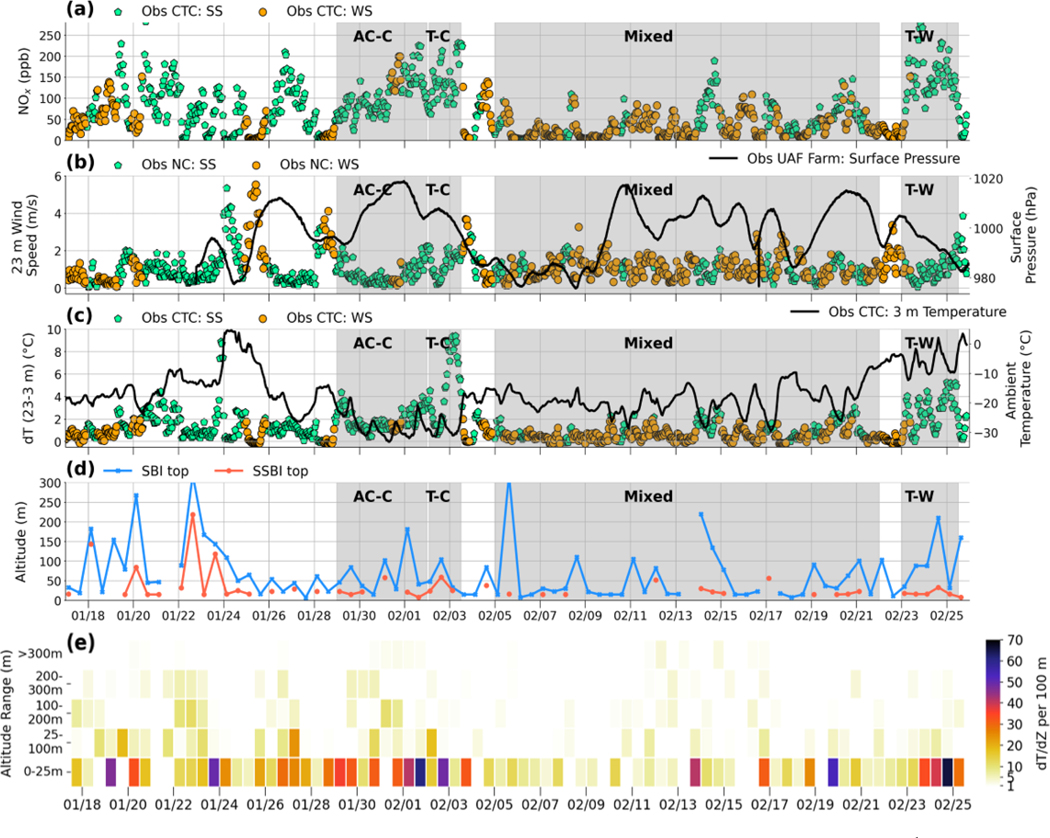
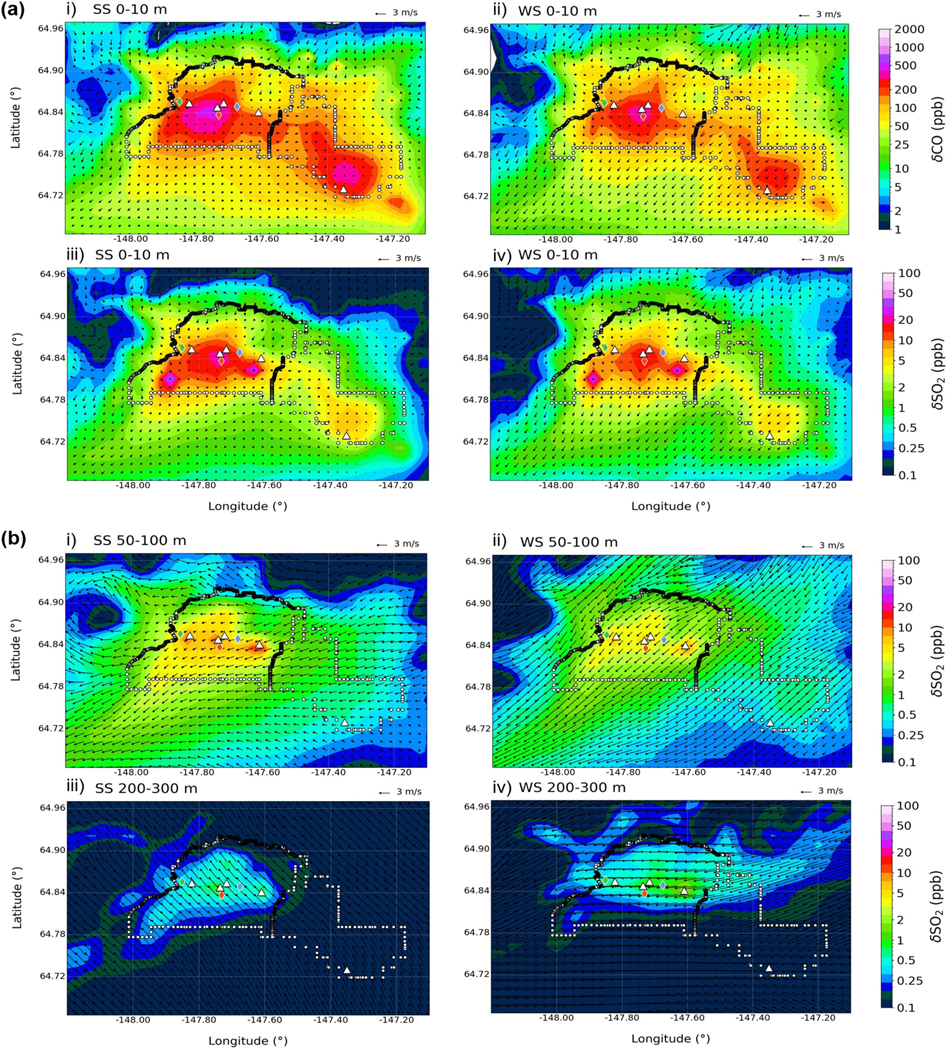
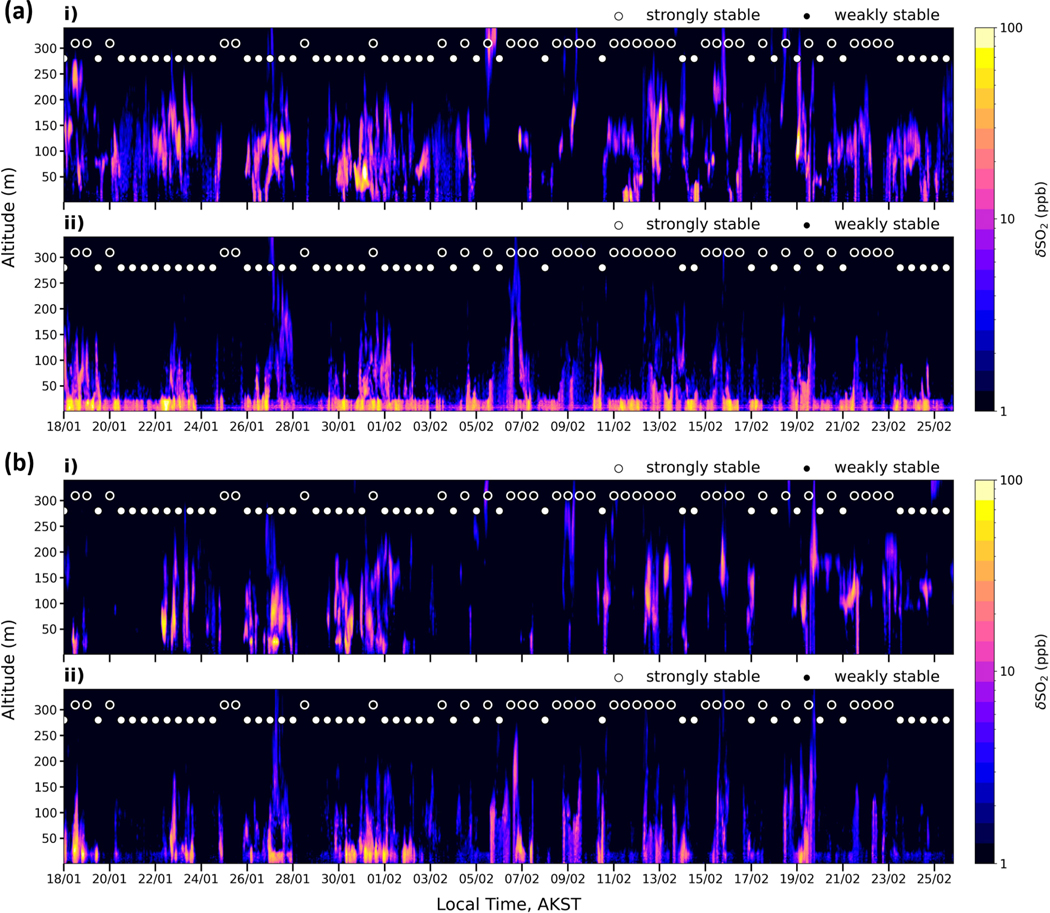
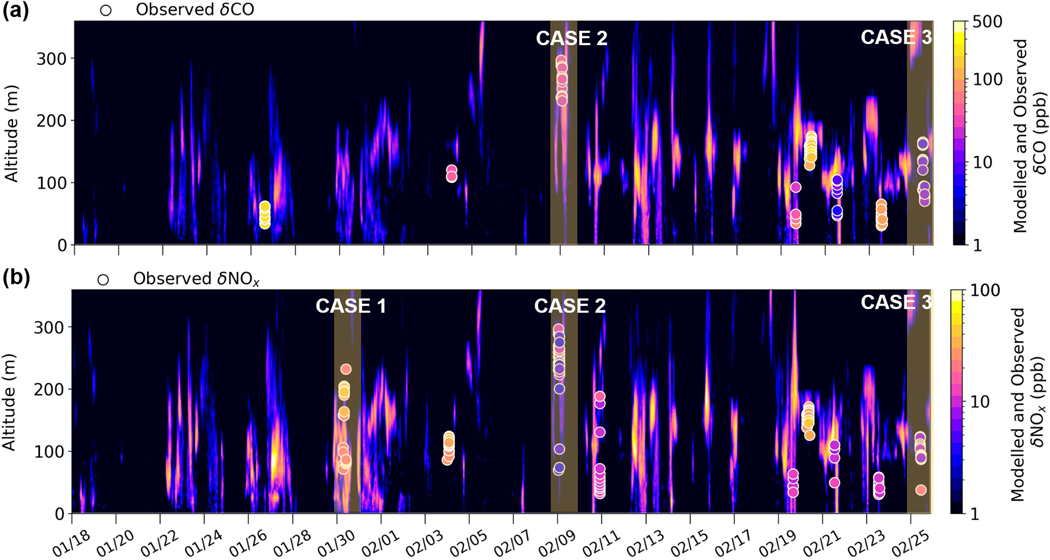
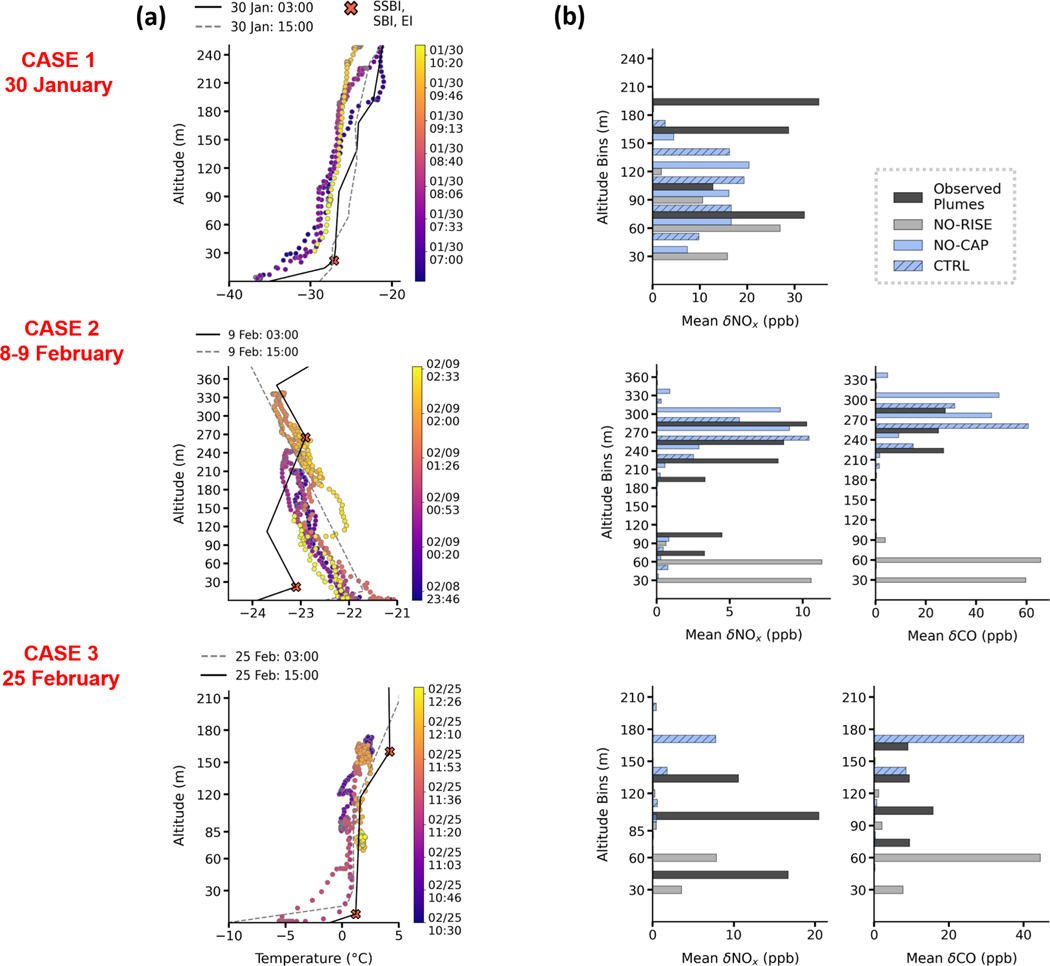
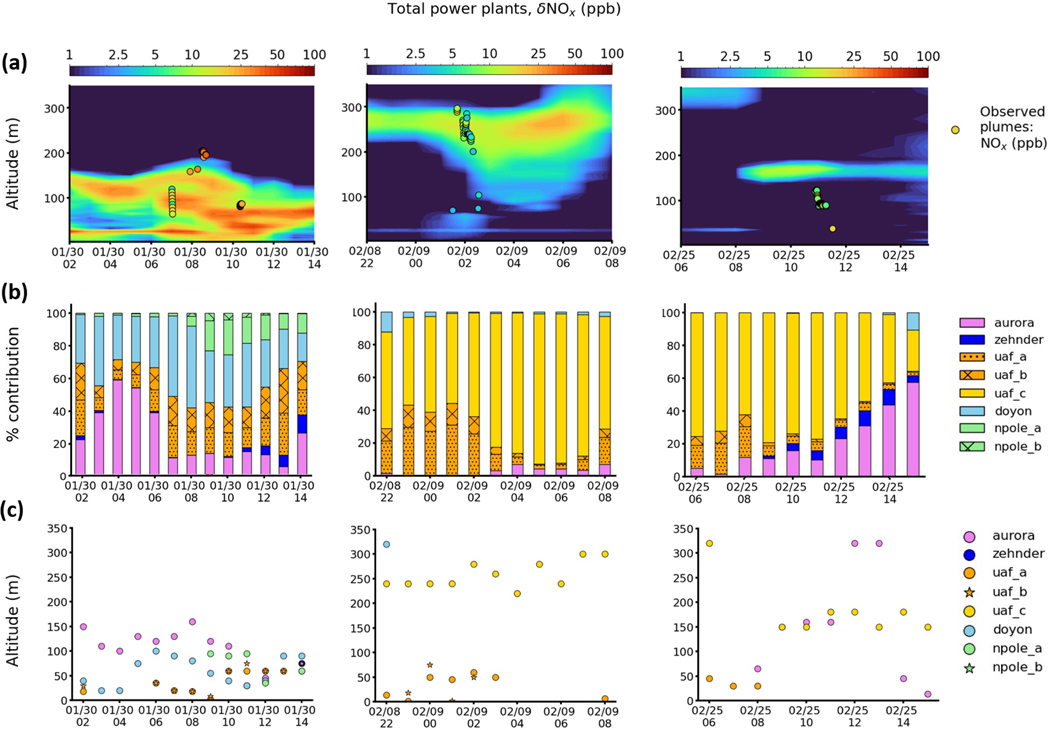
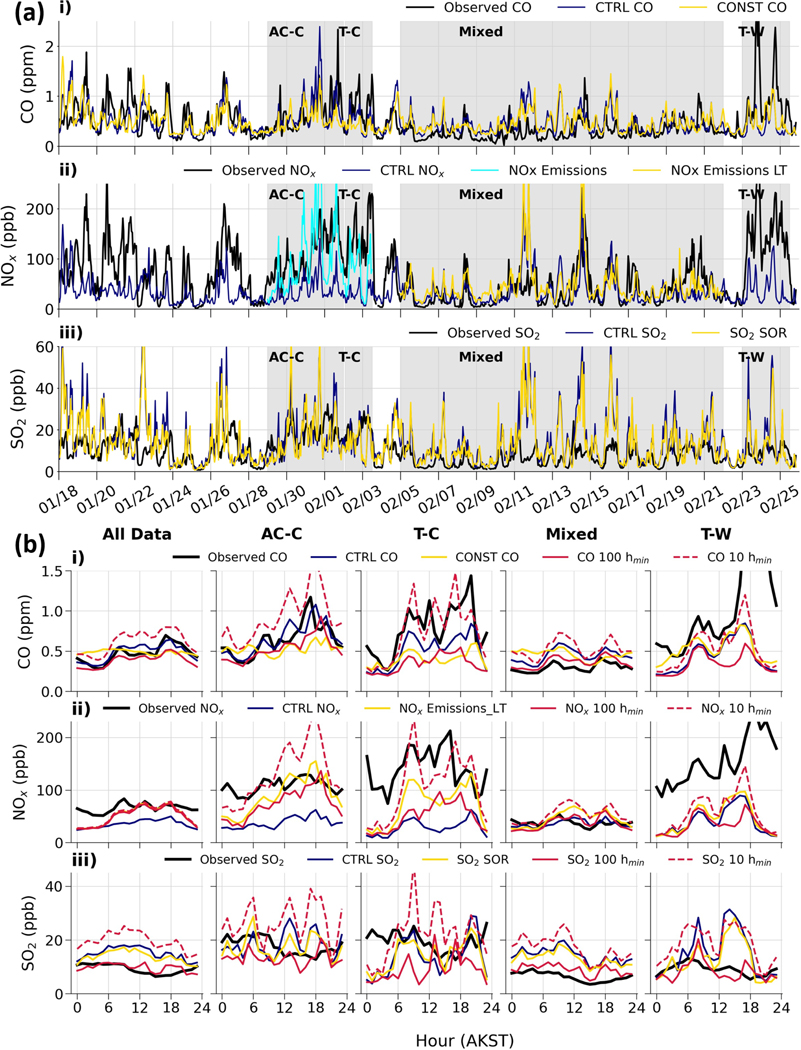
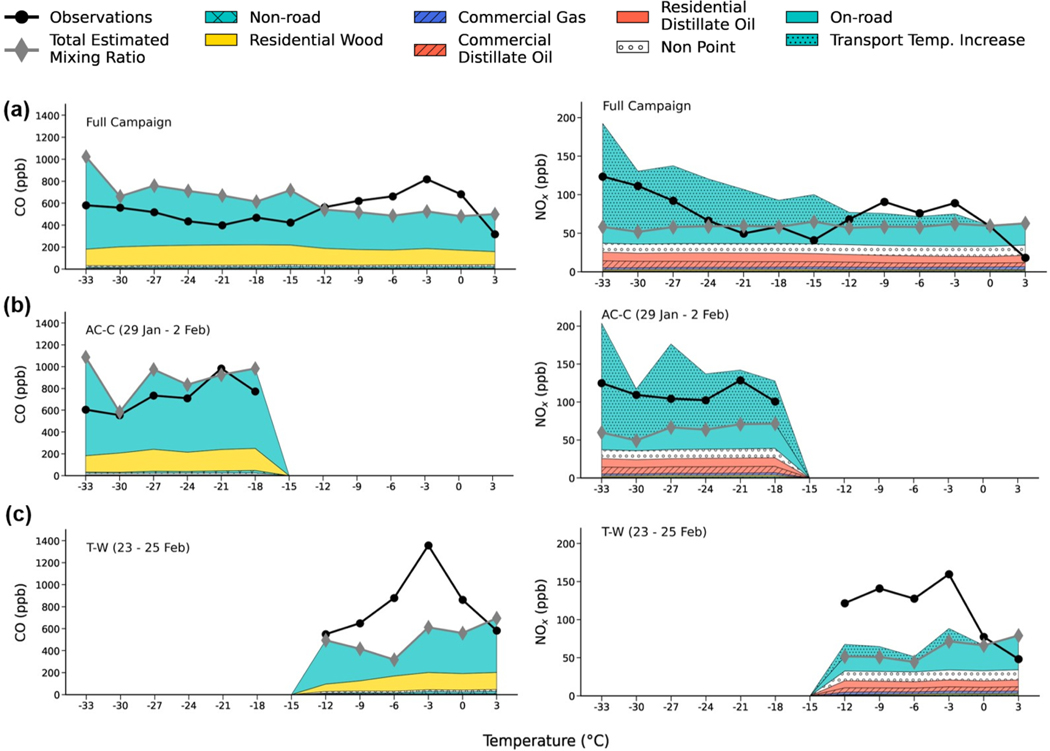
Lagrangian tracer simulations are deployed to investigate processes influencing vertical and horizontal dispersion of anthropogenic pollution in Fairbanks, Alaska, during the Alaskan Layered Pollution and Chemical Analysis (ALPACA) 2022 field campaign. Simulated concentrations of carbon monoxide (CO), sulfur dioxide (SO 2 ), and nitrogen oxides (NO x ), including surface and elevated sources, are the highest at the surface under very cold stable conditions. Pollution enhancements above the surface (50–300 m) are mainly attributed to elevated power plant emissions. Both surface and elevated sources contribute to Fairbanks' regional pollution that is transported downwind, primarily to the south-west, and may contribute to wintertime Arctic haze. Inclusion of a novel power plant plume rise treatment that considers the presence of surface and elevated temperature inversion layers leads to improved agreement with observed CO and NO x plumes, with discrepancies attributed to, for example, displacement of plumes by modelled winds. At the surface, model results show that observed CO variability is largely driven by meteorology and, to a lesser extent, by emissions, although simulated tracers are sensitive to modelled vertical dispersion. Modelled underestimation of surface NO x during very cold polluted conditions is considerably improved following the inclusion of substantial increases in diesel vehicle NO x emissions at cold temperatures (e.g. a factor of 6 at −30 °C). In contrast, overestimation of surface SO 2 is attributed mainly to model deficiencies in vertical dispersion of elevated (5–18 m) space heating emissions. This study highlights the need for improvements to local wintertime Arctic anthropogenic surface and elevated emissions and improved simulation of Arctic stable boundary layers.
Overview
The claims and statistics of this paper haven’t been checked yet.
Free: it reads the open-access text and checks the first 5 claims that cite a source we can check. Create a free account to check every claim.
Integrity signals
Registry
Cites
Statistics
Figures
Verification
Claims the paper makes
The claims and statistics of this paper haven’t been checked yet.
Free: it reads the open-access text and checks the first 5 claims that cite a source we can check. Create a free account to check every claim.
Claims other papers make about this one
Each is checked against this paper’s own text: does it say what the citing paper says it does?
The source backs part of the claim, not all of it — or backs it for a different population, condition or comparison.
In the citing paper
“Higher concentrations (up to 5 ppb) are simulated in central Fairbanks, within the nonattainment area borders, with some outflow to the southwest, as also discussed in Brett et al.34”
From Estimating Power Plant Contributions to Surface Pollution in a Wintertime Arctic Environment (2025) · cites this paper as [34]
Experimental — accuracy not yet measuredThe source backs part of the claim, not all of it — or backs it for a different population, condition or comparison.
In the citing paper
“This case is classified as SS, however the surface pollution is lower compared to case (b) (see Figure 1) due to slightly weaker temperature inversions and stronger horizontal wind speeds.34”
From Estimating Power Plant Contributions to Surface Pollution in a Wintertime Arctic Environment (2025) · cites this paper as [34]
Experimental — accuracy not yet measuredThe source backs part of the claim, not all of it — or backs it for a different population, condition or comparison.
In the citing paper
“Also, while the CALPUFF model included plume rise for the power plant emission injection, it lacked consideration of the stably stratified conditions when emissions can be capped by inversion layers.34”
From Estimating Power Plant Contributions to Surface Pollution in a Wintertime Arctic Environment (2025) · cites this paper as [34]
Experimental — accuracy not yet measuredThe source backs part of the claim, not all of it — or backs it for a different population, condition or comparison.
In the citing paper
“However, relative contributions of NOx (7% (min-max: 4–10%)) are lower, due to larger NOx surface emissions from the mobile on-road and residential heating sectors (see Figure 2, and Brett et al.34).”
From Estimating Power Plant Contributions to Surface Pollution in a Wintertime Arctic Environment (2025) · cites this paper as [34]
Experimental — accuracy not yet measuredThe source backs part of the claim, not all of it — or backs it for a different population, condition or comparison.
In the citing paper
“Under extremely cold conditions, pollution emission rates from domestic heating and energy production are generally high, and traffic emissions at cold temperatures can release comparatively more pollutants than under higher temperatures due to inefficient combustion conditions (e.g., Brett et al., 2025;Weber et al., 2019;Zhu et al., 2022).”
From In situ vertical observations of the layered structure of air pollution in a continental high-latitude urban boundary layer during winter (2025) · cites this paper as Brett et al., 2025
Experimental — accuracy not yet measured
18 more claims about this paper
Create a free account to see every claim other papers make about this one.
Self-check
Percentages, sums and reported differences re-computed from the paper’s own numbers.
The self-check needs the paper’s full text.
Citations
Cites
Iacono, M. J., Delamere, J. S., Mlawer, E. J., Shephard, M. W., Clough, S. A., & Collins, W. D. (2008) · Journal of Geophysical Research: Atmospheres · doi:10.1029/2008jd009944 · Cited by 5,738
Morrison, H., Thompson, G., & Tatarskii, V. (2009) · Monthly Weather Review · doi:10.1175/2008mwr2556.1 · Cited by 2,438
Development of an Improved Turbulence Closure Model for the Atmospheric Boundary Layer
NAKANISHI, M., & NIINO, H. (2009) · Journal of the Meteorological Society of Japan. Ser. II · doi:10.2151/jmsj.87.895 · Cited by 1,270
Liu, S. C., Trainer, M., Fehsenfeld, F. C., Parrish, D. D., Williams, E. J., Fahey, D. W., Hübler, G., & Murphy, P. C. (1987) · Journal of Geophysical Research: Atmospheres · doi:10.1029/jd092id04p04191 · Cited by 990
Characteristics of atmospheric transport into the Arctic troposphere
Stohl, A. (2006) · Journal of Geophysical Research: Atmospheres · doi:10.1029/2005jd006888 · Cited by 767
The Lagrangian particle dispersion model FLEXPART-WRF version 3.1
Brioude, J., Arnold, D., Stohl, A., Cassiani, M., Morton, D., Seibert, P., Angevine, W., Evan, S., Dingwell, A., Fast, J. D., et al. (2013) · Geoscientific Model Development · doi:10.5194/gmd-6-1889-2013 · Cited by 389
Stohl, A., Klimont, Z., Eckhardt, S., Kupiainen, K., Shevchenko, V. P., Kopeikin, V. M., & Novigatsky, A. N. (2013) · Atmospheric Chemistry and Physics · doi:10.5194/acp-13-8833-2013 · Cited by 383
Shaw, G. E. (1995) · Bulletin of the American Meteorological Society · doi:10.1175/1520-0477(1995)076<2403:tahp>2.0.co;2 · Cited by 371
Wang, Y., Zhang, Q., Jiang, J., Zhou, W., Wang, B., He, K., Duan, F., Zhang, Q., Philip, S., & Xie, Y. (2014) · Journal of Geophysical Research: Atmospheres · doi:10.1002/2013jd021426 · Cited by 366
Atmospheric science and power production
(1984) · doi:10.2172/6503687 · Cited by 329
Research works printed but not linked: 3
- Fochesatto GJ, Brett N, Law KS, Pohorsky R, Baccarini A, Barret B, Pappaccogli G, Scoto F, Busetto M, Dieudonné E, Albertin S, Bekki S, Maillard J, Cesler-maloney M, Raut J-C, Ravetta F, Atkinson D, Keller D, Roberts TJ, Schmale J, Decesari S, Donateo A, Doulgeris K, Brus D, Arnold S, Mao J, and Simpson WR: Overview of the ALPACA-PBL Winter Field Experiment, in: The 103rd AMS Annual Meeting, Denver, United States, January 2023, https://insu.hal.science/insu-04216320 (last access: 3 December 2024), 2023.
- Pasquill F. and Smith FB: Atmospheric diffusion, vol. 437, E. Horwood New York, NY, USA, ISBN 10:0130513350, ISBN 13:9780130513359, 1983.
- Simpson WR, Mao J, Fochesatto GJ, Law KS, DeCarlo PF, Schmale J, Pratt KA, Arnold SR, Stutz J, Dibb JE, Creamean JM, Weber RJ, Williams BJ, Alexander B, Hu L, Yokelson RJ, Shiraiwa M, Decesari S, Anastasio C, D’Anna B, Gilliam RC, Nenes A, St. Clair JM, Trost B, Flynn JH, Savarino J, Conner LD, Kettle N, Heeringa KM, Albertin S, Baccarini A, Barret B, Battaglia MA, Bekki S, Brado TJ, Brett N, Brus D, Campbell JR, Cesler-Maloney M, Cooperdock S, Cysneiros de Carvalho K, Delbarre H, DeMott PJ, Dennehy CJS, Dieudonné E, Dingilian KK, Donateo A, Doulgeris KM, Edwards KC, Fahey K, Fang T, Guo F, Heinlein LMD, Holen AL, Huff D, Ijaz A, Johnson S, Kapur S, Ketcherside DT, Levin E, Lill E, Moon AR, Onishi T, Pappaccogli G, Perkins R, Pohorsky R, Raut J-C, Ravetta F, Roberts T, Robinson ES, Scoto F, Selimovic V, Sunday MO, Temime-Roussel B, Tian X, Wu J, and Yang Y: Overview of the Alaskan Layered Pollution and Chemical Analysis (ALPACA) Field Experiment, ACS EST Air, 1, 200– 222, 10.1021/acsestair.3c00076, 2024. 38482269 PMC10928659 · DOI · Paper page
Cited by
Pohorsky, R., Baccarini, A., Brett, N., Barret, B., Bekki, S., Pappaccogli, G., Dieudonné, E., Temime-Roussel, B., D'Anna, B., Cesler-Maloney, M., et al. (2025) · Atmospheric Chemistry and Physics · doi:10.5194/acp-25-3687-2025 · Cited by 24
“Since aerosol light absorption coefficients, as well as CO and O 3 mixing ratio measurements, were not duplicated on the ground during the flights, direct comparisons were not possible.”
Self-citationSurprisingly robust photochemistry in subarctic particles during winter: evidence from photooxidants
Heinlein, L. M. D., He, J., Sunday, M. O., Guo, F., Campbell, J. R., Moon, A. R., Kapur, S., Fang, T., Edwards, K., Cesler‐Maloney, M., et al. (2025) · Atmospheric chemistry and physics · doi:10.5194/acp-25-9561-2025 · Cited by 11
“While the meteorology driving pollution episodes has been characterized (Brett et al., 2025; Cesler-Maloney et al., 2024) and many of the primary sources of PM have been identified, the secondary chemical processes that form and transform PM in Fairbanks are only starting to be explored (Moon et…”
InfluentialSelf-citationUnraveling Urban NOx Emission Sources in Polluted Arctic Wintertime Using NO2 Nitrogen Isotopes
Albertin, S., Bekki, S., Savarino, J., Brett, N., Law, K. S., Cesler‐Maloney, M., Flynn, J. H., Guo, F., Barret, B., Caillon, N., et al. (2024) · Journal of Geophysical Research: Atmospheres · doi:10.1029/2024jd041842 · Cited by 9
“In addition, according to Brett et al. (2024), diesel vehicle NO x emissions may be underestimated in very cold conditions during the winter in Fairbanks.”
InfluentialSelf-citationEstimating Power Plant Contributions to Surface Pollution in a Wintertime Arctic Environment
Brett, N., Arnold, S. R., Law, K. S., Raut, J.-C., Onishi, T., Barret, B., Dieudonné, E., Cesler-Maloney, M., Simpson, W., Bekki, S., et al. (2025) · ACS ES&T Air · doi:10.1021/acsestair.5c00030 · Cited by 9
Self-citationWintertime Abundance and Sources of Key Trace Gas and Particle Species in Fairbanks, Alaska
Ketcherside, D., Yokelson, R. J., Selimovic, V., Robinson, E. S., Cesler‐Maloney, M., Holen, A. L., Wu, J. T., Temime‐Roussel, B., Ijaz, A., Kuhn, J., et al. (2025) · Journal of Geophysical Research Atmospheres · doi:10.1029/2025jd043677 · Cited by 8
“Jet fuel is the main regional sulfur source (JP8 with 900 ppm S is used at both Fairbanks international and military airports), but, as with power plants (Brett et al., 2025), the emissions are not thought to heavily influence surface air quality.”
InfluentialSelf-citationDieudonné, E., Delbarre, H., Augustin, P., Fourmentin, M., Flament, P., Deboudt, K., Ngagine, S. H., & Cazier, F. (2024) · Aerosol Science and Technology · doi:10.1080/02786826.2024.2427868 · Cited by 5
Self-citationBarret, B., Medina, P., Brett, N., Pohorsky, R., Law, K. S., Bekki, S., Fochesatto, G. J., Schmale, J., Arnold, S. R., Baccarini, A., et al. (2025) · Atmospheric measurement techniques · doi:10.5194/amt-18-1163-2025 · Cited by 11
Self-citationHuff, D., Carlson, T., Vennam, L. P., Chien, C., Fahey, K. M., Gilliam, R. C., & Czarnecki, N. (2025) · Faraday Discussions · doi:10.1039/d4fd00158c · Cited by 3
Self-citationStutz, J., Kuhn, J., Cooperdock, S. C., Johnson, S., Guo, F., Flynn, J. H., Cesler‐Maloney, M., & Simpson, W. R. (2026) · Atmospheric chemistry and physics · doi:10.5194/acp-26-14345-2026 · Cited by 2
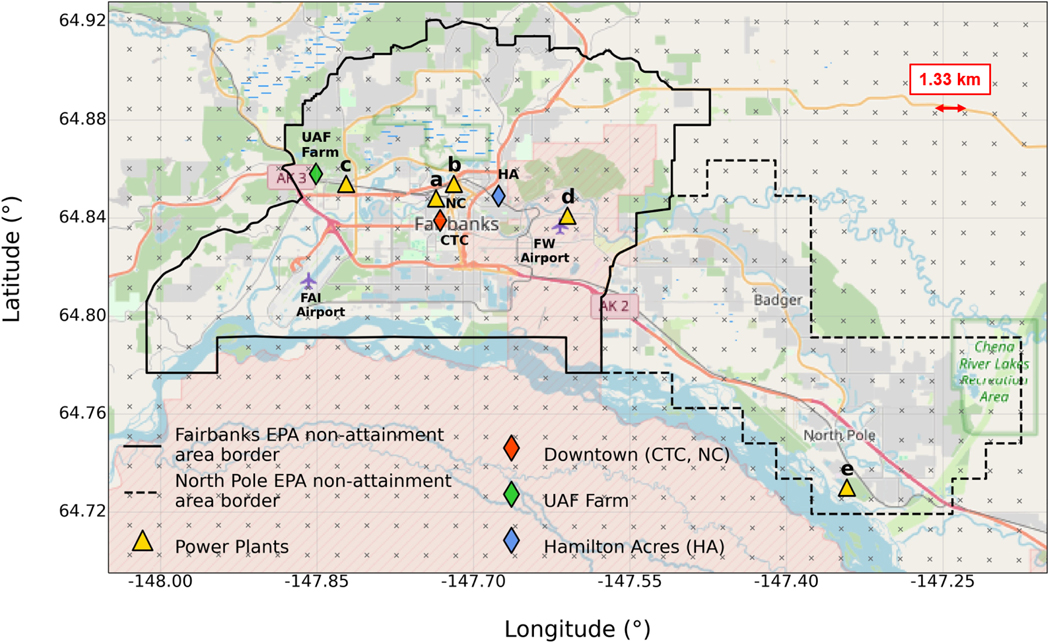
“Emission rates of pollutants are reported by the Alaska Department of Environmental Conservation, ADEC, with hourly resolution on a 1.33 km regular horizontal grid distributed in 4 vertical grid boxes between 0 and ca. m a.g.l.”
InfluentialSelf-citationRoberts, T., Cesler‐Maloney, M., & Simpson, W. R. (2025) · Faraday Discussions · doi:10.1039/d4fd00177j · Cited by 4
Self-citationAerosol dry deposition fluxes on snow during the ALPACA campaign in Fairbanks, Alaska
Donateo, A., Pappaccogli, G., Scoto, F., Busetto, M., Lovisco, F. L., Brett, N., Keller, D., Barret, B., Dieudonné, E., Pohorsky, R., et al. (2025) · Atmospheric chemistry and physics · doi:10.5194/acp-25-18129-2025 · Cited by 3
“In addition, the composite radiosonde profiles presented in Brett et al. 2025 (see their Fig.”
Self-citationLocal wintertime Arctic air pollution
Brett, N. (2025) · theses.fr (ABES) · doi:10.70675/8c764862zfb52z4ccez8e0bz5ac148c244d3
Self-citationAzi, A. O., Lim, H. S., & Yohanna, E. (2026) · Earth Systems and Environment · doi:10.1007/s41748-026-01202-7
“This illustrates the temporal patterns of PM 2.5 and PM 10 at these locations, aligning with a similar study of (Brett et al. 2025).”
InfluentialCosta, E. J., Bekele, M. S., Mashkevich, M. R., Lill, E. R., Wu, J., Holen, A. L., Moon, A. R., Alexander, B., Cheng, Z., Lata, N. N., et al. (2026) · ACS ES&T Air · doi:10.1021/acsestair.6c00130
Self-citationPhotochemical Modeling of Wintertime HO x Sources and Sinks in a Subarctic Urban Location
Hoffman, A. J., James, R. L., Heard, D. E., Whalley, L. K., Stone, D., Seldon, S., Stutz, J., Kuhn, J., Cooperdock, S. C., Temime‐Roussel, B., et al. (2026) · ACS ES&T Air · doi:10.1021/acsestair.6c00254 · Cited by 1
Self-citation
Metadata
- Authors
- Brett, N., Law, K. S., Arnold, S. R., Fochesatto, J. G., Raut, J.-C., Onishi, T., Gilliam, R., Fahey, K., Huff, D., Pouliot, G., Barret, B., Dieudonné, E., Pohorsky, R., Schmale, J., Baccarini, A., Bekki, S., Pappaccogli, G., Scoto, F., Decesari, S., Donateo, A., Cesler-Maloney, M., Simpson, W., Medina, P., D'Anna, B., Temime-Roussel, B., Savarino, J., Albertin, S., Mao, J., Alexander, B., Moon, A., DeCarlo, P. F., Selimovic, V., Yokelson, R., & Robinson, E. S.
- Affiliations
- Centre National de la Recherche Scientifique (FR)
- University of Leeds (GB)
- Environmental Protection Agency (US)
- Alaska Department of Environmental Conservation (US)
- Université du littoral côte d'opale (FR)
- École Polytechnique Fédérale de Lausanne (CH)
- Institute of Atmospheric Sciences and Climate (IT)
- University of Alaska Fairbanks (US)
- Institut polytechnique de Grenoble (FR)
- University of Washington (US)
- Johns Hopkins University (US)
- University of Michigan (US)
- University of Montana (US)
- Corresponding author
- Brett, Natalie
- ORCID
- Brett, Natalie
- Law, Kathy S.
- Arnold, Steve R.
- Raut, Jean-Christophe
- Onishi, Tatsuo
- Gilliam, Robert
- Fahey, Kathleen
- Huff, Deanna
- Pouliot, George
- Barret, Brice
- Dieudonné, Elsa
- Pohorsky, Roman
- Schmale, Julia
- Baccarini, Andrea
- Bekki, Slimane
- Pappaccogli, Gianluca
- Scoto, Federico
- Decesari, Stefano
- Donateo, Antonio
- Simpson, William
- Medina, Patrice
- D'Anna, Barbara
- Savarino, Joel
- Albertin, Sarah
- Mao, Jingqiu
- Alexander, Becky
- Moon, Allison
- DeCarlo, Peter F.
- Selimovic, Vanessa
- Yokelson, Robert
- Robinson, Ellis S.
- Venue
- Atmospheric Chemistry and Physics
- Publisher
- Copernicus GmbH
- Published
- 2025-01-28
- Volume
- 25
- Issue
- 2
- Pages
- 1063-1104
- ISSN
- 1680-7316 (ISSN-L)
- 1680-7324
- PMC
- PMC12180936
- OpenAlex
- W4406882059
- Cited by
- 15
- References
- 66
- Citations by year
- 2026: 4 · 2025: 9
- FWCI
- 5.65
- Type
- journal article
- Language
- en
- Open access
- gold
- doi.org
- Licence
- Locations
- Atmospheric chemistry and physics (publishedVersion, cc-by)
- PubMed (publishedVersion)
- PubMed Central (publishedVersion, cc-by)
- White Rose Research Online (University of Leeds, The University of Sheffield, University of York) (acceptedVersion)
- HAL (submittedVersion, other-oa)
- DOAJ (DOAJ: Directory of Open Access Journals) (submittedVersion, cc-by-sa)
- Infoscience (Ecole Polytechnique Fédérale de Lausanne) (submittedVersion, cc-by-nc-nd)
- Funders
- Natural Environment Research Council (NE/W00609X/1)
- Topics
- Physical Sciences › Earth and Planetary Sciences › Atmospheric Science › Atmospheric chemistry and aerosols
- Physical Sciences › Environmental Science › Environmental Engineering › Wind and Air Flow Studies
- Physical Sciences › Environmental Science › Environmental Engineering › Air Quality Monitoring and Forecasting
- Keywords
- Arctic haze, anthropogenic emissions, carbon monoxide, sulfur dioxide, nitrogen oxides, temperature inversion layer, stable boundary layer, diesel vehicle emissions, Fairbanks, Alaska, pollutant dispersion
About these checks
Registry, retraction, Cites and statistics results are computed, not judged, with one exception: a printed reference that no index lists is read once by a model before it counts as a citation error. Claims are extracted by a model and kept only when their quote appears verbatim in the text; each cited source is then checked, with a model’s help, for whether it says what the claim relies on. Those verdicts can be wrong — read the claim’s quote and the cited source before relying on one.
Statistics and arithmetic are recomputed, not judged.
Confidence bands are shown only for fields calibrated on our annotated test set. None is calibrated yet, so no band is shown.
What counts as a claim ›How we measure confidence ›How we check this ›
Are you an author, or do you see a problem with this page? Request a review
Data sources
Bibliographic data: Semantic Scholar, OpenAlex, Crossref.
Contains information from the Semantic Scholar Academic Graph Datasets, made available under the ODC Attribution License (ODC-BY 1.0).
Semantic Scholar’s data is described in: Kinney, R., et al. (2023). The Semantic Scholar Open Data Platform. arXiv:2301.10140.
