

The DOI matches its Crossref record.
Evaluation of the current state of small pelagic fisheries in the Colombian Pacific: ensuring the sustainability of the resource and evaluating its response to climatic events
Abstract
Abstract. Commercial fishing of small pelagic species in Colombia, mainly "carduma" (Cetengraulis mysticetus) and "plumuda" (Opisthonema spp.), has been recorded since 1970. Both are used to produce fish meal for aquaculture and poultry and for canned foods. These two species are filter feeders, and therefore support higher levels of the food chain (other fish, birds and marine mammals), and artisanal fishermen use them as bait. Between 2005 and 2010, 86.131 t have been captured (X = 14.355 t yr−1), and a strong reduction was noticed in 2009 (6.969 t). Carduma is considered a total spawning species. However, from 1997 to 2000 and from 2008 to date, atypical reproductive behavior of the species has been observed, including partition of the spawning period and the reduction of the volume of eggs and larvae released to the environment. Both situations are linked to thermal anomalies such as El Niño and La Niña events. Therefore, the process of assigning the global quota of extraction has been revised to take into account the reduction of total capture during the last years and the inconsistencies of the reproductive processes. The Ministry of Agriculture reduced the quota by 10%, leaving available a total of 27 000 t for 2010 and reduced it again to 25 000 t for 2011. It is important to maintain the management measures that are already implemented on this resource (bans during reproduction seasons, catch quotas, regulation of mesh sizes for the fishing nets, and limiting the number of new vessels) and considering other measures such as season closure for recruitment and establishment of marine protected areas to further contribute to the sustainability of these fisheries.
Overview
The claims and statistics of this paper haven’t been checked yet.
Run the check — free, no account needed. It reads the open-access text and checks the sources it cites.
Integrity signals
Registry
Cites
Statistics
Figures
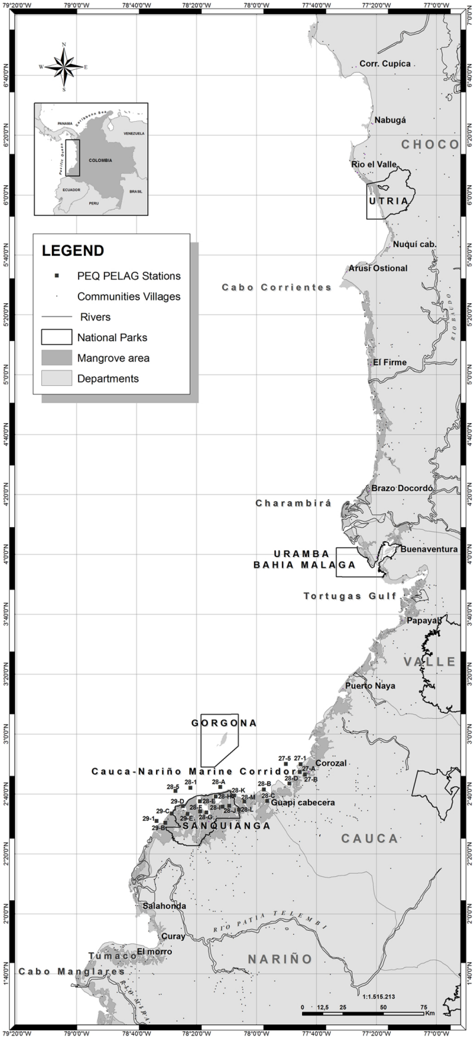
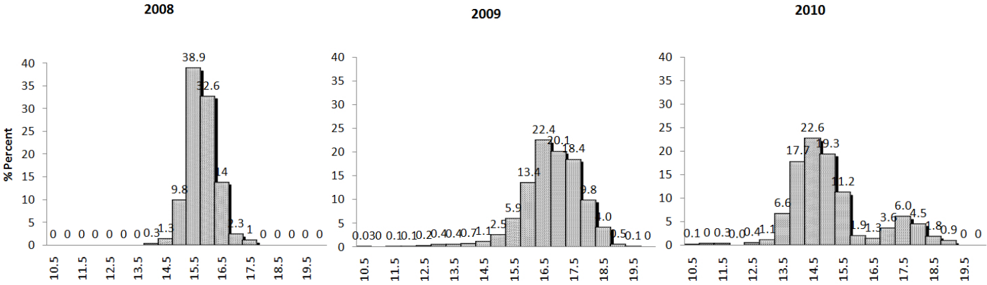
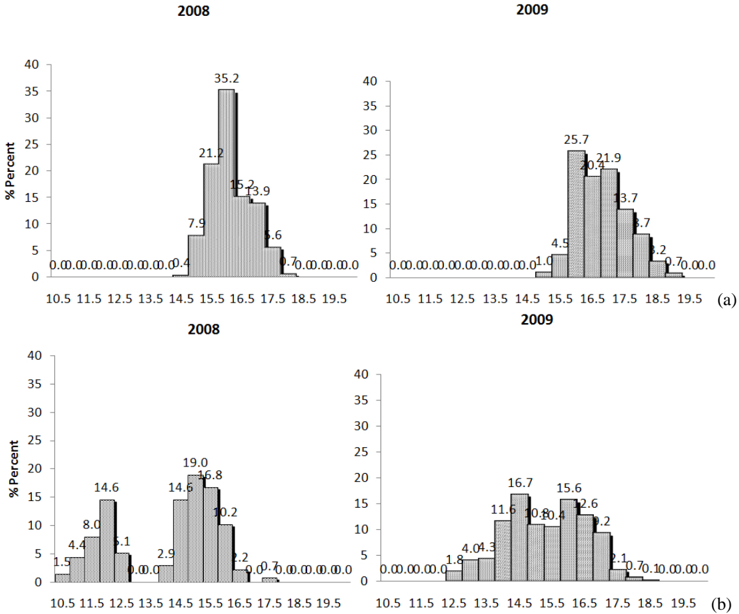
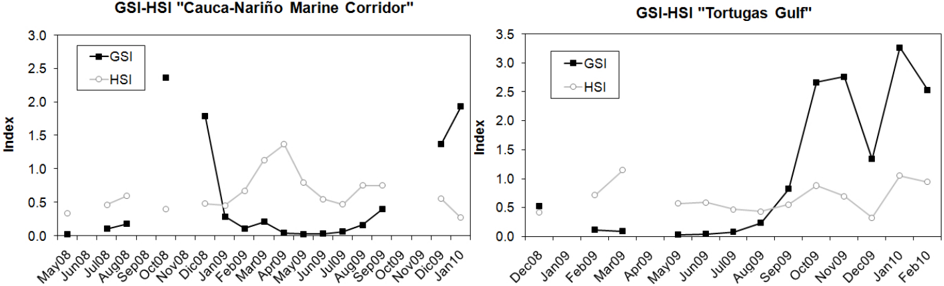
Verification
Claims the paper makes
The claims and statistics of this paper haven’t been checked yet.
Run the check — free, no account needed. It reads the open-access text and checks the sources it cites.
Claims other papers make about this one
Each is checked against this paper’s own text: does it say what the citing paper says it does?
The cited source doesn’t support the claim as written.
In the citing paper
“Fisheries have been dramatically affected by overfishing, extreme El Niño Southern Oscillation phases, high fuel prices, habitat destruction and demand reduction, leading to the collapse of the shallowwater shrimp fishery during the 1980s and the carduma (Cetengraulis mysticetus) fishery in 2013 (Díaz-Ochoa and Quiñones 2008;Zapata et al. 2013).”
From Fluid geographies: marine territorialisation and the scaling up of local aquatic epistemologies on the pacific coast of Colombia (2018) · cites this paper as Zapata et al. 2013
Checked by a reasoning model — may be wrong.
Experimental — accuracy not yet measured
Self-check
Percentages, sums and reported differences re-computed from the paper’s own numbers.
The self-check needs the paper’s full text.
Citations
Cites
No references could be resolved yet.
Research works printed but not linked: 3
- Beltrán-León, B. S: Changes in the distribution, abundance and spawning season of the anchovy \\textitCetengraulis mysticetus, in the Pacific ocean off Colombia during the events of El Niño and La Niña, Invest. Mar, 30, 106–107, 2002. · DOI
- Riascos, J. M.: Effects of El Niño-Southern oscillation on the population dynamics of the tropical bivalve \\textitDonax dentifer from Málaga bay, Colombian Pacific, Mar. Biol., 148, 1283–1293, https://doi.org/10.1007/s00227-005-0165-4, 2006. · DOI
- Zapata, L. A.: Effects of El Niño and La Niña on the fisheries of the Colombian Pacific, Invest. Mar, 30, 205–206, 2002. · DOI
Cited by
Sorted by citations
Satizábal, P., & Batterbury, S. P. J. (2018) · Transactions of the Institute of British Geographers · doi:10.1111/tran.12199 · Cited by 35
Metadata
- Authors
- Zapata, L. A., Beltrán-León, B. S., Herrera, J. C., Jiménez-Tello, P., Prieto, L. M., Baos, R. A., Guevara-Fletcher, C., & Zambrano, E.
- Venue
- Advances in Geosciences
- Publisher
- Copernicus GmbH
- Published
- 2013-04-02
- Volume
- 33
- Pages
- 63-68
- ISSN
- 1680-7359
- Cited by
- 6
- References
- 0
- Language
- en
About these checks
Registry, retraction, Cites and statistics results are computed, not judged, with one exception: a printed reference that no index lists is read once by a model before it counts as a citation error. Claims are extracted by a model and kept only when their quote appears verbatim in the text; each cited source is then checked, with a model’s help, for whether it says what the claim relies on. Those verdicts can be wrong — read the claim’s quote and the cited source before relying on one.
Statistics and arithmetic are recomputed, not judged.
Confidence bands are shown only for fields calibrated on our annotated test set. None is calibrated yet, so no band is shown.
What counts as a claim ›How we measure confidence ›How we check this ›
Are you an author, or do you see a problem with this page? Request a review
