

Thiết kế và sử dụng đánh giá xác thực trong dạy học chủ đề hình đồng dạng trong môn Toán lớp 8 theo hướng phát triển năng lực giải quyết vấn đề toán học cho học sinh
Open accessThe DOI matches its Crossref record; 2 of the 2 references it cites were found in a registry or an index; none of the 13 sources its claims cite is checked for support yet.
Abstract
Trong bối cảnh đổi mới giáo dục theo định hướng phát triển năng lực, việc đánh giá không chỉ nhằm mục tiêu phân loại học sinh, mà còn tập trung vào khả năng vận dụng sáng tạo kiến thức vào các tình huống thực tiễn, từ đó hướng đến việc xác định triển vọng và đóng góp của học sinh trong tương lai. Đánh giá xác thực là hình thức đánh giá đã được nghiên cứu và áp dụng trong thực tiễn giáo dục phổ thông ở một số quốc gia. Tuy nhiên, phần lớn các nghiên cứu chủ yếu tập trung vào việc xác định quan điểm, định hướng chung hoặc chỉ đi sâu vào ứng dụng đánh giá thực tế trong phạm vi hẹp, ở một khâu cụ thể của quá trình giảng dạy. Bài viết tập trung làm rõ những vấn đề cơ bản liên quan đến đánh giá xác thực, đồng thời đề xuất quy trình thiết kế và sử dụng đánh giá xác thực trong dạy học chủ đề Hình đồng dạng trong môn Toán 8 theo hướng phát triển năng lực giải quyết vấn đề toán học cho học sinh.
Overview
CoChat Summary
TL;DR
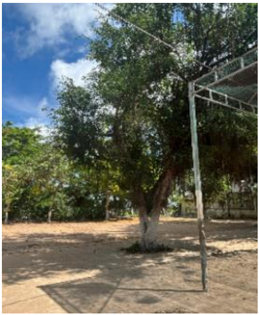
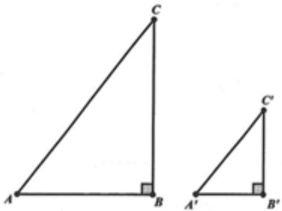
This paper synthesizes theory on authentic assessment and proposes a five-step process for designing and using it in teaching Similar Figures in Grade 8 Mathematics to develop students’ mathematical problem-solving competence. It illustrates the process with a group activity measuring the height of a pole using shadows and similar triangles, including criteria, rubrics, and weighted scoring.
Key findings
- The paper argues that authentic assessment fits competency-based reform and proposes combining Gulikers et al.’s five-dimensional framework—assessment task, physical context, social context, assessment outcome, and authentic criteria/standards—with Wiggins’s four features: practice in real context, assessment criteria, self-assessment, and product reporting.
- It proposes a five-step design process: (1) identify required qualities and competencies; (2) select and design assessment tasks; (3) build assessment criteria; (4) trial and adjust; (5) implement and evaluate.
- The illustrative activity “Measuring the height of a pole” uses groups of 6–7 students over 45 minutes, shadow measurement, and similar triangles; scoring weights are teacher rubric 70%, group assessment 20%, and self-assessment 10%, with the formula ĐIỂM HS = ĐGV (*70%) + ĐN (*20%) + Đtdg (*10%).
- Score bands are reported as 9–10 points: Tốt; 7–under 9: Khá; 5–under 7: Đạt; under 5: Chưa đạt—cần hỗ trợ thêm.
Methods
- Theoretical document analysis of educational materials on assessment, authentic assessment, competence, mathematical competence, and mathematical problem-solving; theses/dissertations on designing and using authentic assessment for high school students; and the Grade 8 mathematics curriculum, especially the Similar Figures topic.
- From this analysis, the paper proposes a process for designing and using authentic assessment in Similar Figures to develop mathematical problem-solving competence, including an illustrative activity and rubrics.
- No empirical sample or outcome data are reported; the text describes a trial step with 2–3 small groups but does not present trial results.
Limitations
- The paper states that designing and implementing authentic assessment requires teachers to invest much time and effort, especially in constructing tasks and scoring, and that more specialized studies are needed to support teachers.
- Evident from the text: the work is conceptual and design-oriented, with no empirical validation, trial results, or effectiveness data reported; the trial step is only described as part of the proposed process.
- Evident from the text: the illustration is limited to one topic and one activity, so broader classroom applicability is not demonstrated.
Model-written summary. Check it against the paper before relying on it.
Integrity signals
Registry
Cites
Statistics
Figures
Verification
Claims the paper makes
0 Valid · 0 Not valid · 12 Not checked · 22 Own results and interpretations
In the paper
“nghiên cứu của Gulikers và các cộng sự (2004) đã đề xuất một khung lý thuyết gồm năm chiều là các đặc điểm của ĐGXT trong bối cảnh đào tạo chuyên nghiệp và dạy nghề.Năm đặc điểm đó là nhiệm vụ ĐGXT, bối cảnh thực tế (vật chất), bối cảnh xã hội, kết quả ĐGXT và tiêu chuẩn/tiêu chí xác thực”
§ THIẾT KẾ > 3.1.2. Đặc điểm của đánh giá xác thực
What the sources say
- Not matchedcites Gulikers và các cộng sự (2004)
An author–year citation the paper’s reference list doesn’t settle. We don’t search these by name.
plain- Asserted: passes — The authors put it forward as true.
- Checkable: passes — It can be checked against evidence.
- Load-bearing: passes — The paper’s conclusions depend on it.
- Based: passes — The paper gives a reason why it holds.
- Not matched
- Probably not a substantial claim. 32
- It may state two separate claims as one. 13
Citations
Cites
A five-dimensional framework for authentic assessment
Gulikers, J. T. M., Bastiaens, T. J., & Kirschner, P. A. (2004) · Educational Technology Research and Development · doi:10.1007/bf02504676 · Cited by 916
The Authentic Assessment Toolbox: Enhancing Student Learning through Online Faculty Development
Mueller, J. F. (2005) · Cited by 343
Research works printed but not linked: 2
- Kiều, T. L. (2022). giá xác áp trong môn Toán cấp Trung học cơ sở. Tạp chí Khoa học Giáo dục Việt Nam, 18(2), 31.
- Nguyễn, H. T., Nguyễn, N. G., Phạm, H. T., Nguyễn, T. N., & Dương, M. T. (2024). Dạy học ứng dụng "Định lí Sin" vào giải các bài toán tiễn nhằm triển lực quyết đề toán học cho học sinh trung học phổ thông. Tạp chí Giáo dục, 24(3), 19-23.
Cited by
Huỳnh, T. C., & Nguyễn, N. H. (2026) · Dong Thap University Journal of Science · doi:10.52714/dthu.sch.3307.1904
Metadata
- Authors
- Trần, T. P. L.
- Affiliations
- Dong Thap University (VN)
- Corresponding author
- Trần, Thái Phương Linh
- Venue
- Dong Thap University Journal of Science
- Publisher
- Dong Thap University
- Published
- 2025-08-06
- Volume
- 14
- Issue
- 03S
- Pages
- 108-122
- ISSN
- 0866-7675 (ISSN-L)
- 2815-567X
- OpenAlex
- W4413647503
- Cited by
- 1
- References
- 2
- Citations by year
- 2026: 1
- FWCI
- 0.54
- Type
- journal article
- Language
- vi
- Open access
- diamond
- doi.org
- Licence
- Locations
- Dong Thap University Journal of Science (publishedVersion, cc-by-nc)
- DOAJ (DOAJ: Directory of Open Access Journals) (submittedVersion)
- Topics
- Social Sciences › Education › Student Assessment and Feedback
- Social Sciences › Education › Mathematics Education and Pedagogy
- Social Sciences › Education › Problem and Project Based Learning
- Keywords
- authentic assessment, assessment design, similar figures, geometry teaching, eighth grade mathematics, competency-based education
About these checks
Registry, retraction, Cites and statistics results are computed, not judged, with one exception: a printed reference that no index lists is read once by a model before it counts as a citation error. Claims are extracted by a model and kept only when their quote appears verbatim in the text; each cited source is then checked, with a model’s help, for whether it says what the claim relies on. Those verdicts can be wrong — read the claim’s quote and the cited source before relying on one.
A language model drew the claims from the paper on 2026-11-23, under version 3 of the claim definition (model deepseek-v4.1-flash, prompt extract-v3).
A second model labelled each claim on 2026-11-23 (model jev-1.13-20260917, definition revision gold-guideline-v0.2).
Statistics and arithmetic are recomputed, not judged.
Confidence bands are shown only for fields calibrated on our annotated test set. None is calibrated yet, so no band is shown.
What counts as a claim ›How we measure confidence ›How we check this ›
Are you an author, or do you see a problem with this page? Request a review
Data sources
Bibliographic data: Semantic Scholar, OpenAlex, Crossref.
Contains information from the Semantic Scholar Academic Graph Datasets, made available under the ODC Attribution License (ODC-BY 1.0).
Semantic Scholar’s data is described in: Kinney, R., et al. (2023). The Semantic Scholar Open Data Platform. arXiv:2301.10140.
