

The DOI matches its Crossref record; 3 of the 3 references it cites were found in a registry or an index; none of the 34 sources its claims cite is checked for support yet.
SIGNIFICANT RESULTS OF ARCHAEOLOGICAL RESEARCH THE PAST 30 YEARS ON THE MONGOL INVASION (1241—42) IN MEDIEVAL HUNGARIAN KINGDOM: ВАЖНЕЙШИЕ РЕЗУЛЬТАТЫ АРХЕОЛОГИЧЕСКИХ ИССЛЕДОВАНИЙ ПОСЛЕДНИХ 30 ЛЕТ, ПОСВЯЩЕННЫХ МОНГОЛЬСКОМУ НАШЕСТВИЮ (1241—42) В СРЕДНЕВЕКОВОМ ВЕНГЕРСКОМ КОРОЛЕВСТВЕ
Open accessAbstract
The article presents the latest results of archaeological research into the events of the Mongol invasion against the Kingdom of Hungary in the Carpathian Basin in 1241—42. Despite the wealth of written sources, archaeology could not provide any serious evidence of the events of the Mongol invasion in Hungary for a long time. However, for a long time there was no clear and reliable evidence of massacres and widespread destruction, which could be judged from the descriptions of contemporaries, often of an apocalyptic nature. The archaeology of the invasion period, the youngest field of Hungarian archaeology to become an independent discipline, is today one of the most dynamically developing fields. The full development of the archaeology of the Mongol invasion period is connected with the appearance of new sites as a result of recent targeted and planned research. В статье представлены новейшие результаты археологических исследований события монгольского нашествия против Венгерского королевства в Карпатском бассейне в 1241—42 гг. По сравнению с богатством письменных источников, археология долгое время не могла предоставить никаких серьезных свидетельств событий монгольского нашествия в Венгрии. Однако долгое время не было четких и достоверных свидетельств массовых убийств и широкомасштабных разрушений, о которых можно было судить по описаниям современников, часто апокалиптического характера. Археология периода нашествия, самая молодая область венгерской археологии, ставшая самостоятельной дисциплиной, сегодня является одним из наиболее динамично развивающихся направлений. Полноценное развитие археологии периода нашествия связано с появлением новых объектов в результате последних целенаправленных и плановых исследований.
Overview
CoChat Summary
TL;DR
The article reviews 30 years of archaeological research showing that the 1241–42 Mongol invasion of the Kingdom of Hungary, long attested mainly by written sources, is now directly evidenced at multiple excavated sites. It highlights mass-casualty horizons, burnt settlements, fortified churches, treasure hoards, and a lowland fort system of more than 100 sites, especially in the Kiskunság.
Key findings
- Direct archaeological evidence now includes anomalously positioned or unburied skeletons, burnt buildings, weapons, coins, and treasure hoards at sites such as Cegléd, Orosháza-Bónum, Dunaföldvár, Szank, Kiskunmaja, Tázlár, Csanádpalota, and Abaújvár. Reported counts include 23 burnt buildings and 22 individuals at Orosháza-Bónum, 33 individuals at Dunaföldvár, 34 individuals at Szank (17 women and 17 children), and at least 34 individuals at Kiskunmaja (15 children, 16 adult women, 3 men).
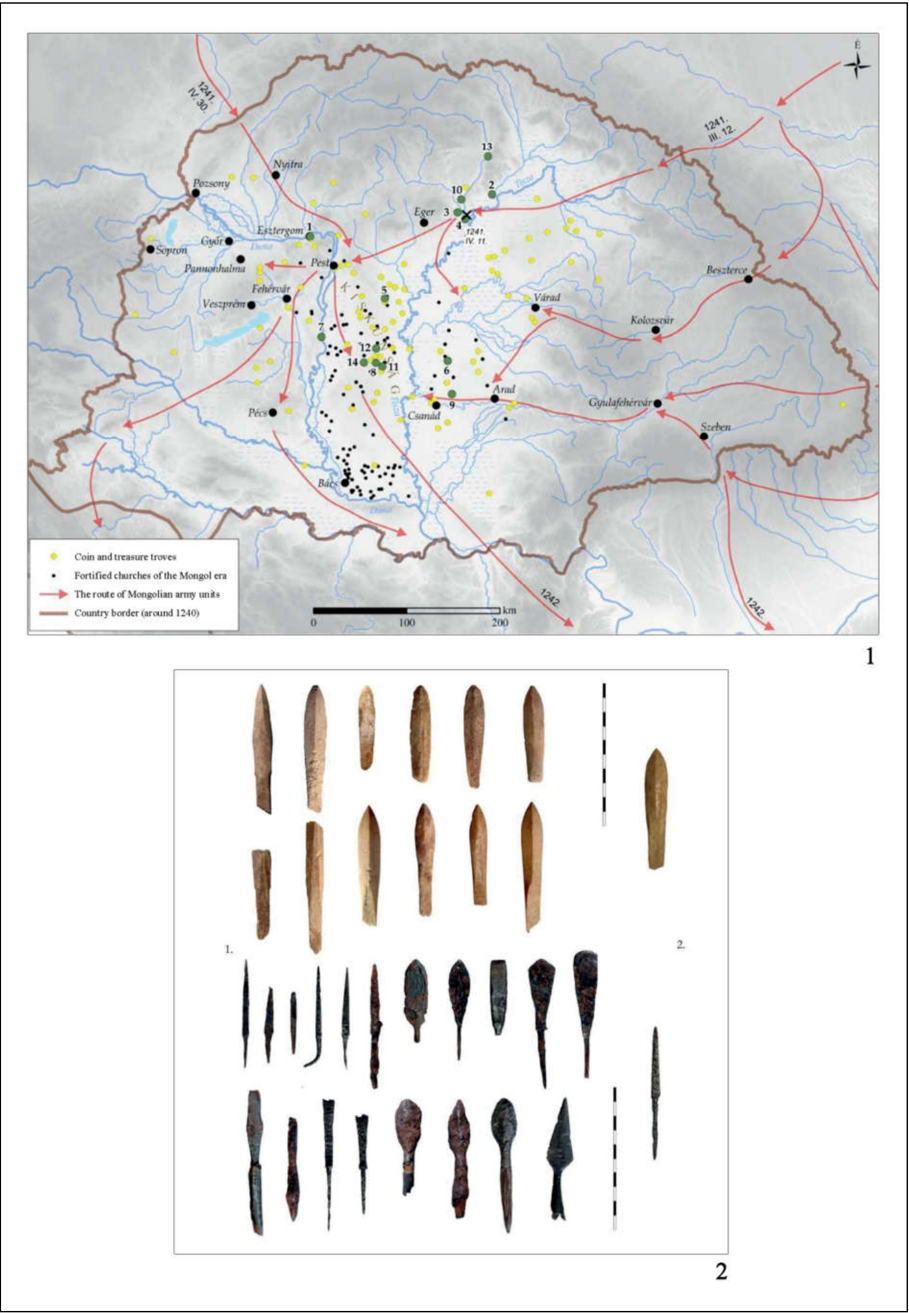
- In the Kiskunság, recent interdisciplinary settlement-history research indicates that destruction of settlements with churches during the Mongol invasion reached 90–100% in some parts. The authors also recognize a system of lowland forts comprising more than 100 sites, built up from necessity in 1241.
- Tázlár-Templomhegy and Szank-Kápolnahely are described as the best-researched Mongol sites in Hungary, with fortified churches, triple or double ditch systems, siege traces, western and eastern weapons, perimortem combat injuries, and coins or treasure finds dating the atrocities.
- At Kiskunmaja, human bones showed deliberate cutting/flaying interpreted as evidence of starvation anthropophagy mentioned in written sources; at Csanádpalota, a harnessed horse was found buried alone in accordance with Eastern custom.
Methods
- The article is a synthesis/review of archaeological research over the past 30 years, drawing on excavations, large-scale infrastructure projects, targeted research, and published site reports.
- Data come from Árpád-era settlements, churches, fortifications, burials, artefact assemblages, coin hoards, and anthropological analyses, concentrated especially in the Kiskunság and other Hungarian locations.
- Main analysis compares destruction horizons, artefact dating, spatial distribution of weapons and dead, and integration with written sources; technical tools mentioned include geophysical methods, drone photography, metal detectors, and IT programmes.
Limitations
- The paper states that archaeology long lacked clear, direct evidence of the invasion and that finds were sparse; many sites provide indirect evidence such as burnt buildings and hidden valuables rather than direct proof.
- The paper states that the Tázlár excavation series is still ongoing and has yet to fully investigate the phenomena, and that deep ploughing at Kiskunmaja significantly destroyed features.
- Evident from the text: the article is a synthesis/review rather than a systematic quantitative study, and many interpretations rely on coin dating, artefact assemblages, and contextual association with 1241–42.
Model-written summary. Check it against the paper before relying on it.
Integrity signals
Registry
Cites
Statistics
Figures
Verification
Claims the paper makes
0 Valid · 2 Not valid · 34 Not checked · 13 Own results and interpretations
None of the sources cited for this claim have been checked yet.
In the paper
“The name of Abaújvár is mentioned in a letter of 2 February 1242, which lists the castles in Hungary that could potentially be the starting point of a counterattack against the Mongols (Bakos et al. 2020).”
§ SIGNIFICANT RESULTS OF ARCHAEOLOGICAL RESEARCH THE PAST 30 YEARS ON THE MONGOL INVASION (1241-42) IN MEDIEVAL HUNGARIAN KINGDOM * > Targeted research of the Mongol invasion sites in Hungary
What the sources say
- Not checked yetcites Bakos et al. 2020 source
Checked before — its earlier verdict is held back until a new check runs.
plain- Asserted: passes — The authors put it forward as true.
- Checkable: passes — It can be checked against evidence.
- Load-bearing: unclear — It is unclear whether the paper’s conclusions depend on it.
- Based: passes — The paper gives a reason why it holds.
- Not checked yet
In the paper
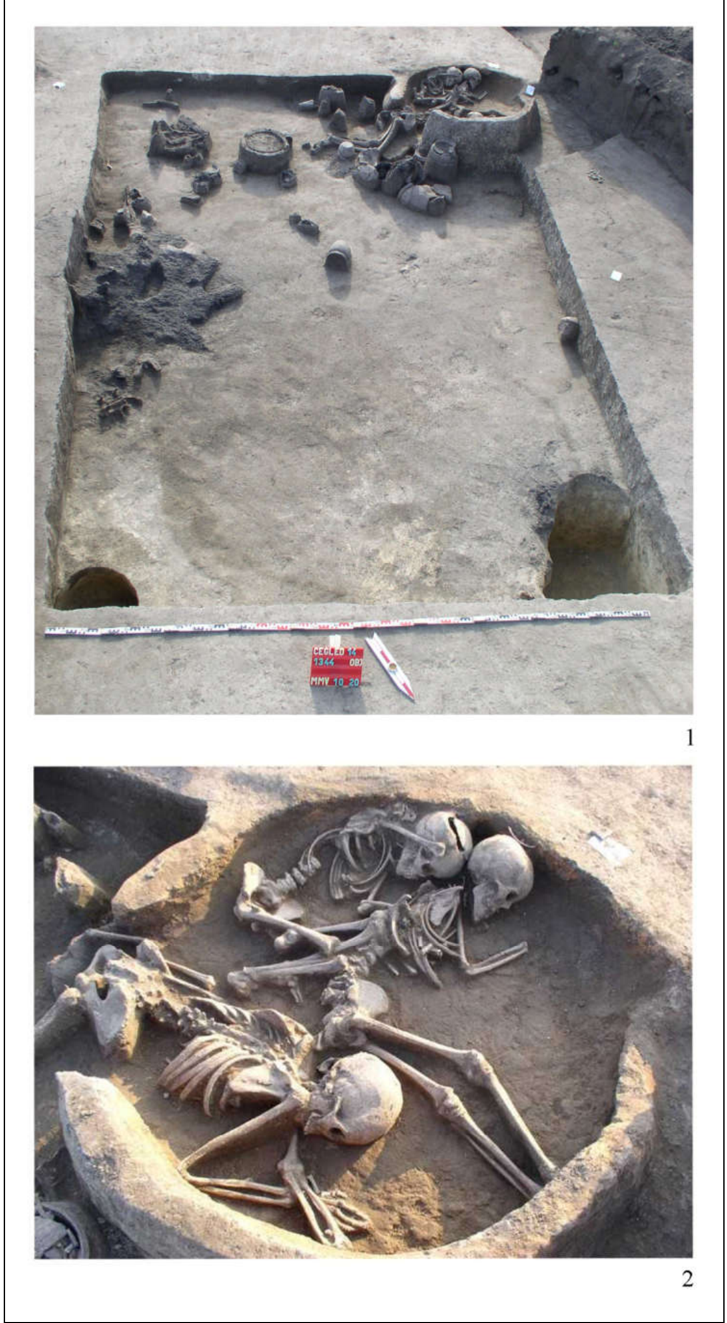
“Beside them lay the remains of dozens of human skeletons belonging to individuals in various states of complete and partial anatomical order.”
§ SIGNIFICANT RESULTS OF ARCHAEOLOGICAL RESEARCH THE PAST 30 YEARS ON THE MONGOL INVASION (1241-42) IN MEDIEVAL HUNGARIAN KINGDOM * > Targeted research of the Mongol invasion sites in Hungary
What the sources say
- Not matchedcites Rosta 2018a;2018b
Couldn’t be matched to a paper in Crossref, so it can’t be checked.
plain- Asserted: passes — The authors put it forward as true.
- Checkable: passes — It can be checked against evidence.
- Load-bearing: passes — The paper’s conclusions depend on it.
- Based: passes — The paper gives a reason why it holds.
- Not matched
In the paper
“During an excavation in 2016, the remains of children and a young woman were found lying in an abnormal position in a row among burnt buildings in the central part of the civil settlement.”
§ SIGNIFICANT RESULTS OF ARCHAEOLOGICAL RESEARCH THE PAST 30 YEARS ON THE MONGOL INVASION (1241-42) IN MEDIEVAL HUNGARIAN KINGDOM * > Targeted research of the Mongol invasion sites in Hungary
What the sources say
- Not matchedcites Rosta 2018a
Couldn’t be matched to a paper in Crossref, so it can’t be checked.
plain- Asserted: passes — The authors put it forward as true.
- Checkable: passes — It can be checked against evidence.
- Load-bearing: passes — The paper’s conclusions depend on it.
- Based: passes — The paper gives a reason why it holds.
- Not matched
In the paper
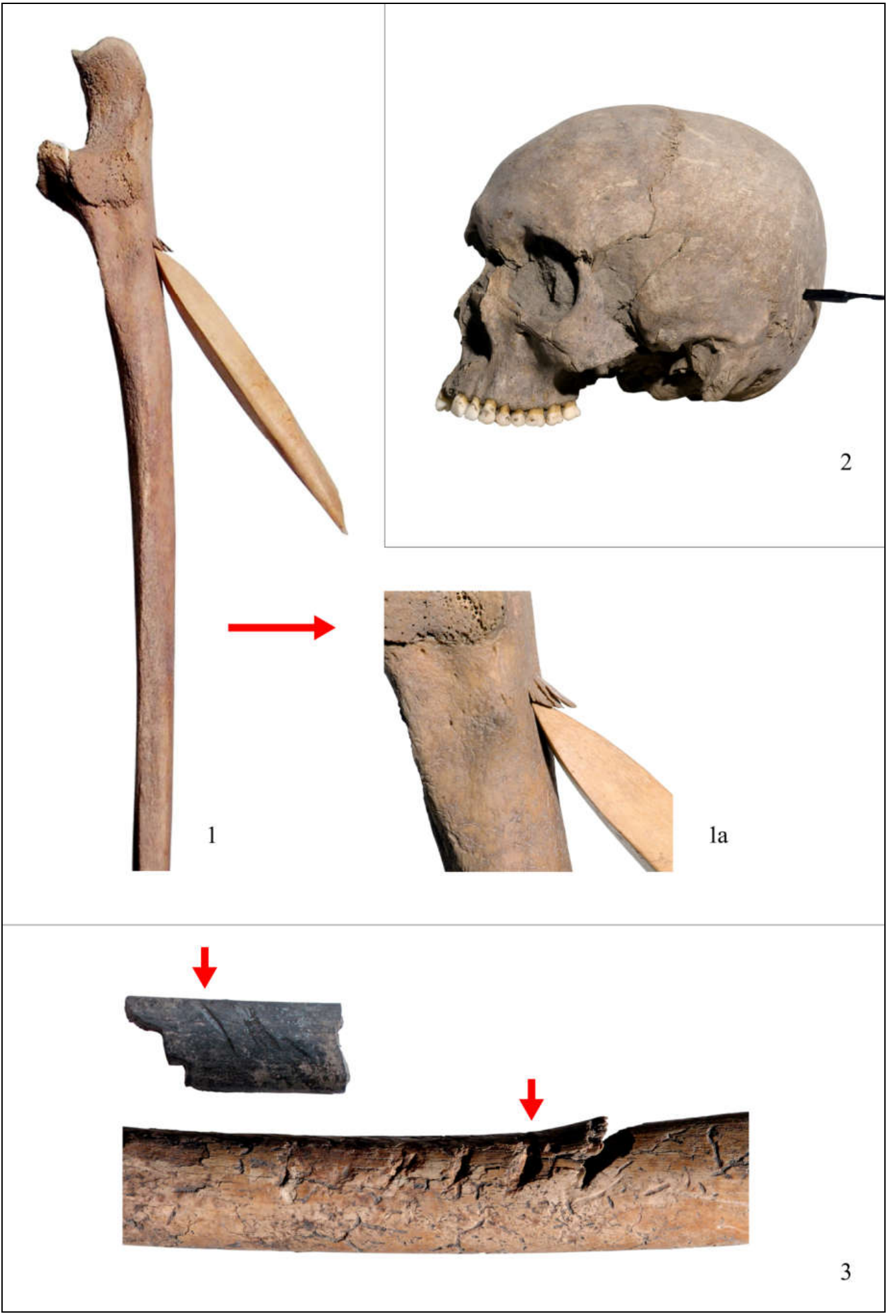
“In several cases the bones showed signs of perimortem combat injuries (Fig 3: 1, 2).”
§ SIGNIFICANT RESULTS OF ARCHAEOLOGICAL RESEARCH THE PAST 30 YEARS ON THE MONGOL INVASION (1241-42) IN MEDIEVAL HUNGARIAN KINGDOM * > Targeted research of the Mongol invasion sites in Hungary
What the sources say
- Not matchedcites Rosta 2018a;2018b
Couldn’t be matched to a paper in Crossref, so it can’t be checked.
plain- Asserted: passes — The authors put it forward as true.
- Checkable: passes — It can be checked against evidence.
- Load-bearing: passes — The paper’s conclusions depend on it.
- Based: passes — The paper gives a reason why it holds.
- Not matched
In the paper
“Two buildings, buried in the ground about 100 m apart and burnt down, contained both complete and partial human skeletons.”
§ SIGNIFICANT RESULTS OF ARCHAEOLOGICAL RESEARCH THE PAST 30 YEARS ON THE MONGOL INVASION (1241-42) IN MEDIEVAL HUNGARIAN KINGDOM * > Targeted research of the Mongol invasion sites in Hungary
What the sources say
- Not matchedcites Rosta 2018a
Couldn’t be matched to a paper in Crossref, so it can’t be checked.
plain- Asserted: passes — The authors put it forward as true.
- Checkable: passes — It can be checked against evidence.
- Load-bearing: passes — The paper’s conclusions depend on it.
- Based: passes — The paper gives a reason why it holds.
- Not matched
29 more claims
Create a free account to see all 49 claims and to verify the 4 references still open.
- It may state two separate claims as one. 10
- Probably not a substantial claim. 6
Self-check
Percentages, sums and reported differences re-computed from the paper’s own numbers.
Each contradiction between two passages listed here was confirmed by an independent check.
Rated minor: it would not touch a result — a value no result rests on, a p-value that stays on the same side of the significance level, or a conflict that is clerical, resolved elsewhere in the paper, or outside its own findings.
In the paper
§ SIGNIFICANT RESULTS OF ARCHAEOLOGICAL RESEARCH THE PAST 30 YEARS ON THE MONGOL INVASION (1241-42) IN MEDIEVAL HUNGARIAN KINGDOM * > Introduction
“the death of an individual thrown into a grain storage pit of an Árpád-era settlement was linked to the Mongol invasion by István Fodor (Fodor 1975).”
§ SIGNIFICANT RESULTS OF ARCHAEOLOGICAL RESEARCH THE PAST 30 YEARS ON THE MONGOL INVASION (1241-42) IN MEDIEVAL HUNGARIAN KINGDOM * > References
“Fodor, I. 1976. Vorbericht über die Ausgrabungen am Szabolcs-Vontatópart und in Szabolcs-Kisfalud.”
Citations
Cites
A tatárjárás régészetének újabb távlatai két kiskunsági lelőhely eredményeinek fényében
Rosta, S. (2018) · Archaeologiai Értesítő · doi:10.1556/0208.2018.143.8 · Cited by 2
Self-citationTatárjárás kori kincslelet az abaújvári ispáni várból
Bakos, G., Sipos, E., Tóth, C., & Wolf, M. (2020) · Magyar Régészet · doi:10.36245/mr.2020.4.3 · Cited by 1
Ágota, B., & Zsolt, B. (2018) · Archaeologiai Értesítő · doi:10.1556/0208.2018.143.10
Research works printed but not linked: 10
- Rosta, Sz., V. Székely, Gy. (eds.). "Carmen Miserabile" A tatárjárás magyarországi emlékei. Tanulmányok Pálóczi Horváth András 70. születésnapja tiszteletére. Kecskemét: A Kecskeméti Katona József Múzeum.
- Gulyás Gy., Gallina, Zs. 2014. Magányos kun lósír Csanádpalotáról. In: Rosta, Sz., V. Székely, Gy. (eds.). "Carmen Miserabile" A tatárjárás magyarországi emlékei. Tanulmányok Pálóczi Horváth András 70. születésnapja tiszteletére. Kecskemét: A Kecskeméti Katona József Múzeum,151-168.
- Gulyás, Gy. 2014. Egy elpusztult tatárjáráskori ház Cegléd határában. In: Rosta, Sz., V. Székely, Gy. (eds.). "Carmen Miserabile" A tatárjárás magyarországi emlékei. Tanulmányok Pálóczi Horváth András 70. születésnapja tiszteletére. Kecskemét: A Kecskeméti Katona József Múzeum, 29-56.
- Gyucha, A., Rózsa, Z. 2014. "…egyesek darabokra vágva, egyesek egészben": A tatárjárás nyomainak azonosítási kísérlete egy dél-alföldi településen. In: Rosta, Sz., V. Székely, Gy. (eds.). "Carmen Miserabile" A tatárjárás magyarországi emlékei. Tanulmányok Pálóczi Horváth András 70. születésnapja tiszteletére. Kecskemét: A Kecskeméti Katona József Múzeum, 57-68.
- Pánya, I., Rosta, Sz. 2024. "Ecclesia cum duabus turribus…" Egyháztopográfiai kutatások a Duna-Tisza közén. In: Lantos A. (ed.). A középkor kutatásának újabb eredményei Bács-Kiskun megyében. Kalocsa: Viski Károly Múzeum, 153-181.
- Pusztai, T. 2014. Buzogánnyal, tarsollyal és késtok merevítővel eltemetett halott a muhi csatából. In: Rosta, Sz., V. Székely, Gy. (eds.). "Carmen Miserabile" A tatárjárás magyarországi emlékei. Tanulmányok Pálóczi Horváth András 70. születésnapja tiszteletére. Kecskemét: A Kecskeméti Katona József Múzeum, 141-150.
- Rosta, Sz. 2014. Pétermonostora pusztulása. In: Rosta, Sz., V. Székely, Gy. (eds.). "Carmen Miserabile" A tatárjárás magyarországi emlékei. Tanulmányok Pálóczi Horváth András 70. születésnapja tiszteletére. Kecskemét: A Kecskeméti Katona József Múzeum, 193-230.
- Szilágyi, M., Serlegi, G. 2014. Nád közé bújtak…? Egy a tatárjárás során elpusztult település maradványai Dunaföldvár határában. In: Rosta, Sz., V. Székely, Gy. (eds.). "Carmen Miserabile" A tatárjárás magyarországi emlékei. Tanulmányok Pálóczi Horváth András 70. születésnapja tiszteletére. Kecskemét: A Kecskeméti Katona József Múzeum, 127-140.
- Wolf, M. 2014. Régészeti adatok a muhi csata történetéhez. In: Rosta, Sz., V. Székely, Gy. (eds.). "Carmen Miserabile" A tatárjárás magyarországi emlékei. Tanulmányok Pálóczi Horváth András 70. születésnapja tiszteletére. Kecskemét: A Kecskeméti Katona József Múzeum, 69-80.
- Wolf, M. 1997. Hejőkeresztúr-Vizeközze. Árpád-kori település a XI-XIII. századból (Hejőkeresztúr-Vizeközze. Settlement of the Árpád period from the 11 th -13 th century). In: Raczky P. et al. (eds.). Utak a múltba. Az M3-as autópálya régészeti leletmentései. Budapest: Magyar Nemzeti Múzeum, 139-143.
Cited by
Still being checked.
Metadata
- Authors
- Rosta, S., Gulyás, G., Gallina, Z., Pánya, I., & Türk, A.
- Affiliations
- Kecskeméti Katona József Múzeum (HU)
- Ásatárs Ltd
- Institute of Archaeological Sciences
- Venue
- Proceedings in Archaeology and History of Ancient and Medieval Black Sea Region
- Publisher
- Choref Mikhail Mikhailovich
- Published
- 2024-12-20
- Issue
- 16
- ISSN
- 2713-2021 (ISSN-L)
- OpenAlex
- W4405754544
- Cited by
- 0
- References
- 1
- FWCI
- 0.00
- Type
- journal article
- Language
- ru
- Open access
- diamond
- doi.org
- Licence
- cc-by
- Locations
- Proceedings in Archaeology and History of Ancient and Medieval Black Sea Region (publishedVersion, cc-by)
- CyberLeninK (CyberLeninka) (submittedVersion, cc-by)
- DOAJ (DOAJ: Directory of Open Access Journals) (submittedVersion, cc-by-sa)
- Funders
- Pázmány Péter Katolikus Egyetem
- Topics
- Social Sciences › Arts and Humanities › History › Eurasian Exchange Networks
- Social Sciences › Arts and Humanities › Archeology (arts and humanities) › Ancient and Medieval Archaeology Studies
- Social Sciences › Arts and Humanities › Archeology (arts and humanities) › Medieval European History and Architecture
- Keywords
- Mongol invasion of Hungary, medieval Hungary, Carpathian Basin, medieval archaeology
About these checks
Registry, retraction, Cites and statistics results are computed, not judged, with one exception: a printed reference that no index lists is read once by a model before it counts as a citation error. Claims are extracted by a model and kept only when their quote appears verbatim in the text; each cited source is then checked, with a model’s help, for whether it says what the claim relies on. Those verdicts can be wrong — read the claim’s quote and the cited source before relying on one.
A language model drew the claims from the paper on 2026-11-12, under version 3 of the claim definition (model deepseek-v4.1-flash, prompt extract-v3).
A second model labelled each claim on 2026-11-12 (model jev-1.13-20260917, definition revision gold-guideline-v0.2).
Statistics and arithmetic are recomputed, not judged.
Confidence bands are shown only for fields calibrated on our annotated test set. None is calibrated yet, so no band is shown.
What counts as a claim ›How we measure confidence ›How we check this ›
Are you an author, or do you see a problem with this page? Request a review
Data sources
Bibliographic data: Semantic Scholar, OpenAlex, Crossref.
Contains information from the Semantic Scholar Academic Graph Datasets, made available under the ODC Attribution License (ODC-BY 1.0).
Semantic Scholar’s data is described in: Kinney, R., et al. (2023). The Semantic Scholar Open Data Platform. arXiv:2301.10140.
