

The DOI matches its Crossref record; 1 of the 1 references it cites were found in a registry or an index.
The Application of Artificial Intelligence in Spine Surgery: A Scoping Review
Open accessAbstract
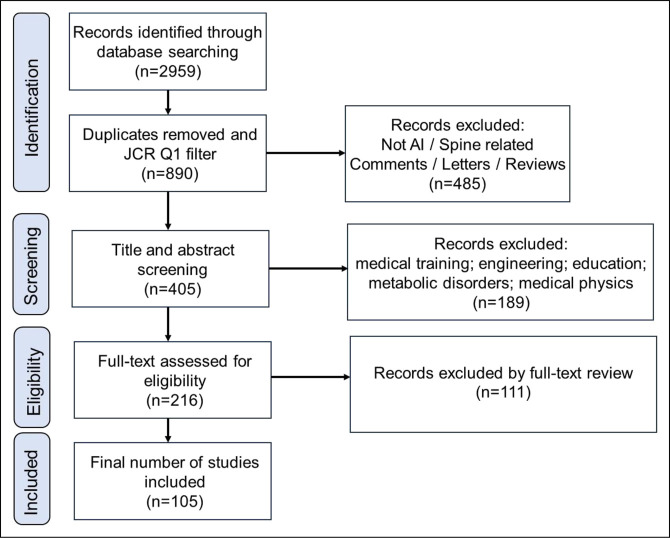
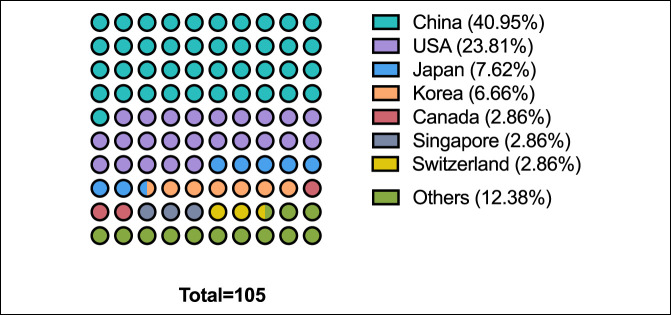
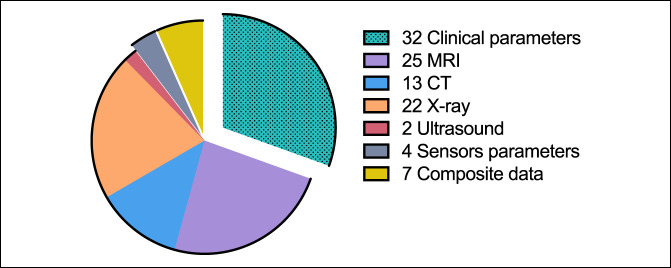
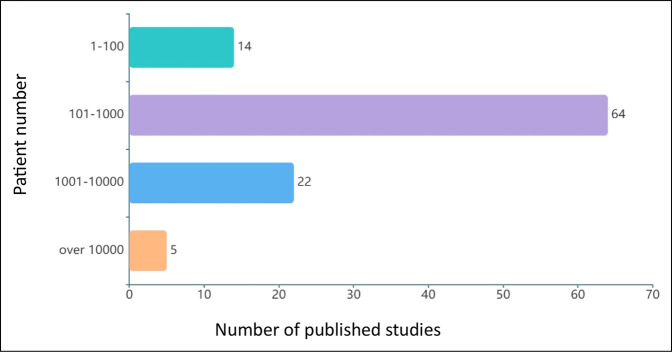
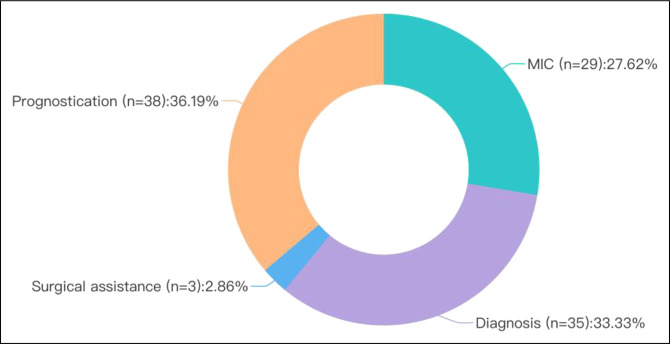
Background: A comprehensive review on the application of artificial intelligence (AI) within spine surgery as a specialty remains lacking. Methods: This scoping review was conducted upon PubMed and EMBASE databases according to Preferred Reporting Items for Systematic Reviews and Meta-Analyses guidelines. Our analysis focused on publications from January 1, 2020, to March 31, 2024, with a specific focus on AI in the field of spine surgery. Review articles and articles predominantly concerning secondary validation of algorithms, medical physics, electronic devices, biomechanics, preclinical, and with a lack of clinical emphasis were excluded. Results: One hundred five studies were included after our inclusion/exclusion criteria were applied. Most studies (n = 100) were conducted through supervised learning upon prelabeled data sets. Overall, 38 studies used conventional machine learning methods upon predefined features, whereas 67 used deep learning methods, predominantly for medical image analyses. Only 25.7% of studies (27/105) collected data from more than 1,000 patients for model development and validation. Data originated from only a single center in 72 studies. The most common application was prognostication (38/105), followed by diagnosis (35/105), medical image processing (29/105), and surgical assistance (3/105). Conclusion: The application of AI within the domain of spine surgery has significant potential to advance patient-specific diagnosis, management, and surgical execution.
Overview
The claims and statistics of this paper haven’t been checked yet.
Run the check — free, no account needed. It reads the open-access text and checks the sources it cites.
Integrity signals
Registry
Cites
Statistics
Figures
Verification
Claims the paper makes
The claims and statistics of this paper haven’t been checked yet.
Run the check — free, no account needed. It reads the open-access text and checks the sources it cites.
Claims other papers make about this one
Each is checked against this paper’s own text: does it say what the citing paper says it does?
The source backs part of the claim, not all of it — or backs it for a different population, condition or comparison.
In the citing paper
“Within spine surgery, the literature has largely centered on procedural and technical use cases such as diagnostics, image processing, and prognostic prediction, rather than evaluating the reliability of LLM-generated “evidence” itself.6”
From Large Language Model Hallucinations in Spine Surgery: A Comparative Analysis of Clinician vs Patient-Level Prompts (2026) · cites this paper as [6]
Experimental — accuracy not yet measured
Self-check
Percentages, sums and reported differences re-computed from the paper’s own numbers.
The self-check needs the paper’s full text.
Citations
Cites
Liu, X., Cruz Rivera, S., Moher, D., Calvert, M. J., Denniston, A. K., The SPIRIT-AI and CONSORT-AI Working Group, SPIRIT-AI and CONSORT-AI Steering Group, Chan, A.-W., Darzi, A., Holmes, C., et al. (2020) · Nature Medicine · doi:10.1038/s41591-020-1034-x · Cited by 1,421
Research works printed but not linked: 127
- Moher, 2009, Preferred reporting items for systematic reviews and meta-analyses: The PRISMA statement, PLoS Med, 6, e1000097, 10.1371/journal.pmed.1000097 · DOI · Paper page
- Song, 2024, Developing predictive models for surgical outcomes in patients with degenerative cervical myelopathy: A comparison of statistical and machine learning approaches, Spine J, 24, 57, 10.1016/j.spinee.2023.07.021 · DOI
- Gitto, 2022, Diffusion-weighted MRI radiomics of spine bone tumors: Feature stability and machine learning-based classification performance, Radiol Med, 127, 518, 10.1007/s11547-022-01468-7 · DOI
- Zhang, 2023, Differentiation of benign versus malignant indistinguishable vertebral compression fractures by different machine learning with MRI-based radiomic features, Eur Radiol, 33, 5069, 10.1007/s00330-023-09678-x · DOI
- Tsai, 2021, Lumbar disc herniation automatic detection in magnetic resonance imaging based on deep learning, Front Bioeng Biotechnol, 9, 708137, 10.3389/fbioe.2021.708137 · DOI
- Zhang, 2024, Development and validation of a feature-based broad-learning system for opportunistic osteoporosis screening using lumbar spine radiographs, Acad Radiol, 31, 84, 10.1016/j.acra.2023.07.002 · DOI
- Castro-Zunti, 2020, Early detection of ankylosing spondylitis using texture features and statistical machine learning, and deep learning, with some patient age analysis, Comput Med Imaging Graph, 82, 101718, 10.1016/j.compmedimag.2020.101718 · DOI
- Jiang, 2022, Novel automated spinal ultrasound segmentation approach for scoliosis visualization, Front Physiol, 13, 1051808, 10.3389/fphys.2022.1051808 · DOI
- Huang, 2023, Si-MSPDNet: A multiscale Siamese network with parallel partial decoders for the 3-D measurement of spines in 3D ultrasonic images, Comput Med Imaging Graph, 108, 102262, 10.1016/j.compmedimag.2023.102262 · DOI
- Hong, 2023, Deep-learning-based detection of vertebral fracture and osteoporosis using lateral spine X-ray radiography, J Bone Mineral Res, 38, 887, 10.1002/jbmr.4814 · DOI
- Wang, 2023, An intelligent composite model incorporating global/regional X-rays and clinical parameters to predict progressive adolescent idiopathic scoliosis curvatures and facilitate population screening, EBioMedicine, 95, 104768, 10.1016/j.ebiom.2023.104768 · DOI
- Kita, 2023, Bimodal artificial intelligence using TabNet for differentiating spinal cord tumors-Integration of patient background information and images, iScience, 26, 107900, 10.1016/j.isci.2023.107900 · DOI
- Chen, 2023, MRI feature-based radiomics models to predict treatment outcome after stereotactic body radiotherapy for spinal metastases, Insights Imaging, 14, 169, 10.1186/s13244-023-01523-5 · DOI
- Staartjes, 2021, Magnetic resonance imaging–based synthetic computed tomography of the lumbar spine for surgical planning: A clinical proof-of-concept, Neurosurg Focus, 50, E13, 10.3171/2020.10.FOCUS20801 · DOI
- Meng, 2023, Radiograph-comparable image synthesis for spine alignment analysis using deep learning with prospective clinical validation, EClinicalMedicine, 61, 102050, 10.1016/j.eclinm.2023.102050 · DOI
- Mustafa, 2023, Non-intrusive RF sensing for early diagnosis of spinal curvature syndrome disorders, Comput Biol Med, 155, 106614, 10.1016/j.compbiomed.2023.106614 · DOI
- Werner, 2023, Data-driven characterization of walking after a spinal cord injury using inertial sensors, J Neuroeng Rehabil, 20, 55, 10.1186/s12984-023-01178-9 · DOI
- Zheng, 2022, Severity assessment of cervical spondylotic myelopathy based on intelligent video analysis, IEEE J Biomed Health Inform, 26, 4486, 10.1109/JBHI.2022.3184870 · DOI
- Ibara, 2023, Screening for degenerative cervical myelopathy with the 10-second grip-and-release test using a smartphone and machine learning: A pilot study, Digit Health, 9, 20552076231179030, 10.1177/20552076231179030 · DOI
- Chen, 2022, Image quality control in lumbar spine radiography using enhanced U-net neural networks, Front Public Health, 10, 891766, 10.3389/fpubh.2022.891766 · DOI
- Kim, 2021, Automatic detection and segmentation of lumbar vertebrae from X-ray images for compression fracture evaluation, Comput Methods Programs Biomed, 200, 105833, 10.1016/j.cmpb.2020.105833 · DOI
- Tao, 2022, Spine-transformers: Vertebra labeling and segmentation in arbitrary field-of-view spine CTs via 3D transformers, Med Image Anal, 75, 102258, 10.1016/j.media.2021.102258 · DOI
- Da Mutten, 2024, Whole spine segmentation using object detection and semantic segmentation, Neurospine, 21, 57, 10.14245/ns.2347178.589 · DOI
- Netherton, 2022, An automated treatment planning framework for spinal radiation therapy and vertebral-level second check, Int J Radiat Oncol Biol Phys, 114, 516, 10.1016/j.ijrobp.2022.06.083 · DOI
- Zhang, 2024, LumVertCancNet: A novel 3D lumbar vertebral body cancellous bone location and segmentation method based on hybrid Swin-transformer, Comput Biol Med, 171, 108237, 10.1016/j.compbiomed.2024.108237 · DOI
- Pang, 2022, DGMSNet: Spine segmentation for MR image by a detection-guided mixed-supervised segmentation network, Med Image Anal, 75, 102261, 10.1016/j.media.2021.102261 · DOI
- Zhang, 2022, SeUneter: Channel attentive U-Net for instance segmentation of the cervical spine MRI medical image, Front Physiol, 13, 1081441, 10.3389/fphys.2022.1081441 · DOI
- Huang, 2020, Spine explorer: A deep learning based fully automated program for efficient and reliable quantifications of the vertebrae and discs on sagittal lumbar spine MR images, Spine J, 20, 590, 10.1016/j.spinee.2019.11.010 · DOI
- Das, 2021, Deep neural network for automated simultaneous intervertebral disc (IVDs) identification and segmentation of multi-modal MR images, Comput Methods Programs Biomed, 205, 106074, 10.1016/j.cmpb.2021.106074 · DOI
- Sáenz-Gamboa, 2023, Automatic semantic segmentation of the lumbar spine: Clinical applicability in a multi-parametric and multi-center study on magnetic resonance images, Artif Intell Med, 140, 102559, 10.1016/j.artmed.2023.102559 · DOI
- Shen, 2021, A deep-learning-based, fully automated program to segment and quantify major spinal components on axial lumbar spine magnetic resonance images, Phys Ther, 101, pzab041, 10.1093/ptj/pzab041 · DOI
- Zhou, 2020, Automatic vertebral body segmentation based on deep learning of Dixon images for bone marrow fat fraction quantification, Front Endocrinol (Lausanne), 11, 612, 10.3389/fendo.2020.00612 · DOI
- Gao, 2022, Automatic detection and voxel-wise mapping of lumbar spine Modic changes with deep learning, JOR Spine, 5, e1204, 10.1002/jsp2.1204 · DOI
- Shea, 1998, A comparison of manual versus computer-assisted radiographic measurement. Intraobserver measurement variability for Cobb angles, Spine (Phila Pa 1976), 23, 551, 10.1097/00007632-199803010-00007 · DOI
- Jimenez-Pastor, 2020, Automated vertebrae localization and identification by decision forests and image-based refinement on real-world CT data, Radiol Med, 125, 48, 10.1007/s11547-019-01079-9 · DOI
- Wang, 2022, Multi-input adaptive neural network for automatic detection of cervical vertebral landmarks on X-rays, Comput Biol Med, 146, 105576, 10.1016/j.compbiomed.2022.105576 · DOI
- Wills, 2007, Comparison of Cobb angle measurement of scoliosis radiographs with preselected end vertebrae: Traditional versus digital acquisition, Spine (Phila Pa 1976), 32, 98, 10.1097/01.brs.0000251086.84420.d1 · DOI
- Liu, 2021, The measurement of Cobb angle based on spine X-ray images using multi-scale convolutional neural network, Phys Eng Sci Med, 44, 809, 10.1007/s13246-021-01032-z · DOI
- Zou, 2023, VLTENet: A deep-learning-based vertebra localization and tilt estimation network for automatic Cobb angle estimation, IEEE J Biomed Health Inform, 27, 3002, 10.1109/JBHI.2023.3258361 · DOI
- van der Graaf, 2024, Development and validation of AI-based automatic measurement of coronal Cobb angles in degenerative scoliosis using sagittal lumbar MRI, Eur Radiol, 34, 5748, 10.1007/s00330-024-10616-8 · DOI
- Meng, 2022, An artificial intelligence powered platform for auto-analyses of spine alignment irrespective of image quality with prospective validation, EClinicalMedicine, 43, 101252, 10.1016/j.eclinm.2021.101252 · DOI
- Yuh, 2024, Deep learning-assisted quantitative measurement of thoracolumbar fracture features on lateral radiographs, Neurospine, 21, 30, 10.14245/ns.2347366.683 · DOI
- Zerouali, 2023, Automatic deep learning-based assessment of spinopelvic coronal and sagittal alignment, Diagn Interv Imaging, 104, 343, 10.1016/j.diii.2023.03.003 · DOI
- Kim, 2023, Automatic spine segmentation and parameter measurement for radiological analysis of whole-spine lateral radiographs using deep learning and computer vision, J Digit Imaging, 36, 1447, 10.1007/s10278-023-00830-z · DOI
- Hallinan, 2021, Deep learning model for automated detection and classification of central canal, lateral recess, and neural foraminal stenosis at lumbar spine MRI, Radiology, 300, 130, 10.1148/radiol.2021204289 · DOI
- Su, 2022, Automatic grading of disc herniation, central canal stenosis and nerve roots compression in lumbar magnetic resonance image diagnosis, Front Endocrinol (Lausanne), 13, 890371, 10.3389/fendo.2022.890371 · DOI
- Han, 2021, Unifying neural learning and symbolic reasoning for spinal medical report generation, Med Image Anal, 67, 101872, 10.1016/j.media.2020.101872 · DOI
- Lim, 2022, Improved productivity using deep learning-assisted reporting for lumbar spine MRI, Radiology, 305, 160, 10.1148/radiol.220076 · DOI
- Xu, 2023, Deep learning-based artificial intelligence model for classification of vertebral compression fractures: A multicenter diagnostic study, Front Endocrinol (Lausanne), 14, 1025749, 10.3389/fendo.2023.1025749 · DOI
- Germann, 2023, Performance of a deep convolutional neural network for MRI-based vertebral body measurements and insufficiency fracture detection, Eur Radiol, 33, 3188, 10.1007/s00330-022-09354-6 · DOI
- Nicolaes, 2023, Towards improved identification of vertebral fractures in routine computed tomography (CT) scans: Development and external validation of a machine learning algorithm, J Bone Miner Res, 38, 1856, 10.1002/jbmr.4916 · DOI
- Choi, 2023, Weakly supervised deep learning for diagnosis of multiple vertebral compression fractures in CT, Eur Radiol, 34, 3750, 10.1007/s00330-023-10394-9 · DOI
- Dong, 2022, Deep learning classification of spinal osteoporotic compression fractures on radiographs using an adaptation of the genant semiquantitative criteria, Acad Radiol, 29, 1819, 10.1016/j.acra.2022.02.020 · DOI
- Zhang, 2023, Automated detection and classification of acute vertebral body fractures using a convolutional neural network on computed tomography, Front Endocrinol (Lausanne), 14, 1132725, 10.3389/fendo.2023.1132725 · DOI
- Doerr, 2022, Automated prediction of the Thoracolumbar Injury Classification and Severity Score from CT using a novel deep learning algorithm, Neurosurg Focus, 52, E5, 10.3171/2022.1.FOCUS21745 · DOI
- Li, 2021, Differential diagnosis of benign and malignant vertebral fracture on CT using deep learning, Eur Radiol, 31, 9612, 10.1007/s00330-021-08014-5 · DOI
- Wu, 2022, A multi-stage ensemble network system to diagnose adolescent idiopathic scoliosis, Eur Radiol, 32, 5880, 10.1007/s00330-022-08692-9 · DOI
- Magnide, 2021, Automatic bone maturity grading from EOS radiographs in Adolescent Idiopathic Scoliosis, Comput Biol Med, 136, 104681, 10.1016/j.compbiomed.2021.104681 · DOI
- Mohanty, 2024, Machine learning clustering of adult spinal deformity patients identifies four prognostic phenotypes: A multicenter prospective cohort analysis with single surgeon external validation, Spine J, 24, 1095, 10.1016/j.spinee.2024.02.010 · DOI
- Xuan, 2023, Spinal disease diagnosis assistant based on MRI images using deep transfer learning methods, Front Public Health, 11, 1044525, 10.3389/fpubh.2023.1044525 · DOI
- Tsai, 2021, Lumbar disc herniation automatic detection in magnetic resonance imaging based on deep learning, Front Bioeng Biotechnol, 9, 708137, 10.3389/fbioe.2021.708137 · DOI
- Bharadwaj, 2023, Deep learning for automated, interpretable classification of lumbar spinal stenosis and facet arthropathy from axial MRI, Eur Radiol, 33, 3435, 10.1007/s00330-023-09483-6 · DOI
- Ren, 2022, Differentiation of lumbar disc herniation and lumbar spinal stenosis using natural language processing–based machine learning based on positive symptoms, Neurosurg Focus, 52, E7, 10.3171/2022.1.FOCUS21561 · DOI
- Li, 2022, Computer-aided diagnosis of spinal Tuberculosis from CT images based on deep learning with multimodal feature fusion, Front Microbiol, 13, 823324, 10.3389/fmicb.2022.823324 · DOI
- Ogawa, 2022, Detecting ossification of the posterior longitudinal ligament on plain radiographs using a deep convolutional neural network: A pilot study, Spine J, 22, 934, 10.1016/j.spinee.2022.01.004 · DOI
- Shemesh, 2023, MRI-based detection of cervical ossification of the posterior longitudinal ligament using a novel automated machine learning diagnostic tool, Neurosurg Focus, 54, E11, 10.3171/2023.3.FOCUS2390 · DOI
- Badhiwala, 2020, Degenerative cervical myelopathy - update and future directions, Nat Rev Neurol, 16, 108, 10.1038/s41582-019-0303-0 · DOI
- Foreman, 2024, Deep learning to differentiate benign and malignant vertebral fractures at multidetector CT, Radiology, 310, e231429, 10.1148/radiol.231429 · DOI
- Hallinan, 2022, Deep learning model for grading metastatic epidural spinal cord compression on staging CT, Cancers (Basel), 14, 3219, 10.3390/cancers14133219 · DOI
- Liu, 2022, Benign and malignant diagnosis of spinal tumors based on deep learning and weighted fusion framework on MRI, Insights Imaging, 13, 87, 10.1186/s13244-022-01227-2 · DOI
- Hsieh, 2021, Automated bone mineral density prediction and fracture risk assessment using plain radiographs via deep learning, Nat Commun, 12, 5472, 10.1038/s41467-021-25779-x · DOI
- Mao, 2022, Deep learning for screening primary osteopenia and osteoporosis using spine radiographs and patient clinical covariates in a Chinese population, Front Endocrinol (Lausanne), 13, 971877, 10.3389/fendo.2022.971877 · DOI
- Shen, 2023, Using artificial intelligence to diagnose osteoporotic vertebral fractures on plain radiographs, J Bone Miner Res, 38, 1278, 10.1002/jbmr.4879 · DOI
- Xue, 2023, Osteoporosis prediction in lumbar spine X-ray images using the multi-scale weighted fusion contextual transformer network, Artif Intell Med, 143, 102639, 10.1016/j.artmed.2023.102639 · DOI
- Li, 2021, Can a deep-learning model for the automated detection of vertebral fractures approach the performance level of human subspecialists?, Clin Orthop Relat Res, 479, 1598, 10.1097/CORR.0000000000001685 · DOI
- Hong, 2023, Deep-learning-based detection of vertebral fracture and osteoporosis using lateral spine X-ray radiography, J Bone Miner Res, 38, 887, 10.1002/jbmr.4814 · DOI
- Dong, 2023, Generalizability of deep learning classification of spinal osteoporotic compression fractures on radiographs using an adaptation of the modified-2 algorithm-based qualitative criteria, Acad Radiol, 30, 2973, 10.1016/j.acra.2023.04.023 · DOI
- Ryu, 2023, Diagnosis of osteoporotic vertebral compression fractures and fracture level detection using multitask learning with U-Net in lumbar spine lateral radiographs, Comput Struct Biotechnol J, 21, 3452, 10.1016/j.csbj.2023.06.017 · DOI
- Zhang, 2024, Exploring deep learning radiomics for classifying osteoporotic vertebral fractures in X-ray images, Front Endocrinol (Lausanne), 15, 1370838, 10.3389/fendo.2024.1370838 · DOI
- Yabu, 2021, Using artificial intelligence to diagnose fresh osteoporotic vertebral fractures on magnetic resonance images, Spine J, 21, 1652, 10.1016/j.spinee.2021.03.006 · DOI
- Wilson, 2021, Predicting spinal surgery candidacy from imaging data using machine learning, Neurosurgery, 89, 116, 10.1093/neuros/nyab085 · DOI
- Wang, 2021, Application of deep learning upon spinal radiographs to predict progression in adolescent idiopathic scoliosis at first clinic visit, EClinicalMedicine, 42, 101220, 10.1016/j.eclinm.2021.101220 · DOI
- Yang, 2022, Application of supervised machine learning algorithms to predict the risk of hidden blood loss during the perioperative period in thoracolumbar burst fracture patients complicated with neurological compromise, Front Public Health, 10, 969919, 10.3389/fpubh.2022.969919 · DOI
- Torres-Espín, 2021, Topological network analysis of patient similarity for precision management of acute blood pressure in spinal cord injury, Elife, 10, e68015, 10.7554/eLife.68015 · DOI
- Dong, 2022, Development and internal validation of supervised machine learning algorithm for predicting the risk of recollapse following minimally invasive kyphoplasty in osteoporotic vertebral compression fractures, Front Public Health, 10, 874672, 10.3389/fpubh.2022.874672 · DOI
- Khan, 2021, Machine learning algorithms for prediction of health-related quality-of-life after surgery for mild degenerative cervical myelopathy, Spine J, 21, 1659, 10.1016/j.spinee.2020.02.003 · DOI
- Khan, 2021, Prediction of worse functional status after surgery for degenerative cervical myelopathy: A machine learning approach, Neurosurgery, 88, 584, 10.1093/neuros/nyaa477 · DOI
- Yagi, 2022, Development and validation of machine learning-based predictive model for clinical outcome of decompression surgery for lumbar spinal canal stenosis, Spine J, 22, 1768, 10.1016/j.spinee.2022.06.008 · DOI
- Toyoda, 2023, A decision tree analysis to predict clinical outcome of minimally invasive lumbar decompression surgery for lumbar spinal stenosis with and without coexisting spondylolisthesis and scoliosis, Spine J, 23, 973, 10.1016/j.spinee.2023.01.023 · DOI
- Karabacak, 2023, Precision medicine for traumatic cervical spinal cord injuries: Accessible and interpretable machine learning models to predict individualized in-hospital outcomes, Spine J, 23, 1750, 10.1016/j.spinee.2023.08.009 · DOI
- Schonnagel, 2024, Predicting postoperative outcomes in lumbar spinal fusion: Development of a machine learning model, Spine J, 24, 239, 10.1016/j.spinee.2023.09.029 · DOI
- Kato, 2024, Functional outcome prediction after spinal cord injury using ensemble machine learning, Arch Phys Med Rehabil, 105, 95, 10.1016/j.apmr.2023.08.011 · DOI
- Karabacak, 2024, Development and internal validation of machine learning models for personalized survival predictions in spinal cord glioma patients, Spine J, 24, 1065, 10.1016/j.spinee.2024.02.002 · DOI
- Russo, 2021, A novel scoring system to predict length of stay after anterior cervical discectomy and fusion, J Am Acad Orthop Surg, 29, 758
- Valliani, 2022, Pragmatic prediction of excessive length of stay after cervical spine surgery with machine learning and validation on a national scale, Neurosurgery, 91, 322, 10.1227/neu.0000000000001999 · DOI
- Etzel, 2022, Supervised machine learning for predicting length of stay after lumbar arthrodesis: A comprehensive artificial intelligence approach, J Am Acad Orthop Surg, 30, 125
- Shahrestani, 2023, Developing nonlinear k-nearest neighbors classification algorithms to identify patients at high risk of increased length of hospital stay following spine surgery, Neurosurg Focus, 54, E7, 10.3171/2023.3.FOCUS22651 · DOI
- Kato, 2024, Decision tree analysis accurately predicts discharge destination after spinal cord injury rehabilitation, Arch Phys Med Rehabil, 105, 88, 10.1016/j.apmr.2023.08.010 · DOI
- Arora, 2023, Predictive models to assess risk of extended length of stay in adults with spinal deformity and lumbar degenerative pathology: Development and internal validation, Spine J, 23, 457, 10.1016/j.spinee.2022.10.009 · DOI
- Martini, 2020, Machine learning with feature domains elucidates candidate drivers of hospital readmission following spine surgery in a large single-center patient cohort, Neurosurgery, 87, E500, 10.1093/neuros/nyaa136 · DOI
- Zhang, 2023, Automated machine learning-based model for the prediction of delirium in patients after surgery for degenerative spinal disease, CNS Neurosci Ther, 29, 282, 10.1111/cns.14002 · DOI
- Zhang, 2024, Construct validation of machine learning for accurately predicting the risk of postoperative surgical site infection following spine surgery, J Hosp Infect, 146, 232, 10.1016/j.jhin.2023.09.024 · DOI
- Lu, 2024, Machine learning application for prediction of surgical site infection after posterior cervical surgery, Int Wound J, 21, e14607, 10.1111/iwj.14607 · DOI
- Jiang, 2024, Automated machine learning-based model for the prediction of pedicle screw loosening after degenerative lumbar fusion surgery, Biosci Trends, 18, 83, 10.5582/bst.2023.01327 · DOI
- Jia, 2024, Optimizing prediction accuracy for early recurrent lumbar disc herniation with a directional mutation-guided SVM model, Comput Biol Med, 173, 108297, 10.1016/j.compbiomed.2024.108297 · DOI
- Lee, 2023, Development and validation of an online calculator to predict proximal junctional kyphosis after adult spinal deformity surgery using machine learning, Neurospine, 20, 1272, 10.14245/ns.2342434.217 · DOI
- Peng, 2020, Prediction of proximal junctional kyphosis after posterior scoliosis surgery with machine learning in the lenke 5 adolescent idiopathic scoliosis patient, Front Bioeng Biotechnol, 8, 559387, 10.3389/fbioe.2020.559387 · DOI
- Karhade, 2021, Development of prediction models for clinically meaningful improvement in PROMIS scores after lumbar decompression, Spine J, 21, 397, 10.1016/j.spinee.2020.10.026 · DOI
- Rigot, 2022, Toward improving the prediction of functional ambulation after spinal cord injury through the inclusion of limb accelerations during sleep and personal factors, Arch Phys Med Rehabil, 103, 676, 10.1016/j.apmr.2021.02.029 · DOI
- Liu, 2023, Prediction of primary tumor sites in spinal metastases using a ResNet-50 convolutional neural network based on MRI, Cancers (Basel), 15, 2974, 10.3390/cancers15112974 · DOI
- Shi, 2024, Development and validation of a web-based artificial intelligence prediction model to assess massive intraoperative blood loss for metastatic spinal disease using machine learning techniques, Spine J, 24, 146, 10.1016/j.spinee.2023.09.001 · DOI
- Karabacak, 2023, A machine learning-based online prediction tool for predicting short-term postoperative outcomes following spinal tumor resections, Cancers (Basel), 15, 812, 10.3390/cancers15030812 · DOI
- Cui, 2024, Establishment and validation of an interactive artificial intelligence platform to predict postoperative ambulatory status for patients with metastatic spinal disease: A multicenter analysis, Int J Surg, 110, 2738
- Scherer, 2022, Development and validation of an automated planning tool for navigated lumbosacral pedicle screws using a convolutional neural network, Spine J, 22, 1666, 10.1016/j.spinee.2022.05.002 · DOI
- Sun, 2023, Clinical efficacy of robotic spine surgery: An updated systematic review of 20 randomized controlled trials, EFORT Open Rev, 8, 841, 10.1530/EOR-23-0125 · DOI
- Suarez-Ahedo, 2023, Revolutionizing orthopedics: A comprehensive review of robot-assisted surgery, clinical outcomes, and the future of patient care, J Robot Surg, 17, 2575, 10.1007/s11701-023-01697-6 · DOI
- Passias, 2021, A cost benefit analysis of increasing surgical technology in lumbar spine fusion, Spine J, 21, 193, 10.1016/j.spinee.2020.10.012 · DOI
- Staartjes, 2021, Magnetic resonance imaging-based synthetic computed tomography of the lumbar spine for surgical planning: A clinical proof-of-concept, Neurosurg Focus, 50, E13, 10.3171/2020.10.FOCUS20801 · DOI
- Mulford, 2024, Automated measurements of interscrew angles in vertebral body tethering patients with deep learning, Spine J, 24, 333, 10.1016/j.spinee.2023.09.011 · DOI
- Rajkomar, 2019, Machine learning in medicine, N Engl J Med, 380, 1347, 10.1056/NEJMra1814259 · DOI · Paper page
- Kunze, 2023, Development and internal validation of machine learning algorithms for predicting complications after primary total hip arthroplasty, Arch Orthop Trauma Surg, 143, 2181, 10.1007/s00402-022-04452-y · DOI
- Molliqaj, 2017, Accuracy of robot-guided versus freehand fluoroscopy-assisted pedicle screw insertion in thoracolumbar spinal surgery, Neurosurg Focus, 42, E14, 10.3171/2017.3.FOCUS179 · DOI
- Walsh, 2021, DOME: Recommendations for supervised machine learning validation in biology, Nat Methods, 18, 1122, 10.1038/s41592-021-01205-4 · DOI · Paper page
- Huang, 2021, Performance metrics for the comparative analysis of clinical risk prediction models employing machine learning, Circ Cardiovasc Qual Outcomes, 14, e007526, 10.1161/CIRCOUTCOMES.120.007526 · DOI
- Shehab, 2022, Machine learning in medical applications: A review of state-of-the-art methods, Comput Biol Med, 145, 105458, 10.1016/j.compbiomed.2022.105458 · DOI · Paper page
- Shah, 2019, Making machine learning models clinically useful, JAMA, 322, 1351, 10.1001/jama.2019.10306 · DOI · Paper page
- Topol, 2019, High-performance medicine: The convergence of human and artificial intelligence, Nat Med, 25, 44, 10.1038/s41591-018-0300-7 · DOI · Paper page
Cited by
Sorted by citations
McLaughlin, N. D., Srinivas, A. N., Lowe, Z. F., Botterbush, K. S., Patel, M. S., & Avila, M. J. (2026) · Neurosurgery Practice · doi:10.1227/neuprac.0000000000000244 · Cited by 1
Metadata
- Authors
- Shi, L., Wang, H., & Shea, G. K.-H.
- Affiliations
- University of Hong Kong (HK)
- Corresponding author
- Shea, Graham Ka-Hon
- Venue
- JAAOS: Global Research and Reviews
- Published
- 2025-04
- Volume
- 9
- Issue
- 4
- ISSN
- 2474-7661 (ISSN-L)
- PMC
- PMC11999406
- OpenAlex
- W4409488697
- Cited by
- 9
- References
- 1
- Citations by year
- 2026: 4 · 2025: 5
- FWCI
- 0.46
- Type
- journal article
- Language
- en
- Open access
- gold
- doi.org
- Licence
- Locations
- JAAOS Global Research and Reviews (publishedVersion, cc-by-nc-nd)
- PubMed Central (publishedVersion, cc-by-nc-nd)
- PubMed (publishedVersion)
- The HKU Scholars Hub (University of Hong Kong) (submittedVersion)
- Topics
- Health Sciences › Medicine › Health Informatics › Artificial Intelligence in Healthcare and Education
- Physical Sciences › Engineering › Biomedical Engineering › Medical Imaging and Analysis
- Health Sciences › Medicine › Surgery › Scoliosis diagnosis and treatment
- Keywords
- artificial intelligence, spinal surgery, deep learning, medical image analysis, outcome prediction, diagnosis, surgical assistance, supervised learning, model validation
- MeSH terms
- Machine Learning, Deep Learning, Artificial Intelligence, Humans, Spinal Diseases, Spine, Orthopedic Procedures
About these checks
Registry, retraction, Cites and statistics results are computed, not judged, with one exception: a printed reference that no index lists is read once by a model before it counts as a citation error. Claims are extracted by a model and kept only when their quote appears verbatim in the text; each cited source is then checked, with a model’s help, for whether it says what the claim relies on. Those verdicts can be wrong — read the claim’s quote and the cited source before relying on one.
Statistics and arithmetic are recomputed, not judged.
Confidence bands are shown only for fields calibrated on our annotated test set. None is calibrated yet, so no band is shown.
What counts as a claim ›How we measure confidence ›How we check this ›
Are you an author, or do you see a problem with this page? Request a review
How to cite
Cite CoChat for the checks on this page, and the paper for its own findings.
- This page
- CoChat. (2026). Citation check: The Application of Artificial Intelligence in Spine Surgery: A Scoping Review. https://app.cochat.ai/papers/10.5435/jaaosglobal-d-24-00405
- The paper
- Shi, L., Wang, H., & Shea, G. K.-H. (2025). The Application of Artificial Intelligence in Spine Surgery: A Scoping Review. JAAOS: Global Research and Reviews. https://doi.org/10.5435/jaaosglobal-d-24-00405
