

The DOI matches its Crossref record; 42 of the 42 references it cites were found in a registry or an index.
Scale and Cross-Scale Dynamics: Governance and Information in a Multilevel World
Open accessAbstract
Cash, D. W., W. Adger, F. Berkes, P. Garden, L. Lebel, P. Olsson, L. Pritchard, and O. Young. 2006. Scale and cross-scale dynamics: governance and information in a multilevel world. Ecology and Society 11(2): 8. https://doi.org/10.5751/ES-01759-110208
Overview
The claims and statistics of this paper haven’t been checked yet.
Run the check — free, no account needed. It reads the open-access text and checks the sources it cites.
Integrity signals
Registry
Cites
Statistics
Figures
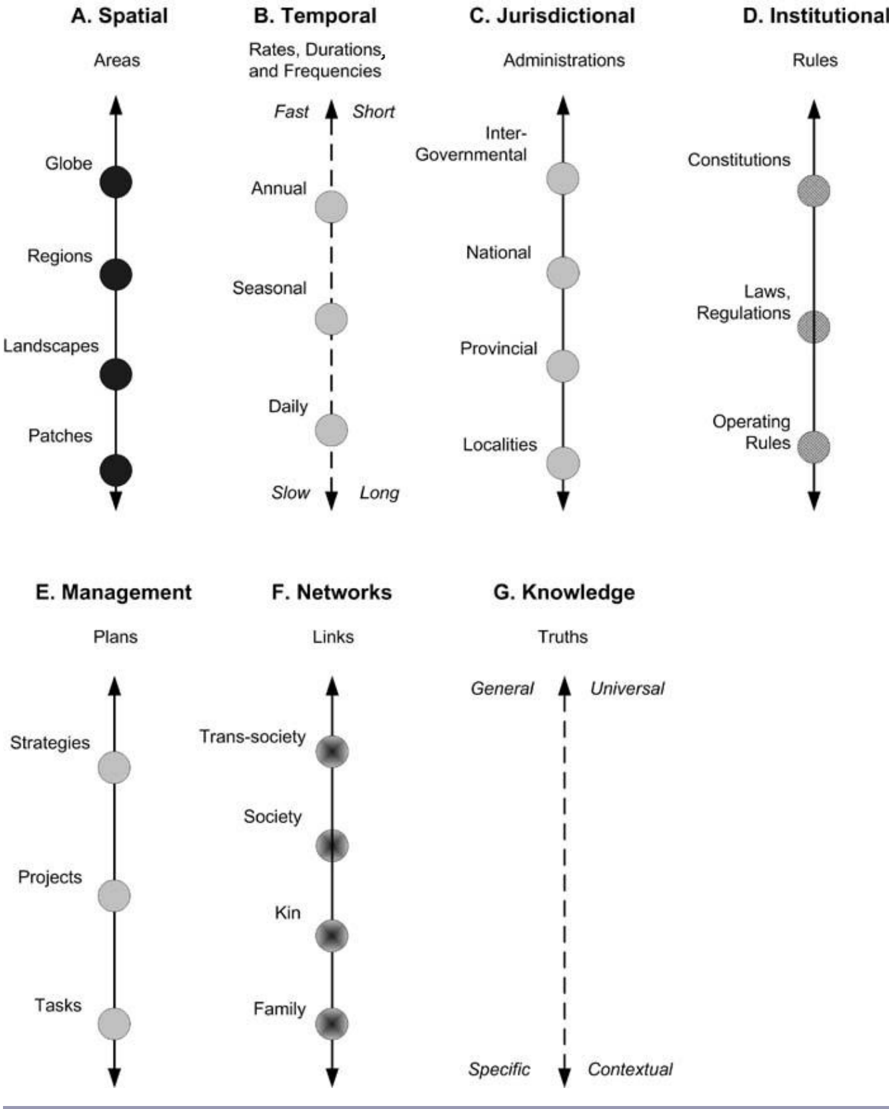
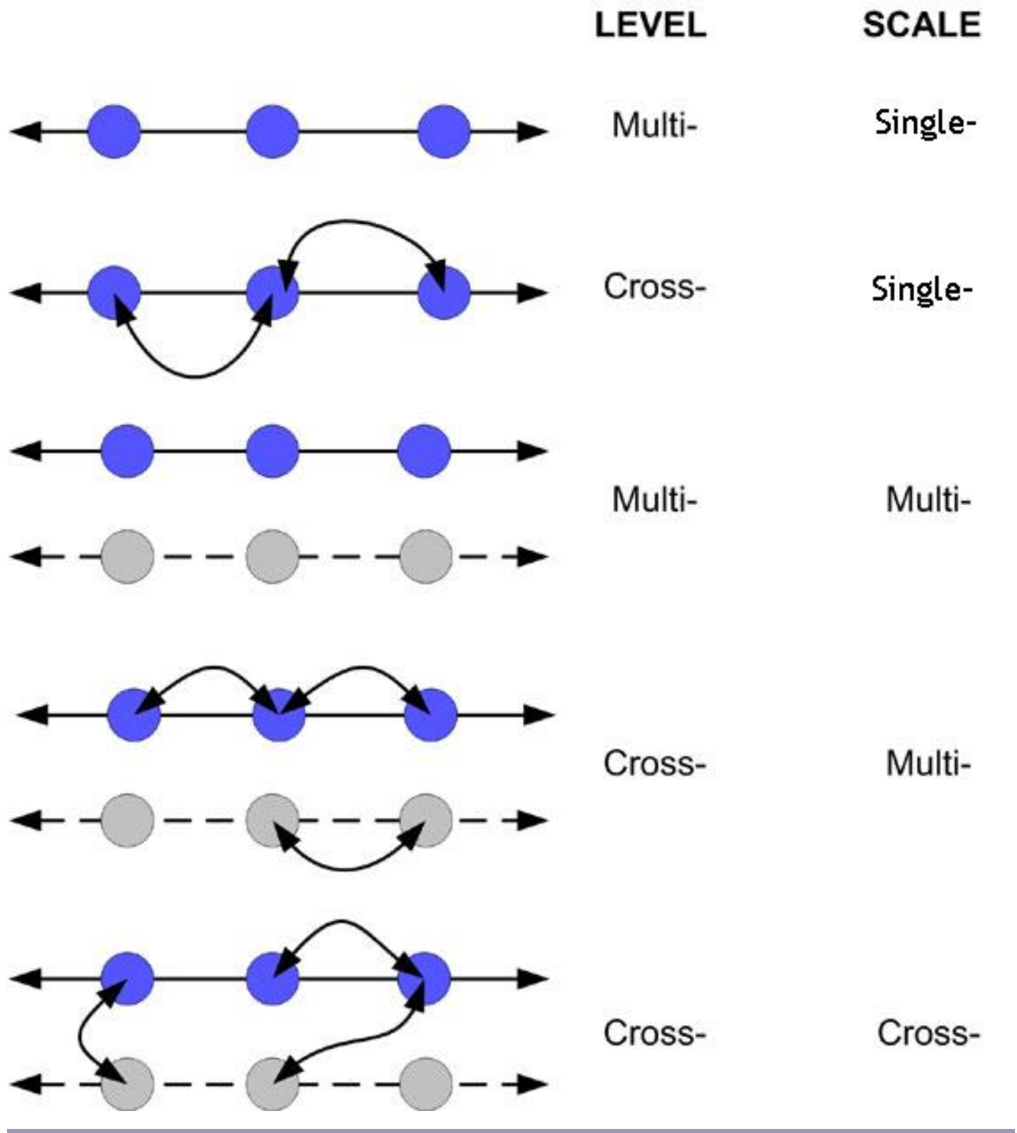
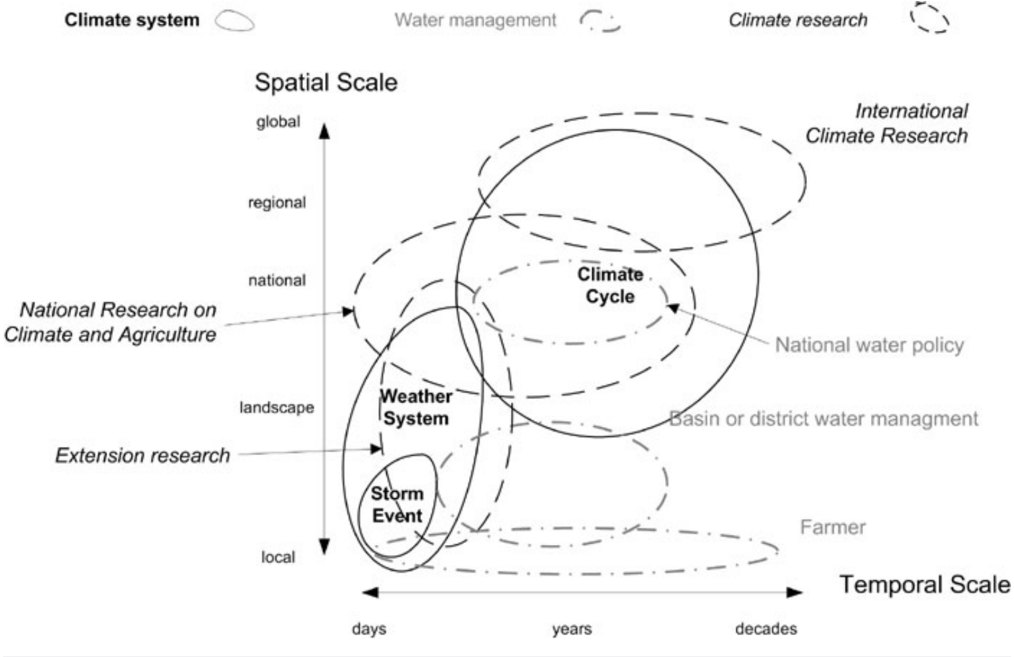
Verification
Claims the paper makes
The claims and statistics of this paper haven’t been checked yet.
Run the check — free, no account needed. It reads the open-access text and checks the sources it cites.
Claims other papers make about this one
Each is checked against this paper’s own text: does it say what the citing paper says it does?
The cited source says what the claim attributes to it.
In the citing paper
“In this regard, Cash et al. (2006) note that spatial scale mismatches occur when the extent of a decision maker's authority does not map coherently onto the spatial scale of the social or ecological problem at issue.”
From Polycentric Systems of Governance: A Theoretical Model for the Commons (2019) · cites this paper as Cash et al., 2006
The cited source says what the claim attributes to it.
In the citing paper
“They cite transboundary pollution, migratory fish stocks, and aquifer management as examples of concerns that often extend beyond the reach of a single decision maker or governance system (Cash et al., 2006).”
From Polycentric Systems of Governance: A Theoretical Model for the Commons (2019) · cites this paper as Cash et al., 2006
The cited source says what the claim attributes to it.
In the citing paper
“The diverse mix of state and nonstate governance actors in a polycentric system may be an advantage in this regard because governance actors may be able to leverage complementary knowledge (e.g., local or traditional knowledge and scientific knowledge) about social and ecological systems to inform more contextually adapted institutions, thereby enhancing fit (see Cash et al., 2006).”
From Polycentric Systems of Governance: A Theoretical Model for the Commons (2019) · cites this paper as Cash et al., 2006
Self-check
Percentages, sums and reported differences re-computed from the paper’s own numbers.
The self-check needs the paper’s full text.
Citations
Cites
Star, S. L., & Griesemer, J. R. (1989) · Social Studies of Science · doi:10.1177/030631289019003001 · Cited by 10,847
Ecosystems and Human Well-being: Synthesis
Assessment, M. E. (2005) · Island Press · doi:10.5281/zenodo.18167309 · Cited by 10,665
ADAPTIVE GOVERNANCE OF SOCIAL-ECOLOGICAL SYSTEMS
Folke, C., Hahn, T., Olsson, P., & Norberg, J. (2005) · Annual Review of Environment and Resources · doi:10.1146/annurev.energy.30.050504.144511 · Cited by 5,814
Self-citationEpidemic Spreading in Scale-Free Networks
Pastor‐Satorras, R., & Vespignani, A. (2001) · Physical Review Letters · doi:10.1103/physrevlett.86.3200 · Cited by 5,785
Knowledge systems for sustainable development
Cash, D. W., Clark, W. C., Alcock, F., Dickson, N. M., Eckley, N., Guston, D. H., Jäger, J., & Mitchell, R. B. (2003) · Proceedings of the National Academy of Sciences · doi:10.1073/pnas.1231332100 · Cited by 3,660
Self-citationPanarchy: Understanding Transformations in Human and Natural Systems
Price, M. F. (2003) · Biological Conservation · doi:10.1016/s0006-3207(03)00041-7 · Cited by 3,329
Resilience and Sustainable Development: Building Adaptive Capacity in a World of Transformations
Folke, C., Carpenter, S., Elmqvist, T., Gunderson, L., Holling, C. S., & Walker, B. (2002) · AMBIO: A Journal of the Human Environment · doi:10.1579/0044-7447-31.5.437 · Cited by 3,136
Revisiting the commons: local lessons, global challenges.
Ostrom, E., Burger, J., Field, C. B., Norgaard, R. B., & Policansky, D. (1999) · Science · doi:10.1126/science.284.5412.278 · Cited by 2,798
Kates, R. W., Clark, W. C., Corell, R. W., Hall, J. M., Jaeger, C. C., Lowe, I., McCarthy, J. J., Schellnhuber, H. J., Bolin, B., Dickson, N. M., et al. (2001) · Science · doi:10.1126/science.1059386 · Cited by 2,639
Seeing Like a State: How Certain Schemes to Improve the Human Condition Have Failed
Levine, A., & Scott, J. C. (1999) · Contemporary Sociology A Journal of Reviews · doi:10.2307/2655340 · Cited by 2,464
Research works printed but not linked: 8
- Ecology and Society 11(2): 8 http://www.ecologyandsociety.org/vol11/iss2/art8/ through the Environment, Science and Development Program for the Knowledge Systems for Sustainable Development Project. LITERATURE CITED
- Berkes, F., and C. Folke. 2002. Back to the future: ecosystems dynamics and local knowledge. Pages 121-146 in L. H. Gunderson, and C. S. Holling, editors. Panarchy: understanding transformations in human and natural systems. Island Press, Washington, D.C., USA.
- Gibson, C., E. Ostrom, and T.-K. Ahn. 1997. Scaling issues in the social sciences: a report for the International Human Dimensions Programme on Global Environmental Change. International Human Dimensions Programme on Global Ecology and Society 11(2): 8 http://www.ecologyandsociety.org/vol11/iss2/art8/ Environmental Change, Bonn, Germany.
- Holling, C. S. 1995. Sustainability: the cross-scale dimension. Pages 65-75 in M. Munasinghe and W. Shearer, editors. Defining and measuring sustainability: the biogeophysical foundations. United Nations University/World Bank, Washington, D.C., USA.
- Lebel, L., P. Garden, and M. Imamura. 2005. The politics of scale, position and place in the management of water resources in the Mekong region. Ecology and Society 10(2): 18. [online] URL: http://www.ecologyandsociety.org/vol10/iss2/ art18.
- Ostrom, E., T. Dietz, N. Dolsak, P. C. Stern, S. Stonich, and E. U. Weber, editors. 2002. The drama of the commons. National Academy Press, Washington, D.C., USA.
- Polsky, C., and D. W. Cash. 2005. Drought, climate change, and vulnerability: the role of science and technology in a multi-scale, multi-stressor world. Pages 215-245 in D. Wilhite, editor. Drought and water crises: science, technology, and management issues. Marcel Dekker, New York, New York, USA.
- Young, O. 2006. Vertical interplay among scale- dependent resource regimes. Ecology and Society 11(1): 27. [online] URL: http://www.ecologyandso ciety.org/vol11/iss1/art27.
Cited by
Sorted by citations
Items 601–700 of 1,001
O’Higgins, T., Nogueira, A. J. A., & Lillebø, A. I. (2018) · The Science of The Total Environment · doi:10.1016/j.scitotenv.2018.08.420 · Cited by 38
Challenges for local adaptation when governance scales overlap. Evidence from Languedoc, France
Therville, C., Brady, U., Barreteau, O., Bousquet, F., Mathevet, R., Dhénain, S., Grelot, F., & Brémond, P. (2018) · Regional Environmental Change · doi:10.1007/s10113-018-1427-2 · Cited by 42
Antoni, C. D., Huber‐Sannwald, E., Hernández, H. R., Hooft, A. V. ‘., & Schoon, M. (2018) · Land Use Policy · doi:10.1016/j.landusepol.2018.10.028 · Cited by 38
The Role of Stakeholders in Creating Societal Value From Coastal and Ocean Observations
Mackenzie, B., Celliers, L., Assad, L. P. D. F., Heymans, J. J., Rome, N., Thomas, J., Anderson, C. R., Behrens, J., Calverley, M., Desai, K., et al. (2019) · Frontiers in Marine Science · doi:10.3389/fmars.2019.00137 · Cited by 38
Fixing flammable Forest: The scalar politics of peatland governance and restoration in Indonesia
Astuti, R. (2020) · Asia Pacific Viewpoint · doi:10.1111/apv.12267 · Cited by 37
Withanachchi, S. S., Ghambashidze, G., Kunchulia, I. O., Urushadze, T., & Ploeger, A. (2018) · Water · doi:10.3390/w10020098 · Cited by 42
Christopher, N., Vachette, A., Horne, A., & Kosovac, A. (2024) · Wiley Interdisciplinary Reviews Water · doi:10.1002/wat2.1723 · Cited by 42
Manyani, A., Biggs, R., Hill, L. B., & Preiser, R. (2024) · Ecology and Society · doi:10.5751/es-14694-290133 · Cited by 52
Cross-level differences and similarities in coastal climate change adaptation planning
Kettle, N. P., & Dow, K. M. (2014) · Environmental Science & Policy · doi:10.1016/j.envsci.2014.08.013 · Cited by 37
Climate Change, Environmental Governance and the Scale Problem
Haarstad, H. (2014) · Geography Compass · doi:10.1111/gec3.12111 · Cited by 37
ICT-enabled boundary spanning arrangements in collaborative sustainability governance
Termeer, C. J. A. M., & Bruinsma, A. (2016) · Current Opinion in Environmental Sustainability · doi:10.1016/j.cosust.2015.11.008 · Cited by 40
A reflection on collaborative adaptation research in Africa and Asia
Cochrane, L., Cundill, G., Ludi, E., New, M. G., Nicholls, R. J., Wester, P., Cantin, B., Murali, K. S., Leone, M., Kituyi, E., et al. (2017) · Regional Environmental Change · doi:10.1007/s10113-017-1140-6 · Cited by 39
Exploring trade-offs in climate change response in the context of Pacific Island fisheries
Finkbeiner, E. M., Micheli, F., Bennett, N. J., Ayers, A. L., Cornu, E. L., & Doerr, A. N. (2017) · Marine Policy · doi:10.1016/j.marpol.2017.09.032 · Cited by 37
Wuijts, S., Driessen, P., & van Rijswick, H. F. M. W. (2017) · Water Resources Management · doi:10.1007/s11269-017-1867-3 · Cited by 37
Metrics to analyze and improve diets through food Systems in low and Middle Income Countries
Melesse, M. B., van den Berg, M., Béné, C., de Brauw, A., & Brouwer, I. D. (2020) · Food Security · doi:10.1007/s12571-020-01091-2 · Cited by 44
Adaptation and evolution of institutions and governance in community‐based conservation
Salerno, J., Romulo, C. L., Galvin, K., Brooks, J., Mupeta-Muyamwa, P., & Glew, L. (2021) · Conservation Science and Practice · doi:10.1111/csp2.355 · Cited by 34
Kay, C. A. M., Rohnke, A. T., Sander, H. A., Stankowich, T., Fidino, M., Murray, M. H., Lewis, J. S., Taves, I., Lehrer, E. W., Zellmer, A. J., et al. (2021) · People and Nature · doi:10.1002/pan3.10283 · Cited by 38
Regional capacity to govern the energy transition: The case of two Dutch energy regions
van Dijk, J., Wieczorek, A. J., & Ligtvoet, A. (2022) · Environmental Innovation and Societal Transitions · doi:10.1016/j.eist.2022.06.001 · Cited by 37
Bisaro, A., Hinkel, J., & Kranz, N. (2010) · Environmental Science & Policy · doi:10.1016/j.envsci.2010.08.004 · Cited by 41
Adaptation by stealth: climate information use in the Great Lakes region across scales
Rasmussen, L. V., Kirchhoff, C. J., & Lemos, M. C. (2016) · Climatic Change · doi:10.1007/s10584-016-1857-0 · Cited by 37
Evidence of effectiveness in the Cohesive Strategy: measuring and improving wildfire response
Steelman, T. A., & Nowell, B. L. (2019) · International Journal of Wildland Fire · doi:10.1071/wf18136 · Cited by 37
Scale-sensitive governance in forest and landscape restoration: a systematic review
Wiegant, D. A., van Oel, P. R., & Dewulf, A. R. P. J. (2022) · Regional Environmental Change · doi:10.1007/s10113-022-01889-0 · Cited by 36
Connecting MPAs – eight challenges for science and management
Lagabrielle, E., Crochelet, E. C., Andrello, M., Schill, S. R., Arnaud‐Haond, S., Alloncle, N., & Ponge, B. (2014) · Aquatic Conservation Marine and Freshwater Ecosystems · doi:10.1002/aqc.2500 · Cited by 37
Vercoe, R. A., Welch‐Devine, M., Hardy, D., DeMoss, J., Bonney, S., Allen, K. E., Brosius, P., Charles, D., Crawford, B. A., Heisel, S., et al. (2014) · Ecology and Society · doi:10.5751/es-05970-190123 · Cited by 36
Human development and environmental governance: a reality check
Brown, K. M. (2009) · Cambridge University Press eBooks · doi:10.1017/cbo9780511807756.004 · Cited by 36
Transdisciplinary weed research: new leverage on challenging weed problems?
Jordan, N., Schut, M., Graham, S., Barney, J. N., Childs, D. Z., Christensen, S., Cousens, R. D., Davis, A. S., Eizenberg, H., Ervin, D. E., et al. (2016) · Weed Research · doi:10.1111/wre.12219 · Cited by 38
Scales of integration for sustainable development governance
Stevens, C. C. (2017) · International Journal of Sustainable Development & World Ecology · doi:10.1080/13504509.2017.1282893 · Cited by 36
Adams, V. M., Álvarez-Romero, J. G., Capon, S. J., Crowley, G., Dale, A. P., Kennard, M. J., Douglas, M. M., & Pressey, R. L. (2017) · Environmental Science & Policy · doi:10.1016/j.envsci.2017.05.003 · Cited by 36
Resilience at the periphery: Insurgency, agency and social-ecological change under armed conflict
Ingalls, M., & Mansfield, D. (2017) · Geoforum · doi:10.1016/j.geoforum.2017.06.012 · Cited by 36
Decision-making and integrated assessment models of the water-energy-food nexus
Rising, J. (2019) · Water Security · doi:10.1016/j.wasec.2019.100056 · Cited by 36
McFadden, L., Penning‐Rowsell, E. C., & Tapsell, S. M. (2009) · Ocean & Coastal Management · doi:10.1016/j.ocecoaman.2009.10.001 · Cited by 36
Wavelet correlations to reveal multiscale coupling in geophysical systems
Casagrande, E., Mueller, B., Miralles, D. G., Entekhabi, D., & Molini, A. (2015) · Journal of Geophysical Research Atmospheres · doi:10.1002/2015jd023265 · Cited by 36
Patrick, M. J., Syme, G. J., & Horwitz, P. (2014) · Journal of Hydrology · doi:10.1016/j.jhydrol.2014.09.002 · Cited by 35
Towards sustainable supply management: requisite governance and resilience capabilities
Eltantawy, R. (2015) · Journal of Strategic Marketing · doi:10.1080/0965254x.2015.1011201 · Cited by 35
The sustainable use approach could save South Africa’s rhinos
Child, B. A. (2012) · South African Journal of Science · doi:10.4102/sajs.v108i7/8.1338 · Cited by 35
Vallejo-Rojas, V., Ravera, F., & Rivera‐Ferre, M. G. (2015) · Regional Environmental Change · doi:10.1007/s10113-015-0887-x · Cited by 36
Managing spatial sustainability trade-offs: The case of wind power
Lehmann, P. L., Ammermann, K., Gawel, E., Geiger, C., Hauck, J., Heilmann, J., Meier, J.-N., Ponitka, J., Schicketanz, S., Stemmer, B., et al. (2021) · Ecological Economics · doi:10.1016/j.ecolecon.2021.107029 · Cited by 35
Durant, S. M., Marino, A., Linnell, J. D. C., Cotterill, A., Dloniak, S. M., Dolrenry, S., Funston, P. J., Groom, R. J., Hanssen, L., Horgan, J., et al. (2022) · Frontiers in Conservation Science · doi:10.3389/fcosc.2021.698631 · Cited by 42
Havard, L., Brigand, L., & Cariño, M. (2015) · Ocean & Coastal Management · doi:10.1016/j.ocecoaman.2015.06.017 · Cited by 35
Discovering Resilient Pathways for South African Water Management: Two Frameworks for a Vision
Bohensky, E. L. (2008) · Ecology and Society · doi:10.5751/es-02301-130119 · Cited by 35
Investigating land dynamics: future research perspectives
Veldkamp, A. (2009) · Journal of Land Use Science · doi:10.1080/17474230802645592 · Cited by 35
Lebel, L., Daniel, R., Badenoch, N., Garden, P., & Imamura, M. (2007) · International Journal of the Commons · doi:10.18352/bmgn-lchr.29 · Cited by 35
Self-citationRISK, VULNERABILITY AND ADAPTATION TO CLIMATE CHANGE: AN INTERDISCIPLINARY APPROACH
Iwama, A. Y., Batistella, M., Ferreira, L. D. C., Alves, D. S., & Ferreira, L. D. C. (2016) · Ambiente & sociedade · doi:10.1590/1809-4422asoc137409v1922016 · Cited by 35
From food production to food security: developing interdisciplinary, regional-level research
Ingram, J. S. I. (2011) · doi:10.18174/176450 · Cited by 35
Fragmentation and urban knowledge: An analysis of urban knowledge exchange institutions
Dickey, A., Kosovac, A., Fastenrath, S., Acuto, M., & Gleeson, B. J. (2022) · Cities · doi:10.1016/j.cities.2022.103917 · Cited by 34
Disentangling the complexity of human–nature interactions
Bennett, E. M., & Reyers, B. (2024) · People and Nature · doi:10.1002/pan3.10611 · Cited by 48
Governance of coastal wetlands: Beyond the community conservation paradigm
de Oliveira, M., Morrison, T. H., O’Brien, K. R., & Lovelock, C. E. (2024) · Ocean & Coastal Management · doi:10.1016/j.ocecoaman.2024.107253 · Cited by 41
Karpouzoglou, T., & Barron, J. (2014) · Physics and Chemistry of the Earth Parts A/B/C · doi:10.1016/j.pce.2014.09.009 · Cited by 34
Impacts of land use and land use changes on the resilience of beekeeping in Uruguay
Malkamäki, A., Toppinen, A., & Kanninen, M. (2016) · Forest Policy and Economics · doi:10.1016/j.forpol.2016.06.002 · Cited by 33
Reflecting upon knowledge management studies: insights from systems thinking
Caputo, F. (2017) · International Journal of Knowledge Management Studies · doi:10.1504/ijkms.2017.087065 · Cited by 34
Holtz, G., Xia-Bauer, C., Roelfes, M., Schüle, R., Vallentin, D., & Martens, L. (2017) · Journal of Cleaner Production · doi:10.1016/j.jclepro.2017.12.137 · Cited by 38
Resilience by design in Mexico City: A participatory human-hydrologic systems approach
Freeman, S. S. G., Brown, C., Cañada, H., Martinez, V., Nava, A. P., Ray, P. A., Rodríguez, D., Romo, A., Tracy, J., Vázquez, E., et al. (2020) · Water Security · doi:10.1016/j.wasec.2019.100053 · Cited by 33
Robinson, S., & Wren, C. (2020) · Geografisk Tidsskrift-Danish Journal of Geography · doi:10.1080/00167223.2020.1733432 · Cited by 34
Polycentricity and adaptive governance of transboundary marine socio-ecological systems
Tuda, A. O., Kark, S., & Newton, A. (2020) · Ocean & Coastal Management · doi:10.1016/j.ocecoaman.2020.105412 · Cited by 39
Operationalizing integrated landscape approaches in the tropics
Reed, J., Ros-Tonen, M. A. F., & Sunderland, T. C. H. (2020) · Center for International Forestry Research (CIFOR) eBooks · doi:10.17528/cifor/007800 · Cited by 40
Re-integrating ecology into integrated landscape approaches
REED, J. F., Kusters, K., Barlow, J., Balinga, M. P. B., Borah, J. R., Carmenta, R., Chervier, C., Djoudi, H., Gumbo, D., Laumonier, Y., et al. (2021) · Landscape Ecology · doi:10.1007/s10980-021-01268-w · Cited by 39
Ecosystem Services and Environmental Governance: Comparing China and the U.S.
Costanza, R., & Liu, S. (2014) · Asia & the Pacific Policy Studies · doi:10.1002/app5.16 · Cited by 34
Robards, M. D., & Lovecraft, A. L. (2010) · Policy Studies Journal · doi:10.1111/j.1541-0072.2010.00361.x · Cited by 35
Fan, M., Li, W., Zhang, C., & Li, L. (2013) · AMBIO · doi:10.1007/s13280-013-0445-z · Cited by 34
Tragedy of the unwanted commons: Governing the marine debris in Taiwan’s oyster farming
Liu, T., Kao, J.-C., & Ping, C. (2014) · Marine Policy · doi:10.1016/j.marpol.2014.12.001 · Cited by 34
Quality of urban patterns: Spatially explicit evidence for multiple scales
Hayek, U. W., Efthymiou, D., Farooq, B., von Wirth, T., Teich, M., Neuenschwander, N., & Grêt‐Regamey, A. (2015) · Landscape and Urban Planning · doi:10.1016/j.landurbplan.2015.05.010 · Cited by 34
Rights, equity and justice: a diagnostic for social meta-norm diffusion in environmental governance
Lawless, S., Song, A. M., Cohen, P. J., & Morrison, T. H. (2020) · Earth System Governance · doi:10.1016/j.esg.2020.100052 · Cited by 48
The ‘Governance-Check’: Assessing the sustainability of public spatial decision-making structures
Mauerhofer, V. (2012) · Land Use Policy · doi:10.1016/j.landusepol.2012.03.016 · Cited by 33
Kowler, L. F., Ravikumar, A., Larson, A. M., Rodríguez-Ward, D., & Burga, C. (2016) · Center for International Forestry Research (CIFOR) eBooks · doi:10.17528/cifor/006107 · Cited by 33
Modernising sustainable development? Standardisation, evidence and experts in local indicators
Elgert, L., & Krueger, R. (2012) · Local Environment · doi:10.1080/13549839.2012.681466 · Cited by 33
Internationally agreed environmental goals: A critical evaluation of progress
Jabbour, J., Keita-Ouane, F., Hunsberger, C. A., Sánchez-Rodríguez, R., Gilruth, P. T., Patel, N., Singh, A., Levy, M. A., & Schwarzer, S. (2012) · Environmental Development · doi:10.1016/j.envdev.2012.05.002 · Cited by 36
Denton, A. D. (2017) · Global Environmental Change · doi:10.1016/j.gloenvcha.2017.01.006 · Cited by 33
Högström, J., Balfors, B., & Hammer, M. (2017) · European Planning Studies · doi:10.1080/09654313.2017.1391751 · Cited by 33
Navigating multi‐level natural resource governance: an analytical guide
Nunan, F. (2018) · Natural Resources Forum · doi:10.1111/1477-8947.12149 · Cited by 35
Interplay Between Local and Global: Change Processes and Small-Scale Fisheries
Nayak, P. K., & Berkes, F. (2018) · MARE publication series · doi:10.1007/978-3-319-94938-3_11 · Cited by 33
Self-citationA diagnostic for collaborative monitoring in forest landscape restoration
Guariguata, M., & Evans, K. (2019) · Restoration Ecology · doi:10.1111/rec.13076 · Cited by 33
Gain, A., Ashik-Ur-Rahman, M., & Vafeidis, A. (2019) · Environmental Research Communications · doi:10.1088/2515-7620/ab2407 · Cited by 28
Hanh, T. T. H., & Boonstra, W. J. (2019) · Ocean & Coastal Management · doi:10.1016/j.ocecoaman.2019.104943 · Cited by 33
Ziervogel, G., Satyal, P., Basu, R., Mensah, A. M., Singh, C., Hegga, S., & Abu, T. Z. (2019) · Regional Environmental Change · doi:10.1007/s10113-019-01571-y · Cited by 33
Wang, J., Zhou, W., Wang, J., & Yu, W. (2020) · Environmental Research Letters · doi:10.1088/1748-9326/ab719f · Cited by 33
Eriyagama, N., Smakhtin, V., & Udamulla, L. (2020) · Earth-Science Reviews · doi:10.1016/j.earscirev.2020.103294 · Cited by 34
Delozier, J., & Burbach, M. E. (2021) · Current Research in Environmental Sustainability · doi:10.1016/j.crsust.2021.100027 · Cited by 33
Exploring discursive hydropolitics: a conceptual framework and research agenda
Bréthaut, C., Ezbakhe, F., McCracken, M., Wolf, A. T., & Dalton, J. (2021) · International Journal of Water Resources Development · doi:10.1080/07900627.2021.1944845 · Cited by 33
Kopainsky, B., Huber, R., & Pedercini, M. (2015) · Systems Research and Behavioral Science · doi:10.1002/sres.2334 · Cited by 35
Talking about fire: Pikangikum First Nation elders guiding fire management
Miller, A., Davidson-Hunt, I., & Peters, P. P. (2010) · Canadian Journal of Forest Research · doi:10.1139/x10-177 · Cited by 31
Gerber, J., Nahrath, S., Reynard, E., & Thomi, L. (2008) · International Journal of the Commons · doi:10.18352/bmgn-lchr.44 · Cited by 33
Sustainable Potato Production and Global Food Security
DeFauw, S. L., He, Z., Larkin, R. P., & Mansour, S. A. (2012) · Springer eBooks · doi:10.1007/978-94-007-4104-1_1 · Cited by 33
Spatial Dynamics of Optimal Management in Bioeconomic Systems
Aadland, D. M., Sims, C. B., & Finnoff, D. (2014) · Computational Economics · doi:10.1007/s10614-014-9442-y · Cited by 32
Horstkotte, T., Sandström, C., & Moen, J. (2014) · Human Ecology · doi:10.1007/s10745-014-9687-z · Cited by 32
Life, Fish and Mangroves : Resource Governance in Coastal Cambodia
Marschke, M. J. (2012) · University of Ottawa Press eBooks · doi:10.26530/oapen_528201 · Cited by 34
Miller, A. M. M., Bush, S. R., & van Zwieten, P. A. M. (2014) · MAST. Maritime studies/Maritime studies · doi:10.1186/s40152-014-0017-2 · Cited by 32
Orchard, S., Stringer, L. C., & Quinn, C. H. (2015) · Resources · doi:10.3390/resources4040903 · Cited by 33
Social networks and environmental management at multiple levels: soil conservation in Sumatra
Matouš, P. (2015) · Ecology and Society · doi:10.5751/es-07816-200337 · Cited by 33
Hassenforder, É., Clavreul, D., Akhmouch, A., & Ferrand, N. (2018) · International Journal of Water Resources Development · doi:10.1080/07900627.2018.1452722 · Cited by 32
Making It Spatial Makes It Personal: Engaging Stakeholders with Geospatial Participatory Modeling
Vukomanovic, J., Skrip, M. M., & Meentemeyer, R. K. (2019) · Land · doi:10.3390/land8020038 · Cited by 32
Spatial-temporal analysis of urban environmental quality of Tehran, Iran
Javanbakht, M., Boloorani, A. D., Kiavarz, M., Samany, N. N., Zebardast, L., & Zangiabadi, M. (2020) · Ecological Indicators · doi:10.1016/j.ecolind.2020.106901 · Cited by 32
On the frontiers of collaboration and conflict: how context influences the success of collaboration
Schoon, M., Chapman, M., Loos, J., Speranza, C. I., Kelman, C. C., Aburto, J. A., Alexander, S., Baggio, J. A., Brady, U., Cockburn, J. J., et al. (2021) · Ecosystems and People · doi:10.1080/26395916.2021.1946593 · Cited by 33
Ten things to get right for marine conservation planning in the Coral Triangle
Weeks, R., Pressey, R. L., Wilson, J. R., Knight, M., Horigue, V., Abesamis, R. A., Acosta, R., & Jompa, J. (2015) · F1000Research · doi:10.12688/f1000research.3886.3 · Cited by 32
Reindeer pastoralism in Fennoscandia
Holand, Ø., Horstkotte, T., Kumpula, J., & Moen, J. (2022) · Routledge eBooks · doi:10.4324/9781003118565-3 · Cited by 38
Eaton, W. M., Burnham, M., Robertson, T., Arbuckle, J. G., Brasier, K. J., Burbach, M. E., Church, S. P., Hart-Fredeluces, G. M., Jackson‐Smith, D. B., Wildermuth, G. A., et al. (2022) · Socio-Ecological Practice Research · doi:10.1007/s42532-022-00132-8 · Cited by 32
The neighbourhood approach to urban forest management: The case of Halifax, Canada
Steenberg, J. W. N., Duinker, P. N., & Charles, J. D. (2013) · Landscape and Urban Planning · doi:10.1016/j.landurbplan.2013.04.003 · Cited by 32
Cervoni, L., Biro, A., & Beazley, K. (2008) · Canadian Water Resources Journal / Revue canadienne des ressources hydriques · doi:10.4296/cwrj3304333 · Cited by 36
Robinson, C., Bark, R. H., Garrick, D. E., & Pollino, C. (2014) · Journal of Environmental Planning and Management · doi:10.1080/09640568.2014.976699 · Cited by 32
Bradley, M., van Putten, I. E., & Sheaves, M. J. (2014) · Marine Policy · doi:10.1016/j.marpol.2014.11.004 · Cited by 32
Metadata
- Authors
- Cash, D. W., Adger, W. N., Berkes, F., Garden, P., Lebel, L., Olsson, P., Pritchard, L., & Young, O.
- Affiliations
- University of East Anglia (GB)
- University of Manitoba (CA)
- Chiang Mai University (TH)
- Stockholm University (SE)
- National Wildlife Federation (US)
- University of California System (US)
- Venue
- Ecology and Society
- Publisher
- Resilience Alliance, Inc.
- Published
- 2006
- Volume
- 11
- Issue
- 2
- ISSN
- 1708-3087 (ISSN-L)
- OpenAlex
- W1768791706
- Cited by
- 2,254
- References
- 42
- Citations by year
- 2026: 113 · 2025: 70 · 2024: 97 · 2023: 119 · 2022: 113 · 2021: 142 · 2020: 172 · 2019: 162 · 2018: 158 · 2017: 148 · 2016: 127 · 2015: 129 · 2014: 185 · 2013: 113 · 2012: 107
- FWCI
- 37.62
- Type
- journal article
- Language
- en
- Open access
- gold
- doi.org
- Licence
- cc-by
- Locations
- Ecology and Society (publishedVersion, cc-by)
- DOAJ (DOAJ: Directory of Open Access Journals) (submittedVersion, cc-by-sa)
- UEA Digital Repository (University of East Anglia) (submittedVersion)
- Funders
- National Oceanic and Atmospheric Administration
- Climate Program Office
- Topics
- Physical Sciences › Environmental Science › Global and Planetary Change › Sustainability and Climate Change Governance
- Physical Sciences › Environmental Science › Global and Planetary Change › Land Use and Ecosystem Services
- Physical Sciences › Environmental Science › Management, Monitoring, Policy and Law › Coastal and Marine Management
- Keywords
- scale, cross-scale dynamics, multi-level governance, information flow, environmental governance
About these checks
Registry, retraction, Cites and statistics results are computed, not judged, with one exception: a printed reference that no index lists is read once by a model before it counts as a citation error. Claims are extracted by a model and kept only when their quote appears verbatim in the text; each cited source is then checked, with a model’s help, for whether it says what the claim relies on. Those verdicts can be wrong — read the claim’s quote and the cited source before relying on one.
Statistics and arithmetic are recomputed, not judged.
Confidence bands are shown only for fields calibrated on our annotated test set. None is calibrated yet, so no band is shown.
What counts as a claim ›How we measure confidence ›How we check this ›
Are you an author, or do you see a problem with this page? Request a review
