

Gender differences in the application of anthropometric measures for evaluation of obstructive sleep apnea
Open accessThe DOI matches its Crossref record; 41 of the 42 references it cites were found in a registry or an index.
Abstract
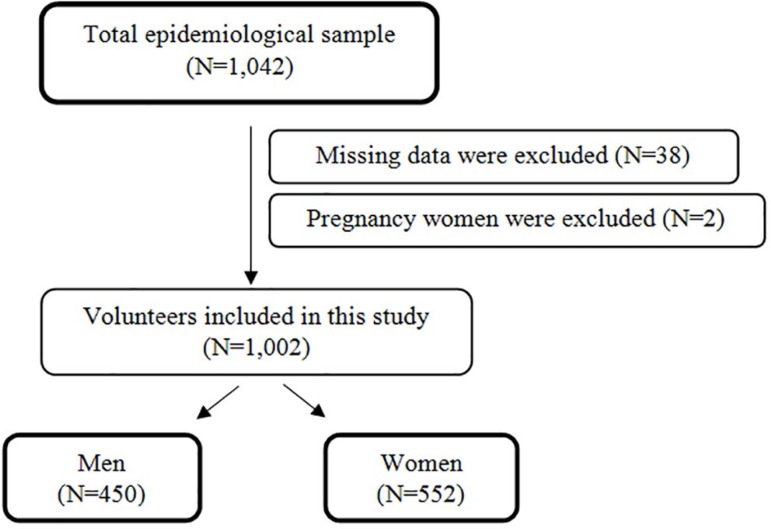
This study aims to investigate anthropometric measures and their effectiveness as screening method for diagnosing obstructive sleep apnea (OSA) in each gender. We also evaluated which measures were associated with OSA in the adult population of a large metropolitan city, Sao Paulo, Brazil. 552 women and 450 men were submitted to polysomnography (PSG), and the anthropometric measurements as body mass index (BMI), waist-to-height ratio, neck and waist circumference were collected. The measurements were then compared with the OSA classification established by the PSG. In women, waist circumference and waist-to-height ratio were found to be the best predictor, while in men, the factors with great potential for identification varied according to severity of the disease, highlighting waist-to-height ratio, neck circumference and BMI had strongest association. The accuracy of the classification in relation to mild-to-severe OSA based on cut-off values of 92.5cm for waist circumference was greater than 72.9% in men, and 78.9% in women based on cut off values of 95cm. Regarding severe OSA, cut-off values of 116.1cm were greater than 91.3% accurate in the male population, and 95.1% in the female population with a cut-off value of 126.5cm. The study found waist circumference and waist-to-height ratio to be the best measure to assess sleep-disordered breathing in women. Waist-to-height ratio and neck circumferences were the best measures in men with mild OSA, but BMI was more closely associated with severe OSA. The present study identified the anthropometric variables with the highest risk for OSA and their respective cutoff value, according to gender.
Overview
The claims and statistics of this paper haven’t been checked yet.
Free: it reads the open-access text and checks the first 5 claims that cite a source we can check. Create a free account to check every claim.
Integrity signals
Registry
Cites
Statistics
Figures
Verification
Claims the paper makes
The claims and statistics of this paper haven’t been checked yet.
Free: it reads the open-access text and checks the first 5 claims that cite a source we can check. Create a free account to check every claim.
Claims other papers make about this one
Each is checked against this paper’s own text: does it say what the citing paper says it does?
The cited source says what the claim attributes to it.
In the citing paper
“Neck circumference (NC) or collar size is associated with OSA in adults.184,528–534”
From International Consensus Statement on Obstructive Sleep Apnea (2023) · cites this paper as [184]
Experimental — accuracy not yet measured
Self-check
Percentages, sums and reported differences re-computed from the paper’s own numbers.
The self-check needs the paper’s full text.
Citations
Cites
Rechtschaffen, A. (1968) · Medical Entomology and Zoology · Cited by 12,675
Prevalence of Overweight and Obesity in the United States, 1999-2004
Ogden, C. L., Carroll, M. D., Curtin, L. R., McDowell, M. A., Tabak, C. J., & Flegal, K. M. (2006) · JAMA · doi:10.1001/jama.295.13.1549 · Cited by 8,720
Ford, E. S., Giles, W. H., & Dietz, W. H. (2002) · JAMA · doi:10.1001/jama.287.3.356 · Cited by 6,698 · cited 1×
“The effectiveness of these measures in general assessing health has been previously demonstrated 13 , and they have a strong correlation with sleep apnea.”
BackgroundPrevalence of obesity, diabetes, and obesity-related health risk factors, 2001
Mokdad, A. H., Ford, E. S., Bowman, B. A., Dietz, W. H., Vinicor, F., Bales, V. S., & Marks, J. S. (2003) · JAMA · doi:10.1001/jama.289.1.76 · Cited by 5,866
Allan Hobson, J. (1969) · Electroencephalography and Clinical Neurophysiology · doi:10.1016/0013-4694(69)90021-2 · Cited by 5,192
Levesque, R. J. R. (2017) · Encyclopedia of Adolescence · doi:10.1007/978-3-319-32132-5_447-2 · Cited by 4,021
McNicholas, W. T., Strohl, K. P., White, D. P., Levy, P. A., Schmidt, W., Wheatley, J. R., Redline, S. S., Carley, D. W., Buysse, D. J., Young, T. B., et al. (1999) · PubMed · Cited by 3,665
Fox, C. S., Massaro, J. M., Hoffmann, U., Pou, K. M., Maurovich-Horvat, P., Liu, C.-Y., Vasan, R. S., Murabito, J. M., Meigs, J. B., Cupples, L. A., et al. (2007) · Circulation · doi:10.1161/circulationaha.106.675355 · Cited by 2,882
Waist circumference and not body mass index explains obesity-related health risk
Janssen, I., Katzmarzyk, P. T., & Ross, R. (2004) · The American Journal of Clinical Nutrition · doi:10.1093/ajcn/79.3.379 · Cited by 2,013 · cited 11×
“Nevertheless, the results emphasize the role of BMI and waist circumference in OSA in both men and women.”
BackgroundInfluentialHu, F. B., Li, T. Y., Colditz, G. A., Willett, W. C., & Manson, J. E. (2003) · JAMA · doi:10.1001/jama.289.14.1785 · Cited by 1,892 · cited 1×
“Sedentary behaviors can result in an energy imbalance and lead to weight gain as well 10 .”
BackgroundNew Criteria for `Obesity Disease' in Japan
The Examination Committee of Criter (2002) · Circulation Journal · doi:10.1253/circj.66.987 · Cited by 1,650 · cited 1×
“Previous studies reported that a waist circumference greater than 85 cm in men and 90 cm in women are suggestive of obesity due their approximates to this visceral fat mass 35 .”
BackgroundAbdominal Adiposity and Coronary Heart Disease in Women
Rexrode, K. M. (1998) · JAMA · doi:10.1001/jama.280.21.1843 · Cited by 1,213 · cited 3×
“In women, relations between visceral adipose tissue and risk factors were consistently stronger than in men 15,26 .”
BackgroundObstructive Sleep Apnea Syndrome in the Sao Paulo Epidemiologic Sleep Study
Tufik, S., Santos-Silva, R., Taddei, J. A., & Bittencourt, L. R. A. (2010) · Sleep Medicine · doi:10.1016/j.sleep.2009.10.005 · Cited by 1,069 · cited 2×
“We used data from the Sao Paulo Epidemiologic Sleep study (EPISONO), which was designed to evaluate parameters related to overall sleep disorders in Sao Paulo, Brazil 1 .”
BackgroundMethodInfluentialSelf-citationA prospective study of obesity and cancer risk (Sweden)
Wolk, A., Gridley, G., Svensson, M., Nyrén, O., McLaughlin, J. K., Fraumeni, J. F., & Adami, H.-O. (2001) · Cancer Causes & Control · doi:10.1023/a:1008995217664 · Cited by 581
Ford, E. S., Giles, W. H., & Dietz, W. H. (2002) · Obstetrical & Gynecological Survey · doi:10.1097/00006254-200209000-00017 · Cited by 576
Compliance of the respiratory system and its components in health and obesity
Naimark, A., & Cherniack, R. M. (1960) · Journal of Applied Physiology · doi:10.1152/jappl.1960.15.3.377 · Cited by 561 · cited 1×
“…explain the relationship between obesity and sleep apnea include: a reduction in intrathoracic volume, resulting in a lower current tidal volume 29 ; a reduction of the size of the pharyngeal lumen caused by the accumulation of adipose tissue on the side walls of the upper airway 30 ;…”
BackgroundThe Medical Cost of Undiagnosed Sleep Apnea
Kapur, V., Blough, D. K., Sandblom, R. E., Hert, R., de Maine, J. B., Sullivan, S. D., & Psaty, B. M. (1999) · Sleep · doi:10.1093/sleep/22.6.749 · Cited by 384 · cited 1×
“OSA has major economic costs for health systems 6 .”
BackgroundLung Volume Dependence of Pharyngeal Cross-Sectional Area in Patients with Obstructive Sleep Apnea
Hoffstein, V., Zamel, N., & Phillipson, E. A. (1984) · American Review of Respiratory Disease · doi:10.1164/arrd.1984.130.2.175 · Cited by 332 · cited 1×
“…tidal volume 29 ; a reduction of the size of the pharyngeal lumen caused by the accumulation of adipose tissue on the side walls of the upper airway 30 ; decreased muscle strength resulting in reduced airway obstruction protection due to deposits of in-tramuscularfat 31 and a reduction in the size…”
BackgroundPillar, G., & Shehadeh, N. (2008) · Diabetes Care · doi:10.2337/dc08-s272 · Cited by 316
Onat, A., Hergenç, G., Yüksel, H., Can, G., Ayhan, E., Kaya, Z., & Dursunoğlu, D. (2009) · Clinical Nutrition · doi:10.1016/j.clnu.2008.10.006 · Cited by 310 · cited 1×
“Neck circumference is a variable often considered in sleep medicine due to its capability to predict sleep apnea events 14 .”
BackgroundWhittle, A. T., Marshall, I., Mortimore, I. L., Wraith, P. K., Sellar, R. J., & Douglas, N. J. (1999) · Thorax · doi:10.1136/thx.54.4.323 · Cited by 302 · cited 1×
“…tissue on the side walls of the upper airway 30 ; decreased muscle strength resulting in reduced airway obstruction protection due to deposits of in-tramuscularfat 31 and a reduction in the size of the upper airway, as a secondary result of central obesity, chest wall and tracheal traction 32 .”
BackgroundSimpson, L., Mukherjee, S., Cooper, M. N., Ward, K. L., Lee, J. D., Fedson, A. C., Potter, J., Hillman, D. R., Eastwood, P., Palmer, L. J., et al. (2010) · Sleep · doi:10.1093/sleep/33.4.467 · Cited by 193 · cited 1×
“Some previous studies, contrary to this one, found that OSA was more closely associated to abdominal obesity in men than in women 37-39 .”
ResultSong, X., Jousilahti, P., Stehouwer, C. D. A., Söderberg, S., Onat, A., Laatikainen, T. K., Yudkin, J. S., Dankner, R. S., Morris, R. W., Tuomilehto, J., et al. (2014) · Nutrition Metabolism and Cardiovascular Diseases · doi:10.1016/j.numecd.2014.09.004 · Cited by 176
Sao Paulo Epidemiologic Sleep Study: Rationale, design, sampling, and procedures
Santos‐Silva, R., Tufik, S., Conway, S. G., Taddei, J. A. D. A. C., & Bittencourt, L. (2009) · Sleep Medicine · doi:10.1016/j.sleep.2008.11.001 · Cited by 171 · cited 1×
“These individuals were replaced using the same method described above 18 .”
MethodSelf-citationWaist Circumference and Sleep Disordered Breathing
Davidson, T. M., & Patel, M. R. (2008) · The Laryngoscope · doi:10.1097/mlg.0b013e3181587d7c · Cited by 130 · cited 1×
“The importance of waist circumference in sleep-disor-dered breathing has been previously demonstrated 28,33 .”
Sleep apnoea and visceral adiposity in middle-aged male and female subjects
Kritikou, I., Basta, M., Tappouni, R., Pejovic, S., Fernandez-Mendoza, J., Nazir, R., Shaffer, M. L., Liao, D., Bixler, E. O., Chrousos, G. P., et al. (2013) · European Respiratory Journal · doi:10.1183/09031936.00183411 · Cited by 130
Kawaguchi, Y., Fukumoto, S., Inaba, M., Koyama, H., Shoji, T., Shoji, S., & Nishizawa, Y. (2011) · Obesity · doi:10.1038/oby.2010.170 · Cited by 113
Health care costs and the sleep apnea syndrome
Wittmann, V., & Rodenstein, D. O. (2004) · Sleep Medicine Reviews · doi:10.1016/j.smrv.2004.01.002 · Cited by 105 · cited 1×
“Direct and indirect costs of moderate-severe OSA in the USA are estimated to be between US$65 billion and US$165 billion/year 7 .”
BackgroundAbdominal Fat and Sleep Apnea: the Chicken or the Egg?
Pillar, G., & Shehadeh, N. (2008) · Diabetes Care · doi:10.2337/dc08-0715 · Cited by 100
Prevalence of Overweight and Obesity in the United States, 1999-2004
Stockman, J. A. (2007) · Yearbook of Pediatrics · doi:10.1016/s0084-3954(08)70227-6 · Cited by 87
Mazzuca, E., Battaglia, S. L., Marrone, O., Marotta, A. M., Castrogiovanni, A., Esquinas, C., Barceló, A., Barbé, F., & Bonsignore, M. R. (2013) · Journal of Sleep Research · doi:10.1111/jsr.12088 · Cited by 83 · cited 1×
“Some previous studies, contrary to this one, found that OSA was more closely associated to abdominal obesity in men than in women 37-39 .”
Result041 OBSTRUCTIVE SLEEP APNEA SYNDROME IN THE SAO PAULO EPIDEMIOLOGIC SLEEP STUDY
Tufik, S., Santos‐Silva, R., Taddei, J. A., & Bittencourt, L. (2009) · Sleep Medicine · doi:10.1016/s1389-9457(09)70043-7 · Cited by 69
Self-citationSleep complaints in the Brazilian population: Impact of socioeconomic factors
Hirotsu, C., Bittencourt, L., Garbuio, S., Andersen, M. L., & Tufik, S. (2014) · Sleep Science · doi:10.1016/j.slsci.2014.08.001 · Cited by 68
Self-citationPolesel, D. N., Hirotsu, C., Nozoe, K. T., Boin, A. C., Bittencourt, L., Tufik, S., Andersen, M. L., & Hachul, H. (2015) · Menopause · doi:10.1097/gme.0000000000000406 · Cited by 55 · cited 2×
“Postmenopausal women have an increased incidence of sleep-disordered breathing 28 .”
BackgroundSelf-citationSleepiness and residual sleepiness in adults with obstructive sleep apnea
Black, J. (2003) · Respiratory Physiology & Neurobiology · doi:10.1016/s1569-9048(03)00083-1 · Cited by 48 · cited 1×
“OSA is mainly characterized by a set of symptoms resulting from apnea events that have negative outcomes on health, such as excessive day-time sleepiness 3 , cardiovascular impairment 4 and increased morbidity and mortality 5 .”
BackgroundMarcouiller, F., Boukari, R., Laouafa, S., Lavoie, R., & Joseph, V. (2014) · PLoS ONE · doi:10.1371/journal.pone.0100421 · Cited by 48
A Waist Is a Terrible Thing to Mind
Brown, L. K. (2002) · CHEST Journal · doi:10.1378/chest.122.3.774 · Cited by 34 · cited 1×
“…tissue on the side walls of the upper airway 30 ; decreased muscle strength resulting in reduced airway obstruction protection due to deposits of in-tramuscularfat 31 and a reduction in the size of the upper airway, as a secondary result of central obesity, chest wall and tracheal traction 32 .”
BackgroundIncreased risk of heart failure in women with symptoms of sleep-disordered breathing
Ljunggren, M. E., Byberg, L., Theorell‐Haglöw, J., Lindahl, B., Michaëlsson, K., & Lindberg, E. (2015) · Sleep Medicine · doi:10.1016/j.sleep.2015.09.018 · Cited by 30 · cited 1×
“OSA is mainly characterized by a set of symptoms resulting from apnea events that have negative outcomes on health, such as excessive day-time sleepiness 3 , cardiovascular impairment 4 and increased morbidity and mortality 5 .”
BackgroundCPAP for Obstructive Sleep Apnea and the Metabolic Syndrome
Bertisch, S. M., & Patel, S. R. (2012) · New England Journal of Medicine · doi:10.1056/nejmc1200497 · Cited by 9
Obstructive sleep apnea as a potential confounding factor in atherosclerosis in the Asian population
Polesel, D. N., Okazaki, K. M., Nozoe, K. T., Andersen, M. L., & Tufik, S. B. (2014) · Journal of the Neurological Sciences · doi:10.1016/j.jns.2014.08.006 · Cited by 7 · cited 1×
“Gradual weight gain occurs primarily through to aging, unhealthy eating habits and lifestyle 24,25 .”
BackgroundSelf-citationObesity, Dyslipidemia, and Sleep Disorders
Polesel, D. N., Nozoe, K. T., Decleva, D., Tufik, S., & Andersen, M. L. (2013) · CHEST Journal · doi:10.1378/chest.12-2648 · Cited by 4
Self-citation
Research works printed but not linked: 1
- [19]19. Korn EL, Graubard BI. Analyses of health surveys. Hoboken: John Wiley & Sons; 1999.
Cited by
International Consensus Statement on Obstructive Sleep Apnea
Chang, J. L., Goldberg, A. N., Alt, J. A., Mohammed, A., Ashbrook, L., Auckley, D., Ayappa, I., Bakhtiar, H., Barrera, J. E., Bartley, B. L., et al. (2023) · International Forum of Allergy & Rhinology · doi:10.1002/alr.23079 · Cited by 350
Endocrine disorders in obstructive sleep apnoea syndrome: A bidirectional relationship
Akset, M., Poppe, K. G., Kleynen, P., Bold, I., & Bruyneel, M. (2022) · Clinical Endocrinology · doi:10.1111/cen.14685 · Cited by 64
“3 cm predicts the presence of moderate‐to‐severe OSA with an accuracy of 78%.(84) In contrast, regarding the latest available data on PA that confirmed a”
BackgroundSex-specific sleep apnea screening questionnaires: closing the performance gap in women
Bauters, F. A., Loof, S., Hertegonne, K. B. C., Chirinos, J. A., Buyzere, M. D., & Rietzschel, E. R. (2019) · Sleep Medicine · doi:10.1016/j.sleep.2019.10.023 · Cited by 52
Evaluation of Obstructive Sleep Apnea in Female Patients in Primary Care: Time for Improvement?
Bouloukaki, I., Tsiligianni, I., & Schiza, S. E. (2021) · Medical Principles and Practice · doi:10.1159/000518932 · Cited by 51
Frange, C., Franco, A. M., Brasil, E. L., Hirata, R. P., Lino, J. A., Mortari, D. M., Ykeda, D. S., Leocádio-Miguel, M. A., D’Aurea, C. V. R., Silva, L. O. E., et al. (2022) · Sleep Science · doi:10.5935/1984-0063.20220083 · Cited by 41
Metadata
- Authors
- Polesel, D. N., Nozoe, K. T., Tufik, S. B., Bezerra, A. G., Fernandes, M. T. B., Bittencourt, L., Tufik, S., Andersen, M. L., & Hachul, H.
- Affiliations
- Universidade Federal de São Paulo (BR)
- Universidade Federal de São Paulo, Departamento de Psicobiologia - São Paulo - São Paulo - Brazil.
- Universidade de São Paulo (BR)
- Universidade de São Paulo, Departamento de Pediatria - São Paulo - São Paulo - Brazil.
- Corresponding author
- Hachul, Helena
- ORCID
- Venue
- Sleep Science
- Publisher
- Georg Thieme Verlag KG
- Published
- 2019-02
- Volume
- 12
- Issue
- 01
- Pages
- 2-9
- ISSN
- 1984-0063 (ISSN-L)
- 1984-0659
- PMC
- PMC6508944
- OpenAlex
- W2942722677
- Cited by
- 23
- References
- 42
- Citations by year
- 2025: 2 · 2024: 1 · 2023: 2 · 2022: 5 · 2021: 7 · 2020: 3 · 2019: 3
- FWCI
- 3.09
- Type
- journal article
- Language
- en
- Open access
- diamond
- doi.org
- Licence
- Locations
- Sleep Science (publishedVersion, cc-by-nc-nd)
- PubMed Central (publishedVersion, cc-by-nc-nd)
- PubMed (publishedVersion)
- LA Referencia (Red Federada de Repositorios Institucionales de Publicaciones Científicas) (submittedVersion, other-oa)
- DOAJ (DOAJ: Directory of Open Access Journals) (submittedVersion)
- Funders
- Fundação de Amparo à Pesquisa do Estado de São Paulo
- Coordenação de Aperfeiçoamento de Pessoal de Nível Superior
- Conselho Nacional de Desenvolvimento Científico e Tecnológico
- Associação Fundo de Incentivo à Pesquisa
- Topics
- Health Sciences › Medicine › Physiology (medical) › Obstructive Sleep Apnea Research
- Social Sciences › Psychology › Experimental and Cognitive Psychology › Sleep and related disorders
- Health Sciences › Medicine › Pulmonary and Respiratory Medicine › Chronic Obstructive Pulmonary Disease (COPD) Research
- Keywords
- obstructive sleep apnea, anthropometric measures, gender differences, screening, waist-to-height ratio, waist circumference, neck circumference, body mass index, OSA severity, cut-off values, sleep-disordered breathing, women
About these checks
Registry, retraction, Cites and statistics results are computed, not judged, with one exception: a printed reference that no index lists is read once by a model before it counts as a citation error. Claims are extracted by a model and kept only when their quote appears verbatim in the text; each cited source is then checked, with a model’s help, for whether it says what the claim relies on. Those verdicts can be wrong — read the claim’s quote and the cited source before relying on one.
Statistics and arithmetic are recomputed, not judged.
Confidence bands are shown only for fields calibrated on our annotated test set. None is calibrated yet, so no band is shown.
What counts as a claim ›How we measure confidence ›How we check this ›
Are you an author, or do you see a problem with this page? Request a review
Data sources
Bibliographic data: Semantic Scholar, OpenAlex, Crossref.
Contains information from the Semantic Scholar Academic Graph Datasets, made available under the ODC Attribution License (ODC-BY 1.0).
Semantic Scholar’s data is described in: Kinney, R., et al. (2023). The Semantic Scholar Open Data Platform. arXiv:2301.10140.
