

The DOI matches its Crossref record; 72 of the 84 references it cites were found in a registry or an index.
Chiral Drugs. An Overview
Open accessAbstract
About more than half of the drugs currently in use are chiral compounds and near 90% of the last ones are marketed as racemates consisting of an equimolar mixture of two enantiomers. Although they have the same chemical structure, most isomers of chiral drugs exhibit marked differences in biological activities such as pharmacology, toxicology, pharmacokinetics, metabolism etc. Some mechanisms of these properties are also explained. Therefore, it is important to promote the chiral separation and analysis of racemic drugs in pharmaceutical industry as well as in clinic in order to eliminate the unwanted isomer from the preparation and to find an optimal treatment and a right therapeutic control for the patient. In this article, we review the nomenclature, pharmacology, toxicology, pharmacokinetics, metabolism etc of some usual chiral drugs as well as their mechanisms. Different techniques used for the chiral separation in pharmaceutical industry as well as in clinical analyses are also examined.
Overview
The claims and statistics of this paper haven’t been checked yet.
Run the check — free, no account needed. It reads the open-access text and checks the sources it cites.
Integrity signals
Registry
Cites
Statistics
Figures
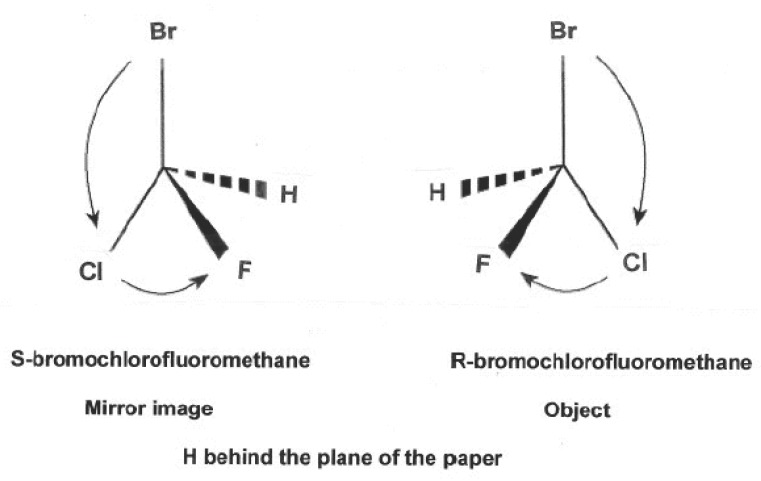
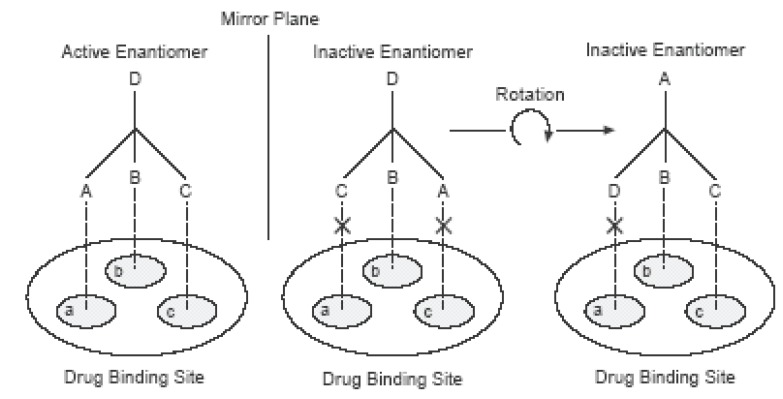
Verification
Claims the paper makes
The claims and statistics of this paper haven’t been checked yet.
Run the check — free, no account needed. It reads the open-access text and checks the sources it cites.
Claims other papers make about this one
Each is checked against this paper’s own text: does it say what the citing paper says it does?
In the citing paper
“The stereoselective engagement of protein targets is a feature of numerous chemical probes and drugs15–19”
From Expedited mapping of the ligandable proteome using fully functionalized enantiomeric probe pairs (2019) · cites this paper as [16]
Self-check
Percentages, sums and reported differences re-computed from the paper’s own numbers.
The self-check needs the paper’s full text.
Citations
Cites
Role of Pharmacokinetics and Metabolism in Drug Discovery and Development
Lin, J. H., & Lu, A. Y. H. (1997) · Pharmacological Reviews · doi:10.1016/s0031-6997(24)01340-1 · Cited by 713
Barrett, A. M., & Cullum, V. A. (1968) · British Journal of Pharmacology · doi:10.1111/j.1476-5381.1968.tb07949.x · Cited by 583
Enantioselective Aspects of Drug Action and Disposition: Therapeutic Pitfalls
Jamali, F., Mehvar, R., & Pasutto, F. M. (1989) · Journal of Pharmaceutical Sciences · doi:10.1002/jps.2600780902 · Cited by 395
Pharmacodynamic and pharmacokinetic differences between drug enantiomers in humans: An overview
Drayer, D. (1986) · Clinical pharmacology and therapy · doi:10.1038/clpt.1986.150 · Cited by 299
Stereochemistry in Drug Action
McConathy, J., & Owens, M. J. (2003) · The Primary Care Companion For CNS Disorders · doi:10.4088/pcc.v05n0202 · Cited by 297
The importance of stereoselective determination of drugs in the clinical laboratory
Rentsch, K. (2002) · Journal of Biochemical and Biophysical Methods · doi:10.1016/s0165-022x(02)00124-0 · Cited by 233
Bioanalysis of drugs by liquid-phase microextraction coupled to separation techniques
Pedersen‐Bjergaard, S., & Rasmussen, K. E. (2004) · Journal of Chromatography B · doi:10.1016/j.jchromb.2004.08.034 · Cited by 215
Mechanism of action of barbiturates.
Ho, I., & Harris, R. (1981) · Annual Review of Pharmacology and Toxicology · doi:10.1146/annurev.pa.21.040181.000503 · Cited by 197
The specification of asymmetric configuration in organic chemistry
Cahn, R., Ingold, C., & Prelog, V. (1956) · Experientia · doi:10.1007/bf02157171 · Cited by 190
Chiral Separations By Liquid Chromatography And Related Technologies
Aboul-Enein, H., & Ali, I. (2003) · doi:10.1201/9780203911112 · Cited by 140
Research works printed but not linked: 5
- [5]Katzung BG The nature of drugs In: Basic and clinical pharmacology 2004 9th New York Lange Medical Books/McGraw Hill 3 5
- [12]Ariens EJ Ariens EJ Soudijn W Timmermans PBMWM Stereoselectivity of bioactive agents: general aspects Stereochemistry and Biological activity of Drugs 1983 Oxford Blackwell Scientific 11 33
- [16]Stoschitzky K Lindner W Zernig G Racemic beta-blockers-fixed combinations of different drugs Journal of Clinical and Basic Cardiology 1998 1 1 15 19
- [24]Industry Overview organised by scientific update. Conferences An international symposium on chirality 5-7 September 1999 Cambridge University, Cambridge, UK http://www.geocities.com/jefferywinkler/bcc.doc
- [43]Scott AK Stereoisomers and drug toxicity. The value of single stereoisomer therapy Drug Safety 1993 8 2 149 159 8452656
Cited by
Sorted by citations
Free Radicals, Antioxidants in Disease and Health
Department of Pharmacy, L. S. P. C. H., Pham-Huy, L. A., He, H., Department of Analytical Chemistry, C. P. U., Pham-Huyc, C., & Laboratory of Toxicology, F. O. P. (2008) · International Journal of Biomedical Science · doi:10.59566/ijbs.2008.4089 · Cited by 3,058
Self-citationPatel, M., Kumar, R., Kishor, K., Mlsna, T., Pittman, C. U., & Mohan, D. (2019) · Chemical Reviews · doi:10.1021/acs.chemrev.8b00299 · Cited by 2,654
Adsorptive separation on metal–organic frameworks in the liquid phase
de Voorde, B. V., Bueken, B., Denayer, J. F. M., & Vos, D. E. D. (2014) · Chemical Society Reviews · doi:10.1039/c4cs00006d · Cited by 880
Carbon Nanotubes: Applications in Pharmacy and Medicine
He, H., Pham-Huy, L. A., Dramou, P., et al. (2013) · BioMed Research International · doi:10.1155/2013/578290 · Cited by 536
Self-citationPharmacologically active compounds in the environment and their chirality
Kasprzyk‐Hordern, B. (2010) · Chemical Society Reviews · doi:10.1039/c000408c · Cited by 472
Metadata
- Authors
- Laboratory of Toxicology, F. O. P., Chuong, P.-H., Nguyen, L. A., Department of Pharmacy, L. S. P. C. H., He, H., & Department of Analytical Chemistry, C. P. U.
- ORCID
- He, Hua
- Venue
- International Journal of Biomedical Science
- Published
- 2006-09-15
- Volume
- 2
- Issue
- 2
- Pages
- 85-100
- ISSN
- 1550-9702 (ISSN-L)
- 1555-2810
- PMC
- PMC3614593
- OpenAlex
- W4390049991
- Cited by
- 1,224
- References
- 84
- Citations by year
- 2026: 81 · 2025: 105 · 2024: 106 · 2023: 110 · 2022: 132 · 2021: 113 · 2020: 136 · 2019: 120 · 2018: 87 · 2017: 69 · 2016: 81 · 2015: 26 · 2014: 17 · 2013: 11 · 2012: 7
- FWCI
- 1.11
- Type
- journal article
- Language
- en
- Open access
- green
- europepmc.org
- Licence
- cc-by
- Locations
- International Journal of Biomedical Science (publishedVersion)
- Europe PMC (PubMed Central) (publishedVersion, cc-by)
- PubMed Central (publishedVersion, cc-by)
- PubMed (publishedVersion)
- PubMed
- Topics
- Physical Sciences › Chemistry › Analytical Chemistry › Analytical Chemistry and Chromatography
- Physical Sciences › Chemistry › Organic Chemistry › Chemistry and Stereochemistry Studies
- Physical Sciences › Chemistry › Spectroscopy › Molecular spectroscopy and chirality
- Keywords
- chiral drugs, enantiomers, racemic mixtures, enantiomer separation, pharmaceutical industry
About these checks
Registry, retraction, Cites and statistics results are computed, not judged, with one exception: a printed reference that no index lists is read once by a model before it counts as a citation error. Claims are extracted by a model and kept only when their quote appears verbatim in the text; each cited source is then checked, with a model’s help, for whether it says what the claim relies on. Those verdicts can be wrong — read the claim’s quote and the cited source before relying on one.
Statistics and arithmetic are recomputed, not judged.
Confidence bands are shown only for fields calibrated on our annotated test set. None is calibrated yet, so no band is shown.
What counts as a claim ›How we measure confidence ›How we check this ›
Are you an author, or do you see a problem with this page? Request a review
