

The DOI matches its Crossref record; 1 of the 1 references it cites were found in a registry or an index.
Infrared studies of aragonite, calcite, and vaterite type structures in the borates, carbonates, and nitrates
Open accessAbstract
Infrared absorption spectra have been obtained on the alkali nitrates, the divalent metal carbonates, and the rare earth borates which assume the aragonite, calcite, or vaterite crystal structures. It was observed that similar structures give rise to analogous spectra except for the carbonate and borates having the vaterite structure. The marked differences observed in these latter spectra are discussed. Frequency shifts produced by cation substitution are ascribed to repulsion between closed electron shells of oxygen atoms. It is concluded that this repulsive force determines the structure type in the rare earth borates.
Overview
The claims and statistics of this paper haven’t been checked yet.
Run the check — free, no account needed. It reads the open-access text and checks the sources it cites.
Integrity signals
Registry
Cites
Statistics
Figures
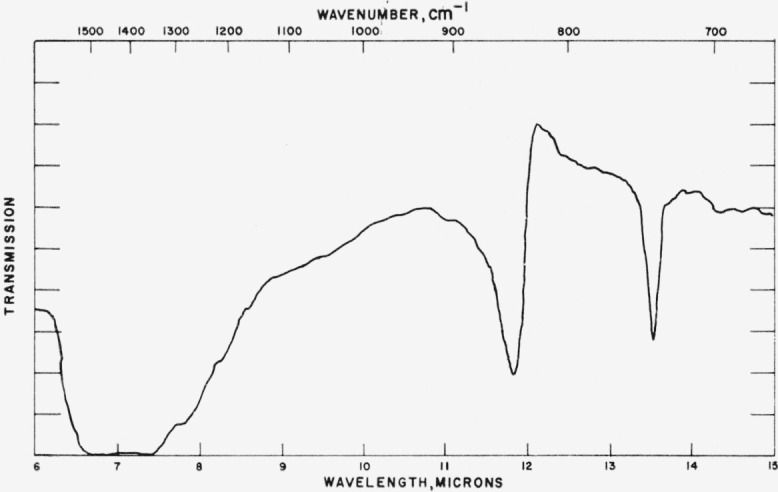
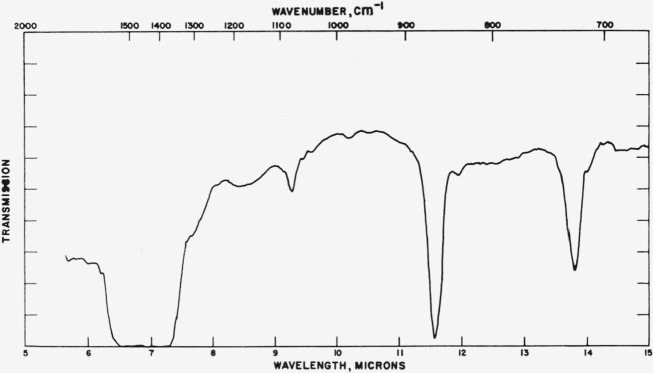
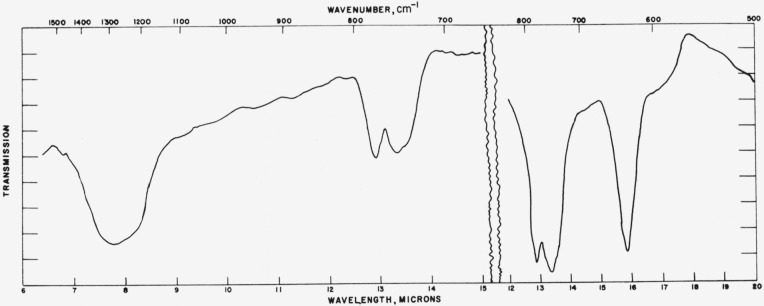
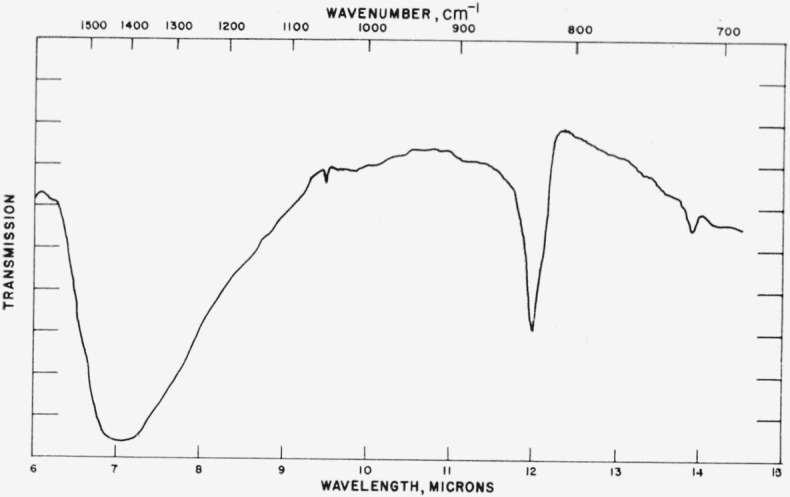
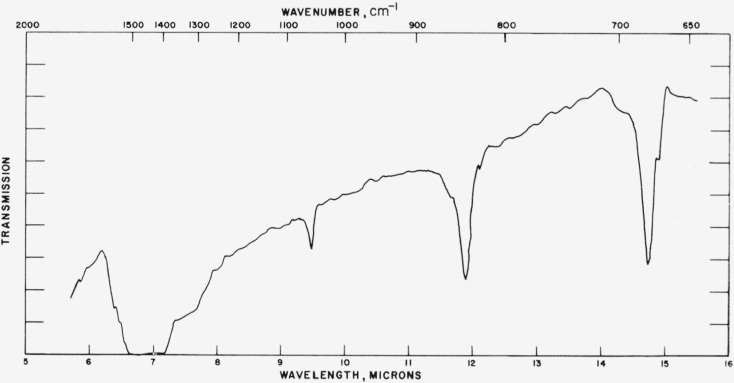
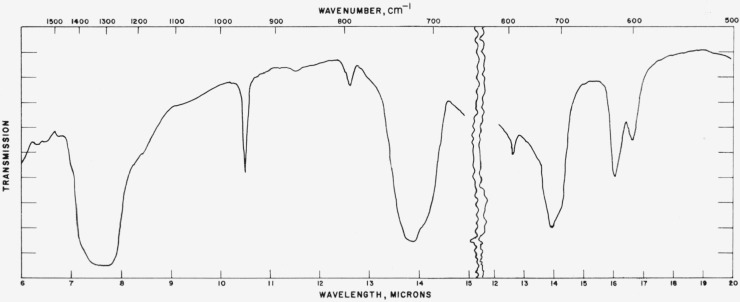
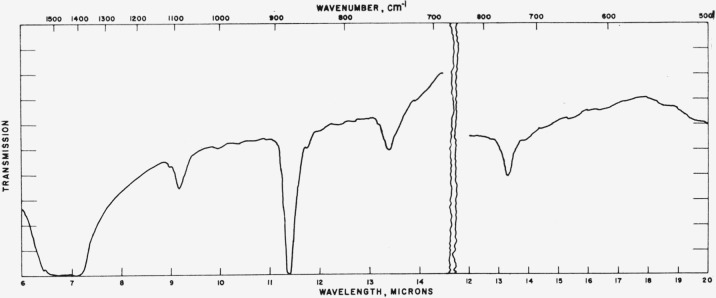
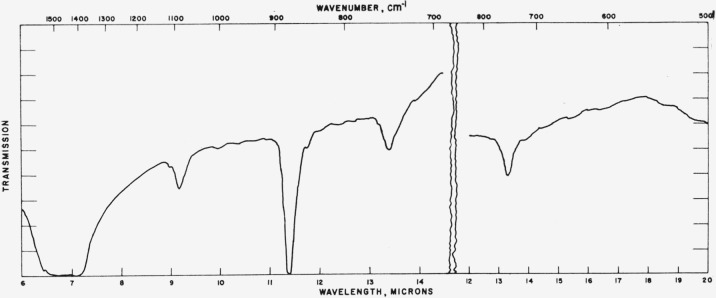
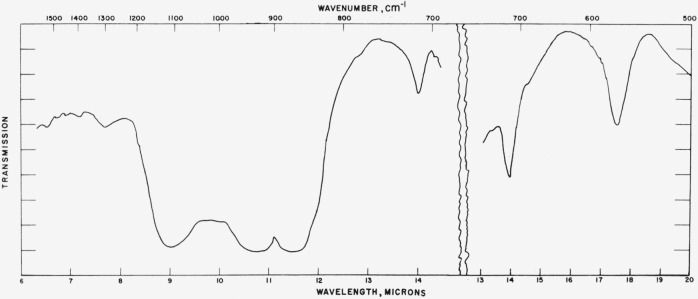
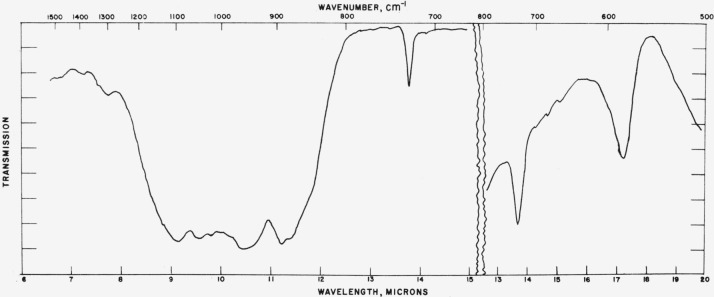
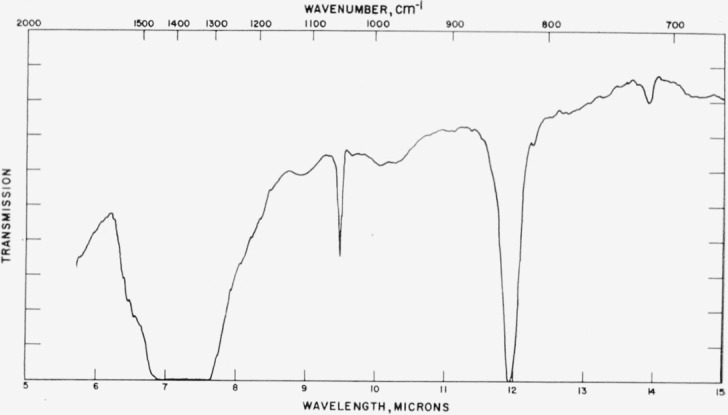
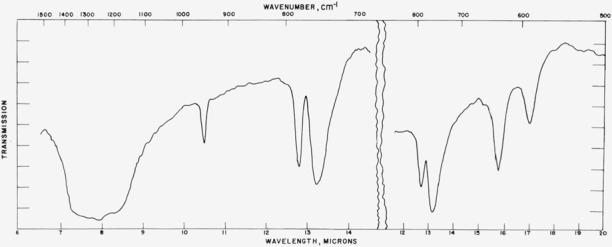
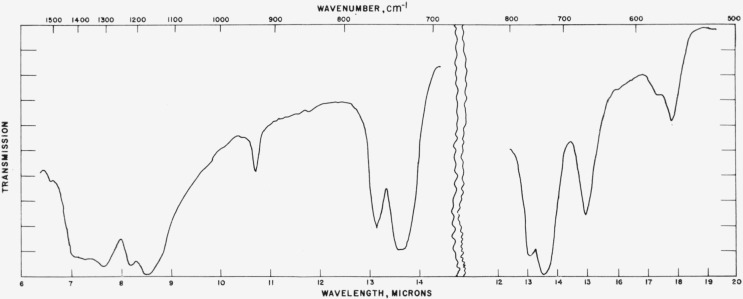
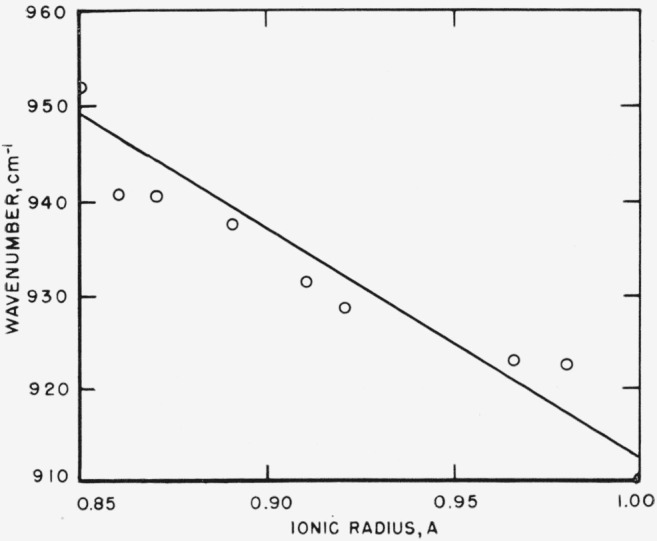
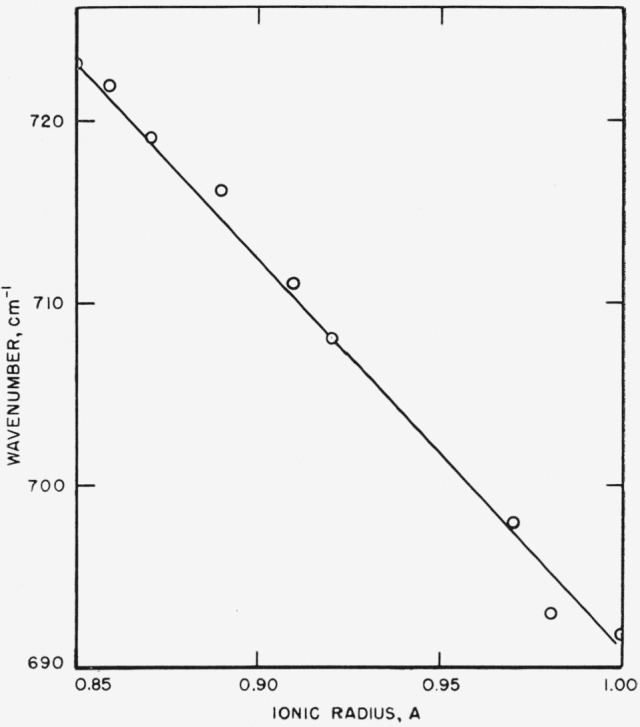
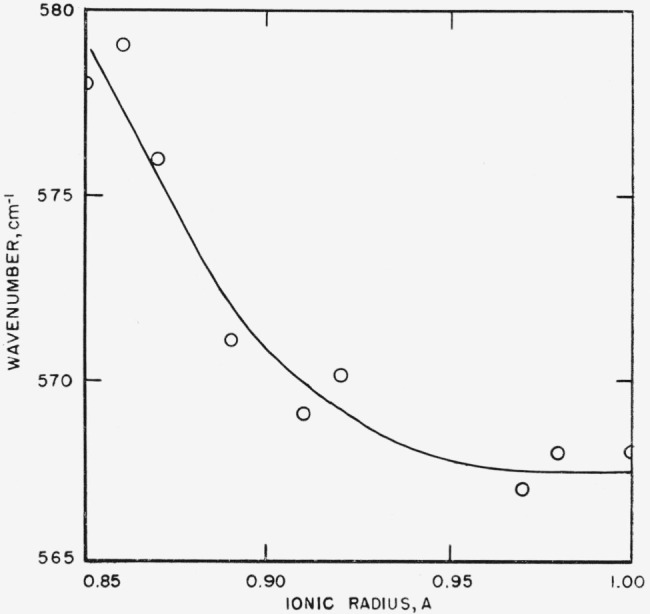
Verification
Claims the paper makes
The claims and statistics of this paper haven’t been checked yet.
Run the check — free, no account needed. It reads the open-access text and checks the sources it cites.
Claims other papers make about this one
Each is checked against this paper’s own text: does it say what the citing paper says it does?
The source backs part of the claim, not all of it — or backs it for a different population, condition or comparison.
In the citing paper
“The comparison of wavenumbers calculated by the B3LYP method with the experimental values shows that the root-mean-square deviation for four ν1–ν4 wavenumbers in four carbonates is, according to [68], 1.5% for IRS; 0.8% for RS; for IRS [55]—2.0%, and for RS [57]—0.9%.”
From Comprehensive Density Functional Theory Studies of Vibrational Spectra of Carbonates (2020) · cites this paper as [55]
Experimental — accuracy not yet measuredThe cited source says what the claim attributes to it.
In the citing paper
“Prior to this study, carbonate minerals have been analyzed in the thermal infrared region predominantly by the transmission technique [e.g., Hunt and Turner, 1953; Gatehouse et al., 1958; Weir and Lippincott, 1961; Adler and Kerr, 1962, 1963a,b; Chester and Elderfield, 1967; Scheetz and White, 1977; Salisbury et al., 1987].”
From Thermal infrared emission spectroscopy of anhydrous carbonates (1997) · cites this paper as Weir and Lippincott, 1961
The cited source says what the claim attributes to it.
In the citing paper
“Weir and Lippincott [1961] state that anhydrous carbonates are not equally ionic, so the effect of ionic character likely superposes the effects arising from ionic size.”
From Thermal infrared emission spectroscopy of anhydrous carbonates (1997) · cites this paper as Weir and Lippincott, 1961
Self-check
Percentages, sums and reported differences re-computed from the paper’s own numbers.
The self-check needs the paper’s full text.
Citations
Cites
Infrared studies in the 1- to 15-micron region to 30,000 atmospheres
Weir, C. E., Lippincott, E. R., Valkenburg, A. V., & Bunting, E. N. (1959) · Journal of Research of the National Bureau of Standards Section A Physics and Chemistry · doi:10.6028/jres.063a.003 · Cited by 340
Self-citation
Research works printed but not linked: 14
- [2]2. R. M. H exter , Spectrochim . Acta 10, 281 (1958) .
- [3]3. G. Baron, S. Cailliere, R. Lagrange, a nd T. Pobeguin, Bull . Soc. Fra n. Min. Cryst. 82, 150 (1959).
- [5]5. J . L . W ray a nd F. Daniels, J. Amer. Chem. Soc. 79, 2031 (1957).
- [7]7. D. F. I-Io l'ni g, J. Chem. Phys. 16,1063 (1948).
- [8]8. R. S. I-Ia. lford , J. Chem. Phys. 14, 8 (1946) .
- [10]10. H ans-Jurge n Meyer, Angew. Chem. 71, 678 (1959).
- [11]11. L . H. Ah rens, Geochim Cosmochim Acta 2, 155 (1952).
- [14]14. S. Bhagavantam a nd T. Venkataray ud o, Proc. Indian Acad. Sci. A9, 224 (1939); A13, 543 (1941).
- [15]15. C. K. I-luang and P. F. K err, Am. Mineral. 45, 311 (1960) .
- [16]16. W. C. Steele and J. C. D eciu s, J. Chem. Phys. 25, 1184 (1955) .
- [17]17. J. C. Decius, J. Chem. Phys. 23,1290 (1955).
- [18]18. L . Pau lin g, The nature of the chemical bond, ch . X . (Cornell Univ. Press, Ithaca, N. Y., 1948).
- [20]20. J . R. Clark, Acta Cryst. 12, 69 (1958).
- [21]21. C. L. Christ, Am. Mineral. 45, 334 (1960) .
Cited by
Sorted by citations
Items 201–204 of 204
Kawano, M., & Shimoyama, S. (2026) · Journal of Crystal Growth · doi:10.1016/j.jcrysgro.2026.128521
Valverde, A. J. Á. (2024) · Investigative News in Education (Universidad de Costa Rica)
Ehsani, A. (2026) · Acta Montanistica Slovaca · doi:10.46544/ams.v31i2.11
Jiménez, A., Coronel, J. M., & Astilleros, J. M. (2026) · Chemical Geology · doi:10.1016/j.chemgeo.2026.123795
Metadata
- Authors
- Weir, C. E., & Lippincott, E. R.
- Venue
- Journal of Research of the National Bureau of Standards Section A: Physics and Chemistry
- Published
- 1961-05
- Volume
- 65A
- Issue
- 3
- Pages
- 173
- ISSN
- 0022-4332 (ISSN-L)
- PMC
- PMC5287277
- OpenAlex
- W2328054148
- Semantic Scholar
- 8a9a1e3f1674775299acab01da41c4a43e37ccfe
- Cited by
- 202
- References
- 1
- Citations by year
- 2026: 6 · 2025: 13 · 2024: 11 · 2023: 10 · 2022: 7 · 2021: 10 · 2020: 9 · 2019: 14 · 2018: 6 · 2017: 7 · 2016: 6 · 2015: 11 · 2013: 1
- FWCI
- 1.42
- Type
- journal article
- Language
- en
- Open access
- hybrid
- doi.org
- Licence
- public-domain
- Locations
- Journal of Research of the National Bureau of Standards Section A Physics and Chemistry (publishedVersion, public-domain)
- Europe PMC (PubMed Central) (publishedVersion, public-domain)
- PubMed Central (publishedVersion, public-domain)
- PubMed (publishedVersion)
- National Institute of Standards and Technology (NIST) (submittedVersion, public-domain)
- Topics
- Physical Sciences › Materials Science › Materials Chemistry › Solid-state spectroscopy and crystallography
- Physical Sciences › Materials Science › Electronic, Optical and Magnetic Materials › Crystal Structures and Properties
- Physical Sciences › Earth and Planetary Sciences › Geochemistry and Petrology › Mineralogy and Gemology Studies
- Keywords
- calcite structure, rare earth borates, alkali metal nitrates, crystal structure determination, infrared spectra, cation substitution, frequency shift
About these checks
Registry, retraction, Cites and statistics results are computed, not judged, with one exception: a printed reference that no index lists is read once by a model before it counts as a citation error. Claims are extracted by a model and kept only when their quote appears verbatim in the text; each cited source is then checked, with a model’s help, for whether it says what the claim relies on. Those verdicts can be wrong — read the claim’s quote and the cited source before relying on one.
Statistics and arithmetic are recomputed, not judged.
Confidence bands are shown only for fields calibrated on our annotated test set. None is calibrated yet, so no band is shown.
What counts as a claim ›How we measure confidence ›How we check this ›
Are you an author, or do you see a problem with this page? Request a review
