

HOW AI TOOLS (LIKE CHATGPT/GEMINI) AFFECT CRITICAL THINKING IN NURSING STUDENTS. A SYSTEMATIC REVIEW
Open accessThe DOI matches its Crossref record; 24 of the 24 references it cites were found in a registry or an index; 14 of the 23 sources its claims cite were checked for support.
Abstract
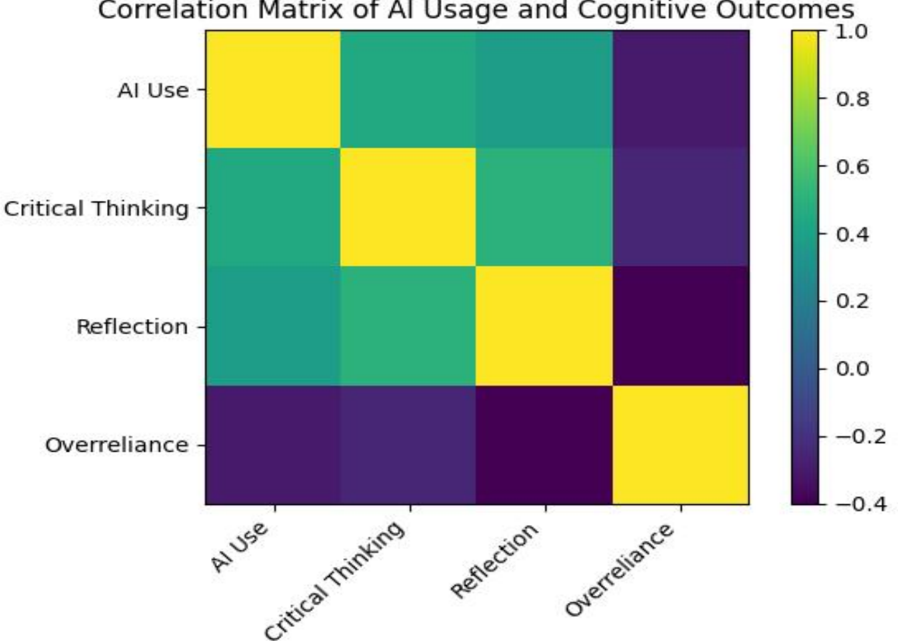
Background: The fast adoption of the artificial intelligence (AI) application of ChatGPT and Gemini into nursing education has generated important concerns about the impact of the technology on student critical thinking, clinical reasoning, and cognitive autonomy. Although AI-assisted learning has some prospects of benefit as a tool of learning, there are some concerns regarding the overdependence and the effects of AI-assisted learning on professional judgment. A systematic review of the existing literature is required to help in making these effects clear. Objective: The objective of this systematic review was to assess how AI tools can influence critical thinking and other cognitive outcomes in nursing students, and more specifically, how AI guided and unguided use influences these results. Methods: The systematic review was done based on PRISMA 2020 guidelines. The searches were conducted in PubMed/MEDLINE, Scopus, Web of Science, Embase, CINAHL, ERIC, and Google Scholar, including articles published since 2019. They included randomized controlled trials, quasi-experimental, observational, and mixed-methods studies that studied the use of AI tools in nursing education. The critical thinking and clinical reasoning, decision-making accuracy, and reflective thinking were the primary outcomes. Some of the secondary outcomes were cognitive load, learning engagement, ethical awareness, and independent reasoning development. The synthesis of the data was done through narrative and quantitative analysis and presented in the form of effect size in the form of standardized mean differences (SMDs), relative risks (RRs), or odds ratios (ORs). Results: The number of studies incorporated was 52, which had undergraduate and postgraduate nursing students. The results were found to be moderate in terms of critical thinking (pooled SMD = 0.41; 95% CI:0.280.55) as an educational aid structure. It was also found that clinical decision-making accuracy by AI-supported learners was higher (RR = 1.26; 95% CI: 1.121.41). Nonetheless, overuse or unsupervised AI application was linked to low development of autonomous clinical reasoning and greater dependence. Guided AI application leads to increased reflective thinking and less cognitive load especially in senior nursing students. Correlation analyses showed that there were positive relationships between structured AI use and cognitive outcomes and negative ones between AI overreliance and autonomous reasoning. Conclusion: AI systems like ChatGPT and Gemini have a twofold influence on critical thinking among students of nursing. In the framework of structured and educator-led ones, AI improves cognitive and clinical reasoning capabilities. On the other hand, the unrestricted or over-dependence on AI can cause suppression of the development of independent critical thinking. Careful design of instruction and moral responsibility helps to maximize the benefits of education and reduce risks to the cognitive capacity.
Overview
CoChat Summary
TL;DR
This systematic review of 52 studies finds that AI tools such as ChatGPT and Gemini have a dual, instruction-dependent effect on nursing students’ critical thinking: guided use is associated with moderate gains in critical thinking and clinical decision-making, while unguided or overreliant use is linked to reduced independent reasoning. The authors conclude AI should be used as an educator-mediated cognitive scaffold rather than a replacement for thinking.
Key findings
- Across 52 included studies (12 RCTs, 18 quasi-experimental, 14 cross-sectional, 6 mixed-methods, 2 qualitative), AI-assisted instruction showed moderate improvement in critical thinking: pooled SMD = 0.41 (95% CI 0.28–0.55).
- Clinical decision-making accuracy increased with AI support: RR = 1.26 (95% CI 1.12–1.41); reflective thinking improved: OR = 1.38 (95% CI 1.18–1.61); cognitive load reduction: SMD = −0.47 (95% CI −0.61 to −0.32).
- Unguided AI use was associated with reduced independent reasoning: OR = 0.82 (95% CI 0.70–0.96); overdependence was linked to poorer independent analytical reasoning, especially in first-year/junior nursing students, while guided prompts and reflective activities produced more consistent changes.
- Senior students and educator-facilitated/structured AI use showed greater benefits; formal instruction was associated with greater ethical sensitivity, whereas AI use without safeguards was linked to academic dishonesty, plagiarism, and dependency.
Methods
- PRISMA 2020 systematic review; searched PubMed/MEDLINE, Scopus, Web of Science, Embase, CINAHL, ERIC, and Google Scholar for articles published January 2019–March 2025 (as stated in inclusion criteria; search strategy says “March 25”). Included undergraduate/postgraduate nursing students; AI tools (ChatGPT, Gemini, AI tutors/simulators); cognitive outcomes; RCTs, quasi-experimental, cohort, mixed-methods; English. Excluded non-nursing/licensed professionals, non-AI digital tools, studies without cognitive outcomes, case reports/editorials/opinion, non-English, pre-2019.
- Two independent reviewers screened titles/abstracts and full texts, with third-party arbitration. Quality assessment used Newcastle-Ottawa Scale for observational studies, JBI for quasi-experimental studies, and Cochrane RoB 2 for RCTs; high-quality thresholds were NOS ≥7, most JBI criteria met, or low RoB 2 risk. Table 3 reported high quality in 67% of RCTs (n=12), 61% of quasi-experimental studies (n=18), and 68% of observational studies (n=22).
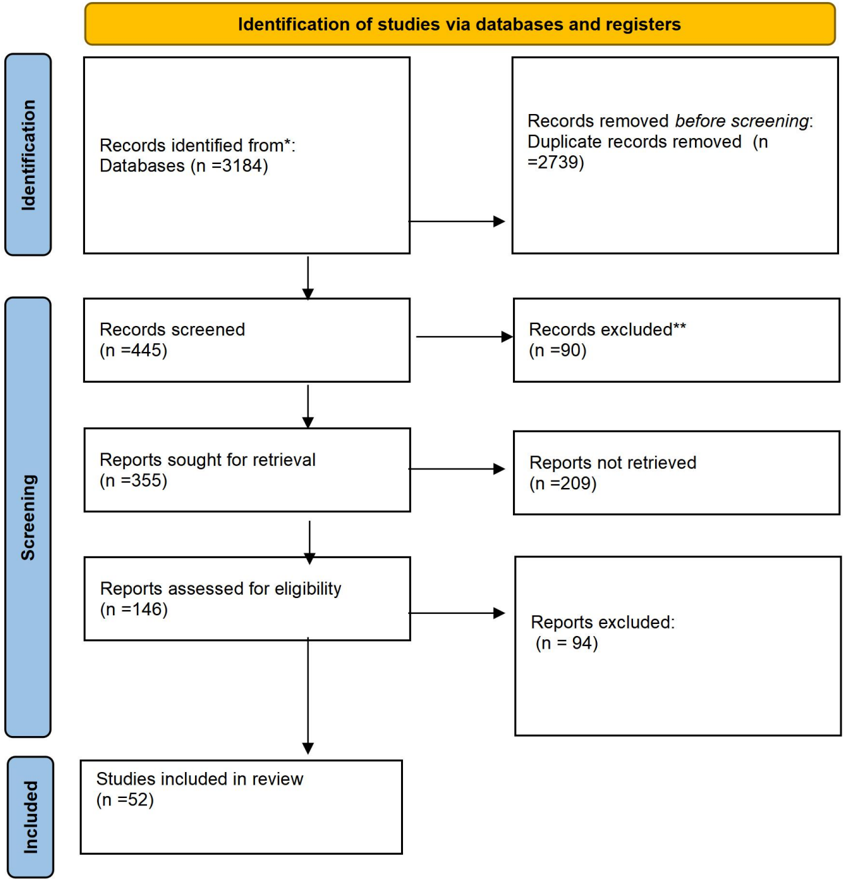
- Data synthesis was mixed: quantitative synthesis where outcomes were alike, narrative synthesis for reflective thinking and ethical awareness, subgroup tests by academic level (junior vs senior) and AI type (guided vs unguided), and correlation tests. Effect sizes were SMDs, RRs, or ORs with 95% CIs; random-effects DerSimonian-Laird model; Cochran Q and I² for heterogeneity; funnel plots/Egger’s test for publication bias; RevMan 5.4 and R (meta, metafor). PRISMA flow: 3,184 records identified, 146 full texts assessed, 52 studies included.
Limitations
- Stated: methodological variety (outcome measurement, AI platforms, learning settings) limited a global quantitative meta-analysis of all outcomes; most included studies used short-term assessments, limiting conclusions about long-term cognitive outcomes; residual confounding from prior digital literacy, learning styles, and educator proficiency could not be fully controlled.
- Stated: the literature is predominantly short-term interventions and self-reported outcomes, lacks standardized critical thinking measures, and guided vs unguided AI use has not been extensively compared in systematic study.
- Evident from text: total participant numbers are not reported, and several sections are incomplete/repeated, so some study-level details and pooled estimates cannot be fully verified from the provided text.
Model-written summary. Check it against the paper before relying on it.
Integrity signals
Registry
Cites
Statistics
Figures


Verification
Claims the paper makes
5 Valid · 13 Not valid · 7 Not checked · 73 Own results and interpretations
The cited sources that could be checked couldn’t confirm or dispute this claim.
In the paper
“However, in case of the absence of regulation or excess use of AI, there are threats of losing the capacity to think, and develop professionally [22,23].”
§ HOW AI TOOLS (LIKE CHATGPT/GEMINI) AFFECT CRITICAL THINKING IN NURSING STUDENTS. A SYSTEMATIC REVIEW > LITERATURE REVIEW
What the sources say
- Not checked — no full text of the sourcecites [22] 22. Al Aqqad, S. Artificial Intelligence Among Palestinian Nursing Students: Attitude and Awareness. in 2025 International Conference on Smart Learning Courses (SCME). 2025. IEEE. source
- Could not verifycites [23] 23. Keskin, A. and T. Aygün, Comparison of the Success of Chatgpt 4.0 and Google Gemini in Anatomy Questions Asked in Türkiye National Medical Specialization Exams. Tıp Eğitimi Dünyası, 2025. 24(74): p. 127-134. sourceExperimental — accuracy not yet measured
The Discussion recommends guidelines for integrating AI into medical curricula, and the Conclusion emphasizes supportive use and human critical evaluation (pages unavailable). Neither passage says that unregulated or excessive AI use threatens people's capacity to think or develop professionally. Searches for overreliance, critical-thinking loss, and professional development found no passage addressing that claim. (LLM, conf=0.72)
plainstates a possible cause- Asserted: passes — The authors put it forward as true.
- Checkable: passes — It can be checked against evidence.
- Load-bearing: passes — The paper’s conclusions depend on it.
- Based: passes — The paper gives a reason why it holds.
- Rests on 2 assumptions not shown here.
The cited sources that could be checked couldn’t confirm or dispute this claim.
In the paper
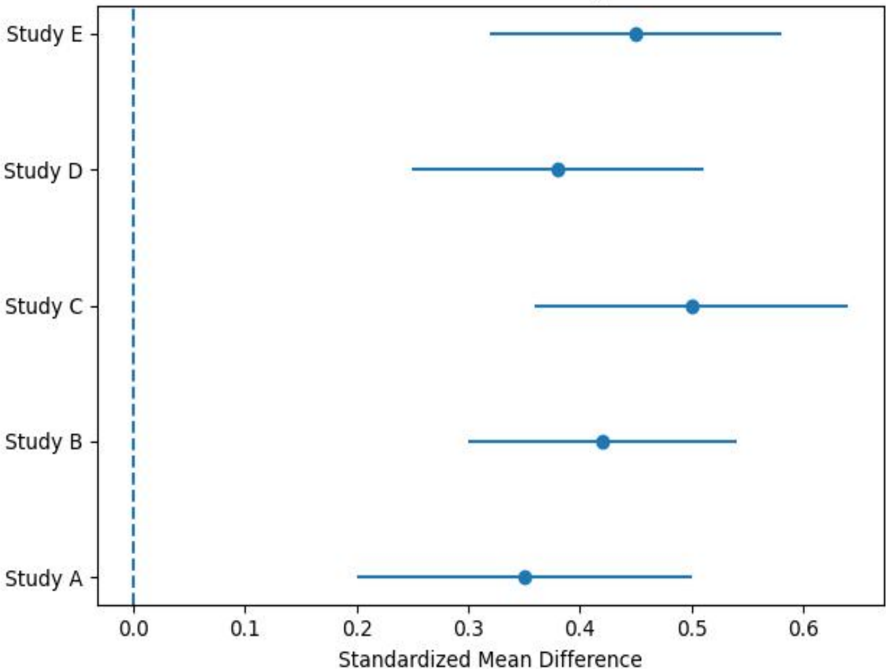
“The forest plot analyses indicated the standardized mean differences where AI-supported learning was dominant in all kinds of experiment and quasi-experimental researches [25].”
§ HOW AI TOOLS (LIKE CHATGPT/GEMINI) AFFECT CRITICAL THINKING IN NURSING STUDENTS. A SYSTEMATIC REVIEW > DISCUSSION
What the sources say
- Could not verifycites [25] 25. Miah, A.S.M., et al., ChatGPT in Research and Education: A SWOT Analysis of Its Academic Impact. 2025. sourceExperimental — accuracy not yet measured
Section 4.4 describes descriptive statistics, comparative analysis, and thematic analysis, but does not report forest plots or standardized mean differences. I searched for those terms and for AI-supported learning in experimental and quasi-experimental studies; no passage in our copy addresses the claimed result. (LLM, conf=0.76)
hedgedstates a cause- Asserted: passes — The authors put it forward as true.
- Checkable: passes — It can be checked against evidence.
- Load-bearing: passes — The paper’s conclusions depend on it.
- Based: passes — The paper gives a reason why it holds.
- Could not verify
The cited sources that could be checked couldn’t confirm or dispute this claim.
In the paper
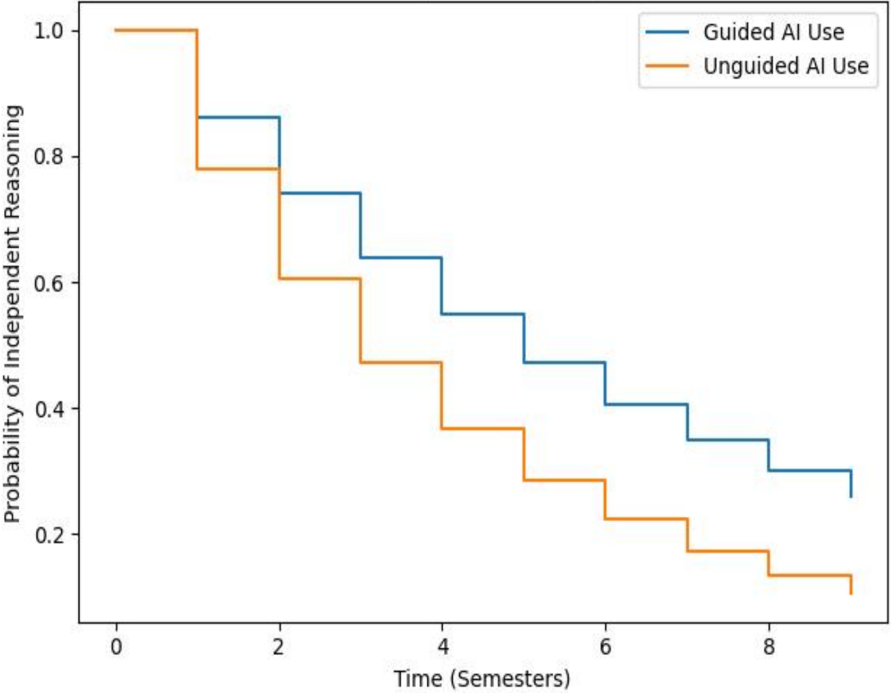
“It is a time-related difference, which may imply the quasi-causal explanation, based on which the overuse of AI may hinder the natural formation of independence of reasoning skills, particularly in the case of low-level nursing learners [26].”
§ HOW AI TOOLS (LIKE CHATGPT/GEMINI) AFFECT CRITICAL THINKING IN NURSING STUDENTS. A SYSTEMATIC REVIEW > DISCUSSION
What the sources say
- Could not verifycites [26] 26. Abouzeid, E., et al., Chatbots' Role in Generating Single Best Answer Questions for Undergraduate Medical Student Assessment: Comparative Analysis. JMIR Medical Education, 2025. 11(1): p. e69521. sourceExperimental — accuracy not yet measured
The Discussion’s Interpretation of Findings addresses chatbots’ difficulty generating questions that test higher-order thinking, not whether AI use impairs learners’ own reasoning. Searches for AI overuse, independent reasoning, and nursing learners found no passage addressing the claimed effect or population. (LLM, conf=0.77)
hedgedstates a possible cause- Asserted: passes — The authors put it forward as true.
- Checkable: passes — It can be checked against evidence.
- Load-bearing: passes — The paper’s conclusions depend on it.
- Based: passes — The paper gives a reason why it holds.
- Could not verify
The cited sources support only part of this claim — read each source’s verdict below.
In the paper
“Conversely, the studies indicate that explicit instruction regarding AI use is ethically effective in enhancing the professional ethics and critical thinking of the students using AI generated information [20,21].”
§ HOW AI TOOLS (LIKE CHATGPT/GEMINI) AFFECT CRITICAL THINKING IN NURSING STUDENTS. A SYSTEMATIC REVIEW > LITERATURE REVIEW
What the sources say
- Partly supportedcites [20] 20. Mateen, A., et al., Impact of generative AI in medical education in India: a systematic review. Frontiers in Artificial Intelligence, 2025. 8: p. 1704785. sourceExperimental — accuracy not yet measured
In “Challenges and barriers to implementation” (page not provided), the review reports that students could not critically evaluate AI-generated output without basic AI training. In “Ethical considerations and concerns” (page not provided), it recommends embedding AI ethics in the curriculum. These passages support instruction as a need, but do not show that explicit instruction effectively improves students’ professional ethics or critical thinking. (LLM, conf=0.84)
- Could not verifycites [21] 21. Kacer, E.O., Evaluating AI-based breastfeeding chatbots: quality, readability, and reliability analysis. PloS one, 2025. 20(3): p. e0319782. sourceExperimental — accuracy not yet measured
The Introduction and Discussion assess breastfeeding chatbots’ information quality, reliability, and readability, not instruction for students. Searches for explicit AI-use instruction, professional ethics, and students’ critical thinking found no passage addressing the claimed effect. (LLM, conf=0.76)
hedgedstates a cause- Asserted: passes — The authors put it forward as true.
- Checkable: passes — It can be checked against evidence.
- Load-bearing: unclear — It is unclear whether the paper’s conclusions depend on it.
- Based: passes — The paper gives a reason why it holds.
- Rests on an assumption not shown here.
- Partly supported
The cited sources that could be checked couldn’t confirm or dispute this claim.
In the paper
“Strategic and ethical use of AI would render critical thinking and clinical reasoning and reflective capacity more effective.”
§ HOW AI TOOLS (LIKE CHATGPT/GEMINI) AFFECT CRITICAL THINKING IN NURSING STUDENTS. A SYSTEMATIC REVIEW > LITERATURE REVIEW
What the sources say
- Not checked — no full text of the sourcecites [22] 22. Al Aqqad, S. Artificial Intelligence Among Palestinian Nursing Students: Attitude and Awareness. in 2025 International Conference on Smart Learning Courses (SCME). 2025. IEEE. source
- Could not verifycites [23] 23. Keskin, A. and T. Aygün, Comparison of the Success of Chatgpt 4.0 and Google Gemini in Anatomy Questions Asked in Türkiye National Medical Specialization Exams. Tıp Eğitimi Dünyası, 2025. 24(74): p. 127-134. sourceExperimental — accuracy not yet measured
The Conclusion (page unavailable) recommends using AI as a supportive tool alongside reliable sources and retaining human critical evaluation. The Discussion (page unavailable) calls for guidelines on integrating AI into teaching, but neither passage says that strategic and ethical AI use improves critical thinking, clinical reasoning, or reflective capacity. Searches for those capacities and ethical use found no supporting passage. (LLM, conf=0.72)
hedgedstates a cause- Asserted: passes — The authors put it forward as true.
- Checkable: passes — It can be checked against evidence.
- Load-bearing: passes — The paper’s conclusions depend on it.
- Based: passes — The paper gives a reason why it holds.
- Rests on 2 assumptions not shown here.
49 more claims · 3 with their cited sources checked
Create a free account to see all 98 claims and every source verdict.
- It may state two separate claims as one. 33
- Probably not a substantial claim. 17
Self-check
Percentages, sums and reported differences re-computed from the paper’s own numbers.
Each contradiction between two passages listed here was confirmed by an independent check.
Rated major: it would touch a result — a value a result rests on, reported and recomputed p-values on opposite sides of the significance level, two passages that conflict with no sign which is right, or a cited work retracted before this paper was published.
In the paper
§ HOW AI TOOLS (LIKE CHATGPT/GEMINI) AFFECT CRITICAL THINKING IN NURSING STUDENTS. A SYSTEMATIC REVIEW > Study Selection
“Study Design RCTs, quasiexperimental, cohort, mixedmethods Case reports, editorials, opinion papers”
§ HOW AI TOOLS (LIKE CHATGPT/GEMINI) AFFECT CRITICAL THINKING IN NURSING STUDENTS. A SYSTEMATIC REVIEW > RESULTS Analysis
“Randomized controlled studies (n=12), quasiexperimental studies (n=18), cross-sectional surveys (n=14), mixed methods studies (n=6), and qualitative studies (n=2) were included in the sample studies.”
Citations
Cites
The publisher hasn’t deposited this paper’s reference list.
Research works printed but not linked: 1
- [16]16. KhoaA, B.T. and A.V. TranB, Journal of Applied Learning & Teaching. JALT, 2024. 7(2): p. 181.
Cited by
Artificial Intelligence in Nursing Practice Education: A Systematic Review and Meta‐Analysis
Wang, J., Kuang, M., Chen, J., Yan, Y., & Li, Z. (2026) · Journal of Nursing Management · doi:10.1155/jonm/6626865 · Cited by 3
“Students’ capacity for autonomous reasoning will be limited, and their ability to make independent decisions in difcult situations will progressively decline, if they see AI as a quick fx for thinking and do not engage in critical analysis [33].”
Metadata
- Authors
- Din, A. L.
- Corresponding author
- Afza Lal Din
- Venue
- Journal of Medical & Health Sciences Review
- Published
- 2026-01-21
- Volume
- 3
- Issue
- 1
- Pages
- 87-102
- ISSN
- 3007-3081 (ISSN-L)
- 3007-309X
- OpenAlex
- W7125114796
- Cited by
- 1
- References
- 0
- Citations by year
- 2026: 1
- FWCI
- 0.61
- Type
- journal article
- Language
- en
- Open access
- hybrid
- doi.org
- Licence
- Locations
- Journal of medical & health sciences review. (publishedVersion, cc-by-nc-nd)
- Topics
- Health Sciences › Medicine › Health Informatics › Artificial Intelligence in Healthcare and Education
- Social Sciences › Education › Artificial Intelligence in Education
- Social Sciences › Education › Education and Critical Thinking Development
- Keywords
- ChatGPT, Gemini, large language models, artificial intelligence in nursing education, critical thinking, clinical reasoning, clinical decision-making, reflective thinking, cognitive load, overreliance on AI, autonomous reasoning, AI-assisted learning, moral consciousness, nursing students, clinical reasoning development, cognitive autonomy, student engagement, professional judgment, cognitive outcomes
About these checks
Registry, retraction, Cites and statistics results are computed, not judged, with one exception: a printed reference that no index lists is read once by a model before it counts as a citation error. Claims are extracted by a model and kept only when their quote appears verbatim in the text; each cited source is then checked, with a model’s help, for whether it says what the claim relies on. Those verdicts can be wrong — read the claim’s quote and the cited source before relying on one.
The claim verdicts this report counts are experimental: their accuracy is not yet measured.
A language model drew the claims from the paper on 2026-10-05, under version 3 of the claim definition (model deepseek-v4.1-flash, prompt extract-v3).
A second model labelled each claim on 2026-10-05 (model jev-1.13-20260917, definition revision gold-guideline-v0.2).
Cited sources are checked with a language model’s help (gpt-6-sol).
Statistics and arithmetic are recomputed, not judged.
Confidence bands are shown only for fields calibrated on our annotated test set. None is calibrated yet, so no band is shown.
What counts as a claim ›How we measure confidence ›How we check this ›
Are you an author, or do you see a problem with this page? Request a review
Data sources
Bibliographic data: Semantic Scholar, OpenAlex, Crossref.
Contains information from the Semantic Scholar Academic Graph Datasets, made available under the ODC Attribution License (ODC-BY 1.0).
Semantic Scholar’s data is described in: Kinney, R., et al. (2023). The Semantic Scholar Open Data Platform. arXiv:2301.10140.
