

The DOI matches its Crossref record; 50 of the 50 references it cites were found in a registry or an index.
Cytosolic and endoplasmic reticulum chaperones inhibit wt-p53 to increase cancer cells' survival by refluxing ER-proteins to the cytosol
Open accessPublished version of a preprint
Abstract
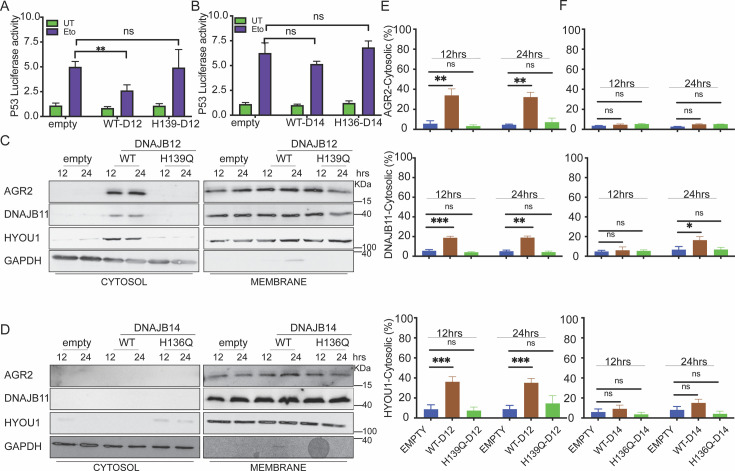
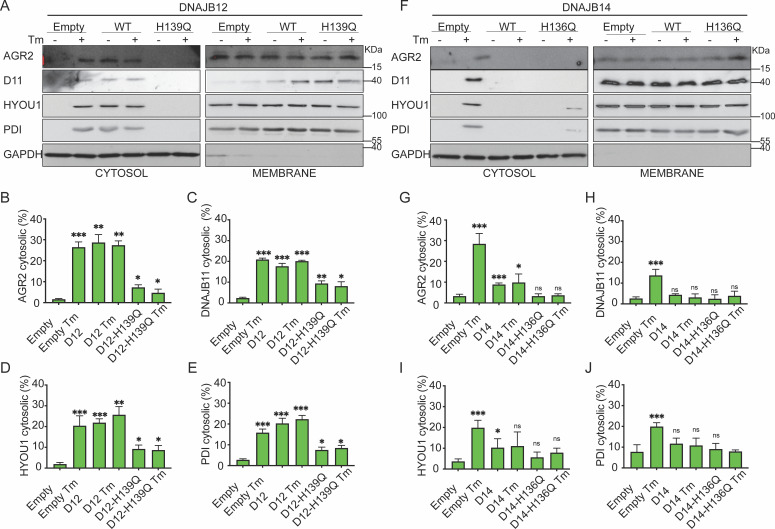
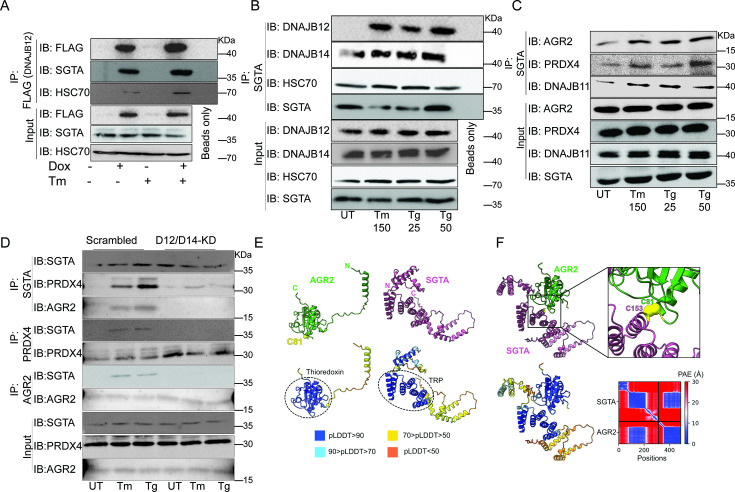
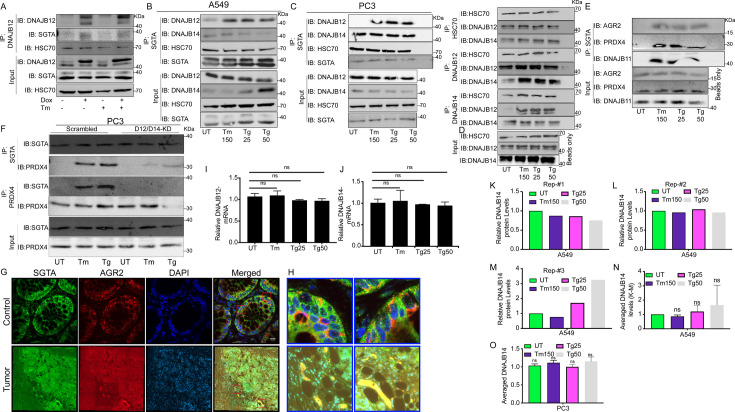
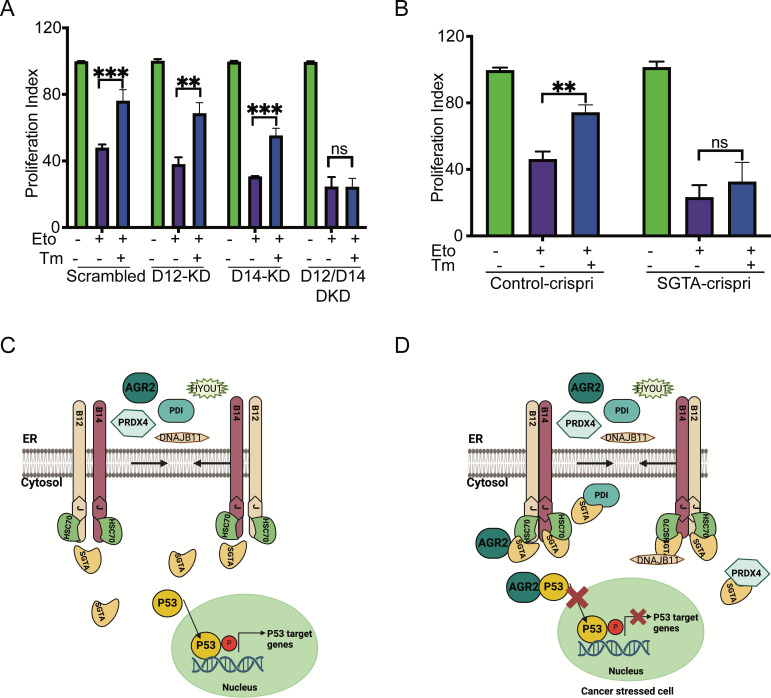
The endoplasmic reticulum (ER) is an essential sensing organelle responsible for the folding and secretion of almost one-third of eukaryotic cells' total proteins. However, environmental, chemical, and genetic insults often lead to protein misfolding in the ER, accumulating misfolded proteins, and causing ER stress. To solve this, several mechanisms were reported to relieve ER stress by decreasing the ER protein load. Recently, we reported a novel ER surveillance mechanism by which proteins from the secretory pathway are refluxed to the cytosol to relieve the ER of its content. The refluxed proteins gain new prosurvival functions in cancer cells, thereby increasing cancer cell fitness. We termed this phenomenon ER to CY tosol S ignaling (or ‘ ERCYS’ ). Here, we found that in mammalian cells, ERCYS is regulated by DNAJB12, DNAJB14, and the HSC70 cochaperone SGTA. Mechanistically, DNAJB12 and DNAJB14 bind HSC70 and SGTA - through their cytosolically localized J-domains to facilitate ER-protein reflux. DNAJB12 is necessary and sufficient to drive this phenomenon to increase AGR2 reflux and inhibit wt-p53 during ER stress. Mutations in DNAJB12/14 J-domain prevent the inhibitory interaction between AGR2-wt-p53. Thus, targeting the DNAJB12/14-HSC70/SGTA axis is a promising strategy to inhibit ERCYS and impair cancer cell fitness.
Overview
The claims and statistics of this paper haven’t been checked yet.
Run the check — free, no account needed. It reads the open-access text and checks the sources it cites.
Integrity signals
Registry
Cites
Statistics
Figures
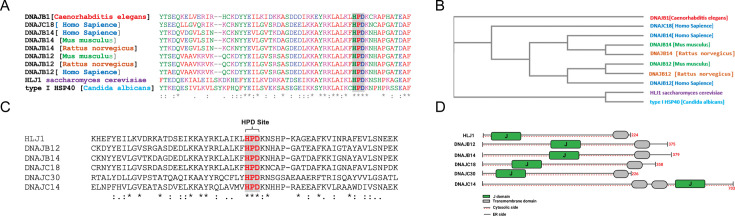
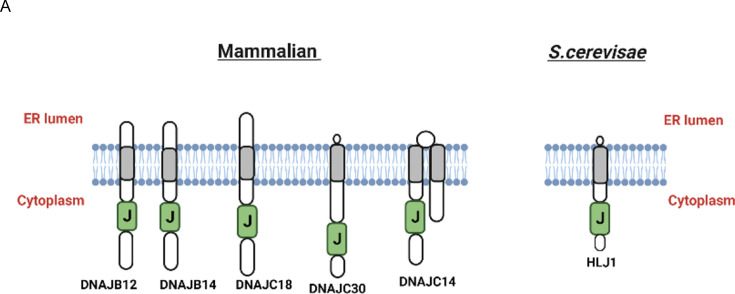
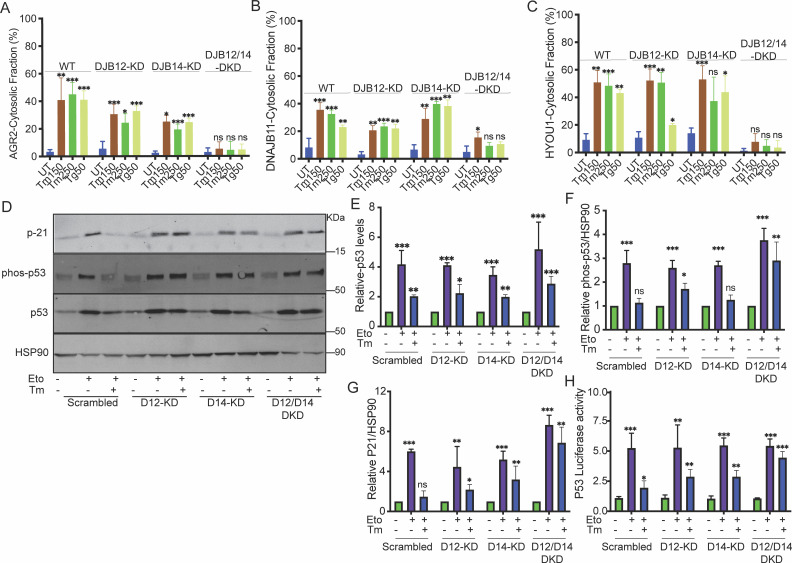
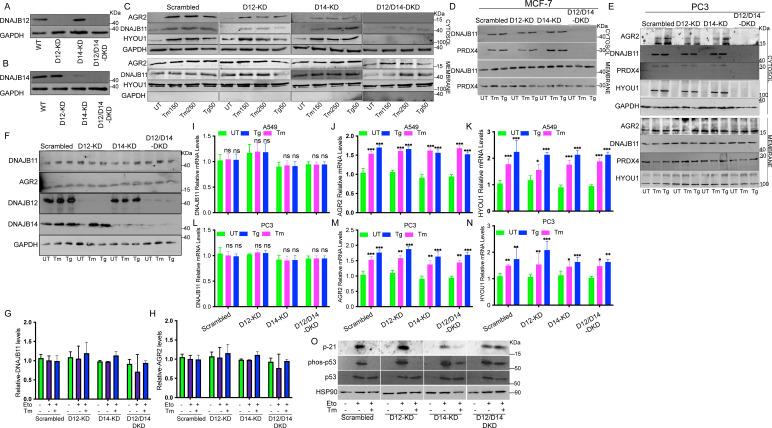
Verification
Claims the paper makes
The claims and statistics of this paper haven’t been checked yet.
Run the check — free, no account needed. It reads the open-access text and checks the sources it cites.
Self-check
Percentages, sums and reported differences re-computed from the paper’s own numbers.
The self-check needs the paper’s full text.
Citations
Cites
Highly accurate protein structure prediction with AlphaFold
Jumper, J., Evans, R., Pritzel, A., Green, T., Figurnov, M., Ronneberger, O., Tunyasuvunakool, K., Bates, R., Žídek, A., Potapenko, A., et al. (2021) · Nature · doi:10.1038/s41586-021-03819-2 · Cited by 43,764
ColabFold - Making protein folding accessible to all
Mirdita, M., Schütze, K., Moriwaki, Y., Heo, L., Ovchinnikov, S., & Steinegger, M. (2021) · doi:10.1101/2021.08.15.456425 · Cited by 9,391
The Unfolded Protein Response: From Stress Pathway to Homeostatic Regulation
Walter, P., & Ron, D. (2011) · Science · doi:10.1126/science.1209038 · Cited by 5,924
Yoshida, H., Matsui, T., Yamamoto, A., Okada, T., & Mori, K. (2001) · Cell · doi:10.1016/s0092-8674(01)00611-0 · Cited by 4,039
Protein translation and folding are coupled by an endoplasmic-reticulum-resident kinase
Harding, H. P., Zhang, Y., & Ron, D. (1999) · Nature · doi:10.1038/16729 · Cited by 3,310
IRE1 couples endoplasmic reticulum load to secretory capacity by processing the XBP-1 mRNA
Calfon, M., Zeng, H., Urano, F., Till, J. H., Hubbard, S. R., Harding, H. P., Clark, S. G., & Ron, D. (2002) · Nature · doi:10.1038/415092a · Cited by 2,820
Genome-Scale CRISPR-Mediated Control of Gene Repression and Activation
Gilbert, L. A., Horlbeck, M. A., Adamson, B., Villalta, J. E., Chen, Y., Whitehead, E. H., Guimaraes, C., Panning, B., Ploegh, H. L., Bassik, M. C., et al. (2014) · Cell · doi:10.1016/j.cell.2014.09.029 · Cited by 2,728
Quality control in the endoplasmic reticulum
Ellgaard, L., & Helenius, A. (2003) · Nature Reviews Molecular Cell Biology · doi:10.1038/nrm1052 · Cited by 2,126
Lee, A.-H., Iwakoshi, N. N., & Glimcher, L. H. (2003) · Molecular and Cellular Biology · doi:10.1128/mcb.23.21.7448-7459.2003 · Cited by 2,037
Harding, H. P., Zhang, Y., Bertolotti, A., Zeng, H., & Ron, D. (2000) · Molecular Cell · doi:10.1016/s1097-2765(00)80330-5 · Cited by 2,021
Travers, K. J., Patil, C. K., Wodicka, L., Lockhart, D. J., Weissman, J. S., & Walter, P. (2000) · Cell · doi:10.1016/s0092-8674(00)80835-1 · Cited by 1,992
Decay of Endoplasmic Reticulum-Localized mRNAs During the Unfolded Protein Response
Hollien, J., & Weissman, J. S. (2006) · Science · doi:10.1126/science.1129631 · Cited by 1,317
Protein translocation across the eukaryotic endoplasmic reticulum and bacterial plasma membranes.
Rapoport, T. A. (2007) · Nature · doi:10.1038/nature06384 · Cited by 977
Thioredoxin —a fold for all reasons
Martin, J. L. (1995) · Structure · doi:10.1016/s0969-2126(01)00154-x · Cited by 826
Distinct Ubiquitin-Ligase Complexes Define Convergent Pathways for the Degradation of ER Proteins
Carvalho, P., Goder, V., & Rapoport, T. A. (2006) · Cell · doi:10.1016/j.cell.2006.05.043 · Cited by 724
Activation of ATF6 and an ATF6 DNA Binding Site by the Endoplasmic Reticulum Stress Response
Wang, Y., Shen, J., Arenzana, N., Tirasophon, W., Kaufman, R. J., & Prywes, R. (2000) · Journal of Biological Chemistry · doi:10.1016/s0021-9258(19)61473-0 · Cited by 616
Weir, E. C., Philbrick, W. M., Amling, M., Neff, L. A., Baron, R., & Broadus, A. E. (1996) · Proceedings of the National Academy of Sciences · doi:10.1073/pnas.93.19.10240 · Cited by 480
Matlack, K. E. S., Misselwitz, B., Plath, K., & Rapoport, T. A. (1999) · Cell · doi:10.1016/s0092-8674(00)80767-9 · Cited by 447
Principles of ER cotranslational translocation revealed by proximity-specific ribosome profiling
Jan, C. H., Williams, C. C., & Weissman, J. S. (2014) · Science · doi:10.1126/science.1257521 · Cited by 430
Endoplasmic Reticulum Stress Signaling in Cancer Cells
Oakes, S. A. (2020) · The American Journal of Pathology · doi:10.1016/j.ajpath.2020.01.010 · Cited by 397
Membrane Protein Insertion at the Endoplasmic Reticulum
Shao, S., & Hegde, R. S. (2011) · Annual Review of Cell and Developmental Biology · doi:10.1146/annurev-cellbio-092910-154125 · Cited by 289
Diversity and selectivity in mRNA translation on the endoplasmic reticulum
Reid, D. W., & Nicchitta, C. V. (2015) · Nature Reviews Molecular Cell Biology · doi:10.1038/nrm3958 · Cited by 273
Crude subcellular fractionation of cultured mammalian cell lines
Holden, P. K., & Horton, W. A. (2009) · BMC Research Notes · doi:10.1186/1756-0500-2-243 · Cited by 221
Brain ischemia and reperfusion activates the eukaryotic initiation factor 2α kinase, PERK
Kumar, R., Azam, S. M., Sullivan, J. M., Owen, C. R., Cavener, D. R., Zhang, P., Ron, D., Harding, H. P., Chen, J.-J., Han, A., et al. (2001) · Journal of Neurochemistry · doi:10.1046/j.1471-4159.2001.00387.x · Cited by 212
Untangling the web: Mechanisms underlying ER network formation
Goyal, U. D., & Blackstone, C. D. (2013) · Biochimica et Biophysica Acta (BBA) - Molecular Cell Research · doi:10.1016/j.bbamcr.2013.04.009 · Cited by 204
Youker, R. T., Walsh, P., Beilharz, T. H., Lithgow, T. J., & Brodsky, J. L. (2004) · Molecular Biology of the Cell · doi:10.1091/mbc.e04-07-0584 · Cited by 171
Tavender, T. J., Sheppard, A. M., & Bulleid, N. J. (2008) · Biochemical Journal · doi:10.1042/bj20071428 · Cited by 152
Smith, J. C., & Sheltzer, J. M. (2018) · eLife · doi:10.7554/elife.39217 · Cited by 145
Grove, D. E., Fan, C., Ren, H. Y., & Cyr, D. (2010) · Molecular Biology of the Cell · doi:10.1091/mbc.e10-09-0760 · Cited by 126
Genome-wide identification and analysis of prognostic features in human cancers
Smith, J. C., & Sheltzer, J. M. (2022) · Cell Reports · doi:10.1016/j.celrep.2022.110569 · Cited by 124
HEDJ, an Hsp40 Co-chaperone Localized to the Endoplasmic Reticulum of Human Cells
Yu, M., Haslam, R. H. A., Haslam, D. B., & Haslam, D. B. (2000) · Journal of Biological Chemistry · doi:10.1074/jbc.m000739200 · Cited by 112
A guide to assessing endoplasmic reticulum homeostasis and stress in mammalian systems
Sicari, D., Delaunay, A., Combettes, L., Chevet, É., & Igbaria, A. (2019) · FEBS Journal · doi:10.1111/febs.15107 · Cited by 110
Self-citationGoodwin, E. C., Lipovsky, A. I., Inoue, T., Magaldi, T. G., Edwards, A. P. B., Goor, K. E. Y. V., Paton, A. W., Paton, J. C., Atwood, W. J., Tsai, B., et al. (2011) · mBio · doi:10.1128/mbio.00101-11 · Cited by 104
Piette, B. L., Alerasool, N., Lin, Z., Lacoste, J., Lam, M. H. Y., Qian, W. W., Tran, S., Larsen, B. G., Campos, E. I., Peng, J., et al. (2021) · Molecular Cell · doi:10.1016/j.molcel.2021.04.012 · Cited by 94
AGR2, an Endoplasmic Reticulum Protein, Is Secreted into the Gastrointestinal Mucus
Bergström, J. H., Berg, K. A., Rodríguez-Piñeiro, A. M., Stecher, B., Johansson, M., & Hansson, G. C. (2014) · PLoS ONE · doi:10.1371/journal.pone.0104186 · Cited by 90
Cziepluch, C., Kordes, E., Poirey, R., Grewenig, A., Rommelaere, J., & Jauniaux, J.-C. (1998) · Journal of Virology · doi:10.1128/jvi.72.5.4149-4156.1998 · Cited by 85
Patel, P., Clarke, C., Barraclough, D. L., Jowitt, T. A., Rudland, P. S., Barraclough, R., & Lian, L. (2012) · Journal of Molecular Biology · doi:10.1016/j.jmb.2012.12.009 · Cited by 71
Chaperone-mediated reflux of secretory proteins to the cytosol during endoplasmic reticulum stress
Igbaria, A., Merksamer, P. I., Trusina, A., Tilahun, F., Johnson, J. R., Brandman, O., Krogan, N. J., Weissman, J. S., & Papa, F. R. (2019) · Proceedings of the National Academy of Sciences · doi:10.1073/pnas.1904516116 · Cited by 68
Self-citationYamamoto, Y.-H., Kimura, T., Momohara, S., Takeuchi, M., Tani, T., Kimata, Y., Kadokura, H., & Kohno, K. (2010) · Cell Structure and Function · doi:10.1247/csf.10023 · Cited by 66
AGR2 Gene Function Requires a Unique Endoplasmic Reticulum Localization Motif
Gupta, A., Dong, A., & Lowe, A. W. (2011) · Journal of Biological Chemistry · doi:10.1074/jbc.m111.301531 · Cited by 61
Chartron, J. W., VanderVelde, D. G., & Clemons, W. (2012) · Cell Reports · doi:10.1016/j.celrep.2012.10.010 · Cited by 59
Regulation of tumor–stroma interactions by the unfolded protein response
Obacz, J., Avril, T., Rubio‐Patiño, C., Bossowski, J. P., Igbaria, A., Ricci, J., & Chevet, É. (2017) · FEBS Journal · doi:10.1111/febs.14359 · Cited by 57
Self-citationControl of Protein Homeostasis in the Early Secretory Pathway: Current Status and Challenges
Sicari, D., Igbaria, A., & Chevet, É. (2019) · Cells · doi:10.3390/cells8111347 · Cited by 52
Self-citationReflux of Endoplasmic Reticulum proteins to the cytosol inactivates tumor suppressors
Sicari, D., Centonze, F. G., Pineau, R., Reste, P. L., Négroni, L., Chat, S., Mohtar, M. A., Thomas, D., Gillet, R., Hupp, T. R., et al. (2021) · EMBO Reports · doi:10.15252/embr.202051412 · Cited by 46
Self-citationDutta, S., & Tan, Y. (2008) · Biochemistry · doi:10.1021/bi800758a · Cited by 44
Malinverni, D., Zamuner, S., Rebeaud, M. E., Barducci, A., Nillegoda, N. B., & De Los Rios, P. (2023) · Proceedings of the National Academy of Sciences · doi:10.1073/pnas.2218217120 · Cited by 39
Lajoie, P., & Snapp, E. L. (2020) · Traffic · doi:10.1111/tra.12729 · Cited by 29
Goodwin, E. C., Motamedi, N., Lipovsky, A. I., Fernández‐Busnadiego, R., & DiMaio, D. (2014) · PLoS ONE · doi:10.1371/journal.pone.0094322 · Cited by 25
The Anterior GRadient (AGR) family proteins in epithelial ovarian cancer
Fessart, D., Robert, J., Hartog, C., Chevet, É., Delom, F., & Babin, G. (2021) · Journal of Experimental & Clinical Cancer Research · doi:10.1186/s13046-021-02060-z · Cited by 16
Integrative analysis of genomic and transcriptomic alterations of AGR2 and AGR3 in cancer
Fessart, D., Villamor, I., Chevet, É., Delom, F., & Robert, J. (2022) · Open Biology · doi:10.1098/rsob.220068 · Cited by 11
Metadata
- Authors
- Dabsan, S., Zur, G., Abu-Freha, N., Sofer, S., Grossman-Haham, I., Gilad, A., & Igbaria, A.
- Affiliations
- Ben-Gurion University of the Negev (IL)
- Institute of Gastroenterology and Liver Diseases, Soroka Medical Center, Faculty of Health Sciences, Ben Gurion University of the Negev
- Department of Life Sciences, Faculty of Natural Sciences, Ben-Gurion University of the Negev
- Corresponding author
- Igbaria, Aeid
- Venue
- eLife
- Publisher
- eLife Sciences Publications, Ltd
- Published
- 2025-04-09
- Volume
- 14
- ISSN
- 2050-084X (ISSN-L)
- PMC
- PMC11981610
- OpenAlex
- W4409291428
- Cited by
- 10
- References
- 50
- Citations by year
- 2026: 5 · 2025: 3
- FWCI
- 3.97
- Type
- journal article
- Language
- en
- Open access
- gold
- doi.org
- Licence
- cc-by
- creativecommons.org/licenses/by/4.0/ (vor)
- creativecommons.org/licenses/by/4.0/ (am)
- creativecommons.org/licenses/by/4.0/ (tdm)
- Locations
- eLife (publishedVersion, cc-by)
- bioRxiv (Cold Spring Harbor Laboratory) (acceptedVersion, cc-by-nd)
- PubMed Central (publishedVersion, cc-by)
- PubMed (publishedVersion)
- DOAJ (DOAJ: Directory of Open Access Journals) (submittedVersion, cc-by-sa)
- Funders
- Israel Science Foundation (977/21)
- Israel Cancer Research Fund (RCDA)
- Topics
- Life Sciences › Biochemistry, Genetics and Molecular Biology › Cell Biology › Endoplasmic Reticulum Stress and Disease
- Life Sciences › Biochemistry, Genetics and Molecular Biology › Molecular Biology › Heat shock proteins research
- Life Sciences › Neuroscience › Sensory Systems › Ion Channels and Receptors
- Keywords
- endoplasmic reticulum stress, Hsc70, SGTA, AGR2, p53 inhibition, molecular chaperones, J-domain, tumor cell survival, secretory pathway, protein misfolding
- MeSH terms
- Cell Survival, Cytosol, Endoplasmic Reticulum, Humans, Neoplasms, Tumor Suppressor Protein p53, Molecular Chaperones, Cell Line, Tumor, HSC70 Heat-Shock Proteins, HSP40 Heat-Shock Proteins, Endoplasmic Reticulum Stress
About these checks
Registry, retraction, Cites and statistics results are computed, not judged, with one exception: a printed reference that no index lists is read once by a model before it counts as a citation error. Claims are extracted by a model and kept only when their quote appears verbatim in the text; each cited source is then checked, with a model’s help, for whether it says what the claim relies on. Those verdicts can be wrong — read the claim’s quote and the cited source before relying on one.
Statistics and arithmetic are recomputed, not judged.
Confidence bands are shown only for fields calibrated on our annotated test set. None is calibrated yet, so no band is shown.
What counts as a claim ›How we measure confidence ›How we check this ›
Are you an author, or do you see a problem with this page? Request a review
Data sources
Bibliographic data: Semantic Scholar, OpenAlex, Crossref.
Contains information from the Semantic Scholar Academic Graph Datasets, made available under the ODC Attribution License (ODC-BY 1.0).
Semantic Scholar’s data is described in: Kinney, R., et al. (2023). The Semantic Scholar Open Data Platform. arXiv:2301.10140.
