

The DOI matches its Crossref record; 67 of the 67 references it cites were found in a registry or an index.
Glycolytic reliance promotes anabolism in photoreceptors
Open accessPublished version of a preprint
Abstract
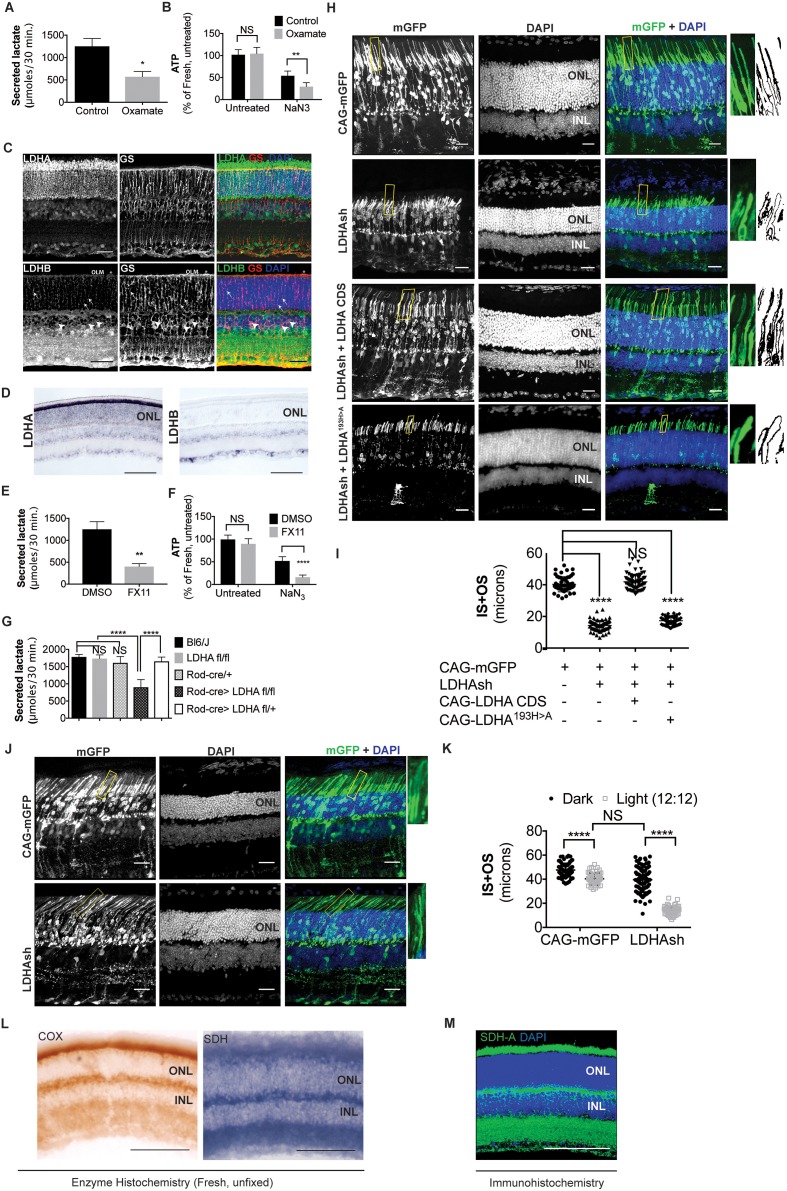
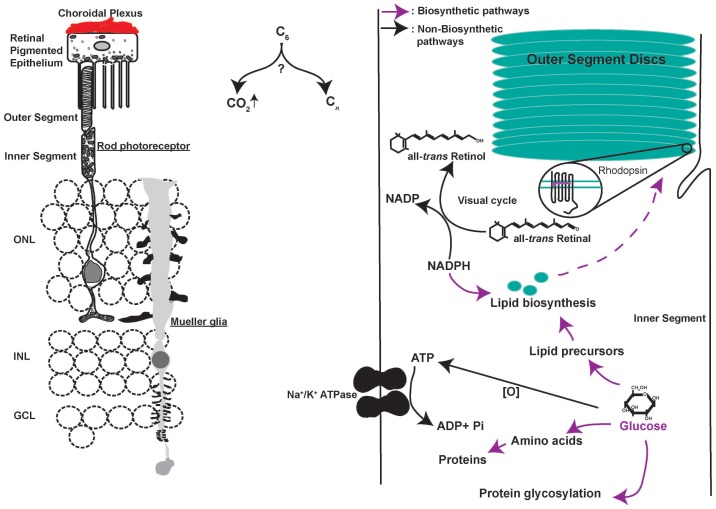
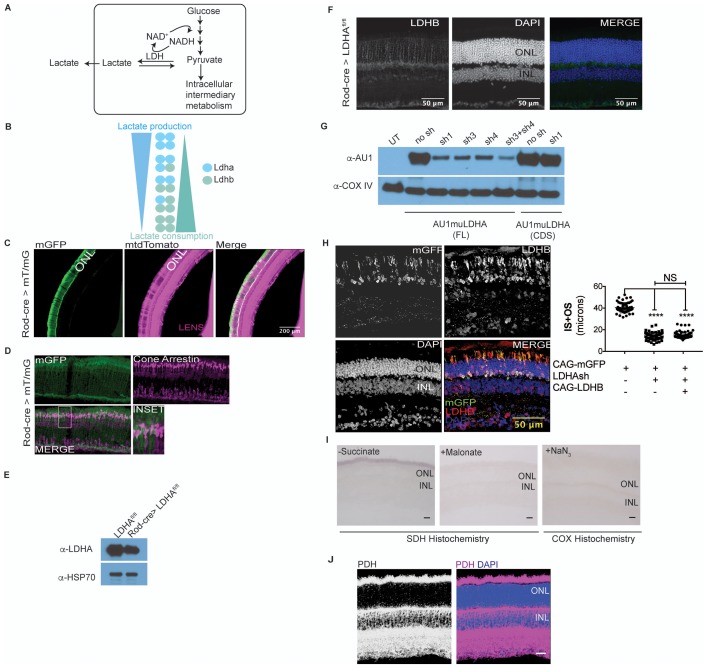
Sensory neurons capture information from the environment and convert it into signals that can greatly impact the survival of an organism. These systems are thus under heavy selective pressure, including for the most efficient use of energy to support their sensitivity and efficiency 1 . In this regard, the vertebrate photoreceptor cells face a dual challenge. They not only need to preserve their membrane excitability via ion pumps by ATP hydrolysis 2 but also maintain a highly membrane rich organelle, the outer segment, which is the primary site of phototransduction, creating a considerable biosynthetic demand. How photoreceptors manage carbon allocation to balance their catabolic and anabolic demands is poorly understood. One metabolic feature of the retina is its ability to convert the majority of its glucose into lactate 3,4 even in the presence of oxygen. This phenomenon, aerobic glycolysis, is found in cancer and proliferating cells, and is thought to promote biomass buildup to sustain proliferation 5,6 . The purpose of aerobic glycolysis in the retina, its relevance to photoreceptor physiology, and its regulation, are not understood. Here, we show that rod photoreceptors rely on glycolysis for their outer segment (OS) biogenesis. Genetic perturbations targeting allostery or key regulatory nodes in the glycolytic pathway impacted the OS size. Fibroblast growth factor (FGF) signaling was found to regulate glycolysis, with antagonism of this pathway resulting in anabolic deficits. These data demonstrate the cell autonomous role of the glycolytic pathway in OS maintenance and provide evidence that aerobic glycolysis is part of a metabolic program that supports the biosynthetic needs of a normal neuronal cell type.
Overview
The claims and statistics of this paper haven’t been checked yet.
Run the check — free, no account needed. It reads the open-access text and checks the sources it cites.
Integrity signals
Registry
Cites
Statistics
Figures
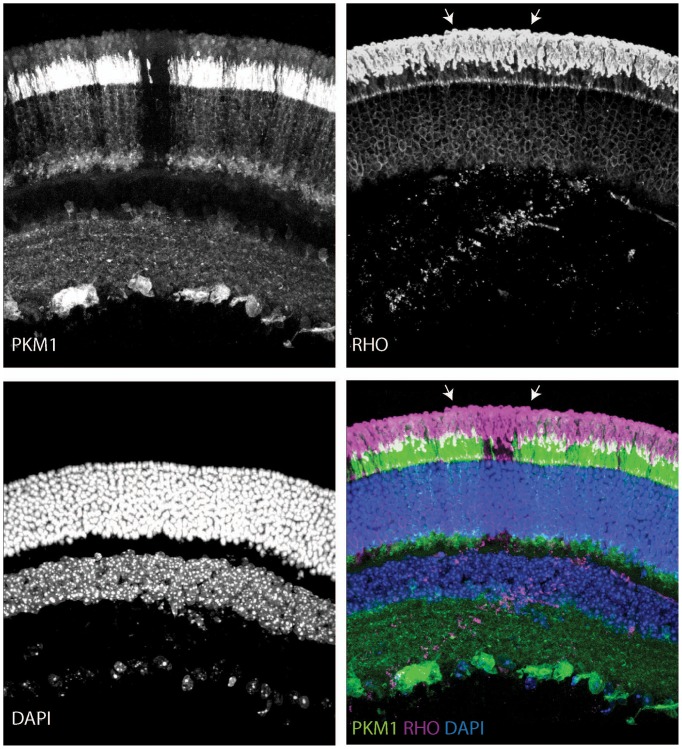
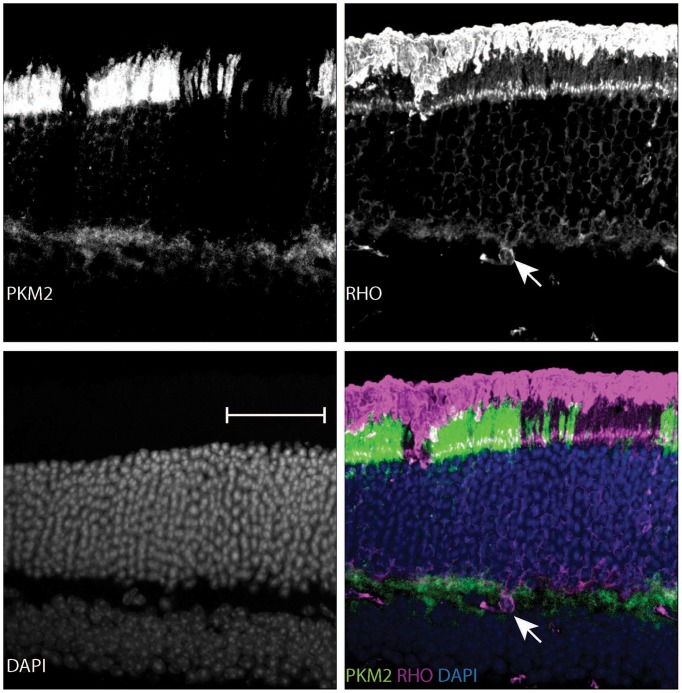
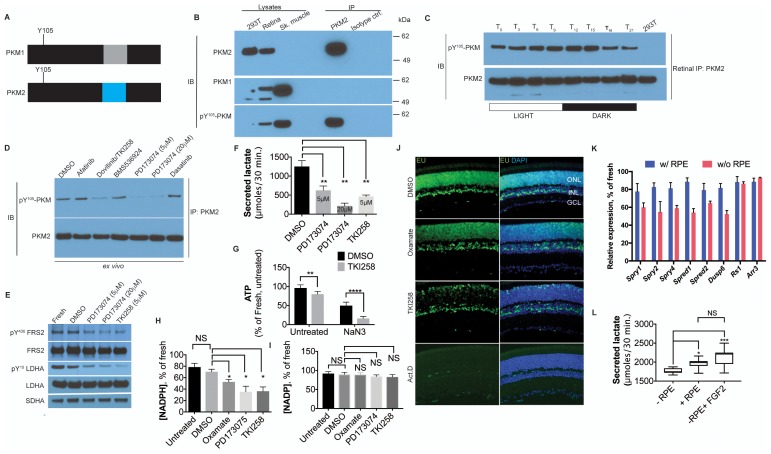
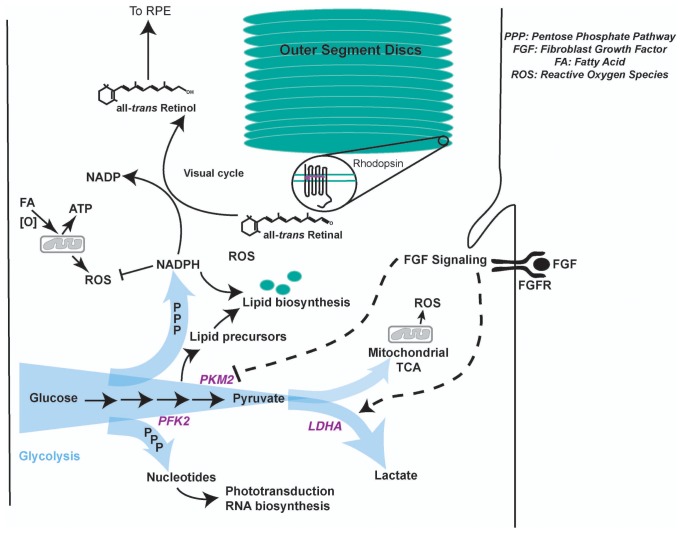
Verification
Claims the paper makes
The claims and statistics of this paper haven’t been checked yet.
Run the check — free, no account needed. It reads the open-access text and checks the sources it cites.
Claims other papers make about this one
Each is checked against this paper’s own text: does it say what the citing paper says it does?
In the citing paper
“The high level of glycolysis in photoreceptors is important as they perform substantial biosynthesis during their diurnal degradation and nocturnal regeneration of outer segments (Chinchore et al., 2017).”
From Fueling thought: Management of glycolysis and oxidative phosphorylation in neuronal metabolism (2018) · cites this paper as Chinchore et al., 2017
Self-check
Percentages, sums and reported differences re-computed from the paper’s own numbers.
The self-check needs the paper’s full text.
Citations
Cites
The Warburg Effect: How Does it Benefit Cancer Cells?
Liberti, M. V., & Locasale, J. W. (2016) · Trends in Biochemical Sciences · doi:10.1016/j.tibs.2015.12.001 · Cited by 5,150
Why Do Cancers Have High Aerobic Glycolysis?
Gatenby, R. A., & Gillies, R. J. (2004) · Nature reviews. Cancer · doi:10.1038/nrc1478 · Cited by 4,784
A global double-fluorescent Cre reporter mouse
Muzumdar, M. D., Tasic, B., Miyamichi, K., Li, L., & Luo, L. (2007) · genesis · doi:10.1002/dvg.20335 · Cited by 3,491
The M2 splice isoform of pyruvate kinase is important for cancer metabolism and tumour growth
Christofk, H. R., Vander Heiden, M. G., Harris, M. H., Ramanathan, A., Gerszten, R. E., Wei, R., Fleming, M. D., Schreiber, S. L., & Cantley, L. C. (2008) · Nature · doi:10.1038/nature06734 · Cited by 2,820
Premature ageing in mice expressing defective mitochondrial DNA polymerase
Trifunovic, A., Wredenberg, A., Falkenberg, M., Spelbrink, J. N., Rovio, A. T., Bruder, C. E., Bohlooly-Y, M., Gidlöf, S., Oldfors, A., Wibom, R., et al. (2004) · Nature · doi:10.1038/nature02517 · Cited by 2,734
TIGAR, a p53-Inducible Regulator of Glycolysis and Apoptosis
Bensaad, K., Tsuruta, A., Selak, M. A., Vidal, M. N. C., Nakano, K., Bartrons, R., Gottlieb, E., & Vousden, K. H. (2006) · Cell · doi:10.1016/j.cell.2006.05.036 · Cited by 2,019
Inhibition of lactate dehydrogenase A induces oxidative stress and inhibits tumor progression
Le, A., Cooper, C. R., Gouw, A. M., Dinavahi, R., Maitra, A., Deck, L. M., Royer, R. E., Jagt, D. L. V., Semenza, G. L., & Dang, C. V. (2010) · Proceedings of the National Academy of Sciences · doi:10.1073/pnas.0914433107 · Cited by 1,528
Anastasiou, D., Poulogiannis, G., Asara, J. M., Boxer, M. B., Jiang, J., Shen, M., Bellinger, G., Sasaki, A. T., Locasale, J. W., Auld, D. S., et al. (2011) · Science · doi:10.1126/science.1211485 · Cited by 1,218
Targeting lactate metabolism for cancer therapeutics
Doherty, J. R., & Cleveland, J. L. (2013) · Journal of Clinical Investigation · doi:10.1172/jci69741 · Cited by 1,194
Energy limitation as a selective pressure on the evolution of sensory systems
Niven, J. E., & Laughlin, S. B. (2008) · Journal of Experimental Biology · doi:10.1242/jeb.017574 · Cited by 1,056
Research works printed but not linked: 1
- Dawson, 1964, LACTIC DEHYDROGENASES: FUNCTIONS OF THE TWO TYPES RATES OF SYNTHESIS OF THE TWO MAJOR FORMS CAN BE CORRELATED WITH METABOLIC DIFFERENTIATION, Science, 143, 929, 10.1126/science.143.3609.929 · DOI
Cited by
Sorted by citations
Increased demand for NAD(+) relative to ATP drives aerobic glycolysis
Luengo, A., Li, Z., Gui, D. Y., Sullivan, L. B., Zagorulya, M., Do, B. T., Ferreira, R., Naamati, A., Ali, A., Lewis, C. A., et al. (2021) · Molecular Cell · doi:10.1016/j.molcel.2020.12.012 · Cited by 547
Kanow, M. A., Giarmarco, M. M., Jankowski, C. S., Tsantilas, K., Engel, A. L., Du, J., Linton, J. D., Farnsworth, C. C., Sloat, S. R., Rountree, A., et al. (2017) · eLife · doi:10.7554/elife.28899 · Cited by 377
Fueling thought: Management of glycolysis and oxidative phosphorylation in neuronal metabolism
Yellen, G. (2018) · Journal of Cell Biology · doi:10.1083/jcb.201803152 · Cited by 371
“The high level of glycolysis in photoreceptors is important as they perform substantial biosynthesis during their diurnal degradation and nocturnal regeneration of outer segments (Chinchore et al., 2017).”
BackgroundPhotoreceptor cells and RPE contribute to the development of diabetic retinopathy
Tonade, D., & Kern, T. S. (2020) · Progress in Retinal and Eye Research · doi:10.1016/j.preteyeres.2020.100919 · Cited by 217
Retina Metabolism and Metabolism in the Pigmented Epithelium: A Busy Intersection
Hurley, J. B. (2021) · Annual Review of Vision Science · doi:10.1146/annurev-vision-100419-115156 · Cited by 205
Metadata
- Authors
- Chinchore, Y., Begaj, T., Wu, D., Drokhlyansky, E., & Cepko, C. L.
- Affiliations
- Howard Hughes Medical Institute (US)
- Corresponding author
- Cepko, Constance L
- Venue
- eLife
- Publisher
- eLife Sciences Publications, Ltd
- Published
- 2017-06-09
- Volume
- 6
- ISSN
- 2050-084X (ISSN-L)
- PMC
- PMC5499945
- OpenAlex
- W2590528398
- Cited by
- 191
- References
- 67
- Citations by year
- 2026: 27 · 2025: 20 · 2024: 25 · 2023: 19 · 2022: 21 · 2021: 23 · 2020: 24 · 2019: 12 · 2018: 15 · 2017: 4
- FWCI
- 6.14
- Type
- journal article
- Language
- en
- Open access
- gold
- doi.org
- Licence
- Locations
- eLife (publishedVersion, cc-by)
- bioRxiv (Cold Spring Harbor Laboratory) (acceptedVersion)
- PubMed Central (publishedVersion, cc-by)
- PubMed (publishedVersion)
- The Journal of the American Medical Association (JAMA) Network (American Medical Association) (submittedVersion, cc-by)
- DOAJ (DOAJ: Directory of Open Access Journals) (submittedVersion, cc-by-sa)
- Funders
- National Institutes of Health (R01 EY023291)
- Howard Hughes Medical Institute
- Topics
- Health Sciences › Medicine › Ophthalmology › Retinal Development and Disorders
- Life Sciences › Biochemistry, Genetics and Molecular Biology › Cancer Research › Cancer, Hypoxia, and Metabolism
- Life Sciences › Neuroscience › Cellular and Molecular Neuroscience › Neuroscience and Neuropharmacology Research
- Keywords
- rod photoreceptors, glycolysis, aerobic glycolysis, phototransduction, anabolism, FGF signaling, allosteric regulation, cellular metabolism, ATP consumption
- MeSH terms
- Aerobiosis, Animals, Organelle Biogenesis, Fibroblast Growth Factors, Glycolysis, Metabolism, Signal Transduction, Retinal Rod Photoreceptor Cells, Mice
About these checks
Registry, retraction, Cites and statistics results are computed, not judged, with one exception: a printed reference that no index lists is read once by a model before it counts as a citation error. Claims are extracted by a model and kept only when their quote appears verbatim in the text; each cited source is then checked, with a model’s help, for whether it says what the claim relies on. Those verdicts can be wrong — read the claim’s quote and the cited source before relying on one.
Statistics and arithmetic are recomputed, not judged.
Confidence bands are shown only for fields calibrated on our annotated test set. None is calibrated yet, so no band is shown.
What counts as a claim ›How we measure confidence ›How we check this ›
Are you an author, or do you see a problem with this page? Request a review
