

The DOI matches its Crossref record; 7 of the 7 references it cites were found in a registry or an index.
Tau monomer encodes strains
Published version of a preprint
Abstract
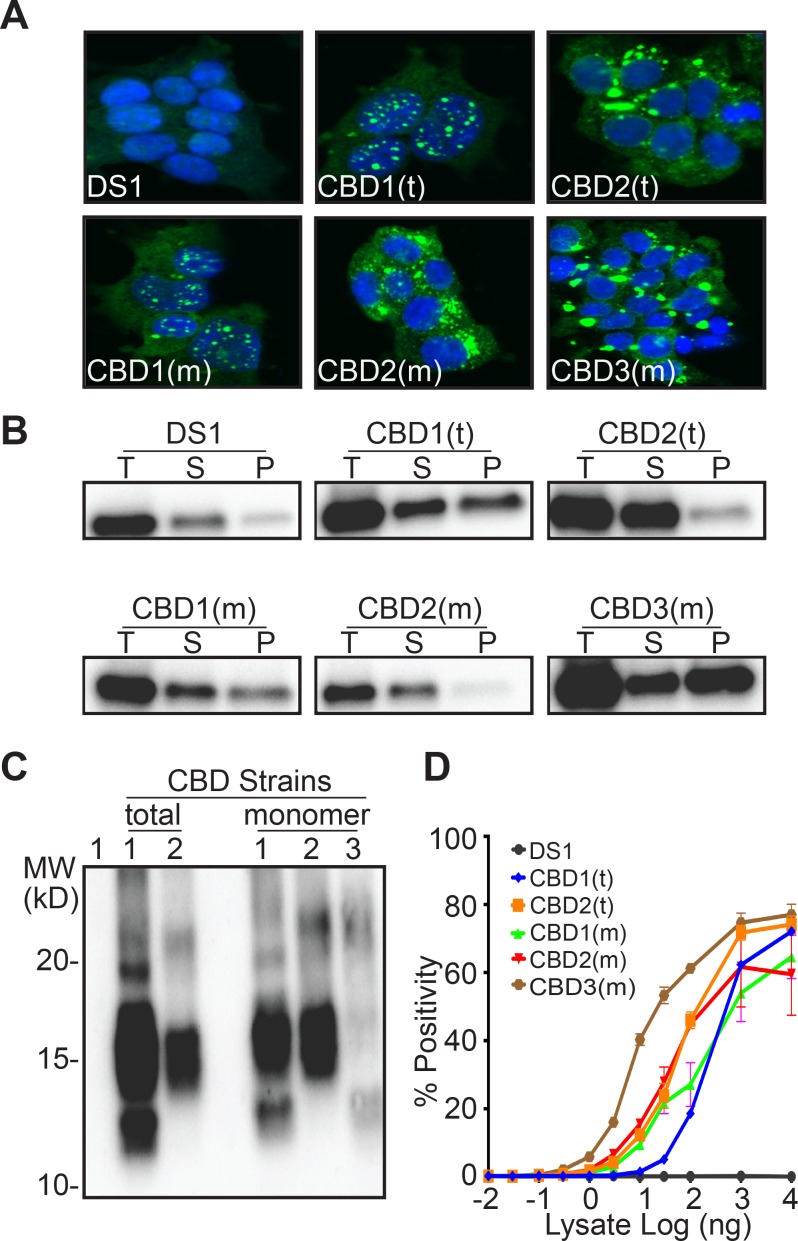
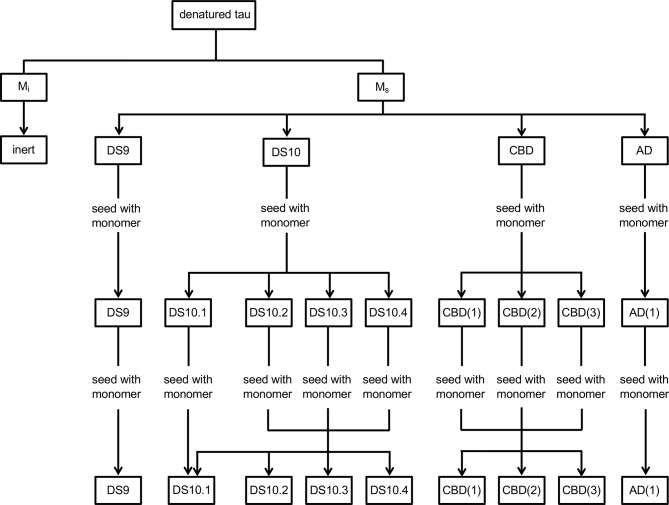
Tauopathies have diverse presentation, progression, and neuropathology. They are linked to tau prion strains, self-replicating assemblies of unique quaternary conformation, whose origin is unknown. Strains can be propagated indefinitely in cultured cells, and induce unique patterns of transmissible neuropathology upon inoculation into mice. DS9 and DS10 cell lines propagate different synthetic strains that derive from recombinant tau. We previously observed that tau monomer adopts two conformational states: one that is inert (Mi) and one that is seed-competent (Ms) (Mirbaha et al., 2018). We have now found that Ms itself is comprised of multiple stable ensembles that encode unique strains. DS9 monomer inoculated into naive cells encoded only DS9, whereas DS10 monomer encoded multiple sub-strains. Sub-strains each induced distinct pathology upon inoculation into a tauopathy mouse model (PS19). Ms purified from an Alzeimer's disease brain encoded a single strain. Conversely, Ms from a corticobasal degeneration brain encoded three sub-strains, in which monomer from any one re-established all three upon inoculation into cells. Seed competent tau monomer thus adopts multiple, stable seed-competent conformations, each of which encodes a limited number of strains. This provides insight into the emergence of distinct tauopathies, and may improve diagnosis and therapy.
Overview
The claims and statistics of this paper haven’t been checked yet.
Run the check — free, no account needed. It reads the open-access text and checks the sources it cites.
Integrity signals
Registry
Cites
Statistics
Figures
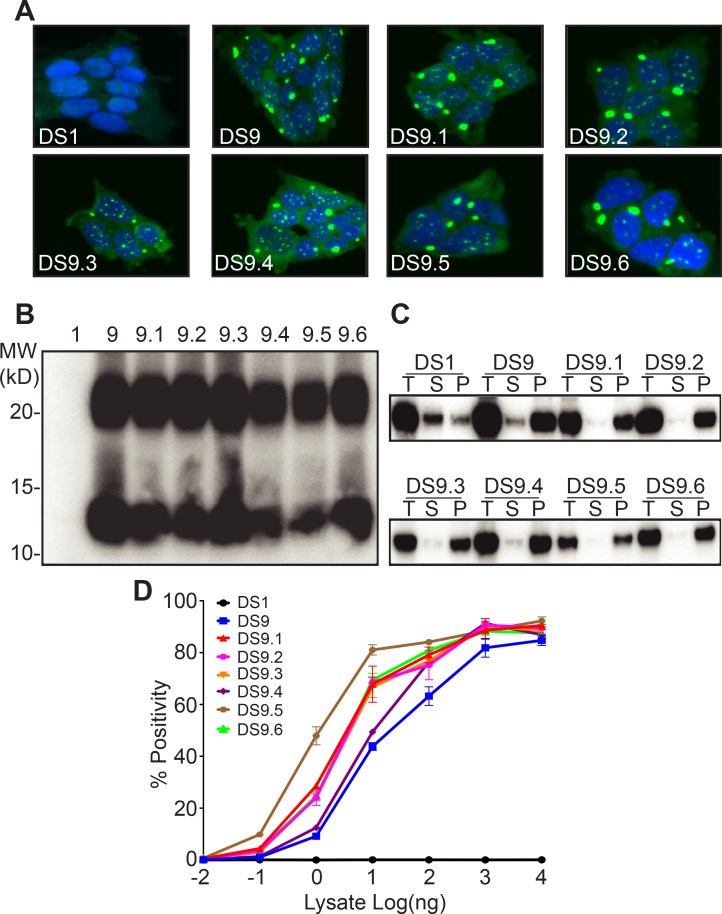
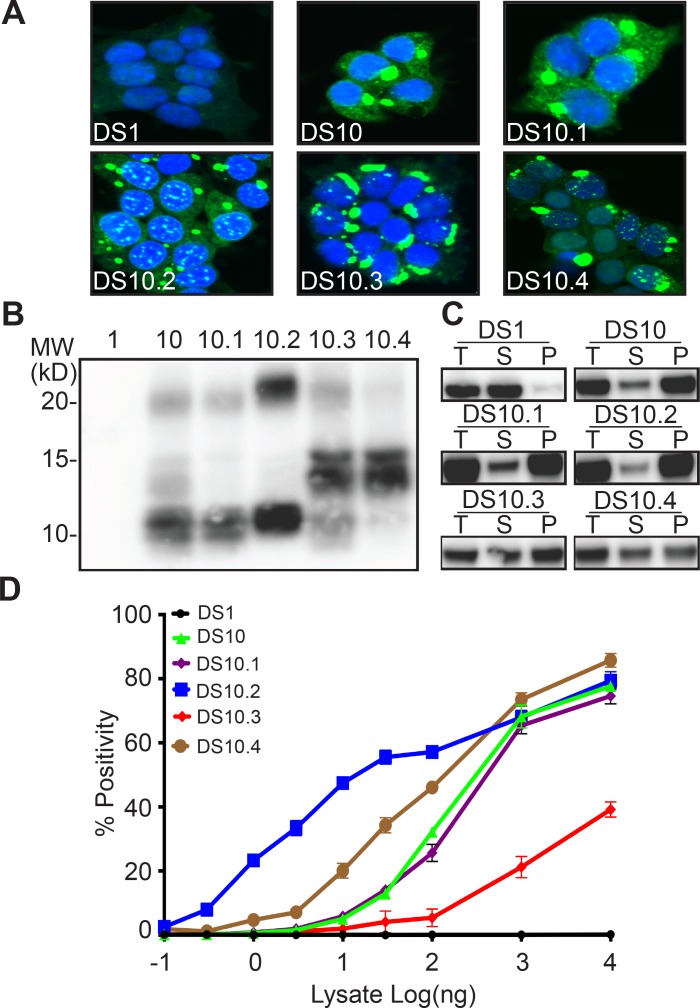
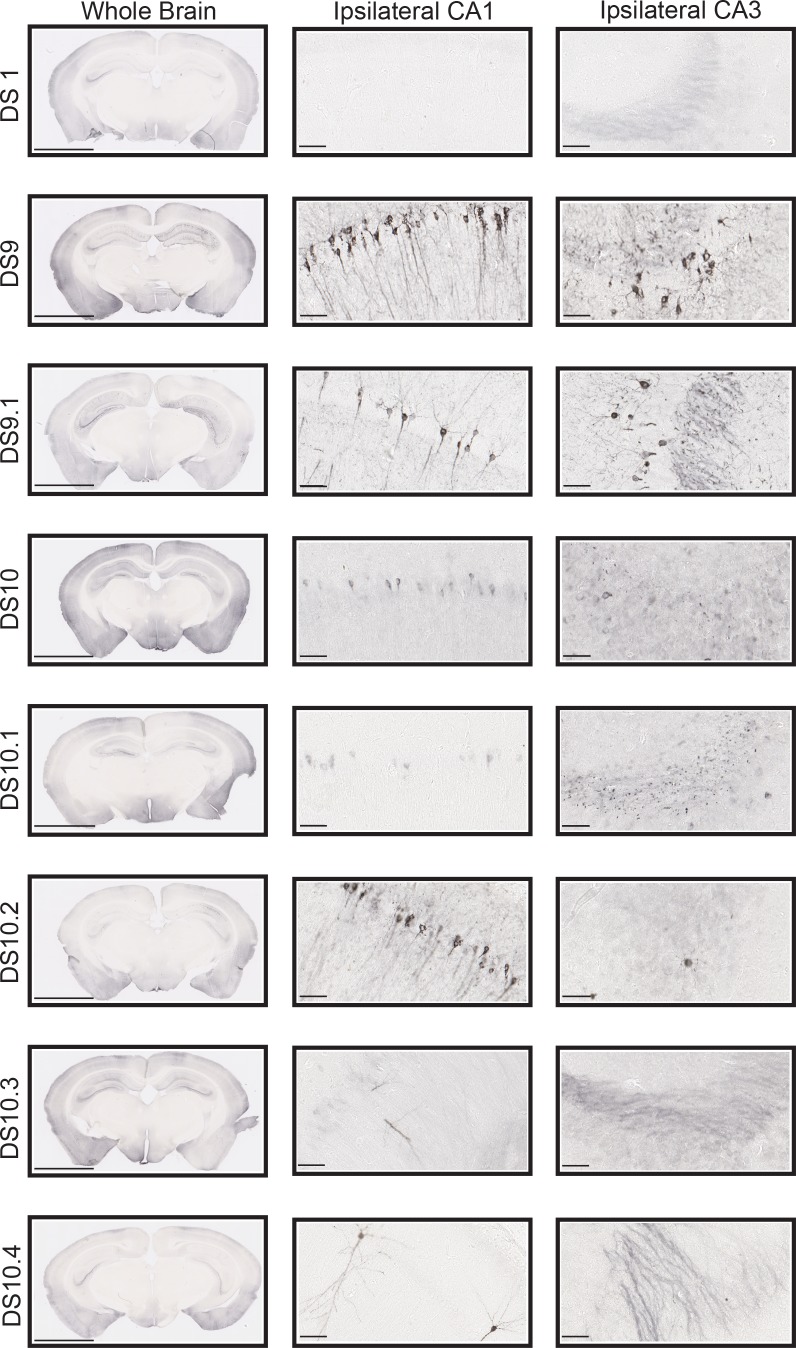
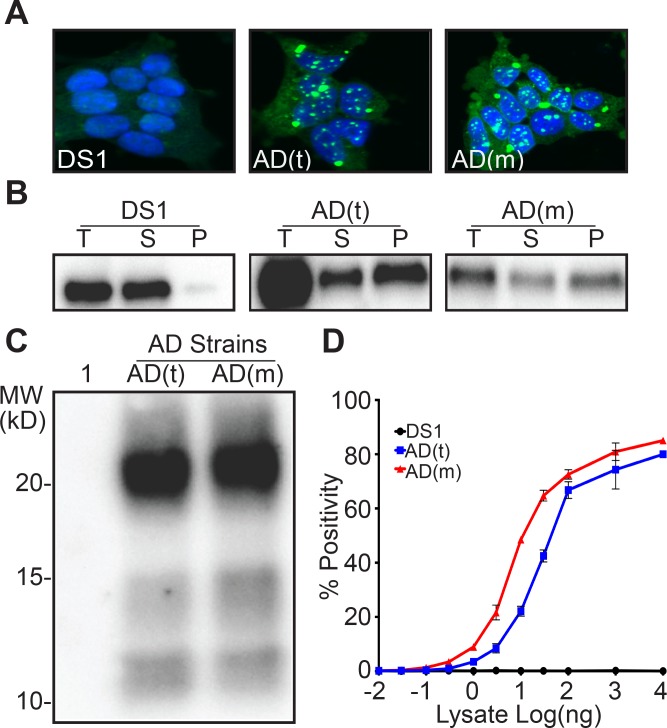
Verification
Claims the paper makes
The claims and statistics of this paper haven’t been checked yet.
Run the check — free, no account needed. It reads the open-access text and checks the sources it cites.
Claims other papers make about this one
Each is checked against this paper’s own text: does it say what the citing paper says it does?
In the citing paper
“Tau oligomers and aggregates (Kaufman et al, 2016), and even monomers (Sharma et al, 2018), can seed distinct patters of Tau inclusions (“strains”), which are encoded in the nature (conformation and composition) of the seeding Tau species.”
From Molecular crowding and RNA synergize to promote phase separation, microtubule interaction, and seeding of Tau condensates (2022) · cites this paper as Sharma et al, 2018
Self-check
Percentages, sums and reported differences re-computed from the paper’s own numbers.
The self-check needs the paper’s full text.
Citations
Cites
Lee, V. M.-Y., Goedert, M., & Trojanowski, J. Q. (2001) · Annual Review of Neuroscience · doi:10.1146/annurev.neuro.24.1.1121 · Cited by 2,480
Synapse Loss and Microglial Activation Precede Tangles in a P301S Tauopathy Mouse Model
Yoshiyama, Y., Higuchi, M., Zhang, B., Huang, S.-M., Iwata, N., Saido, T. C., Maeda, J., Suhara, T., Trojanowski, J. Q., & Lee, V. M.-Y. (2007) · Neuron · doi:10.1016/j.neuron.2007.01.010 · Cited by 2,208
Cryo-EM structures of tau filaments from Alzheimer’s disease
Fitzpatrick, A. W. P., Falcon, B., He, S., Murzin, A. G., Murshudov, G., Garringer, H. J., Crowther, R. A., Ghetti, B., Goedert, M., & Scheres, S. H. W. (2017) · Nature · doi:10.1038/nature23002 · Cited by 2,061
Transmission and spreading of tauopathy in transgenic mouse brain
Clavaguera, F., Bolmont, T., Crowther, R. A., Abramowski, D., Frank, S., Probst, A., Fraser, G., Stalder, A. K., Beibel, M., Staufenbiel, M., et al. (2009) · Nature Cell Biology · doi:10.1038/ncb1901 · Cited by 1,803
Propagation of Tau Misfolding from the Outside to the Inside of a Cell
Frost, B., Jacks, R. L., & Diamond, M. I. (2009) · Journal of Biological Chemistry · doi:10.1074/jbc.m808759200 · Cited by 1,252
Self-citationConformational Diversity of Wild-type Tau Fibrils Specified by Templated Conformation Change
Frost, B., Ollesch, J., Wille, H., & Diamond, M. I. (2009) · Journal of Biological Chemistry · doi:10.1074/jbc.m805627200 · Cited by 224
Self-citationMirbaha, H., Holmes, B. B., Sanders, D. W., Bieschke, J., & Diamond, M. I. (2015) · Journal of Biological Chemistry · doi:10.1074/jbc.m115.652693 · Cited by 215
Self-citation
Research works printed but not linked: 8
- Clavaguera, 2013, Brain homogenates from human tauopathies induce tau inclusions in mouse brain, PNAS, 110, 9535, 10.1073/pnas.1301175110 · DOI · Paper page
- Holmes, 2014, Proteopathic tau seeding predicts tauopathy in vivo, Proceedings of the National Academy of Sciences, 111, E4376, 10.1073/pnas.1411649111 · DOI · Paper page
- Kaufman, 2016, Tau Prion Strains Dictate Patterns of Cell Pathology, Progression Rate, and Regional Vulnerability In Vivo, Neuron, 92, 796, 10.1016/j.neuron.2016.09.055 · DOI · Paper page
- Mirbaha, 2018, Inert and seed-competent tau monomers suggest structural origins of aggregation, eLife, 7, 338, 10.7554/eLife.36584 · DOI
- Ohhashi, 2018, Molecular basis for diversification of yeast prion strain conformation, PNAS, 115, 2389, 10.1073/pnas.1715483115 · DOI
- Sanders, 2014, Distinct tau prion strains propagate in cells and mice and define different tauopathies, Neuron, 82, 1271, 10.1016/j.neuron.2014.04.047 · DOI · Paper page
- von Bergen, 2000, Assembly of tau protein into Alzheimer paired helical filaments depends on a local sequence motif ((306)VQIVYK(311)) forming beta structure, PNAS, 97, 5129, 10.1073/pnas.97.10.5129 · DOI · Paper page
- von Bergen, 2001, Mutations of tau protein in frontotemporal dementia promote aggregation of paired helical filaments by enhancing local beta-structure, Journal of Biological Chemistry, 276, 48165, 10.1074/jbc.M105196200 · DOI
Cited by
Phase separation and neurodegenerative diseases: a disturbance in the force
Zbinden, A., Pérez-Berlanga, M., De Rossi, P., & Polymenidou, M. (2020) · Developmental Cell · doi:10.1016/j.devcel.2020.09.014 · Cited by 500
Mechanisms of secretion and spreading of pathological tau protein
Brunello, C. A., Merezhko, M., Uronen, R.-L., & Huttunen, H. J. (2020) · Cellular and Molecular Life Sciences · doi:10.1007/s00018-019-03349-1 · Cited by 304
Intersection of pathological tau and microglia at the synapse
Vogels, T., Murgoci, A.-N., & Hromádka, T. (2019) · Acta Neuropathologica Communications · doi:10.1186/s40478-019-0754-y · Cited by 197
Hochmair, J., Exner, C., Franck, M., Dominguez‐Baquero, A., Diez, L., Brognaro, H., Kraushar, M. L., Mielke, T., Radbruch, H., Kaniyappan, S., et al. (2022) · The EMBO Journal · doi:10.15252/embj.2021108882 · Cited by 106
Ercan-Herbst, E., Ehrig, J., Schöndorf, D. C., Behrendt, A., Klaus, B., Gomez Ramos, B., Prat Oriol, N., Weber, C., & Ehrnhoefer, D. E. (2019) · Acta Neuropathologica Communications · doi:10.1186/s40478-019-0823-2 · Cited by 101
Metadata
- Authors
- Sharma, A. M., Thomas, T. L., Woodard, D. R., Kashmer, O. M., & Diamond, M. I.
- Venue
- eLife
- Publisher
- eLife Sciences Publications, Ltd
- Published
- 2018-12-11
- Volume
- 7
- ISSN
- 2050-084X
- PMC
- PMC6289568
- Cited by
- 79
- References
- 7
- Language
- en
- Licence
- Funders
- National Institutes of Health (1R01NS071835, R01NS089932)
- Rainwater Charitable Foundation (Tau Consortium)
About these checks
Registry, retraction, Cites and statistics results are computed, not judged, with one exception: a printed reference that no index lists is read once by a model before it counts as a citation error. Claims are extracted by a model and kept only when their quote appears verbatim in the text; each cited source is then checked, with a model’s help, for whether it says what the claim relies on. Those verdicts can be wrong — read the claim’s quote and the cited source before relying on one.
Statistics and arithmetic are recomputed, not judged.
Confidence bands are shown only for fields calibrated on our annotated test set. None is calibrated yet, so no band is shown.
What counts as a claim ›How we measure confidence ›How we check this ›
Are you an author, or do you see a problem with this page? Request a review
Data sources
Bibliographic data: Semantic Scholar, OpenAlex, Crossref.
Contains information from the Semantic Scholar Academic Graph Datasets, made available under the ODC Attribution License (ODC-BY 1.0).
Semantic Scholar’s data is described in: Kinney, R., et al. (2023). The Semantic Scholar Open Data Platform. arXiv:2301.10140.
