

The DOI matches its Crossref record; 1 of the 1 references it cites were found in a registry or an index.
The Uso1 globular head interacts with SNAREs to maintain viability even in the absence of the coiled-coil domain
Open accessPublished version of a preprint
Abstract
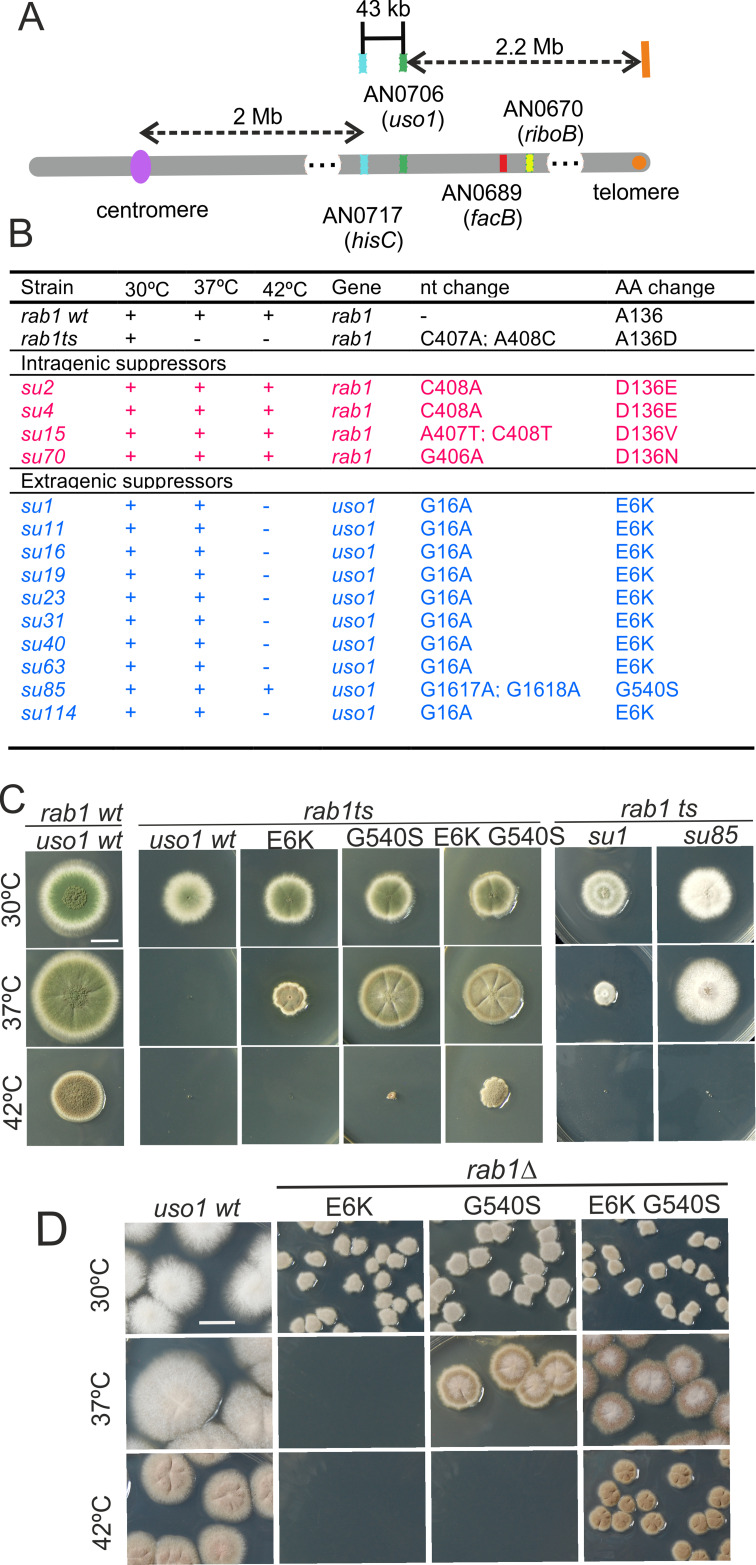
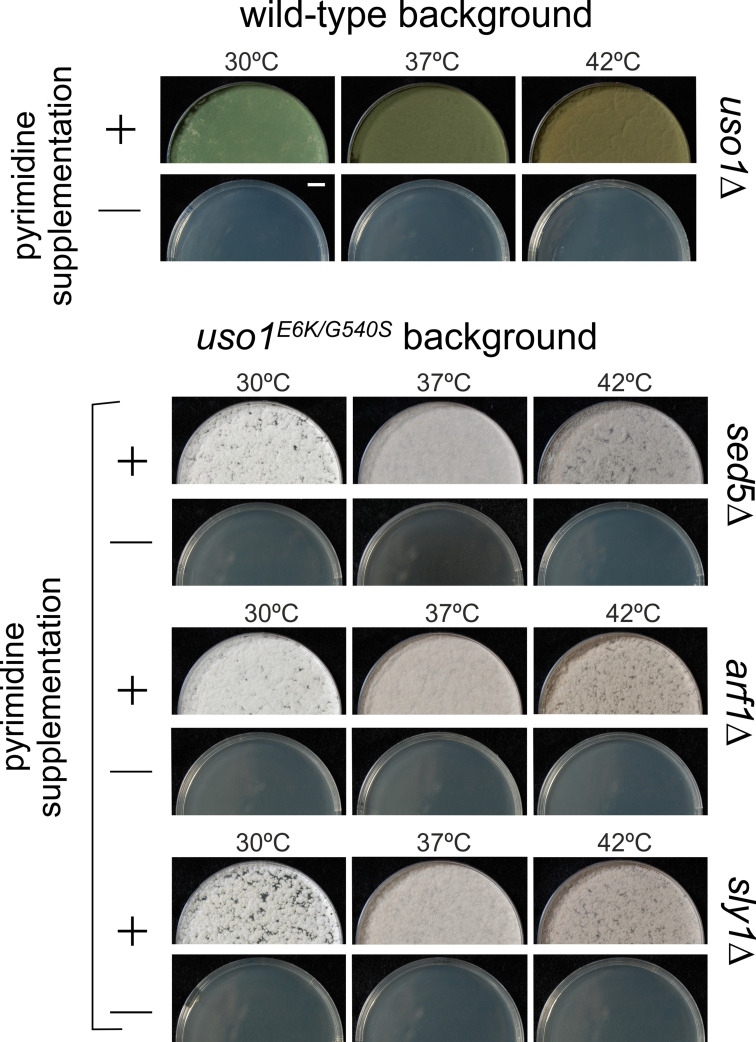
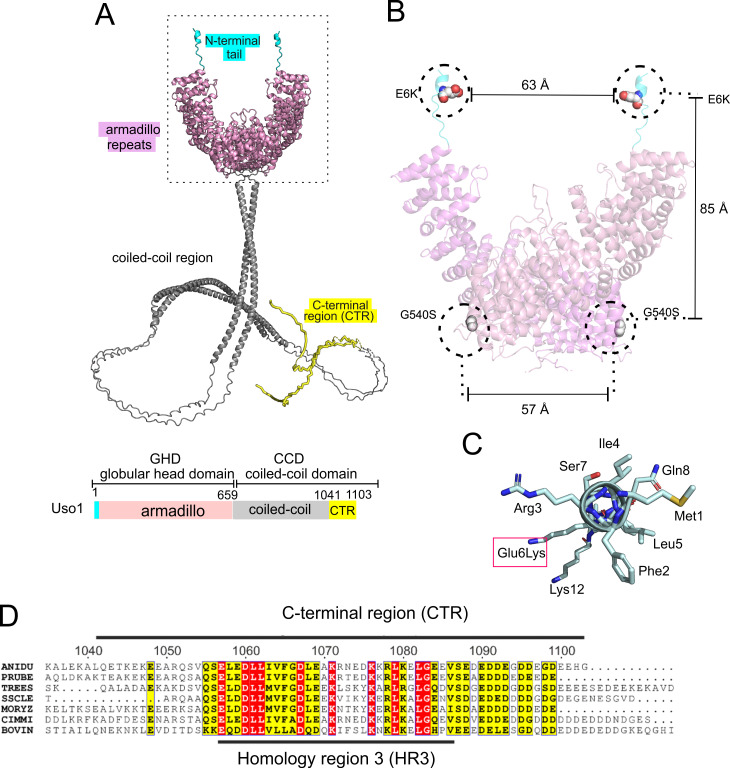
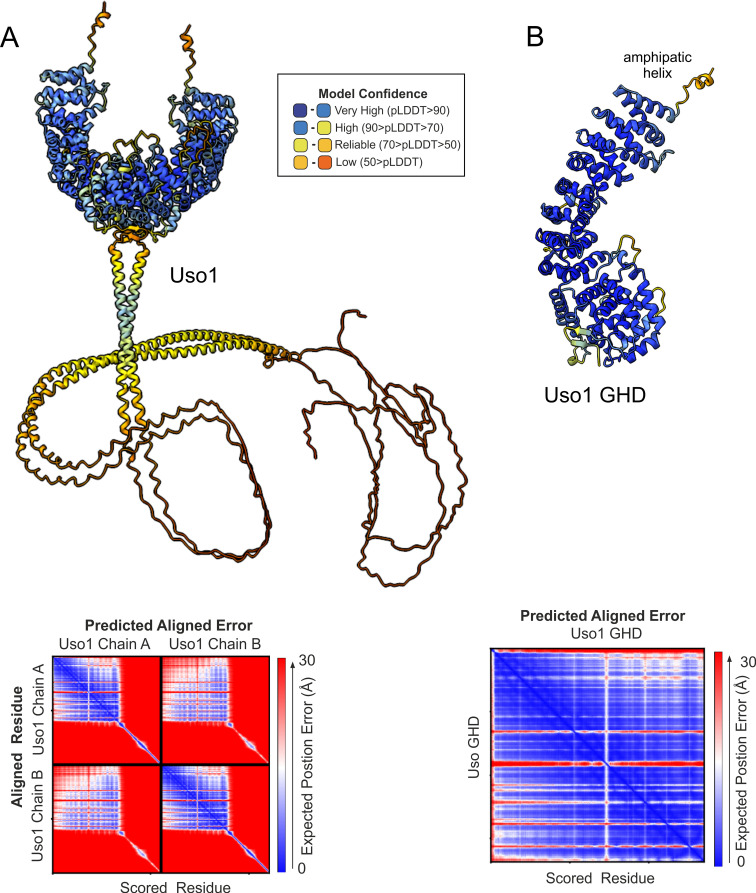
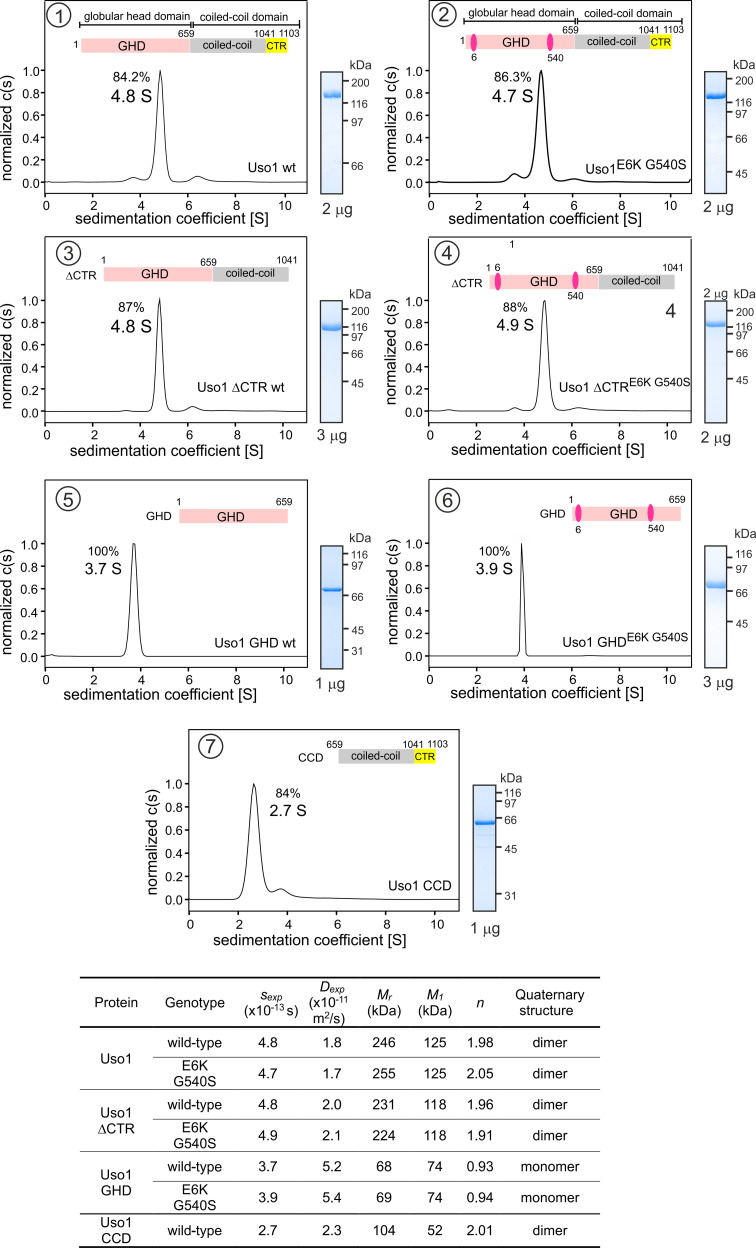
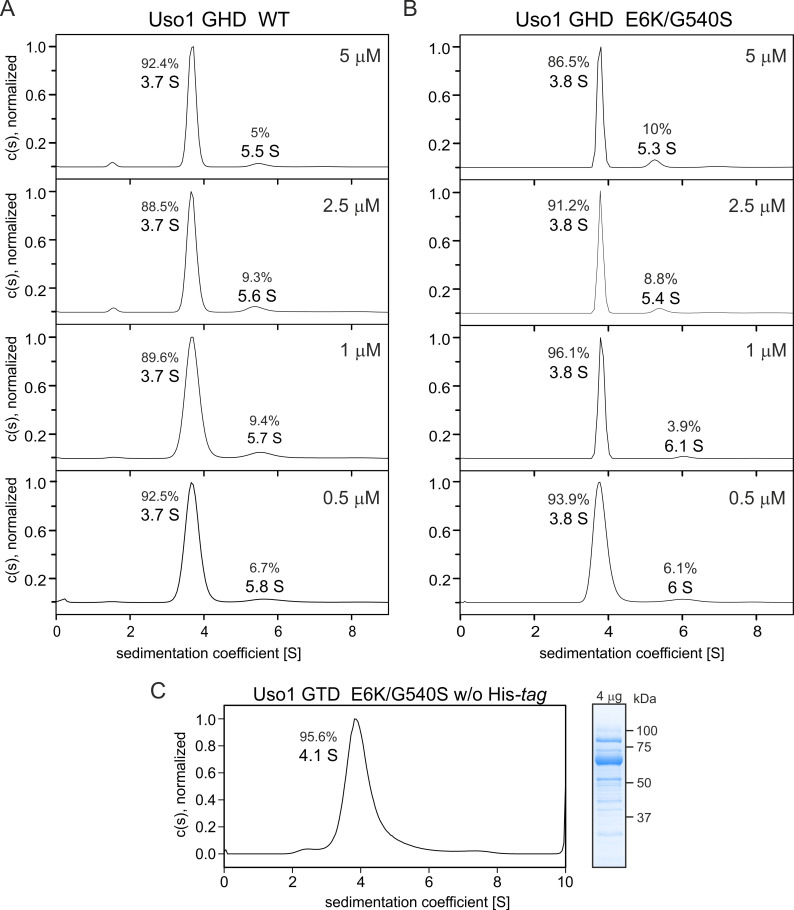
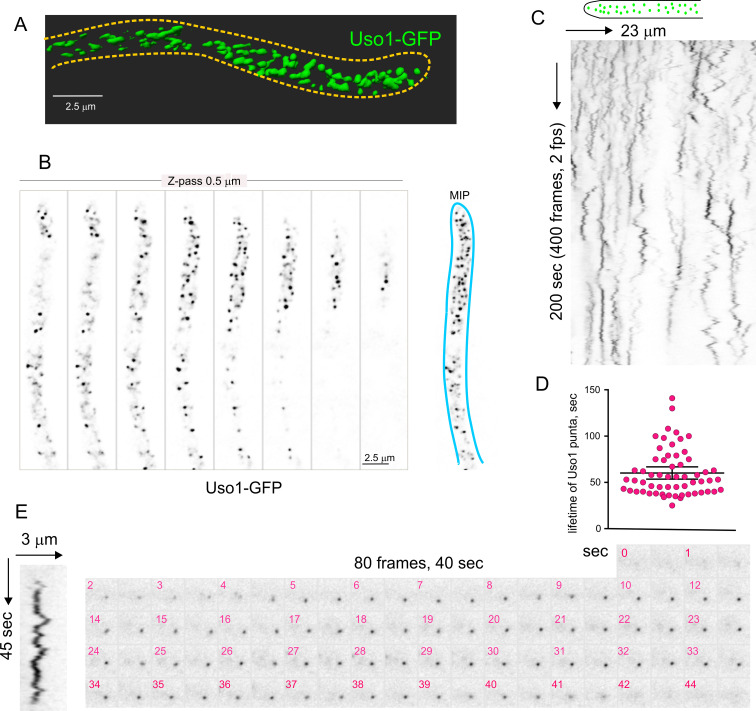
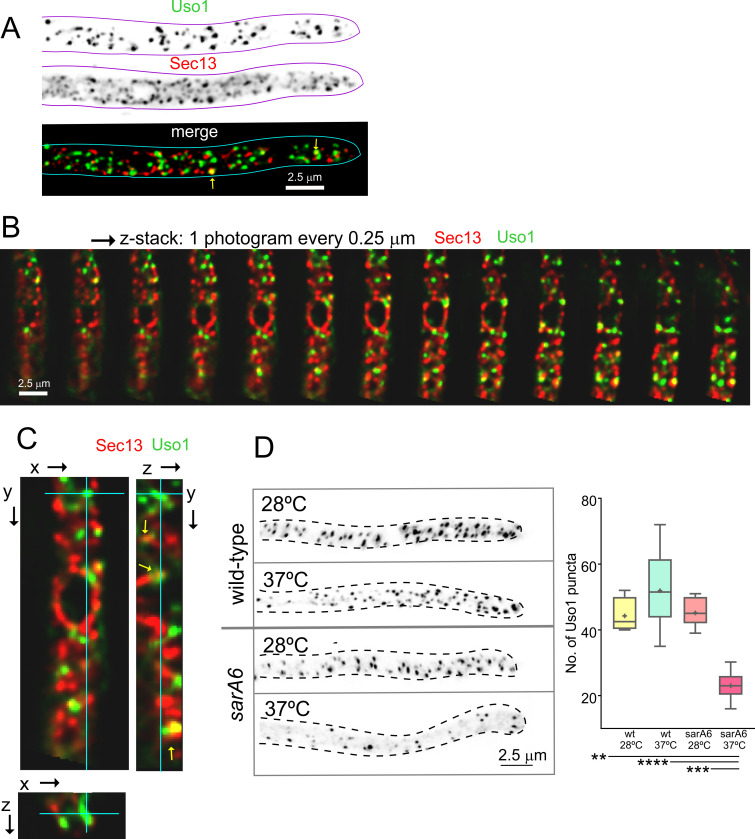
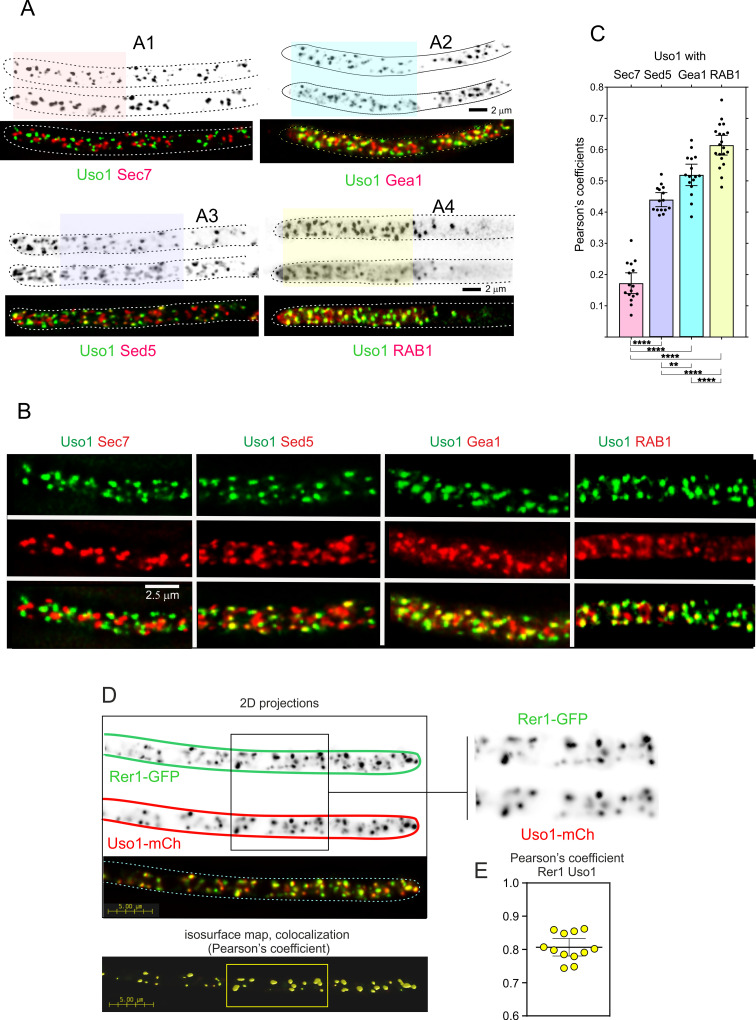
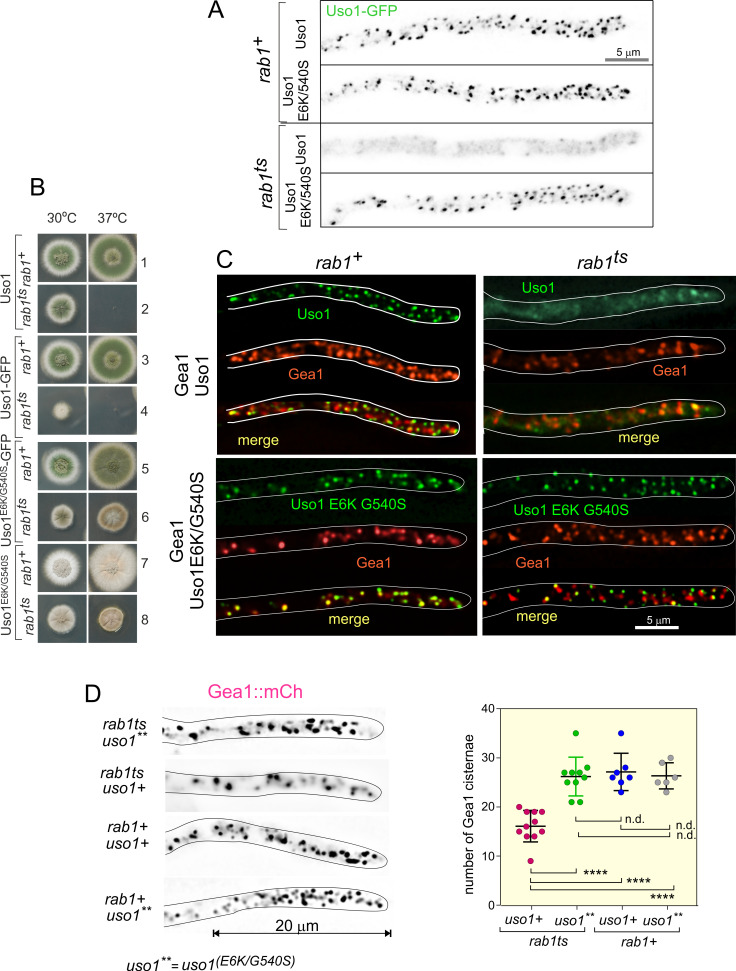
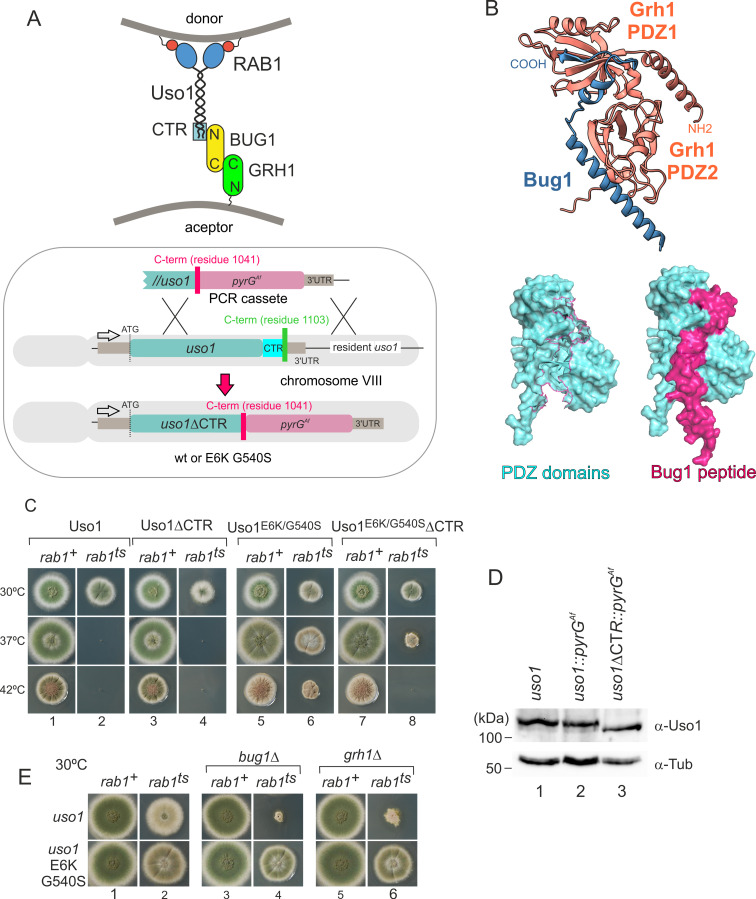
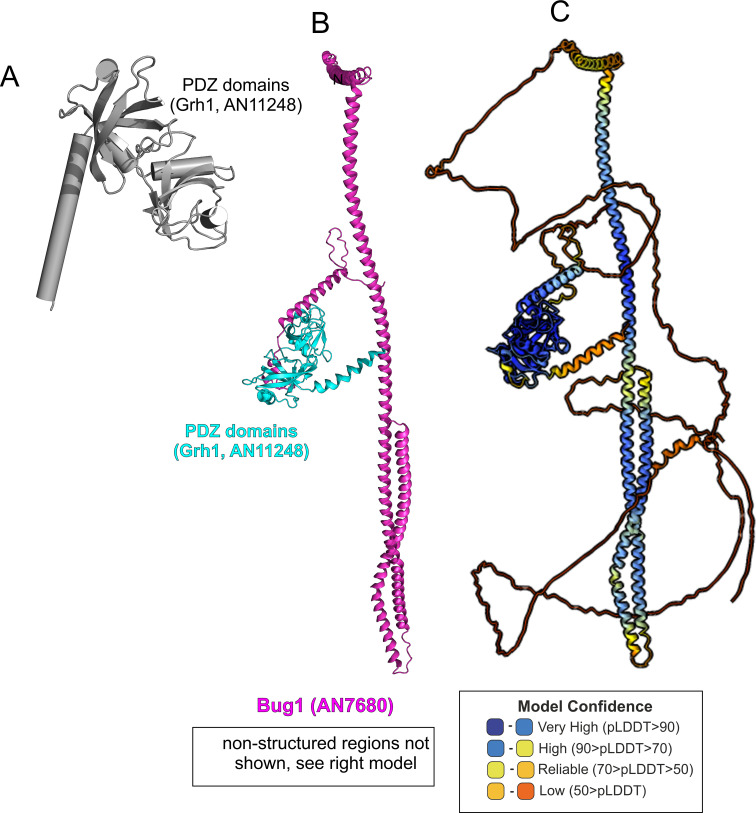
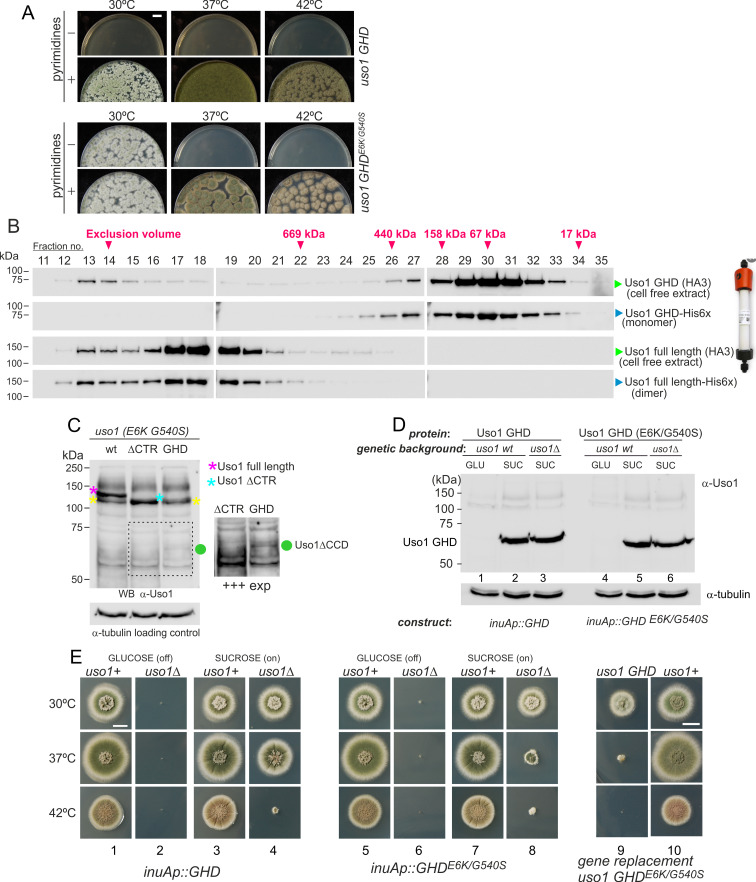
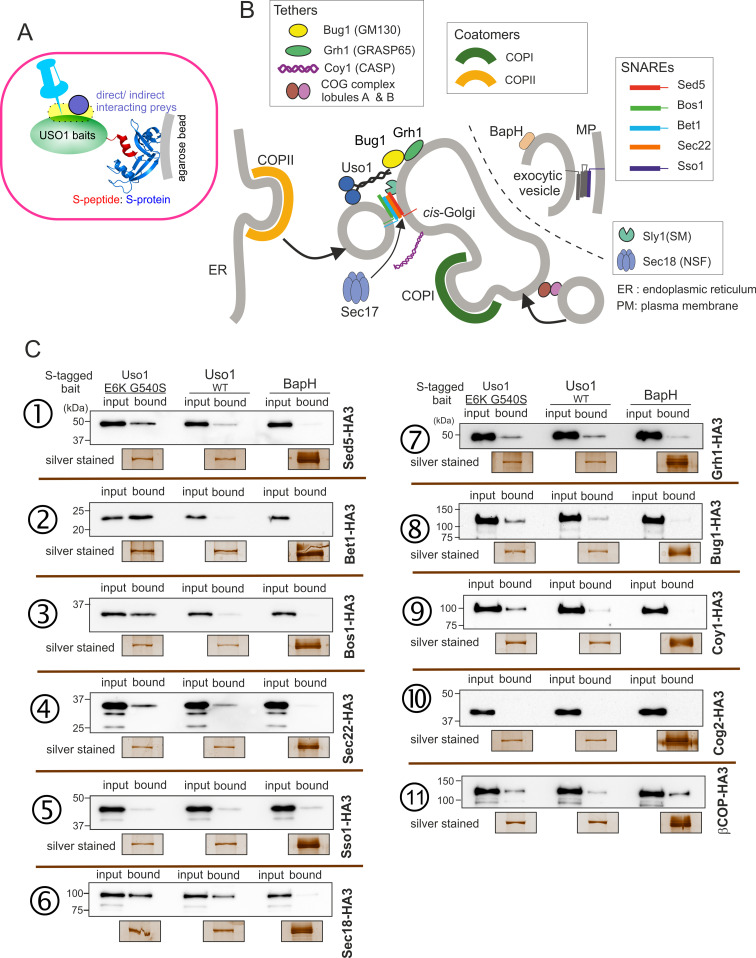
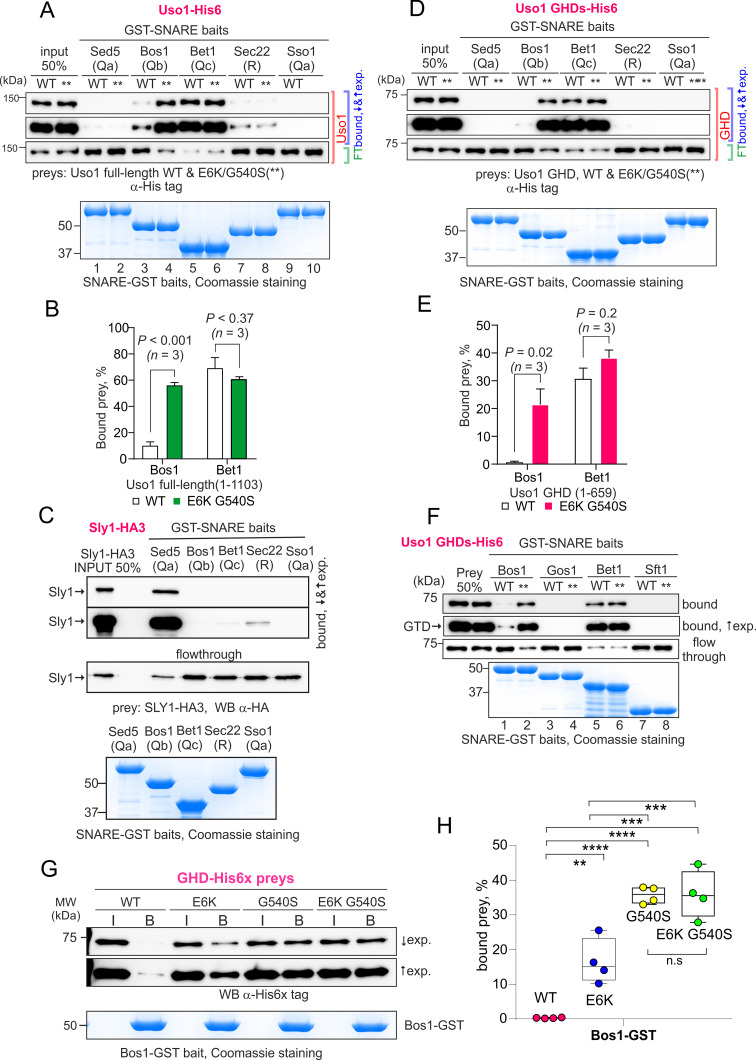
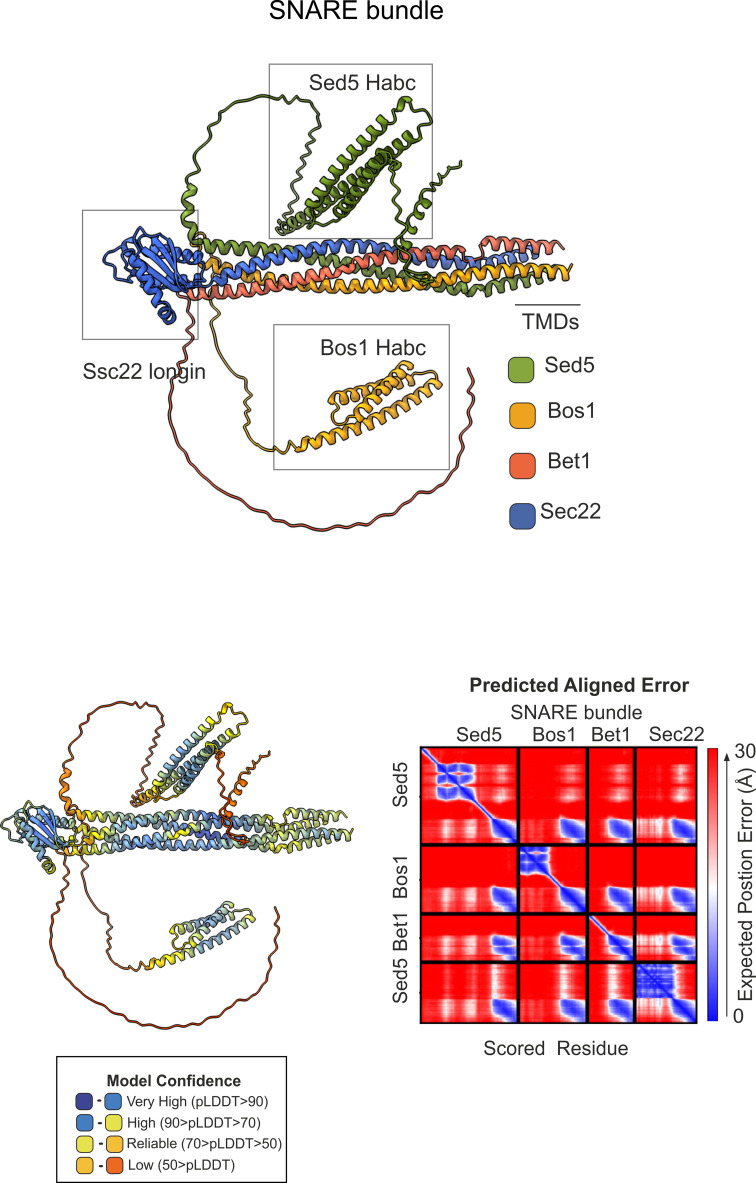
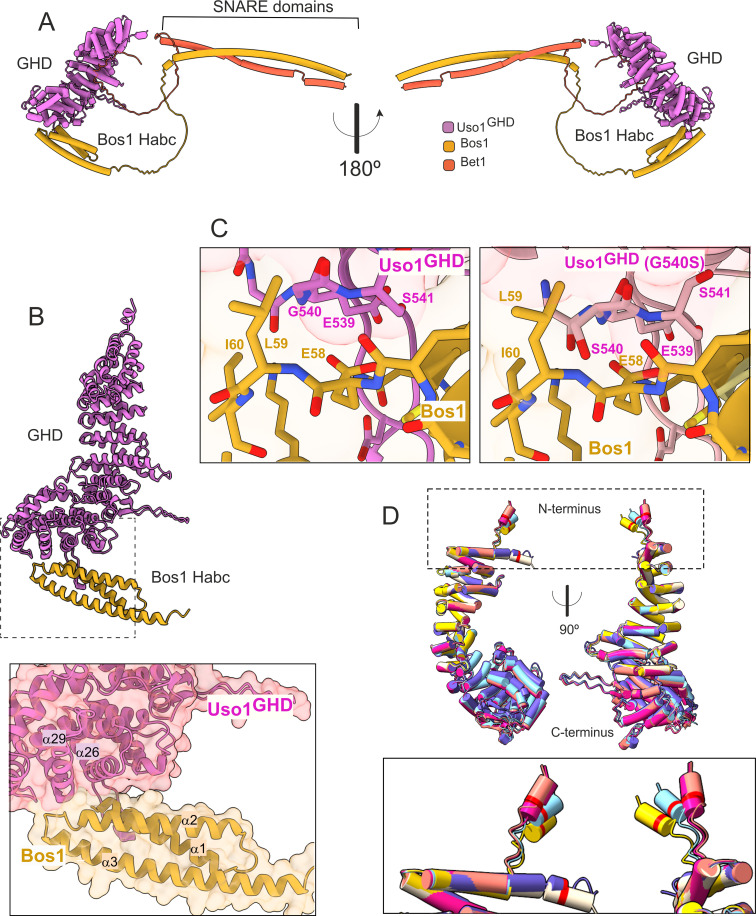
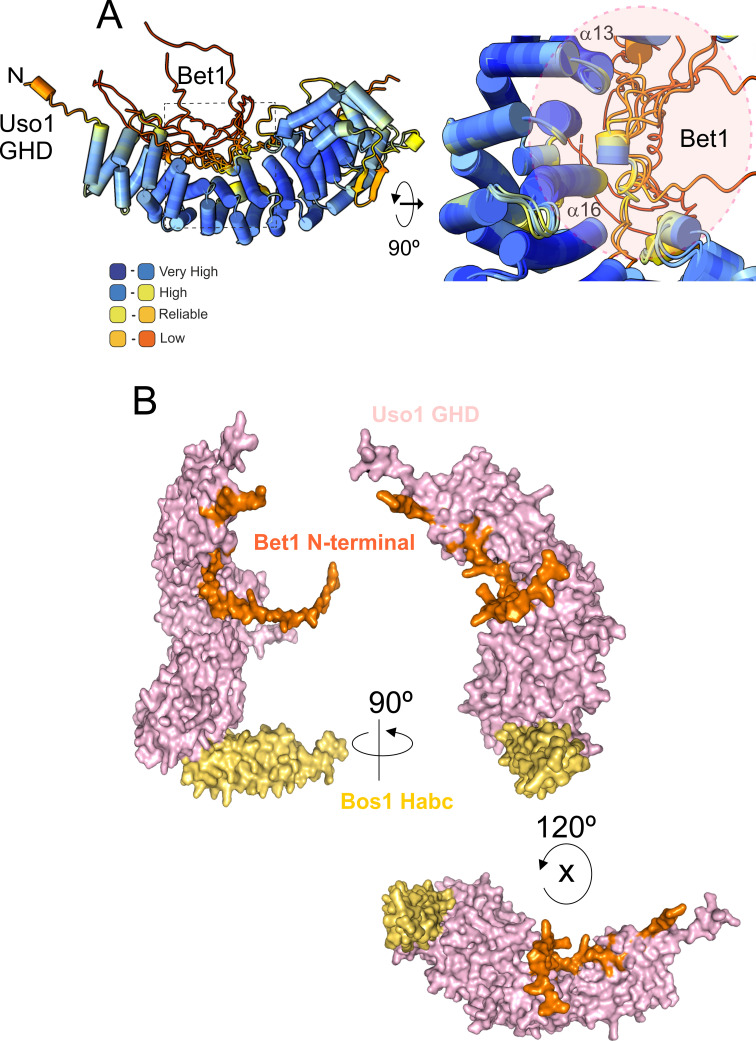
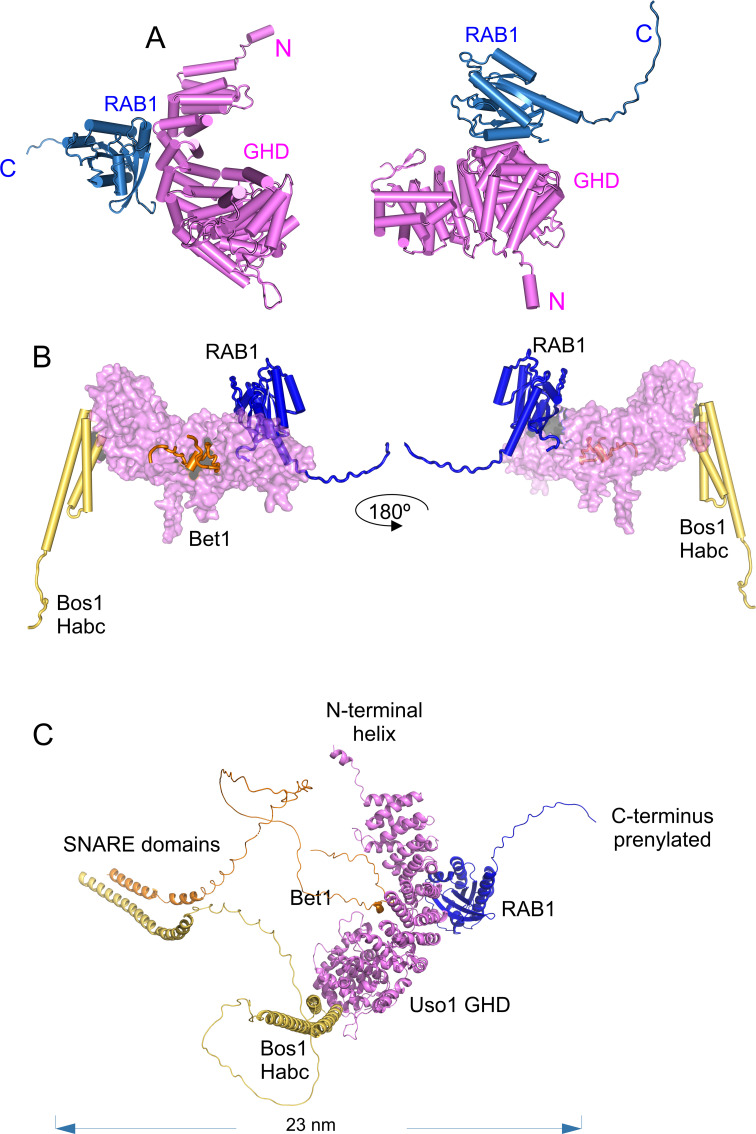
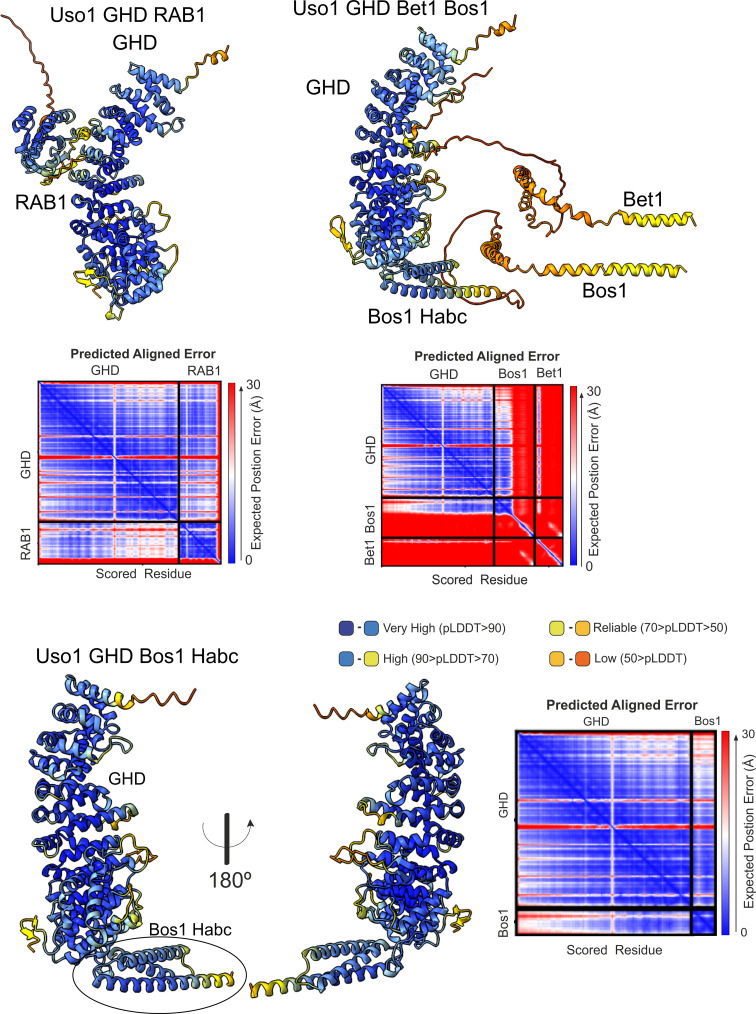
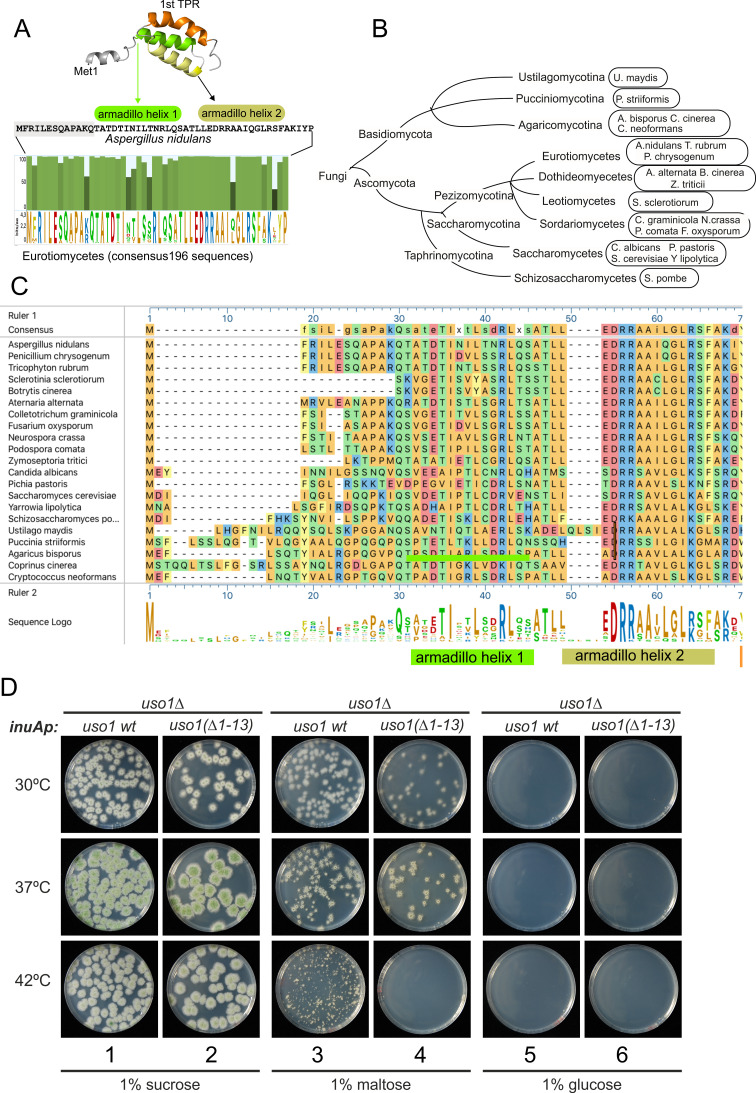
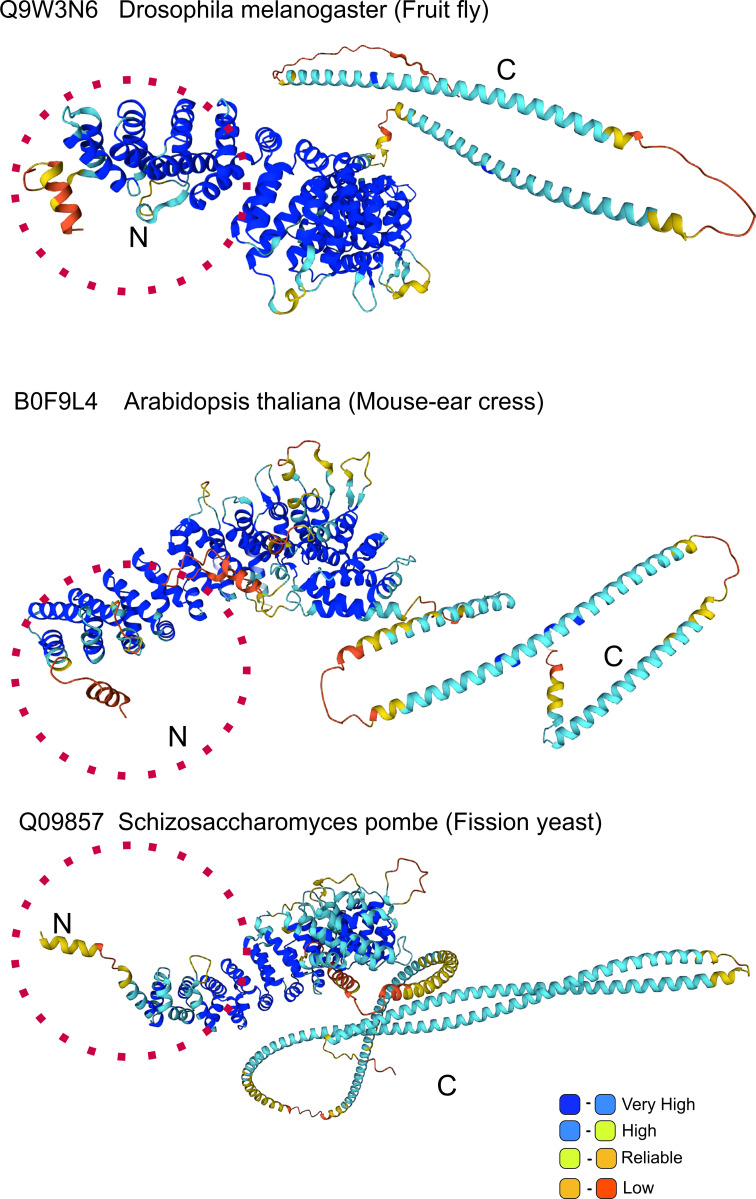
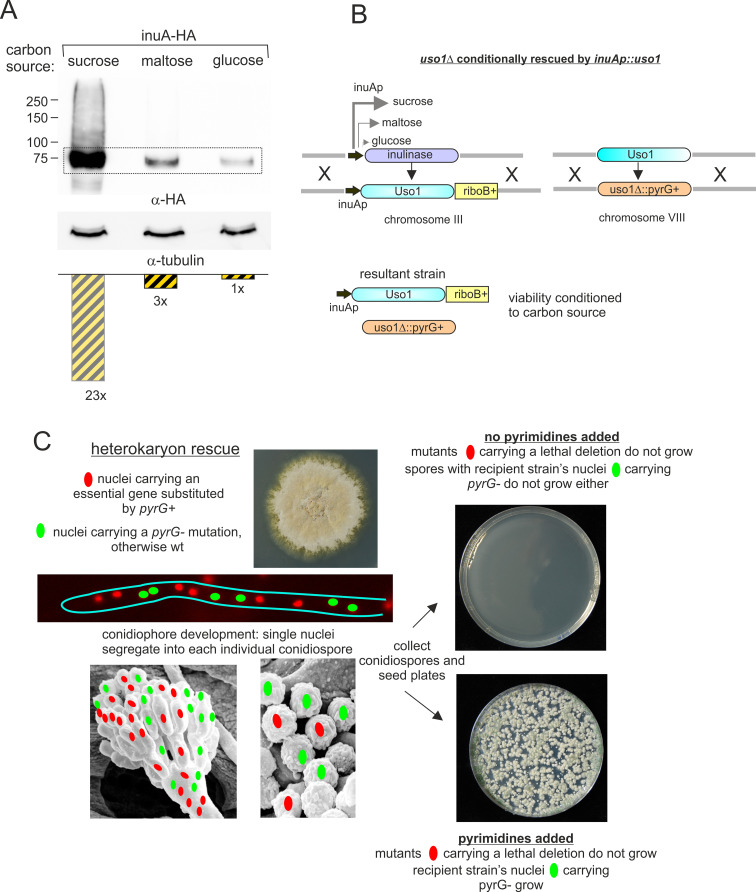
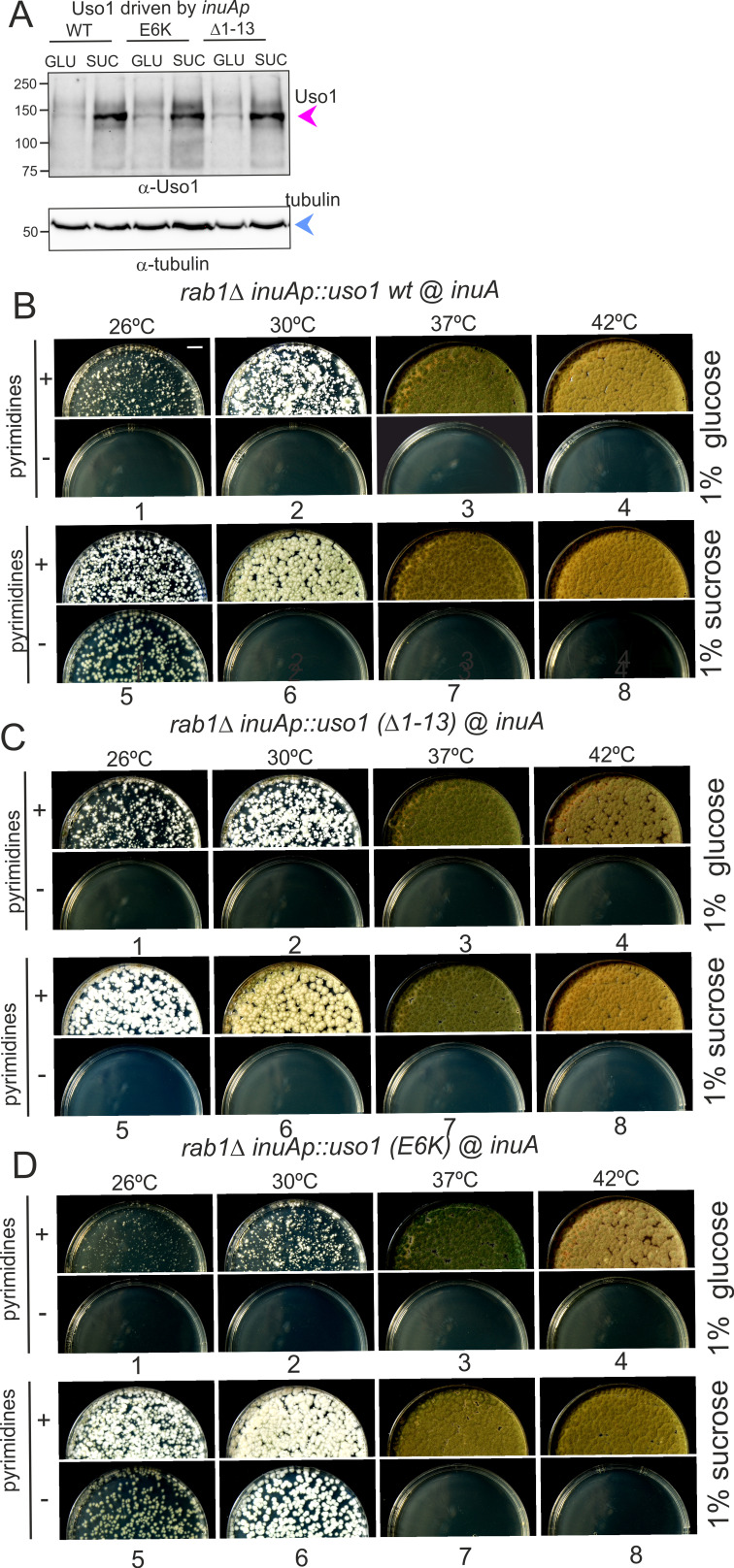
Uso1/p115 and RAB1 tether ER-derived vesicles to the Golgi. Uso1/p115 contains a globular-head-domain (GHD), a coiled-coil (CC) mediating dimerization/tethering, and a C-terminal region (CTR) interacting with golgins. Uso1/p115 is recruited to vesicles by RAB1. Genetic studies placed Uso1 paradoxically acting upstream of, or in conjunction with RAB1 (Sapperstein et al., 1996). We selected two missense mutations in uso1 resulting in E6K and G540S in the GHD that rescued lethality of rab1 -deficient Aspergillus nidulans . The mutations are phenotypically additive, their combination suppressing the complete absence of RAB1, which emphasizes the key physiological role of the GHD. In living hyphae Uso1 recurs on puncta (60 s half-life) colocalizing partially with the Golgi markers RAB1, Sed5, and GeaA/Gea1/Gea2, and totally with the retrograde cargo receptor Rer1, consistent with Uso1 dwelling in a very early Golgi compartment from which ER residents reaching the Golgi recycle back to the ER. Localization of Uso1, but not of Uso1 E6K/G540S , to puncta is abolished by compromising RAB1 function, indicating that E6K/G540S creates interactions bypassing RAB1. That Uso1 delocalization correlates with a decrease in the number of Gea1 cisternae supports that Uso1-and-Rer1-containing puncta are where the protein exerts its physiological role. In S-tag-coprecipitation experiments, Uso1 is an associate of the Sed5/Bos1/Bet1/Sec22 SNARE complex zippering vesicles with the Golgi, with Uso1 E6K/G540S showing a stronger association. Using purified proteins, we show that Bos1 and Bet1 bind the Uso1 GHD directly. However, Bet1 is a strong E6K/G540S-independent binder, whereas Bos1 is weaker but becomes as strong as Bet1 when the GHD carries E6K/G540S. G540S alone markedly increases GHD binding to Bos1, whereas E6K causes a weaker effect, correlating with their phenotypic contributions. AlphaFold2 predicts that G540S increases the binding of the GHD to the Bos1 Habc domain. In contrast, E6K lies in an N-terminal, potentially alpha-helical, region that sensitive genetic tests indicate as required for full Uso1 function. Remarkably, this region is at the end of the GHD basket opposite to the end predicted to interact with Bos1. We show that, unlike dimeric full-length and CTR∆ Uso1 proteins, the GHD lacking the CC/CTR dimerization domain, whether originating from bacteria or Aspergillus extracts and irrespective of whether it carries or not E6K/G540S, would appear to be monomeric. With the finding that overexpression of E6K/G540S and wild-type GHD complement uso1∆ , our data indicate that the GHD monomer is capable of providing, at least partially, the essential Uso1 functions, and that long-range tethering activity is dispensable. Rather, these findings strongly suggest that the essential role of Uso1 involves the regulation of SNAREs.
Overview
The claims and statistics of this paper haven’t been checked yet.
Run the check — free, no account needed. It reads the open-access text and checks the sources it cites.
Integrity signals
Registry
Cites
Statistics
Figures
Verification
Claims the paper makes
The claims and statistics of this paper haven’t been checked yet.
Run the check — free, no account needed. It reads the open-access text and checks the sources it cites.
Self-check
Percentages, sums and reported differences re-computed from the paper’s own numbers.
The self-check needs the paper’s full text.
Citations
Cites
Highly accurate protein structure prediction with AlphaFold
Jumper, J., Evans, R., Pritzel, A., Green, T., Figurnov, M., Ronneberger, O., Tunyasuvunakool, K., Bates, R., Žídek, A., Potapenko, A., et al. (2021) · Nature · doi:10.1038/s41586-021-03819-2 · Cited by 43,764
Research works printed but not linked: 93
- Allan, 2000, Rab1 recruitment of P115 into a cis-SNARE complex: programming budding COPII vesicles for fusion, Science, 289, 444, 10.1126/science.289.5478.444 · DOI · Paper page
- An, 2009, Structural and functional analysis of the Globular head domain of P115 provides insight into membrane tethering, Journal of Molecular Biology, 391, 26, 10.1016/j.jmb.2009.04.062 · DOI
- Arst, 2014, GBF/Gea mutant with a single substitution sustains fungal growth in the absence of BIG/Sec7, FEBS Letters, 588, 4799, 10.1016/j.febslet.2014.11.014 · DOI
- Baker, 2015, A direct role for the Sec1/Munc18-family protein Vps33 as a template for SNARE assembly, Science, 349, 1111, 10.1126/science.aac7906 · DOI
- Baker, 2016, Chaperoning SNARE assembly and disassembly, Nature Reviews. Molecular Cell Biology, 17, 465, 10.1038/nrm.2016.65 · DOI
- Banfield, 1995, A SNARE-like protein required for traffic through the Golgi complex, Nature, 375, 10.1038/375806a0 · DOI
- Barlowe, 2013, Secretory protein Biogenesis and traffic in the early secretory pathway, Genetics, 193, 383, 10.1534/genetics.112.142810 · DOI
- Beard, 2005, A cryptic Rab1-binding site in the P115 tethering protein, The Journal of Biological Chemistry, 280, 25840, 10.1074/jbc.M503925200 · DOI
- Behnia, 2007, The yeast orthologue of Grasp65 forms a complex with a coiled-coil protein that contributes to ER to Golgi traffic, The Journal of Cell Biology, 176, 255, 10.1083/jcb.200607151 · DOI
- Bentley, 2006, SNARE status regulates tether recruitment and function in homotypic COPII vesicle fusion, The Journal of Biological Chemistry, 281, 38825, 10.1074/jbc.M606044200 · DOI
- Bracher, 2002, Structural basis for the Golgi membrane recruitment of Sly1P by Sed5P, The EMBO Journal, 21, 6114, 10.1093/emboj/cdf608 · DOI
- Bravo-Plaza, 2019, Identification of the Guanine nucleotide exchange factor for Sar1 in the filamentous fungal model Aspergillus nidulans, Biochimica et Biophysica Acta. Molecular Cell Research, 1866, 10.1016/j.bbamcr.2019.118551 · DOI
- Cai, 2007, TRAPPI tethers COPII vesicles by binding the coat subunit Sec23, Nature, 445, 941, 10.1038/nature05527 · DOI
- Cao, 1998, Initial docking of ER-derived Vesicles requires Uso1P and Ypt1P but is independent of SNARE proteins, The EMBO Journal, 17, 2156, 10.1093/emboj/17.8.2156 · DOI
- Cove, 1966, The induction and repression of nitrate reductase in the fungus Aspergillus nidulans, Biochimica et Biophysica Acta, 113, 51, 10.1016/s0926-6593(66)80120-0 · DOI
- Cruz-Garcia, 2014, Remodeling of secretory compartments creates CUPS during nutrient starvation, The Journal of Cell Biology, 207, 695, 10.1083/jcb.201407119 · DOI
- Dascher, 1991, Identification and structure of four yeast genes (SLY) that are able to suppress the functional loss of Ypt1, a member of the RAS superfamily, Mol Cell Biol, 11, 872
- Day, 2013, A three-stage model of Golgi structure and function, Histochemistry and Cell Biology, 140, 239, 10.1007/s00418-013-1128-3 · DOI
- Day, 2018, Budding yeast has a minimal endomembrane system, Developmental Cell, 44, 56, 10.1016/j.devcel.2017.12.014 · DOI
- Demircioglu, 2014, The SM protein Sly1 accelerates assembly of the ER-Golgi SNARE complex, PNAS, 111, 13828, 10.1073/pnas.1408254111 · DOI
- Galindo, 2016, Structural insights into Arl1-mediated targeting of the ARF-GEF Big1 to the trans-Golgi, Cell Reports, 16, 839, 10.1016/j.celrep.2016.06.022 · DOI
- Galindo, 2021, Cryo-EM structure of metazoan TRAPPIII, the multi-subunit complex that activates the GTPase Rab1, The EMBO Journal, 40, 10.15252/embj.2020107608 · DOI
- Garcia-Mata, 2003, The membrane-Tethering protein P115 interacts with Gbf1, an ARF Guanine-nucleotide-exchange factor, EMBO Reports, 4, 10.1038/sj.embor.embor762 · DOI
- Gustafson, 2017, Regulation of ARF activation occurs via distinct mechanisms at early and late Golgi compartments, Mol Biol Cell, 28, 10.1091/mbc.E17-06-0370 · DOI
- Halaby, 2018, The HUS box is required for allosteric regulation of the Sec7 ARF-GEF, The Journal of Biological Chemistry, 293, 6682, 10.1074/jbc.RA117.001318 · DOI
- Heo, 2020, Crystal structures of Uso1 membrane tether reveal an alternative conformation in the Globular head domain, Scientific Reports, 10, 10.1038/s41598-020-66480-1 · DOI
- Hernández-González, 2015, Conditional inactivation of Aspergillus nidulans sarA(SAR1) uncovers the Morphogenetic potential of regulating endoplasmic reticulum (ER) exit, Molecular Microbiology, 95, 491, 10.1111/mmi.12880 · DOI
- Hernández-González, 2018, Genetic dissection of the secretory route followed by a fungal extracellular Glycosyl Hydrolase, Molecular Microbiology, 109, 781, 10.1111/mmi.14073 · DOI
- Hernández-González, 2019, COPI Localizes to the early Golgi in Aspergillus nidulans, Fungal Genetics and Biology, 123, 78, 10.1016/j.fgb.2018.12.003 · DOI
- Hu, 2015, Structural basis for the interaction between the Golgi reassembly-stacking protein Grasp65 and the Golgi matrix protein Gm130, The Journal of Biological Chemistry, 290, 26373, 10.1074/jbc.M115.657940 · DOI
- Jedd, 1995, The Ypt1 Gtpase is essential for the first two steps of the yeast secretory pathway, The Journal of Cell Biology, 131, 583, 10.1083/jcb.131.3.583 · DOI
- Joiner, 2021, Structural basis of TRAPPIII-mediated Rab1 activation, The EMBO Journal, 40, 10.15252/embj.2020107607 · DOI
- Kurokawa, 2014, Contact of cis-Golgi with ER exit sites executes cargo capture and delivery from the ER, Nature Communications, 5, 10.1038/ncomms4653 · DOI
- Lord, 2011, Sequential interactions with Sec23 control the direction of vesicle traffic, Nature, 473, 181, 10.1038/nature09969 · DOI
- Losev, 2006, Golgi maturation visualized in living yeast, Nature, 441, 1002, 10.1038/nature04717 · DOI
- Lupashin, 1997, T-SNARE activation through transient interaction with a rab-like guanosine triphosphatase, Science, 276, 1255, 10.1126/science.276.5316.1255 · DOI
- Malsam, 2011, Organization of SNAREs within the Golgi stack, Cold Spring Harbor Perspectives in Biology, 3, 10.1101/cshperspect.a005249 · DOI
- Matsuura-Tokita, 2006, Live imaging of yeast Golgi cisternal maturation, Nature, 441, 1007, 10.1038/nature04737 · DOI
- McDonold, 2014, Four Gtpases Differentially regulate the Sec7 ARF-GEF to direct traffic at the trans-Golgi network, Developmental Cell, 30, 759, 10.1016/j.devcel.2014.07.016 · DOI
- McNew, 2000, Compartmental specificity of cellular membrane fusion encoded in SNARE proteins, Nature, 407, 153, 10.1038/35025000 · DOI
- Mirdita, 2022, Colabfold: making protein folding accessible to all, Nature Methods, 19, 679, 10.1038/s41592-022-01488-1 · DOI · Paper page
- Muccini, 2022, Structural basis for activation of Arf1 at the Golgi complex, Cell Reports, 40, 10.1016/j.celrep.2022.111282 · DOI
- Nakajima, 1991, A cytoskeleton-related Gene, uso1, is required for intracellular protein transport in Saccharomyces cerevisiae, The Journal of Cell Biology, 113, 245, 10.1083/jcb.113.2.245 · DOI
- Nayak, 2006, A versatile and efficient gene targeting system for Aspergillus nidulans, Genetics, 172, 1557, 10.1534/genetics.105.052563 · DOI
- Osmani, 1988, Spindle formation and chromatin condensation in cells blocked in interphase by mutation of a negative cell cycle control Gene, Cell, 52, 241, 10.1016/0092-8674(88)90513-2 · DOI
- Pantazopoulou, 2011, Characterization of Aspergillus nidulans RabcRab6, Traffic, 12, 386, 10.1111/j.1600-0854.2011.01164.x · DOI
- Pantazopoulou, 2016, The Golgi apparatus: insights from filamentous fungi, Mycologia, 108, 603, 10.3852/15-309 · DOI
- Pantazopoulou, 2019, A kinetic view of membrane traffic pathways can transcend the classical view of Golgi compartments, Frontiers in Cell and Developmental Biology, 7, 10.3389/fcell.2019.00153 · DOI
- Park, 2005, Mutations in a highly conserved region of the Arf1P activator Gea2 block anterograde Golgi transport but not COPI recruitment to membranes, Molecular Biology of the Cell, 16, 3786, 10.1091/mbc.e05-04-0289 · DOI
- Parlati, 2002, Distinct SNARE complexes mediating membrane fusion in Golgi transport based on combinatorial specificity, PNAS, 99, 5424, 10.1073/pnas.082100899 · DOI
- Pelham, 1999, Snares and the secretory pathway-lessons from yeast, Experimental Cell Research, 247, 1, 10.1006/excr.1998.4356 · DOI
- Pelham, 2001, Snares and the specificity of membrane fusion, Trends in Cell Biology, 11, 99, 10.1016/s0962-8924(01)01929-8 · DOI
- Peñalva, 2005, Tracing the endocytic pathway of Aspergillus nidulans with FM4-64, Fungal Genetics and Biology, 42, 963, 10.1016/j.fgb.2005.09.004 · DOI
- Peñalva, 2020, Tracking Exocytosis of a GPI-anchored protein in Aspergillus nidulans, Traffic, 21, 675, 10.1111/tra.12761 · DOI
- Peng, 2002, Sly1 protein bound to Golgi Syntaxin Sed5P allows assembly and contributes to specificity of SNARE fusion complexes, The Journal of Cell Biology, 157, 645, 10.1083/jcb.200202006 · DOI
- Pinar, 2013, Acute inactivation of the Aspergillus nidulans Golgi membrane fusion machinery: correlation of apical extension arrest and tip swelling with cisternal disorganization, Molecular Microbiology, 89, 228, 10.1111/mmi.12280 · DOI
- Pinar, 2015, TRAPPII regulates exocytic Golgi exit by mediating nucleotide exchange on the Ypt31 orthologue Rabe/Rab11, PNAS, 112, 4346, 10.1073/pnas.1419168112 · DOI
- Pinar, 2017, Aspergillus nidulans Baph is a Rab11 Effector that connects membranes in the Spitzenkörper with basal autophagy, Molecular Microbiology, 106, 452, 10.1111/mmi.13777 · DOI
- Pinar, 2019, Characterization of Aspergillus nidulans Trapps Uncovers unprecedented similarities with Metazoans and reveals the modular assembly of TRAPPII, PLOS Genetics, 15, 10.1371/journal.pgen.1008557 · DOI
- Pinar, 2020, En bloc TGN recruitment of Aspergillus TRAPPII reveals TRAPP maturation as unlikely to drive Rab1-to-Rab11 transition, Journal of Cell Science, 133, 10.1242/jcs.241141 · DOI
- Pinar, 2021, The fungal RABOME: RAB Gtpases acting in the Endocytic and Exocytic pathways of Aspergillus nidulans (with excursions to other Filamentous Fungi), Molecular Microbiology, 116, 53, 10.1111/mmi.14716 · DOI
- Pinar, 2022, The type V myosin-containing complex HUM is a Rab11 Effector Powering movement of Secretory Vesicles, IScience, 25, 10.1016/j.isci.2022.104514 · DOI
- Ren, 2009, A structure-based mechanism for Vesicle capture by the Multisubunit Tethering complex Dsl1, Cell, 139, 1119, 10.1016/j.cell.2009.11.002 · DOI
- Rexach, 1994, Characteristics of Endoplasmic Reticulum-derived transport Vesicles, The Journal of Cell Biology, 126, 1133, 10.1083/jcb.126.5.1133 · DOI · Paper page
- Richardson, 2012, The Sec7 ARF-GEF is recruited to the Trans-Golgi network by positive feedback, Dev Cell, 22, 799, 10.1016/j.devcel.2012.02.006 · DOI
- Richardson, 2016, The Sec7 N-terminal regulatory domains facilitate membrane-proximal activation of the Arf1 Gtpase, eLife, 5, 10.7554/eLife.18204 · DOI
- Riedel, 2018, The two TRAPP complexes of Metazoans have distinct roles and act on different Rab Gtpases, The Journal of Cell Biology, 217, 601, 10.1083/jcb.201705068 · DOI
- Rizo, 2012, The membrane fusion enigma: Snares, Sec1/Munc18 proteins, and their accomplices--guilty as charged, Annual Review of Cell and Developmental Biology, 28, 279, 10.1146/annurev-cellbio-101011-155818 · DOI
- Sánchez-León, 2015, The Rab Gtpase YPT-1 associates with Golgi cisternae and Spitzenkörper microvesicles in Neurospora Crassa, Molecular Microbiology, 95, 472, 10.1111/mmi.12878 · DOI
- Sapperstein, 1995, P115 is a general vesicular transport factor related to the yeast Endoplasmic Reticulum to Golgi transport factor Uso1P, PNAS, 92, 522, 10.1073/pnas.92.2.522 · DOI
- Sapperstein, 1996, Assembly of the ER to Golgi SNARE complex requires Uso1P, The Journal of Cell Biology, 132, 755, 10.1083/jcb.132.5.755 · DOI
- Sato, 2003, Rer1P, a retrieval receptor for ER membrane proteins, recognizes Transmembrane domains in multiple modes, Molecular Biology of the Cell, 14, 3605, 10.1091/mbc.e02-12-0777 · DOI
- Schuck, 2000, Size-distribution analysis of macromolecules by sedimentation velocity ultracentrifugation and Lamm equation modeling, Biophysical Journal, 78, 1606, 10.1016/S0006-3495(00)76713-0 · DOI
- Seog, 1994, Uso1 protein contains a coiled-coil rod region essential for protein transport from the ER to the Golgi apparatus in Saccharomyces cerevisiae, Journal of Biochemistry, 116, 1341, 10.1093/oxfordjournals.jbchem.a124685 · DOI
- Shorter, 2002, Sequential Tethering of Golgins and Catalysis of Snarepin assembly by the Vesicle-Tethering protein P115, The Journal of Cell Biology, 157, 45, 10.1083/jcb.200112127 · DOI
- Søgaard, 1994, A Rab protein is required for the assembly of SNARE complexes in the docking of transport Vesicles, Cell, 78, 937, 10.1016/0092-8674(94)90270-4 · DOI
- Striegl, 2009, Unusual armadillo fold in the human general vesicular transport factor P115, PLOS ONE, 4, 10.1371/journal.pone.0004656 · DOI
- Szewczyk, 2006, Fusion PCR and Gene targeting in Aspergillus nidulans, Nature Protocols, 1, 3111, 10.1038/nprot.2006.405 · DOI
- Thomas, 2018, The TRAPPIII complex activates the Gtpase Ypt1 (Rab1) in the Secretory pathway, The Journal of Cell Biology, 217, 283, 10.1083/jcb.201705214 · DOI
- Thomas, 2019, A Steric gating mechanism dictates the substrate specificity of a Rab-GEF, Developmental Cell, 48, 100, 10.1016/j.devcel.2018.11.013 · DOI
- Tilburn, 1983, Transformation by integration in Aspergillus nidulans, Gene, 26, 205, 10.1016/0378-1119(83)90191-9 · DOI
- Todd, 2007, Genetic manipulation of Aspergillus nidulans: Meiotic progeny for genetic analysis and strain construction, Nature Protocols, 2, 811, 10.1038/nprot.2007.112 · DOI
- Travis, 2020, Structural basis for the binding of Snares to the Multisubunit Tethering complex Dsl1, J Biol Chem, 295, 10.1074/jbc.RA120.013654 · DOI
- Tsui, 2001, Selective formation of Sed5P-containing SNARE complexes is mediated by Combinatorial binding interactions, Molecular Biology of the Cell, 12, 521, 10.1091/mbc.12.3.521 · DOI
- Wang, 2014, P115-SNARE interactions: A dynamic cycle of P115 binding monomeric SNARE motifs and releasing assembled bundles, Traffic, 16, 148, 10.1111/tra.12242 · DOI
- Weigel, 2021, ER-to-Golgi protein delivery through an interwoven, tubular network extending from ER, Cell, 184, 2412, 10.1016/j.cell.2021.03.035 · DOI
- Wooding, 1998, The Dynamics of Golgi protein traffic visualized in living yeast cells, Molecular Biology of the Cell, 9, 2667, 10.1091/mbc.9.9.2667 · DOI
- Wright, 2014, Regulating the large Sec7 ARF Guanine nucleotide exchange factors: the when, where and how of activation, Cell Mol Life Sci, 71, 10.1007/s00018-014-1602-7 · DOI
- Yamakawa, 1996, Uso1 protein is a Dimer with two Globular heads and a long coiled-coil tail, Journal of Structural Biology, 116, 356, 10.1006/jsbi.1996.0053 · DOI
- Yu, 2010, Tethering factors as organizers of intracellular vesicular traffic, Annual Review of Cell and Developmental Biology, 26, 137, 10.1146/annurev.cellbio.042308.113327 · DOI
- Yuan, 2017, Rewiring a Rab regulatory network reveals a possible inhibitory role for the Vesicle Tether, Uso1, PNAS, 114, E8637, 10.1073/pnas.1708394114 · DOI
- Zhang, 2020, Securing Snares for assembly, The Journal of Biological Chemistry, 295, 10136, 10.1074/jbc.H120.014815 · DOI
- Zhang, 2021, Chaperoning SNARE folding and assembly, Annual Review of Biochemistry, 90, 581, 10.1146/annurev-biochem-081820-103615 · DOI
Metadata
- Authors
- Bravo-Plaza, I., Tagua, V. G., Arst, H. N., Alonso, A., Pinar, M., Monterroso, B., Galindo, A., & Peñalva, M. A.
- Affiliations
- Consejo Superior de Investigaciones Científicas (ES)
- Instituto de Tecnologías Biomédicas, Hospital Universitario Nuestra Señora de Candelaria
- Imperial College London (GB)
- MRC Laboratory of Molecular Biology (GB)
- Corresponding author
- Peñalva, Miguel A
- ORCID
- Venue
- eLife
- Publisher
- eLife Sciences Publications, Ltd
- Published
- 2023-05-30
- Volume
- 12
- ISSN
- 2050-084X (ISSN-L)
- PMC
- PMC10275640
- OpenAlex
- W4378746447
- Cited by
- 10
- References
- 1
- Citations by year
- 2026: 2 · 2025: 4 · 2024: 4
- FWCI
- 1.45
- Type
- journal article
- Language
- en
- Open access
- gold
- doi.org
- Licence
- Locations
- eLife (publishedVersion, cc-by)
- bioRxiv (Cold Spring Harbor Laboratory) (acceptedVersion, cc-by)
- PubMed Central (publishedVersion, cc-by)
- PubMed (publishedVersion)
- DIGITAL.CSIC (Spanish National Research Council (CSIC)) (submittedVersion, cc-by)
- DOAJ (DOAJ: Directory of Open Access Journals) (submittedVersion, cc-by-sa)
- Funders
- Agencia Estatal de Investigación (BES-2016-077440, RTI2018-093344-B100, PID2021-124278OB-I00)
- Comunidad Autónoma de Madrid (S2017/BMD-3691)
- European Regional Development Fund
- European Social Fund
- Topics
- Life Sciences › Biochemistry, Genetics and Molecular Biology › Cell Biology › Cellular transport and secretion
- Life Sciences › Biochemistry, Genetics and Molecular Biology › Molecular Biology › Fungal and yeast genetics research
- Life Sciences › Biochemistry, Genetics and Molecular Biology › Cell Biology › Autophagy in Disease and Therapy
- Keywords
- p115, coiled-coil domain, SNARE proteins, Rab1, ER-Golgi transport, Golgi cisternae, Aspergillus nidulans, missense mutations, vesicle tethering
- MeSH terms
- Protein Domains, Golgi Apparatus, Branchio-Oto-Renal Syndrome, Vesicular Transport Proteins, SNARE Proteins
About these checks
Registry, retraction, Cites and statistics results are computed, not judged, with one exception: a printed reference that no index lists is read once by a model before it counts as a citation error. Claims are extracted by a model and kept only when their quote appears verbatim in the text; each cited source is then checked, with a model’s help, for whether it says what the claim relies on. Those verdicts can be wrong — read the claim’s quote and the cited source before relying on one.
Statistics and arithmetic are recomputed, not judged.
Confidence bands are shown only for fields calibrated on our annotated test set. None is calibrated yet, so no band is shown.
What counts as a claim ›How we measure confidence ›How we check this ›
Are you an author, or do you see a problem with this page? Request a review
