

The DOI matches its Crossref record; 51 of the 51 references it cites were found in a registry or an index.
Zinc activation of OTOP proton channels identifies structural elements of the gating apparatus
Open accessPublished version of a preprint
Abstract
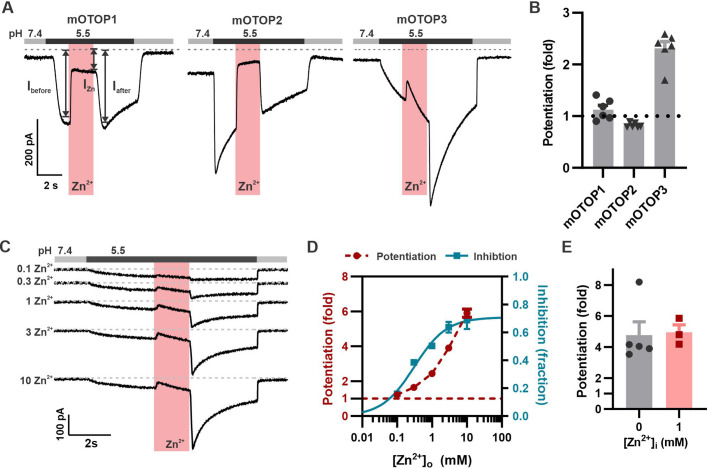
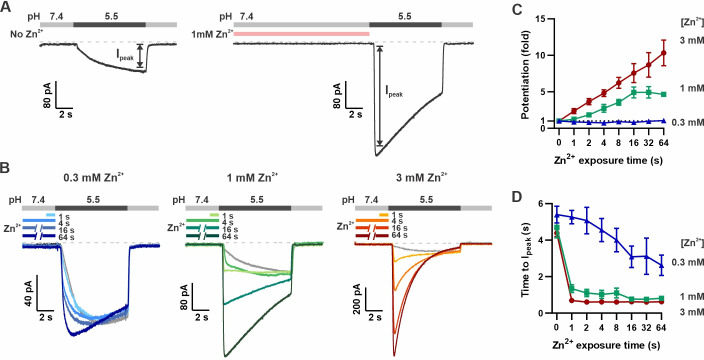
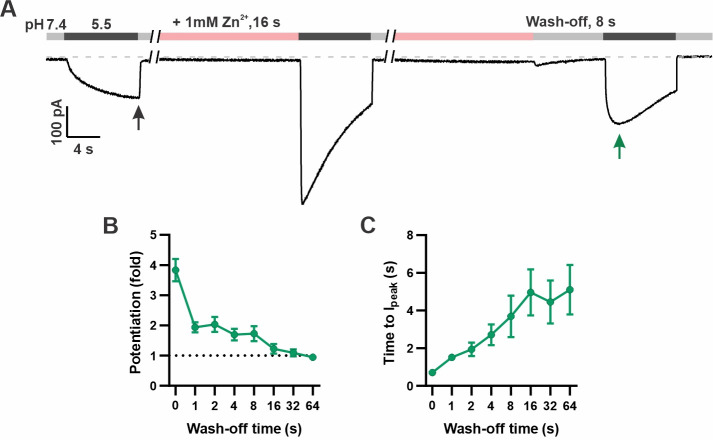
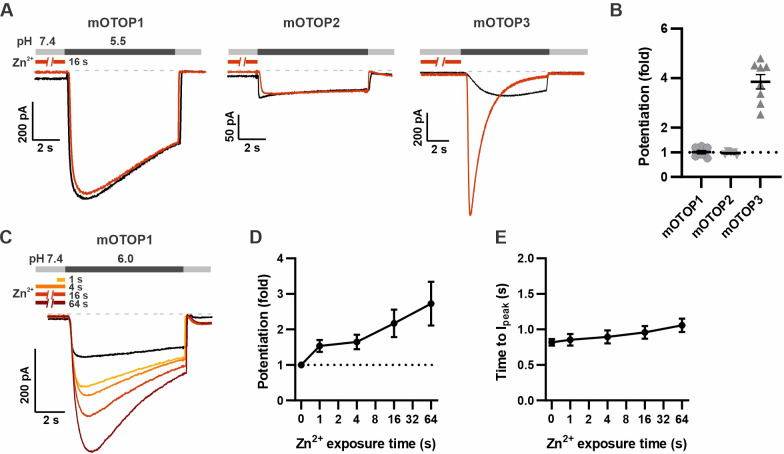
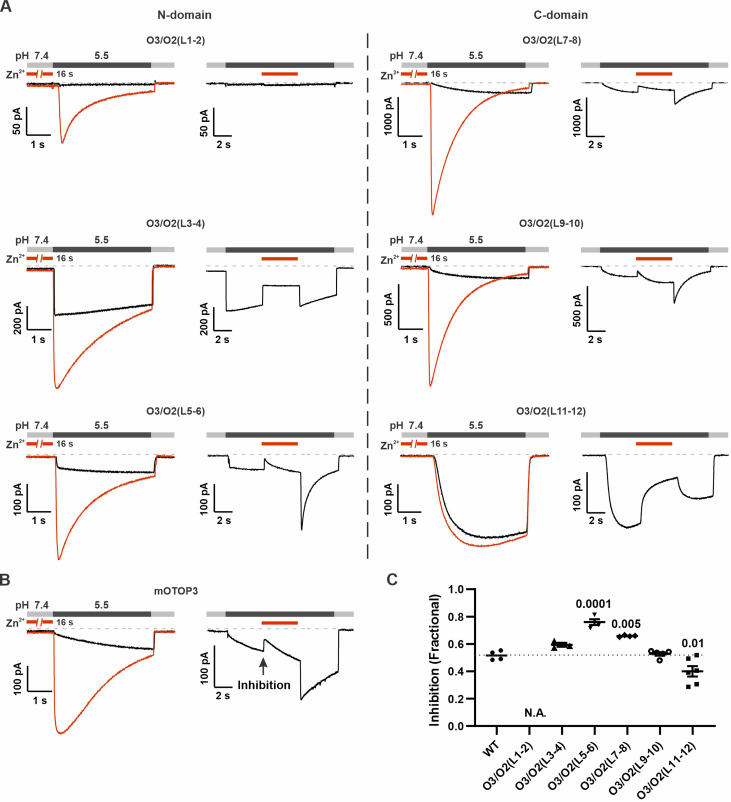
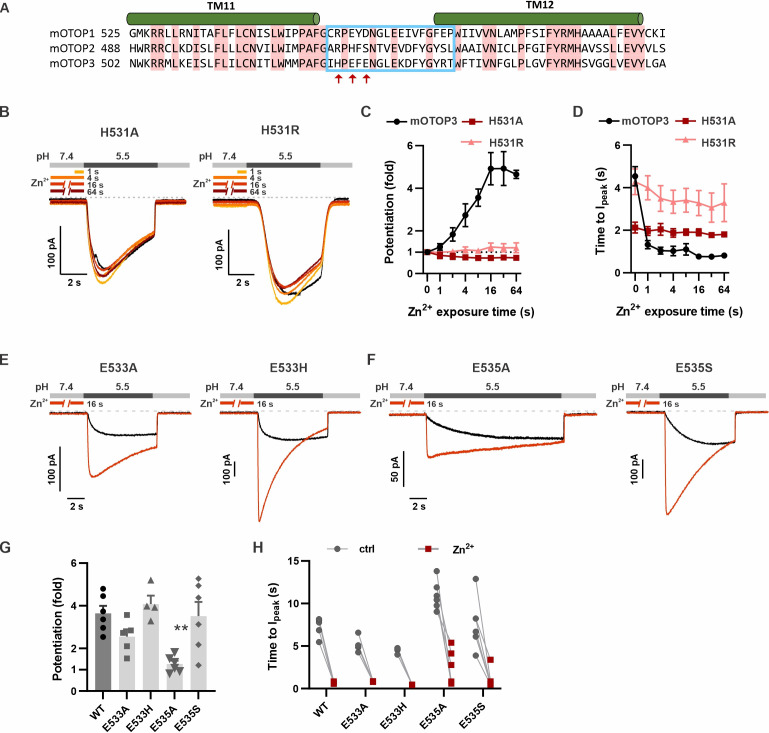
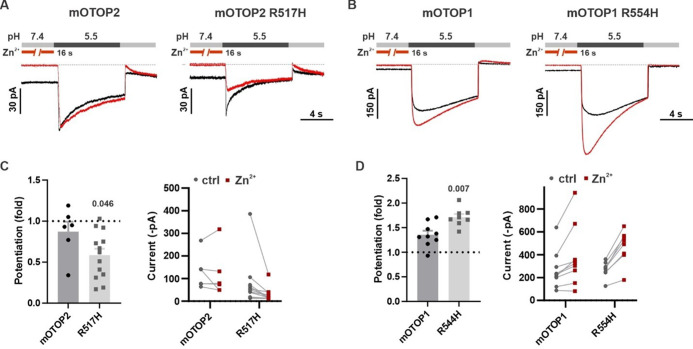
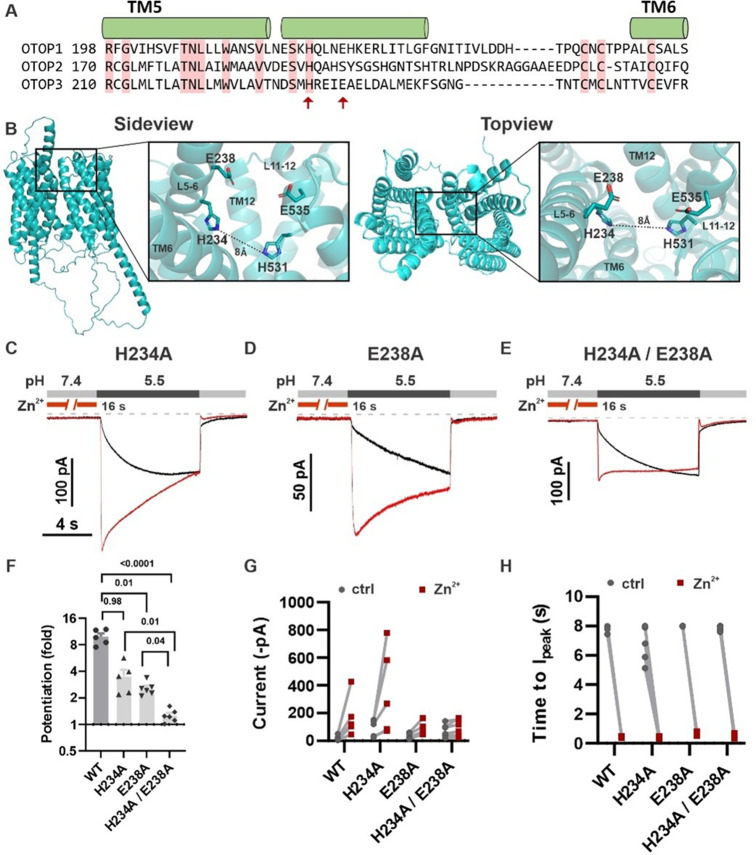
Otopetrin proteins (OTOPs) form proton-selective ion channels that are expressed in diverse cell types where they mediate detection of acids or regulation of pH. In vertebrates there are three family members: OTOP1 is required for formation of otoconia in the vestibular system and it forms the receptor for sour taste, while the functions of OTOP2 and OTOP3 are not yet known. Importantly, the gating mechanisms of any of the OTOP channels are not well understood. Here, we show that zinc (Zn 2+) , as well as other transition metals including copper (Cu 2+ ), potently activates murine OTOP3 (mOTOP3). Zn 2+ pre-exposure increases the magnitude of mOTOP3 currents to a subsequent acid stimulus by as much as 10-fold. In contrast, mOTOP2 currents are insensitive to activation by Zn 2+ . Swapping the extracellular tm 11–12 linker between mOTOP3 and mOTOP2 was sufficient to eliminate Zn 2+ activation of mOTOP3 and confer Zn 2+ activation on mOTOP2. Mutation to alanine of H531 and E535 within the tm 11–12 linker and H234 and E238 within the 5–6 linker reduced or eliminated activation of mOTOP3 by Zn 2+ , indicating that these residues likely contribute to the Zn 2+ activating site. Kinetic modeling of the data is consistent with Zn 2+ stabilizing the opn2+en state of the channel, competing with H + for activation of the channels. These results establish the tm 11–12 and tm 5–6 linkers as part of the gating apparatus of OTOP channels and a target for drug discovery. Zn 2+ is an essential micronutrient and its activation of OTOP channels will undoubtedly have important physiological sequelae.
Overview
The claims and statistics of this paper haven’t been checked yet.
Run the check — free, no account needed. It reads the open-access text and checks the sources it cites.
Integrity signals
Registry
Cites
Statistics
Figures
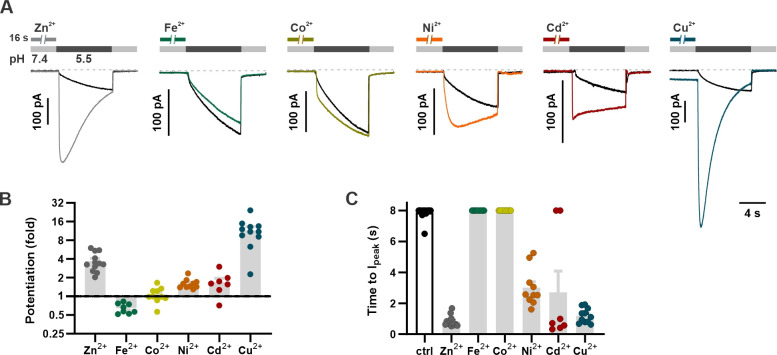
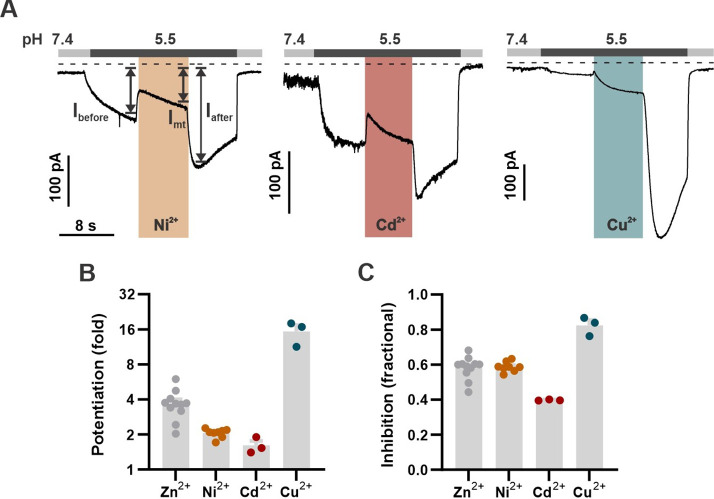
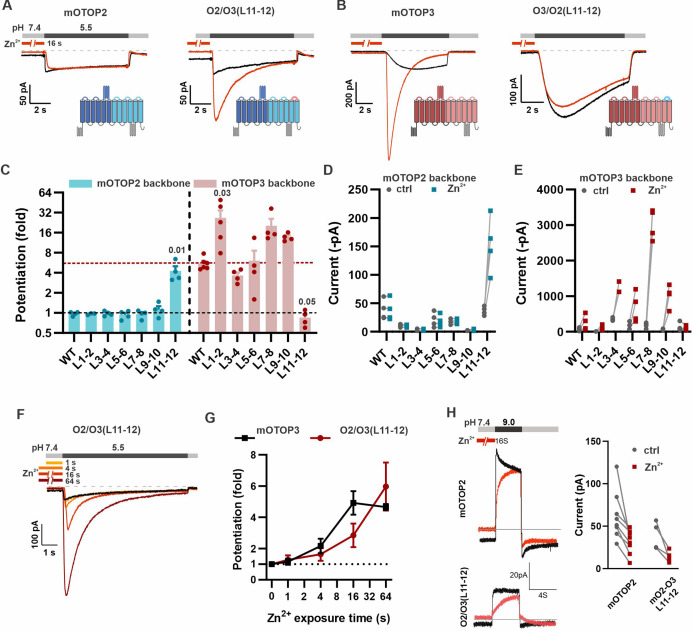
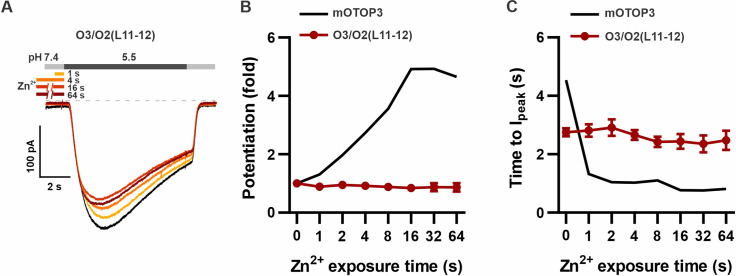
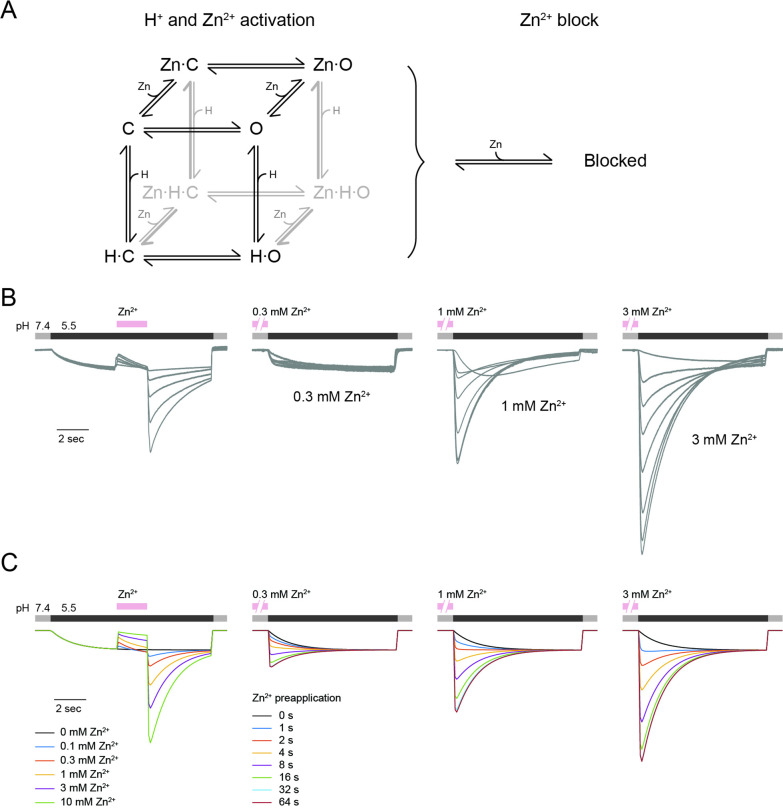
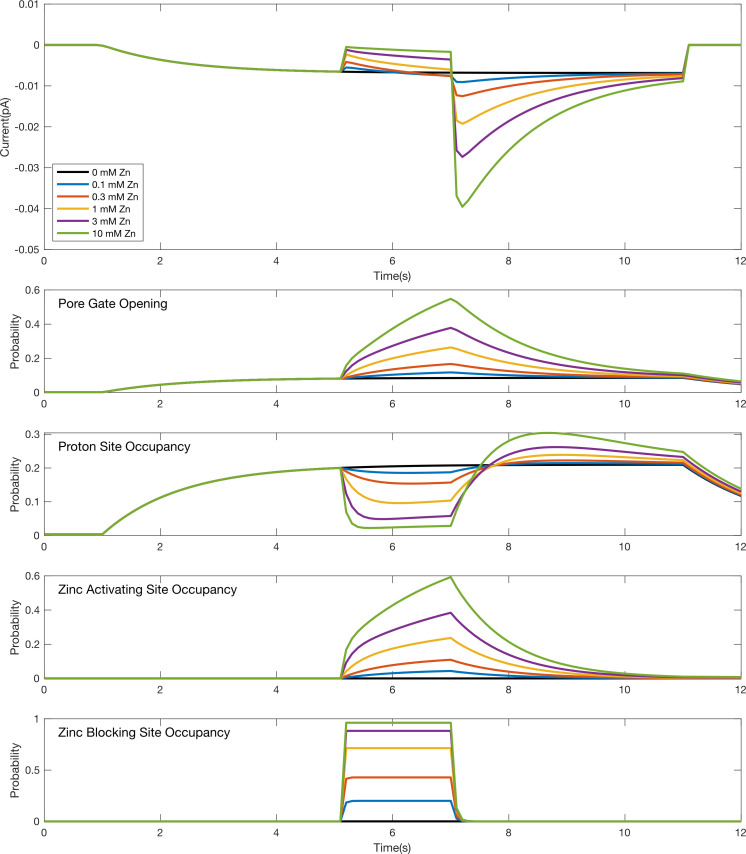
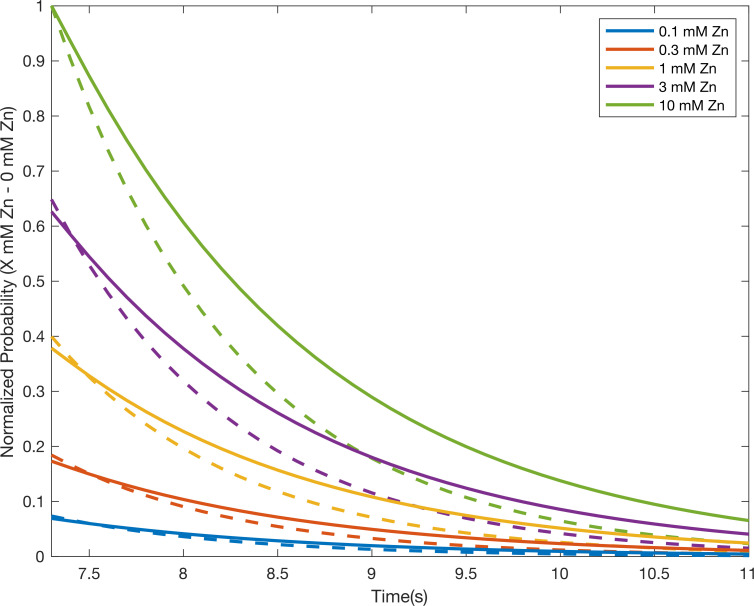
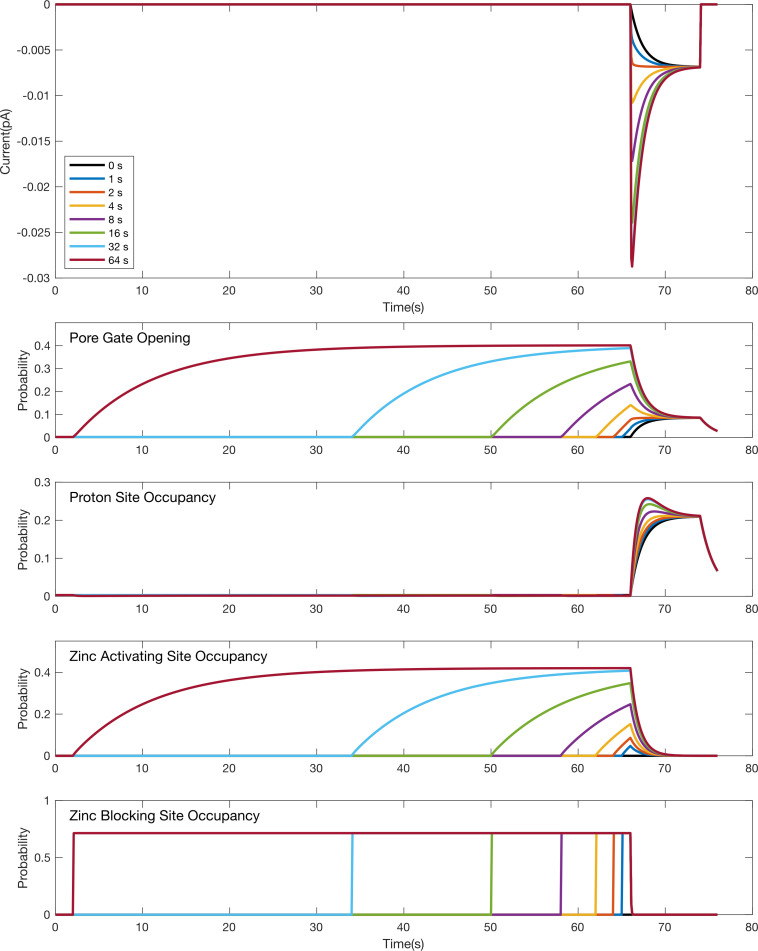
Verification
Claims the paper makes
The claims and statistics of this paper haven’t been checked yet.
Run the check — free, no account needed. It reads the open-access text and checks the sources it cites.
Self-check
Percentages, sums and reported differences re-computed from the paper’s own numbers.
The self-check needs the paper’s full text.
Citations
Cites
Highly accurate protein structure prediction with AlphaFold
Jumper, J., Evans, R., Pritzel, A., Green, T., Figurnov, M., Ronneberger, O., Tunyasuvunakool, K., Bates, R., Žídek, A., Potapenko, A., et al. (2021) · Nature · doi:10.1038/s41586-021-03819-2 · Cited by 43,764
Varadi, M., Anyango, S., Deshpande, M., Nair, S., Natassia, C., Yordanova, G., Yuan, D., Stroe, O., Wood, G., Laydon, A., et al. (2022) · Nucleic Acids Research · doi:10.1093/nar/gkab1061 · Cited by 7,850
The biochemical basis of zinc physiology
Vallee, B. L., & Falchuk, K. H. (1993) · Physiological Reviews · doi:10.1152/physrev.1993.73.1.79 · Cited by 2,990
Zinc coordination, function, and structure of zinc enzymes and other proteins
Vallée, B. L., & Auld, D. S. (1990) · Biochemistry · doi:10.1021/bi00476a001 · Cited by 1,786
The Ionic Channels in Excitable Membranes
Keynes, R. D. (1975) · Novartis Foundation Symposia · doi:10.1002/9780470720134.ch11 · Cited by 1,648
Colonic epithelial cell diversity in health and inflammatory bowel disease
Parikh, K., Antanaviciute, A., Fawkner-Corbett, D., Jagielowicz, M., Aulicino, A., Lagerholm, C., Davis, S., Kinchen, J., Chen, H. H., Alham, N. K., et al. (2019) · Nature · doi:10.1038/s41586-019-0992-y · Cited by 860
Voltage-Gated Proton Channels and Other Proton Transfer Pathways
Decoursey, T. E. (2003) · Physiological Reviews · doi:10.1152/physrev.00028.2002 · Cited by 737
Voltage-gated ion channels and gating modifier toxins
Catterall, W. A., Cestèle, S., Yarov-Yarovoy, V., Yu, F. H., Konoki, K., & Scheuer, T. (2007) · Toxicon · doi:10.1016/j.toxicon.2006.09.022 · Cited by 640
Mutations Affecting Internal TEA Blockade Identify the Probable Pore-Forming Region of a K + Channel
Yellen, G., Jurman, M. E., Abramson, T., & MacKinnon, R. (1991) · Science · doi:10.1126/science.2000494 · Cited by 626
A voltage-gated proton-selective channel lacking the pore domain
Ramsey, I. S., Moran, M. M., Chong, J. A., & Clapham, D. E. (2006) · Nature · doi:10.1038/nature04700 · Cited by 612
Research works printed but not linked: 1
- Hille, 2001, Ionic Channels of Excitable Membranes
Metadata
- Authors
- Teng, B., Kaplan, J. P., Liang, Z., Chyung, K. S., Goldschen-Ohm, M. P., & Liman, E. R.
- Affiliations
- University of Southern California (US)
- The University of Texas at Austin (US)
- Corresponding author
- Liman, Emily R
- Venue
- eLife
- Publisher
- eLife Sciences Publications, Ltd
- Published
- 2023-04-13
- Volume
- 12
- ISSN
- 2050-084X (ISSN-L)
- PMC
- PMC10101688
- OpenAlex
- W4364350983
- Cited by
- 16
- References
- 51
- Citations by year
- 2026: 2 · 2025: 4 · 2024: 8 · 2023: 2
- FWCI
- 1.42
- Type
- journal article
- Language
- en
- Open access
- gold
- doi.org
- Licence
- cc-by
- creativecommons.org/licenses/by/4.0/ (vor)
- creativecommons.org/licenses/by/4.0/ (am)
- creativecommons.org/licenses/by/4.0/ (tdm)
- Locations
- eLife (publishedVersion, cc-by)
- bioRxiv (Cold Spring Harbor Laboratory) (acceptedVersion, cc-by)
- PubMed Central (publishedVersion, cc-by)
- PubMed (publishedVersion)
- DOAJ (DOAJ: Directory of Open Access Journals) (submittedVersion, cc-by-sa)
- Funders
- National Institutes of Health (R01GM131234, R01GM148591)
- Topics
- Life Sciences › Biochemistry, Genetics and Molecular Biology › Molecular Biology › Ion channel regulation and function
- Life Sciences › Neuroscience › Sensory Systems › Ion Channels and Receptors
- Health Sciences › Nursing › Nutrition and Dietetics › Biochemical Analysis and Sensing Techniques
- Keywords
- zinc activation, channel gating, acid sensing, sour taste, zinc-binding residues, kinetic modeling, pH control
- MeSH terms
- Acids, Animals, Membrane Proteins, Mutation, Protons, Vertebrates, Zinc, Mice
About these checks
Registry, retraction, Cites and statistics results are computed, not judged, with one exception: a printed reference that no index lists is read once by a model before it counts as a citation error. Claims are extracted by a model and kept only when their quote appears verbatim in the text; each cited source is then checked, with a model’s help, for whether it says what the claim relies on. Those verdicts can be wrong — read the claim’s quote and the cited source before relying on one.
Statistics and arithmetic are recomputed, not judged.
Confidence bands are shown only for fields calibrated on our annotated test set. None is calibrated yet, so no band is shown.
What counts as a claim ›How we measure confidence ›How we check this ›
Are you an author, or do you see a problem with this page? Request a review
How to cite
Cite CoChat for the checks on this page, and the paper for its own findings.
- This page
- CoChat. (2026). Citation check: Zinc activation of OTOP proton channels identifies structural elements of the gating apparatus. https://app.cochat.ai/papers/10.7554/elife.85317
- The paper
- Teng, B., Kaplan, J. P., Liang, Z., Chyung, K. S., Goldschen-Ohm, M. P., & Liman, E. R. (2023). Zinc activation of OTOP proton channels identifies structural elements of the gating apparatus. eLife. https://doi.org/10.7554/elife.85317
Data sources
Bibliographic data: Semantic Scholar, OpenAlex, Crossref.
Contains information from the Semantic Scholar Academic Graph Datasets, made available under the ODC Attribution License (ODC-BY 1.0).
Semantic Scholar’s data is described in: Kinney, R., et al. (2023). The Semantic Scholar Open Data Platform. arXiv:2301.10140.
