

Hypothalamic-Pituitary Axis Dysfunction, Central Diabetes Insipidus, and Syndrome of Inappropriate Antidiuretic Hormone Secretion as the First Clinical Presentation of Neurosarcoidosis: Why Early Diagnosis and Treatment is Important?
Open accessThe DOI matches its Crossref record; 50 of the 50 references it cites were found in a registry or an index; none of the 161 sources its claims cite is checked for support yet.
Abstract
Sarcoidosis is defined by granuloma formation in a multitude of organs. Despite its rare involvement in the nervous system, there are a number of cases that identify neurological symptoms to be the initial clinical manifestation of sarcoidosis. The involvement of the hypothalamic-pituitary (HP) axis presented most frequently with hormone deficiencies. Studies have reported that damage to the pituitary gland may be irreversible, and hormone abnormalities were generally permanent. Neurosarcoidosis has been described as the underlying cause of central diabetes insipidus (DI) and syndrome of inappropriate antidiuretic hormone (SIADH) secretion. The pathological mechanism that can lead both to deficiency and excess of antidiuretic hormone (ADH) secretion is still not fully understood. It has been shown that diagnosis of neurosarcoidosis remains challenging, as symptoms can be inconclusive and diagnostic tools are not sufficiently sensitive and specific. Early treatment may potentially reverse pituitary deficiencies, although studies to confirm this hypothesis are minimal. This review article aims to increase knowledge about central DI and SIADH caused by neurosarcoidosis, identify possible difficulties in diagnosis, and discuss the importance of early management. Clinical trials investigating the long-term therapeutic response in patients with HP sarcoidosis are essential, as there are currently no established guidelines for the treatment of neurosarcoidosis.
Overview
CoChat Summary
TL;DR
This narrative review summarizes hypothalamic-pituitary neurosarcoidosis presenting with central diabetes insipidus and SIADH, emphasizing that antidiuretic hormone abnormalities can be the first clinical manifestation and that diagnosis is challenging. It argues early corticosteroid treatment may salvage pituitary function, but evidence is limited to case reports/series and no treatment guidelines exist.
Key findings
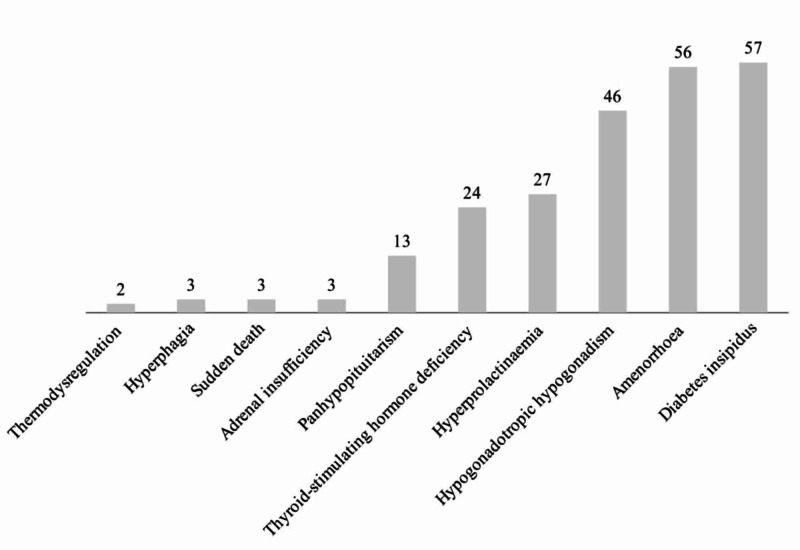
- Neurosarcoidosis occurs in approximately 5–15% of patients with systemic sarcoidosis; 52% initially present with neurological symptoms. Hypothalamic-pituitary involvement has a reported prevalence of 2.5%, and central diabetes insipidus is estimated in approximately 2% of patients with neurosarcoidosis.
- In a multicenter study of 24 patients, 54% had pituitary dysfunction in previously undiagnosed neurosarcoidosis. An earlier study found pituitary hormone abnormalities were the first sign of systemic sarcoidosis in 54.3% of patients, but improvement despite treatment occurred in only 13%, with all-cause mortality of 8.7%; that study included only four patients.
- Among 13 case reports reviewed, central diabetes insipidus was the first clinical presentation of sarcoidosis in 10 cases. In a 20-patient review, 17 had hypothalamic/pituitary MRI abnormalities, and for 14 treated patients MRI findings improved while diabetes insipidus symptoms persisted; mean duration from symptom onset to diagnosis was 3.4 months.
- Sarcoidosis as a definitive cause of SIADH was found in only four studies; in all reported cases, serum sodium normalized and clinical symptoms improved after corticosteroid therapy, although in one case hyponatremia failed to improve with standard therapy until corticosteroids were added. Neurosarcoidosis outcomes from a prior meta-analysis were complete remission 27%, incomplete remission 32%, stable disease 24%, deterioration 6%, and death 5%.
Methods
- Narrative literature review; the authors state that a systemic review was not conducted.
- Included studies were mostly case reports, case series, and a few review articles and observational studies; no randomized clinical trials related to the topic were found.
- The paper synthesizes published data on neurosarcoidosis, hypothalamic-pituitary axis dysfunction, central diabetes insipidus, and SIADH, using tables, figures, and case examples.
Limitations
- The paper states that it is not a systemic review and is subject to bias; included studies were mostly case reports, case series, and small observational studies; no randomized clinical trials were found; some patients were clinically diagnosed with sarcoidosis without histological confirmation; and review articles were limited by small sample sizes, potentially causing flawed comparison of findings.
- Evident from the text: no systematic search strategy or formal quality assessment is reported, and the evidence relies heavily on small, heterogeneous case reports, limiting generalizability and causal inference about whether early treatment reverses antidiuretic hormone abnormalities.
Model-written summary. Check it against the paper before relying on it.
Integrity signals
Registry
Cites
Statistics
Figures
Verification
Claims the paper makes
0 Valid · 0 Not valid · 87 Not checked · 26 Own results and interpretations
A result the paper states — it cites no source for it, so there is none to check. The quote shows it is in the paper.
In the paper
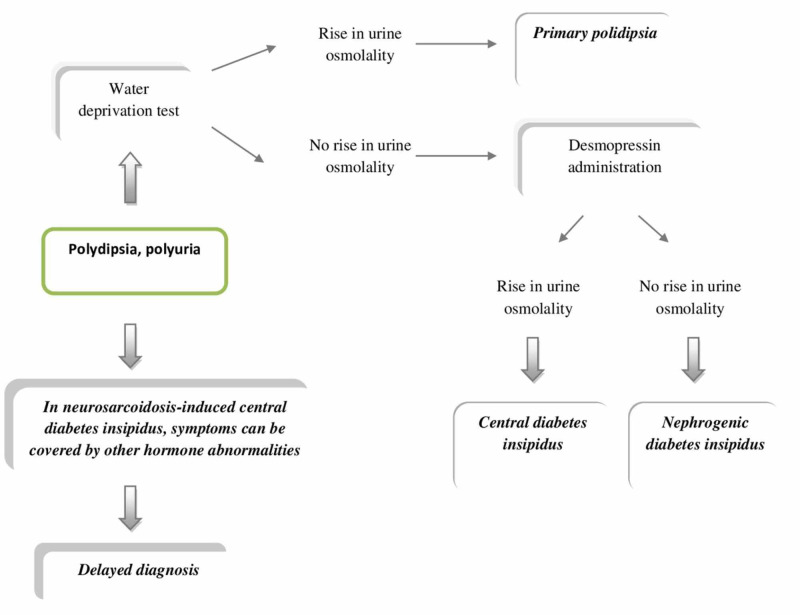
“Laboratory investigations revealed hypernatremia and low urine osmolality in the majority of patients.”
§ Hypothalamic-Pituitary Axis Dysfunction, Central Diabetes Insipidus, and Syndrome of Inappropriate Antidiuretic Hormone Secretion as the First Clinical Presentation of Neurosarcoidosis: Why Early Diagnosis and Treatment is Important? > Review
plainstates an association- Asserted: passes — The authors put it forward as true.
- Checkable: passes — It can be checked against evidence.
- Load-bearing: unclear — It is unclear whether the paper’s conclusions depend on it.
- Based: passes — The paper gives a reason why it holds.
A result the paper reports from its own data — it cites no other source for it, so there is none to check. The quote shows it is in the paper.
In the paper
“Out of 13 case reports included in this study, DI was the first clinical presentation of sarcoidosis in 10 cases.”
§ Hypothalamic-Pituitary Axis Dysfunction, Central Diabetes Insipidus, and Syndrome of Inappropriate Antidiuretic Hormone Secretion as the First Clinical Presentation of Neurosarcoidosis: Why Early Diagnosis and Treatment is Important? > Review
plainn = 10- Asserted: passes — The authors put it forward as true.
- Checkable: passes — It can be checked against evidence.
- Load-bearing: passes — The paper’s conclusions depend on it.
- Based: passes — The paper gives a reason why it holds.
A result the paper reports from its own data — it cites no other source for it, so there is none to check. The quote shows it is in the paper.
In the paper
“It is important to highlight that symptoms of central DI were the first manifestation of sarcoidosis in a substantial number of reported cases.”
§ Hypothalamic-Pituitary Axis Dysfunction, Central Diabetes Insipidus, and Syndrome of Inappropriate Antidiuretic Hormone Secretion as the First Clinical Presentation of Neurosarcoidosis: Why Early Diagnosis and Treatment is Important? > Review
plainstates an associationn = 10- Asserted: passes — The authors put it forward as true.
- Checkable: passes — It can be checked against evidence.
- Load-bearing: passes — The paper’s conclusions depend on it.
- Based: passes — The paper gives a reason why it holds.
None of the sources cited for this claim have been checked yet.
In the paper
“The mean duration from symptoms onset to diagnosis was 3.4 months and remains unclear if a lack of prompt diagnosis and treatment contributed to these findings.”
§ Hypothalamic-Pituitary Axis Dysfunction, Central Diabetes Insipidus, and Syndrome of Inappropriate Antidiuretic Hormone Secretion as the First Clinical Presentation of Neurosarcoidosis: Why Early Diagnosis and Treatment is Important? > Review
plainn = 20- Asserted: passes — The authors put it forward as true.
- Checkable: passes — It can be checked against evidence.
- Load-bearing: unclear — It is unclear whether the paper’s conclusions depend on it.
- Based: passes — The paper gives a reason why it holds.
A result the paper states — it cites no source for it, so there is none to check. The quote shows it is in the paper.
In the paper
“there are still no conclusive data if prompt diagnosis and treatment can reverse changes that lead to central DI”
§ Hypothalamic-Pituitary Axis Dysfunction, Central Diabetes Insipidus, and Syndrome of Inappropriate Antidiuretic Hormone Secretion as the First Clinical Presentation of Neurosarcoidosis: Why Early Diagnosis and Treatment is Important? > Review
plain- Asserted: passes — The authors put it forward as true.
- Checkable: passes — It can be checked against evidence.
- Load-bearing: passes — The paper’s conclusions depend on it.
- Based: passes — The paper gives a reason why it holds.
53 more claims
Create a free account to see all 113 claims and to verify the 161 references still open.
- It may state two separate claims as one. 33
- Probably not a substantial claim. 26
Self-check
Percentages, sums and reported differences re-computed from the paper’s own numbers.
Each contradiction between two passages listed here was confirmed by an independent check.
Rated minor: it would not touch a result — a value no result rests on, a p-value that stays on the same side of the significance level, or a conflict that is clerical, resolved elsewhere in the paper, or outside its own findings.
In the paper
§ Hypothalamic-Pituitary Axis Dysfunction, Central Diabetes Insipidus, and Syndrome of Inappropriate Antidiuretic Hormone Secretion as the First Clinical Presentation of Neurosarcoidosis: Why Early Diagnosis and Treatment is Important? > Review
“In all previously reported studies, a history of additional symptoms like erythema nodosum, uveitis, cough, and dyspnea, led to a more detailed investigation to determine the primary cause of SIADH [42,43].”
§ Hypothalamic-Pituitary Axis Dysfunction, Central Diabetes Insipidus, and Syndrome of Inappropriate Antidiuretic Hormone Secretion as the First Clinical Presentation of Neurosarcoidosis: Why Early Diagnosis and Treatment is Important? > Review
“Nevertheless, in one reported case, a patient diagnosed with SIADH and subsequently with hydrocephalus had no other symptoms associated with sarcoidosis.”
Rated minor: it would not touch a result — a value no result rests on, a p-value that stays on the same side of the significance level, or a conflict that is clerical, resolved elsewhere in the paper, or outside its own findings.
In the paper
§ Hypothalamic-Pituitary Axis Dysfunction, Central Diabetes Insipidus, and Syndrome of Inappropriate Antidiuretic Hormone Secretion as the First Clinical Presentation of Neurosarcoidosis: Why Early Diagnosis and Treatment is Important? > Introduction and background
“An earlier study indicated that pituitary hormone abnormalities (PHA) were the first sign of systemic sarcoidosis in 54.3% of patients. Furthermore, PHA improvement despite treatment was reported in only 13% of patients with all-cause mortality of 8.7% [11].”
§ Hypothalamic-Pituitary Axis Dysfunction, Central Diabetes Insipidus, and Syndrome of Inappropriate Antidiuretic Hormone Secretion as the First Clinical Presentation of Neurosarcoidosis: Why Early Diagnosis and Treatment is Important? > Introduction and background
“The significant limitation of this study is that it included only four patients.”
Rated minor: it would not touch a result — a value no result rests on, a p-value that stays on the same side of the significance level, or a conflict that is clerical, resolved elsewhere in the paper, or outside its own findings.
In the paper
§ Hypothalamic-Pituitary Axis Dysfunction, Central Diabetes Insipidus, and Syndrome of Inappropriate Antidiuretic Hormone Secretion as the First Clinical Presentation of Neurosarcoidosis: Why Early Diagnosis and Treatment is Important? > Review
“| Myopathy | 15% | 9-11% |”
§ Hypothalamic-Pituitary Axis Dysfunction, Central Diabetes Insipidus, and Syndrome of Inappropriate Antidiuretic Hormone Secretion as the First Clinical Presentation of Neurosarcoidosis: Why Early Diagnosis and Treatment is Important? > Review
“| Clinical manifestation | % of patients | 95 CI |”
Citations
Cites
(1999) · American Journal of Respiratory and Critical Care Medicine · doi:10.1164/ajrccm.160.2.ats4-99 · Cited by 1,902
The syndrome of inappropriate secretion of antidiuretic hormone
Bartter, F. C., & Schwartz, W. B. (1967) · The American Journal of Medicine · doi:10.1016/0002-9343(67)90096-4 · Cited by 1,276
Central nervous system sarcoidosisdiagnosis and management
Zajicek, J. P. (1999) · QJM · doi:10.1093/qjmed/92.2.103 · Cited by 742 · cited 1×
“Correct and prompt diagnosis and treatment should be ensured since early treatment may salvage pituitary function [7-10].”
BackgroundStern, B. J., Royal, W., Gelfand, J. M., Clifford, D. B., Tavee, J., Pawate, S., Berger, J. R., Aksamit, A. J., Krumholz, A., Pardo, C. A., et al. (2018) · JAMA Neurology · doi:10.1001/jamaneurol.2018.2295 · Cited by 398 · cited 4×
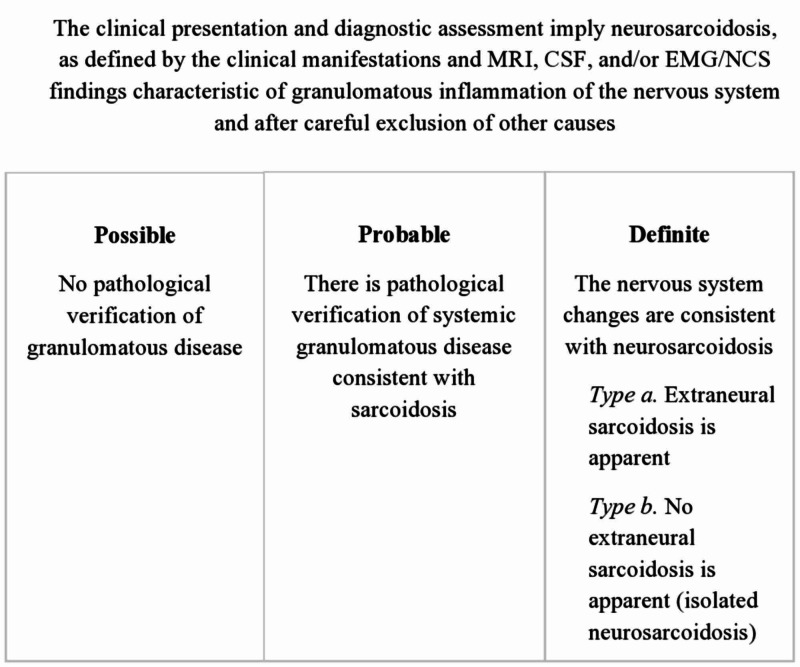
“According to these criteria, the diagnosis of ‘possible’, ‘probable’, and ‘definite’ neurosarcoidosis can be made (Figure 2) [8].”
BackgroundInfluentialClinical features, treatment and outcome in neurosarcoidosis: systematic review and meta-analysis
Fritz, D., van de Beek, D., & Brouwer, M. C. (2016) · BMC Neurology · doi:10.1186/s12883-016-0741-x · Cited by 385 · cited 7×
“The most frequent presentations of neurosarcoidosis are headache, cranial nerve dysfunction, ataxia, meningitis, sensory, or motor abnormalities (Table 1) [5,14].”
BackgroundResultInfluentialSarcoidosis: Causes, Diagnosis, Clinical Features, and Treatments
Jain, R., Yadav, D., Puranik, N., Guleria, R., & Jin, J.-O. (2020) · Journal of Clinical Medicine · doi:10.3390/jcm9041081 · Cited by 183 · cited 1×
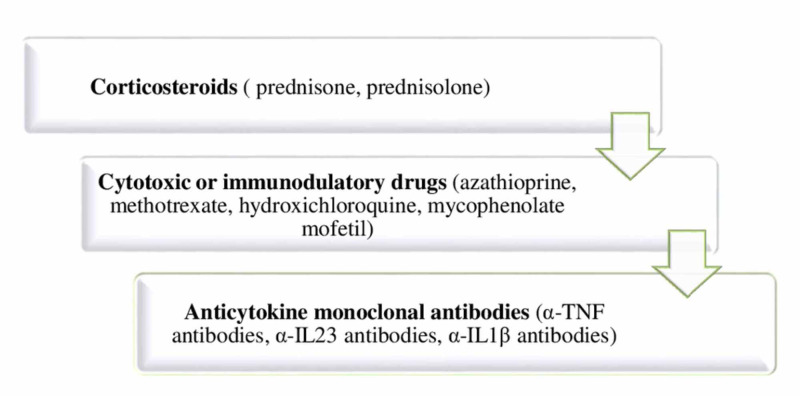
“Glucocorticoids are generally the initial therapy, whereas the more severe cases are candidates for the second and third-line therapy which includes cytotoxic and immunomodulatory drugs, in addition to monoclonal antibodies (Figure 3) [22,23].”
BackgroundGranuloma Formation in Pulmonary Sarcoidosis
Broos, C. E., van Nimwegen, M., Hoogsteden, H. C., Hendriks, R. W., Kool, M., & van den Blink, B. (2013) · Frontiers in Immunology · doi:10.3389/fimmu.2013.00437 · Cited by 177 · cited 1×
“Epitheloid granuloma formation begins with the interaction between dendritic cells, macrophages, T helper cells and occasional cytotoxic T lymphocytes, and B cells triggered by unclear immunologic mechanisms [2,20].”
BackgroundHypothalamo-pituitary sarcoidosis: a multicenter study of 24 patients
Langrand, C., Bihan, H., Raverot, G., Varron, L., Androdias, G., Borson-Chazot, F., Brue, T., Cathebras, P., Pinede, L., Muller, G., et al. (2012) · QJM · doi:10.1093/qjmed/hcs121 · Cited by 174 · cited 6×
“MRI findings in HP sarcoidosis most frequently include infiltrative lesions of the hypothalamus or pituitary gland and pituitary stalk thickening; however, normal MRI findings are reported in some cases which further can delay the diagnosis [1,4,24].”
BackgroundInfluentialDiagnosis and management of central diabetes insipidus in adults
Garrahy, A., Moran, C., & Thompson, C. J. (2019) · Clinical Endocrinology · doi:10.1111/cen.13866 · Cited by 111 · cited 2×
“Central DI is caused by neurohypophysial destruction and it is suggested that more than 90% of vasopressinergic neurons have to be damaged to cause symptoms of ADH deficiency [25,26].”
BackgroundBullmann, C., Faust, M., Hoffmann, A., Heppner, C., Jockenhovel, F., Muller-Wieland, D., & Krone, W. (2000) · European Journal of Endocrinology · doi:10.1530/eje.0.1420365 · Cited by 84 · cited 6×
“This observation falls within the range of a previously reported review article from 2000 that described five patients who all presented with symptoms of DI and subsequently were diagnosed with neurosarcoidosis [29].”
BackgroundResultInfluential
Cited by
Angelousi, A. G., Alexandraki, K., Mytareli, C., Grossman, A. B., & Kaltsas, G. (2023) · Journal of Neuroendocrinology · doi:10.1111/jne.13233 · Cited by 57
“Recovery of thirst is unusual.(88,97) These patients do not feel an urge to compen-”
BackgroundClinical features and diagnosis of neurosarcoidosis – review article
Barreras, P., & Stern, B. J. (2022) · Journal of Neuroimmunology · doi:10.1016/j.jneuroim.2022.577871 · Cited by 51
A comprehensive diagnostic approach in suspected neurosarcoidosis
Berntsson, S. G., Elmgren, A., Gudjonsson, O., Grabowska, A., Landtblom, A., & Moraes‐Fontes, M. F. (2023) · Scientific Reports · doi:10.1038/s41598-023-33631-z · Cited by 34
“Despite our extensive workup, the final classification for our patients only allowed for a definite diagnosis in 14 patients; the remainder were classified as probable (32) or possible (20) neurosarcoidosis.”
BackgroundNeurosarcoidosis: Current Perspectives on Diagnosis, Management, and Future Directions
Sinha, T., Tahir, S., Namal, F., Vineesha, F., Warsha, F., Ahmed, Z., Bokhari, S. F. H., Haris, M., & Khan, M. M. (2024) · Cureus · doi:10.7759/cureus.69208 · Cited by 16
“This may lead to diabetes insipidus, hyperprolactinemia, or other endocrine abnormalities [17,18].”
BackgroundMiguel-Ibáñez, R. D., Espinosa-Cárdenas, E., García-Sáenz, M. R., & Sandoval-Bonilla, B. A. (2025) · JCEM Case Reports · doi:10.1210/jcemcr/luaf014 · Cited by 6
Metadata
- Authors
- Blazin, T., Prajapati, D., Mohammed, L. (. M., Dhavale, M., Abdelaal, M. K., Alam, A. B. M. N., Ballestas, N. P., & Mostafa, J. A.
- Affiliations
- California Institute of Behavioral Neurosciences and Psychology (United States) (US)
- Corresponding author
- Blazin, Tatjana
- ORCID
- Blazin, Tatjana
- Venue
- Cureus
- Published
- 2020-11-14
- Volume
- 12
- Issue
- 11
- Pages
- e11481-e11481
- ISSN
- 2168-8184 (ISSN-L)
- PMC
- PMC7735527
- OpenAlex
- W3098555890
- Semantic Scholar
- 9b929d221b40bbc3b20262c36504ff1b9f6277b7
- Cited by
- 22
- References
- 50
- Citations by year
- 2026: 5 · 2025: 5 · 2024: 4 · 2023: 4 · 2022: 4
- FWCI
- 0.24
- Type
- journal article
- Language
- en
- Open access
- diamond
- doi.org
- Licence
- cc-by
- Locations
- Cureus (publishedVersion, cc-by)
- PubMed Central (publishedVersion, cc-by)
- PubMed (publishedVersion)
- Topics
- Health Sciences › Medicine › Pulmonary and Respiratory Medicine › Sarcoidosis and Beryllium Toxicity Research
- Health Sciences › Medicine › Nephrology › Electrolyte and hormonal disorders
- Health Sciences › Medicine › Endocrinology, Diabetes and Metabolism › Pituitary Gland Disorders and Treatments
- Keywords
- neurosarcoidosis, central diabetes insipidus, syndrome of inappropriate antidiuretic hormone secretion, pituitary hormone deficiency, vasopressin, early diagnosis, early treatment, treatment response
About these checks
Registry, retraction, Cites and statistics results are computed, not judged, with one exception: a printed reference that no index lists is read once by a model before it counts as a citation error. Claims are extracted by a model and kept only when their quote appears verbatim in the text; each cited source is then checked, with a model’s help, for whether it says what the claim relies on. Those verdicts can be wrong — read the claim’s quote and the cited source before relying on one.
A language model drew the claims from the paper on 2026-11-27, under version 3 of the claim definition (model deepseek-v4.1-flash, prompt extract-v3).
A second model labelled each claim on 2026-11-27 (model jev-1.13-20260917, definition revision gold-guideline-v0.2).
Statistics and arithmetic are recomputed, not judged.
Confidence bands are shown only for fields calibrated on our annotated test set. None is calibrated yet, so no band is shown.
What counts as a claim ›How we measure confidence ›How we check this ›
Are you an author, or do you see a problem with this page? Request a review
How to cite
Cite CoChat for the checks on this page, and the paper for its own findings.
- This page
- CoChat. (2026). Citation check: Hypothalamic-Pituitary Axis Dysfunction, Central Diabetes Insipidus, and Syndrome of Inappropriate Antidiuretic Hormone Secretion as the First Clinical Presentation of Neurosarcoidosis: Why Early Diagnosis and Treatment is Important? https://app.cochat.ai/papers/10.7759/cureus.11481
- The paper
- Blazin, T., Prajapati, D., Mohammed, L. (. M., Dhavale, M., Abdelaal, M. K., Alam, A. B. M. N., Ballestas, N. P., & Mostafa, J. A. (2020). Hypothalamic-Pituitary Axis Dysfunction, Central Diabetes Insipidus, and Syndrome of Inappropriate Antidiuretic Hormone Secretion as the First Clinical Presentation of Neurosarcoidosis: Why Early Diagnosis and Treatment is Important? Cureus. https://doi.org/10.7759/cureus.11481
Data sources
Bibliographic data: Semantic Scholar, OpenAlex, Crossref.
Contains information from the Semantic Scholar Academic Graph Datasets, made available under the ODC Attribution License (ODC-BY 1.0).
Semantic Scholar’s data is described in: Kinney, R., et al. (2023). The Semantic Scholar Open Data Platform. arXiv:2301.10140.
