

The DOI matches its Crossref record; 1 of the 1 references it cites were found in a registry or an index.
Assessment of Burden and Stress Among Caregivers of Terminally Ill Patients in a Saudi University Hospital: A Cross-Sectional Study
Open accessAbstract
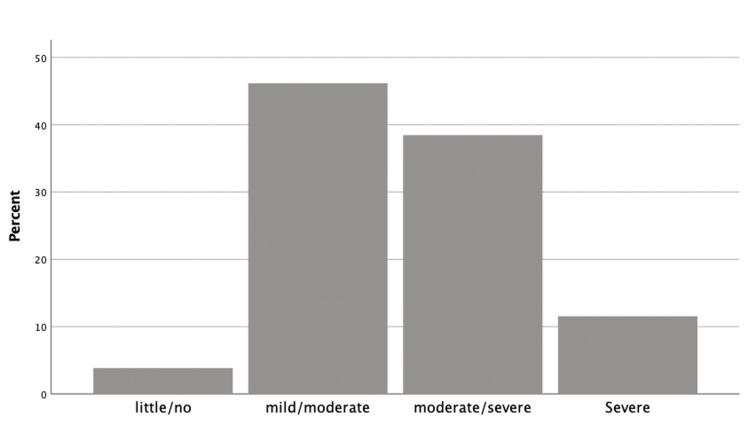
Background As the burden of cancer in Saudi Arabia has increased, the number of terminally ill patients is growing. In parallel, family caregivers' burden has emerged as an escalating problem within the field of palliative medicine. In this study, we aimed to explore the prevalence and types of burden experienced by caregivers of terminally ill patients and the associated risk factors. Methodology A cross-sectional study was conducted from March 2019 to February 2020 at Najran University Hospital in southern Saudi Arabia. The study included all caregivers of terminal Saudi patients receiving palliative care. A three-part study questionnaire was used for data collection: socio-demographic characteristics, the Arabic version of Zarit Burden Interview to quantify the caregivers' burden, and the Caregiver Distress Scale to identify and rank the different types of burden among caregivers Results The study included 78 caregivers of terminally ill cancer patients. Their ages ranged between 19 and 70 years, with an arithmetic mean of 39.5 years and a standard deviation of 12.9 years. The caregiver burden was reported among the majority of the participants (96.2%); the burden was mild among 46.2%, moderate among 38.5%, and severe among 11.5% of the participants. The age of caregivers who expressed moderate-to-severe burden was significantly higher than those who expressed little-to-moderate burden (44.5 ± 13.7 versus 34.5 ± 9.8 years, respectively; p < 0.001). Moderate-to-severe burden was more observed among mothers/brothers [12 (80%)] than sons [21 (53.8%)] and daughters [six (25.0%)] (p = 0.003). Regarding caregiver distress, caregivers with shorter caregiving (≤three months) and mother/brother relation to the patient had significantly higher relationship distress scores (p < 0.001). In addition, relation to the patient was significantly associated with emotional burden score (p <0.001), social impact score (p < 0.007), and personal cost score (p < 0.001). Conclusion Caregiving to terminally ill cancer patients is a considerably hidden problem leading to caregiver's burden and stress.
Overview
The claims and statistics of this paper haven’t been checked yet.
Run the check — free, no account needed. It reads the open-access text and checks the sources it cites.
Integrity signals
Registry
Cites
Statistics
Figures
Verification
Claims the paper makes
The claims and statistics of this paper haven’t been checked yet.
Run the check — free, no account needed. It reads the open-access text and checks the sources it cites.
Claims other papers make about this one
Each is checked against this paper’s own text: does it say what the citing paper says it does?
The cited source says what the claim attributes to it.
In the citing paper
“One study from the southern region of Saudi Arabia reported a moderate/severe CB among 50% of caregivers of hospitalized terminally ill cancer patients [15].”
From Caregiver burden among family caregivers of incurable cancer patients in two eastern Mediterranean countries (2021) · cites this paper as [15]
Self-check
Percentages, sums and reported differences re-computed from the paper’s own numbers.
The self-check needs the paper’s full text.
Citations
Cites
Bédard, M., Molloy, D. W., Squire, L., Dubois, S., Lever, J. A., & O'Donnell, M. (2001) · The Gerontologist · doi:10.1093/geront/41.5.652 · Cited by 1,691
Research works printed but not linked: 27
- Ibrahim E, Bin SBM, Banjar L, Awadalla S, Abomelha MS. Current and future cancer burden in Saudi Arabia: meeting the challenge. Hematol Oncol Stem Cell Ther. 2008, 1:210-215. 10.1016/s1658-3876(08)50006-9 · DOI
- Lee J, Cha C. Unmet needs and caregiver burden among family caregivers of hospice patients in South Korea. J Hosp Palliat Nurs. 2017, 19:323-331. 10.1097/NJH.0000000000000350 · DOI
- Song JI, Shin DW, Choi JY, et al.. Quality of life and mental health in the bereaved family members of patients with terminal cancer. Psychooncology. 2012, 21:1158-1166. 10.1002/pon.2027 · DOI
- Yoo J-S, Lee J, Chang SJ. Family experiences in end-of-life care: a literature review. Asian Nurs Res (Korean Soc Nurs Sci). 2008, 2:223-234. 10.1016/S1976-1317(09)60004-9 · DOI
- Ge L, Mordiffi SZ. Factors associated with higher caregiver burden among family caregivers of elderly cancer patients: a systematic review. Cancer Nurs. 2017, 40:471-478. 10.1097/NCC.0000000000000445 · DOI
- Hsu T, Loscalzo M, Ramani R, et al.. Factors associated with high burden in caregivers of older adults with cancer. Cancer. 2014, 120:2927-2935. 10.1002/cncr.28765 · DOI
- Chua CK, Wu JT, Wong YY, Qu L, Tan YY, Neo PS, Pang GS. Caregiving and its resulting effects-the care study to evaluate the effects of caregiving on caregivers of patients with advanced cancer in Singapore. Cancers (Basel). 2016, 8:105. 10.3390/cancers8110105 · DOI
- Almoajel A. Quality of palliative care: perspective of healthcare providers at a tertiary hospital in Riyadh, Saudi Arabia. J Relig Health. 2020, 59:2442-2457. 10.1007/s10943-020-00998-6 · DOI
- Arai Y, Kudo K, Hosokawa T, Washio M, Miura H, Hisamichi S. Reliability and validity of the Japanese version of the Zarit Caregiver Burden interview. Psychiatry Clin Neurosci. 1997, 51:281-287. 10.1111/j.1440-1819.1997.tb03199.x · DOI
- Maksoud AAHA. Burden of mother and wife caregivers of psychiatric and non-psychiatric patients and its relation to psychiatric disorders. Psychiatry Department Al Azhar University. 2008, 2008:160-160.
- Zarit SH, Reever KE, Bach-Peterson J. Relatives of the impaired elderly: correlates of feelings of burden. Gerontologist. 1980, 20:649-655. 10.1093/geront/20.6.649 · DOI · Paper page
- Cousins R, Davies AD, Turnbull CJ, Playfer JR. Assessing caregiving distress: a conceptual analysis and a brief scale. Br J Clin Psychol. 2002, 41:387-403. 10.1348/014466502760387506 · DOI
- Verhaeghe S, Defloor T, Van Zuuren F, Duijnstee M, Grypdonck M. The needs and experiences of family members of adult patients in an intensive care unit: a review of the literature. J Clin Nurs. 2005, 14:501-509. 10.1111/j.1365-2702.2004.01081.x · DOI
- Schulz R, Beach SR. Caregiving as a risk factor for mortality: the Caregiver Health Effects Study. JAMA. 1999, 282:2215-2219. 10.1001/jama.282.23.2215 · DOI · Paper page
- Lim HA, Tan JY, Chua J, Yoong RK, Lim SE, Kua EH, Mahendran R. Quality of life of family caregivers of cancer patients in Singapore and globally. Singapore Med J. 2017, 58:258-261. 10.11622/smedj.2016083 · DOI
- Goren A, Gilloteau I, Lees M, DaCosta Dibonaventura M. Quantifying the burden of informal caregiving for patients with cancer in Europe. Support Care Cancer. 2014, 22:1637-1646. 10.1007/s00520-014-2122-6 · DOI
- Hebert RS, Schulz R. Caregiving at the end of life. J Palliat Med. 2006, 9:1174-1187. 10.1089/jpm.2006.9.1174 · DOI
- Lee KC, Chang WC, Chou WC, Su PJ, Hsieh CH, Chen JS, Tang ST. Longitudinal changes and predictors of caregiving burden while providing end-of-life care for terminally ill cancer patients. J Palliat Med. 2013, 16:632-637. 10.1089/jpm.2012.0499 · DOI
- Turkoglu N, Kilic D. Effects of care burdens of caregivers of cancer patients on their quality of life. Asian Pac J Cancer Prev. 2012, 13:4141-4145. 10.7314/APJCP.2012.13.8.4141 · DOI
- Kim Y, Spillers RL. Quality of life of family caregivers at 2 years after a relative's cancer diagnosis. Psychooncology. 2010, 19:431-440. 10.1002/pon.1576 · DOI
- Kim Y, Spillers RL, Hall DL. Quality of life of family caregivers 5 years after a relative's cancer diagnosis: follow-up of the national quality of life survey for caregivers. Psychooncology. 2012, 21:273-281. 10.1002/pon.1888 · DOI
- Doorenbos AZ, Given B, Given CW, Wyatt G, Gift A, Rahbar M, Jeon S. The influence of end-of-life cancer care on caregivers. Res Nurs Health. 2007, 30:270-281. 10.1002/nur.20217 · DOI
- Lowenstein A, Gilbar O. The perception of caregiving burden on the part of elderly cancer patients, spouses and adult children. Families Systems Health. 2000, 18:337-346. 10.1037/h0091862 · DOI
- Gilbar O. Gender as a predictor of burden and psychological distress of elderly husbands and wives of cancer patients. Psychooncology. 1999, 8:287-294. 10.1002/(SICI)1099-1611(199907/08)8:4<287::AID-PON385>3.0.CO;2-W · DOI
- Yoon SJ, Kim JS, Jung JG, Kim SS, Kim S. Modifiable factors associated with caregiver burden among family caregivers of terminally ill Korean cancer patients. Support Care Cancer. 2014, 22:1243-1250. 10.1007/s00520-013-2077-z · DOI
- Lee JE, Shin DW, Cho J, et al.. Caregiver burden, patients' self-perceived burden, and preference for palliative care among cancer patients and caregivers. Psychooncology. 2015, 24:1545-1551. 10.1002/pon.3827 · DOI
- Otis-Green S, Juarez G. Enhancing the social well-being of family caregivers. Semin Oncol Nurs. 2012, 28:246-255. 10.1016/j.soncn.2012.09.007 · DOI
Cited by
Alsirafy, S. A., Nagy, R., Hassan, A. D., Fawzy, R., Abdelhafeez, A. A. M., Husein, M. O., Almashiakhi, M. A., Alabdullateef, S. H., Alghamdi, S. A., & Elyamany, A. M. (2021) · BMC Palliative Care · doi:10.1186/s12904-021-00857-5 · Cited by 30
“One study from the southern region of Saudi Arabia reported a moderate/severe CB among 50% of caregivers of hospitalized terminally ill cancer patients [15].”
BackgroundThe Level of Burden among Caregivers of Patients with Alzheimer’s Disease in Saudi Arabia
Badawoud, A. M., AlQadheeb, Y. K., AlZahrani, S. S., AlGhamdi, R. A., Alanazi, E. A., AlFozan, S. M., AlJafer, N. S., Asiri, I. M., & Alotaibi, F. M. (2023) · International Journal of Environmental Research and Public Health · doi:10.3390/ijerph20042864 · Cited by 11
Metadata
- Authors
- Ghazwani, E. Y., Al-Shehri, A. A., & Alghamdi, F. A.
- Affiliations
- Najran University (SA)
- Corresponding author
- Ghazwani, Eisa Y
- ORCID
- Ghazwani, Eisa Y
- Venue
- Cureus
- Published
- 2021-03-31
- Volume
- 13
- Issue
- 3
- Pages
- e14215-e14215
- ISSN
- 2168-8184 (ISSN-L)
- PMC
- PMC8086738
- OpenAlex
- W3142346603
- Cited by
- 10
- References
- 1
- Citations by year
- 2026: 1 · 2025: 1 · 2024: 3 · 2023: 1 · 2022: 3 · 2021: 1
- FWCI
- 1.73
- Type
- journal article
- Language
- en
- Open access
- diamond
- doi.org
- Licence
- cc-by
- Locations
- Cureus (publishedVersion, cc-by)
- PubMed Central (publishedVersion, cc-by)
- PubMed (publishedVersion)
- Topics
- Health Sciences › Medicine › Public Health, Environmental and Occupational Health › Palliative Care and End-of-Life Issues
- Health Sciences › Medicine › Public Health, Environmental and Occupational Health › Palliative and Oncologic Care
- Health Sciences › Nursing › Research and Theory › Nursing care and research
- Keywords
- caregiver burden, caregiver stress, family caregivers, dying patients, cancer patients, palliative care, Zarit Burden Interview, caregiver distress, relationship distress, emotional burden, social impact, personal cost, caregiver age
About these checks
Registry, retraction, Cites and statistics results are computed, not judged, with one exception: a printed reference that no index lists is read once by a model before it counts as a citation error. Claims are extracted by a model and kept only when their quote appears verbatim in the text; each cited source is then checked, with a model’s help, for whether it says what the claim relies on. Those verdicts can be wrong — read the claim’s quote and the cited source before relying on one.
Statistics and arithmetic are recomputed, not judged.
Confidence bands are shown only for fields calibrated on our annotated test set. None is calibrated yet, so no band is shown.
What counts as a claim ›How we measure confidence ›How we check this ›
Are you an author, or do you see a problem with this page? Request a review
How to cite
Cite CoChat for the checks on this page, and the paper for its own findings.
- This page
- CoChat. (2026). Citation check: Assessment of Burden and Stress Among Caregivers of Terminally Ill Patients in a Saudi University Hospital: A Cross-Sectional Study. https://app.cochat.ai/papers/10.7759/cureus.14215
- The paper
- Ghazwani, E. Y., Al-Shehri, A. A., & Alghamdi, F. A. (2021). Assessment of Burden and Stress Among Caregivers of Terminally Ill Patients in a Saudi University Hospital: A Cross-Sectional Study. Cureus. https://doi.org/10.7759/cureus.14215
