

The DOI matches its Crossref record; the references it cites are not checked yet.
The Impact of Probiotics on Acne Vulgaris: A Meta-Analysis of Randomized Controlled Trials
Open accessAbstract
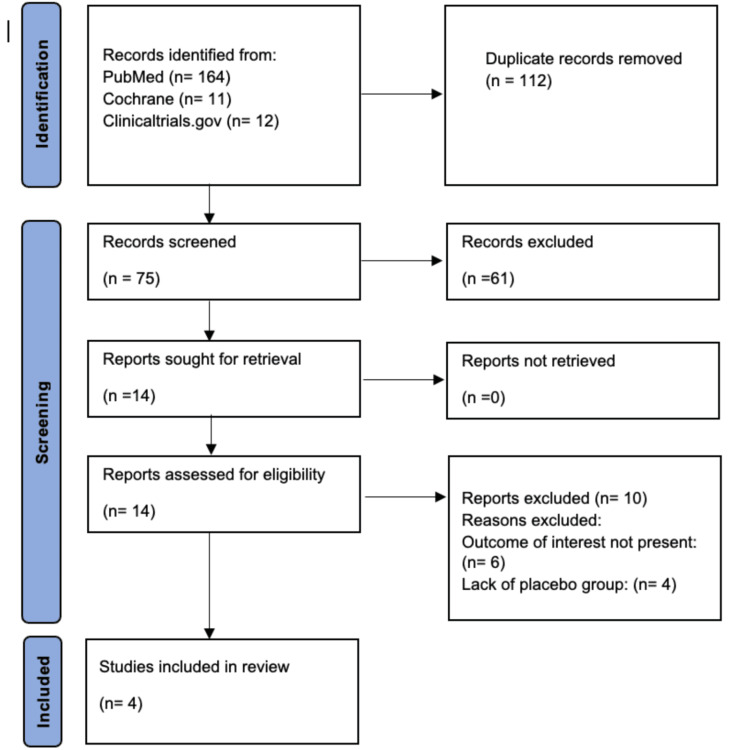
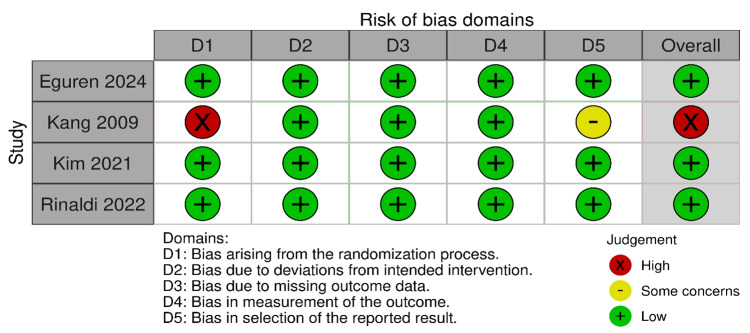
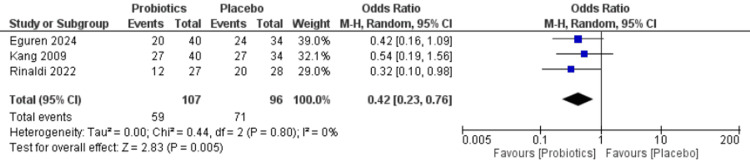
Acne vulgaris is a multifactorial inflammatory skin disorder influenced by hormonal activity, microbial imbalance, and immune dysregulation. While conventional treatments such as antibiotics and retinoids remain effective, their long-term use is often limited by side effects, resistance, and poor adherence. This meta-analysis evaluated the efficacy of probiotics as an adjunct or alternative therapy for acne management. Four randomized controlled trials involving 227 participants were analyzed, showing that probiotic supplementation reduced acne severity scores (OR 0.48; 95% CI 0.29-0.79) and non-inflammatory lesion counts (mean difference (MD) -4.62; 95% CI -8.10 to -1.15) compared with controls. A trend toward improvement in inflammatory lesions was observed (MD -2.03; 95% CI -5.46 to 1.41) but was not statistically significant. Heterogeneity across studies ranged from moderate to high, reflecting variation in probiotic strains, formulations, and treatment durations. While these findings suggest a potential benefit of probiotics, the limited number and quality of trials warrant cautious interpretation. Larger, standardized clinical studies are needed to confirm efficacy and identify optimal probiotic regimens for acne management.
Overview
The claims and statistics of this paper haven’t been checked yet.
Run the check — free, no account needed. It reads the open-access text and checks the sources it cites.
Integrity signals
Registry
Cites
Statistics
Figures


Verification
Claims the paper makes
The claims and statistics of this paper haven’t been checked yet.
Run the check — free, no account needed. It reads the open-access text and checks the sources it cites.
Self-check
Percentages, sums and reported differences re-computed from the paper’s own numbers.
The self-check needs the paper’s full text.
Citations
The citation lists are queued
They are fetched later and appear here then.
References 24 · Cited by 5
Research works printed but not linked: 26
- Williams HC, Dellavalle RP, Garner S. Acne vulgaris. Lancet. 2012, 379:361-72. 10.1016/S0140-6736(11)60321-8 · DOI · Paper page
- Vasam M, Korutla S, Bohara RA. Acne vulgaris: A review of the pathophysiology, treatment, and recent nanotechnology based advances. Biochem Biophys Rep. 2023, 36:101578. 10.1016/j.bbrep.2023.101578 · DOI
- Heng AH, Chew FT. Systematic review of the epidemiology of acne vulgaris. Sci Rep. 2020, 10:5754. 10.1038/s41598-020-62715-3 · DOI
- Leung AK, Barankin B, Lam JM, Leong KF, Hon KL. Dermatology: How to manage acne vulgaris. Drugs Context. 2021, 10:2021-8-6. 10.7573/dic.2021-8-6 · DOI
- Bowe WP, Logan AC. Acne vulgaris, probiotics and the gut-brain-skin axis - Back to the future?. Gut Pathog. 2011, 3:1. 10.1186/1757-4749-3-1 · DOI
- Muizzuddin N, Maher W, Sullivan M, Schnittger S, Mammone T. Physiological effect of a probiotic on skin. J Cosmet Sci. 2012, 63:385-95.
- Marson JW, Baldwin HE. New concepts, concerns, and creations in acne. Dermatol Clin. 2019, 37:1-9. 10.1016/j.det.2018.07.002 · DOI
- Lee YB, Byun EJ, Kim HS. Potential role of the microbiome in acne: A comprehensive review. J Clin Med. 2019, 8:987. 10.3390/jcm8070987 · DOI
- Latif A, Shehzad A, Niazi S, et al.. Probiotics: Mechanism of action, health benefits and their application in food industries. Front Microbiol. 2023, 14:1216674. 10.3389/fmicb.2023.1216674 · DOI
- Trivedi MK, Bosanac SS, Sivamani RK, Larsen LN. Emerging therapies for acne vulgaris. Am J Clin Dermatol. 2018, 19:505-16. 10.1007/s40257-018-0345-x · DOI
- Kumar S, Mahajan BB, Kamra N. Future perspective of probiotics in dermatology: An old wine in new bottle. Dermatol Online J. 2014, 20:13030/qt8br333fc. · DOI
- Sutema I, Latarissa IR, Widowati I, Sartika CR, Ciptasari NWE, Lestari K. Efficacy of probiotic supplements and topical applications in the treatment of acne: A scoping review of current results. J Exp Pharmacol. 2025, 17:1-14. 10.2147/jep.s498769 · DOI
- Shields A, Ly S, Wafae B, et al.. Safety and effectiveness of oral nutraceuticals for treating acne: A systematic review. JAMA Dermatol. 2023, 159:1373-82. 10.1001/jamadermatol.2023.3949 · DOI
- Talebi S, Shab-Bidar S, Mohammadi H, Moini A, Djafarian K. The effects of intermittent fasting diet alone or in combination with probiotic supplementation in comparison with calorie-restricted diet on metabolic and hormonal profile in patients with polycystic ovary syndrome: Study protocol for a randomized clinical trial. Trials. 2023, 24:690. 10.1186/s13063-023-07691-5 · DOI
- McLoughlin IJ, Wright EM, Tagg JR, Jain R, Hale JD. Skin microbiome-The next frontier for probiotic intervention. Probiotics Antimicrob Proteins. 2022, 14:630-47. 10.1007/s12602-021-09824-1 · DOI
- Paetzold B, Willis JR, Pereira de Lima J, et al.. Skin microbiome modulation induced by probiotic solutions. Microbiome. 2019, 7:95. 10.1186/s40168-019-0709-3 · DOI
- Baquerizo Nole KL, Yim E, Keri JE. Probiotics and prebiotics in dermatology. J Am Acad Dermatol. 2014, 71:814-21. 10.1016/j.jaad.2014.04.050 · DOI
- Roudsari MR, Karimi R, Sohrabvandi S, Mortazavian AM. Health effects of probiotics on the skin. Crit Rev Food Sci Nutr. 2015, 55:1219-40. 10.1080/10408398.2012.680078 · DOI · Paper page
- Kang BS, Seo JG, Lee GS, et al.. Antimicrobial activity of enterocins from Enterococcus faecalis SL-5 against Propionibacterium acnes, the causative agent in acne vulgaris, and its therapeutic effect. J Microbiol. 2009, 47:101-9. 10.1007/s12275-008-0179-y · DOI
- Rinaldi F, Marotta L, Mascolo A, Amoruso A, Pane M, Giuliani G, Pinto D. Facial acne: A randomized, double-blind, placebo-controlled study on the clinical efficacy of a symbiotic dietary supplement. Dermatol Ther (Heidelb). 2022, 12:577-89. 10.1007/s13555-021-00664-z · DOI
- Eguren C, Navarro-Blasco A, Corral-Forteza M, et al.. A randomized clinical trial to evaluate the efficacy of an oral probiotic in acne vulgaris. Acta Derm Venereol. 2024, 104:adv33206. 10.2340/actadv.v104.33206 · DOI · Paper page
- Kim MJ, Kim KP, Choi E, et al.. Effects of Lactobacillus plantarum CJLP55 on clinical improvement, skin condition and urine bacterial extracellular vesicles in patients with acne vulgaris: A randomized, double-blind, placebo-controlled study. Nutrients. 2021, 13:1368. 10.3390/nu13041368 · DOI · Paper page
- Talebi S, Shab-Bidar S, Moini A, Mohammadi H, Djafarian K. The effects of time-restricted eating alone or in combination with probiotic supplementation in comparison with a calorie-restricted diet on endocrine and metabolic profiles in women with polycystic ovary syndrome: A randomized clinical trial. Diabetes Obes Metab. 2024, 26:4468-79. 10.1111/dom.15801 · DOI
- Xu W, Xu J, Huang D, Wang C, Song J, Chen X, Suo H. Acne vulgaris: Advances in pathogenesis and prevention strategies. Eur J Clin Microbiol Infect Dis. 2025, 44:515-32. 10.1007/s10096-024-04984-8 · DOI
- Bowe WP. Probiotics in acne and rosacea. Cutis. 2013, 92:6-7.
- Fuchs-Tarlovsky V, Marquez-Barba MF, Sriram K. Probiotics in dermatologic practice. Nutrition. 2016, 32:289-95. 10.1016/j.nut.2015.09.001 · DOI
Metadata
- Authors
- Mohamed, M., Ullah, A., Hassan, R., Hamza, M., Mohamed, I., & Salam, M.
- Affiliations
- Mid Cheshire Hospitals NHS Foundation Trust (GB)
- Texas State University (US)
- Corresponding author
- Mohamed, Marwa
- ORCID
- Mohamed, Marwa
- Venue
- Cureus
- Published
- 2025-11-16
- Volume
- 17
- Issue
- 11
- Pages
- e97010-e97010
- ISSN
- 2168-8184 (ISSN-L)
- PMC
- PMC12709052
- OpenAlex
- W4416301738
- Cited by
- 5
- References
- 24
- Citations by year
- 2026: 5
- FWCI
- 0.75
- Type
- journal article
- Language
- en
- Open access
- diamond
- doi.org
- Licence
- cc-by
- Locations
- Cureus (publishedVersion, cc-by)
- PubMed (publishedVersion)
- PubMed Central (publishedVersion, cc-by)
- Topics
- Health Sciences › Medicine › Dermatology › Acne and Rosacea Treatments and Effects
- Life Sciences › Agricultural and Biological Sciences › Food Science › Probiotics and Fermented Foods
- Health Sciences › Medicine › Dermatology › Dermatology and Skin Diseases
- Keywords
- probiotics, acne, acne severity, inflammatory lesions, adjunctive therapy, probiotic supplementation, skin microbiome, immune dysregulation, antibiotic resistance
About these checks
Registry, retraction, Cites and statistics results are computed, not judged, with one exception: a printed reference that no index lists is read once by a model before it counts as a citation error. Claims are extracted by a model and kept only when their quote appears verbatim in the text; each cited source is then checked, with a model’s help, for whether it says what the claim relies on. Those verdicts can be wrong — read the claim’s quote and the cited source before relying on one.
Statistics and arithmetic are recomputed, not judged.
Confidence bands are shown only for fields calibrated on our annotated test set. None is calibrated yet, so no band is shown.
What counts as a claim ›How we measure confidence ›How we check this ›
Are you an author, or do you see a problem with this page? Request a review
How to cite
Cite CoChat for the checks on this page, and the paper for its own findings.
- This page
- CoChat. (2026). Citation check: The Impact of Probiotics on Acne Vulgaris: A Meta-Analysis of Randomized Controlled Trials. https://app.cochat.ai/papers/10.7759/cureus.97010
- The paper
- Mohamed, M., Ullah, A., Hassan, R., Hamza, M., Mohamed, I., & Salam, M. (2025). The Impact of Probiotics on Acne Vulgaris: A Meta-Analysis of Randomized Controlled Trials. Cureus. https://doi.org/10.7759/cureus.97010
