

The DOI matches its Crossref record; 1 of the 1 references it cites were found in a registry or an index.
Isolation of thermotolerant and high acetic acid-producing Acetobacter pasteurianus from Ivorian palm wine
Open accessAbstract
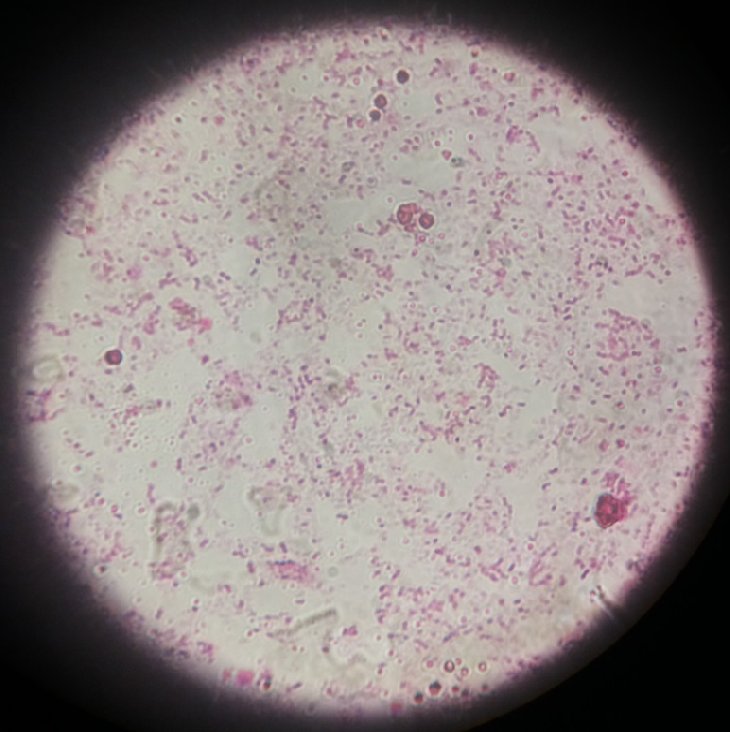
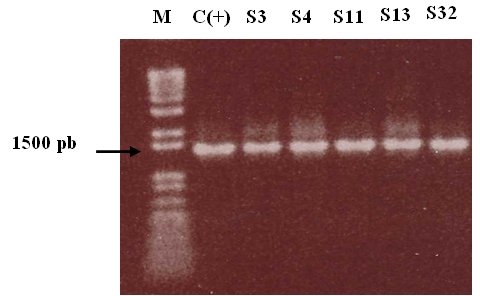
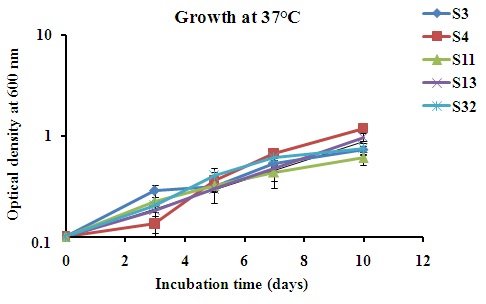
The aim of this work was to identify acetic acid bacteria expressing technological characteristics for further use in vinegar production in tropical countries.It was focused on isolation and identification of thermotolerant acetic acid bacteria strains from Elaeis guineensis wine of Côte d'Ivoire (Ivorian palm wine).A screening was performed to find out strains with high vinegar production, tolerant against high ethanol, acid and sugar concentrations as well as tolerating high production temperatures.Among 104 isolated strains, 5 were selected for their growth ability, acetification capacity (acetic acid production higher than 30 g/l) and suroxydation at 37°C.Tolerance against 6% acetic acid and 9% ethanol was observed.Osmotolerance study showed tolerance against 5% and 10% glucose giving 100% and 50% relative growth, respectively.Resistance against desiccation showed survival rate of 50% at 37°C after 5 h treatment and 10% after 20 h treatment.The best aeration rate in flasks for acetification was 70%.Polyphasic identification study based on biochemical, physiological and molecular characterization showed that the 5 isolates were all Acetobacter pasteurianus.Owing to their potentialities, these strains may be used as starters in vinegar production after conducting preservation studies.
Overview
The claims and statistics of this paper haven’t been checked yet.
Run the check — free, no account needed. It reads the open-access text and checks the sources it cites.
Integrity signals
Registry
Cites
Statistics
Figures
Verification
Claims the paper makes
The claims and statistics of this paper haven’t been checked yet.
Run the check — free, no account needed. It reads the open-access text and checks the sources it cites.
Claims other papers make about this one
Each is checked against this paper’s own text: does it say what the citing paper says it does?
The cited source says what the claim attributes to it.
In the citing paper
“These species were isolated from palm (Elaeis guineensis) wine and presented potentialities for industrial vinegar production at 37 °C.”
From Banana Vinegars Production Using Thermotolerant Acetobacter pasteurianus Isolated From Ivorian Palm Wine (2015) · cites this paper as Konate et al., 2014
Self-check
Percentages, sums and reported differences re-computed from the paper’s own numbers.
The self-check needs the paper’s full text.
Citations
Cites
Gullo, M., & Giudici, P. (2008) · International Journal of Food Microbiology · doi:10.1016/j.ijfoodmicro.2007.11.076 · Cited by 221
Research works printed but not linked: 7
- Adams, M.R. 1998. Vinegar. Microbiology of fermented foods. In: J. B. Woods (Eds.), pp. 1-44. Blacki Academic and Professional, London.
- Andelib, A. Y. and D. A. Nuran. 2009. Isolation of cellulose producing bacteria from wastes of vinegar fermentation. In: Proceedings of the World Congress on Engineering and Computer Science Vol I, San Francisco, USA. pp. 978-988.
- Brosius, J., L. M. Palmer, P. J. Kennedy and H. F. Noller. 1978. Complete nucleotide sequence of a 16S ribosomal RNA gene from Escherichia coli. Proc. Natl. Acad. Sci. USA. 75:4801-4805.
- De Ley, J., M. Gillis and J. Swings. 1984. Acetobacteriaceae. In: N. R. Krieg and J. G. Holt (Eds.), pp. 267-278. Bergey's Manual of Systematic Bacteriology.
- Drysdale, G. S. and G. H. Fleet. 1988. Acetic acid bacteria in winemaking:a review. Am. J. Enol. Vitic. 39:143-154.
- Holt, J. G., N. R. Krieg, P. H. A. Sneath, J. T. Stanley and S. T. Williams. 1994. Bergey's Manual of Determinative Bacteriology. 9 th Eds. pp. 164-181.
- Legrand-Sow, N. 2004. Sélection et caractérisation de bactéries lactiques d'origine africaine en vue d'une utilisation comme probiotiques. Ph. D. dissertation. Faculté universitaire des sciences agronomiques de Gembloux. Belgium.
Cited by
Sorted by citations
Konate, M., Akpa, E. E., Bernadette, G. G., Koffi, L. B., Honore, O. G., & Niamke, S. L. (2015) · Journal of Food Research · doi:10.5539/jfr.v4n2p92 · Cited by 9
Self-citation
Metadata
- Authors
- Konate, M., Akpa, E., Koffi, L., Kra, K., Megnanou, R., & Niamke, S.
- Affiliations
- Université Félix Houphouët-Boigny (CI)
- Centre National de Recherche Agronomique (CI)
- ORCID
- Kra, Kouassi
- Venue
- Emirates Journal of Food and Agriculture
- Publisher
- Pensoft Publishers
- Published
- 2014
- Volume
- 26
- Issue
- 9
- Pages
- 773
- ISSN
- 2079-052X (ISSN-L)
- OpenAlex
- W1990904469
- Cited by
- 12
- References
- 1
- Citations by year
- 2025: 2 · 2023: 3 · 2022: 1 · 2020: 1 · 2019: 1 · 2017: 2 · 2015: 2
- FWCI
- 0.50
- Type
- journal article
- Language
- en
- Open access
- diamond
- doi.org
- Licence
- cc-by
- Locations
- Emirates Journal of Food and Agriculture (publishedVersion, cc-by)
- Topics
- Life Sciences › Biochemistry, Genetics and Molecular Biology › Molecular Biology › Microbial metabolism and enzyme function
- Life Sciences › Agricultural and Biological Sciences › Food Science › Fermentation and Sensory Analysis
- Life Sciences › Biochemistry, Genetics and Molecular Biology › Biotechnology › Biochemical and biochemical processes
- Keywords
- Acetobacter pasteurianus, thermotolerant bacteria, acetic acid production, palm wine, oil palm, vinegar production, starter cultures, osmotolerance, ethanol tolerance, desiccation tolerance, air flow rate, polyphasic identification, Côte d'Ivoire
About these checks
Registry, retraction, Cites and statistics results are computed, not judged, with one exception: a printed reference that no index lists is read once by a model before it counts as a citation error. Claims are extracted by a model and kept only when their quote appears verbatim in the text; each cited source is then checked, with a model’s help, for whether it says what the claim relies on. Those verdicts can be wrong — read the claim’s quote and the cited source before relying on one.
Statistics and arithmetic are recomputed, not judged.
Confidence bands are shown only for fields calibrated on our annotated test set. None is calibrated yet, so no band is shown.
What counts as a claim ›How we measure confidence ›How we check this ›
Are you an author, or do you see a problem with this page? Request a review
