

Benefit-Risk Reporting for FDA-Cleared Artificial Intelligence−Enabled Medical Devices
Open accessThe DOI matches its Crossref record; 23 of the 23 references it cites were found in a registry or an index.
Abstract
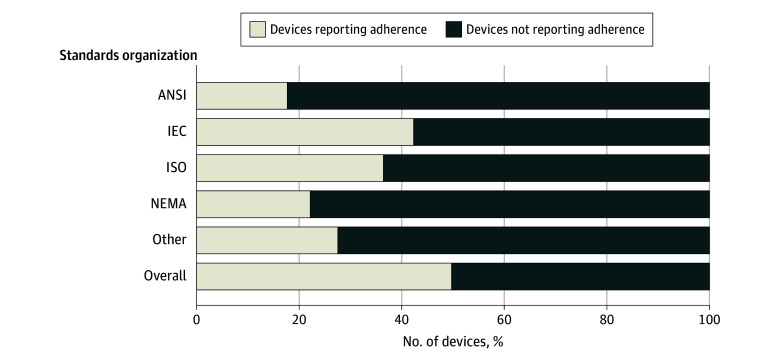
Importance: Devices enabled by artificial intelligence (AI) and machine learning (ML) are increasingly used in clinical settings, but there are concerns regarding benefit-risk assessment and surveillance by the US Food and Drug Administration (FDA). Objective: To characterize pre- and postmarket efficacy, safety, and risk assessment reporting for FDA-cleared AI/ML devices. Design and Setting: This was a cross-sectional study using linked data from FDA decision summaries and approvals databases, the FDA Manufacturer and User Facility Device Experience Database, and the FDA Medical Device Recalls Database for all AI/ML devices cleared by the FDA from September 1995 to July 2023. Data were analyzed from October to November 2024. Main Outcomes and Measures: AI/ML reporting of study design, data availability, efficacy, safety, bias assessments, adverse events, device recalls, and risk classification. Results: The analysis included data for all 691 AI/ML devices that received FDA clearance through 2023, with 254 (36.8%) cleared in or after 2021. Device summaries often failed to report study designs (323 [46.7%]), training sample size (368 [53.3%]), and/or demographic information (660 [95.5%]). Only 6 devices (1.6%) reported data from randomized clinical trials and 53 (7.7%) from prospective studies. Few premarket summaries contained data published in peer-reviewed journals (272 [39.4%]) or provided statistical or clinical performance, including sensitivity (166 [24.0%]), specificity (152 [22.0%]), and/or patient outcomes (3 [<1%]). Some devices reported safety assessments (195 [28.2%]), adherence to international safety standards (344 [49.8%]), and/or risks to health (42 [6.1%]). In all, 489 adverse events were reported involving 36 (5.2%) devices, including 458 malfunctions, 30 injuries, and 1 death. A total of 40 devices (5.8%) were recalled 113 times, primarily due to software issues. Conclusions and Relevance: This cross-sectional study suggests that despite increasing clearance of AI/ML devices, standardized efficacy, safety, and risk assessment by the FDA are lacking. Dedicated regulatory pathways and postmarket surveillance of AI/ML safety events may address these challenges.
Overview
The claims and statistics of this paper haven’t been checked yet.
Free: it reads the open-access text and checks the first 5 claims that cite a source we can check. Create a free account to check every claim.
Integrity signals
Registry
Cites
Statistics
Figures
Verification
Claims the paper makes
The claims and statistics of this paper haven’t been checked yet.
Free: it reads the open-access text and checks the first 5 claims that cite a source we can check. Create a free account to check every claim.
Claims other papers make about this one
Each is checked against this paper’s own text: does it say what the citing paper says it does?
The cited source says what the claim attributes to it.
In the citing paper
“Even among regulated AI products, available evidence and disclosure are often insufficient to assess for bias and/or accuracy, underscoring the need for competency in the critical appraisal of resources19,20.”
From What the AI era doctor should know: a scoping review of proposed artificial intelligence competencies for medical education (2026) · cites this paper as [20]
Self-check
Percentages, sums and reported differences re-computed from the paper’s own numbers.
The self-check needs the paper’s full text.
Citations
Cites
Benjamens, S., Dhunnoo, P., & Meskó, B. (2020) · npj Digital Medicine · doi:10.1038/s41746-020-00324-0 · Cited by 1,215
Muehlematter, U. J., Daniore, P., & Vokinger, K. N. (2021) · The Lancet Digital Health · doi:10.1016/s2589-7500(20)30292-2 · Cited by 665
Goldsack, J. C., Coravos, A., Bakker, J. P., Bent, B., Dowling, A. V., Fitzer-Attas, C., Godfrey, A., Godino, J. G., Gujar, N., Izmailova, E., et al. (2020) · npj Digital Medicine · doi:10.1038/s41746-020-0260-4 · Cited by 557
How Is ChatGPT’s Behavior Changing Over Time?
Chen, L., Zaharia, M., & Zou, J. (2024) · Harvard Data Science Review · doi:10.1162/99608f92.5317da47 · Cited by 507
How is ChatGPT's behavior changing over time?
Chen, L., Zaharia, M., & Zou, J. (2023) · arXiv · doi:10.48550/arxiv.2307.09009 · Cited by 507
Wu, E., Wu, K., Daneshjou, R., Ouyang, D., Ho, D. E., & Zou, J. (2021) · Nature Medicine · doi:10.1038/s41591-021-01312-x · Cited by 494
Joshi, G., Jain, A., Araveeti, S. R., Adhikari, S., Garg, H., & Bhandari, M. (2024) · Electronics · doi:10.3390/electronics13030498 · Cited by 294
Arya, S. S., Dias, S. B., Jelinek, H. F., Hadjileontiadis, L. J., & Pappa, A. (2023) · Biosensors and Bioelectronics · doi:10.1016/j.bios.2023.115387 · Cited by 188
Improving Medical Device Regulation: The United States and Europe in Perspective
SORENSON, C., & DRUMMOND, M. (2014) · The Milbank Quarterly · doi:10.1111/1468-0009.12043 · Cited by 170
Muehlematter, U. J., Bluethgen, C., & Vokinger, K. N. (2023) · The Lancet Digital Health · doi:10.1016/s2589-7500(23)00126-7 · Cited by 113
Cited by
Muneer, A., Waqas, M. M., Saad, M. B., Showkatian, E., Bandyopadhyay, R., Xu, H. M., Li, W., Chang, J., Liao, Z., Haymaker, C., et al. (2026) · Artificial Intelligence Review · doi:10.1007/s10462-026-11522-9 · Cited by 30
Hunt, V. M., Sprehe, L. K., de Lomba, W. C., Gameiro, R. R., Woite, N. L., Wade, C. G., Chen, J. H., Rougas, S. C., Fraser, H. S. F., Sullivan, A. M., et al. (2026) · npj Digital Medicine · doi:10.1038/s41746-026-02761-9 · Cited by 10
“Even among regulated AI products, available evi-denceanddisclosureareofteninsuf fi cienttoassessforbiasand/oraccuracy, underscoring the need for competency in the critical appraisal of resources 19,20 .”
Lee, H., Handler, R., Mungle, T., & Hernandez‐Boussard, T. (2026) · Journal of the American Medical Informatics Association · doi:10.1093/jamia/ocag078 · Cited by 9
Maynard, S., Farrington, J., Raza, S., & Stanworth, S. J. (2026) · Transfusion Medicine Reviews · doi:10.1016/j.tmrv.2026.150961 · Cited by 8
Wi, C.-I., Overgaard, S. M., Malik, M., Watson, D., Sharma, D., Le‐Rademacher, J. G., Kelleher, D. P., Zheng, L., Ohde, J. W., Lynch, B., et al. (2026) · Journal of the National Medical Association · doi:10.1016/j.jnma.2026.04.001 · Cited by 7
Patel, N. N. (2026) · The American Journal of Cardiology · doi:10.1016/j.amjcard.2026.06.005 · Cited by 6
Approval of AI-Based Medical Devices in China From 2020 to 2025: Retrospective Analysis
Zhang, L., & Yan, J. (2026) · JMIR Medical Informatics · doi:10.2196/85538 · Cited by 5
“A recent study of Food and Drug Administration–authorized AI and ML devices found that 5.2% were linked to adverse events and 5.8% were recalled, primarily due to software issues [27].”
InfluentialMapping the evidence supporting FDA-authorized digital therapeutics, before and after authorization
Amyx, M. M., Alebouyeh, F., Phi, N. T. T., Ravaud, P., & Tran, V.-T. (2026) · npj Digital Medicine · doi:10.1038/s41746-026-02737-9 · Cited by 4
Dayma, K., Patel, P., Hildreth, K., & Jamaspishvili, T. (2026) · Radiology Artificial Intelligence · doi:10.1148/ryai.260385 · Cited by 4
Tolsgaard, M. G., Grierson, L., Pusic, M. V., & Turner, L. (2026) · Medical Education · doi:10.1111/medu.70309 · Cited by 4
Fairboard: a quantitative framework for equity assessment of healthcare modelsPreprint
Ruffle, J. K., Mohinta, S., Foulon, C., Zeina, M., Wang, Z., Brandner, S., Hyare, H., & Nachev, P. (2026) · arXiv (Cornell University) · doi:10.48550/arxiv.2604.09656 · Cited by 4
“…the U.S. Food and Drug Administration (FDA) has now authorised over 1,000 AI/ML-enabled medical devices, the majority in radiology [15–17], yet a recent analysis of 691 FDA-cleared devices found that 95.5% lacked any demographic reporting about the patient populations used in their evaluation [18].”
InfluentialAsadov, C. D., Shirinova, A., Alimirzoyeva, Z., & Hasanova, A. (2026) · Cureus · doi:10.7759/cureus.103951 · Cited by 3
Litt, H. K., Mehta, P., Sahni, A., & Mamtani, R. (2026) · Journal of Cancer Policy · doi:10.1016/j.jcpo.2026.100743 · Cited by 3
The absence of full lifecycle risk management for AI-based medical devices in radiology
Li, J., Guo, Z., Guo, Y., Xiao, R., Ding, Y., Shi, W., & Liu, W. (2026) · npj Digital Medicine · doi:10.1038/s41746-026-02712-4 · Cited by 3
“Similarly, Rafa ł Obuchowicz et al. 15 . reviewed advances in AI-based imaging applications, examining technological classi fi cations, clinical practice, regulatory challenges, and future trends in radiology; Snigdha Santra et al. 16 . explored regulatory issues related to AI-driven combination devices, comparing regu…”
Zhao, Q., Jiang, W., Zhang, C., Ouyang, M., Wu, N., & Guo, Y. (2026) · Frontiers in Public Health · doi:10.3389/fpubh.2026.1863050 · Cited by 3
Alignment of Policy, Practice, and Patient Safety for Trustworthy AI in Radiology
Doo, F. X., Davis, M., Poff, J. A., Lui, Y. W., Haines, K., & Towbin, A. J. (2026) · Radiology Artificial Intelligence · doi:10.1148/ryai.250982 · Cited by 2
Qian, Z. J., Brin, P., Korn, S. M., Cosenza, A., Zurl, H., Pohl, K. K., Pakpoor, J., Moore, C. M., Giganti, F., Trinh, Q., et al. (2026) · British Journal of Urology · doi:10.1111/bju.70345 · Cited by 2
Alfieri, F., Ancona, A., Bacci, A., Zappalá, S., & Morillas, J. (2026) · JMIR Formative Research · doi:10.2196/87738 · Cited by 2
Dhingra, L. S., Croon, P. M., Batinica, B., Oikonomou, E. K., & Khera, R. (2025) · medRxiv · doi:10.1101/2025.11.04.25339526 · Cited by 2
Hack, S., & Takashima, M. (2026) · Otolaryngology · doi:10.1002/ohn.70262 · Cited by 1
Walston, S. L., Takita, H., Mitsuyama, Y., Sato, J., & Ueda, D. (2026) · European Radiology · doi:10.1007/s00330-026-12652-y · Cited by 1
Tănase, A. D., Zaharia, C., Dinu, Ş., Mureșan, C.-O., Bojoga, D. E., Cosoroabă, R.-M., & Crăciunescu, E. L. (2026) · Healthcare · doi:10.3390/healthcare14131867 · Cited by 1
“…assessments of FDA-cleared AI/ML devices emphasize that even when products reach market, the information available to support local gover-https nance decisions may be inconsistent—reinforcing the importance of internal literacy and structured readiness when institutions make adoption choices [20].”
Chun-wang, L. U. I., & Pusheng, W. A. N. G. (2026) · Frontiers in Medicine · doi:10.3389/fmed.2026.1894905 · Cited by 1
Current Trends in AI and Eye Disease Diagnostics
Cruz, M. J., Limaye, S., & Christopher, M. (2026) · Ophthalmic and Physiological Optics · doi:10.1007/s44402-026-00193-2 · Cited by 1
“Overall, the FDA has authorised ~1000 AI-enabled medical devices, most through the 510(k) pathway, which relies on demonstrating equivalence to existing devices rather than independent clinical validation [108 – 110].”
Mansuri, A., Chavoshi, M., Dapamede, T., Bala, W., Brown-Mulry, B., Isaac, R., Khosravi, B., Li, H., Li, F., Moon, J. T., et al. (2026) · npj Digital Medicine · doi:10.1038/s41746-026-03418-3 · Cited by 1
Between automation and alienation: rethinking AI’s role in radiologist well-being
Can, E., & Nawabi, J. (2026) · European Radiology · doi:10.1007/s00330-026-12473-z · Cited by 1
When Compliance Is Not Safety: The Regulatory Blind Spot in AI Companion Chatbots
Zavaleta‐Monestel, E., Arguedas‐Chacón, S., Mora-Jiménez, J., & González, R. M. (2026) · Cureus · doi:10.7759/cureus.105902 · Cited by 1
Bioelectronic interface for real-time brain biomarker analysis
Singh, A., Swain, R. P., Chaturvedi, S. S., Singh, S. K., & Chandra, P. (2026) · Bioelectrochemistry · doi:10.1016/j.bioelechem.2026.109250
Bair, H. (2026) · Ophthalmology Science · doi:10.1016/j.xops.2026.101159
“4,5 However, such proposals remain largely abstract from the perspective of the practicing ophthalmologist who must decide, on a given clinic day, whether to trust a specific AI system for a specific patient.”
Dayma, K., Patel, P., Hildreth, K., & Jamaspishvili, T. (2026) · Research Square · doi:10.21203/rs.3.rs-9411603/v1
Dayma, K., Patel, P., Hildreth, K., & Jamaspishvili, T. (2026) · Research Square · doi:10.21203/rs.3.rs-9411603/v2
AI Medical Device Safety: Scoping Review with ☸️SAIMSARA
SAIMSARA (2026) · SAIMSARA Journal · doi:10.62487/saimsaraa33bf709
Artificial Intelligence in Surgery: Current Applications and Future Prospects
Josiah, P. A., Nwosu-Ijiomah, C., & Eboh, N. A. (2026) · Epidemiology and Health Data Insights · doi:10.63946/ehdi/18696
Ethical and Legal Implications in Medical AI
Khullar, S., Ahmed, I., Kapoor, S. K., Joshi, M. L., & Arora, A. (2026) · Advances in computational intelligence and robotics book series · doi:10.4018/979-8-2600-2173-6.ch005
Academia and industry in the age of artificial intelligence: a narrative review
Bernstam, E. V., Johnson, T. R., & Alahdab, F. (2026) · BMJ Digital Health & AI · doi:10.1136/bmjdh-2026-000047
Yin, Z., & Ho, J. W. K. (2026) · Computational and Structural Biotechnology Journal · doi:10.34133/csbj.0197
“These gaps in clinical validation underscore the need for stronger oversight of AI devices before market authorization [ 154 ].”
InfluentialGrasel, I. O., Gorre, N., & Naqa, I. E. (2026) · Research Square · doi:10.21203/rs.3.rs-10099224/v1
“However, the agency’s approach to post-market introduction surveillance remains highly passive, relying on the product providers to voluntarily report adverse events and recalls rather than proactively risk tracking [ 10, 11].”
Dong, Y., Jiang, P., & Zhou, X. (2026) · Medical Review · doi:10.1515/mr-2026-0027
Med-SAFE: Postmarket Safety-Actionability Screening for Robotic Medical DevicesPreprint
Bahaddad, A. A. S. (2026) · Research Square · doi:10.21203/rs.3.rs-9913804/v1
Putting the I in AML: Artificial Intelligence and Machine Learning in Acute Myeloid Leukemia
Marchi, F. D., Ciotti, G., Atanasio, A., Pascarella, G., Sperotto, A. A., & Gottardi, M. (2026) · Cells · doi:10.3390/cells15171539
“The FDA’s Good Machine Learning Practice framework and Predetermined Change Control Plans apply in principle but remain untested here [112,114], and most of the research tools in this review have no regulatory pathway at all.”
Caspers, J., & Heinrichs, B. (2026) · European Radiology · doi:10.1007/s00330-026-12812-0
Artificial intelligence for Amazonian health: validation is the price of entry
Serrao, M., Lasmar, M. L., Nakayama, L., Monnerat, G., & Celi, L. A. (2026) · The Lancet Regional Health - Americas · doi:10.1016/j.lana.2026.101627
Oikonomou, E., Tsaftaridis, N., Spyropoulos, A. C., & Goldin, M. (2026) · Seminars in Thrombosis and Hemostasis · doi:10.1055/a-2946-5165
Sebin, B., & Sebin, I. K. (2026) · Frontiers in Artificial Intelligence · doi:10.3389/frai.2026.1956533
“Postmarket studies show that event counts lack reliable exposure denominators and often cannot isolate the AI component’s contribution (Lin et al., 2025; Lyell et al., 2023), while recall and lifecycle analyses illustrate the importance of linking product and software-version histories to safety…”
AI-Guided Precision Medicine in Europe: Architecture and Action
Gramatikoff, K. (n.d.) · PhilPapers (PhilPapers Foundation)
Part 1: Artificial intelligence in neurointerventional surgery: current state and challenges
Vargas, J., Hoffman, H., Schirmer, C. M., Hui, F. K., 河野健一, Booth, T. C., Kellogg, R. T., & Levitt, M. (2026) · JNIS Advances · doi:10.1136/jnisadv-2026-000011
Purkayastha, S., Kuruvikkattil, A. V., Sammeta, C., Perumbilly, A. N., Kudamala, R., & Gichoya, J. W. (2026) · Research Square · doi:10.21203/rs.3.rs-10808081/v1
Technology and Innovation in Practice Management
Huang, E. C., Huang, J. J., & Huang, J. (2026) · Anesthesiology Clinics · doi:10.1016/j.anclin.2026.09.007
León‐Figueroa, D. A., Acosta-Porzoliz, R. P. E., Cómina-Tamayo, M. J., Aguirre-Milachay, E., Vera-Ponce, V. J., & Valladares-Garrido, M. J. (2026) · International Journal of Medical Informatics · doi:10.1016/j.ijmedinf.2026.106771
Fritze, R. R. (2025) · SAP Artificial Intelligence in Dentistry · doi:10.62486/aid202538
Hsueh, Y.-S., O’Keefe, R. J., Goodman, S. B., Hegyi, P., Richards, R. G., Zheng, M., Tong, W., Xu, J., Rolf, C., Yung, P. S., et al. (2026) · Engineering · doi:10.1016/j.eng.2026.10.012
Ferrari, L., Imran, M., Frera, B. D., Abidin, A. J., Beccari, T., Gökçe, N., Hrončeková, Š., Akalın, H., Prakash, S., Judge, E., et al. (2026) · The EuroBiotech Journal · doi:10.2478/ebtj-2026-0020
Kimura, C. J., Nayak, K. R., McGrath, S. W., Rashid, L., & Bhavnani, S. P. (2026) · npj Cardiovascular Health · doi:10.1038/s44325-026-00159-w
Reframing Artificial Intelligence Adoption in Lung Cancer Care
Seastedt, K. P., Patel, M. S., Nanyonjo, J., Bank, A. C., Palakala, K. R., Juan, C. M., & Celi, L. A. (2026) · Thoracic surgery clinics/Thorac. surg. clin. · doi:10.1016/j.thorsurg.2026.09.010
Updated AI and/or Machine Learning–Based Medical Devices Cleared Through the FDA 510(k) Pathway
Zogka, M., Amyx, M. M., Ravaud, P., & Tran, V. (2026) · JAMA Network Open · doi:10.1001/jamanetworkopen.2026.41071
Sparnon, E., Stevens, K., Song, E. C., Harris, R. J., Strong, B. W., Bruno, M. A., Kim, W., Wald, C., & Baird, G. L. (2026) · Journal of Imaging Informatics in Medicine · doi:10.1007/s10278-026-02488-9
Metadata
- Authors
- Lin, J. C., Jain, B., Iyer, J. M., Rola, I., Srinivasan, A. R., Kang, C., Patel, H., & Parikh, R. B.
- Affiliations
- University of Pennsylvania (US)
- Stanford Medicine (US)
- Harvard University (US)
- The Ohio State University (US)
- Brown University (US)
- Emory University (US)
- Corresponding author
- Parikh, Ravi B.
- Venue
- JAMA Health Forum
- Publisher
- American Medical Association (AMA)
- Published
- 2025-09-26
- Volume
- 6
- Issue
- 9
- Pages
- e253351
- ISSN
- 2689-0186 (ISSN-L)
- PMC
- PMC12475944
- OpenAlex
- W4414542836
- Semantic Scholar
- 05c647201006facfc20a55ff2aa41b878cab7947
- Cited by
- 42
- References
- 21
- Citations by year
- 2026: 41 · 2025: 1
- FWCI
- 10.11
- Type
- journal article
- Language
- en
- Open access
- gold
- doi.org
- Licence
- cc-by
- Locations
- JAMA Health Forum (publishedVersion, cc-by)
- Europe PMC (PubMed Central) (publishedVersion, cc-by)
- PubMed (publishedVersion)
- PubMed Central (publishedVersion, cc-by)
- Funders
- U.S. Department of Defense
- Prostate Cancer Foundation
- Conquer Cancer Foundation
- National Comprehensive Cancer Network
- National Palliative Care Research Center
- Arnold Ventures
- Emerson Collective
- G1 Therapeutics
- Flatiron Health
- National Institutes of Health
- Topics
- Health Sciences › Medicine › Health Informatics › Artificial Intelligence in Healthcare and Education
- Health Sciences › Medicine › Public Health, Environmental and Occupational Health › Healthcare Regulation
- Physical Sciences › Engineering › Safety, Risk, Reliability and Quality › Safety Systems Engineering in Autonomy
- Keywords
- machine learning, risk-benefit assessment, postmarket surveillance, medical device recall, adverse events, risk classification, safety standards, training data transparency
- MeSH terms
- Machine Learning, Artificial Intelligence, Cross-Sectional Studies, Equipment and Supplies, Equipment Safety, Humans, Product Surveillance, Postmarketing, United States, United States Food and Drug Administration, Risk Assessment, Device Approval
About these checks
Registry, retraction, Cites and statistics results are computed, not judged, with one exception: a printed reference that no index lists is read once by a model before it counts as a citation error. Claims are extracted by a model and kept only when their quote appears verbatim in the text; each cited source is then checked, with a model’s help, for whether it says what the claim relies on. Those verdicts can be wrong — read the claim’s quote and the cited source before relying on one.
Statistics and arithmetic are recomputed, not judged.
Confidence bands are shown only for fields calibrated on our annotated test set. None is calibrated yet, so no band is shown.
What counts as a claim ›How we measure confidence ›How we check this ›
Are you an author, or do you see a problem with this page? Request a review
Data sources
Bibliographic data: Semantic Scholar, OpenAlex, Crossref.
Contains information from the Semantic Scholar Academic Graph Datasets, made available under the ODC Attribution License (ODC-BY 1.0).
Semantic Scholar’s data is described in: Kinney, R., et al. (2023). The Semantic Scholar Open Data Platform. arXiv:2301.10140.
