

The DOI matches its Crossref record; 18 of the 19 references it cites were found in a registry or an index.
Variation in COVID-19 Mortality in the US by Race and Ethnicity and Educational Attainment
Open accessAbstract
Importance: Racial and ethnic inequities in COVID-19 mortality have been well documented, but little prior research has assessed the combined roles of race and ethnicity and educational attainment. Objective: To measure inequality in COVID-19 mortality jointly by race and ethnicity and educational attainment. Design, Setting, and Participants: This cross-sectional study analyzed data on COVID-19 mortality from the 50 US states and the District of Columbia for the full calendar year 2020. It included all persons in the United States aged 25 years or older and analyzed them in subgroups jointly stratified by age, sex, race and ethnicity, and educational attainment. Main Outcomes and Measures: Population-based cumulative mortality rates attributed to COVID-19.F. Results: Among 219.1 million adults aged 25 years or older (113.3 million women [51.7%]; mean [SD] age, 51.3 [16.8] years), 376 125 COVID-19 deaths were reported. Age-adjusted cumulative mortality rates per 100 000 ranged from 54.4 (95% CI, 49.8-59.0 per 100 000 population) among Asian women with some college to 699.0 (95% CI, 612.9-785.0 per 100 000 population) among Native Hawaiian and Other Pacific Islander men with a high school degree or less. Racial and ethnic inequalities in COVID-19 mortality rates remained when comparing within educational attainment categories (median rate ratio reduction, 17% [IQR, 0%-25%] for education-stratified estimates vs unstratified, with non-Hispanic White individuals as the reference). If all groups had experienced the same mortality rates as college-educated non-Hispanic White individuals, there would have been 48% fewer COVID-19 deaths among adults aged 25 years or older overall, including 71% fewer deaths among racial and ethnic minority populations and 89% fewer deaths among racial and ethnic minority populations aged 25 to 64 years. Conclusions and Relevance: Public health research and practice should attend to the ways in which populations that share socioeconomic characteristics may still experience racial and ethnic inequity in the distribution of risk factors for SARS-CoV-2 exposure and infection fatality rates (eg, housing, occupation, and prior health status). This study suggests that a majority of deaths among racial and ethnic minority populations could have been averted had all groups experienced the same mortality rate as college-educated non-Hispanic White individuals, thus highlighting the importance of eliminating joint racial-socioeconomic health inequities.
Overview
The claims and statistics of this paper haven’t been checked yet.
Run the check — free, no account needed. It reads the open-access text and checks the sources it cites.
Integrity signals
Registry
Cites
Statistics
Figures
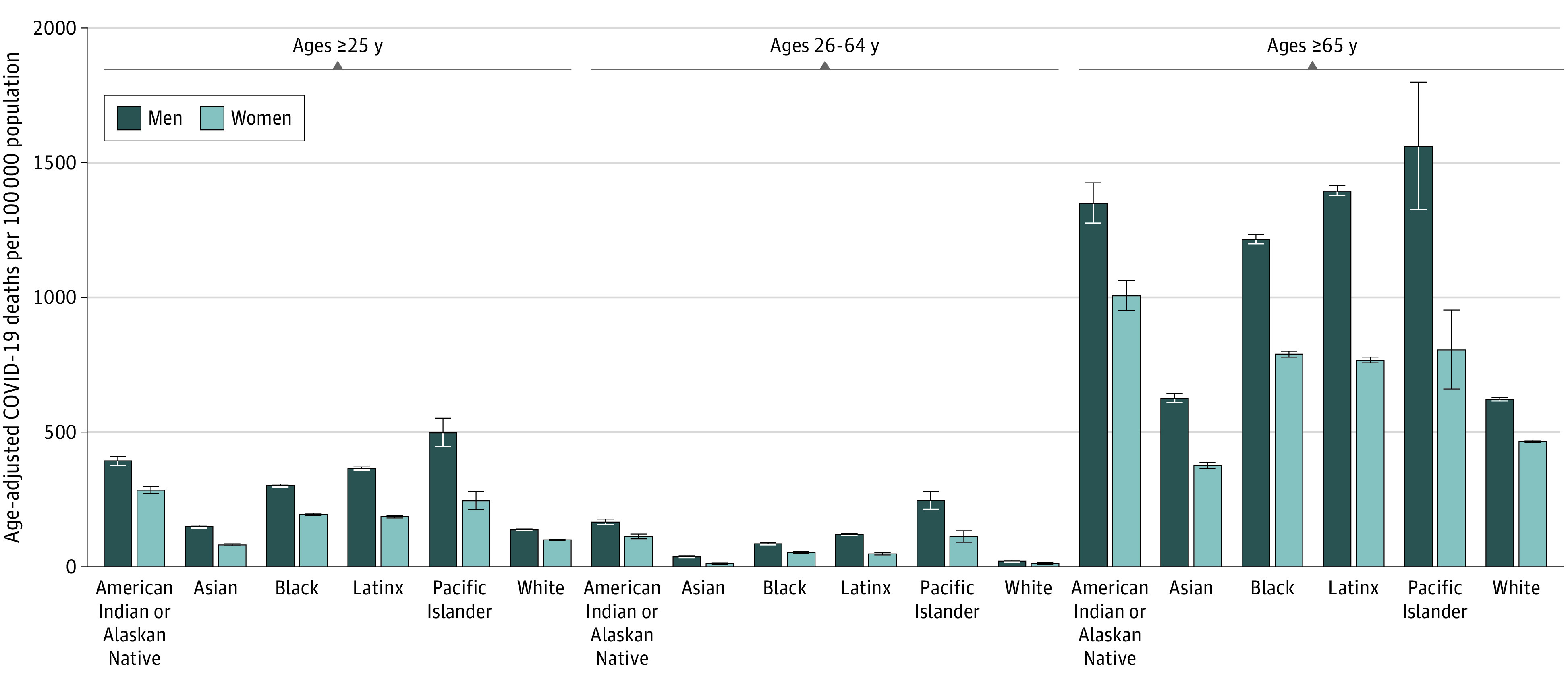
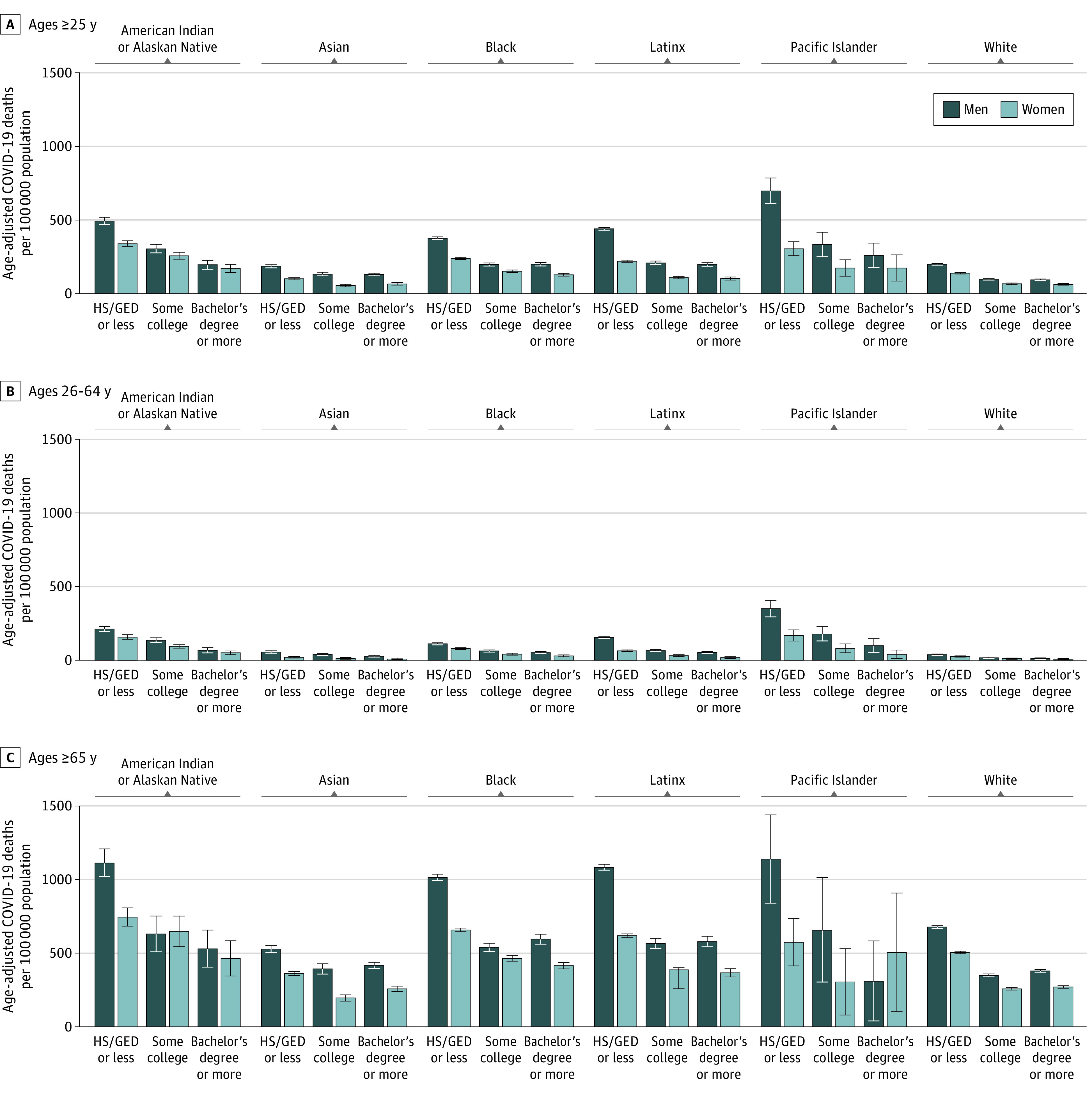
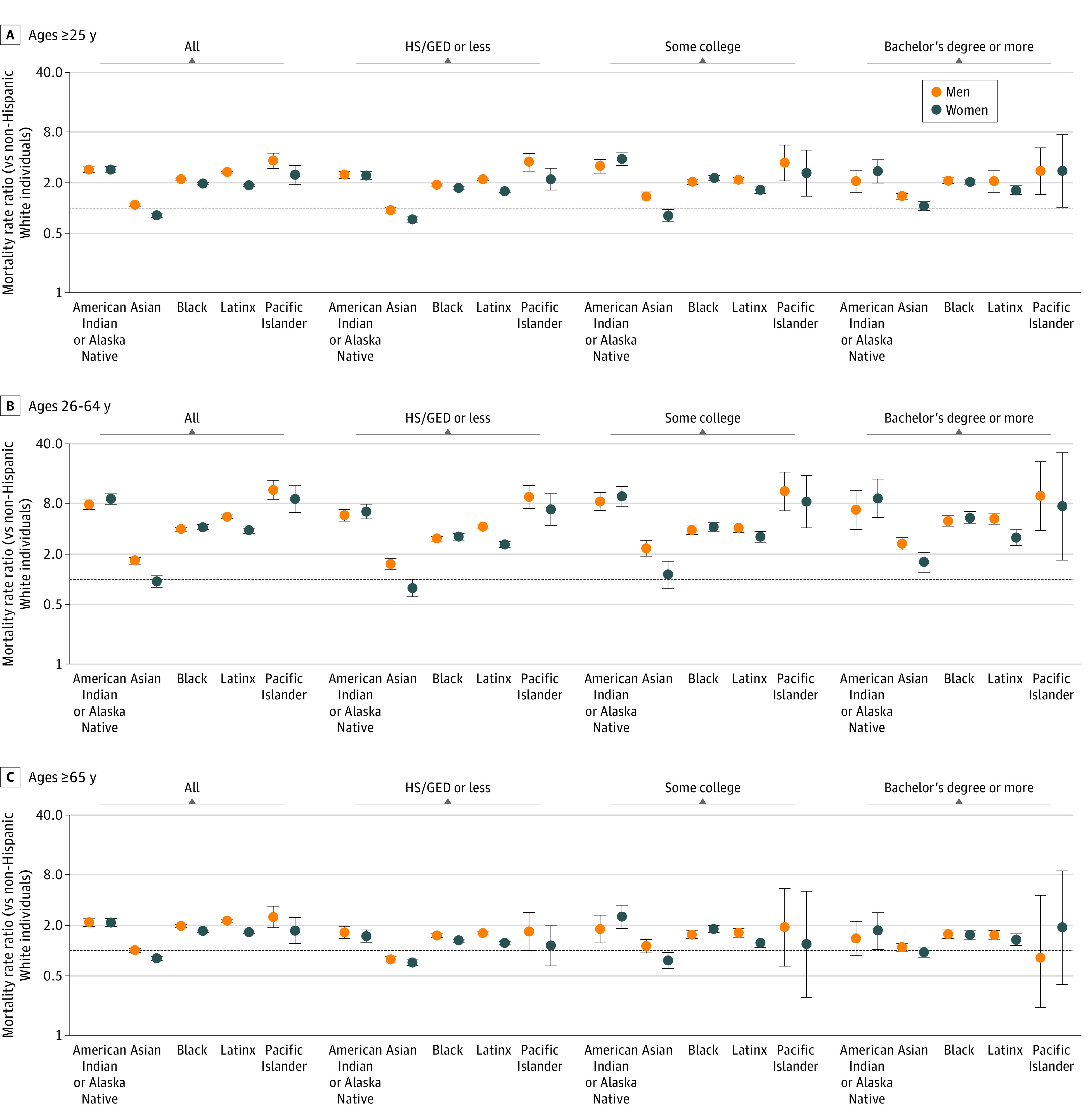
Verification
Claims the paper makes
The claims and statistics of this paper haven’t been checked yet.
Run the check — free, no account needed. It reads the open-access text and checks the sources it cites.
Claims other papers make about this one
Each is checked against this paper’s own text: does it say what the citing paper says it does?
In the citing paper
“These groups of workers have been at the greatest risk of serious illness and death from COVID-19.”
From The Lancet Commission on lessons for the future from the COVID-19 pandemic (2022) · cites this paper as [278]
Self-check
Percentages, sums and reported differences re-computed from the paper’s own numbers.
The self-check needs the paper’s full text.
Citations
Cites
von Elm, E., Altman, D. G., Egger, M., Pocock, S. J., Gøtzsche, P. C., Vandenbroucke, J. P., & Initiative, F. T. S. (2007) · PLoS Medicine · doi:10.1371/journal.pmed.0040296 · Cited by 23,020
von Elm, E., Altman, D. G., Egger, M., Pocock, S. J., Gøtzsche, P. C., & Vandenbroucke, J. P. (2007) · The Lancet · doi:10.1016/s0140-6736(07)61602-x · Cited by 21,320
Measuring Social Class in US Public Health Research: Concepts, Methodologies, and Guidelines
Krieger, N., Williams, D. R., & Moss, N. (1997) · Annual Review of Public Health · doi:10.1146/annurev.publhealth.18.1.341 · Cited by 2,767
How Structural Racism Works — Racist Policies as a Root Cause of U.S. Racial Health Inequities
Bailey, Z. D., Feldman, J. M., & Bassett, M. T. (2021) · New England Journal of Medicine · doi:10.1056/nejmms2025396 · Cited by 1,598
Self-citationRacial and Ethnic Disparities in COVID-19–Related Infections, Hospitalizations, and Deaths
Mackey, K., Ayers, C. K., Kondo, K. K., Saha, S. S., Advani, S., Young, S., Spencer, H. C., Rusek, M., Anderson, J., Veazie, S., et al. (2020) · Annals of Internal Medicine · doi:10.7326/m20-6306 · Cited by 1,110
Age Adjustment Using the 2000 Projected U.S. Population
Klein, R. J., & Schoenborn, C. A. (2001) · PsycEXTRA Dataset · doi:10.1037/e583772012-001 · Cited by 580
Arias, E., Schauman, W. S., Eschbach, K., Sorlie, P. D., & Backlund, E. (2008) · PubMed · Cited by 451
Age adjustment using the 2000 projected U.S. population.
Klein, R. J., & Schoenborn, C. A. (2001) · PubMed · Cited by 444
Bassett, M. T., Chen, J. T., & Krieger, N. (2020) · PLoS Medicine · doi:10.1371/journal.pmed.1003402 · Cited by 277
Self-citationChen, Y.-H., Glymour, M., Riley, A., Balmes, J., Duchowny, K., Harrison, R., Matthay, E., & Bibbins-Domingo, K. (2021) · PLOS ONE · doi:10.1371/journal.pone.0252454 · Cited by 267
Research works printed but not linked: 2
- Klein, 2001, Age Adjustment Using the 2000 Projected US Population
- Cochrane, 1991, Sampling Techniques
Cited by
Sorted by citations
The Lancet Commission on lessons for the future from the COVID-19 pandemic
Sachs, J. D., Karim, S. S. A., Aknin, L., Allen, J., Brosbøl, K., Colombo, F., Barron, G. C., Espinosa, M. F., Gaspar, V., Gaviria, A., et al. (2022) · The Lancet · doi:10.1016/s0140-6736(22)01585-9 · Cited by 842
Irizar, P., Pan, D., Kapadia, D., Bécares, L., Sze, S., Taylor, H. F. W., Amele, S., Kibuchi, E., Divall, P., Gray, L. J., et al. (2023) · EClinicalMedicine · doi:10.1016/j.eclinm.2023.101877 · Cited by 109
Support amid uncertainty: Long COVID illness experiences and the role of online communities
Russell, D., Spence, N. J., Chase, J. D., Schwartz, T., Tumminello, C. M., & Bouldin, E. D. (2022) · SSM - Qualitative Research in Health · doi:10.1016/j.ssmqr.2022.100177 · Cited by 93
“Additionally, researchers have documented disparities in COVID-19 morbidity and mortality by age, race/ethnicity and sex across earlier and later pandemic stages (Danielsen et al., 2022; Elo et al., 2022; Feldman and Bassett, 2021).”
BackgroundChanges in Life Expectancy Between 2019 and 2020 in the US and 21 Peer Countries
Woolf, S. H., Masters, R. K., & Aron, L. Y. (2022) · JAMA Network Open · doi:10.1001/jamanetworkopen.2022.7067 · Cited by 85
Zambrana, R. E., & Williams, D. R. (2022) · Health Affairs · doi:10.1377/hlthaff.2021.01439 · Cited by 81
Metadata
- Authors
- Feldman, J. M., & Bassett, M. T.
- Affiliations
- Harvard University (US)
- Corresponding author
- Feldman, Justin M.
- Venue
- JAMA Network Open
- Publisher
- American Medical Association (AMA)
- Published
- 2021-11-23
- Volume
- 4
- Issue
- 11
- Pages
- e2135967
- ISSN
- 2574-3805 (ISSN-L)
- PMC
- PMC8611482
- OpenAlex
- W3215441144
- Cited by
- 120
- References
- 19
- Citations by year
- 2026: 5 · 2025: 14 · 2024: 25 · 2023: 42 · 2022: 34
- FWCI
- 9.76
- Type
- journal article
- Language
- en
- Open access
- gold
- doi.org
- Licence
- cc-by
- Locations
- JAMA Network Open (publishedVersion, cc-by)
- PubMed Central (publishedVersion, cc-by)
- PubMed (publishedVersion)
- Topics
- Physical Sciences › Mathematics › Modeling and Simulation › COVID-19 epidemiological studies
- Social Sciences › Health › Health disparities and outcomes
- Health Sciences › Medicine › Infectious Diseases › COVID-19 Clinical Research Studies
- Keywords
- COVID-19 mortality, racial and ethnic disparities, educational attainment, health disparities, SARS-CoV-2, Asian Americans, Hispanic Americans, African Americans, socioeconomic status, United States adults, COVID-19 pandemic, health inequalities reduction, infection fatality rate
- MeSH terms
- Academic Success, COVID-19, Health Inequities, Ethnic and Racial Minorities, Adult, Aged, Cross-Sectional Studies, Ethnicity, Female, Humans, Male, Middle Aged, Minority Groups, United States, Health Status Disparities
About these checks
Registry, retraction, Cites and statistics results are computed, not judged, with one exception: a printed reference that no index lists is read once by a model before it counts as a citation error. Claims are extracted by a model and kept only when their quote appears verbatim in the text; each cited source is then checked, with a model’s help, for whether it says what the claim relies on. Those verdicts can be wrong — read the claim’s quote and the cited source before relying on one.
Statistics and arithmetic are recomputed, not judged.
Confidence bands are shown only for fields calibrated on our annotated test set. None is calibrated yet, so no band is shown.
What counts as a claim ›How we measure confidence ›How we check this ›
Are you an author, or do you see a problem with this page? Request a review
