

The DOI matches its Crossref record; 44 of the 44 references it cites were found in a registry or an index.
Association of Healthful Plant-based Diet Adherence With Risk of Mortality and Major Chronic Diseases Among Adults in the UK
Open accessAbstract
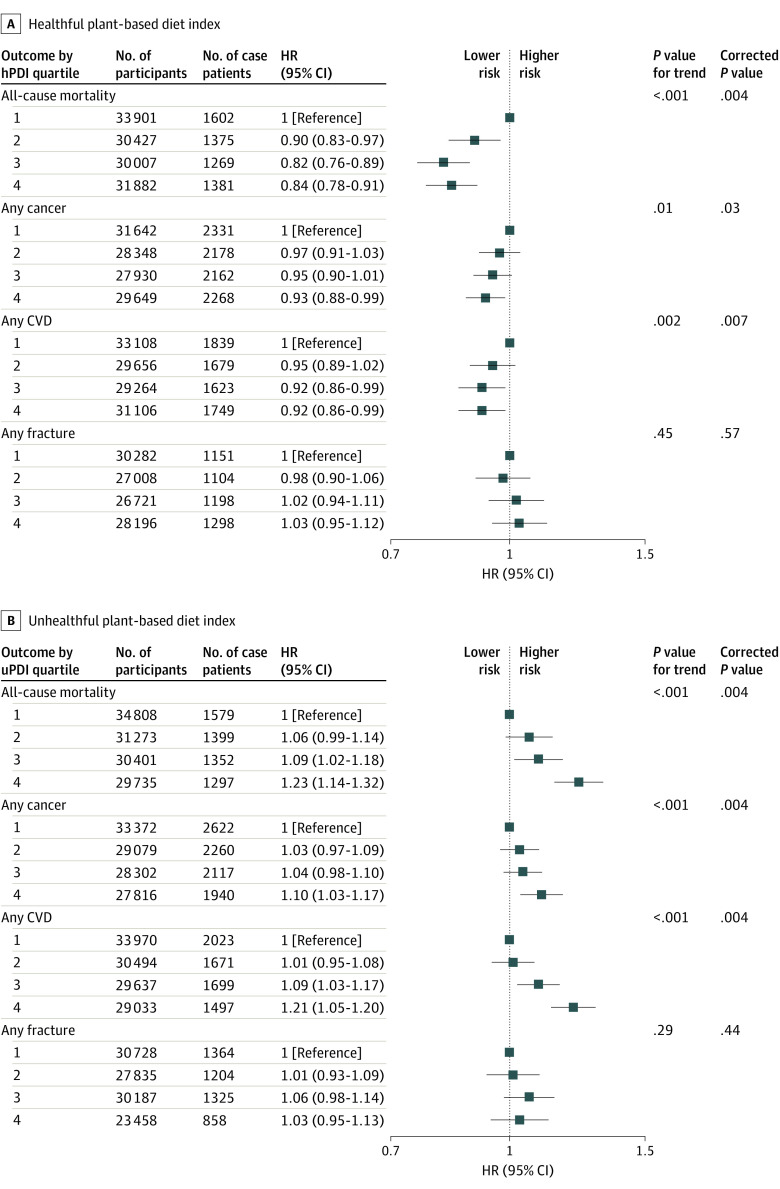
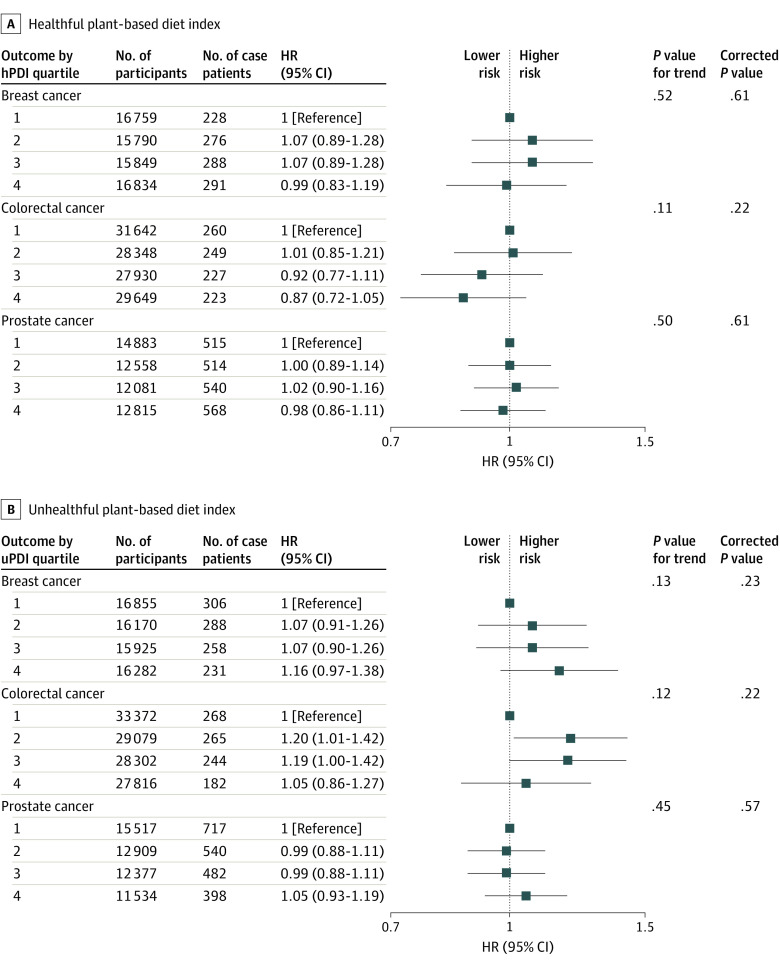
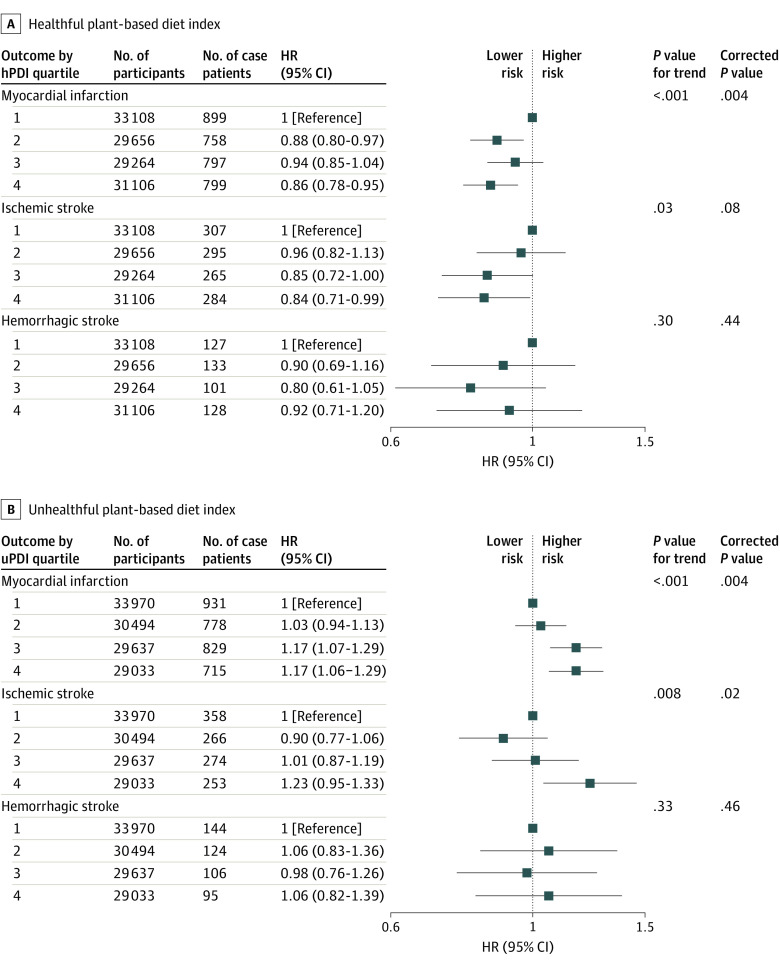
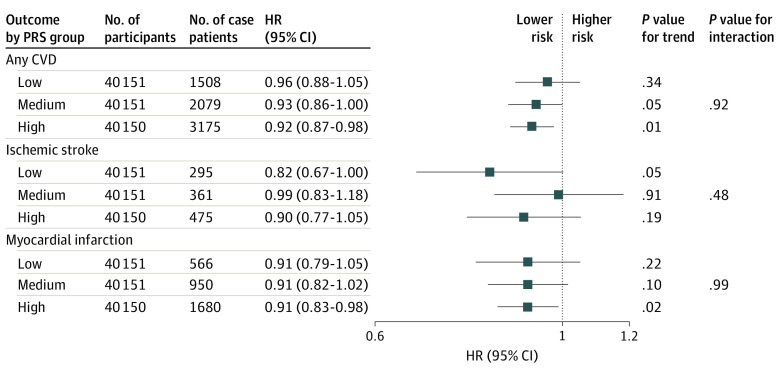
Importance: Plant-based diets have gained popularity for both environmental and health reasons, but a comprehensive assessment of their quality in relation to risk of mortality and major chronic diseases is lacking. Objective: To examine whether healthful vs unhealthful plant-based dietary patterns are associated with mortality and major chronic diseases among UK adults. Design, Setting, and Participants: This prospective cohort study used data from adults in the UK Biobank, a large-scale population-based study. Participants were recruited between 2006 and 2010 and followed up using record linkage data until 2021; follow-up for different outcomes ranged between 10.6 and 12.2 years. Data analysis was conducted from November 2021 to October 2022. Exposures: Adherence to a healthful vs unhealthful plant-based diet index (hPDI vs uPDI) derived from 24-hour dietary assessments. Main Outcomes and Measures: The main outcomes were hazard ratios (HRs) and 95% CIs of mortality (overall and cause specific), cardiovascular disease (CVD [total, myocardial infarction, ischemic stroke, and hemorrhagic stroke]), cancer (total, breast, prostate, and colorectal), and fracture (total, vertebrae, and hip) across quartiles of hPDI and uPDI adherence. Results: This study included 126 394 UK Biobank participants. They had a mean (SD) age of 56.1 (7.8) years; 70 618 (55.9%) were women. The majority of participants (115 371 [91.3%]) were White. Greater adherence to the hPDI was associated with lower risks of total mortality, cancer, and CVD, with HRs (95% CIs) of 0.84 (0.78-0.91), 0.93 (0.88-0.99), and 0.92 (0.86-0.99), respectively, for participants in the highest hPDI quartile compared with the lowest. The hPDI was also associated with lower risks of myocardial infarction and ischemic stroke, with HRs (95% CIs) of 0.86 (0.78-0.95) and 0.84 (0.71-0.99), respectively. By contrast, higher uPDI scores were associated with higher risks of mortality, CVD, and cancer. The associations observed did not show heterogeneity across strata of sex, smoking status, body mass index, or socioeconomic status or with polygenic risk scores (specifically with regard to CVD end points). Conclusions and Relevance: The findings of this cohort study of middle-aged UK adults suggest that a diet characterized by high-quality plant-based foods and lower intakes of animal products may be beneficial for health, irrespective of established chronic disease risk factors and genetic predisposition.
Overview
The claims and statistics of this paper haven’t been checked yet.
Run the check — free, no account needed. It reads the open-access text and checks the sources it cites.
Integrity signals
Registry
Cites
Statistics
Figures
Verification
Claims the paper makes
The claims and statistics of this paper haven’t been checked yet.
Run the check — free, no account needed. It reads the open-access text and checks the sources it cites.
Claims other papers make about this one
Each is checked against this paper’s own text: does it say what the citing paper says it does?
The source backs part of the claim, not all of it — or backs it for a different population, condition or comparison.
In the citing paper
“Abundant evidence from observational and intervention studies7,8,9,10,11,12,13 indicates that vegan diets are associated with improved cardiovascular health and decreased risk of cardiovascular disease, likely because of the higher daily consumption of vegetables and fruits, legumes, whole grains and nuts, and seeds compared with other different types of dietary patterns.14”
From Cardiometabolic Effects of Omnivorous vs Vegan Diets in Identical Twins: A Randomized Clinical Trial (2023) · cites this paper as [12]
Experimental — accuracy not yet measured
Self-check
Percentages, sums and reported differences re-computed from the paper’s own numbers.
The self-check needs the paper’s full text.
Citations
Cites
Sudlow, C., Gallacher, J., Allen, N., Beral, V., Burton, P., Danesh, J., Downey, P., Elliott, P., Green, J., Landray, M., et al. (2015) · PLOS Medicine · doi:10.1371/journal.pmed.1001779 · Cited by 12,728
Food in the Anthropocene: the EAT–Lancet Commission on healthy diets from sustainable food systems
Willett, W., Rockström, J., Loken, B., Springmann, M., Lang, T., Vermeulen, S., Garnett, T., Tilman, D., DeClerck, F., Wood, A., et al. (2019) · The Lancet · doi:10.1016/s0140-6736(18)31788-4 · Cited by 10,880
Adjustment for total energy intake in epidemiologic studies
Willett, W. C., Howe, G., & Kushi, L. H. (1997) · American Journal of Clinical Nutrition · doi:10.1093/ajcn/65.4.1220s · Cited by 3,805
Global diets link environmental sustainability and human health
Tilman, D., & Clark, M. (2014) · Nature · doi:10.1038/nature13959 · Cited by 3,026
The gut microbiota, bacterial metabolites and colorectal cancer
Louis, P., Hold, G. L., & Flint, H. J. (2014) · Nature Reviews Microbiology · doi:10.1038/nrmicro3344 · Cited by 2,925
Shared Risk Factors in Cardiovascular Disease and Cancer
Koene, R. J., Prizment, A. E., Blaes, A. H., & Konety, S. (2016) · Circulation · doi:10.1161/circulationaha.115.020406 · Cited by 1,512
What makes UK Biobank special?
Collins, R. (2012) · The Lancet · doi:10.1016/s0140-6736(12)60404-8 · Cited by 1,128
Satija, A., Bhupathiraju, S. N., Rimm, E. B., Spiegelman, D., Chiuve, S. E., Borgi, L., Willett, W. C., Manson, J. E., Sun, Q., & Hu, F. B. (2016) · PLOS Medicine · doi:10.1371/journal.pmed.1002039 · Cited by 1,069
Healthful and Unhealthful Plant-Based Diets and the Risk of Coronary Heart Disease in U.S. Adults
Satija, A., Bhupathiraju, S. N., Spiegelman, D., Chiuve, S. E., Manson, J. E., Willett, W., Rexrode, K. M., Rimm, E. B., & Hu, F. B. (2017) · Journal of the American College of Cardiology · doi:10.1016/j.jacc.2017.05.047 · Cited by 991
Dinu, M., Abbate, R., Gensini, G. F., Casini, A., & Sofi, F. (2017) · Critical Reviews in Food Science and Nutrition · doi:10.1080/10408398.2016.1138447 · Cited by 971
Research works printed but not linked: 2
- World Health Organization, 2021, Plant-Based Diets and Their Impact on Health, Sustainability and the Environment: A Review of the Evidence
- Thompson? DJ, Wells? D, Selzam? S, . UK Biobank release and systematic evaluation of optimised polygenic risk scores for 53 diseases and quantitative traits.? medRxiv. Preprint posted online August 1, 2022. doi:10.1101/2022.06.16.22276246? · DOI · Paper page
Cited by
Sorted by citations
Items 101–175 of 175
Johnson, S. S. (2023) · American Journal of Health Promotion · doi:10.1177/08901171231184527 · Cited by 3
“16 Another larger prospective cohort study demonstrated that replacing just 10% of processed or ultra-processed foods with minimally processed foods decreased overall cancer risk.”
BackgroundShin, D., Kim, D., Kim, H., & Kim, J. (2026) · Nutrients · doi:10.3390/nu18050856 · Cited by 2
Toward a roadmap for addressing today's health dilemma–The 101-statement consensus report
Wirnitzer, K., Motevalli, M. S., Tanous, D., Drenowatz, C. J., Moser, M., Cramer, H., Rosemann, T. J., Wagner, K., Michalsen, A., Knechtle, B., et al. (2025) · Frontiers in Nutrition · doi:10.3389/fnut.2025.1676080 · Cited by 3
Qasim, S., Khan, I., Hassan, S. S. U., Rath, S., Khan, M., Rahman, S., Zafar, H., Ashraf, D., Ali, M., & Kamil, K. (2025) · Cardio-Oncology · doi:10.1186/s40959-025-00409-3 · Cited by 2
“The study by Thompson et al. further supports the importance of diet in chronic disease prevention, showing that healthful plant-based diets are associated with lower risks of mortality, cardiovascular disease, and cancer [29].”
Nguyen, D. H. N., Chen, C., Lin, S.-P., Lam, H. N., Su, C., Liu, K. E., Lee, S.-C., & Li, S. (2025) · Nutrition · doi:10.1016/j.nut.2025.113085 · Cited by 2
Park, C., Han, B. E., & Lee, Y. (2025) · Nutrients · doi:10.3390/nu17172805 · Cited by 3
“Although prior studies have demonstrated inverse associations of healthful plant-based dietary patterns with CVD and related risk factors, most research has been conducted in Western populations [12–16].”
InfluentialSchönleben, A. M., Cseresznye, A., Yin, S.-S., McGrath, T. J., Bosschaerts, S., van Nuijs, A. V., Covaci, A., & Poma, G. (2025) · Food Control · doi:10.1016/j.foodcont.2025.111630 · Cited by 2
Dietary patterns, nutrients, and risk of expiratory airflow limitation in children and adolescents
Bao, Y., Chang, Q., Zhang, H., Ding, H., Gao, J., Zhang, C., Chi, B., Xia, Y., Zhao, Y., & Zhang, H. (2025) · European Journal of Nutrition · doi:10.1007/s00394-025-03604-1 · Cited by 2
“Given that the association between plant foods pattern and the risk of other chronic diseases (such as cardiovascular disease [40], cancer [41], diabetes [42, 43], and chronic kidney disease [44]) has been well established in previous epidemiological studies, the observed association between plant…”
Fan, C., Wang, W., Xiong, W.-X., Li, Z.-Y., & Ling, L. (2025) · Ecotoxicology and Environmental Safety · doi:10.1016/j.ecoenv.2025.117739 · Cited by 2
La salud del planeta en mi consulta
Sáez, J. G., Vidal, M. R., & Ferré, A. M. R. (2023) · Actualización en Medicina de Familia · doi:10.55783/amf.190603 · Cited by 2
Sustainable diets deliver synergistic benefits to global resources, environment, and health
Zhu, X., Zhao, R., Zou, P., Zhu, Y., & Guo, Y. (2026) · Applied Geography · doi:10.1016/j.apgeog.2026.104066 · Cited by 1
Gwon, M.-R., Lee, J. H., Lee, D.-H., Park, Y., Park, S.-J., Lee, J.-W., Lee, H., Seong, S., & Yoon, Y.-R. (2026) · European Journal of Clinical Nutrition · doi:10.1038/s41430-026-01703-8 · Cited by 1
“A recent prospective study conducted in the United Kingdom found that adherence to a healthful plant-based diet was signi fi cantly associated with a reduced risk of mortality, cardiovascular disease, and cancer [8].”
Clemente‐Suárez, V. J., Sancho-Haro, E. S., Yáñez-Sepúlveda, R., Tornero-Aguilera, J. F., & Martín-Rodríguez, A. (2026) · Nutrients · doi:10.3390/nu18142291 · Cited by 1
“FFQs are particularly insensitive to the food processing dimension: a participant consuming predominantly ultra-processed plant products and one consuming a whole-food plant-based diet may be classified identically despite radically different physiological exposures [8–10].”
Thompson, A. S., Jennings, A., Bondonno, N. P., Cassidy, A., & Kühn, T. (2026) · The Lancet Regional Health - Europe · doi:10.1016/j.lanepe.2026.101736 · Cited by 1
“28,29 Sec-ondly, the UK Biobank has a notably low response rate to the initial recruitment invitation (approximately 5%), which is substantially lower than that reported in many population-based studies.”
Self-citationGil‐Lespinard, M., Iglesias‐Vázquez, L., & Jakszyn, P. G. (2026) · European Journal of Nutrition · doi:10.1007/s00394-026-03948-2 · Cited by 2
Enhancing a plant-based diet can reduce the risk of multimorbidity in older adults
Tu, W., Cai, L., LIU, Y. Z., & Han, A. (2026) · BMC Geriatrics · doi:10.1186/s12877-026-07444-4 · Cited by 1
Zheng, H., Huang, Z., Cai, Y., He, W., Wu, X., Zhang, H., Wu, Y., Wang, J., Zhang, S., Gao, J., et al. (2026) · Diabetes Obesity and Metabolism · doi:10.1111/dom.70732 · Cited by 2
Xu, X., Li, J., Li, J., Shen, W., Tan, X., Xu, F., Zhang, W., Wang, N., Lu, Y., & Wang, B. (2026) · GeroScience · doi:10.1007/s11357-026-02189-9 · Cited by 1
The Role of Plant-Based Diets for Cancer Survivors and Planetary Health
Kwok, K., Hedley, T. E., & Mariano, C. J. (2026) · Current Oncology · doi:10.3390/curroncol33020072 · Cited by 1
“Most studies have classified diets into categories, such as a “healthful diet” versus an “unhealthful diet” or used scoring indices such as the Healthy Eating Index 2005 (HEI-2005) [5–7].”
Vitale, S., Palumbo, E., D'Angelo, A., Maso, M. D., Polesel, J., Grimaldi, M., Porciello, G., Luongo, A., Pica, R., Crispo, A., et al. (2025) · Nutrients · doi:10.3390/nu17233782
“Furthermore, they reduce the risk of chronic diseases and therefore may partly explain the reduced mortality [22].”
Association between plant-based dietary patterns and dementia among Chinese older adults
Xian, X., Chen, Y., Fu, Y., Chen, Z., Xiang, J., Han, Z., Zeng, L., Li, J., Wang, Y., & Shen, K. (2025) · Frontiers in Nutrition · doi:10.3389/fnut.2025.1669647 · Cited by 1
Korkmaz, E. D., Vardari, S. K., Isiltan, I., & Temizci, B. (2025) · bioRxiv · doi:10.1101/2025.10.27.684740 · Cited by 1
Nutritional status and its influencing factors of urban Chinese adults aged 40-69 years.
Wang, W.-J., Shen, J., Lin, Q., Fu, Y.-B., Lu, B., Bai, S., Zhang, M., Yang, Y., You, J., Xiao, R., et al. (2025) · Asia Pacific Journal of Clinical Nutrition · doi:10.6133/apjcn.202506_34(3).0014 · Cited by 1
The Impact of Ultra-Processed Foods on the Risk of Developing Chronic Diseases
Степаненко, Д. С. (2025) · Universal library of medical and health sciences. · doi:10.70315/uloap.ulmhs.2025.0302012 · Cited by 1
Creedon, A., Hubbard, V., Gibson, R., & Dimidi, E. (2025) · Nutrition reviews · doi:10.1093/nutrit/nuaf040 · Cited by 1
Fan, Z.-X., Yang, C.-J., Zhao, C., Wu, H., Wang, H.-B., Yang, Y., Li, Q., & Yang, J. (2025) · Molecular Nutrition & Food Research · doi:10.1002/mnfr.202400833 · Cited by 1
Cai, D., Zeng, Y., Liang, X., Song, A., & Ye, M. (2024) · Nutrients · doi:10.3390/nu16234011 · Cited by 1
“Alysha et al. have re-ported that adherence to a healthy plant-based diet can enhance cardiovascular health, decrease the incidence of cardiovascular disease, and alleviate their detrimental effects, consequently lowering the risk of disability attributable to such conditions [25,38–40].”
Rapid Lifestyle Recommendations to Improve Urologic, Heart and Overall Health
Moyad, M. A. (2024) · Current Urology Reports · doi:10.1007/s11934-024-01246-0 · Cited by 1
“Quality of the diet is important with multiple dietary interventions [15], but so is quantity, and multiple options exist for patients to reduce caloric intake to improve metabolic and urologic health [16].”
Tucker, A. C., Mueller, M. P., Taillie, L. S., Block, J. P., Leung, C. W., & Wolfson, J. A. (2024) · American Journal of Preventive Medicine · doi:10.1016/j.amepre.2024.10.013 · Cited by 1
Yang, F., Jin, J., Liu, J., Lu, X., Jiang, H., Tan, H., Zhou, F., & Zeng, P. (2024) · Aging Clinical and Experimental Research · doi:10.1007/s40520-024-02838-z · Cited by 2
“The plant-based diet emphasized consuming diverse selection of healthy plant foods, reducing risk of chronic disease such as PD, DM, cognitive impairment, and stroke [ 18, 21, 30 – 32 ].”
BackgroundD'Angelo, A., Vitale, S., Palumbo, E., & Augustin, L. S. A. (2024) · Epidemiology Biostatistics and Public Health · doi:10.54103/2282-0930/22226 · Cited by 1
“For example, vegetables and fruits are the main sources of fiber and antioxidants, nuts are rich in PUFA, soy and pulses are main sources of plant protein, and coffee and tea are rich in antioxidants, theaflavins and chlorogenic acid respectively [33, 34].”
BackgroundVegetarian Diets and Cardiovascular Risk Reduction: Pros
Lee, S. Y. (2023) · Journal of Lipid and Atherosclerosis · doi:10.12997/jla.2023.12.3.315 · Cited by 2
Xie, S., Yang, Y., Tang, S., Zhou, L. N., Wang, J., Chan, J. W. Y., Or, B., Li, N., Gong, S., He, Z., et al. (2026) · Movement Disorders · doi:10.1002/mds.70562
Tang, S., Yang, Y., Wang, Y., Gong, S., Li, N., He, Z., Ni, J., Wang, J., Liu, Y., Chan, J. W. Y., et al. (2026) · EBioMedicine · doi:10.1016/j.ebiom.2026.106503
Yang, X.-M., Xiao, R.-X., Wu, Y.-J., Chen, H., & Zhao, Q.-P. (2026) · Frontiers in Nutrition · doi:10.3389/fnut.2026.1899346
“Previous cohort studies and meta-analyses have generally shown that healthy plant-based dietary patterns are associated with lower all-cause and cardiovascular mortality, whereas unhealthy plant-based dietary patterns are associated with higher mortality risk (15, 16).”
Yu, J., Zhang, Q., Zhou, Q., Sun, J., He, B., Wang, Z., Guo, Z., Liu, M., Zhao, M., Wanyan, T., et al. (2026) · Frontiers in Nutrition · doi:10.3389/fnut.2026.1922232
“Several prospective cohort studies have shown that healthier plant-based dietary patterns are associated with lower risks of colorectal cancer, gastrointestinal cancers, and cancer mortality (11, 26, 29).”
InfluentialEdkaidek, H., Dahiya, D., & Nigam, P. S. (2026) · Foods · doi:10.3390/foods15183255
“Compared with livestock production, plant-based dietary patterns are generally associated with reduced greenhouse gas emissions, lower resource use, and favourable public health outcomes, making them an important component of future food systems [2,3].”
Sella, L., Alabadi-Bierman, A., Paalani, M., Beeson, W. L., & Santos, H. D. (2026) · American Journal of Lifestyle Medicine · doi:10.1177/15598276261477331
“Recent large-scale cohort data, including findings from the UK Biobank, have shown that adherence to a greater number of healthy lifestyle factors is associated with lower mortality, lower multimorbidity, and better perceived health.”
InfluentialIsayeva, U., Guloksuz, S., Lin, B., de Boer, N., Rutten, B., Linden, D. E. J., Manchia, M., & Luykx, J. (2026) · Translational Psychiatry · doi:10.1038/s41398-026-04332-8
Plant-based dietary patterns and risk of breast cancer: A systematic review and meta-analysis
Han, Y., Xu, H., Liu, L., Bheesham, N., Manem, R., Fickel, A. K., & Sun, C. (2026) · European Journal of Clinical Nutrition · doi:10.1038/s41430-026-01806-2
Candussi, C. J., Bell, W., Mutapcic, M., Thompson, A. S., Rohrmann, S., Cassidy, A., Kühn, T., & Gaggl, M. (2026) · Scientific Reports · doi:10.1038/s41598-026-62827-2
“While diets rich in fruits and vegetables confer health benefits in the general population 8,28,29 , recommendations for individuals with CKD can be contradictory.”
Self-citationRosenstein, R. B., & Song, H.-J. (2026) · Journal of Nutrition Education and Behavior · doi:10.1016/j.jneb.2026.06.222
Liu, S., You, B., Liu, T., & Li, Y. (2026) · Nutrition Journal · doi:10.1186/s12937-026-01368-w
“Thompson et al. [14] reported that healthy plant-based diets lowered mortality risk, whereas unhealthy ones increased it.”
A narrative review of dietary patterns in cardiovascular-kidney-metabolic syndrome
Lv, L., Guo, Y., Li, X., Han, Q., & Wang, H. (2026) · Frontiers in Nutrition · doi:10.3389/fnut.2026.1799305
“Multiple studies show that hPDI is significantly inversely associated with CVD and mortality risk; conversely, uPDI is associated with increased risks (247–249).”
Cara, K. C., Sabaté, J., Hartman, T. J., Patel, A. V., Um, C. Y., & Shams‐White, M. (2026) · Current Developments in Nutrition · doi:10.1016/j.cdnut.2026.109438
“Lower quality vegetarian diets, such as those high in refined grains, added sugars, and sodium-rich foods, or low in essential nutrients like calcium and vitamin B12, have been associated with a higher risk of all-cause mortality and ischemic stroke [32].”
Kolahi, A., Yekaninejad, M. S., Iqbal, Z., & Mirzaei, K. (2026) · Nutrition Bulletin · doi:10.1111/nbu.70050
Zhang, Y., Li, M.-J., Fan, Z.-H., He, F.-F., Li, X.-Q., Wang, S.-M., & Wei, W.-Q. (2026) · Journal of Oral Microbiology · doi:10.1080/20002297.2026.2682962
“A high hPDI indicates a diet rich in whole plant foods and limited in less healthy plants and animal products; (3) Unhealthy plant-based diet index (uPDI): the inverse of hPDI with respect to plant food quality [8].”
He, X.-C., Zhao, S.-P., He, X.-M., Li, F., Wang, Q., & Gao, X. (2026) · BMC Public Health · doi:10.1186/s12889-026-27939-4
“Vegetarian diet preference was also independently associated with both the increasing-risk and stable high-risk trajectories [35, 36].”
Berlivet, J., Srour, B., Allès, B., Pointereau, P., Langevin, B., Agaësse, C., Lairon, D., Touvier, M., Berden, J., Chimera, B., et al. (2026) · Public Health Nutrition · doi:10.1017/s1368980026102791
“Many studies have focused on plant-based foods and demonstrated that diets rich in healthy plant-based foods, such as vegetables, fruits, legumes, wholegrain products and nuts, were associated with a lower risk of cancer, CVD and all-cause mortality (37 – 39) .”
Towards a Sustainable Food System: the role of Dietitians-Nutritionists
Muñoz-Martínez, J., Álvarez, E. C., Moñino, M., Baladía, E., & Russolillo, G. (2026) · Revista Española de Nutrición Humana y Dietética · doi:10.14306/renhyd.30.2.2446
Zhao, N., Hu, F.-Y., Liang, J.-Z., Zhang, Y., Yuan, L., Tang, B.-H., He, J., & Liu, Y. (2026) · Frontiers in Public Health · doi:10.3389/fpubh.2026.1792338
“These weighted values were then aggregated to yield the overall DII and E-DII scores (9, 23, 24).”
Karahan, T. Ö., Aydın, Ö., Küçükpolat, F., Çapar, N., Aktaş, S., Yılmaz, Ş., Dirhemsiz, Z., & Kenger, E. (2026) · Bandırma Onyedi Eylül Üniversitesi Sağlık Bilimleri ve Araştırmaları Dergisi · doi:10.46413/boneyusbad.1697486
Chen, X., Wang, Q., Zhang, X., Zou, F., Wu, Y., Zeng, W., Li, S., & Lin, Y. (2026) · Food Science & Nutrition · doi:10.1002/fsn3.71756
“…a large-scale prospective cohort among UK adults reported that higher uPDI scores significantly increased the risks of cardiovascular disease (HR = 1.21, 95% CI: 1.05–1.20), cancer (HR = 1.10, 95% CI: 1.03–1.17), and all-cause mortality (HR = 1.23, 95% CI: 1.14–1.32) (Thompson et al. 2023).”
InfluentialKronsteiner-Gicevic, S., Thompson, A. S., Córdova, R., Gaggl, M., Woodside, J. V., Cassidy, A., Rohrmann, S., & Kühn, T. (2026) · European Journal of Nutrition · doi:10.1007/s00394-025-03877-6
Self-citationLi, R. Q., Peng, S. X., Zhang, R. H., Lu, T. Y., Zhang, W. S., Wang, J., Wang, Y., Yang, L., Yeung, S. B., Lam, T. H., et al. (2026) · Aging Cell · doi:10.1111/acel.70422 · Cited by 1
“…un-healthy plant foods, such as fruit juices, refined grains, potatoes, sugar-sweetened beverages, sweets and desserts; and (3) animal-derived foods, including animal fat, dairy, eggs, fish or seafood, meat, and other miscellaneous animal-derived foods (Satija et al. 2016; Thompson et al. 2023).”
Adherence to plant-based diet and risk of heart failure among middle-aged and older population
Chang, X.-X., Zhu, Y.-J., Che, W.-L., & Li, Y.-M. (2026) · Frontiers in Nutrition · doi:10.3389/fnut.2026.1769535
“Conversely, the uPDI was derived using the opposite scoring approach (22).”
Yao, H., Zhang, C., & Xiao, S. (2026) · European Journal of Nutrition · doi:10.1007/s00394-025-03808-5
Fletcher, J., Griffith, D. J., Malhi, H., & Cooper, S. (2026) · Frontline Gastroenterology · doi:10.1136/flgastro-2025-103209
“35 Conversely, there is far less data available on patient satisfaction with regard to changes in food availability in hospital menus.”
Comparative nutritional assessment of vegetarian and nonvegetarian ready-to-eat foods
Park, J., Han, S.-R., & Choi, M. (2026) · Clinical Nutrition Research · doi:10.7762/cnr.2025.0032
“This association is a key factor when evaluating vegetarianism as a health-promoting dietary pattern [14-16].”
Parascandalo, F., Khakban, I., Qian, C., Zvereva, E., Ford, A., de Souza, R., & Sergeant, M. (2025) · BMJ Leader · doi:10.1136/leader-2025-001299
Yun, S.-Y., Choi, M., & Kim, M. (2025) · British Food Journal · doi:10.1108/bfj-08-2025-1119
Gülada, B. Ö., Złotek, U., Gawlik, U., Kowalczyk, D., Taşkın, D., Taşkın, T., Jakubczyk, A., & Güneş, F. (2025) · Molecules · doi:10.3390/molecules30244677
Dietary Habit Changes in Preclinical Medical Students
Yarlagadda, S., Hilmi, I., Mobley, M., & Cobbs, L. (2025) · Cureus · doi:10.7759/cureus.97240
“…amounts of animal foods, sugary drinks, snacks and desserts, refined grains, potatoes, and fruit juices is associated with lower risks of cardiovascular disease, cancer, and total mortality, whereas a plant-based diet that does not follow these characteristics is associated with a higher risk [12].”
Zhao, C., Wang, T., Wang, Y., Jia, X.-C., Fan, Z.-X., Yang, C.-J., Fan, J.-W., Wang, N.-N., Yang, Y.-L., Shi, X.-Z., et al. (2025) · Food Science & Nutrition · doi:10.1002/fsn3.70790
“We derived the plant-based diet index (PDI), health-ful plant-based diet index (hPDI), and unhealthful plant-based diet index (uPDI) by assigning scores to 17 food categories, following established methods (Thompson et al. 2023) (see Supporting Information for further details).”
Martínez-Tabar, A., Ruiz‐Canela, M., Bullón‐Vela, V., Sayón-Orea, C., Carlos, S., Martínez‐González, M. Á., & Bes‐Rastrollo, M. (2025) · Nutrients · doi:10.3390/nu17152472 · Cited by 2
“These results are in line with other studies conducted in non-Mediterranean populations [24,36,37,39,40,44–48].”
Mulijono, D. (2025) · Archives of Epidemiology & Public Health Research · doi:10.33140/aephr.04.02.13
Pola Asupan Serat Individu Berdasarkan Preferensi Terhadap Sayur
Naja, S., Wahyuni, I., Mareti, V., & Anjani, P. (2025) · Nathiqiyyah · doi:10.46781/nathiqiyyah.v8i1.1722
“Bukti empiris ini semakin diperkuat oleh meta-analisis terbaru yang menunjukkan bahwa asupan serat yang memadai dari sayuran dapat mengurangi risiko penyakit kardiovaskular hingga 30% dan diabetes mellitus tipe 2 hingga 20% (Thompson et al., 2023).”
Zhang, H., He, J., You, X.-W., Liu, X., Zhou, W., & Shen, J. (2025) · European Geriatric Medicine · doi:10.1007/s41999-025-01234-8
Marchese, L., McNaughton, S., Hendrie, G., Brayner, B., Dickinson, K., & Livingstone, K. (2025) · Proceedings of the Nutrition Society · doi:10.1038/s41430-026-01731-4
“Additionally, previous UK Biobank studies found that a higher hPDI was associated with a reduced risk of cardiometabolic disorders [46], mortality, and CVD [37], regardless of genetic susceptibility [47].”
Tripathy, B., Sahoo, N., & Sahoo, S. K. (2024) · Pharmacological Research - Modern Chinese Medicine · doi:10.1016/j.prmcm.2024.100436
Bruins, A., Keeley, J., Uhley, V. E., Anyadike, K., & Kemp, K. L. (2024) · Nutrients · doi:10.3390/nu16040556
“While ethnic disparities in immune response related to obesity were discerned, caution is warranted, as the strength of these differences may require further exploration.”
BackgroundZheng, Y., Wang, J., Li, Y., Xu, K., & Chen, X. (2023) · Journal of Functional Foods · doi:10.1016/j.jff.2023.105904 · Cited by 1
Bermejo, L. M., Trabado-Fernández, A., Aparicio, A., Lozano-Estevan, M. D. C., & Plaza, B. L. (2023) · Nutrición Hospitalaria · doi:10.20960/nh.04960 · Cited by 10
Zhao, M., Qin, H., Sun, R., Zhang, J., Yan, X., & Liu, W.-W. (2024) · Medical Data Mining · doi:10.53388/mdm202407027
“Thompson [28], who utilized a cohort study with British adults, demonstrated that a diet rich in plant-based foods is more beneficial for health.”
Method
Metadata
- Authors
- Thompson, A. S., Tresserra-Rimbau, A., Karavasiloglou, N., Jennings, A., Cantwell, M., Hill, C., Perez-Cornago, A., Bondonno, N. P., Murphy, N., Rohrmann, S., Cassidy, A., & Kühn, T.
- Affiliations
- Queen's University Belfast (GB)
- Institute for Global Food Security, School of Biological Sciences, Queen’s University, Belfast, United Kingdom
- University of Zurich (CH)
- Cancer Epidemiology Unit, Nuffield Department of Population Health, University of Oxford, Oxford, United Kingdom
- Edith Cowan University (AU)
- Centre international de recherche sur le cancer (FR)
- Corresponding author
- Cassidy, Aedín
- ORCID
- Venue
- JAMA Network Open
- Publisher
- American Medical Association (AMA)
- Published
- 2023-03-28
- Volume
- 6
- Issue
- 3
- Pages
- e234714
- ISSN
- 2574-3805 (ISSN-L)
- PMC
- PMC10051114
- OpenAlex
- W4361224334
- Cited by
- 203
- References
- 44
- Citations by year
- 2026: 45 · 2025: 73 · 2024: 60 · 2023: 25
- FWCI
- 51.97
- Type
- journal article
- Language
- en
- Open access
- gold
- doi.org
- Licence
- other-oa
- Locations
- JAMA Network Open (publishedVersion, other-oa)
- PubMed Central (publishedVersion, cc-by)
- PubMed (publishedVersion)
- Research Portal (Queen's University Belfast) (acceptedVersion, other-oa)
- Zurich Open Repository and Archive (University of Zurich) (acceptedVersion, cc-by-nc-nd)
- Australasian Journal of Paramedicine (submittedVersion, cc-by)
- Zurich Open Repository and Archive (University of Zurich) (submittedVersion, cc-by)
- Zurich Open Repository and Archive (University of Zurich)
- Funders
- World Health Organization
- Wellcome Trust
- Scottish Government
- Department for the Economy
- Cancer Research UK (29017)
- National Institute for Health and Care Research
- British Heart Foundation
- Northwest Regional Development Agency
- Medical Research Council
- Topics
- Health Sciences › Medicine › Public Health, Environmental and Occupational Health › Nutritional Studies and Diet
- Physical Sciences › Environmental Science › Ecology › Agriculture Sustainability and Environmental Impact
- Health Sciences › Medicine › Physiology (medical) › Dietary Effects on Health
- Keywords
- plant-based diet, healthful plant-based diet index, unhealthful plant-based diet index, dietary habits, mortality, cardiovascular disease, cancer, fracture, myocardial infarction, ischemic stroke, hemorrhagic stroke, breast cancer, prostate cancer, colorectal cancer, UK Biobank, dietary adherence, UK adults, fracture risk
- MeSH terms
- Animals, United Kingdom, Myocardial Infarction, Neoplasms, Plants, Prospective Studies, Diet, Vegetarian, Cohort Studies
About these checks
Registry, retraction, Cites and statistics results are computed, not judged, with one exception: a printed reference that no index lists is read once by a model before it counts as a citation error. Claims are extracted by a model and kept only when their quote appears verbatim in the text; each cited source is then checked, with a model’s help, for whether it says what the claim relies on. Those verdicts can be wrong — read the claim’s quote and the cited source before relying on one.
Statistics and arithmetic are recomputed, not judged.
Confidence bands are shown only for fields calibrated on our annotated test set. None is calibrated yet, so no band is shown.
What counts as a claim ›How we measure confidence ›How we check this ›
Are you an author, or do you see a problem with this page? Request a review
