

The DOI matches its Crossref record; 32 of the 33 references it cites were found in a registry or an index.
Minocycline at 2 Different Dosages vs Placebo for Patients With Mild Alzheimer Disease: A Randomized Clinical Trial
Open accessAbstract
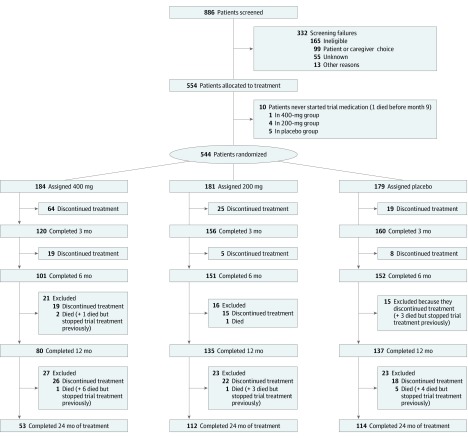
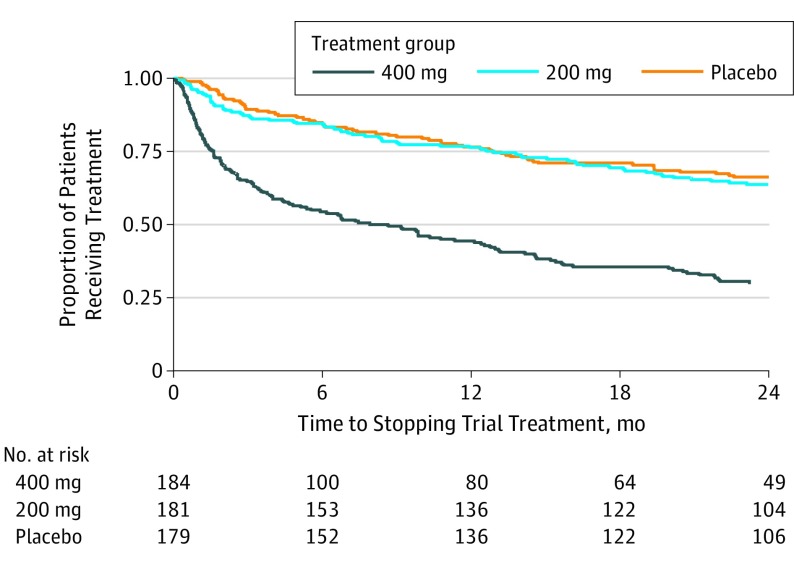
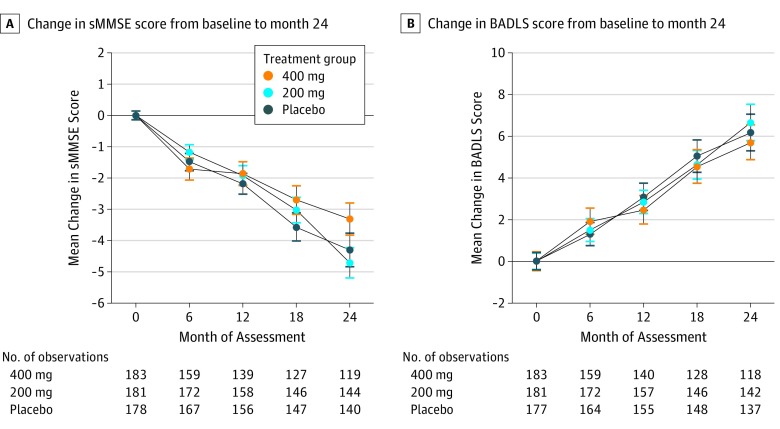
Importance: There are no disease-modifying treatments for Alzheimer disease (AD), the most common cause of dementia. Minocycline is anti-inflammatory, protects against the toxic effects of β-amyloid in vitro and in animal models of AD, and is a credible repurposed treatment candidate. Objective: To determine whether 24 months of minocycline treatment can modify cognitive and functional decline in patients with mild AD. Design, Setting, and Participants: Participants were recruited into a double-blind randomized clinical trial from May 23, 2014, to April 14, 2016, with 24 months of treatment and follow-up. This multicenter study in England and Scotland involved 32 National Health Service memory clinics within secondary specialist services for people with dementia. From 886 screened patients, 554 patients with a diagnosis of mild AD (Standardised Mini-Mental State Examination [sMMSE] score ≥24) were randomized. Interventions: Participants were randomly allocated 1:1:1 in a semifactorial design to receive minocycline (400 mg/d or 200 mg/d) or placebo for 24 months. Main Outcomes and Measures: Primary outcome measures were decrease in sMMSE score and Bristol Activities of Daily Living Scale (BADLS), analyzed by intention-to-treat repeated-measures regression. Results: Of 544 eligible participants (241 women and 303 men), the mean (SD) age was 74.3 (8.2) years, and the mean (SD) sMMSE score was 26.4 (1.9). Fewer participants completed 400-mg minocycline hydrochloride treatment (28.8% [53 of 184]) than 200-mg minocycline treatment (61.9% [112 of 181]) or placebo (63.7% [114 of 179]; P < .001), mainly because of gastrointestinal symptoms (42 in the 400-mg group, 15 in the 200-mg group, and 10 in the placebo group; P < .001), dermatologic adverse effects (10 in the 400-mg group, 5 in the 200-mg group, and 1 in the placebo group; P = .02), and dizziness (14 in the 400-mg group, 3 in the 200-mg group, and 1 in the placebo group; P = .01). Assessment rates were lower in the 400-mg group: 68.4% (119 of 174 expected) for sMMSE at 24 months compared with 81.8% (144 of 176) for the 200-mg group and 83.8% (140 of 167) for the placebo group. Decrease in sMMSE scores over 24 months in the combined minocycline group was similar to that in the placebo group (4.1 vs 4.3 points). The combined minocycline group had mean sMMSE scores 0.1 points higher than the placebo group (95% CI, -1.1 to 1.2; P = .90). The decrease in mean sMMSE scores was less in the 400-mg group than in the 200-mg group (3.3 vs 4.7 points; treatment effect = 1.2; 95% CI, -0.1 to 2.5; P = .08). Worsening of BADLS scores over 24 months was similar in all groups: 5.7 in the 400-mg group, 6.6 in the 200-mg group, and 6.2 in the placebo groups (treatment effect for minocycline vs placebo = -0.53; 95% CI, -2.4 to 1.3; P = .57; treatment effect for 400 mg vs 200 mg of minocycline = -0.31; 95% CI, -0.2 to 1.8; P = .77). Results were similar in different patient subgroups and in sensitivity analyses adjusting for missing data. Conclusions and Relevance: Minocycline did not delay the progress of cognitive or functional impairment in people with mild AD during a 2-year period. This study also found that 400 mg of minocycline is poorly tolerated in this population. Trial Registration: isrctn.org Identifier: ISRCTN16105064.
Overview
The claims and statistics of this paper haven’t been checked yet.
Run the check — free, no account needed. It reads the open-access text and checks the sources it cites.
Integrity signals
Registry
Cites
Statistics
Figures
Verification
Claims the paper makes
The claims and statistics of this paper haven’t been checked yet.
Run the check — free, no account needed. It reads the open-access text and checks the sources it cites.
Claims other papers make about this one
Each is checked against this paper’s own text: does it say what the citing paper says it does?
The cited source says what the claim attributes to it.
In the citing paper
“Minocycline, a tetracycline antibiotic which protects against the toxic effects of β -amyloid in vitro and in animal models of AD, did not delay the progression of cognitive impairment in people with mild AD over a 2-year period in a multicentre clinical trial.(364)”
From Dementia prevention, intervention, and care: 2024 report of the Lancet standing Commission (2024) · cites this paper as [364]
The cited source says what the claim attributes to it.
In the citing paper
“In a transgenic AD mouse model, minocycline prevented Aβ deposition and neuronal death, reduced tau phosphorylation and aggregation, and improved cognitive deficits; however, it failed to delay disease progression in individuals with mild AD in a clinical trial.542”
From Role of neuroinflammation in neurodegeneration development (2023) · cites this paper as [542]
The cited source says what the claim attributes to it.
In the citing paper
“however, it failed to delay disease progression in individuals with mild AD in a clinical trial.542”
From Role of neuroinflammation in neurodegeneration development (2023) · cites this paper as [542]
Self-check
Percentages, sums and reported differences re-computed from the paper’s own numbers.
The self-check needs the paper’s full text.
Citations
Cites
McKhann, G. M., Knopman, D. S., Chertkow, H., Hyman, B. T., Jack, C. R., Kawas, C. H., Klunk, W. E., Koroshetz, W. J., Manly, J. J., Mayeux, R., et al. (2011) · Alzheimer's & Dementia · doi:10.1016/j.jalz.2011.03.005 · Cited by 18,657
Cook, R. J., Dickens, B. M., & Fathalla, M. F. (2003) · Oxford University Press eBooks · doi:10.1093/acprof:oso/9780199241323.003.0025 · Cited by 10,825
Neuroinflammation in Alzheimer's disease
Heneka, M. T., Carson, M. J., Khoury, J. E., Landreth, G. E., Brosseron, F., Feinstein, D. L., Jacobs, A. H., Wyss-Coray, T., Vitorica, J., Ransohoff, R. M., et al. (2015) · The Lancet Neurology · doi:10.1016/s1474-4422(15)70016-5 · Cited by 6,226
Alzheimer’s Disease Risk Genes and Mechanisms of Disease Pathogenesis
Karch, C. M., & Goate, A. M. (2015) · Biological Psychiatry · doi:10.1016/j.biopsych.2014.05.006 · Cited by 1,357
Efficacy of minocycline in patients with amyotrophic lateral sclerosis: a phase III randomised trial
Gordon, P. H., Moore, D. H., Miller, R. G., Florence, J. M., Verheijde, J. L., Doorish, C., Hilton, J. F., Spitalny, G. M., MacArthur, R. B., Mitsumoto, H., et al. (2007) · The Lancet Neurology · doi:10.1016/s1474-4422(07)70270-3 · Cited by 649
Bucks, R. S., Ashworth, D. L., Wilcock, G. K., & Siegfried, K. (1996) · Age and Ageing · doi:10.1093/ageing/25.2.113 · Cited by 581
Self-citationInverse association of anti‐inflammatory treatments and Alzheimer's disease
Breitner, J. C. S., Gau, B. A., Welsh-Bohmer, K. A., Plassman, B. L., McDonald, W. M., Helms, M. J., & Anthony, J. C. (1994) · Neurology · doi:10.1212/wnl.44.2.227 · Cited by 569
A Guide to the Standardized Mini-Mental State Examination
Molloy, D. W., & Standish, T. I. M. (1997) · International Psychogeriatrics · doi:10.1017/s1041610297004754 · Cited by 505
NSAIDs and Alzheimer disease: Epidemiological, animal model and clinical studies
McGeer, P. L., & McGeer, E. G. (2007) · Neurobiology of Aging · doi:10.1016/j.neurobiolaging.2006.03.013 · Cited by 498
Research works printed but not linked: 1
- Alzheimer’s Disease International, 2015, World Alzheimer Report 2015: The Global Impact of Dementia
Cited by
Sorted by citations
Dementia prevention, intervention, and care: 2024 report of the Lancet standing Commission
Livingston, G., Huntley, J., Liu, K. Y., Costafreda, S. G., Selbæk, G., Alladi, S., Ames, D., Banerjee, S., Burns, A., Brayne, C., et al. (2024) · The Lancet · doi:10.1016/s0140-6736(24)01296-0 · Cited by 3,860
Self-citationNeuroinflammation and microglial activation in Alzheimer disease: where do we go from here?
Leng, F., & Edison, P. (2021) · Nature Reviews Neurology · doi:10.1038/s41582-020-00435-y · Cited by 3,179
Neuroinflammation in neurodegenerative disorders: the roles of microglia and astrocytes
Kwon, H. S., & Koh, S.-H. (2020) · Translational Neurodegeneration · doi:10.1186/s40035-020-00221-2 · Cited by 2,595
Role of neuroinflammation in neurodegeneration development
Zhang, W., Xiao, D., Mao, Q., & Xia, H. (2023) · Signal Transduction and Targeted Therapy · doi:10.1038/s41392-023-01486-5 · Cited by 1,668
Neuroinflammation in Alzheimer’s Disease: Current Progress in Molecular Signaling and Therapeutics
Thakur, S., Dhapola, R., Sarma, P., Medhi, B., & Reddy, D. H. (2023) · Inflammation · doi:10.1007/s10753-022-01721-1 · Cited by 557
Metadata
- Authors
- Howard, R., Zubko, O., Bradley, R., Harper, E., Pank, L., O’Brien, J., Fox, C., Tabet, N., Livingston, G., Bentham, P., McShane, R., Burns, A., Ritchie, C., Reeves, S., Lovestone, S., Ballard, C., Noble, W., Nilforooshan, R., Wilcock, G., Gray, R., & for the Minocycline in Alzheimer Disease Efficacy (MADE) Trialist Group
- Affiliations
- University College London (GB)
- King's College London (GB)
- University of Oxford (GB)
- Department of Psychiatry, University of Cambridge, Cambridge, United Kingdom
- University of East Anglia (GB)
- University of Sussex (GB)
- National Health Service (GB)
- University of Manchester (GB)
- University of Edinburgh (GB)
- University of Exeter (GB)
- Corresponding author
- Howard, Robert
- ORCID
- Venue
- JAMA Neurology
- Publisher
- American Medical Association (AMA)
- Published
- 2020-02-01
- Volume
- 77
- Issue
- 2
- Pages
- 164
- ISSN
- 2168-6149 (ISSN-L)
- PMC
- PMC6865324
- OpenAlex
- W2984563923
- Cited by
- 194
- References
- 33
- Citations by year
- 2026: 24 · 2025: 22 · 2024: 30 · 2023: 26 · 2022: 38 · 2021: 26 · 2020: 26
- FWCI
- 15.78
- Type
- journal article
- Language
- en
- Open access
- hybrid
- doi.org
- Licence
- cc-by
- Locations
- JAMA Neurology (publishedVersion, cc-by)
- Research Portal (King's College London) (publishedVersion, cc-by)
- PubMed Central (publishedVersion, cc-by)
- PubMed (publishedVersion)
- UEA Digital Repository (University of East Anglia) (acceptedVersion)
- Sussex Research Online (University of Sussex) (submittedVersion, cc-by)
- UCL Discovery (University College London) (submittedVersion)
- Figshare (submittedVersion, cc-by)
- Open Research Exeter (University of Exeter) (submittedVersion, cc-by)
- Edinburgh Research Explorer (University of Edinburgh) (submittedVersion, cc-by)
- Royal Devon and Exeter Research Repository (Royal Devon and Exeter) (submittedVersion)
- Funders
- South London and Maudsley NHS Foundation Trust
- Sussex Partnership NHS Foundation Trust
- National Institute for Health and Care Research (NF-SI-0616-10042, NIHR/CS/010/019)
- St George's University Hospitals NHS Foundation Trust
- Oxford Health NHS Foundation Trust
- Medical Research Council
- Topics
- Life Sciences › Neuroscience › Cellular and Molecular Neuroscience › Alzheimer's disease research and treatments
- Health Sciences › Medicine › Psychiatry and Mental health › Dementia and Cognitive Impairment Research
- Health Sciences › Medicine › Pharmacology (medical) › Cholinesterase and Neurodegenerative Diseases
- Keywords
- minocycline, Alzheimer's disease, mild Alzheimer disease, disease-modifying therapy, drug repurposing, anti-inflammatory therapy, amyloid-beta, cognitive decline, functional decline, activities of daily living, dose comparison, gastrointestinal adverse effects, dermatologic adverse effects, dizziness, medication adherence, memory clinics, dementia services, Mini-Mental State Examination
- MeSH terms
- Activities of Daily Living, Aged, Aged, 80 and over, Alzheimer Disease, Dose-Response Relationship, Drug, Double-Blind Method, Female, Humans, Male, Minocycline, Treatment Outcome, Disease Progression, Neuroprotective Agents
About these checks
Registry, retraction, Cites and statistics results are computed, not judged, with one exception: a printed reference that no index lists is read once by a model before it counts as a citation error. Claims are extracted by a model and kept only when their quote appears verbatim in the text; each cited source is then checked, with a model’s help, for whether it says what the claim relies on. Those verdicts can be wrong — read the claim’s quote and the cited source before relying on one.
Statistics and arithmetic are recomputed, not judged.
Confidence bands are shown only for fields calibrated on our annotated test set. None is calibrated yet, so no band is shown.
What counts as a claim ›How we measure confidence ›How we check this ›
Are you an author, or do you see a problem with this page? Request a review
