

The DOI matches its Crossref record; 36 of the 36 references it cites were found in a registry or an index.
Representation and Outcomes of Individuals With Schizophrenia Seen in Everyday Practice Who Are Ineligible for Randomized Clinical Trials
Open accessAbstract
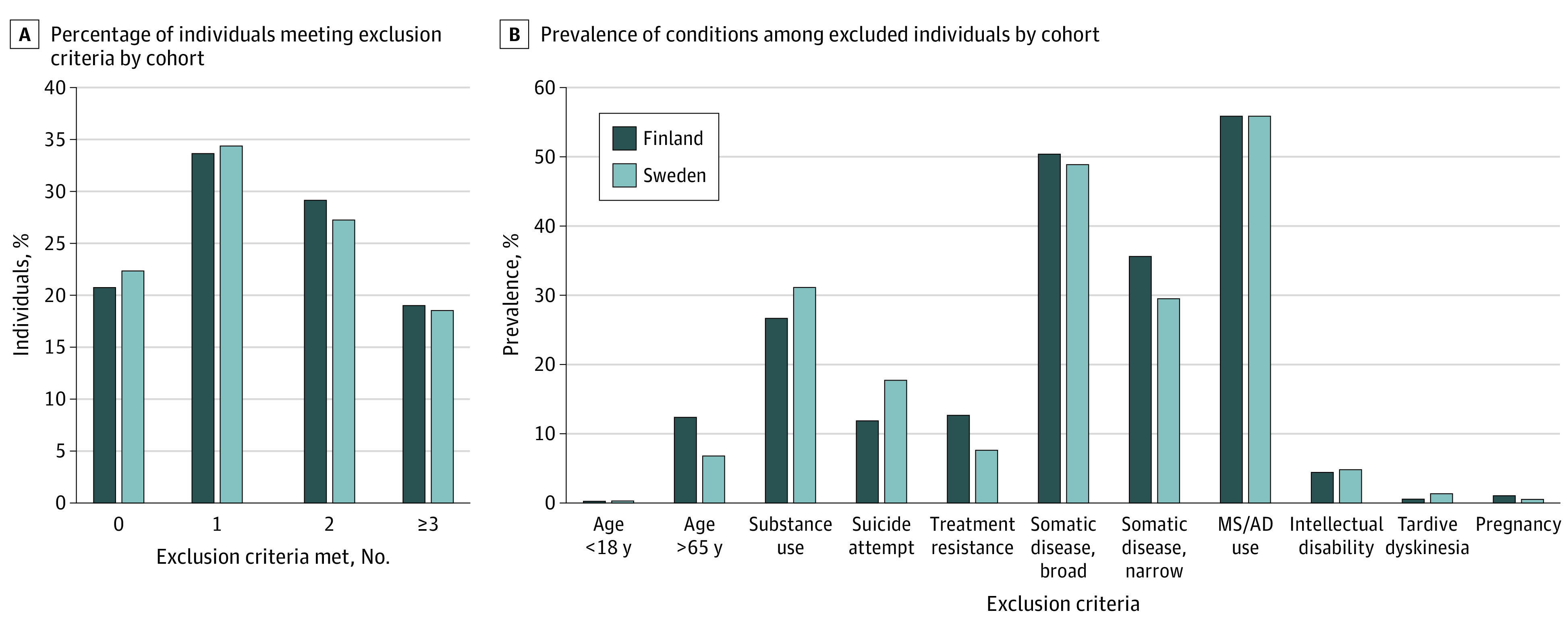
IMPORTANCE: Most evidence about efficacy and safety of antipsychotics in schizophrenia spectrum disorders relies on randomized clinical trials (RCTs). However, owing to their strict eligibility criteria, RCTs represent only a part of the real-world population (ie, unselected patients seen in everyday clinical practice), which may result in an efficacy-effectiveness gap. OBJECTIVE: To quantify the proportion of real-world individuals with schizophrenia spectrum disorders who would be ineligible for participation in RCTs, and to explore whether clinical outcomes differ between eligible and ineligible individuals. DESIGN, SETTING, AND PARTICIPANTS: This study applied eligibility criteria typically used in RCTs for relapse prevention in schizophrenia spectrum disorders to real-world populations. Individuals with diagnoses of schizophrenia spectrum disorders recorded in national patient registries in Finland and Sweden were identified. Individuals who had used antipsychotics continuously for 12 weeks in outpatient care were selected. Individuals were followed up for up to 1 year while they were receiving maintenance treatment with any second-generation antipsychotic (excluding clozapine). Follow-up was censored at treatment discontinuation, initiation of add-on antipsychotics, death, and end of database linkage. MAIN OUTCOMES AND MEASURES: Proportions of RCT-ineligible individuals with schizophrenia spectrum disorders owing to any and specific RCT exclusion criteria. The risk of hospitalization due to psychosis within 1-year follow-up in ineligible vs eligible persons were compared using hazard ratios (HR) and corresponding 95% CIs. RESULTS: The mean (SD) age in the Finnish cohort (n = 17 801) was 47.5 (13.8) years and 8972 (50.4%) were women; the mean (SD) age in the Swedish cohort (n = 7458) was 44.8 (12.5) years and 3344 (44.8%) were women. A total of 20 060 individuals (79%) with schizophrenia spectrum disorders would be ineligible for RCTs (Finnish cohort: 14 221 of 17 801 [79.9%]; Swedish cohort: 5839 of 7458 [78.3%]). Most frequent reasons for ineligibility were serious somatic comorbidities and concomitant antidepressant/mood stabilizer use. Risks of hospitalization due to psychosis was higher among ineligible than eligible individuals (Finnish cohort: 18.4% vs 17.2%; HR, 1.14 [95% CI, 1.04-1.24]; Swedish cohort: 20.1% vs 14.8%; HR, 1.47 [95% CI, 1.28-1.92]). The largest risks of hospitalization due to psychosis were observed in individuals ineligible owing to treatment resistance, tardive dyskinesia, and history of suicide attempts. Finally, with more ineligibility criteria met, larger risks of hospitalization due to psychosis were observed in both countries. CONCLUSIONS AND RELEVANCE: RCTs may represent only about a fifth of real-world individuals with schizophrenia spectrum disorders. Underrepresented (ineligible) patients with schizophrenia spectrum disorders have moderately higher risks of admission due to psychosis while receiving maintenance treatment than RCT-eligible patients. These findings set the stage for future studies targeting real-world populations currently not represented by RCTs.
Overview
The claims and statistics of this paper haven’t been checked yet.
Run the check — free, no account needed. It reads the open-access text and checks the sources it cites.
Integrity signals
Registry
Cites
Statistics
Figures
Verification
Claims the paper makes
The claims and statistics of this paper haven’t been checked yet.
Run the check — free, no account needed. It reads the open-access text and checks the sources it cites.
Claims other papers make about this one
Each is checked against this paper’s own text: does it say what the citing paper says it does?
The source backs part of the claim, not all of it — or backs it for a different population, condition or comparison.
In the citing paper
“Research of RCTs on medications for schizophrenia highlights the significant disparity between the broader patient population and those who qualify for trials, primarily due to exclusion criteria that eliminate many individuals with comorbid conditions and more severe manifestations of the disorder: 79% of individuals with schizophrenia spectrum disorders would be deemed ineligible for RCTs.15”
From Evaluating ADHD medication trial representativeness: a Swedish population-based study comparing hypothetically trial-eligible and trial-ineligible individuals (2025) · cites this paper as [15]
Experimental — accuracy not yet measuredIn the citing paper
“a study found only about 20% of people who have schizophrenia spectrum disorders would be eligible for inclusion in a typical randomised clinical trial.”
From Developing clinical prediction models: a step-by-step guide (2024) · cites this paper as [46]
In the citing paper
“Patients who are ineligible had a higher risk of hospital admission with psychosis than those who are eligible.46”
From Developing clinical prediction models: a step-by-step guide (2024) · cites this paper as [46]
Self-check
Percentages, sums and reported differences re-computed from the paper’s own numbers.
The self-check needs the paper’s full text.
Citations
Cites
Benchimol, E. I., Smeeth, L., Guttmann, A., Harron, K., Moher, D., Petersen, I., Sørensen, H. T., von Elm, E., Langan, S. M., & RECORD Working Committee (2015) · PLOS Medicine · doi:10.1371/journal.pmed.1001885 · Cited by 5,749
Rush, A. J., Trivedi, M. H., Wisniewski, S. R., Nierenberg, A. A., Stewart, J. W., Warden, D., Niederehe, G., Thase, M. E., Lavori, P. W., Lebowitz, B. D., et al. (2006) · American Journal of Psychiatry · doi:10.1176/ajp.2006.163.11.1905 · Cited by 5,643
Kennedy-Martin, T., Curtis, S., Faries, D., Robinson, S., & Johnston, J. (2015) · Trials · doi:10.1186/s13063-015-1023-4 · Cited by 878
Tiihonen, J., Mittendorfer-Rutz, E., Majak, M., Mehtälä, J., Hoti, F., Jedenius, E., Enkusson, D., Leval, A., Sermon, J., Tanskanen, A., et al. (2017) · JAMA Psychiatry · doi:10.1001/jamapsychiatry.2017.1322 · Cited by 670
Self-citationStroup, T., Mcevoy, J., Swartz, M., Byerly, M., Glick, I., Cañive, J., McGee, M., Simpson, G., Stevens, M., & Lieberman, J. (2003) · Schizophrenia bulletin · doi:10.1093/oxfordjournals.schbul.a006986 · Cited by 647
(2020) · Clinical Epidemiology · doi:10.2147/clep · Cited by 468
Isohanni, M. K., M�kikyr�, T., Moring, J., R�sanen, P., Hakko, H. H., Partanen, U., Koiranen, M., & Jones, P. B. (1997) · Social Psychiatry and Psychiatric Epidemiology · doi:10.1007/bf00789044 · Cited by 275
From prescription drug purchases to drug use periods – a second generation method (PRE2DUP)
Tanskanen, A. J., Taipale, H. T., Koponen, M., Tolppanen, A., Hartikainen, S. A., Ahonen, R. S., & Tiihonen, J. (2015) · BMC Medical Informatics and Decision Making · doi:10.1186/s12911-015-0140-z · Cited by 200
Self-citationMaintenance treatment with antipsychotic drugs for schizophrenia
Ceraso, A., Lin, J., Schneider‐Thoma, J., Siafis, S., Tardy, M., Komossa, K., Heres, S., Kissling, W., Davis, J. M., & Leucht, S. (2020) · Cochrane Database of Systematic Reviews · doi:10.1002/14651858.cd008016.pub3 · Cited by 184
Self-citationTaipale, H., Mehtälä, J., Tanskanen, A., & Tiihonen, J. (2018) · Schizophrenia Bulletin · doi:10.1093/schbul/sbx176 · Cited by 153
Self-citation
Research works printed but not linked: 1
- Luykx, 2020, What is the Impact of Randomized Controlled Trials Inclusion and Exclusion Criteria on Outcomes in People using Antipsychotics in the Real World? A Systematic Analysis in National Registries
Cited by
Sorted by citations
Correll, C. U., Solmi, M., Croatto, G., Schneider, L. K., Rohani-Montez, S. C., Fairley, L., Smith, N., Bitter, I., Gorwood, P. A. P. M., Taipale, H. T., et al. (2022) · World Psychiatry · doi:10.1002/wps.20994 · Cited by 758
Self-citationDeveloping clinical prediction models: a step-by-step guide
Efthimiou, O., Seo, M., Chalkou, K., Debray, T., Egger, M., & Salanti, G. (2024) · BMJ · doi:10.1136/bmj-2023-078276 · Cited by 544
“46 Therefore, a prediction model based on trial data might underestimate the real world risk of hospital admissions.”
Self-citationAntipsychotic-Induced Weight Gain: Dose-Response Meta-Analysis of Randomized Controlled Trials
Wu, H., Siafis, S., Hamza, T., Schneider‐Thoma, J., Davis, J. M., Salanti, G., & Leucht, S. (2022) · Schizophrenia Bulletin · doi:10.1093/schbul/sbac001 · Cited by 131
Self-citationLeucht, S., Priller, J., & Davis, J. M. (2024) · American Journal of Psychiatry · doi:10.1176/appi.ajp.20240738 · Cited by 117
Self-citationCorrell, C. U., Solmi, M., Cortese, S., D, M. F. M., Højlund, M., KRAEMER, H. C., McIntyre, R. S., Pine, D. S., Schneider, L. S. S., & Kane, J. M. (2023) · World Psychiatry · doi:10.1002/wps.21056 · Cited by 115
The never-ending problem: Sample size matters
Prisco, M. D., & Vieta, E. (2023) · European Neuropsychopharmacology · doi:10.1016/j.euroneuro.2023.10.002 · Cited by 97
Self-citationHalstead, S., Cao, C., Mohr, G. H., Ebdrup, B. H., Pillinger, T., McCutcheon, R. A., Firth, J., Siskind, D. J., & Warren, N. (2024) · The Lancet Psychiatry · doi:10.1016/s2215-0366(24)00091-9 · Cited by 98
Efthimiou, O., Taipale, H. T., Raduà, J., Schneider‐Thoma, J., Pinzón-Espinosa, J., Ortuño, M., Vinkers, C. H., Mittendorfer‐Rutz, E., Cardoner, N., Tanskanen, A., et al. (2024) · The Lancet Psychiatry · doi:10.1016/s2215-0366(23)00366-8 · Cited by 93
Self-citationHøjlund, M., Köhler‐Forsberg, O., Gregersen, A. T., Rohde, C., Mellentin, A. I., Anhøj, S. J., Kemp, A. F., Fuglsang, N. F. B., Wiuff, A. C., Nissen, L., et al. (2024) · The Lancet Psychiatry · doi:10.1016/s2215-0366(24)00314-6 · Cited by 64
Sexual Dysfunction in Schizophrenia
Korchia, T., Achour, V., Faugère, M., Albeash, A., Yon, D. K., Boyer, L., & Fond, G. B. (2023) · JAMA Psychiatry · doi:10.1001/jamapsychiatry.2023.2696 · Cited by 60
New Drug Treatments for Schizophrenia: A Review of Approaches to Target Circuit Dysfunction
Howes, O. D., Dawkins, E., Lobo, M. C., Kaar, S. J., & Beck, K. (2024) · Biological Psychiatry · doi:10.1016/j.biopsych.2024.05.014 · Cited by 53
“Clinical trials already have a tendency to select only partially representative samples, and additional selection could exacerbate this (202).”
BackgroundPneumonia Risk, Antipsychotic Dosing, and Anticholinergic Burden in Schizophrenia
Luykx, J. J., Correll, C. U., Manu, P., Tanskanen, A. J., Hasan, A., Tiihonen, J., & Taipale, H. T. (2024) · JAMA Psychiatry · doi:10.1001/jamapsychiatry.2024.1441 · Cited by 54
Self-citationBak, M., Campforts, B. C. M., Domen, P. A. E., van Amelsvoort, T., & Drukker, M. (2024) · Acta Psychiatrica Scandinavica · doi:10.1111/acps.13734 · Cited by 56
Wu, H., Siafis, S., Wang, D., Burschinski, A., Schneider‐Thoma, J., Priller, J., Davis, J. M., & Leucht, S. (2023) · European Neuropsychopharmacology · doi:10.1016/j.euroneuro.2023.03.015 · Cited by 52
Self-citationGenetic and Phenotypic Features of Schizophrenia in the UK Biobank
Legge, S. E., Pardiñas, A. F., Woolway, G., Rees, E., Cardno, A. G., Escott‐Price, V., Holmans, P., Kirov, G., Owen, M. J., O’Donovan, M. C., et al. (2024) · JAMA Psychiatry · doi:10.1001/jamapsychiatry.2024.0200 · Cited by 35
Brand, B. A., de Boer, J. N., Marcelis, M. C., Grootens, K. P., Luykx, J. J., & Sommer, I. E. (2023) · Schizophrenia Bulletin · doi:10.1093/schbul/sbad058 · Cited by 36
“62 Limitations A limitation of this study is the relatively small proportion of women in our sample.”
BackgroundSelf-citationBerthet, P., Haatveit, B. C., Kjelkenes, R., Worker, A., Kia, S. M., Wolfers, T., Rutherford, S. E., Alnæs, D., Dinga, R., Pedersen, M. L., et al. (2024) · Schizophrenia Bulletin · doi:10.1093/schbul/sbae107 · Cited by 33
An international research agenda for clozapine-resistant schizophrenia
Luykx, J. J., González-Díaz, J. M., Guu, T., van der Horst, M. Z., van Dellen, E., Boks, M. P., Gülöksüz, S., DeLisi, L. E., Sommer, I. E., Cummins, R., et al. (2023) · The Lancet Psychiatry · doi:10.1016/s2215-0366(23)00109-8 · Cited by 38
“54 Although real-world studies require solid clinical and data infrastructure, these studies might be less laborious and expensive than RCTs and also allow for longer follow-up and the inclusion of larger sample sizes.”
BackgroundSelf-citationPrecision psychiatry: predicting predictability
van Dellen, E. (2024) · Psychological Medicine · doi:10.1017/s0033291724000370 · Cited by 45
“However, patients with certain characteristics, for example, those who are severely paranoid at the time of assessment, are systematically undersampled as a consequence (Taipale et al., 2022).”
BackgroundComparative Effectiveness of Antipsychotics in Patients With Schizophrenia Spectrum Disorder
Hamina, A., Taipale, H. T., Lieslehto, J., Lähteenvuo, M., Tanskanen, A. J., Mittendorfer‐Rutz, E., & Tiihonen, J. (2024) · JAMA Network Open · doi:10.1001/jamanetworkopen.2024.38358 · Cited by 37
Self-citationGarcia-Argibay, M., Chang, Z., Brikell, I., Kuja-Halkola, R., D'Onofrio, B. M., Lichtenstein, P., Newcorn, J. H., Faraone, S. V., Larsson, H., & Cortese, S. (2025) · The Lancet Psychiatry · doi:10.1016/s2215-0366(24)00396-1 · Cited by 31
Association between antipsychotic medication and clinically relevant weight change: meta-analysis
Campforts, B. C. M., Drukker, M., Crins, J., van Amelsvoort, T., & Bak, M. (2023) · BJPsych Open · doi:10.1192/bjo.2022.619 · Cited by 32
Vita, G., Tavella, A., Ostuzzi, G., Tedeschi, F., Prisco, M. D., Segarra, R., Solmi, M., Barbui, C., & Correll, C. U. (2024) · Therapeutic Advances in Psychopharmacology · doi:10.1177/20451253241257062 · Cited by 31
“43 With these conceptual considerations in mind, we aimed to conduct a systematic review and meta-analysis of RCTs comparing head-to-head the efficacy, effectiveness, and safety of LAIs versus OAPs for the maintenance treatment of patients with EP-SSDs.”
MethodWang, D., Schneider-Thoma, J., Siafis, S., Burschinski, A., Dong, S., Wu, H., Zhu, Y., Davis, J. M., Priller, J., & Leucht, S. (2024) · Schizophrenia Bulletin · doi:10.1093/schbul/sbad089 · Cited by 29
Self-citationDigital Phenotyping in Adults with Schizophrenia: A Narrative Review
Lane, E., D’Arcey, J., Kidd, S. A., Onyeaka, H., Alon, N., Joshi, D., & Torous, J. B. (2023) · Current Psychiatry Reports · doi:10.1007/s11920-023-01467-z · Cited by 28
“Schizophrenia, a serious mental illness affecting about 1% of the world’s population [1], continues to present a large disease burden due to high socioeconomic costs [2, 3], early mortality [3], high rate of comorbidities [4], and poor functional outcomes.”
BackgroundAntipsychotic-Related Prolactin Changes: A Systematic Review and Dose–Response Meta-analysis
Lin, X. J., Siafis, S., Tian, J., Wu, H., Qin, M., Correll, C. U., Schneider‐Thoma, J., & Leucht, S. (2025) · CNS Drugs · doi:10.1007/s40263-025-01218-z · Cited by 27
“Third, the findings based on RCT studies with highly selected patients cannot be straightly applied to real-world populations [39].”
Self-citationSiafis, S., Brandt, L., McCutcheon, R. A., Gutwinski, S., Schneider‐Thoma, J., Bighelli, I., Kane, J. M., Arango, C., Kahn, R. S., Fleischhacker, W. W., et al. (2023) · The Lancet Psychiatry · doi:10.1016/s2215-0366(23)00364-4 · Cited by 29
Self-citationErmiş, Ç., Taipale, H. T., Tanskanen, A. J., Vieta, E., Correll, C. U., Mittendorfer‐Rutz, E., & Tiihonen, J. (2025) · The Lancet Psychiatry · doi:10.1016/s2215-0366(24)00411-5 · Cited by 22
Self-citationBrand, B. A., Sommer, I. E., Gangadin, S. S., Tanskanen, A. J., Tiihonen, J., & Taipale, H. T. (2024) · American Journal of Psychiatry · doi:10.1176/appi.ajp.20230850 · Cited by 20
Self-citationChallenges and Strategies for the Recruitment of Patients With Schizophrenia in a Research Setting
Deckler, E., Ferland, M., Brazis, S., Mayer, M., Carlson, M., & Kantrowitz, J. T. (2022) · The International Journal of Neuropsychopharmacology · doi:10.1093/ijnp/pyac058 · Cited by 19
“Even with the best available treatments, only 10% to 20% of patients with schizophrenia recover fully (Jaaskelainen et al., 2013; Taylor and Jauhar, 2019).”
Luykx, J. J., Colgan, M., Vieta, E., Hamina, A., Schulte, P. F. J., Correll, C. U., Mittendorfer‐Rutz, E., Siskind, D. J., Lieslehto, J., Tanskanen, A. J., et al. (2025) · The Lancet Psychiatry · doi:10.1016/s2215-0366(25)00297-4 · Cited by 17
Self-citationRohde, C., Østergaard, S. D., & Jefsen, O. H. (2024) · American Journal of Psychiatry · doi:10.1176/appi.ajp.20230477 · Cited by 18
Schneider‐Thoma, J., Zhu, Y., Qin, M., Dong, Y., Guan, S., Wang, J., Tian, J., Lin, X., Rodolico, A., Siafis, S., et al. (2026) · The Lancet · doi:10.1016/s0140-6736(25)02365-7 · Cited by 16
Self-citationInfluence of CYP2C19 and CYP2D6 on side effects of aripiprazole and risperidone: A systematic review
Brabander, E. Y. D., Schaars, K. K., van Amelsvoort, T., Budde, M., Heilbronner, U., Young, A. H., Juruena, M. F., Vieta, E., Fares‐Otero, N. E., Kas, M. J., et al. (2024) · Journal of Psychiatric Research · doi:10.1016/j.jpsychires.2024.04.001 · Cited by 15
Self-citationUlotaront: a TAAR1/5-HT1A agonist in clinical development for the treatment of schizophrenia
Højlund, M., & Correll, C. U. (2022) · Expert Opinion on Investigational Drugs · doi:10.1080/13543784.2022.2158811 · Cited by 14
“Additionally, as the vast majority of patients in clinical trials are not eligible for and excluded from randomized controlled trials [66], Phase 4 trial data will be needed, which will need to have much less restrictive inclusion and exclusion criteria [67], in order to assess the generalizability of the effects of u…”
BackgroundKane, J. M., Agid, O., Castle, D. J., Citrome, L., Fagiolini, A. M., Kishimoto, T., Larrauri, C. A., Leucht, S., Rubio, J. M., Sajatovic, M., et al. (2025) · Neurology and Therapy · doi:10.1007/s40120-025-00838-3 · Cited by 16
Self-citationComprehensive evaluation of 45 augmentation drugs for schizophrenia: a network meta-analysis
Etchecopar‐Etchart, D., Yon, D. K., Wojciechowski, P., Aballéa, S., Toumi, M., Boyer, L., & Fond, G. B. (2024) · EClinicalMedicine · doi:10.1016/j.eclinm.2024.102473 · Cited by 13
Assessing the validity of a self-reported clinical diagnosis of schizophrenia
Woolway, G., Legge, S. E., Lynham, A. J., Smart, S. E., Hubbard, L., Daniel, E. R., Pardiñas, A. F., Escott‐Price, V., O’Donovan, M. C., Owen, M. J., et al. (2024) · Schizophrenia · doi:10.1038/s41537-024-00526-5 · Cited by 14
The antipsychotic paradox: Lessons regarding determinants of premature mortality
Solmi, M., & Correll, C. U. (2022) · European Neuropsychopharmacology · doi:10.1016/j.euroneuro.2022.05.014 · Cited by 12
Patel, R., Brinn, A., Irving, J., Chaturvedi, J., Gudiseva, S., Correll, C. U., Fusar‐Poli, P., & McGuire, P. K. (2023) · Therapeutic Advances in Psychopharmacology · doi:10.1177/20451253231211575 · Cited by 11
“46 For example, they may be more likely to include participants who are adherent to recommended treatment strategies and who are less likely to discontinue medication, particularly if they receive remuneration for taking part in the trial.”
BackgroundSelf-citationIUPHAR review: Moving beyond dopamine-based therapeutic strategies for schizophrenia
Moran, P. M., & Granger, K. T. (2025) · Pharmacological Research · doi:10.1016/j.phrs.2025.107727 · Cited by 13
Cholinergic Functioning, Cognition, and Anticholinergic Medication Burden in Schizophrenia
Joshi, Y. B. (2022) · Current topics in behavioral neurosciences · doi:10.1007/7854_2022_400 · Cited by 11
Treichler, E. B. H., Reznik, S. J., Oakes, D., Girard, V., & Zisman‐Ilani, Y. (2023) · BJPsych Open · doi:10.1192/bjo.2023.516 · Cited by 10
Whittle, H. J., Kiely, E., Millard, I., Jadhav, S., & Killaspy, H. T. (2024) · BMC Psychiatry · doi:10.1186/s12888-024-06140-0 · Cited by 10
“Our ethics application included provisions to mini-mise perpetuating the systemic exclusion of people with complex psychosis from clinical research, which has led to their under-representation in the clinical evidence base [34, 35].”
Age as a moderating factor of treatment resistance in depression
Kautzky, A., Bartova, L., Fugger, G., Dold, M., Souery, D., Montgomery, S., Zohar, J., Mendlewicz, J., Fabbri, C., Serretti, A., et al. (2023) · European Psychiatry · doi:10.1192/j.eurpsy.2023.17 · Cited by 11
“On the other hand, controlled trials on a severe disorder such as TRD that requires urgent treatment are difficult to realize and recent populationbased data suggest that most psychiatric patients would not meet typical eligibility criteria and thus may never be represented by current gold-standard studies [40].”
BackgroundWagner, E. M., Luykx, J. J., Strube, W., & Hasan, A. (2023) · Expert Review of Clinical Pharmacology · doi:10.1080/17512433.2023.2293996 · Cited by 9
“Nevertheless, according to a recent nationwide registry study from Taipale and colleagues, only about a fifth of individuals with schizophrenia are represented in RCTs, with better outcomes compared to those individuals with schizophrenia not meeting RCT inclusion criteria [19].”
ResultSelf-citationClinical Trials Studying Suicide Risk Reduction: Who is Excluded From Participation
Lawrence, R. E., Jaffe, C., Zhao, Y., Wang, Y., & Goldberg, T. E. (2024) · Archives of Suicide Research · doi:10.1080/13811118.2024.2322128 · Cited by 8
“…bipolar disorder (Storosum et al., 2004; Talamo et al., 2008; Zarin et al., 2005; Zimmerman et al., 2016), schizophrenia (Hofer et al., 2000; Rabinowitz et al., 2003; Riedel et al., 2005; Taipale et al., 2022; Zarin et al., 2005), and other conditions (Goedhard et al., 2010; Surman et al., 2010).”
Turkoz, I., Wong, J., Chee, B., Siddiqui, U., Knight, R. K., Richarz, U., & Correll, C. (2023) · Therapeutic Advances in Psychopharmacology · doi:10.1177/20451253231200258 · Cited by 7
Oluboka, O. J., Clerzius, G., Janetzky, W., Schöttle, D., Therrien, F., Wiedemann, K., & Roy, M. (2023) · BMC Psychiatry · doi:10.1186/s12888-023-04893-8 · Cited by 7
Guinart, D., Fagiolini, A. M., Fusar‐Poli, P., Giordano, G. M., Leucht, S., Moreno, C., & Correll, C. U. (2024) · Neuropsychiatric Disease and Treatment · doi:10.2147/ndt.s456163 · Cited by 7
“46 Other explanations may involve methodological issues.”
Self-citationCorbeil, O., Essiambre, A., Béchard, L., Roy, A.-A., Huot‐Lavoie, M., Brodeur, S., Chandrasena, R. D., Thériault, C., Crocker, C. E., Melun, J.-P., et al. (2022) · Therapeutic Advances in Psychopharmacology · doi:10.1177/20451253221136021 · Cited by 7
Jacobsen, S. L., Köhler‐Forsberg, O., Danielsen, A. A., & Rohde, C. (2025) · Psychiatry Research · doi:10.1016/j.psychres.2025.116592 · Cited by 6
Correll, C. U. (2025) · CNS Drugs · doi:10.1007/s40263-025-01206-3 · Cited by 7
“Clinical trial data cannot be readily generalized to other settings due to restrictive trial eligibility criteria, opportunity for frequent monitoring and adjustments during the trial, and dosing parameters that may not have been based on the real-life target population [22, 36, 37].”
Kozhevnikova, S., Emilian, C. A., Scola, G., Chang, Z., Yukhnenko, D., & Fazel, S. (2026) · EClinicalMedicine · doi:10.1016/j.eclinm.2026.103800 · Cited by 9
“7 This may lead to the lower external validity of the RCT findings in relation to suicide, as the recruited trial sample and real-world treated population can markedly differ.”
Richards‐Belle, A., Launders, N., Hardoon, S. L., Richards, A., Man, K. K. C., Davies, N. M., Bramon, E., Hayes, J., & Osborn, D. (2025) · PLoS Medicine · doi:10.1371/journal.pmed.1004520 · Cited by 6
Perspectives on Precision Psychiatry Using Antipsychotics in the Management of Bipolar Disorder
Fornaro, M., Miola, A., Berardis, D. D., Squassina, A., Manchia, M., & Solmi, M. (2025) · Brain Sciences · doi:10.3390/brainsci15050430 · Cited by 6
“…noticing that roughly three out of four patients with a primary diagnosis of schizophrenia, a condition for which cornerstone pharmacological treatment involves antipsychotic medications, seen in real-world settings may not be captured by pertinent RCTs acknowledged by treatment guidelines [31].”
Luykx, J. J. (2022) · European Neuropsychopharmacology · doi:10.1016/j.euroneuro.2022.07.003 · Cited by 6
Self-citationAnmella, G., Amoretti, S., Safont, G., Meseguer, A., Vieta, E., Pons-Cabrera, M. T., Alfonso, M., Hernández, C., Sánchez-Autet, M., Pérez-Baldellou, F., et al. (2023) · Revista de Psiquiatría y Salud Mental · doi:10.1016/j.sjpmh.2023.09.005 · Cited by 7
Self-citationMortazavi, M., Farsani, Z. A., Rossum, I. W.-V., Kahn, R. S., Fleischhacker, W. W., Davidson, M., Weiser, M., Siskind, D. J., Leucht, S., EULAST Study Group, et al. (2025) · CNS Drugs · doi:10.1007/s40263-025-01225-0 · Cited by 5
“This was highlighted when eligibility criteria typically used in RCTs, i.e., serious somatic comorbidities, concomitant use of mood stabi-lizers or antidepressants, and history of substance use and risk of suicide, were applied in two national cohorts [13].”
Self-citationHamina, A., Pinzón-Espinosa, J., Taipale, H. T., Schneider‐Thoma, J., Radua, J., Efthimiou, O., Cardoner, N., Correll, C. U., Fusar‐Poli, P., Mittendorfer-Rutz, E., et al. (2026) · World Psychiatry · doi:10.1002/wps.70013 · Cited by 5
“We previously demonstrated that nearly 80% of individuals with schizophrenia would be excluded from RCTs assessing antipsychotic efficacy in relapse prevention 16,17 .”
Self-citationFurukawa, Y., Lin, X., Rodolico, A., Tian, J., Wu, H., Schneider‐Thoma, J., Priller, J., Davis, J. M., Leucht, S., & Siafis, S. (2026) · EClinicalMedicine · doi:10.1016/j.eclinm.2026.103847 · Cited by 5
“39 Therefore, dose-response relationships presented here should be supplemented by recommendations on dose adjustments for special subgroups, as outlined in treatment guidelines, e.g., lower starting doses by 25%–50% are recommended in older individuals, especially those with comorbidities.”
Self-citationWho has poor insight, my patient suffering from schizophrenia or myself?
Davidson, M., & Agid, O. (2023) · European Neuropsychopharmacology · doi:10.1016/j.euroneuro.2022.12.009 · Cited by 5
Watanabe, M., Misawa, F., & Takeuchi, H. (2024) · Journal of Clinical Psychopharmacology · doi:10.1097/jcp.0000000000001804 · Cited by 6
Madsen, N. M., Sørensen, M. A., Danielsen, A. A., Højlund, M., Rohde, C., & Köhler‐Forsberg, O. (2024) · Acta Psychiatrica Scandinavica · doi:10.1111/acps.13760 · Cited by 5
Toward Ecologically Sustainable Mental Health Care—A Call for Action From Within Psychiatry
Luykx, J. J., & Voetterl, H. (2022) · JAMA Psychiatry · doi:10.1001/jamapsychiatry.2022.0594 · Cited by 5
Self-citationKishi, T., Sakuma, K., & Iwata, N. (2022) · Translational Psychiatry · doi:10.1038/s41398-022-02286-1 · Cited by 5
Cherniakov, I., Wagner, A. M., Eshet, R., Tiver, R., Bibi, D., Perlstein, I., Kalmanczhelyi, A., Sharon, N. A., Cohen, G., Ferderber, K., et al. (2026) · Clinical Drug Investigation · doi:10.1007/s40261-025-01507-x · Cited by 4
“As highlighted by Taipale et al., a substantial proportion of patients treated in routine care, particularly those with comorbid substance use, suicidality, treatment resistance, or significant medical conditions, are often excluded from clinical trials [50].”
Logeswaran, Y., Micheli, A. D., Toniol, I., Chen, T., Melillo, A., Arribas, M., Livingston, N. R., Krakowski, K., Oliver, D., Stahl, D. R., et al. (2026) · World Psychiatry · doi:10.1002/wps.70063 · Cited by 4
“However, such samples are not representative of clinical cohorts across demographic and clinical characteristics as well as real-world outcomes 16,17 , thereby limiting the real-world generalizability and applicability of these clinical prediction models.”
Self-citationZanting, A., Frambach, J., Meershoek, A., & Krumeich, A. J. S. M. (2024) · Advances in Health Sciences Education · doi:10.1007/s10459-024-10371-x · Cited by 7
“To actually change these practices and include more variety in clinical trials, however, is no easy feat without practical precedents (Salive, 2017; Saturni et al., 2014; Stronks et al., 2013; Taipale et al., 2022).”
Tough times never last too long: the future of psychopharmacology
Vieta, E. (2023) · World Psychiatry · doi:10.1002/wps.21066 · Cited by 4
Self-citationMichaels, T. I., Simon-Pearson, L., Kane, J. M., & Cornblatt, B. A. (2024) · Psychiatric Services · doi:10.1176/appi.ps.20230120 · Cited by 4
Llorca-Bofí, V., Garriga, M., Mezquida, G., García‐Rizo, C., Vieta, E., Díaz‐Caneja, C. M., Bernardo, M., Madero, S., Pina‐Camacho, L., Cuesta, M. J., et al. (2025) · European Neuropsychopharmacology · doi:10.1016/j.euroneuro.2025.03.011 · Cited by 4
Self-citationDhingra, R., He, F., Saunders, E. F. H., Waschbusch, D. A., Bixler, E. O., Greaney, J. L., Swigart, A. R., Al‐Shaar, L., Chinchilli, V. M., Yanosky, J. D., et al. (2023) · Psychiatry Research Communications · doi:10.1016/j.psycom.2023.100139 · Cited by 4
Evidence-based clinical care and policy making for schizophrenia
Solmi, M., & Correll, C. U. (2023) · Nature Reviews Neurology · doi:10.1038/s41582-023-00872-5 · Cited by 4
Russolillo, A., Homayra, F., & Nosyk, B. (2025) · The Canadian Journal of Psychiatry · doi:10.1177/07067437251347150 · Cited by 3
Long term safety of ADHD medication in patients with schizophrenia spectrum disorders
Luykx, J. J., Corbeil, O., Kärkkäinen, O. K., Tanskanen, A. J., Mittendorfer‐Rutz, E., Tiihonen, J., & Taipale, H. T. (2025) · Molecular Psychiatry · doi:10.1038/s41380-025-03080-3 · Cited by 3
Self-citationCorrell, C. U., Rohner, H., Dimalta, S., Göldner, R. S., Assion, H., Langner-Timm, S., Sande, C. N., Rodríguez–Jiménez, R., Bioque, M., Gahr, M., et al. (2026) · The World Journal of Biological Psychiatry · doi:10.1080/15622975.2026.2628198 · Cited by 3
“Although RCTs are the gold standard for assessing the efficacy and safety of new medications, they often fall short in representing the full spectrum of patients treated in clinical practice (Taipale et al. 2022).”
Dhingra, R., He, F., Saunders, E. F. H., Waschbusch, D. A., Pearl, A. M., Bixler, E. O., Greaney, J. L., Swigart, A. R., Al‐Shaar, L., Chinchilli, V. M., et al. (2024) · Mental Illness · doi:10.1155/2024/1689172 · Cited by 4
“Although EHR data focuses on speci fi c populations, it allows a better understanding of patient behavior and clinical care in real-world settings [16, 17].”
Expanded access to investigational drugs in psychiatry: A systematic review
Vermeulen, S. F., Polak, T. B., & Bunnik, E. M. (2023) · Psychiatry Research · doi:10.1016/j.psychres.2023.115554 · Cited by 2
“The study was not registered beforehand as the aim of our systematic literature review was only to provide an overview of expanded access in psychiatry.”
Josiassen, R. C., Xavier, R. M., Dietterich, T. E., Harner, M. K., Filmyer, D. M., Houpt, C., Lichtenstein, M. L., Farrell, M. S., Shaughnessy, R. A., Lázaro‐Muñoz, G., et al. (2025) · Schizophrenia Bulletin Open · doi:10.1093/schizbullopen/sgaf019 · Cited by 3
Wagner, E. M., Katyal, S., Lee, I. O., Tasnim, S., Wadia, H. E., Mortazavi, M., García-Carmona, J. A., Hasan, A., Colman, I., Taipale, H. T., et al. (2026) · The Canadian Journal of Psychiatry · doi:10.1177/07067437251412576 · Cited by 3
Self-citationMcCall, K. L., Doughty, B. J., Piper, B. J., Naik, H., Bange, S., & Leppien, E. E. (2024) · International Journal of Clinical Pharmacy · doi:10.1007/s11096-023-01693-8 · Cited by 2
“The dispropor-tionally low inclusion of women in antipsychotic clinical trials is compounded by the fact that these randomized trials are highly selective and may represent only about one fifth of real-world individuals with schizophrenia [17].”
Correll, C. U., Csehi, R., Acsai, K., & Barabássy, Á. (2025) · European Neuropsychopharmacology · doi:10.1016/j.euroneuro.2025.02.010 · Cited by 2
Are antipsychotic drugs effective against acute psychosis?
Aarre, T. F. (2025) · Tidsskrift for Den norske legeforening · doi:10.4045/tidsskr.25.0047 · Cited by 3
Hewer, W., Sartorius, A., & Holthoff‐Detto, V. (2023) · Zeitschrift für Gerontologie und Geriatrie · doi:10.1007/s00391-023-02173-4 · Cited by 1
Szmulewicz, A., Martínez‐Alés, G., Logan, R. W., Joober, R., Ferrara, M., Kelly, C., Fredrikson, D. H., Thorpe, L. E., Conderino, S. E., Díaz‐Caneja, C. M., et al. (2025) · Nature Mental Health · doi:10.1038/s44220-025-00407-5 · Cited by 1
“By contrast, previous observational studies had longer duration of follow-up and used different inclusion criteria, resulting in the inclusion of a clinical population not directly comparable in severity to that in a trial 19,27 .”
Nyttingnes, O., Hofstad, T., Johnsen, E., Strømme, M. F., Markussen, S., Killackey, E. J., Rinaldi, M., Blindheim, A. A., McDaid, D., Brinchmann, B., et al. (2025) · F1000Research · doi:10.12688/f1000research.166156.1 · Cited by 1
Sex differences in clinical trial enrollment in the United States across psychiatric disorders
Koire, A. M., Jacobsohn, T., Joffe, H., Rich-Edwards, J. W., & Spagnolo, P. A. (2025) · Contemporary Clinical Trials · doi:10.1016/j.cct.2025.108052 · Cited by 1
Deiana, V., Paribello, P., Suprani, F., Mura, A., Arzedi, C., Garzilli, M., Arru, L., Manchia, M., Carpiniello, B., & Pinna, F. (2025) · Medicina · doi:10.3390/medicina61091541 · Cited by 1
“Similar patterns have been described in the literature, where only about one-fifth of individuals with severe mental illnesses, such as schizophrenia, are represented in clinical studies [62].”
Quantitative semiology: harnessing AI-generated teaching signals in psychiatry
Palaniyappan, L. K., & Sabesan, P. (2025) · Journal of Psychiatry and Neuroscience · doi:10.1139/jpn-25-0142 · Cited by 1
Evaluation of preclinical antipsychotic models used to support first‐in‐human clinical trials
Nguyen, T. V. H., McKernan, D. P., & Kelly, J. P. (2025) · British Journal of Pharmacology · doi:10.1111/bph.70284 · Cited by 1
“It is plausible that compounds such as LY2140023 could benefit subsets of patients defined by biomarker profile, symptom clusters or illness stage, but these effects remain undetected in broad Phase III populations efficacy (Nordon et al., 2018; Taipale et al., 2022).”
Second-Generation Antipsychotics and Real-World Outcomes in Youth With On- and Off-Label Indications
Zhang, L., Quinn, P. D., Bjureberg, J., Hellner, C., Sepe-Forrest, L., Brikell, I., Kuja‐Halkola, R., Froehlich, T. E., D'Onofrio, B. M., & Chang, Z. (2026) · Journal of the American Academy of Child & Adolescent Psychiatry · doi:10.1016/j.jaac.2026.01.009 · Cited by 1
Stimulant‐induced psychosis requires the same clinical priority as other psychotic disorders
Niemelä, S. (2026) · Addiction · doi:10.1111/add.70479 · Cited by 1
“As high quality randomized controlled trials (RCT) are challenging to conduct in this hard-to-reach population, register studies can help answer questions that conventional trials may struggle to address [14, 15].”
Solmi, M., Correll, C. U., Boldrini, T., Addington, J., Barbezat, E., Bassetto, S. A., Bechdolf, A., Devoe, D. J. A., Firth, J., Fusar‐Poli, P., et al. (2026) · The World Journal of Biological Psychiatry · doi:10.1080/15622975.2026.2651738 · Cited by 1
“While RCTs for schizophrenia select a potentially biased sample that is not necessarily representative of the general population (Taipale et al. 2022), there is no evidence of selection/sampling bias in RCTs of individuals at CHR-P for prevention of psychosis, as rates of transition to psychosis do…”
Self-citationBao, Z., Liu, Y., & Liu, Y. (2026) · Neurotherapeutics · doi:10.1016/j.neurot.2026.e00930 · Cited by 1
“Females experienced earlier AE onset than males (median TTO [IQR] 6 days [2 – 17] vs 9 days [3 – 26], log-rank test p = 0.”
Lu, C., Dong, Y., Zhai, Z., Gao, T., Luo, M., Chang, D., Chen, J., Xue, J., Zhao, Y., Xiang, Q., et al. (2026) · Psychological Medicine · doi:10.1017/s0033291726104024 · Cited by 1
“%) of patients in routine clinical practice (Taipale et al., 2022).”
Krishnan, R. P. R., Dzidowska, M., Zheng, D., Russell, D. J., Rhaman, A., Quintrell, E., Chan, C. H., Buckley, N. A., & Raubenheimer, J. (2026) · Psychiatry Research · doi:10.1016/j.psychres.2026.117299 · Cited by 1
Altinok, D. C. A., Volkmer, S., Fritze, S., Brandt, G. A., Wölfl, L., Kukovic, J., Mittal, V. A., Meyer‐Lindenberg, A., & Hirjak, D. (2026) · Biological Psychiatry Cognitive Neuroscience and Neuroimaging · doi:10.1016/j.bpsc.2026.06.002 · Cited by 1
Tracy, D. K., Joyce, D. W., Albertson, D. N., & Shergill, S. S. (2022) · The British Journal of Psychiatry · doi:10.1192/bjp.2022.45 · Cited by 1
Wu, J., Zhang, Z., & Zhang, L. (2024) · Gastroenterology · doi:10.1053/j.gastro.2024.09.046 · Cited by 1
Metadata
- Authors
- Taipale, H., Schneider-Thoma, J., Pinzón-Espinosa, J., Radua, J., Efthimiou, O., Vinkers, C. H., Mittendorfer-Rutz, E., Cardoner, N., Pintor, L., Tanskanen, A., Tomlinson, A., Fusar-Poli, P., Cipriani, A., Vieta, E., Leucht, S., Tiihonen, J., & Luykx, J. J.
- Affiliations
- University of Eastern Finland (FI)
- Department of Psychiatry and Psychotherapy, School of Medicine, Technical University of Munich, Munich, Germany
- Universidad de Panamá (PA)
- Divisions of Insurance Medicine, Department of Clinical Neuroscience, Karolinska Institutet, Stockholm, Sweden
- University of Bern (CH)
- Amsterdam Neuroscience (NL)
- Department of Mental Health, Parc Tauli University Hospital, Sabadell, Barcelona, Spain
- Institut d’Investigacions Biomèdiques August Pi i Sunyer (IDIBAPS), CIBERSAM, Barcelona, Spain
- Oxford Health NHS Foundation Trust (GB)
- Early Psychosis: Interventions and Clinical-detection (EPIC) Lab, Department of Psychosis Studies, Institute of Psychiatry, Psychology, and Neuroscience, King’s College London, London, United Kingdom
- Hospital Clínic de Barcelona (ES)
- Technical University of Munich (DE)
- Utrecht University (NL)
- Corresponding author
- Luykx, Jurjen J.
- ORCID
- Venue
- JAMA Psychiatry
- Publisher
- American Medical Association (AMA)
- Published
- 2022-03-01
- Volume
- 79
- Issue
- 3
- Pages
- 210
- ISSN
- 2168-622X (ISSN-L)
- PMC
- PMC8792792
- OpenAlex
- W4210419267
- Cited by
- 129
- References
- 36
- Citations by year
- 2026: 30 · 2025: 28 · 2024: 33 · 2023: 26 · 2022: 12
- FWCI
- 16.14
- Type
- journal article
- Language
- en
- Open access
- hybrid
- doi.org
- Licence
- cc-by
- Locations
- JAMA Psychiatry (publishedVersion, cc-by)
- PubMed Central (publishedVersion, cc-by)
- PubMed (publishedVersion)
- Research Portal (King's College London) (publishedVersion, other-oa)
- Pure Amsterdam UMC (publishedVersion, cc-by)
- Bern Open Repository and Information System (University of Bern) (submittedVersion)
- Research Publications (Maastricht University) (submittedVersion, cc-by)
- Dipòsit Digital de Documents de la UAB (Universitat Autònoma de Barcelona) (submittedVersion, cc-by)
- Utrecht University Repository (Utrecht University) (submittedVersion, other-oa)
- mediaTUM – the media and publications repository of the Technical University Munich (Technical University Munich) (submittedVersion)
- mediaTUM – the media and publications repository of the Technical University Munich (Technical University Munich) (submittedVersion, other-oa)
- Amsterdam UMC (VU Amsterdam) - Institutional Repository (submittedVersion, other-oa)
- Research Publications (Maastricht University) (submittedVersion, other-oa)
- Data Archiving and Networked Services (DANS) (submittedVersion, other-oa)
- Data Archiving and Networked Services (DANS) (submittedVersion)
- Greater South Information System
- Funders
- National Science Foundation
- Eli Lilly and Company
- Pfizer
- GlaxoSmithKline
- Sanofi
- Ministerio de Ciencia, Innovación y Universidades
- National Institute for Health and Care Research (AI_AWARD02183, RP-2017-08-ST2-006, BRC‐1215‐20005, NIHR Research Professorship (grant RP-2017-08-ST2-)
- European Commission (CPII19/00009)
- Schweizerischer Nationalfonds zur Förderung der Wissenschaftlichen Forschung (20005, 180083)
- Academy of Finland (320107, 315969)
- Fondazione Cariplo
- Sigrid Juséliuksen Säätiö
- Angelini Pharma
- Otsuka Pharmaceutical
- Casen Recordati
- H. Lundbeck A/S
- Neuraxpharm
- Instituto de Salud Carlos III ((CPII19/00009), PI19/00394)
- European Regional Development Fund (CPII19/00009)
- Janssen Pharmaceuticals
- Cilag
- Topics
- Health Sciences › Medicine › Psychiatry and Mental health › Schizophrenia research and treatment
- Health Sciences › Medicine › Psychiatry and Mental health › Mental Health Treatment and Access
- Social Sciences › Psychology › Clinical Psychology › Psychiatric care and mental health services
- Keywords
- schizophrenia spectrum disorders, antipsychotic drugs, relapse prevention, long-term antipsychotic treatment, atypical antipsychotics, efficacy-effectiveness gap, somatic comorbidity, real-world outcomes, patient registry, Finland, Sweden
- MeSH terms
- Adult, Clozapine, Female, Humans, Male, Middle Aged, Psychotic Disorders, Schizophrenia, Antipsychotic Agents, Randomized Controlled Trials as Topic
About these checks
Registry, retraction, Cites and statistics results are computed, not judged, with one exception: a printed reference that no index lists is read once by a model before it counts as a citation error. Claims are extracted by a model and kept only when their quote appears verbatim in the text; each cited source is then checked, with a model’s help, for whether it says what the claim relies on. Those verdicts can be wrong — read the claim’s quote and the cited source before relying on one.
Statistics and arithmetic are recomputed, not judged.
Confidence bands are shown only for fields calibrated on our annotated test set. None is calibrated yet, so no band is shown.
What counts as a claim ›How we measure confidence ›How we check this ›
Are you an author, or do you see a problem with this page? Request a review
