

Seasonal Drought Prediction: Advances, Challenges, and Future Prospects
Open accessThe DOI matches its Crossref record; 388 of the 388 references it cites were found in a registry or an index.
Abstract
Drought prediction is of critical importance to early warning for drought managements. This review provides a synthesis of drought prediction based on statistical, dynamical, and hybrid methods. Statistical drought prediction is achieved by modeling the relationship between drought indices of interest and a suite of potential predictors, including large‐scale climate indices, local climate variables, and land initial conditions. Dynamical meteorological drought prediction relies on seasonal climate forecast from general circulation models (GCMs), which can be employed to drive hydrological models for agricultural and hydrological drought prediction with the predictability determined by both climate forcings and initial conditions. Challenges still exist in drought prediction at long lead time and under a changing environment resulting from natural and anthropogenic factors. Future research prospects to improve drought prediction include, but are not limited to, high‐quality data assimilation, improved model development with key processes related to drought occurrence, optimal ensemble forecast to select or weight ensembles, and hybrid drought prediction to merge statistical and dynamical forecasts.
Overview
The claims and statistics of this paper haven’t been checked yet.
Free: it reads the open-access text and checks the first 5 claims that cite a source we can check. Create a free account to check every claim.
Integrity signals
Registry
Cites
Statistics
Figures
Verification
Claims the paper makes
The claims and statistics of this paper haven’t been checked yet.
Free: it reads the open-access text and checks the first 5 claims that cite a source we can check. Create a free account to check every claim.
Claims other papers make about this one
Each is checked against this paper’s own text: does it say what the citing paper says it does?
The cited source says what the claim attributes to it.
In the citing paper
“Skillful drought predictions with sufficient lead time remain a challenge, due to multiple driving factors across different spatial and temporal scales (Hao et al., 2018) and the complex nature of drought.”
From Artificial intelligence for climate prediction of extremes: State of the art, challenges, and future perspectives (2024) · cites this paper as Hao et al., 2018
Self-check
Percentages, sums and reported differences re-computed from the paper’s own numbers.
The self-check needs the paper’s full text.
Citations
Cites
Items 201–388 of 388
AN EARLY WARNING SYSTEM FOR DROUGHT MANAGEMENT USING THE PALMER DROUGHT INDEX1
Lohani, V. K., & Loganathan, G. V. (1997) · JAWRA Journal of the American Water Resources Association · doi:10.1111/j.1752-1688.1997.tb03560.x · Cited by 128
Özger, M., Mishra, A. K., & Singh, V. P. (2011) · Journal of Hydrometeorology · doi:10.1175/jhm-d-10-05007.1 · Cited by 128 · cited 2×
“…drought prediction with the hybrid method, such as the wavelet-ANN (or SVR) (Belayneh et al., 2014; Deo et al., 2016; Kim & Valdés, 2003), wavelet FL (Özger et al., 2012), and wavelet GP (Mehr et al., 2014), which in general shows improved prediction ability of different drought indicators.”
BackgroundMethodSelf-citationYossef, N. C., Winsemius, H., Weerts, A., van Beek, R., & Bierkens, M. F. P. (2013) · Water Resources Research · doi:10.1002/wrcr.20350 · Cited by 127 · cited 1×
“Sources of predictability from initial condition and climate forecast have been assessed at regional and global scales and are shown to depend on the region, season, lead time, and basin size (Shukla et al., 2013; van Dijk et al., 2013; Yossef et al., 2013).”
BackgroundThober, S., Kumar, R., Sheffield, J., Mai, J., Schäfer, D., & Samaniego, L. (2015) · Journal of Hydrometeorology · doi:10.1175/jhm-d-15-0053.1 · Cited by 124 · cited 3×
“…conditions control the forecast skill up to 1 month, while the climate forecast plays a dominant role for longer lead time, as is confirmed by studies in other regions (Mo & Lettenmaier, 2014b; Shukla & Lettenmaier, 2011; Sinha & Sankarasubramanian, 2013; Thober et al., 2015; Yuan et al., 2013).”
BackgroundResultVicente-Serrano, S. M., Prats, J. M. C., & Romo, A. (2006) · International Journal of Remote Sensing · doi:10.1080/01431160500296032 · Cited by 123 · cited 3×
“…methods, such as regression model and conditional probability model, can be applied to establish the relationship between hydroclimatic variables and crop yield (or other indicators) for predicting drought impacts (Nadolnyak & Vedenov, 2013; Sen & Boken, 2005; Vicente-Serrano et al., 2006).”
MethodAn intercomparison of approaches for improving operational seasonal streamflow forecasts
Mendoza, P. A., Wood, A. W., Clark, E., Rothwell, E., Clark, M., Nijssen, B., Brekke, L. D., & Arnold, J. R. (2017) · Hydrology and earth system sciences · doi:10.5194/hess-21-3915-2017 · Cited by 123 · cited 1×
“The prediction skill of seasonal hydroclimatic forecast depends on both the initial hydrological conditions (IHCs) from the catchment before the forecast period and future seasonal climate forecasts (CFs) (Arnal et al., 2017; Emerton et al., 2016; Li et al., 2009; Mendoza et al., 2017).”
BackgroundOn the sources of global land surface hydrologic predictability
Shukla, S., Sheffield, J., Wood, E. F., & Lettenmaier, D. P. (2013) · Hydrology and earth system sciences · doi:10.5194/hess-17-2781-2013 · Cited by 122 · cited 4×
“Sources of predictability from initial condition and climate forecast have been assessed at regional and global scales and are shown to depend on the region, season, lead time, and basin size (Shukla et al., 2013; van Dijk et al., 2013; Yossef et al., 2013).”
BackgroundInfluentialMonitoring and predicting agricultural drought: a global study
(2005) · Choice Reviews Online · doi:10.5860/choice.43-0922 · Cited by 119
Forecasting droughts in East Africa
Mwangi, E., Wetterhall, F., Dutra, E., Giuseppe, F. D., & Pappenberger, F. (2014) · Hydrology and earth system sciences · doi:10.5194/hess-18-611-2014 · Cited by 117 · cited 1×
“…coverage of remote sensing products play an important role in monitoring drought especially for the regions with sparse or no observations (e.g., Africa) (Masih et al., 2014; Mwangi et al., 2014; Sheffield et al., 2008), and in assessing land-atmosphere interactions (Roundy & Santanello, 2017).”
BackgroundA multivariate conditional model for streamflow prediction and spatial precipitation refinement
Liu, Z., Zhou, P., Chen, X., & Guan, Y. (2015) · Journal of Geophysical Research Atmospheres · doi:10.1002/2015jd023787 · Cited by 116 · cited 2×
“For example, streamflow prediction can be achieved by constructing a joint distribution of streamflow of the target period and several predictors, such as precipitation, streamflow, and climate indices in previous time steps (Liu et al., 2015; Souza Filho & Lall, 2003; Sun et al., 2014).”
BackgroundHydrological drought forecasting and skill assessment for the Limpopo River basin, southern Africa
Trambauer, P., Werner, M., Winsemius, H., Maskey, S., Dutra, E., & Uhlenbrook, S. (2015) · Hydrology and earth system sciences · doi:10.5194/hess-19-1695-2015 · Cited by 114 · cited 2×
“…& Mcmahon, 2002; Wanders & Wada, 2015) and have been used for predicting hydrological drought and agricultural drought (or streamflow and soil moisture) in different regions (Kingston et al., 2013; Kuss & Gurdak, 2014; Nicolai-Shaw et al., 2016; Ryu et al., 2010; Trambauer et al., 2013, 2015).”
BackgroundMethodWang, Q. J., Schepen, A., & Robertson, D. (2012) · Journal of Climate · doi:10.1175/jcli-d-11-00386.1 · Cited by 113 · cited 1×
“The hybrid statistical-dynamical drought prediction mainly involves two steps: calibrating climate forecast to correct the bias (and ensemble spread) of GCM forecasts, and merging forecast from multiple sources (Lim et al., 2011; Robertson et al., 2013; Schepen et al., 2014; Wang et al., 2012).”
MethodHao, Z., Hao, F., Singh, V. P., Ouyang, W., & Cheng, H. (2017) · Environmental Modelling & Software · doi:10.1016/j.envsoft.2017.02.008 · Cited by 113
Self-citationThe Physics of Drought in the U.S. Central Great Plains
Livneh, B., & Hoerling, M. P. (2016) · Journal of Climate · doi:10.1175/jcli-d-15-0697.1 · Cited by 111 · cited 1×
“Drought mostly originates from precipitation deficit, while in certain cases it may result from the anomaly of other variables, such as temperature or evapotranspiration (Cook et al., 2014; Livneh & Hoerling, 2016; Luo et al., 2017).”
BackgroundDiagnosing Sources of U.S. Seasonal Forecast Skill
Quan, X., Hoerling, M. P., Whitaker, J. S., Bates, G. T., & Xu, T. (2006) · Journal of Climate · doi:10.1175/jcli3789.1 · Cited by 111 · cited 1×
“…example, in the United States, the seasonal climate forecast of winter precipitation has been improving due to its connection with SST and pressure anomalies, while the prediction skill for the summer growing season is still limited (Crimmins & McClaran, 2016; Quan et al., 2006; Tian et al., 2014).”
BackgroundStephenson, D. B., Coelho, C. A. S., Doblas-Reyes, F. J., & Balmaseda, M. (2005) · Tellus A: Dynamic Meteorology and Oceanography · doi:10.3402/tellusa.v57i3.14664 · Cited by 111 · cited 2×
“…in the weather and climate forecast, predictors may also be obtained from dynamical forecast for the prediction of hydroclimatic variables (Chowdhury & Sharma, 2009; Foster & Uvo, 2010; Lang & Wang, 2010; Marcos et al., 2017; Sahu et al., 2016; Schick et al., 2017; Stephenson et al., 2005).”
BackgroundDeveloping Multiple Indicators and Triggers for Drought Plans
Steinemann, A. C., & Cavalcanti, L. F. N. (2006) · Journal of Water Resources Planning and Management · doi:10.1061/(asce)0733-9496(2006)132:3(164 · Cited by 110
Global Meteorological Drought Prediction Using the North American Multi-Model Ensemble
Mo, K. C., & Lyon, B. (2015) · Journal of Hydrometeorology · doi:10.1175/jhm-d-14-0192.1 · Cited by 109 · cited 3×
“Various studies have shown that the two types of methods may complement each other (Block & Rajagopalan, 2009; Mo & Lyon, 2015; Quan et al., 2012).”
BackgroundYuan, X., Roundy, J. K., Wood, E. F., & Sheffield, J. (2015) · Bulletin of the American Meteorological Society · doi:10.1175/bams-d-14-00003.1 · Cited by 108
Would Advance Knowledge of 1930s SSTs Have Allowed Prediction of the Dust Bowl Drought?*
Seager, R., Kushnir, Y., Ting, M., Cane, M. A., Henderson, N., & Miller, J. A. (2008) · Journal of Climate · doi:10.1175/2007jcli2134.1 · Cited by 108 · cited 1×
“…that for the interannual and longer time scales, SST anomalies affect the timing of drought onset while land-atmosphere feedbacks (primarily during the warm seasons) predominately govern the magnitude and persistence of drought (Ferguson et al., 2010; Schubert et al., 2008; Seager et al., 2008).”
BackgroundToward an Integrated Seasonal Forecasting System for South America
Coelho, C. A. S., Stephenson, D. B., Balmaseda, M., Doblas-Reyes, F. J., & van Oldenborgh, G. J. (2006) · Journal of Climate · doi:10.1175/jcli3801.1 · Cited by 106 · cited 1×
“It has been shown that the best forecast can be achieved by combining all sources of predictions to support informed decision making (Coelho et al., 2006; DoblasReyes et al., 2013).”
BackgroundProspects for Advancing Drought Understanding, Monitoring, and Prediction
Wood, E. F., Schubert, S. D., Wood, A. W., Peters‐Lidard, C. D., Mo, K. C., Mariotti, A., & Pulwarty, R. S. (2015) · Journal of Hydrometeorology · doi:10.1175/jhm-d-14-0164.1 · Cited by 106 · cited 6×
“Overall, continuous efforts are needed in the development of GCMs and hydrologic models to account for key physical processes and human influences through incorporating more components of the Earth system with finer resolutions (Wood et al., 2011, 2015; Yuan, Wood, et al., 2015).”
BackgroundMethodInfluentialBonaccorso, B., Cancelliere, A., & Rossi, G. (2015) · Journal of Hydrology · doi:10.1016/j.jhydrol.2015.01.070 · Cited by 105 · cited 1×
“As such, climate indices may be used as potential predictors for precipitation (or meteorological drought) prediction in regions with strong teleconnections (Bonaccorso et al., 2015; Magno et al., 2014; Morid et al., 2007; Özger et al., 2012; Santos et al., 2014).”
BackgroundGuo, Z., Dirmeyer, P. A., Hu, Z., Gao, X., & Zhao, M. (2006) · Journal of Geophysical Research Atmospheres · doi:10.1029/2006jd007845 · Cited by 104 · cited 1×
“The potential limitation of the hydrologic model for hydrologic prediction is that even with the identical forcing variables, substantially different simulations may be produced (Guo et al., 2006; Mo, Chen, et al., 2012; Wang et al., 2011).”
BackgroundDynamic-Model-Based Seasonal Prediction of Meteorological Drought over the Contiguous United States
Yoon, J., Mo, K. C., & Wood, E. F. (2011) · Journal of Hydrometeorology · doi:10.1175/jhm-d-11-038.1 · Cited by 104 · cited 3×
“For the meteorological drought prediction, the precipitation forecast from GCMs should generally be downscaled (and bias corrected) to assess the prediction skill at regional scales (Sohn et al., 2013; Yoon et al., 2012).”
BackgroundForecast Calibration and Combination: A Simple Bayesian Approach for ENSO
Coelho, C. A. S., Pezzulli, S., Balmaseda, M., Doblas-Reyes, F. J., & Stephenson, D. B. (2004) · Journal of Climate · doi:10.1175/1520-0442(2004)017<1504:fcacas>2.0.co;2 · Cited by 103 · cited 1×
“The Bayesian posterior distribution can be used to update the dynamical forecast with the prior distribution derived from the statistical forecast (Coelho et al., 2004; Luo et al., 2007).”
MethodAssessment of Intraseasonal to Interannual Climate Prediction and Predictability
National Research Council (2010) · National Academies Press eBooks · doi:10.17226/12878 · Cited by 99
Khedun, C. P., Mishra, A. K., Singh, V. P., & Giardino, J. R. (2013) · Water Resources Research · doi:10.1002/2013wr013763 · Cited by 98 · cited 1×
“A variety of studies have been conducted for the prediction of hydroclimatic variables based on the joint distribution (Khedun et al., 2014; Liu et al., 2015; Wang, Robertson, & Chiew, 2009; Wu et al., 2011; Yan et al., 2012).”
BackgroundSelf-citationBoken, V. K., & Shaykewich, C. F. (2002) · International Journal of Remote Sensing · doi:10.1080/014311602320567955 · Cited by 98 · cited 1×
“For example, the crop yield can be predicted with a regression model during the growing season based on yield affecting variables, including climate or weather observations, satellite products and drought indices (Boken, 2000; Boken & Shaykewich, 2002; Kumar & Panu, 1997).”
BackgroundLuo, L., & Wood, E. F. (2008) · Journal of Hydrometeorology · doi:10.1175/2008jhm980.1 · Cited by 98 · cited 2×
“…(Wanders & Wood, 2016), and nonhomogeneous Gaussian regression (NGR) (Bogner et al., 2017; Gneiting et al., 2005), have been used to obtain the merged forecast with unequal weights for different members to improve the drought (or climate) prediction skill (DelSole et al., 2013; Luo & Wood, 2008).”
MethodIs unequal weighting significantly better than equal weighting for multi‐model forecasting?
DelSole, T., Yang, X., & Tippett, M. K. (2012) · Quarterly Journal of the Royal Meteorological Society · doi:10.1002/qj.1961 · Cited by 98 · cited 1×
“…(Wanders & Wood, 2016), and nonhomogeneous Gaussian regression (NGR) (Bogner et al., 2017; Gneiting et al., 2005), have been used to obtain the merged forecast with unequal weights for different members to improve the drought (or climate) prediction skill (DelSole et al., 2013; Luo & Wood, 2008).”
MethodTrambauer, P., Maskey, S., Winsemius, H., Werner, M., & Uhlenbrook, S. (2013) · Physics and Chemistry of the Earth Parts A/B/C · doi:10.1016/j.pce.2013.07.003 · Cited by 97 · cited 2×
“…from CFSv2, ECMWF, or NMME have been used as inputs to drive hydrologic models to predict agricultural and hydrological drought (Fundel et al., 2013; Li et al., 2008; Luo & Wood, 2007; Samaniego et al., 2013; Sheffield et al., 2014; Shukla et al., 2014; Trambauer et al., 2013; Zhang et al., 2016).”
MethodA gene–wavelet model for long lead time drought forecasting
Mehr, A. D., Kahya, E., & Özger, M. (2014) · Journal of Hydrology · doi:10.1016/j.jhydrol.2014.06.012 · Cited by 97 · cited 2×
“…drought prediction with the hybrid method, such as the wavelet-ANN (or SVR) (Belayneh et al., 2014; Deo et al., 2016; Kim & Valdés, 2003), wavelet FL (Özger et al., 2012), and wavelet GP (Mehr et al., 2014), which in general shows improved prediction ability of different drought indicators.”
BackgroundMethodDeveloping and Evaluating Drought Indicators for Decision-Making
Steinemann, A. C., Iacobellis, S. F., & Cayan, D. R. (2015) · Journal of Hydrometeorology · doi:10.1175/jhm-d-14-0234.1 · Cited by 97 · cited 1×
“However, there is still inconsistency in determining the threshold of indicators (e.g., SPI < 1) to define a drought (Hao, Hao, Singh, Xia, et al., 2016; Quiring, 2009; Steinemann et al., 2015).”
BackgroundTian, D., Wood, E. F., & Yuan, X. (2017) · Hydrology and Earth System Sciences · doi:10.5194/hess-21-1477-2017 · Cited by 96
Xia, Y., Ek, M., Peters‐Lidard, C. D., Mocko, D. M., Svoboda, M. D., Sheffield, J., & Wood, E. F. (2014) · Journal of Geophysical Research Atmospheres · doi:10.1002/2013jd020994 · Cited by 95
Self-citationA Diagnostic Comparison of the 1980 and 1988 U.S. Summer Heat Wave-Droughts
Lyon, B., & Dole, R. M. (1995) · Journal of Climate · doi:10.1175/1520-0442(1995)008<1658:adcota>2.0.co;2 · Cited by 95 · cited 2×
“…may lead to increased sensible heat flux contributing to a positive feedback between high temperature and drought (Durre et al., 2000; Fischer et al., 2007; Hao, Hao, Singh & Ouyang, 2017; Koster et al., 2009; Lyon & Dole, 1995; Mueller & Seneviratne, 2012; Seneviratne et al., 2010).”
BackgroundRemote Sensing of Water Resources, Disasters, and Urban Studies
Teixeira, A. D. C., Hernandez, F. B. T. H. [., Scherer-Warren, M., Andrade, R. G., Leivas, J. F., Victoria, D. C., Bolfe, E. L., Thenkabail, P. S., & Franco, R. A. M. F. [. (2015) · CRC Press eBooks · doi:10.1201/b19321 · Cited by 94
Variability and potential sources of predictability of North American runoff
Maurer, E. P., Lettenmaier, D. P., & Mantua, N. J. (2004) · Water Resources Research · doi:10.1029/2003wr002789 · Cited by 93 · cited 9×
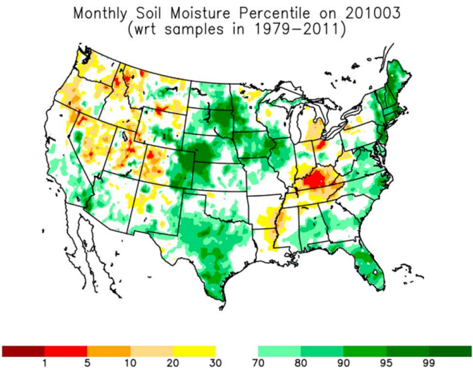
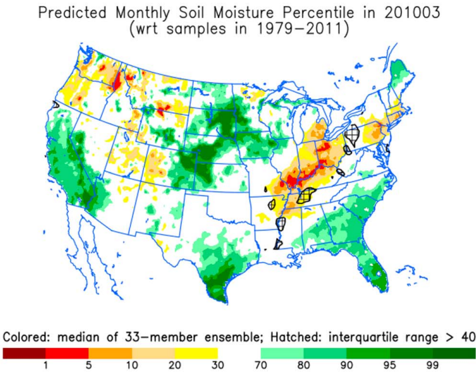
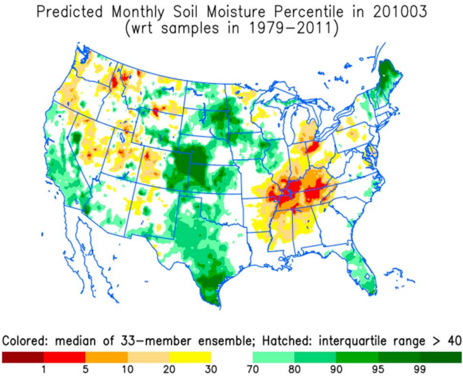
“An example of 1 and 3 month lead drought prediction based on soil moisture percentile at one-eighth spatial resolution for March 2010 in the United States is shown in Figure 7, which was obtained from the NCEP/EMC NLDAS Seasonal Hydrological Forecast System jointly developed by Princeton University and the University…”
BackgroundInfluentialA probabilistic framework for assessing drought recovery
Pan, M., Yuan, X., & Wood, E. F. (2013) · Geophysical Research Letters · doi:10.1002/grl.50728 · Cited by 91 · cited 2×
“…indicators, from which the prediction interval and the probability of exceeding (or below) a certain threshold can be achieved (Behrangi et al., 2015; Hao, Hao, Singh, Sun, et al., 2016; Mendoza et al., 2015; Pan et al., 2013; Scheuerer, 2014), is popular in probabilistic drought prediction.”
BackgroundCarpenter, T. M., & Georgakakos, K. P. (2001) · Journal of Hydrology · doi:10.1016/s0022-1694(01)00417-6 · Cited by 91 · cited 13×
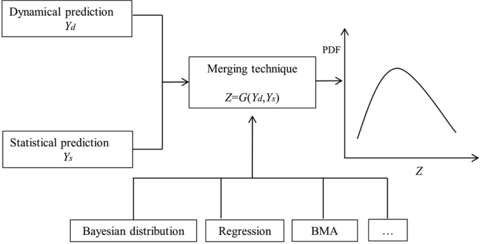
“For this method, “bridging” represents the statistical prediction using GCM’s forecasts of climate indices as predictors to produce alternative forecasts and “merging” is used to optimally combine different forecasts.”
MethodInfluentialHydrologic Prediction over the Conterminous United States Using the National Multi-Model Ensemble
Mo, K. C., & Lettenmaier, D. P. (2014) · Journal of Hydrometeorology · doi:10.1175/jhm-d-13-0197.1 · Cited by 91 · cited 3×
“…conditions control the forecast skill up to 1 month, while the climate forecast plays a dominant role for longer lead time, as is confirmed by studies in other regions (Mo & Lettenmaier, 2014b; Shukla & Lettenmaier, 2011; Sinha & Sankarasubramanian, 2013; Thober et al., 2015; Yuan et al., 2013).”
BackgroundResultHao, Z., Hao, F., Singh, V. P., Sun, A. Y., & Xia, Y. (2016) · Journal of Hydrology · doi:10.1016/j.jhydrol.2016.09.048 · Cited by 90
Self-citationUsing Climate Forecasts for Drought Management
Steinemann, A. C. (2006) · Journal of Applied Meteorology and Climatology · doi:10.1175/jam2401.1 · Cited by 89 · cited 1×
“Season predictions of precipitation and temperature can be used to compute drought indicators for meteorological drought prediction (Dutra et al., 2014; Mo & Lyon, 2015; Steinemann, 2006; Yoon et al., 2012; Yuan & Wood, 2013).”
BackgroundPrediction of vegetation anomalies to improve food security and water management in India
Asoka, A., & Mishra, V. K. (2015) · Geophysical Research Letters · doi:10.1002/2015gl063991 · Cited by 89 · cited 1×
“…the statistical prediction, drought indices from remote sensing products (e.g., NDVI) have been commonly used as the predictand for drought prediction mostly achieved with regression models (Asoka & Mishra, 2015; De Linage et al., 2014; Funk & Brown, 2006; Liu & Juárez, 2001; Tadesse et al., 2014).”
MethodBennett, J. C., Wang, Q. J., Li, M., Robertson, D. E., & Schepen, A. (2016) · Water Resources Research · doi:10.1002/2016wr019193 · Cited by 87 · cited 1×
“…bridging, and merging (CBaM), has been shown to provide improved forecasts of climate variables through postprocessing GCM outputs based on the Bayesian joint probability model (for calibration and bridging) and BMA (for merging) (Bennett et al., 2016; Schepen et al., 2014; Schepen & Wang, 2015).”
MethodMaity, R., Suman, M., & Verma, N. K. (2016) · Journal of Hydrology · doi:10.1016/j.jhydrol.2016.05.042 · Cited by 87 · cited 3×
“…models, including the ANN (Mishra & Desai, 2006; Mishra et al., 2007; Morid et al., 2007), SVM (Ganguli & Reddy, 2014), and wavelet transformation (Maity et al., 2016; Özger et al., 2011), have been used to model complicated and nonlinear interactions between drought indicators and influencing…”
BackgroundMethodSchepen, A., Wang, Q. J., & Robertson, D. (2012) · Journal of Geophysical Research Atmospheres · doi:10.1029/2012jd018011 · Cited by 86 · cited 1×
“However, statistical methods rely on the relationships between the predictand and predictors in historical records, which is not guaranteed in a changing climate (or nonstationarity of climate) (Schepen et al., 2012; Smith et al., 2012).”
MethodMyers‐Pigg, A. N., Louchouarn, P., Amon, R. M. W., Prokushkin, A., Pierce, K., & Rubtsov, A. (2015) · Geophysical Research Letters · doi:10.1002/2014gl062762 · Cited by 85
Barros, A. P., & Bowden, G. J. (2008) · Journal of Hydrology · doi:10.1016/j.jhydrol.2008.05.026 · Cited by 85 · cited 6×
“Selecting or weighting ensembles by conditioning on different phases of teleconnections, such as ENSO, PDO, and NAO (Wood et al., 2015; Zimmerman et al., 2016), is a promising method in this regard.”
MethodInfluentialGlobal meteorological drought – Part 2: Seasonal forecasts
Dutra, E., Pozzi, W., Wetterhall, F., Giuseppe, F. D., Magnusson, L., Naumann, G., Barbosa, P., Vogt, J., & Pappenberger, F. (2014) · Hydrology and earth system sciences · doi:10.5194/hess-18-2669-2014 · Cited by 85 · cited 1×
“Season predictions of precipitation and temperature can be used to compute drought indicators for meteorological drought prediction (Dutra et al., 2014; Mo & Lyon, 2015; Steinemann, 2006; Yoon et al., 2012; Yuan & Wood, 2013).”
Improved sub-seasonal meteorological forecast skill using weighted multi-model ensemble simulations
Wanders, N., & Wood, E. F. (2016) · Environmental Research Letters · doi:10.1088/1748-9326/11/9/094007 · Cited by 85 · cited 4×
“The seasonal climate forecasts usually range from several weeks to a year and are typically available at the monthly time scale and 1° spatial resolution (Crimmins & McClaran, 2016; Doblas-Reyes et al., 2013; Wanders & Wood, 2016).”
BackgroundMethodInfluentialDo Climate Forecast System (CFSv2) forecasts improve seasonal soil moisture prediction?
Mo, K. C., Shukla, S., Lettenmaier, D. P., & Chen, L. (2012) · Geophysical Research Letters · doi:10.1029/2012gl053598 · Cited by 84
Samaniego, L., Kumar, R., Breuer, L., Chamorro, A., Flörke, M., Pechlivanidis, I. G., Schäfer, D., Shah, H. L., Vetter, T., Wortmann, M., et al. (2016) · Climatic Change · doi:10.1007/s10584-016-1778-y · Cited by 83 · cited 1×
“…forecast is that the error in climate forecast may propagate to the hydrological forecast through the rainfall-runoff process, which may mask values of skillful climate forecast and impose challenges to skillful agricultural and hydrological drought prediction (Samaniego et al., 2016).”
BackgroundThe Global Drought Monitor Portal: The Foundation for a Global Drought Information System
Heim, R. R., & Brewer, M. J. (2012) · Earth Interactions · doi:10.1175/2012ei000446.1 · Cited by 83 · cited 1×
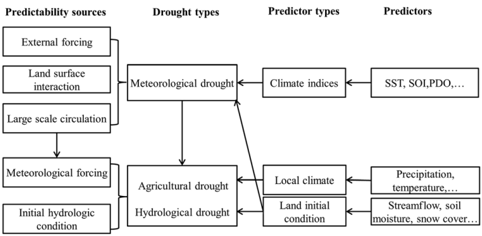
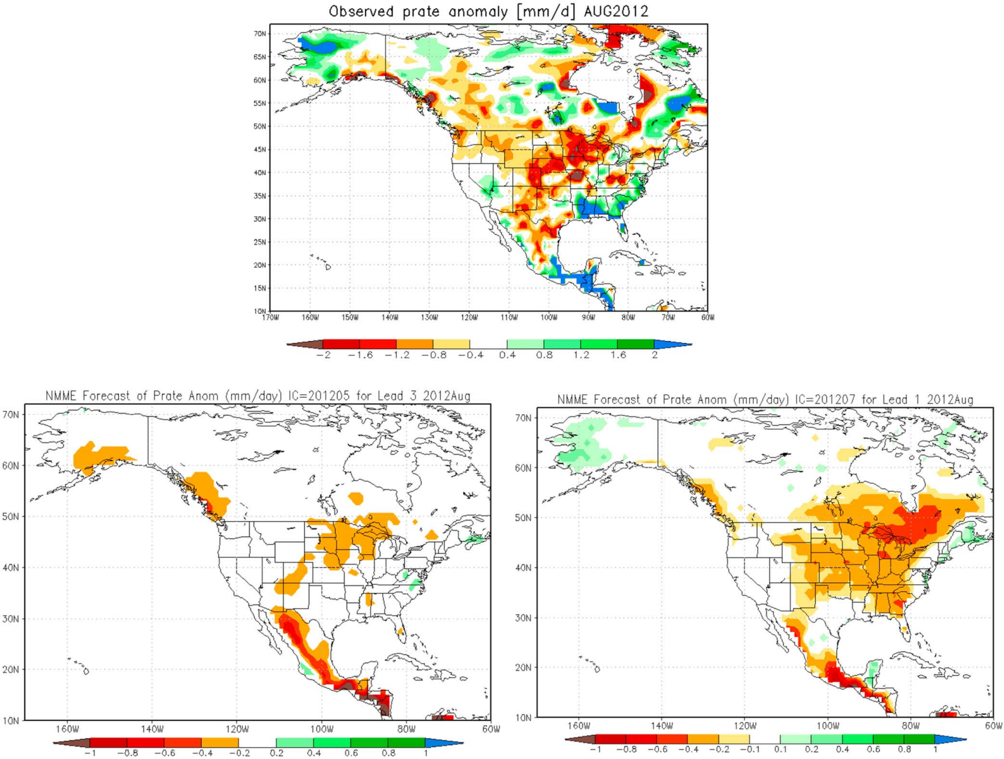
“These forcing factors provide certain degree of meteorological drought predictability (shown in Figure 3) (Heim & Brewer, 2012; Kingston et al., 2015; Mueller & Seneviratne, 2012; Rodríguez-Fonseca et al., 2015; Wood et al., 2015).”
BackgroundMadadgar, S., AghaKouchak, A., Shukla, S., Wood, A. W., Cheng, L., Hsu, K., & Svoboda, M. (2016) · Water Resources Research · doi:10.1002/2015wr018547 · Cited by 83 · cited 1×
“In addition, the two types of forecasts can also be combined through BMA to obtain the optimal weight of each member to form a unique prediction (Madadgar et al., 2016; Pokhrel et al., 2013; Schepen et al., 2014).”
BackgroundArtificial Neural Network–Based Drought Forecasting Using a Nonlinear Aggregated Drought Index
Barua, S., Ng, A. W. M., & Perera, B. J. C. (2012) · Journal of Hydrologic Engineering · doi:10.1061/(asce)he.1943-5584.0000574 · Cited by 82 · cited 1×
“The ANN model is capable of modeling the nonlinear dependence between drought indicator and other variables and has been widely used for drought prediction (Barua et al., 2012; Mishra et al., 2007; Mishra & Desai, 2006; Morid et al., 2007; Santos et al., 2014; Yang et al., 2015).”
MethodDistinct causes for two principal U.S. droughts of the 20th century
Hoerling, M. P., Quan, X., & Eischeid, J. K. (2009) · Geophysical Research Letters · doi:10.1029/2009gl039860 · Cited by 82 · cited 1×
“…associated with ENSO or Pacific Decadal Oscillation (PDO) often provides dominating forcing, while the SST anomaly in the Atlantic ocean and Indian ocean have been shown to provide certain predictability (Cook et al., 2007; Hoerling & Kumar, 2003; Hoerling et al., 2009; McCabe et al., 2004).”
BackgroundSummer drought predictability over Europe: empirical versus dynamical forecasts
Turco, M., Ceglar, A., Prodhomme, C., Soret, A., Toreti, A., & Francisco, J. D.-R. (2017) · Environmental Research Letters · doi:10.1088/1748-9326/aa7859 · Cited by 81 · cited 1×
“Using the initial condition or the persistence as predictors is not confined to the drought prediction based on hydroclimatic variables, such as precipitation, soil moisture, or streamflow (Hao et al., 2014; Lyon et al., 2012; Turco et al., 2017).”
BackgroundPREDICTIVE ASSESSMENT OF SEVERITY OF AGRICULTURAL DROUGHTS BASED ON AGRO‐CLIMATIC FACTORS1
Kumar, V., & Panu, U. S. (1997) · JAWRA Journal of the American Water Resources Association · doi:10.1111/j.1752-1688.1997.tb03550.x · Cited by 81 · cited 1×
“For example, the crop yield can be predicted with a regression model during the growing season based on yield affecting variables, including climate or weather observations, satellite products and drought indices (Boken, 2000; Boken & Shaykewich, 2002; Kumar & Panu, 1997).”
BackgroundMonthly and seasonal streamflow forecasts using rainfall‐runoff modeling and historical weather data
Wang, E., Zhang, Y., Luo, J., Chiew, F. H. S., & Wang, Q. J. (2011) · Water Resources Research · doi:10.1029/2010wr009922 · Cited by 80 · cited 15×
“For this method, “bridging” represents the statistical prediction using GCM’s forecasts of climate indices as predictors to produce alternative forecasts and “merging” is used to optimally combine different forecasts.”
BackgroundMethodInfluentialYuan, X., Ma, F., Wang, L., Zheng, Z., Ma, Z., Ye, A., & Peng, S. (2016) · Hydrology and earth system sciences · doi:10.5194/hess-20-2437-2016 · Cited by 80
Hao, Z., Hao, F., Singh, V. P., Xia, Y., Ouyang, W., & Shen, X. (2016) · Advances in Water Resources · doi:10.1016/j.advwatres.2016.04.010 · Cited by 80
Self-citationKirtman, B., & Pirani, A. (2009) · Bulletin of the American Meteorological Society · doi:10.1175/2008bams2707.1 · Cited by 79 · cited 1×
“…improved, and the overall prediction skill of precipitation and temperature outside the tropics is still low due to the chaotic nature of the ocean-atmospheric system and the currently limited physical understanding (Kirtman & Pirani, 2009; NRC, 2010; Saha et al., 2014; Smith et al., 2012).”
BackgroundMultiple drought indices for agricultural drought risk assessment on the Canadian prairies
Sun, L., Mitchell, S. W., & Davidson, A. (2011) · International Journal of Climatology · doi:10.1002/joc.2385 · Cited by 79 · cited 2×
“The agricultural drought prediction is commonly performed based on indices derived directly from soil moisture or other indices related to soil moisture (e.g., crop yield) (Dutta et al., 2013; Sun et al., 2012).”
BackgroundMethodClimate Index Weighting Schemes for NWS ESP-Based Seasonal Volume Forecasts
Werner, K., Brandon, D., Clark, M., & Gangopadhyay, S. (2004) · Journal of Hydrometeorology · doi:10.1175/jhm-381.1 · Cited by 79 · cited 13×
“For this method, “bridging” represents the statistical prediction using GCM’s forecasts of climate indices as predictors to produce alternative forecasts and “merging” is used to optimally combine different forecasts.”
MethodInfluentialObjective Drought Classification Using Multiple Land Surface Models
Mo, K. C., & Lettenmaier, D. P. (2013) · Journal of Hydrometeorology · doi:10.1175/jhm-d-13-071.1 · Cited by 78 · cited 3×
“…conditions control the forecast skill up to 1 month, while the climate forecast plays a dominant role for longer lead time, as is confirmed by studies in other regions (Mo & Lettenmaier, 2014b; Shukla & Lettenmaier, 2011; Sinha & Sankarasubramanian, 2013; Thober et al., 2015; Yuan et al., 2013).”
BackgroundResultERA‐40 reanalysis hydrological applications in the characterization of regional drought
Dutra, E., Viterbo, P., & Miranda, P. (2008) · Geophysical Research Letters · doi:10.1029/2008gl035381 · Cited by 78 · cited 2×
“Commonly used agricultural drought indicators are mostly based on soil moisture simulations (Heim, 2002), including the Soil Moisture Percentile (SMP) (Sheffield et al., 2004), Crop Moisture Index (CMI) (Palmer, 1965), Soil Moisture Deficit Index (SMDI) (Narasimhan & Srinivasan, 2005), Normalized Soil Moisture (NSM) (…”
BackgroundPotential Predictability of Long-Term Drought and Pluvial Conditions in the U.S. Great Plains
Schubert, S. D., Suárez, M. J., Pegion, P. J., Koster, R. D., & Bacmeister, J. T. (2008) · Journal of Climate · doi:10.1175/2007jcli1741.1 · Cited by 78 · cited 1×
“…that for the interannual and longer time scales, SST anomalies affect the timing of drought onset while land-atmosphere feedbacks (primarily during the warm seasons) predominately govern the magnitude and persistence of drought (Ferguson et al., 2010; Schubert et al., 2008; Seager et al., 2008).”
BackgroundNicolai‐Shaw, N., Gudmundsson, L., Hirschi, M., & Seneviratne, S. I. (2016) · Geophysical Research Letters · doi:10.1002/2016gl069847 · Cited by 77 · cited 2×
“…& Mcmahon, 2002; Wanders & Wada, 2015) and have been used for predicting hydrological drought and agricultural drought (or streamflow and soil moisture) in different regions (Kingston et al., 2013; Kuss & Gurdak, 2014; Nicolai-Shaw et al., 2016; Ryu et al., 2010; Trambauer et al., 2013, 2015).”
BackgroundMethodOn the Weighting of Multimodel Ensembles in Seasonal and Short-Range Weather Forecasting
Casanova, S., & Ahrens, B. (2009) · Monthly Weather Review · doi:10.1175/2009mwr2893.1 · Cited by 76 · cited 7×
“For example, the hybrid statistical-dynamical method, based on calibration, bridging, and merging (CBaM), has been shown to provide improved forecasts of climate variables through postprocessing GCM outputs based on the Bayesian joint probability model (for calibration and bridging) and BMA (for merging) (Bennett et a…”
MethodInfluentialBeginning a New Era of Drought Monitoring Across North America
(2002) · Bulletin of the American Meteorological Society · doi:10.1175/1520-0477(2002)083<1191:baneod>2.3.co;2 · Cited by 76 · cited 3×
“, two states of wet and dry) or categories with a specific threshold (Lawrimore et al., 2002; Steinemann & Cavalcanti, 2006; Svoboda et al., 2002; Zink et al., 2016).”
BackgroundMa, F., Ye, A., Deng, X., Zhou, Z., Liu, X., Duan, Q., Xu, J. R., Miao, C., Di, Z., & Gong, W. (2015) · International Journal of Climatology · doi:10.1002/joc.4333 · Cited by 74 · cited 8×
“For example, the hybrid statistical-dynamical method, based on calibration, bridging, and merging (CBaM), has been shown to provide improved forecasts of climate variables through postprocessing GCM outputs based on the Bayesian joint probability model (for calibration and bridging) and BMA (for merging) (Bennett et a…”
MethodInfluentialLiu, Z., Törnros, T., & Menzel, L. (2016) · Water Resources Research · doi:10.1002/2016wr019106 · Cited by 74 · cited 1×
“For the conditional probability model, probabilistic forecasts can be achieved by constructing conditional distribution functions of the predictand with respect to predictors (Hao, Hao, Singh, Ouyang, & Cheng, 2017; Liu et al., 2016).”
Does a Strong El Niño Imply a Higher Predictability of Extreme Drought?
Wang, S., Yuan, X., & Li, Y. (2017) · Scientific Reports · doi:10.1038/srep40741 · Cited by 73 · cited 8×
“For example, the high-latitude Eurasian snow cover has been used as a predictor for the precipitation (or meteorological drought) prediction in China and Europe (Brands et al., 2012; Wang et al., 2017).”
BackgroundMethodInfluentialGlobal Multimodel Analysis of Drought in Runoff for the Second Half of the Twentieth Century
Huijgevoort, M. H. J. V., Hazenberg, P., Lanen, H. A. J. V., Teuling, A. J., Clark, D. B., Folwell, S. S., Gosling, S. N., Hanasaki, N., Heinke, J., Koirala, S., et al. (2013) · Journal of Hydrometeorology · doi:10.1175/jhm-d-12-0186.1 · Cited by 72 · cited 1×
“In addition, the multimodel ensemble of hydrological simulations has been developed and employed for drought prediction to reduce uncertainties (Duan et al., 2007; Huijgevoort et al., 2013; Mo & Lettenmaier, 2014a; Nijssen et al., 2014; Wang, Bohn, et al., 2009).”
BackgroundAtmospheric and Climatic Hazards: Improved Monitoring and Prediction for Disaster Mitigation
Nicholls, N. (2001) · Natural Hazards · doi:10.1023/a:1011130223164 · Cited by 72 · cited 1×
“However, this may not be valid under climate change, due to the temporal variabilities involving trends, oscillatory behavior, and sudden shifts shown from hydroclimatic records (Mishra & Singh, 2011; Nicholls, 2001; Sveinsson et al., 2003).”
BackgroundImproving statistical forecasts of seasonal streamflows using hydrological model output
Robertson, D., Pokhrel, P., & Wang, Q. J. (2013) · Hydrology and earth system sciences · doi:10.5194/hess-17-579-2013 · Cited by 72 · cited 1×
“The hybrid statistical-dynamical drought prediction mainly involves two steps: calibrating climate forecast to correct the bias (and ensemble spread) of GCM forecasts, and merging forecast from multiple sources (Lim et al., 2011; Robertson et al., 2013; Schepen et al., 2014; Wang et al., 2012).”
MethodSeasonal Forecasts of Australian Rainfall through Calibration and Bridging of Coupled GCM Outputs
Schepen, A., Wang, Q. J., & Robertson, D. E. (2014) · Monthly Weather Review · doi:10.1175/mwr-d-13-00248.1 · Cited by 71 · cited 3×
“The hybrid statistical-dynamical drought prediction mainly involves two steps: calibrating climate forecast to correct the bias (and ensemble spread) of GCM forecasts, and merging forecast from multiple sources (Lim et al., 2011; Robertson et al., 2013; Schepen et al., 2014; Wang et al., 2012).”
BackgroundMethodImproved seasonal drought forecasts using reference evapotranspiration anomalies
McEvoy, D. J., Huntington, J., Mejía, J. F., & Hobbins, M. (2015) · Geophysical Research Letters · doi:10.1002/2015gl067009 · Cited by 70 · cited 1×
“There are large uncertainties in the precipitation forecast, and skillful climate forecast beyond the 1month lead is still a prevailing challenge (Mcevoy et al., 2015; Saha et al., 2014; Weisheimer et al., 2009; Wood et al., 2015; Yuan et al., 2013).”
BackgroundBaseline Probabilities for the Seasonal Prediction of Meteorological Drought
Lyon, B., Bell, M. A., Tippett, M. K., Kumar, A., Hoerling, M. P., Quan, X., & Wang, H. (2012) · Journal of Applied Meteorology and Climatology · doi:10.1175/jamc-d-11-0132.1 · Cited by 69 · cited 3×
“…6 month SPI), resampled historical records of the target period can be combined with antecedent observations to obtain the baseline prediction of SPI (Lyon et al., 2012), which can also be applied to other univariate and multivariate drought indicators (Hao, Hao, & Singh, 2016; Hao et al., 2014).”
BackgroundMethodKam, J., Sheffield, J., & Wood, E. F. (2014) · Geophysical Research Letters · doi:10.1002/2014gl060973 · Cited by 68 · cited 1×
“For example, studies have shown that the 2012 drought in the United States resulted mostly from natural variations in weather and may be driven by atmospheric noise without clear forcings from the SST anomaly (Hoerling et al., 2014; Kam et al., 2014).”
BackgroundFundel, F., Jörg-Hess, S., & Zappa, M. (2013) · Hydrology and Earth System Sciences · doi:10.5194/hess-17-395-2013 · Cited by 68 · cited 1×
“…climate forecasts from CFSv2, ECMWF, or NMME have been used as inputs to drive hydrologic models to predict agricultural and hydrological drought (Fundel et al., 2013; Li et al., 2008; Luo & Wood, 2007; Samaniego et al., 2013; Sheffield et al., 2014; Shukla et al., 2014; Trambauer et al., 2013;…”
MethodSeasonal drought predictability and forecast skill over China
Ma, F., Yuan, X., & Ye, A. (2015) · Journal of Geophysical Research Atmospheres · doi:10.1002/2015jd023185 · Cited by 68 · cited 2×
“, 2014), have uncovered new opportunities for climate and drought prediction in different regions (Ma et al., 2015; Mo & Lyon, 2015; Roundy et al., 2014; Wanders et al., 2017; Yuan & Wood, 2013).”
BackgroundA multiple model assessment of seasonal climate forecast skill for applications
Lavers, D. A., Luo, L., & Wood, E. F. (2009) · Geophysical Research Letters · doi:10.1029/2009gl041365 · Cited by 67 · cited 1×
“One challenge of the climate forecast from coupled GCMs is that the precipitation forecast quickly loses skill after 2 weeks because of the inherent chaotic nature of the atmosphere (Lavers et al., 2009; Smith et al., 2012; Yuan et al., 2011).”
BackgroundSeasonal predictions of agro-meteorological drought indicators for the Limpopo basin
Wetterhall, F., Winsemius, H., Dutra, E., Werner, M., & Pappenberger, F. (2015) · Hydrology and earth system sciences · doi:10.5194/hess-19-2577-2015 · Cited by 67 · cited 1×
“In certain cases drought prediction also refers to other properties, such as drought duration and frequency (Sharma & Panu, 2012; Wetterhall et al., 2015), or phases, such as drought onset, persistence, and recovery.”
BackgroundA Prototype Global Drought Information System Based on Multiple Land Surface Models
Nijssen, B., Shukla, S., Lin, C., Gao, H., Zhou, T., Ishottama, Sheffield, J., Wood, E. F., & Lettenmaier, D. P. (2014) · Journal of Hydrometeorology · doi:10.1175/jhm-d-13-090.1 · Cited by 66 · cited 2×
“Remote sensing products have been employed to aid drought prediction either through statistical or dynamical models (Nijssen et al., 2014; Sheffield et al., 2014; Svoboda et al., 2002).”
BackgroundMethodTadesse, T., Demisse, G. B., Zaitchik, B. F., & Dinku, T. (2014) · Water Resources Research · doi:10.1002/2013wr014281 · Cited by 66 · cited 3×
“Accordingly, predicting NDVI based on hydroclimatic variables (and climate indices) can provide drought early warning information in different regions (Tadesse et al., 2014).”
BackgroundMethodHydrological Drought Class Transition Using SPI and SRI Time Series by Loglinear Regression
Li, J., Zhou, S., & Hu, R. (2015) · Water Resources Management · doi:10.1007/s11269-015-1184-7 · Cited by 66 · cited 1×
“For example, the previous meteorological drought may provide useful predictive information for the subsequent hydrological drought prediction (Hannaford et al., 2011; Haslinger et al., 2014; Li et al., 2016; Maity et al., 2016; Nalbantis & Tsakiris, 2009; Wang et al., 2011; Wong et al., 2013).”
BackgroundSchneider, U., Becker, A., Finger, P., Meyer-Christoffer, A., Rudolf, B., & Ziese, M. (2015) · Deutscher Wetterdienst - Klimaüberwachung · doi:10.5676/dwd_gpcc/fd_m_v7_100 · Cited by 66
Seasonal streamflow forecasting by conditioning climatology with precipitation indices
Crochemore, L., Ramos, M., Pappenberger, F., & Perrin, C. (2017) · Hydrology and earth system sciences · doi:10.5194/hess-21-1573-2017 · Cited by 65 · cited 1×
“Overall, statistical and dynamical methods are complementary in drought (and climate) prediction in that the improved understanding from successful statistical forecasts may lead to better dynamical models, and vice versa (Crochemore et al., 2017; Kirtman et al., 2013).”
BackgroundStochastic Prediction of Drought Class Transitions
Paulo, A. A., & Pereira, L. S. (2007) · Water Resources Management · doi:10.1007/s11269-007-9225-5 · Cited by 65 · cited 1×
“The MC model has been commonly used for drought prediction based on drought states of different indicators, including Palmer drought index (Lohani & Loganathan, 1997), SPI (Cancelliere et al., 2007; Paulo & Pereira, 2007, 2008) and Standardized Hydrological Index (SHI) (Sharma & Panu, 2012).”
MethodUnderstanding and Predicting Seasonal-to-Interannual Climate Variability - The Producer Perspective
Stockdale, T., Alves, O., Boer, G. J., Déqué, M., Ding, Y., Kumar, A., Kumar, K., Landman, W. A., Mason, S. J., Nobre, P., et al. (2010) · Procedia Environmental Sciences · doi:10.1016/j.proenv.2010.09.006 · Cited by 63 · cited 1×
“A probabilistic forecast can be characterized in different forms, including the full PDF, the probability of falling in different categories, or the ensemble mean and variance (Stockdale et al., 2010).”
BackgroundDo extreme climate events require extreme forcings?
Kumar, A., Chen, M., Hoerling, M. P., & Eischeid, J. K. (2013) · Geophysical Research Letters · doi:10.1002/grl.50657 · Cited by 62 · cited 1×
“At last, drought may also result from internal atmospheric variability without strong external forcings (Kumar et al., 2013).”
BackgroundStreamflow drought time series forecasting: a case study in a small watershed in North West Spain
Fernández, C., Vega, J. A., Fontúrbel, T., & Jiménez, E. (2008) · Stochastic Environmental Research and Risk Assessment · doi:10.1007/s00477-008-0277-8 · Cited by 62 · cited 1×
“The ARIMA model has also been applied to other drought indicators, including Palmer drought index (Rao & Padmanabhan, 1984) and standardized streamflow index (Fernández et al., 2009; Modarres, 2007).”
MethodQuantitative risk assessment of the effects of drought on extreme temperature in eastern China
Hao, Z., Hao, F., Singh, V. P., & Ouyang, W. (2017) · Journal of Geophysical Research Atmospheres · doi:10.1002/2017jd027030 · Cited by 61
Self-citationSeibert, M., Merz, B., & Apel, H. (2017) · Hydrology and earth system sciences · doi:10.5194/hess-21-1611-2017 · Cited by 61 · cited 1×
“For example, the hydrological drought (or streamflow) is not only affected by the climate and catchment characteristics but also human activities, such as irrigation or operation of dams and reservoirs (Di Baldassarre et al., 2017; He et al., 2017; Seibert et al., 2016).”
BackgroundUncertainties in North American Land Data Assimilation Systems over the Contiguous United States
Mo, K. C., Chen, L., Shukla, S., Bohn, T. J., & Lettenmaier, D. P. (2012) · Journal of Hydrometeorology · doi:10.1175/jhm-d-11-0132.1 · Cited by 60
Hao, Z., Hao, F., & Singh, V. P. (2016) · Journal of Hydrology · doi:10.1016/j.jhydrol.2016.04.074 · Cited by 60
Self-citationZhang, X., Tang, Q., Liu, X., Leng, G., & Li, Z. (2016) · Journal of Hydrometeorology · doi:10.1175/jhm-d-16-0045.1 · Cited by 59
Prospects for Dynamical Prediction of Meteorological Drought
Quan, X., Hoerling, M. P., Lyon, B., Kumar, A., Bell, M. A., Tippett, M. K., & Wang, H. (2012) · Journal of Applied Meteorology and Climatology · doi:10.1175/jamc-d-11-0194.1 · Cited by 58 · cited 1×
“Various studies have shown that the two types of methods may complement each other (Block & Rajagopalan, 2009; Mo & Lyon, 2015; Quan et al., 2012).”
BackgroundImpact of land-atmospheric coupling in CFSv2 on drought prediction
Roundy, J. K., Ferguson, C. R., & Wood, E. F. (2013) · Climate Dynamics · doi:10.1007/s00382-013-1982-7 · Cited by 58 · cited 1×
“…Ensemble (NMME) (Becker et al., 2014; Bolinger et al., 2016; Infanti & Kirtman, 2014; Kirtman et al., 2014), have uncovered new opportunities for climate and drought prediction in different regions (Ma et al., 2015; Mo & Lyon, 2015; Roundy et al., 2014; Wanders et al., 2017; Yuan & Wood, 2013).”
BackgroundPredictability of low flow – An assessment with simulation experiments
Staudinger, M., & Seibert, J. (2014) · Journal of Hydrology · doi:10.1016/j.jhydrol.2014.08.061 · Cited by 57 · cited 1×
“The initial catchment condition, including the water stored in snow, soil, or groundwater, controls the streamflow generation and may contribute to the prediction skill (Mahanama et al., 2012; Staudinger & Seibert, 2014; Yuan et al., 2016).”
BackgroundAnalysis and modeling of Palmer's drought index series
Rao, A. R., & Padmanabhan, G. (1984) · Journal of Hydrology · doi:10.1016/0022-1694(84)90212-9 · Cited by 56 · cited 1×
“The ARIMA model has also been applied to other drought indicators, including Palmer drought index (Rao & Padmanabhan, 1984) and standardized streamflow index (Fernández et al., 2009; Modarres, 2007).”
MethodThe 1998 Oklahoma–Texas Drought: Mechanistic Experiments with NCEP Global and Regional Models
Hong, S.-Y., & Kalnay, E. (2002) · Journal of Climate · doi:10.1175/1520-0442(2002)015<0945:totdme>2.0.co;2 · Cited by 56 · cited 1×
“For example, Hong and Kalnay (2002) found that for the 1998 Oklahoma-Texas drought, large-scale drought conditions during April–”
BackgroundSpring drought prediction based on winter NAO and global SST in Portugal
Santos, J. F., Portela, M. M., & Pulido‐Calvo, I. (2012) · Hydrological Processes · doi:10.1002/hyp.9641 · Cited by 55 · cited 2×
“As such, climate indices may be used as potential predictors for precipitation (or meteorological drought) prediction in regions with strong teleconnections (Bonaccorso et al., 2015; Magno et al., 2014; Morid et al., 2007; Özger et al., 2012; Santos et al., 2014).”
BackgroundMethodÖzger, M., Mishra, A. K., & Singh, V. P. (2010) · International Journal of Climatology · doi:10.1002/joc.2215 · Cited by 55 · cited 1×
“…ANN (Mishra & Desai, 2006; Mishra et al., 2007; Morid et al., 2007), SVM (Ganguli & Reddy, 2014), and wavelet transformation (Maity et al., 2016; Özger et al., 2011), have been used to model complicated and nonlinear interactions between drought indicators and influencing factors for drought…”
MethodSelf-citationWhat caused the spring intensification and winter demise of the 2011 drought over Texas?
Fernando, N., Mo, K. C., Fu, R., Pu, B., Bowerman, A. R., Scanlon, B. R., Solis, R. S., Yin, L., Mace, R. E., Mioduszewski, J. R., et al. (2016) · Climate Dynamics · doi:10.1007/s00382-016-3014-x · Cited by 54 · cited 1×
“Other factors, such as land surface interactions or feedbacks (e.g., reduced soil moisture and increased temperature) may also contribute to the atmospheric anomaly or occurrence of meteorological drought (Dai, 2011; Fernando et al., 2016; Kam, Sheffield, & Wood, 2014b; Koster & Suarez, 1995).”
BackgroundYu, C., Li, C., Xin, Q., Chen, H., Zhang, J., Zhang, F., Li, X., Clinton, N., Huang, X., Yue, Y., et al. (2014) · Environmental Modelling & Software · doi:10.1016/j.envsoft.2014.08.004 · Cited by 53 · cited 1×
“…water quality, wildfire occurrence, or remotely sensed vegetation stress, are related directly or indirectly to drought impacts, and prediction of these quantity can be regarded as approximations of socioeconomic drought prediction (Gudmundsson et al., 2014; Tadesse et al., 2014; Yu et al., 2014).”
BackgroundYuan, X. (2016) · Hydrology and earth system sciences · doi:10.5194/hess-20-2453-2016 · Cited by 52 · cited 1×
“…ensembles have been commonly used in hydroclimatic forecast in the past decade, which can be achieved by perturbing initial conditions (e.g., SST or wind stress), running the model with different start dates, and performing forecast with multiple climatic or hydrologic models (Yuan, 2016).”
BackgroundPotential extents for ENSO-driven hydrologic drought forecasts in the United States
Ryu, J. H., Svoboda, M. D., Lenters, J. D., Tadesse, T., & Knutson, C. (2009) · Climatic Change · doi:10.1007/s10584-009-9705-0 · Cited by 52 · cited 1×
“…& Mcmahon, 2002; Wanders & Wada, 2015) and have been used for predicting hydrological drought and agricultural drought (or streamflow and soil moisture) in different regions (Kingston et al., 2013; Kuss & Gurdak, 2014; Nicolai-Shaw et al., 2016; Ryu et al., 2010; Trambauer et al., 2013, 2015).”
MethodSchepen, A., & Wang, Q. J. (2015) · Water Resources Research · doi:10.1002/2014wr016163 · Cited by 52 · cited 2×
“124 Generally, it is hard to determine which method is eventually the best, and the predictive skill always depends on the season, region, and lead time (Schepen & Wang, 2015).”
BackgroundMethodMortensen, E. S., Wu, S. H., Notaro, M., Vavrus, S. J., Montgomery, R., de Piérola, J., Sánchez, C., & Block, P. (2018) · Hydrology and earth system sciences · doi:10.5194/hess-22-287-2018 · Cited by 50 · cited 1×
“Crop yield, water supply shortage, and water quality have been commonly used for characterizing the socioeconomic drought (Mosley, 2015; Quiring & Papakryiakou, 2003).”
BackgroundLim, E., Hendon, H. H., Anderson, D. L. T., Charles, A., & Alves, O. (2010) · Monthly Weather Review · doi:10.1175/2010mwr3399.1 · Cited by 49 · cited 1×
“The hybrid statistical-dynamical drought prediction mainly involves two steps: calibrating climate forecast to correct the bias (and ensemble spread) of GCM forecasts, and merging forecast from multiple sources (Lim et al., 2011; Robertson et al., 2013; Schepen et al., 2014; Wang et al., 2012).”
MethodSoutheastern U.S. Rainfall Prediction in the North American Multi-Model Ensemble
Infanti, J. M., & Kirtman, B. P. (2013) · Journal of Hydrometeorology · doi:10.1175/jhm-d-13-072.1 · Cited by 48 · cited 1×
“…Prediction (DEMETER) system (Palmer et al., 2004) and North American Multimodel Ensemble (NMME) (Becker et al., 2014; Bolinger et al., 2016; Infanti & Kirtman, 2014; Kirtman et al., 2014), have uncovered new opportunities for climate and drought prediction in different regions (Ma et al.,…”
BackgroundShafiee‐Jood, M., Cai, X., Chen, L., Liang, X., & Kumar, P. (2014) · Water Resources Research · doi:10.1002/2014wr015822 · Cited by 48 · cited 1×
“The dynamical model can also be applied to predict the drought impact based on crop yield by linking climate forecasts, hydrologic models, and crop models (Shafiee-Jood et al., 2014).”
MethodA multiscale analysis of drought and pluvial mechanisms for the Southeastern United States
Kam, J., Sheffield, J., & Wood, E. F. (2014) · Journal of Geophysical Research Atmospheres · doi:10.1002/2014jd021453 · Cited by 47
Prediction of hydrological drought durations based on Markov chains: case of the Canadian prairies
Sharma, T. C., & Panu, U. S. (2012) · Hydrological Sciences Journal · doi:10.1080/02626667.2012.672741 · Cited by 47 · cited 2×
“In certain cases drought prediction also refers to other properties, such as drought duration and frequency (Sharma & Panu, 2012; Wetterhall et al., 2015), or phases, such as drought onset, persistence, and recovery.”
BackgroundMethodXia, Y., Ek, M., Mocko, D. M., Peters‐Lidard, C. D., Sheffield, J., Dong, J., & Wood, E. F. (2014) · Journal of Hydrometeorology · doi:10.1175/jhm-d-13-058.1 · Cited by 47
Self-citationMultisite seasonal forecast of arid river flows using a dynamic model combination approach
Chowdhury, S., & Sharma, A. (2009) · Water Resources Research · doi:10.1029/2008wr007510 · Cited by 46 · cited 1×
“…advances in the weather and climate forecast, predictors may also be obtained from dynamical forecast for the prediction of hydroclimatic variables (Chowdhury & Sharma, 2009; Foster & Uvo, 2010; Lang & Wang, 2010; Marcos et al., 2017; Sahu et al., 2016; Schick et al., 2017; Stephenson et al.,…”
BackgroundWanders, N., & Wada, Y. (2015) · Geophysical Research Letters · doi:10.1002/2015gl066929 · Cited by 45 · cited 1×
“…to affect hydrological conditions (through the effect on precipitation, temperature, or other meteorological variables) (Chiew & Mcmahon, 2002; Wanders & Wada, 2015) and have been used for predicting hydrological drought and agricultural drought (or streamflow and soil moisture) in different…”
MethodA Statistical Method for Categorical Drought Prediction Based on NLDAS-2
Hao, Z., Hao, F., Xia, Y., Singh, V. P., Hong, Y. E., Shen, X., & Ouyang, W. (2015) · Journal of Applied Meteorology and Climatology · doi:10.1175/jamc-d-15-0200.1 · Cited by 45
Self-citationde Linage, C. R., Famiglietti, J. S., & Randerson, J. T. (2014) · Hydrology and earth system sciences · doi:10.5194/hess-18-2089-2014 · Cited by 44 · cited 1×
“…the statistical prediction, drought indices from remote sensing products (e.g., NDVI) have been commonly used as the predictand for drought prediction mostly achieved with regression models (Asoka & Mishra, 2015; De Linage et al., 2014; Funk & Brown, 2006; Liu & Juárez, 2001; Tadesse et al., 2014).”
MethodSinha, T., & Sankarasubramanian, A. (2013) · Hydrology and earth system sciences · doi:10.5194/hess-17-721-2013 · Cited by 44 · cited 2×
“…conditions control the forecast skill up to 1 month, while the climate forecast plays a dominant role for longer lead time, as is confirmed by studies in other regions (Mo & Lettenmaier, 2014b; Shukla & Lettenmaier, 2011; Sinha & Sankarasubramanian, 2013; Thober et al., 2015; Yuan et al., 2013).”
BackgroundResultImproving Extraseasonal Summer Rainfall Prediction by Merging Information from GCMs and Observations
Lang, X., & Wang, H. (2010) · Weather and Forecasting · doi:10.1175/2010waf2222342.1 · Cited by 43 · cited 2×
“…in the weather and climate forecast, predictors may also be obtained from dynamical forecast for the prediction of hydroclimatic variables (Chowdhury & Sharma, 2009; Foster & Uvo, 2010; Lang & Wang, 2010; Marcos et al., 2017; Sahu et al., 2016; Schick et al., 2017; Stephenson et al., 2005).”
BackgroundAvilés, Á., Célleri, R., Paredes-Arquiola, J., & Solera, A. (2015) · Water Resources Management · doi:10.1007/s11269-015-0921-2 · Cited by 43 · cited 1×
“It can be extended to higher-order MC models for the prediction of multiple categories or states (e.g., wet, normal, and dry) (Avilés et al., 2015).”
BackgroundImproving drought predictability in Arkansas using the ensemble PDSI forecast technique
Liu, Y., & Hwang, Y. (2014) · Stochastic Environmental Research and Risk Assessment · doi:10.1007/s00477-014-0930-3 · Cited by 41 · cited 1×
“Several nonlinear regression models, such as the locally weighted polynomial regression (LWPR), have been employed for modeling nonlinear relationships for prediction purposes (Hwang & Carbone, 2009; Liu & Hwang, 2015).”
MethodTian, D., Martinez, C. J., Graham, W. D., & Hwang, S. (2014) · Journal of Climate · doi:10.1175/jcli-d-13-00481.1 · Cited by 41 · cited 2×
“…relationship between large-scale climate forecast and local-scale observations, while dynamical downscaling employs GCM outputs to provide initial and boundary conditions for regional climate models (RCM) for the generation of forecast at local scales (Maraun et al., 2010; Tian et al., 2014).”
BackgroundForecasting Spring Wheat Yield Using Time Series Analysis: A Case Study for the Canadian Prairies
Boken, V. K. (2000) · Agronomy Journal · doi:10.2134/agronj2000.9261047x · Cited by 41 · cited 1×
“For example, the crop yield can be predicted with a regression model during the growing season based on yield affecting variables, including climate or weather observations, satellite products and drought indices (Boken, 2000; Boken & Shaykewich, 2002; Kumar & Panu, 1997).”
BackgroundSawada, Y., & Koike, T. (2016) · Journal of Geophysical Research Atmospheres · doi:10.1002/2015jd024705 · Cited by 41 · cited 1×
“For example, the recently developed Coupled Land and Vegetation Data Assimilation System (CLVDAS) can generate initial conditions of both soil moisture and leaf area index (LAI), and thus can provide unique opportunities to predict ecohydrological droughts (Sawada & Koike, 2016).”
MethodUtility of Satellite Remote Sensing for Land–Atmosphere Coupling and Drought Metrics
Roundy, J. K., & Santanello, J. A. (2017) · Journal of Hydrometeorology · doi:10.1175/jhm-d-16-0171.1 · Cited by 41 · cited 1×
“…coverage of remote sensing products play an important role in monitoring drought especially for the regions with sparse or no observations (e.g., Africa) (Masih et al., 2014; Mwangi et al., 2014; Sheffield et al., 2008), and in assessing land-atmosphere interactions (Roundy & Santanello, 2017).”
BackgroundHydroclimatic variability and predictability: a survey of recent research
Koster, R. D., Betts, A. K., Dirmeyer, P. A., Bierkens, M. F. P., Bennett, K. E., Déry, S. J., Evans, J. P., Fu, R., Hernandez, F., Leung, L.-Y. R., et al. (2017) · Hydrology and earth system sciences · doi:10.5194/hess-21-3777-2017 · Cited by 40 · cited 3×
“Thus, a pressing need is to improve the atmospheric and land models to incorporate key processes related to extremes, which involve increasing model resolutions and parameterizing subgrid scale processes with novel approaches (Koster et al., 2017; WCRP, 2015).”
BackgroundOcean–Atmosphere Forcing of Summer Streamflow Drought in Great Britain
Kingston, D. G., Fleig, A. K., Tallaksen, L. M., & Hannah, D. M. (2013) · Journal of Hydrometeorology · doi:10.1175/jhm-d-11-0100.1 · Cited by 40 · cited 2×
“The large-scale teleconnection patterns have also been shown to affect hydrological conditions (through the effect on precipitation, temperature, or other meteorological variables) (Chiew & Mcmahon, 2002; Wanders & Wada, 2015) and have been used for predicting hydrological drought and agricultural drought (or streamfl…”
BackgroundMethodA new method to produce categorical streamflow forecasts
Regonda, S. K., Rajagopalan, B., & Clark, M. (2006) · Water Resources Research · doi:10.1029/2006wr004984 · Cited by 39 · cited 1×
“For the simplest case with a binary drought category (i.e., drought occurs or not), the logistic regression model can be applied to estimate the probability of drought occurrences (Hao, Hao, Xia, et al., 2016; Regonda et al., 2006).”
BackgroundKam, J., Sheffield, J., Yuan, X., & Wood, E. F. (2014) · Environmental Research Letters · doi:10.1088/1748-9326/9/3/034005 · Cited by 39
Sohn, S., Ahn, J., & Tam, C. (2013) · Geophysical Research Letters · doi:10.1002/grl.50133 · Cited by 38 · cited 1×
“For the meteorological drought prediction, the precipitation forecast from GCMs should generally be downscaled (and bias corrected) to assess the prediction skill at regional scales (Sohn et al., 2013; Yoon et al., 2012).”
BackgroundUtilizing the state of ENSO as a means for season‐ahead predictor selection
Zimmerman, B. G., Vimont, D. J., & Block, P. J. (2016) · Water Resources Research · doi:10.1002/2015wr017644 · Cited by 38 · cited 1×
“Selecting or weighting ensembles by conditioning on different phases of teleconnections, such as ENSO, PDO, and NAO (Wood et al., 2015; Zimmerman et al., 2016), is a promising method in this regard.”
Method(2007) · Bulletin of the American Meteorological Society · doi:10.1175/bams-88-10-1625 · Cited by 38 · cited 2×
“Meanwhile, regional land surface characteristics (e.g., soil moisture, vegetation, snow cover) have also been shown to strengthen or weaken drought severity and affect drought development (Koster et al., 2017; Schubert et al., 2007; Su & Dickinson, 2017; Yuan & Wood, 2013).”
BackgroundAn Efficient Approach for Estimating Streamflow Forecast Skill Elasticity
Arnal, L., Wood, A. W., Stephens, E., Cloke, H., & Pappenberger, F. (2017) · Journal of Hydrometeorology · doi:10.1175/jhm-d-16-0259.1 · Cited by 38 · cited 1×
“The prediction skill of seasonal hydroclimatic forecast depends on both the initial hydrological conditions (IHCs) from the catchment before the forecast period and future seasonal climate forecasts (CFs) (Arnal et al., 2017; Emerton et al., 2016; Li et al., 2009; Mendoza et al., 2017).”
BackgroundLand surface albedo and vegetation feedbacks enhanced the millennium drought in south-east Australia
Evans, J. P., Meng, X., & McCabe, M. F. (2017) · Hydrology and earth system sciences · doi:10.5194/hess-21-409-2017 · Cited by 37 · cited 1×
“…to the weather (or climate) prediction either through its direct impact on the water and energy balance, or through its memory characteristic affecting atmospheric variability and land surface hydrology (Evans et al., 2017; Koster et al., 2004; Nicolai-Shaw et al., 2016; Seneviratne et al., 2010).”
BackgroundEnsemble Forecasts of Drought Indices Using a Conditional Residual Resampling Technique
Hwang, Y., & Carbone, G. J. (2009) · Journal of Applied Meteorology and Climatology · doi:10.1175/2009jamc2071.1 · Cited by 36 · cited 2×
“For the regression model, the probabilistic forecast of the predictand can be constructed through distributional assumptions of error terms (Hao, Hong, et al., 2016; Hwang & Carbone, 2009).”
MethodThe Attribution of Land–Atmosphere Interactions on the Seasonal Predictability of Drought
Roundy, J. K., & Wood, E. F. (2014) · Journal of Hydrometeorology · doi:10.1175/jhm-d-14-0121.1 · Cited by 36 · cited 1×
“…such as SST and land surface characteristics (e.g., soil moisture, high-latitude snow cover, and sea ice), which may provide more skillful seasonal forecast to the extent that these boundary conditions and associated climate impacts are predictable (Goddard et al., 2001; Roundy & Wood, 2015).”
BackgroundOn the clustering of climate models in ensemble seasonal forecasting
Yuan, X., & Wood, E. F. (2012) · Geophysical Research Letters · doi:10.1029/2012gl052735 · Cited by 35 · cited 1×
“It has been shown that a multimodel ensemble may result in the similarity of or overconfidence in the seasonal forecast, due to similar atmospheric or oceanic components (Yuan & Wood, 2012).”
BackgroundSeasonal Predictability of Wintertime Precipitation in Europe Using the Snow Advance Index
Brands, S., Manzanas, R., Gutiérrez, J. M., & Cohen, J. L. (2012) · Journal of Climate · doi:10.1175/jcli-d-12-00083.1 · Cited by 35 · cited 5×
“For example, the high-latitude Eurasian snow cover has been used as a predictor for the precipitation (or meteorological drought) prediction in China and Europe (Brands et al., 2012; Wang et al., 2017).”
BackgroundInfluentialHao, Z., Xia, Y., Luo, L., Singh, V. P., Ouyang, W., & Hao, F. (2017) · Journal of Hydrology · doi:10.1016/j.jhydrol.2017.06.005 · Cited by 35
Self-citationForecasting the Hydroclimatic Signature of the 2015/16 El Niño Event on the Western United States
Wanders, N., Bachas, A., He, X., Huang, H., Koppa, A., Mekonnen, Z. T., Pagán, B. R., Peng, L., Vergopolan, N., Wang, K. J., et al. (2016) · Journal of Hydrometeorology · doi:10.1175/jhm-d-16-0230.1 · Cited by 35 · cited 1×
“…to affect hydrological conditions (through the effect on precipitation, temperature, or other meteorological variables) (Chiew & Mcmahon, 2002; Wanders & Wada, 2015) and have been used for predicting hydrological drought and agricultural drought (or streamflow and soil moisture) in different…”
MethodStatistical Postprocessing of High-Resolution Regional Climate Model Output
Mendoza, P. A., Rajagopalan, B., Clark, M., Ikeda, K., & Rasmussen, R. (2015) · Monthly Weather Review · doi:10.1175/mwr-d-14-00159.1 · Cited by 34 · cited 7×
“For example, the hybrid statistical-dynamical method, based on calibration, bridging, and merging (CBaM), has been shown to provide improved forecasts of climate variables through postprocessing GCM outputs based on the Bayesian joint probability model (for calibration and bridging) and BMA (for merging) (Bennett et a…”
BackgroundMethodInfluentialObservational breakthroughs lead the way to improved hydrological predictions
Lettenmaier, D. P. (2017) · Water Resources Research · doi:10.1002/2017wr020896 · Cited by 33 · cited 2×
“…initialized from observed states in the ocean, land, and atmosphere domains for the seasonal climate prediction (Infanti & Kirtman, 2017), and high-quality data is of particular importance to specify initial conditions for hydrologic forecasts based on a hydrologic model (Lettenmaier, 2017).”
BackgroundHydrological monitoring and seasonal forecasting: Progress and perspectives
Tang, Q., Zhang, X., Duan, Q., Huang, S., Yuan, X., Cui, H., Li, Z., & Liu, X. (2016) · Journal of Geographical Sciences · doi:10.1007/s11442-016-1306-z · Cited by 31
Long-Lead Seasonal Forecast Skill in Far Eastern Asia Using Canonical Correlation Analysis
Hwang, S., Schemm, J.-K. E., Barnston, A. G., & Kwon, W. (2001) · Journal of Climate · doi:10.1175/1520-0442(2001)014<3005:llsfsi>2.0.co;2 · Cited by 31 · cited 1×
“When the response variable is a vector (or multiple response variables) with multiple predictors, the CCA method can be used to find correlated patterns between predictor and predictand fields for climate prediction (Hwang et al., 2001; Sohn & Tam, 2016).”
MethodTechnical note: Combining quantile forecasts and predictive distributions of streamflows
Bogner, K., Liechti, K., & Zappa, M. (2017) · Hydrology and earth system sciences · doi:10.5194/hess-21-5493-2017 · Cited by 30 · cited 2×
“Except for the commonly used ensemble mean, certain merging techniques of multimodel ensemble, such as the BMA (Casanova & Ahrens, 2009; Ma et al., 2016; Raftery et al., 2005), linear regression (Wanders & Wood, 2016), and nonhomogeneous Gaussian regression (NGR) (Bogner et al., 2017; Gneiting et al., 2005), have been…”
MethodCloke, H., & Hannah, D. M. (2011) · Hydrological Processes · doi:10.1002/hyp.8059 · Cited by 29 · cited 1×
“Since it is directly linked to drought impacts, it is argued that more attention is needed to study the hydrological drought (Cloke & Hannah, 2011; Mishra & Singh, 2010; Pozzi et al., 2013).”
BackgroundSeasonal drought predictability in Portugal using statistical–dynamical techniques
Ribeiro, A. F. S., & Pires, C. (2015) · Physics and Chemistry of the Earth Parts A/B/C · doi:10.1016/j.pce.2015.04.003 · Cited by 29 · cited 1×
“…to incorporate multiple indicators from climate forecast and statistical forecast (or observations) with the aim to obtain coefficient parameters of each forecast in a linear combination manner (Block & Rajagopalan, 2009; Hao, Hao, Xia, et al., 2016; Ribeiro & Pires, 2015; Wang et al., 2017).”
MethodSahu, N., Robertson, A. W., Boer, R., Behera, S. K., DeWitt, D. G., Takara, K., Kumar, M., & Singh, R. B. (2016) · Stochastic Environmental Research and Risk Assessment · doi:10.1007/s00477-016-1297-4 · Cited by 29 · cited 1×
“…in the weather and climate forecast, predictors may also be obtained from dynamical forecast for the prediction of hydroclimatic variables (Chowdhury & Sharma, 2009; Foster & Uvo, 2010; Lang & Wang, 2010; Marcos et al., 2017; Sahu et al., 2016; Schick et al., 2017; Stephenson et al., 2005).”
BackgroundProbabilistic drought characterization in the categorical form using ordinal regression
Hao, Z., Hong, Y. E., Xia, Y., Singh, V. P., Hao, F., & Cheng, H. (2016) · Journal of Hydrology · doi:10.1016/j.jhydrol.2016.01.074 · Cited by 28
Self-citationPrediction from Weeks to Decades
Kirtman, B. P., Anderson, D. L. T., Brunet, G., Kang, I., Scaife, A. A., & Smith, D. M. (2013) · Springer eBooks · doi:10.1007/978-94-007-6692-1_8 · Cited by 26 · cited 2×
“Usually, a statistical method is particularly useful in providing a baseline level of skill, which the complicated dynamical models aim to exceed (Kirtman et al., 2013).”
BackgroundMethodDrought projection based on a hybrid drought index using Artificial Neural Networks
Yang, T., Zhou, X., Yu, Z., Krysanova, V., & Wang, B. (2014) · Hydrological Processes · doi:10.1002/hyp.10394 · Cited by 26 · cited 1×
“The ANN model is capable of modeling the nonlinear dependence between drought indicator and other variables and has been widely used for drought prediction (Barua et al., 2012; Mishra et al., 2007; Mishra & Desai, 2006; Morid et al., 2007; Santos et al., 2014; Yang et al., 2015).”
MethodSeasonal hydrologic predictions of low‐flow conditions over eastern USA during the 2007 drought
Li, H., Luo, L., & Wood, E. F. (2008) · Atmospheric Science Letters · doi:10.1002/asl.182 · Cited by 26 · cited 2×
“…from CFSv2, ECMWF, or NMME have been used as inputs to drive hydrologic models to predict agricultural and hydrological drought (Fundel et al., 2013; Li et al., 2008; Luo & Wood, 2007; Samaniego et al., 2013; Sheffield et al., 2014; Shukla et al., 2014; Trambauer et al., 2013; Zhang et al., 2016).”
MethodStatistical–Dynamical Approach for Streamflow Modeling at Malakal, Sudan, on the White Nile River
Block, P., & Rajagopalan, B. (2009) · Journal of Hydrologic Engineering · doi:10.1061/(asce)1084-0699(2009)14:2(185 · Cited by 26
Marcos-Matamoros, R., Llasat, M. C., Quintana‐Seguí, P., & Turco, M. (2016) · The Science of The Total Environment · doi:10.1016/j.scitotenv.2016.09.080 · Cited by 26 · cited 1×
“With advances in the weather and climate forecast, predictors may also be obtained from dynamical forecast for the prediction of hydroclimatic variables (Chowdhury & Sharma, 2009; Foster & Uvo, 2010; Lang & Wang, 2010; Marcos et al., 2017; Sahu et al., 2016; Schick et al., 2017; Stephenson et al., 2005).”
BackgroundBehrangi, A., Nguyen, H., & Granger, S. L. (2015) · Journal of Applied Meteorology and Climatology · doi:10.1175/jamc-d-14-0162.1 · Cited by 24 · cited 2×
“Providing the PDF of forecasts of drought indicators, from which the prediction interval and the probability of exceeding (or below) a certain threshold can be achieved (Behrangi et al., 2015; Hao, Hao, Singh, Sun, et al., 2016; Mendoza et al., 2015; Pan et al., 2013; Scheuerer, 2014), is popular in probabilistic drou…”
BackgroundAdvancing Drought Understanding, Monitoring, and Prediction
Mariotti, A., Schubert, S. D., Mo, K. C., Peters‐Lidard, C. D., Wood, A., Pulwarty, R. S., Huang, J., & Barrie, D. (2013) · Bulletin of the American Meteorological Society · doi:10.1175/bams-d-12-00248.1 · Cited by 24 · cited 1×
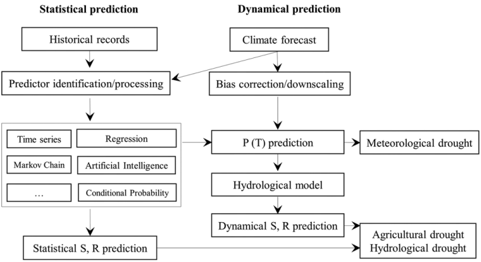
“Generally, three types of methods have been used for drought prediction: statistical, dynamical, and hybrid methods (Mariotti et al., 2013; Mishra & Singh, 2011; Pozzi et al., 2013).”
MethodNadolnyak, D. A., & Vedenov, D. V. (2013) · Journal of Agricultural and Applied Economics · doi:10.1017/s1074070800004612 · Cited by 22 · cited 1×
“…methods, such as regression model and conditional probability model, can be applied to establish the relationship between hydroclimatic variables and crop yield (or other indicators) for predicting drought impacts (Nadolnyak & Vedenov, 2013; Sen & Boken, 2005; Vicente-Serrano et al., 2006).”
MethodA Framework for Diagnosing Seasonal Prediction through Canonical Event Analysis
Roundy, J. K., Yuan, X., Schaake, J. C., & Wood, E. F. (2015) · Monthly Weather Review · doi:10.1175/mwr-d-14-00190.1 · Cited by 21 · cited 2×
“There is, however, a clear advantage of dynamical methods over statistical methods in hydrologic prediction if the precipitation forecast from GCM is skillful (Mo, Shukla, et al., 2012; Roundy et al., 2015).”
BackgroundSikder, M. S., Chen, X., Hossain, F., Roberts, J. B., Robertson, F. R., Shum, C. K., & Turk, F. J. (2015) · Journal of Hydrometeorology · doi:10.1175/jhm-d-14-0099.1 · Cited by 21 · cited 1×
“The rationale behind this approach is that the error cancellation can be achieved through running multimodels, while uncertainties in the initial condition can be addressed by running ensembles of forecasts with different initial conditions (Hagedorn et al., 2005; Sikder et al., 2016).”
BackgroundSohn, S., & Tam, C. (2015) · Climate Dynamics · doi:10.1007/s00382-015-2770-3 · Cited by 20 · cited 2×
“This leads to limitations of reliable drought prediction of long lead time, especially in midlatitude (or extratropics) regions in which the climate predictability is low (Sohn & Tam, 2016).”
BackgroundMethodSu, H., & Dickinson, R. E. (2014) · Journal of Climate · doi:10.1175/jcli-d-13-00185.1 · Cited by 19 · cited 1×
“Meanwhile, regional land surface characteristics (e.g., soil moisture, vegetation, snow cover) have also been shown to strengthen or weaken drought severity and affect drought development (Koster et al., 2017; Schubert et al., 2007; Su & Dickinson, 2017; Yuan & Wood, 2013).”
BackgroundPokhrel, P., Wang, Q. J., & Robertson, D. (2013) · Water Resources Research · doi:10.1002/wrcr.20449 · Cited by 18 · cited 1×
“In addition, the two types of forecasts can also be combined through BMA to obtain the optimal weight of each member to form a unique prediction (Madadgar et al., 2016; Pokhrel et al., 2013; Schepen et al., 2014).”
BackgroundInfluence of SST Forcing on Stochastic Characteristics of Simulated Precipitation and Drought
Ferguson, I. M., Dracup, J. A., Duffy, P. B., Pegion, P. J., & Schubert, S. D. (2009) · Journal of Hydrometeorology · doi:10.1175/2009jhm1132.1 · Cited by 18 · cited 4×
“In addition, evidences have shown that for the interannual and longer time scales, SST anomalies affect the timing of drought onset while land-atmosphere feedbacks (primarily during the warm seasons) predominately govern the magnitude and persistence of drought (Ferguson et al., 2010; Schubert et al., 2008; Seager et…”
BackgroundInfluentialSchubert, S. D., Koster, R. D., Hoerling, M. P., Seager, R., Lettenmaier, D. P., Kumar, A., & Gutzler, D. S. (2007) · Bulletin of the American Meteorological Society · doi:10.1175/bams-88-10-schubert · Cited by 17 · cited 2×
“Meanwhile, regional land surface characteristics (e.g., soil moisture, vegetation, snow cover) have also been shown to strengthen or weaken drought severity and affect drought development (Koster et al., 2017; Schubert et al., 2007; Su & Dickinson, 2017; Yuan & Wood, 2013).”
BackgroundMonthly streamflow forecasting at varying spatial scales in the Rhine basin
Schick, S., Rößler, O., & Weingartner, R. (2018) · Hydrology and earth system sciences · doi:10.5194/hess-22-929-2018 · Cited by 17 · cited 2×
“…in the weather and climate forecast, predictors may also be obtained from dynamical forecast for the prediction of hydroclimatic variables (Chowdhury & Sharma, 2009; Foster & Uvo, 2010; Lang & Wang, 2010; Marcos et al., 2017; Sahu et al., 2016; Schick et al., 2017; Stephenson et al., 2005).”
BackgroundCharacterizing the uncertainty in river stage forecasts conditional on point forecast values
Yan, J., Liao, G., Gebremichael, M., Shedd, R., & Vallee, D. R. (2012) · Water Resources Research · doi:10.1029/2012wr011818 · Cited by 15 · cited 1×
“A variety of studies have been conducted for the prediction of hydroclimatic variables based on the joint distribution (Khedun et al., 2014; Liu et al., 2015; Wang, Robertson, & Chiew, 2009; Wu et al., 2011; Yan et al., 2012).”
BackgroundApplication of the NMME in the Development of a New Regional Seasonal Climate Forecast Tool
Bolinger, R. A., Gronewold, A. D., Kompoltowicz, K. W., & Fry, L. M. (2016) · Bulletin of the American Meteorological Society · doi:10.1175/bams-d-15-00107.1 · Cited by 15 · cited 1×
“…for Seasonal-to-Interannual Prediction (DEMETER) system (Palmer et al., 2004) and North American Multimodel Ensemble (NMME) (Becker et al., 2014; Bolinger et al., 2016; Infanti & Kirtman, 2014; Kirtman et al., 2014), have uncovered new opportunities for climate and drought prediction in…”
BackgroundManaging Climate Risk in Water Supply Systems
Brown, C. (2013) · Water Intelligence Online · doi:10.2166/9781780400594 · Cited by 12
Techniques to Predict Agricultural Droughts
Şen, Z. (2005) · Oxford University Press eBooks · doi:10.1093/oso/9780195162349.003.0010 · Cited by 12
CGCM and AGCM seasonal climate predictions: A study in CCSM4
Infanti, J. M., & Kirtman, B. P. (2017) · Journal of Geophysical Research Atmospheres · doi:10.1002/2016jd026391 · Cited by 11 · cited 1×
“…forecast, GCMs are generally initialized from observed states in the ocean, land, and atmosphere domains for the seasonal climate prediction (Infanti & Kirtman, 2017), and high-quality data is of particular importance to specify initial conditions for hydrologic forecasts based on a…”
BackgroundStakeholder Coinquiries on Drought Impacts, Monitoring, and Early Warning Systems
Collins, K., Hannaford, J., Svoboda, M. D., Knutson, C., Wall, N. A., Bernadt, T. K., Crossman, N. D., Overton, I., Acreman, M., Bachmair, S., et al. (2016) · Bulletin of the American Meteorological Society · doi:10.1175/bams-d-16-0185.1 · Cited by 11 · cited 1×
“It is generally hard to quantify drought impacts due to the slow onset, multiple socioecological interactions, and imprecise definitions (Collins et al., 2016).”
BackgroundPrototype of a drought monitoring and forecasting system for the Tuscany region
Magno, R., Angeli, L., Chiesi, M., & Pasqui, M. (2014) · Advances in science and research · doi:10.5194/asr-11-7-2014 · Cited by 10 · cited 1×
“As such, climate indices may be used as potential predictors for precipitation (or meteorological drought) prediction in regions with strong teleconnections (Bonaccorso et al., 2015; Magno et al., 2014; Morid et al., 2007; Özger et al., 2012; Santos et al., 2014).”
BackgroundWhere Do Seasonal Climate Predictions Belong in the Drought Management Toolbox?
Crimmins, M. A., & McClaran, M. P. (2016) · Rangelands · doi:10.1016/j.rala.2016.06.004 · Cited by 10 · cited 2×
“The seasonal climate forecasts usually range from several weeks to a year and are typically available at the monthly time scale and 1° spatial resolution (Crimmins & McClaran, 2016; Doblas-Reyes et al., 2013; Wanders & Wood, 2016).”
BackgroundForecasting Spring Wheat Yield Using Time Series Analysis: A Case Study for the Canadian Prairies
Boken, V. K. (2001) · Agronomy Journal · doi:10.2134/agronj2001.932475x · Cited by 10
Seasonal streamflow forecast: a GCM multi-model downscaling approach
Foster, K., & Uvo, C. B. (2010) · Hydrology research · doi:10.2166/nh.2010.143 · Cited by 9 · cited 1×
“…in the weather and climate forecast, predictors may also be obtained from dynamical forecast for the prediction of hydroclimatic variables (Chowdhury & Sharma, 2009; Foster & Uvo, 2010; Lang & Wang, 2010; Marcos et al., 2017; Sahu et al., 2016; Schick et al., 2017; Stephenson et al., 2005).”
BackgroundRemote sensing of drought: Emergence of a satellite-based monitoring toolkit for the United States
Wardlow, B. D., Anderson, M., Tadesse, T., Hain, C., Crow, W. T., & Rodell, M. (2015) · Cited by 9
Huang, J., Svoboda, M. D., Wood, A., Schubert, S. D., Peters‐Lidard, C. D., Wood, E. F., Pulwarty, R. S., Mariotti, A., & Barrie, D. (2016) · NOAA Institutional Repository · doi:10.7289/v5v122s3 · Cited by 7
Research to Advance Drought Monitoring and Prediction Capabilities
Huang, J., Svoboda, M. D., Wood, A., Schubert, S. D., Peters‐Lidard, C. D., Wood, E. F., Pulwarty, R. S., Mariotti, A., & Barrie, D. (2017) · CRC Press eBooks · doi:10.1201/b22009-9 · Cited by 3
Pozzi, W., Sheffield, J., Stefański, R., Cripe, D. G., Pulwarty, R. S., Vogt, J., Heim, R. R., Brewer, M. J., Svoboda, M. D., Westerhoff, R., et al. (2013) · Bulletin of the American Meteorological Society · doi:10.1175/bams-d-11-00176
Modeling the Dynamics of Long-Term Variability of Hydroclimatic Processes
Sveinsson, Ó. G. B., Salas, J. D., Boes, D. C., & Pielke, R. A. (2003) · Journal of Hydrometeorology
Human-water interface in hydrological modeling: Current status and future directions
Wada, Y., Bierkens, M. F. P., de Roo, A., Dirmeyer, P. A., Famiglietti, J. S., Hanasaki, N., Konar, M., Liu, J., Schmied, H. M., Oki, T., et al. (2017) · doi:10.5194/hess-2017-248
Research works printed but not linked: 12
- 10.1175/1520-0442(2004)017 · doi:10.1175/1520-0442(2004)017
- 10.1175/1520-0442(2002)015 · doi:10.1175/1520-0442(2002)015
- 10.1175/1520-0442(2001)014 · doi:10.1175/1520-0442(2001)014
- 10.1175/1525-7541(2000)001 · doi:10.1175/1525-7541(2000)001
- 10.1175/1520-0442(1995)008 · doi:10.1175/1520-0442(1995)008
- Milly, P., Julio, B., Malin, F., Robert, M., Zbigniew, W., Dennis, P., & Ronald, J. (2007). Stationarity is dead. Ground Water News & Views, 4, 6-8.
- 10.1175/1520-0442(2004)017 · doi:10.1175/1520-0442(2004)017
- Sheffield, J., Wood, E., Lettenmaier, D., & Lipponen, A. (2008). Experimental drought monitoring for Africa. GEWEX News, 8(3), 4-6.
- 10.1175/1525-7541(2003)004 · doi:10.1175/1525-7541(2003)004 · Paper page
- WCRP (2015). Workshop on understanding, modeling and predicting weather and climate extremes, WCRP Report. No.10/2016.
- 10.1175/1520-0442(2004)017 · doi:10.1175/1520-0442(2004)017
- 10.1175/1525-7541(2002)003 · doi:10.1175/1525-7541(2002)003
Cited by
Tirivarombo, S., Osupile, D., & Eliasson, P. (2018) · Physics and Chemistry of the Earth, Parts A/B/C · doi:10.1016/j.pce.2018.07.001 · Cited by 535
Challenges in modeling and predicting floods and droughts: A review
Brunner, M. I., Slater, L., Tallaksen, L. M., & Clark, M. (2021) · WIREs Water · doi:10.1002/wat2.1520 · Cited by 467
“, internal climate variability), the limitations of prediction capabilities (Hao et al., 2018), sampling uncertainties (Hu et al.”
BackgroundAnthropogenic Drought: Definition, Challenges, and Opportunities
AghaKouchak, A., Mirchi, A., Madani, K., Di Baldassarre, G., Nazemi, A., Alborzi, A., Anjileli, H., Azarderakhsh, M., Chiang, F., Hassanzadeh, E., et al. (2021) · Reviews of Geophysics · doi:10.1029/2019rg000683 · Cited by 387
Extreme Drought Events over Brazil from 2011 to 2019
Cunha, A. P. M. A., Zeri, M., Deusdará Leal, K., Costa, L., Cuartas, L. A., Marengo, J. A., Tomasella, J., Vieira, R. M., Barbosa, A. A., Cunningham, C., et al. (2019) · Atmosphere · doi:10.3390/atmos10110642 · Cited by 387
Slater, L. J., Anderson, B., Buechel, M., Dadson, S., Han, S., Harrigan, S., Kelder, T., Kowal, K., Lees, T., Matthews, T., et al. (2021) · Hydrology and Earth System Sciences · doi:10.5194/hess-25-3897-2021 · Cited by 357
Metadata
- Authors
- Hao, Z., Singh, V. P., & Xia, Y.
- Affiliations
- Beijing Normal University (CN)
- Texas A&M University (US)
- NOAA National Centers for Environmental Prediction (US)
- Corresponding author
- Hao, Zengchao
- Venue
- Reviews of Geophysics
- Publisher
- American Geophysical Union (AGU)
- Published
- 2018-01-27
- Volume
- 56
- Issue
- 1
- Pages
- 108-141
- ISSN
- 0096-1043 (ISSN-L)
- 8755-1209
- 1944-9208
- OpenAlex
- W2784184607
- Semantic Scholar
- e7b1812d8fae2df8f1600e9086c7696ff060c3a8
- Cited by
- 607
- References
- 384
- Citations by year
- 2026: 68 · 2025: 99 · 2024: 97 · 2023: 80 · 2022: 89 · 2021: 81 · 2020: 52 · 2019: 28 · 2018: 12
- FWCI
- 25.31
- Type
- journal article
- Language
- en
- Open access
- hybrid
- doi.org
- Licence
- Locations
- Reviews of Geophysics (publishedVersion, cc-by-nc-nd)
- NOAA Institutional Repository (submittedVersion)
- Funders
- National Natural Science Foundation of China (41601014)
- Topics
- Physical Sciences › Environmental Science › Global and Planetary Change › Hydrology and Drought Analysis
- Physical Sciences › Environmental Science › Global and Planetary Change › Climate variability and models
- Physical Sciences › Environmental Science › Water Science and Technology › Hydrology and Watershed Management Studies
- Keywords
- drought forecasting, drought indices, global climate models, hydrological drought, agricultural drought, climate indices, data assimilation, ensemble forecasting, drought early warning, climate change impacts on drought
About these checks
Registry, retraction, Cites and statistics results are computed, not judged, with one exception: a printed reference that no index lists is read once by a model before it counts as a citation error. Claims are extracted by a model and kept only when their quote appears verbatim in the text; each cited source is then checked, with a model’s help, for whether it says what the claim relies on. Those verdicts can be wrong — read the claim’s quote and the cited source before relying on one.
Statistics and arithmetic are recomputed, not judged.
Confidence bands are shown only for fields calibrated on our annotated test set. None is calibrated yet, so no band is shown.
What counts as a claim ›How we measure confidence ›How we check this ›
Are you an author, or do you see a problem with this page? Request a review
Data sources
Bibliographic data: Semantic Scholar, OpenAlex, Crossref.
Contains information from the Semantic Scholar Academic Graph Datasets, made available under the ODC Attribution License (ODC-BY 1.0).
Semantic Scholar’s data is described in: Kinney, R., et al. (2023). The Semantic Scholar Open Data Platform. arXiv:2301.10140.
