

Seasonal Drought Prediction: Advances, Challenges, and Future Prospects
Open accessThe DOI matches its Crossref record; 388 of the 388 references it cites were found in a registry or an index.
Abstract
Drought prediction is of critical importance to early warning for drought managements. This review provides a synthesis of drought prediction based on statistical, dynamical, and hybrid methods. Statistical drought prediction is achieved by modeling the relationship between drought indices of interest and a suite of potential predictors, including large‐scale climate indices, local climate variables, and land initial conditions. Dynamical meteorological drought prediction relies on seasonal climate forecast from general circulation models (GCMs), which can be employed to drive hydrological models for agricultural and hydrological drought prediction with the predictability determined by both climate forcings and initial conditions. Challenges still exist in drought prediction at long lead time and under a changing environment resulting from natural and anthropogenic factors. Future research prospects to improve drought prediction include, but are not limited to, high‐quality data assimilation, improved model development with key processes related to drought occurrence, optimal ensemble forecast to select or weight ensembles, and hybrid drought prediction to merge statistical and dynamical forecasts.
Overview
The claims and statistics of this paper haven’t been checked yet.
Free: it reads the open-access text and checks the first 5 claims that cite a source we can check. Create a free account to check every claim.
Integrity signals
Registry
Cites
Statistics
Figures
Verification
Claims the paper makes
The claims and statistics of this paper haven’t been checked yet.
Free: it reads the open-access text and checks the first 5 claims that cite a source we can check. Create a free account to check every claim.
Claims other papers make about this one
Each is checked against this paper’s own text: does it say what the citing paper says it does?
The cited source says what the claim attributes to it.
In the citing paper
“Skillful drought predictions with sufficient lead time remain a challenge, due to multiple driving factors across different spatial and temporal scales (Hao et al., 2018) and the complex nature of drought.”
From Artificial intelligence for climate prediction of extremes: State of the art, challenges, and future perspectives (2024) · cites this paper as Hao et al., 2018
Self-check
Percentages, sums and reported differences re-computed from the paper’s own numbers.
The self-check needs the paper’s full text.
Citations
Cites
(1993) · Cited by 7,699
An Introduction to Categorical Data Analysis
Agresti, A. (2007) · Wiley Series in Probability and Statistics · doi:10.1002/0470114754 · Cited by 6,689
Investigating soil moisture–climate interactions in a changing climate: A review
Seneviratne, S. I., Corti, T., Davin, E. L., Hirschi, M., Jaeger, E. B., Lehner, I., Orlowsky, B., & Teuling, A. J. (2010) · Earth-Science Reviews · doi:10.1016/j.earscirev.2010.02.004 · Cited by 5,638 · cited 2×
“…may lead to increased sensible heat flux contributing to a positive feedback between high temperature and drought (Durre et al., 2000; Fischer et al., 2007; Hao, Hao, Singh & Ouyang, 2017; Koster et al., 2009; Lyon & Dole, 1995; Mueller & Seneviratne, 2012; Seneviratne et al., 2010).”
BackgroundThe Global Land Data Assimilation System
Rodell, M., Houser, P. R., Jambor, U., Gottschalck, J., Mitchell, K., Meng, C.-J., Arsenault, K., Cosgrove, B., Radakovich, J., Bosilovich, M., et al. (2004) · Bulletin of the American Meteorological Society · doi:10.1175/bams-85-3-381 · Cited by 5,614 · cited 3×
“…(LDAS) have been developed in recent decades, such as the NLDAS in the United States (Mitchell et al., 2004; Xia, Peters-Lidard, et al., 2014; Xia, Ek, et al., 2014) and the Global Land Data Assimilation System (GLDAS) (Rodell et al., 2004), and they play an important role in drought early warning.”
BackgroundMishra, A. K., & Singh, V. P. (2010) · Journal of Hydrology · doi:10.1016/j.jhydrol.2010.07.012 · Cited by 5,436 · cited 2×
“…of univariate and multivariate drought indicators based on individual or multiple hydroclimatic variables have been developed in past decades (Hao & Singh, 2015; Hayes et al., 2011; Mishra & Singh, 2010; Zargar et al., 2011), such as the Standardized Precipitation Index (SPI) (McKee et al., 1993).”
BackgroundSelf-citationRobust Responses of the Hydrological Cycle to Global Warming
Held, I. M., & Soden, B. J. (2006) · Journal of Climate · doi:10.1175/jcli3990.1 · Cited by 4,959
Drought under global warming: a review
Dai, A. (2011) · WIREs Climate Change · doi:10.1002/wcc.81 · Cited by 3,523 · cited 3×
“Other factors, such as land surface interactions or feedbacks (e.g., reduced soil moisture and increased temperature) may also contribute to the atmospheric anomaly or occurrence of meteorological drought (Dai, 2011; Fernando et al., 2016; Kam, Sheffield, & Wood, 2014b; Koster & Suarez, 1995).”
BackgroundGlobal warming and changes in drought
Trenberth, K. E., Dai, A., van der Schrier, G., Jones, P. D., Barichivich, J., Briffa, K. R., & Sheffield, J. (2014) · Nature Climate Change · doi:10.1038/nclimate2067 · Cited by 3,382 · cited 1×
“Global warming from natural and anthropogenic factors has accelerated the hydrological cycle, resulting in more extremes, including drought, and a strong tendency of the wet areas getting wetter and dry areas getting drier (Dai, 2011; Held & Soden, 2006; Seager et al., 2010; Trenberth et al., 2014).”
BackgroundThe NCEP Climate Forecast System Version 2
Saha, S., Moorthi, S., Wu, X., Wang, J., Nadiga, S., Tripp, P., Behringer, D., Hou, Y.-T., Chuang, H.-Y., Iredell, M., et al. (2014) · Journal of Climate · doi:10.1175/jcli-d-12-00823.1 · Cited by 3,354 · cited 5×
“There are large uncertainties in the precipitation forecast, and skillful climate forecast beyond the 1month lead is still a prevailing challenge (Mcevoy et al., 2015; Saha et al., 2014; Weisheimer et al., 2009; Wood et al., 2015; Yuan et al., 2013).”
BackgroundMethodInfluentialChow, V. T. (2010) · Cited by 3,340
Understanding: the Drought Phenomenon: The Role of Definitions
Wilhite, D. A., & Glantz, M. H. (1985) · Water International · doi:10.1080/02508068508686328 · Cited by 3,154
Regions of Strong Coupling Between Soil Moisture and Precipitation
Koster, R. D., Dirmeyer, P. A., Guo, Z., Bonan, G., Chan, E., Cox, P., Gordon, C. T., Kanae, S., Kowalczyk, E., Lawrence, D., et al. (2004) · Science · doi:10.1126/science.1100217 · Cited by 2,872 · cited 2×
“…to the weather (or climate) prediction either through its direct impact on the water and energy balance, or through its memory characteristic affecting atmospheric variability and land surface hydrology (Evans et al., 2017; Koster et al., 2004; Nicolai-Shaw et al., 2016; Seneviratne et al., 2010).”
BackgroundEvidence for intensification of the global water cycle: Review and synthesis
Huntington, T. G. (2006) · Journal of Hydrology · doi:10.1016/j.jhydrol.2005.07.003 · Cited by 2,374 · cited 1×
“The altered water cycle due to the climate change and human activities (Huntington, 2006; Milly et al., 2007) imposes challenges to drought prediction.”
BackgroundTeutschbein, C., & Seibert, J. (2012) · Journal of Hydrology · doi:10.1016/j.jhydrol.2012.05.052 · Cited by 2,214 · cited 1×
“…the mean of climate forecast based on the mean of both observations and forecasts, while the quantile mapping approach corrects the distribution function of climate forecasts to match the distribution function of observations (Crochemore et al., 2016; Maraun, 2016; Teutschbein & Seibert, 2012).”
BackgroundFowler, H. J., Blenkinsop, S., & Tebaldi, C. (2007) · International Journal of Climatology · doi:10.1002/joc.1556 · Cited by 2,158 · cited 1×
“In addition, due to the course resolution and low temporal resolution of climate forecast, the downscaling is required to provide regional drought information at finer temporal and spatial scales (Fowler et al., 2007; Tian et al., 2017).”
BackgroundPair-copula constructions of multiple dependence
Aas, K., Czado, C., Frigessi, A., & Bakken, H. (2009) · Insurance: Mathematics and Economics · doi:10.1016/j.insmatheco.2007.02.001 · Cited by 2,039 · cited 1×
“The recently developed vine copula is capable of modeling flexible dependences of multiple drought indicators and influential factors (Aas et al., 2009; Bedford & Cooke, 2002; Kurowicka & Joe, 2011) and may be used for addressing this issue for drought prediction.”
BackgroundA Review of Twentieth-Century Drought Indices Used in the United States
Heim, R. R. (2002) · Bulletin of the American Meteorological Society · doi:10.1175/1520-0477-83.8.1149 · Cited by 2,021 · cited 1×
“Commonly used agricultural drought indicators are mostly based on soil moisture simulations (Heim, 2002), including the Soil Moisture Percentile (SMP) (Sheffield et al., 2004), Crop Moisture Index (CMI) (Palmer, 1965), Soil Moisture Deficit Index (SMDI) (Narasimhan & Srinivasan, 2005), Normalized…”
MethodUsing Bayesian model averaging to calibrate forecast ensembles.
Raftery, A. E., Gneiting, T., Balabdaoui, F., & Polakowski, M. (2005) · Monthly Weather Review · doi:10.1175/mwr2906.1 · Cited by 1,915 · cited 8×
“For example, the hybrid statistical-dynamical method, based on calibration, bridging, and merging (CBaM), has been shown to provide improved forecasts of climate variables through postprocessing GCM outputs based on the Bayesian joint probability model (for calibration and bridging) and BMA (for merging) (Bennett et a…”
MethodInfluentialHydrologic Implications of Dynamical and Statistical Approaches to Downscaling Climate Model Outputs
Wood, A. W., Leung, L. R., Sridhar, V., & Lettenmaier, D. P. (2004) · Climatic Change · doi:10.1023/b:clim.0000013685.99609.9e · Cited by 1,886 · cited 3×
“121 With the progress in climate forecasts from state-of-the-art models, the advancement of seasonal hydrologic forecast has been witnessed by driving hydrological models with climate forecast as forcing variables (Shukla et al., 2014; Wood et al., 2002, 2004).”
MethodMaraun, D., Wetterhall, F., Ireson, A. M., Chandler, R. E., Kendon, E. J., Widmann, M., Brienen, S., Rust, H. W., Sauter, T., Themeßl, M., et al. (2010) · Reviews of Geophysics · doi:10.1029/2009rg000314 · Cited by 1,805 · cited 1×
“…relationship between large-scale climate forecast and local-scale observations, while dynamical downscaling employs GCM outputs to provide initial and boundary conditions for regional climate models (RCM) for the generation of forecast at local scales (Maraun et al., 2010; Tian et al., 2014).”
BackgroundHydrological drought explained
Van Loon, A. F. (2015) · WIREs Water · doi:10.1002/wat2.1085 · Cited by 1,786 · cited 6×
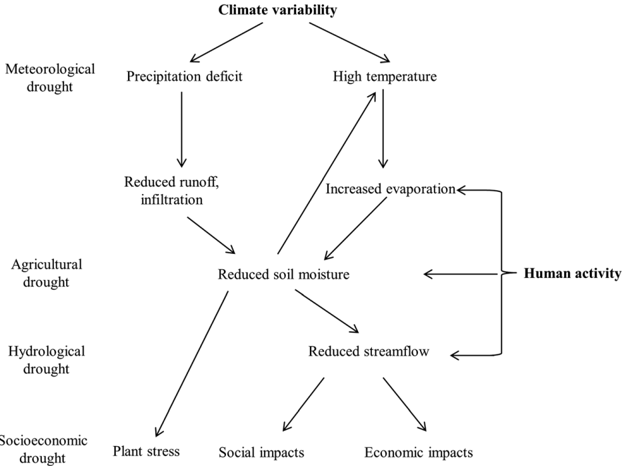
“The agricultural drought is generally caused by the previous precipitation deficit and/or increased temperature resulting in increased evapotranspiration from the bare soil and plant (as shown in Figure 1) (Sheffield et al., 2004; Van Loon, 2015).”
BackgroundInfluentialLand–atmosphere coupling and climate change in Europe
Seneviratne, S. I., Lüthi, D., Litschi, M., & Schär, C. (2006) · Nature · doi:10.1038/nature05095 · Cited by 1,698
Vines--a new graphical model for dependent random variables
Bedford, T., & Cooke, R. M. (2002) · The Annals of Statistics · doi:10.1214/aos/1031689016 · Cited by 1,418 · cited 1×
“The recently developed vine copula is capable of modeling flexible dependences of multiple drought indicators and influential factors (Aas et al., 2009; Bedford & Cooke, 2002; Kurowicka & Joe, 2011) and may be used for addressing this issue for drought prediction.”
BackgroundUse of a standardized runoff index for characterizing hydrologic drought
Shukla, S., & Wood, A. W. (2008) · Geophysical Research Letters · doi:10.1029/2007gl032487 · Cited by 1,400 · cited 1×
“The commonly used hydrologic drought indicators include Palmer Hydrologic Drought Index (PHDI) (Palmer, 1965), runoff or streamflow percentile, Standardized Runoff Index (SRI) (Shukla & Wood, 2008), or reservoir level (Hayes et al., 2011).”
Methodvan Dijk, A. I. J. M., Beck, H. E., Crosbie, R. S., de Jeu, R. A. M., Liu, Y. Y., Podger, G. M., Timbal, B., & Viney, N. R. (2013) · Water Resources Research · doi:10.1002/wrcr.20123 · Cited by 1,357 · cited 5×
“Apart from enhancing the skill from weather or climate forecast, the increased skill of hydrological forecast likely necessitates improved precipitation estimation and initial hydrological conditions (Shukla et al., 2013; van Dijk et al., 2013).”
BackgroundInfluentialZargar, A., Sadiq, R., Naser, B., & Khan, F. I. (2011) · Environmental Reviews · doi:10.1139/a11-013 · Cited by 1,342 · cited 1×
“…of univariate and multivariate drought indicators based on individual or multiple hydroclimatic variables have been developed in past decades (Hao & Singh, 2015; Hayes et al., 2011; Mishra & Singh, 2010; Zargar et al., 2011), such as the Standardized Precipitation Index (SPI) (McKee et al., 1993).”
BackgroundMitchell, K. E., Lohmann, D., Houser, P. R., Wood, E. F., Schaake, J. C., Robock, A., Cosgrove, B. A., Sheffield, J., Duan, Q., Luo, L., et al. (2004) · Journal of Geophysical Research: Atmospheres · doi:10.1029/2003jd003823 · Cited by 1,297 · cited 10×
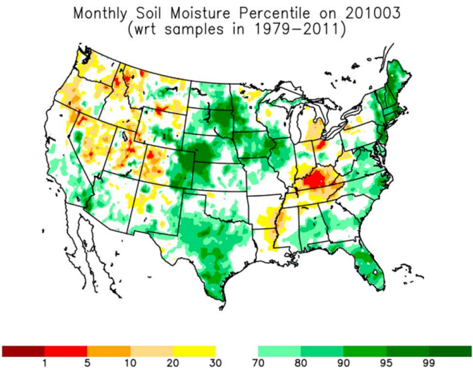
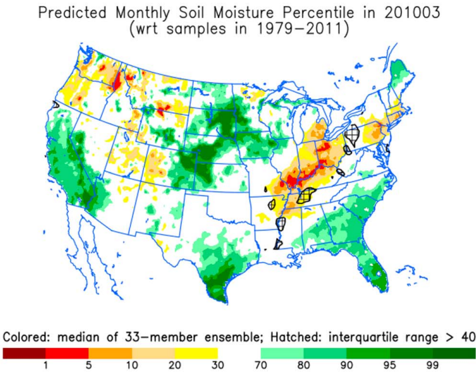
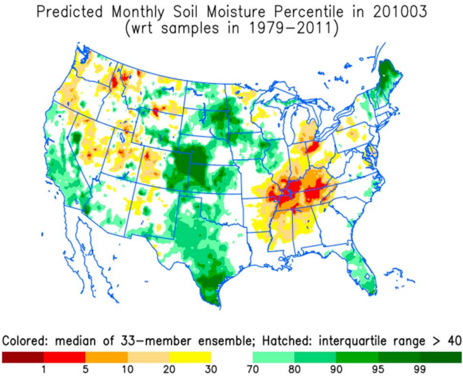
“An example of 1 and 3 month lead drought prediction based on soil moisture percentile at one-eighth spatial resolution for March 2010 in the United States is shown in Figure 7, which was obtained from the NCEP/EMC NLDAS Seasonal Hydrological Forecast System jointly developed by Princeton University and the University…”
BackgroundInfluentialSvoboda, M., LeComte, D., Hayes, M., Heim, R., Gleason, K., Angel, J., Rippey, B., Tinker, R., Palecki, M., Stooksbury, D., et al. (2002) · Bulletin of the American Meteorological Society · doi:10.1175/1520-0477-83.8.1181 · Cited by 1,256
Gneiting, T., Raftery, A. E., Westveld, A. H., & Goldman, T. (2005) · Monthly Weather Review · doi:10.1175/mwr2904.1 · Cited by 1,142 · cited 4×
“For example, the BMA can be used to calibrate and merge forecast to produce probabilistic distributions of the forecast (Raftery et al., 2005).”
MethodInfluentialPacific and Atlantic Ocean influences on multidecadal drought frequency in the United States
McCabe, G. J., Palecki, M. A., & Betancourt, J. L. (2004) · Proceedings of the National Academy of Sciences · doi:10.1073/pnas.0306738101 · Cited by 1,126 · cited 1×
“…associated with ENSO or Pacific Decadal Oscillation (PDO) often provides dominating forcing, while the SST anomaly in the Atlantic ocean and Indian ocean have been shown to provide certain predictability (Cook et al., 2007; Hoerling & Kumar, 2003; Hoerling et al., 2009; McCabe et al., 2004).”
BackgroundGlobal warming and 21st century drying
Cook, B. I., Smerdon, J. E., Seager, R., & Coats, S. (2014) · Climate Dynamics · doi:10.1007/s00382-014-2075-y · Cited by 1,070 · cited 1×
“Drought mostly originates from precipitation deficit, while in certain cases it may result from the anomaly of other variables, such as temperature or evapotranspiration (Cook et al., 2014; Livneh & Hoerling, 2016; Luo et al., 2017).”
BackgroundLong‐range experimental hydrologic forecasting for the eastern United States
Wood, A. W., Maurer, E. P., Kumar, A., & Lettenmaier, D. P. (2002) · Journal of Geophysical Research: Atmospheres · doi:10.1029/2001jd000659 · Cited by 1,037 · cited 1×
“121 With the progress in climate forecasts from state-of-the-art models, the advancement of seasonal hydrologic forecast has been witnessed by driving hydrological models with climate forecast as forcing variables (Shukla et al., 2014; Wood et al., 2002, 2004).”
Mishra, A. K., & Singh, V. P. (2011) · Journal of Hydrology · doi:10.1016/j.jhydrol.2011.03.049 · Cited by 1,037 · cited 3×
“Generally, three types of methods have been used for drought prediction: statistical, dynamical, and hybrid methods (Mariotti et al., 2013; Mishra & Singh, 2011; Pozzi et al., 2013).”
BackgroundMethodSelf-citationKirtman, B. P., Min, D., Infanti, J. M., Kinter, J. L., Paolino, D. A., Zhang, Q., van den Dool, H., Saha, S., Mendez, M. P., Becker, E., et al. (2014) · Bulletin of the American Meteorological Society · doi:10.1175/bams-d-12-00050.1 · Cited by 1,014 · cited 6×
“…system (Palmer et al., 2004) and North American Multimodel Ensemble (NMME) (Becker et al., 2014; Bolinger et al., 2016; Infanti & Kirtman, 2014; Kirtman et al., 2014), have uncovered new opportunities for climate and drought prediction in different regions (Ma et al., 2015; Mo & Lyon, 2015;…”
BackgroundInfluentialRemote sensing of drought: Progress, challenges and opportunities
AghaKouchak, A., Farahmand, A., Melton, F. S., Teixeira, J., Anderson, M. C., Wardlow, B. D., & Hain, C. R. (2015) · Reviews of Geophysics · doi:10.1002/2014rg000456 · Cited by 989 · cited 1×
“Remote sensing products provide consistent temporal and spatial measurements of multiple hydroclimatic variables, including precipitation, soil moisture, snow, and vegetation conditions, at regional and global scales (AghaKouchak et al., 2015; Tang et al., 2009; Wardlow et al., 2012, 2016).”
BackgroundBias Correcting Climate Change Simulations - a Critical Review
Maraun, D. (2016) · Current Climate Change Reports · doi:10.1007/s40641-016-0050-x · Cited by 974 · cited 1×
“…the mean of climate forecast based on the mean of both observations and forecasts, while the quantile mapping approach corrects the distribution function of climate forecasts to match the distribution function of observations (Crochemore et al., 2016; Maraun, 2016; Teutschbein & Seibert, 2012).”
Palmer, T. N., Alessandri, A., Andersen, U., Cantelaube, P., Davey, M., Délécluse, P., Déqué, M., Díez, E., Doblas-Reyes, F. J., Feddersen, H., et al. (2004) · Bulletin of the American Meteorological Society · doi:10.1175/bams-85-6-853 · Cited by 959
Wood, E. F., Roundy, J. K., Troy, T. J., van Beek, L. P. H., Bierkens, M. F. P., Blyth, E., de Roo, A., Döll, P., Ek, M., Famiglietti, J., et al. (2011) · Water Resources Research · doi:10.1029/2010wr010090 · Cited by 957 · cited 1×
“Overall, continuous efforts are needed in the development of GCMs and hydrologic models to account for key physical processes and human influences through incorporating more components of the Earth system with finer resolutions (Wood et al., 2011, 2015; Yuan, Wood, et al., 2015).”
BackgroundSeager, R., Naik, N., & Vecchi, G. A. (2010) · Journal of Climate · doi:10.1175/2010jcli3655.1 · Cited by 925 · cited 1×
“Global warming from natural and anthropogenic factors has accelerated the hydrological cycle, resulting in more extremes, including drought, and a strong tendency of the wet areas getting wetter and dry areas getting drier (Dai, 2011; Held & Soden, 2006; Seager et al., 2010; Trenberth et al., 2014).”
BackgroundThe Lincoln Declaration on Drought Indices: Universal Meteorological Drought Index Recommended
Hayes, M., Svoboda, M., Wall, N., & Widhalm, M. (2011) · Bulletin of the American Meteorological Society · doi:10.1175/2010bams3103.1 · Cited by 923 · cited 3×
“The commonly used meteorological drought indicators include SPI (McKee et al., 1993), Percent of Normal Precipitation (PNP) (Hayes et al., 2011), and Palmer Drought Severity Index (PDSI) (Palmer, 1965).”
BackgroundMethodAssessment of Hydrological Drought Revisited
Nalbantis, I., & Tsakiris, G. (2009) · Water Resources Management · doi:10.1007/s11269-008-9305-1 · Cited by 914 · cited 1×
“For example, the previous meteorological drought may provide useful predictive information for the subsequent hydrological drought prediction (Hannaford et al., 2011; Haslinger et al., 2014; Li et al., 2016; Maity et al., 2016; Nalbantis & Tsakiris, 2009; Wang et al., 2011; Wong et al., 2013).”
BackgroundLand use/land cover changes and climate: modeling analysis and observational evidence
Pielke, R. A., Pitman, A., Niyogi, D., Mahmood, R., McAlpine, C., Hossain, F., Goldewijk, K. K., Nair, U., Betts, R., Fall, S., et al. (2011) · WIREs Climate Change · doi:10.1002/wcc.144 · Cited by 903 · cited 1×
“Human activities, such as extracting groundwater or water transfer over long distances, may also induce drought and are thus required to be incorporated in drought modeling and diagnosis (Mote et al., 2016; Pielke et al., 2011; Van Loon, Stahl, et al., 2016).”
BackgroundNarasimhan, B., & Srinivasan, R. (2005) · Agricultural and Forest Meteorology · doi:10.1016/j.agrformet.2005.07.012 · Cited by 863 · cited 2×
“Commonly used agricultural drought indicators are mostly based on soil moisture simulations (Heim, 2002), including the Soil Moisture Percentile (SMP) (Sheffield et al., 2004), Crop Moisture Index (CMI) (Palmer, 1965), Soil Moisture Deficit Index (SMDI) (Narasimhan & Srinivasan, 2005), Normalized Soil Moisture (NSM) (…”
BackgroundNorth American drought: Reconstructions, causes, and consequences
Cook, E. R., Seager, R., Cane, M. A., & Stahle, D. W. (2007) · Earth-Science Reviews · doi:10.1016/j.earscirev.2006.12.002 · Cited by 862 · cited 1×
“…associated with ENSO or Pacific Decadal Oscillation (PDO) often provides dominating forcing, while the SST anomaly in the Atlantic ocean and Indian ocean have been shown to provide certain predictability (Cook et al., 2007; Hoerling & Kumar, 2003; Hoerling et al., 2009; McCabe et al., 2004).”
BackgroundVan Loon, A. F., Gleeson, T., Clark, J., Van Dijk, A. I. J. M., Stahl, K., Hannaford, J., Di Baldassarre, G., Teuling, A. J., Tallaksen, L. M., Uijlenhoet, R., et al. (2016) · Nature Geoscience · doi:10.1038/ngeo2646 · Cited by 830
Wang, W.-C., Chau, K.-W., Cheng, C.-T., & Qiu, L. (2009) · Journal of Hydrology · doi:10.1016/j.jhydrol.2009.06.019 · Cited by 824
Global integrated drought monitoring and prediction system
Hao, Z., AghaKouchak, A., Nakhjiri, N., & Farahmand, A. (2014) · Scientific Data · doi:10.1038/sdata.2014.1 · Cited by 796 · cited 6×
“…including the Soil Moisture Percentile (SMP) (Sheffield et al., 2004), Crop Moisture Index (CMI) (Palmer, 1965), Soil Moisture Deficit Index (SMDI) (Narasimhan & Srinivasan, 2005), Normalized Soil Moisture (NSM) (Dutra et al., 2008), and Standardized Soil moisture Index (SSI) (Hao et al., 2014).”
BackgroundMethodInfluentialSelf-citationPrudhomme, C., Giuntoli, I., Robinson, E. L., Clark, D. B., Arnell, N. W., Dankers, R., Fekete, B. M., Franssen, W., Gerten, D., Gosling, S. N., et al. (2014) · Proceedings of the National Academy of Sciences · doi:10.1073/pnas.1222473110 · Cited by 777 · cited 1×
“The rise in temperature will increase the water holding capacity of and evaporation to the atmosphere, resulting in changes of precipitation extremes (Prudhomme et al., 2014).”
BackgroundApplications of hybrid wavelet–Artificial Intelligence models in hydrology: A review
Nourani, V., Hosseini Baghanam, A., Adamowski, J., & Kisi, O. (2014) · Journal of Hydrology · doi:10.1016/j.jhydrol.2014.03.057 · Cited by 730 · cited 2×
“The Artificial Intelligence (AI) (or machine learning, soft computing) models, including Artificial Neural Network (ANN), Fuzzy Logic (FL), Support Vector Regression (SVR) or Support Vector Machine (SVM), Genetic Algorithm (GA) or Genetic Programming (GP), and wavelet transformation, can be used to model complex inter…”
BackgroundLand information system: An interoperable framework for high resolution land surface modeling
KUMAR, S., PETERSLIDARD, C., TIAN, Y., HOUSER, P., GEIGER, J., OLDEN, S., LIGHTY, L., EASTMAN, J., DOTY, B., & DIRMEYER, P. (2006) · Environmental Modelling & Software · doi:10.1016/j.envsoft.2005.07.004 · Cited by 729 · cited 1×
“Data assimilation (DA) provides a useful method in this regard to merge different observations with model simulations to provide accurate initial conditions for hydroclimatic forecasting (including drought prediction) (Kumar et al., 2006; Liu et al., 2012; Tang et al., 2016).”
MethodContribution of land‐atmosphere coupling to recent European summer heat waves
Fischer, E. M., Seneviratne, S. I., Lüthi, D., & Schär, C. (2007) · Geophysical Research Letters · doi:10.1029/2006gl029068 · Cited by 728 · cited 2×
“…may lead to increased sensible heat flux contributing to a positive feedback between high temperature and drought (Durre et al., 2000; Fischer et al., 2007; Hao, Hao, Singh & Ouyang, 2017; Koster et al., 2009; Lyon & Dole, 1995; Mueller & Seneviratne, 2012; Seneviratne et al., 2010).”
BackgroundWilks, D. S. (2011) · International Geophysics · doi:10.1016/b978-0-12-385022-5.00008-7 · Cited by 727
Multi-model ensemble hydrologic prediction using Bayesian model averaging
Duan, Q., Ajami, N. K., Gao, X., & Sorooshian, S. (2007) · Advances in Water Resources · doi:10.1016/j.advwatres.2006.11.014 · Cited by 724 · cited 1×
“In addition, the multimodel ensemble of hydrological simulations has been developed and employed for drought prediction to reduce uncertainties (Duan et al., 2007; Huijgevoort et al., 2013; Mo & Lettenmaier, 2014a; Nijssen et al., 2014; Wang, Bohn, et al., 2009).”
BackgroundThe rationale behind the success of multi-model ensembles in seasonal forecasting - I. Basic concept
Hagedorn, R., Doblas-Reyes, F. J., & Palmer, T. N. (2005) · Tellus A: Dynamic Meteorology and Oceanography · doi:10.3402/tellusa.v57i3.14657 · Cited by 710 · cited 1×
“The rationale behind this approach is that the error cancellation can be achieved through running multimodels, while uncertainties in the initial condition can be addressed by running ensembles of forecasts with different initial conditions (Hagedorn et al., 2005; Sikder et al., 2016).”
BackgroundA review of droughts on the African continent: a geospatial and long-term perspective
Masih, I., Maskey, S., Mussá, F. E. F., & Trambauer, P. (2014) · Hydrology and Earth System Sciences · doi:10.5194/hess-18-3635-2014 · Cited by 707 · cited 7×
“…coverage of remote sensing products play an important role in monitoring drought especially for the regions with sparse or no observations (e.g., Africa) (Masih et al., 2014; Mwangi et al., 2014; Sheffield et al., 2008), and in assessing land-atmosphere interactions (Roundy & Santanello, 2017).”
BackgroundInfluential(2000) · Routledge eBooks · Cited by 704
Drought characterization from a multivariate perspective: A review
Hao, Z., & Singh, V. P. (2015) · Journal of Hydrology · doi:10.1016/j.jhydrol.2015.05.031 · Cited by 682 · cited 1×
“Scores of univariate and multivariate drought indicators based on individual or multiple hydroclimatic variables have been developed in past decades (Hao & Singh, 2015; Hayes et al., 2011; Mishra & Singh, 2010; Zargar et al., 2011), such as the Standardized Precipitation Index (SPI) (McKee et al.,…”
BackgroundSelf-citationHot days induced by precipitation deficits at the global scale
Mueller, B., & Seneviratne, S. I. (2012) · Proceedings of the National Academy of Sciences · doi:10.1073/pnas.1204330109 · Cited by 672 · cited 2×
“…may lead to increased sensible heat flux contributing to a positive feedback between high temperature and drought (Durre et al., 2000; Fischer et al., 2007; Hao, Hao, Singh & Ouyang, 2017; Koster et al., 2009; Lyon & Dole, 1995; Mueller & Seneviratne, 2012; Seneviratne et al., 2010).”
BackgroundUS billion-dollar weather and climate disasters: data sources, trends, accuracy and biases
Smith, A. B., & Katz, R. W. (2013) · Natural Hazards · doi:10.1007/s11069-013-0566-5 · Cited by 661 · cited 1×
“Extensive impacts of drought in past decades at regional and global scales call for improved capability to cope with drought (Below et al., 2007; Sheffield & Wood, 2012; Smith & Katz, 2013).”
Drought impacts on the water quality of freshwater systems; review and integration
Mosley, L. M. (2015) · Earth-Science Reviews · doi:10.1016/j.earscirev.2014.11.010 · Cited by 660
Reviewing and visualizing the interactions of natural hazards
Gill, J. C., & Malamud, B. D. (2014) · Reviews of Geophysics · doi:10.1002/2013rg000445 · Cited by 636 · cited 1×
“We stress that drought prediction studies will benefit not only the drought research community but also other sectors related to natural hazards, such as flood or wildfire (Gill & Malamud, 2014).”
BackgroundHoerling, M., & Kumar, A. (2003) · Science · doi:10.1126/science.1079053 · Cited by 636 · cited 2×
“…recognized as the external driver of large-scale drought conditions in different regions, which has significantly improved forecasting capabilities, especially in regions or seasons with strong teleconnection (Hoerling & Kumar, 2003; Kallis, 2008; Schubert et al., 2016; Seager & Hoerling, 2014).”
BackgroundAfternoon rain more likely over drier soils
Taylor, C. M., de Jeu, R. A. M., Guichard, F., Harris, P. P., & Dorigo, W. A. (2012) · Nature · doi:10.1038/nature11377 · Cited by 623 · cited 13×
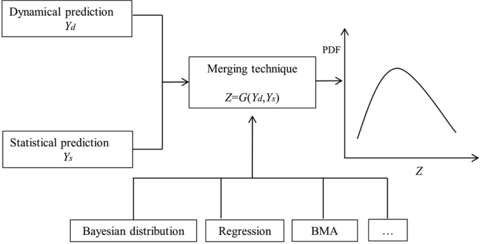
“For this method, “bridging” represents the statistical prediction using GCM’s forecasts of climate indices as predictors to produce alternative forecasts and “merging” is used to optimally combine different forecasts.”
BackgroundInfluentialBraud, I., Haverkamp, R., Arrúe, J. L., & López, M. V. (2003) · Journal of Hydrometeorology · doi:10.1175/1525-7541(2003)004<0878:amrchf>2.0.co;2 · Cited by 599
Current approaches to seasonal to interannual climate predictions
Goddard, L., Mason, S. J., Zebiak, S. E., Ropelewski, C. F., Basher, R., & Cane, M. A. (2001) · International Journal of Climatology · doi:10.1002/joc.636 · Cited by 588
Artificial intelligence based models for stream-flow forecasting: 2000–2015
Yaseen, Z. M., El-shafie, A., Jaafar, O., Afan, H. A., & Sayl, K. N. (2015) · Journal of Hydrology · doi:10.1016/j.jhydrol.2015.10.038 · Cited by 570 · cited 1×
“…(GA) or Genetic Programming (GP), and wavelet transformation, can be used to model complex interactions of hydroclimatic variables for a variety of applications (Bourdin et al., 2012; Fahimi et al., 2016; Nourani et al., 2014; Rhee & Im, 2017; Wang, Chau, et al., 2009; Yaseen et al., 2015).”
On the Cause of the 1930s Dust Bowl
Schubert, S. D., Suarez, M. J., Pegion, P. J., Koster, R. D., & Bacmeister, J. T. (2004) · Science · doi:10.1126/science.1095048 · Cited by 557
Maurer, E. P., & Hidalgo, H. G. (2008) · Hydrology and Earth System Sciences · doi:10.5194/hess-12-551-2008 · Cited by 540 · cited 1×
“120 analogue approach (Maurer & Hidalgo, 2008), and Bayesian methods (Luo et al., 2007), among others.”
MethodTemporal and spatial scales of observed soil moisture variations in the extratropics
Entin, J. K., Robock, A., Vinnikov, K. Y., Hollinger, S. E., Liu, S., & Namkhai, A. (2000) · Journal of Geophysical Research: Atmospheres · doi:10.1029/2000jd900051 · Cited by 527 · cited 1×
“A salient property of soil moisture is its high persistence ranging from a few weeks to months (Entin et al., 2000; Koster, Mahanama, Livneh, et al., 2010; Seneviratne, Koster, et al., 2006; Wu & Dickinson, 2004).”
BackgroundExtended Streamflow Forecasting Using NWSRFS
Day, G. N. (1985) · Journal of Water Resources Planning and Management · doi:10.1061/(asce)0733-9496(1985)111:2(157 · Cited by 522
Causes and Predictability of the 2012 Great Plains Drought
Hoerling, M., Eischeid, J., Kumar, A., Leung, R., Mariotti, A., Mo, K., Schubert, S., & Seager, R. (2014) · Bulletin of the American Meteorological Society · doi:10.1175/bams-d-13-00055.1 · Cited by 519 · cited 6×
“…License, which permits use and distribution in any medium, provided the original work is properly cited, the use is non-commercial and no modifications or adaptations are made. high temperatures (and increased evaporation) (Hoerling et al., 2014; Mo & Lettenmaier, 2015; Wang et al., 2016).”
BackgroundInfluentialVan Loon, A. F., Stahl, K., Di Baldassarre, G., Clark, J., Rangecroft, S., Wanders, N., Gleeson, T., Van Dijk, A. I. J. M., Tallaksen, L. M., Hannaford, J., et al. (2016) · Hydrology and Earth System Sciences · doi:10.5194/hess-20-3631-2016 · Cited by 510
Drought forecasting using stochastic models
Mishra, A. K., & Desai, V. R. (2005) · Stochastic Environmental Research and Risk Assessment · doi:10.1007/s00477-005-0238-4 · Cited by 492 · cited 1×
“As such, the ARIMA model is suitable for drought prediction based on these drought indices for different time scales (e.g., 3 and 6 month SPI) (Durdu, 2010; Mishra & Desai, 2005).”
MethodLiu, Y., Weerts, A. H., Clark, M., Hendricks Franssen, H.-J., Kumar, S., Moradkhani, H., Seo, D.-J., Schwanenberg, D., Smith, P., van Dijk, A. I. J. M., et al. (2012) · Hydrology and Earth System Sciences · doi:10.5194/hess-16-3863-2012 · Cited by 487 · cited 1×
“Data assimilation (DA) provides a useful method in this regard to merge different observations with model simulations to provide accurate initial conditions for hydroclimatic forecasting (including drought prediction) (Kumar et al., 2006; Liu et al., 2012; Tang et al., 2016).”
MethodSeasonal climate predictability and forecasting: status and prospects
Doblas‐Reyes, F. J., García‐Serrano, J., Lienert, F., Biescas, A. P., & Rodrigues, L. R. L. (2013) · WIREs Climate Change · doi:10.1002/wcc.217 · Cited by 478 · cited 2×
“The seasonal climate forecasts usually range from several weeks to a year and are typically available at the monthly time scale and 1° spatial resolution (Crimmins & McClaran, 2016; Doblas-Reyes et al., 2013; Wanders & Wood, 2016).”
BackgroundBelayneh, A., Adamowski, J., Khalil, B., & Ozga-Zielinski, B. (2014) · Journal of Hydrology · doi:10.1016/j.jhydrol.2013.10.052 · Cited by 470 · cited 4×
“…statistical methods can be applied to predict each series to facilitate drought prediction with the hybrid method, such as the wavelet-ANN (or SVR) (Belayneh et al., 2014; Deo et al., 2016; Kim & Valdés, 2003), wavelet FL (Özger et al., 2012), and wavelet GP (Mehr et al., 2014), which in general…”
MethodInfluentialPeterson, T. C., Heim, R. R., Hirsch, R., Kaiser, D. P., Brooks, H., Diffenbaugh, N. S., Dole, R. M., Giovannettone, J. P., Guirguis, K., Karl, T. R., et al. (2013) · Bulletin of the American Meteorological Society · doi:10.1175/bams-d-12-00066.1 · Cited by 464
Sheffield, J., Andreadis, K. M., Wood, E. F., & Lettenmaier, D. P. (2009) · Journal of Climate · doi:10.1175/2008jcli2722.1 · Cited by 445 · cited 2×
“For example, the African drought of early 1980s is among the most spatially extensive drought events and covered over 11 × 106 km2 (Sheffield et al., 2009).”
BackgroundKim, T.-W., & Valdés, J. B. (2003) · Journal of Hydrologic Engineering · doi:10.1061/(asce)1084-0699(2003)8:6(319 · Cited by 443
A Drought Monitoring and Forecasting System for Sub-Sahara African Water Resources and Food Security
Sheffield, J., Wood, E. F., Chaney, N., Guan, K., Sadri, S., Yuan, X., Olang, L., Amani, A., Ali, A., Demuth, S., et al. (2014) · Bulletin of the American Meteorological Society · doi:10.1175/bams-d-12-00124.1 · Cited by 440 · cited 2×
“…from CFSv2, ECMWF, or NMME have been used as inputs to drive hydrologic models to predict agricultural and hydrological drought (Fundel et al., 2013; Li et al., 2008; Luo & Wood, 2007; Samaniego et al., 2013; Sheffield et al., 2014; Shukla et al., 2014; Trambauer et al., 2013; Zhang et al., 2016).”
MethodKoster, R. D., Mahanama, S. P. P., Yamada, T. J., Balsamo, G., Berg, A. A., Boisserie, M., Dirmeyer, P. A., Doblas‐Reyes, F. J., Drewitt, G., Gordon, C. T., et al. (2010) · Geophysical Research Letters · doi:10.1029/2009gl041677 · Cited by 435
Variance and Predictability of Precipitation at Seasonal-to-Interannual Timescales
Koster, R. D., Suarez, M. J., & Heiser, M. (2000) · Journal of Hydrometeorology · doi:10.1175/1525-7541(2000)001<0026:vapopa>2.0.co;2 · Cited by 433 · cited 2×
“, transitional zones between wet and dry climates) and may provide useful information for improving climate prediction on a seasonal basis through land-atmosphere interactions (shown in Figure 1) (Dirmeyer et al., 2009; Koster et al., 2000; NRC, 2010; Seneviratne, Lüthi, et al., 2006; van den Hurk et al., 2012).”
BackgroundA process-based typology of hydrological drought
Van Loon, A. F., & Van Lanen, H. A. J. (2012) · Hydrology and Earth System Sciences · doi:10.5194/hess-16-1915-2012 · Cited by 428
A simulated soil moisture based drought analysis for the United States
Sheffield, J., Goteti, G., Wen, F., & Wood, E. F. (2004) · Journal of Geophysical Research: Atmospheres · doi:10.1029/2004jd005182 · Cited by 425 · cited 3×
“Commonly used agricultural drought indicators are mostly based on soil moisture simulations (Heim, 2002), including the Soil Moisture Percentile (SMP) (Sheffield et al., 2004), Crop Moisture Index (CMI) (Palmer, 1965), Soil Moisture Deficit Index (SMDI) (Narasimhan & Srinivasan, 2005), Normalized Soil Moisture (NSM) (…”
BackgroundMethodSeager, R., Kushnir, Y., Herweijer, C., Naik, N., & Velez, J. (2005) · Journal of Climate · doi:10.1175/jcli3522.1 · Cited by 421 · cited 1×
“For example, the precipitation deficit over North America is primarily associated with the SST variability in the tropical Pacific with certain contributions from the SST variability in the Atlantic at the annual time scale (Schubert et al., 2009, 2016; Seager et al., 2005).”
BackgroundA review of water scarcity and drought indexes in water resources planning and management
Pedro-Monzonís, M., Solera, A., Ferrer, J., Estrela, T., & Paredes-Arquiola, J. (2015) · Journal of Hydrology · doi:10.1016/j.jhydrol.2015.05.003 · Cited by 399
Human water consumption intensifies hydrological drought worldwide
Wada, Y., van Beek, L. P. H., Wanders, N., & Bierkens, M. F. P. (2013) · Environmental Research Letters · doi:10.1088/1748-9326/8/3/034036 · Cited by 397 · cited 1×
“For example, it has been shown that human activity of water consumption has intensified hydrological droughts worldwide (Wada et al., 2013).”
BackgroundCauses of the 2011–14 California Drought*
Seager, R., Hoerling, M., Schubert, S., Wang, H., Lyon, B., Kumar, A., Nakamura, J., & Henderson, N. (2015) · Journal of Climate · doi:10.1175/jcli-d-14-00860.1 · Cited by 389 · cited 2×
“Central Great Plains drought, and 2012–2015 California drought, have caused huge losses to agriculture, society, and ecosystems with profound impacts on crop production and water supply (Dutra et al., 2013; Hoerling et al., 2014; Nielsen-Gammon, 2012; Peterson, Hoerling, et al., 2013; Seager et al., 2015).”
BackgroundImpacts of European drought events: insights from an international database of text-based reports
Stahl, K., Kohn, I., Blauhut, V., Urquijo, J., De Stefano, L., Acácio, V., Dias, S., Stagge, J. H., Tallaksen, L. M., Kampragou, E., et al. (2016) · Natural Hazards and Earth System Sciences · doi:10.5194/nhess-16-801-2016 · Cited by 382 · cited 1×
“…(DIR) and European Drought Impact report Inventory (EDII) (Bachmair, Stahl, et al., 2016; González Tánago et al., 2016; Stagge et al., 2015; Stahl et al., 2016), which collect drought impacts from agriculture to water quality, provide alternatives for predicting drought impacts in the U.S.…”
BackgroundAmplification of the North American “Dust Bowl” drought through human-induced land degradation
Cook, B. I., Miller, R. L., & Seager, R. (2009) · Proceedings of the National Academy of Sciences · doi:10.1073/pnas.0810200106 · Cited by 378
Global Modeling of Land Water and Energy Balances. Part I: The Land Dynamics (LaD) Model
Milly, P. C. D., & Shmakin, A. B. (2002) · Journal of Hydrometeorology · doi:10.1175/1525-7541(2002)003<0283:gmolwa>2.0.co;2 · Cited by 364
Drought forecasting using feed-forward recursive neural network
Mishra, A. K., & Desai, V. R. (2006) · Ecological Modelling · doi:10.1016/j.ecolmodel.2006.04.017 · Cited by 362 · cited 10×
“There are certain limitations of ANN methods, including local maxima and overfitting.”
MethodInfluentialPrecipitation, Recycling, and Land Memory: An Integrated Analysis
Dirmeyer, P. A., Schlosser, C. A., & Brubaker, K. L. (2009) · Journal of Hydrometeorology · doi:10.1175/2008jhm1016.1 · Cited by 362 · cited 1×
“…zones between wet and dry climates) and may provide useful information for improving climate prediction on a seasonal basis through land-atmosphere interactions (shown in Figure 1) (Dirmeyer et al., 2009; Koster et al., 2000; NRC, 2010; Seneviratne, Lüthi, et al., 2006; van den Hurk et al., 2012).”
BackgroundAn evaluation of agricultural drought indices for the Canadian prairies
Quiring, S. M., & Papakryiakou, T. N. (2003) · Agricultural and Forest Meteorology · doi:10.1016/s0168-1923(03)00072-8 · Cited by 361
Human–water interface in hydrological modelling: current status and future directions
Wada, Y., Bierkens, M. F. P., de Roo, A., Dirmeyer, P. A., Famiglietti, J. S., Hanasaki, N., Konar, M., Liu, J., Müller Schmied, H., Oki, T., et al. (2017) · Hydrology and Earth System Sciences · doi:10.5194/hess-21-4169-2017 · Cited by 352 · cited 2×
“126 Current drought prediction efforts mostly focus on natural aspects of climate or hydrology, while studies on the integration of human aspects in drought prediction are rare but growing (Van Loon, 2015; Wada et al., 2017; Yuan et al., 2017).”
BackgroundCauses of Long-Term Drought in the U.S. Great Plains
Schubert, S. D., Suarez, M. J., Pegion, P. J., Koster, R. D., & Bacmeister, J. T. (2004) · Journal of Climate · doi:10.1175/1520-0442(2004)017<0485:coldit>2.0.co;2 · Cited by 349
Hydrological drought across the world: impact of climate and physical catchment structure
Van Lanen, H. A. J., Wanders, N., Tallaksen, L. M., & Van Loon, A. F. (2013) · Hydrology and Earth System Sciences · doi:10.5194/hess-17-1715-2013 · Cited by 341 · cited 1×
“Overall, the occurrence of hydrological drought is mainly controlled by both the climate and catchment characteristics (Van Lanen et al., 2013), and its prediction necessitates meteorological forcing (particularly precipitation and temperature) and initial catchment conditions.”
BackgroundDoblas-Reyes, F. J., Hagedorn, R., & Palmer, T. N. (2005) · Tellus A: Dynamic Meteorology and Oceanography · doi:10.3402/tellusa.v57i3.14658 · Cited by 340 · cited 1×
“The uncertainty linked to initial conditions and models are taken into account through the use of an ensemble of simulations with different initial conditions from each model and the use of several models as ensemble members, respectively (Doblas-Reyes et al., 2005).”
MethodDrought forecasting using artificial neural networks and time series of drought indices
Morid, S., Smakhtin, V., & Bagherzadeh, K. (2007) · International Journal of Climatology · doi:10.1002/joc.1498 · Cited by 337 · cited 11×
“As such, climate indices may be used as potential predictors for precipitation (or meteorological drought) prediction in regions with strong teleconnections (Bonaccorso et al., 2015; Magno et al., 2014; Morid et al., 2007; Özger et al., 2012; Santos et al., 2014).”
BackgroundMethodInfluentialDrought forecasting using the Standardized Precipitation Index
Cancelliere, A., Mauro, G. D., Bonaccorso, B., & Rossi, G. (2007) · Water Resources Management · doi:10.1007/s11269-006-9062-y · Cited by 333 · cited 16×
“However, there is still inconsistency in determining the threshold of indicators (e.g., SPI < 1) to define a drought (Hao, Hao, Singh, Xia, et al., 2016; Quiring, 2009; Steinemann et al., 2015).”
BackgroundMethodInfluentialColumbia River Streamflow Forecasting Based on ENSO and PDO Climate Signals
Hamlet, A. F., & Lettenmaier, D. P. (1999) · Journal of Water Resources Planning and Management · doi:10.1061/(asce)0733-9496(1999)125:6(333 · Cited by 330
Heat wave flash droughts in decline
Mo, K. C., & Lettenmaier, D. P. (2015) · Geophysical Research Letters · doi:10.1002/2015gl064018 · Cited by 330 · cited 1×
“…License, which permits use and distribution in any medium, provided the original work is properly cited, the use is non-commercial and no modifications or adaptations are made. high temperatures (and increased evaporation) (Hoerling et al., 2014; Mo & Lettenmaier, 2015; Wang et al., 2016).”
BackgroundThe Science of NOAA's Operational Hydrologic Ensemble Forecast Service
Demargne, J., Wu, L., Regonda, S. K., Brown, J. D., Lee, H., He, M., Seo, D.-J., Hartman, R., Herr, H. D., Fresch, M., et al. (2014) · Bulletin of the American Meteorological Society · doi:10.1175/bams-d-12-00081.1 · Cited by 324 · cited 1×
“In addition, end users’ decision making generally requires probabilistic forecasts with quantitative information regarding forecast uncertainty (Demargne et al., 2014).”
BackgroundDependence Modeling: Vine Copula Handbook
Kurowicka, D., & Joe, H. (2010) · RePEc: Research Papers in Economics · doi:10.1142/7699 · Cited by 323
Seneviratne, S. I., Koster, R. D., Guo, Z., Dirmeyer, P. A., Kowalczyk, E., Lawrence, D., Liu, P., Mocko, D., Lu, C.-H., Oleson, K. W., et al. (2006) · Journal of Hydrometeorology · doi:10.1175/jhm533.1 · Cited by 318
Drought indicators revisited: the need for a wider consideration of environment and society
Bachmair, S., Stahl, K., Collins, K., Hannaford, J., Acreman, M., Svoboda, M., Knutson, C., Smith, K. H., Wall, N., Fuchs, B., et al. (2016) · WIREs Water · doi:10.1002/wat2.1154 · Cited by 316
Land surface processes and Sahel climate
Nicholson, S. (2000) · Reviews of Geophysics · doi:10.1029/1999rg900014 · Cited by 314 · cited 1×
“It may delay and prolong effects of meteorological drought (Nicholson, 2000; Wu et al., 2002).”
BackgroundSkill in streamflow forecasts derived from large-scale estimates of soil moisture and snow
Koster, R. D., Mahanama, S. P. P., Livneh, B., Lettenmaier, D. P., & Reichle, R. H. (2010) · Nature Geoscience · doi:10.1038/ngeo944 · Cited by 307
Increasing flash droughts over China during the recent global warming hiatus
Wang, L., Yuan, X., Xie, Z., Wu, P., & Li, Y. (2016) · Scientific Reports · doi:10.1038/srep30571 · Cited by 305 · cited 2×
“…License, which permits use and distribution in any medium, provided the original work is properly cited, the use is non-commercial and no modifications or adaptations are made. high temperatures (and increased evaporation) (Hoerling et al., 2014; Mo & Lettenmaier, 2015; Wang et al., 2016).”
BackgroundModeling drought impact occurrence based on meteorological drought indices in Europe
Stagge, J. H., Kohn, I., Tallaksen, L. M., & Stahl, K. (2015) · Journal of Hydrology · doi:10.1016/j.jhydrol.2015.09.039 · Cited by 303 · cited 2×
“Thus, the improved prediction of drought may contribute to the wildfire prediction (Gudmundsson et al., 2014; Stagge et al., 2015).”
BackgroundMonthly streamflow forecasting using Gaussian Process Regression
Sun, A. Y., Wang, D., & Xu, X. (2014) · Journal of Hydrology · doi:10.1016/j.jhydrol.2014.01.023 · Cited by 301 · cited 2×
“For example, streamflow prediction can be achieved by constructing a joint distribution of streamflow of the target period and several predictors, such as precipitation, streamflow, and climate indices in previous time steps (Liu et al., 2015; Souza Filho & Lall, 2003; Sun et al., 2014).”
BackgroundMethodContinental and global scale flood forecasting systems
Emerton, R. E., Stephens, E. M., Pappenberger, F., Pagano, T. C., Weerts, A. H., Wood, A. W., Salamon, P., Brown, J. D., Hjerdt, N., Donnelly, C., et al. (2016) · WIREs Water · doi:10.1002/wat2.1137 · Cited by 298 · cited 1×
“The prediction skill of seasonal hydroclimatic forecast depends on both the initial hydrological conditions (IHCs) from the catchment before the forecast period and future seasonal climate forecasts (CFs) (Arnal et al., 2017; Emerton et al., 2016; Li et al., 2009; Mendoza et al., 2017).”
BackgroundExplaining Extreme Events of 2012 from a Climate Perspective
Peterson, T. C., Hoerling, M. P., Stott, P. A., & Herring, S. C. (2013) · Bulletin of the American Meteorological Society · doi:10.1175/bams-d-13-00085.1 · Cited by 291
Natural hazards in Australia: droughts
Kiem, A. S., Johnson, F., Westra, S., van Dijk, A., Evans, J. P., O’Donnell, A., Rouillard, A., Barr, C., Tyler, J., Thyer, M., et al. (2016) · Climatic Change · doi:10.1007/s10584-016-1798-7 · Cited by 286 · cited 2×
“For example, the 2001–2009 drought in southeast Australia is the worst drought on record since 1900 with below median rainfall for several years (Dijk et al., 2013; Kiem et al., 2016).”
BackgroundWeisheimer, A., Doblas‐Reyes, F. J., Palmer, T. N., Alessandri, A., Arribas, A., Déqué, M., Keenlyside, N., MacVean, M., Navarra, A., & Rogel, P. (2009) · Geophysical Research Letters · doi:10.1029/2009gl040896 · Cited by 285 · cited 1×
“There are large uncertainties in the precipitation forecast, and skillful climate forecast beyond the 1month lead is still a prevailing challenge (Mcevoy et al., 2015; Saha et al., 2014; Weisheimer et al., 2009; Wood et al., 2015; Yuan et al., 2013).”
BackgroundStreamflow drought time series forecasting
Modarres, R. (2007) · Stochastic Environmental Research and Risk Assessment · doi:10.1007/s00477-006-0058-1 · Cited by 284 · cited 1×
“The ARIMA model has also been applied to other drought indicators, including Palmer drought index (Rao & Padmanabhan, 1984) and standardized streamflow index (Fernández et al., 2009; Modarres, 2007).”
MethodSchubert, S., Gutzler, D., Wang, H., Dai, A., Delworth, T., Deser, C., Findell, K., Fu, R., Higgins, W., Hoerling, M., et al. (2009) · Journal of Climate · doi:10.1175/2009jcli3060.1 · Cited by 278 · cited 1×
“For example, the precipitation deficit over North America is primarily associated with the SST variability in the tropical Pacific with certain contributions from the SST variability in the Atlantic at the annual time scale (Schubert et al., 2009, 2016; Seager et al., 2005).”
BackgroundObservational evidence that soil moisture variations affect precipitation
Koster, R. D., Suarez, M. J., Higgins, R. W., & Van den Dool, H. M. (2003) · Geophysical Research Letters · doi:10.1029/2002gl016571 · Cited by 277 · cited 2×
“…(e.g., 1980 and 1988 U.S. summer drought) with relative importance depending on the evolution of the events, in which land-atmosphere feedbacks contribute to the persistence and magnitude of drought (Ferguson et al., 2010; Koster et al., 2003; Lyon & Dole, 1995; Schubert et al., 2004b).”
BackgroundHumphrey, G. B., Gibbs, M. S., Dandy, G. C., & Maier, H. R. (2016) · Journal of Hydrology · doi:10.1016/j.jhydrol.2016.06.026 · Cited by 273 · cited 1×
“Combining dynamical forecast with predictors from observations in a statistical prediction framework is also termed hybrid statistical-dynamical prediction in certain cases (Humphrey et al., 2016; Lang & Wang, 2010; Stephenson et al., 2005; Wang et al., 2017).”
Challenges in drought research: some perspectives and future directions
PANU, U. S., & SHARMA, T. C. (2002) · Hydrological Sciences Journal · doi:10.1080/02626660209493019 · Cited by 273 · cited 1×
“The regression model has been used to model the relationship between drought indices to be predicted and a suite of predictors (e.g., SOI and PDO) (Barros & Bowden, 2008; Liu & Juárez, 2001; Panu & Sharma, 2002; Sun et al., 2012).”
MethodSheffield, J., & Wood, E. F. (2012) · Routledge eBooks · doi:10.4324/9781849775250 · Cited by 271
Wang, Q. J., Robertson, D. E., & Chiew, F. H. S. (2009) · Water Resources Research · doi:10.1029/2008wr007355 · Cited by 269
Blauhut, V., Stahl, K., Stagge, J. H., Tallaksen, L. M., De Stefano, L., & Vogt, J. (2016) · Hydrology and Earth System Sciences · doi:10.5194/hess-20-2779-2016 · Cited by 267
Drought Forecasting Using a Hybrid Stochastic and Neural Network Model
Mishra, A. K., Desai, V. R., & Singh, V. P. (2007) · Journal of Hydrologic Engineering · doi:10.1061/(asce)1084-0699(2007)12:6(626 · Cited by 261
Self-citationRhee, J., & Im, J. (2017) · Agricultural and Forest Meteorology · doi:10.1016/j.agrformet.2017.02.011 · Cited by 245 · cited 1×
“…(GA) or Genetic Programming (GP), and wavelet transformation, can be used to model complex interactions of hydroclimatic variables for a variety of applications (Bourdin et al., 2012; Fahimi et al., 2016; Nourani et al., 2014; Rhee & Im, 2017; Wang, Chau, et al., 2009; Yaseen et al., 2015).”
Kallis, G. (2008) · Annual Review of Environment and Resources · doi:10.1146/annurev.environ.33.081307.123117 · Cited by 244
Socio-hydrological modelling: a review asking "why, what and how?"
Blair, P., & Buytaert, W. (2016) · Hydrology and Earth System Sciences · doi:10.5194/hess-20-443-2016 · Cited by 243
Haslinger, K., Koffler, D., Schöner, W., & Laaha, G. (2014) · Water Resources Research · doi:10.1002/2013wr015051 · Cited by 243 · cited 1×
“For example, the previous meteorological drought may provide useful predictive information for the subsequent hydrological drought prediction (Hannaford et al., 2011; Haslinger et al., 2014; Li et al., 2016; Maity et al., 2016; Nalbantis & Tsakiris, 2009; Wang et al., 2011; Wong et al., 2013).”
BackgroundSchubert, S. D., Stewart, R. E., Wang, H., Barlow, M., Berbery, E. H., Cai, W., Hoerling, M. P., Kanikicharla, K. K., Koster, R. D., Lyon, B., et al. (2016) · Journal of Climate · doi:10.1175/jcli-d-15-0452.1 · Cited by 241 · cited 7×
“For example, the 2001–2009 drought in southeast Australia is the worst drought on record since 1900 with below median rainfall for several years (Dijk et al., 2013; Kiem et al., 2016).”
BackgroundInfluentialForecasting effective drought index using a wavelet extreme learning machine (W-ELM) model
Deo, R. C., Tiwari, M. K., Adamowski, J. F., & Quilty, J. M. (2017) · Stochastic Environmental Research and Risk Assessment · doi:10.1007/s00477-016-1265-z · Cited by 228
Global ENSO-streamflow teleconnection, streamflow forecasting and interannual variability
CHIEW, F. H. S., & McMAHON, T. A. (2002) · Hydrological Sciences Journal · doi:10.1080/02626660209492950 · Cited by 228 · cited 1×
“…have also been shown to affect hydrological conditions (through the effect on precipitation, temperature, or other meteorological variables) (Chiew & Mcmahon, 2002; Wanders & Wada, 2015) and have been used for predicting hydrological drought and agricultural drought (or streamflow and soil…”
MethodBias correcting precipitation forecasts to improve the skill of seasonal streamflow forecasts
Crochemore, L., Ramos, M.-H., & Pappenberger, F. (2016) · Hydrology and Earth System Sciences · doi:10.5194/hess-20-3601-2016 · Cited by 225 · cited 2×
“…the mean of climate forecast based on the mean of both observations and forecasts, while the quantile mapping approach corrects the distribution function of climate forecasts to match the distribution function of observations (Crochemore et al., 2016; Maraun, 2016; Teutschbein & Seibert, 2012).”
BackgroundMethodPozzi, W., Sheffield, J., Stefanski, R., Cripe, D., Pulwarty, R., Vogt, J. V., Heim, R. R., Brewer, M. J., Svoboda, M., Westerhoff, R., et al. (2013) · Bulletin of the American Meteorological Society · doi:10.1175/bams-d-11-00176.1 · Cited by 219 · cited 3×
“The current skill of drought forecasting at the seasonal time scale is mainly limited to tropical or subtropical regions due to its strong teleconnection with ENSO, or relies on land surface memory in midlatitude regions (Pozzi et al., 2013).”
BackgroundMethodDrought and flood in the Anthropocene: feedback mechanisms in reservoir operation
Di Baldassarre, G., Martinez, F., Kalantari, Z., & Viglione, A. (2017) · Earth System Dynamics · doi:10.5194/esd-8-225-2017 · Cited by 218 · cited 1×
“For example, the hydrological drought (or streamflow) is not only affected by the climate and catchment characteristics but also human activities, such as irrigation or operation of dams and reservoirs (Di Baldassarre et al., 2017; He et al., 2017; Seibert et al., 2016).”
BackgroundRodríguez-Fonseca, B., Mohino, E., Mechoso, C. R., Caminade, C., Biasutti, M., Gaetani, M., Garcia-Serrano, J., Vizy, E. K., Cook, K., Xue, Y., et al. (2015) · Journal of Climate · doi:10.1175/jcli-d-14-00130.1 · Cited by 217
Koster, R. D., Schubert, S. D., & Suarez, M. J. (2009) · Journal of Climate · doi:10.1175/2008jcli2718.1 · Cited by 215 · cited 2×
“…may lead to increased sensible heat flux contributing to a positive feedback between high temperature and drought (Durre et al., 2000; Fischer et al., 2007; Hao, Hao, Singh & Ouyang, 2017; Koster et al., 2009; Lyon & Dole, 1995; Mueller & Seneviratne, 2012; Seneviratne et al., 2010).”
BackgroundHannaford, J., Lloyd‐Hughes, B., Keef, C., Parry, S., & Prudhomme, C. (2011) · Hydrological Processes · doi:10.1002/hyp.7725 · Cited by 212 · cited 3×
“Drought may occur at different spatial scales, usually with large spatial extent that may reach continental scales (Hannaford et al., 2011; Sheffield et al., 2009).”
BackgroundAtmosphere and Ocean Origins of North American Droughts*
Seager, R., & Hoerling, M. (2014) · Journal of Climate · doi:10.1175/jcli-d-13-00329.1 · Cited by 212 · cited 2×
“…recognized as the external driver of large-scale drought conditions in different regions, which has significantly improved forecasting capabilities, especially in regions or seasons with strong teleconnection (Hoerling & Kumar, 2003; Kallis, 2008; Schubert et al., 2016; Seager & Hoerling, 2014).”
BackgroundZink, M., Samaniego, L., Kumar, R., Thober, S., Mai, J., Schäfer, D., & Marx, A. (2016) · Environmental Research Letters · doi:10.1088/1748-9326/11/7/074002 · Cited by 211
Predictability and Forecast Skill in NMME
Becker, E., den Dool, H. V., & Zhang, Q. (2014) · Journal of Climate · doi:10.1175/jcli-d-13-00597.1 · Cited by 208 · cited 5×
“, 2004) and North American Multimodel Ensemble (NMME) (Becker et al., 2014; Bolinger et al., 2016; Infanti & Kirtman, 2014; Kirtman et al., 2014), have uncovered new opportunities for climate and drought prediction in different regions (Ma et al.”
BackgroundInfluentialAn ensemble approach for attribution of hydrologic prediction uncertainty
Wood, A. W., & Lettenmaier, D. P. (2008) · Geophysical Research Letters · doi:10.1029/2008gl034648 · Cited by 208 · cited 2×
“Wood and Lettenmaier (2008) showed that in northern California, USA, initial conditions provide streamflow prediction skill for up to 5 months during the transition from wet to dry seasons, whereas climate forecast information is critical during the reverse transition.”
BackgroundRajagopalan, B., Cook, E., Lall, U., & Ray, B. K. (2000) · Journal of Climate · doi:10.1175/1520-0442(2000)013<4244:svoeas>2.0.co;2 · Cited by 198
DROUGHT INDICATORS AND TRIGGERS: A STOCHASTIC APPROACH TO EVALUATION1
Steinemann, A. (2003) · JAWRA Journal of the American Water Resources Association · doi:10.1111/j.1752-1688.2003.tb03704.x · Cited by 197 · cited 1×
“118 the period n (Steinemann, 2003).”
Yuan, X., Wood, E. F., Luo, L., & Pan, M. (2011) · Geophysical Research Letters · doi:10.1029/2011gl047792 · Cited by 194 · cited 1×
“One challenge of the climate forecast from coupled GCMs is that the precipitation forecast quickly loses skill after 2 weeks because of the inherent chaotic nature of the atmosphere (Lavers et al., 2009; Smith et al., 2012; Yuan et al., 2011).”
BackgroundA quantitative analysis to objectively appraise drought indicators and model drought impacts
Bachmair, S., Svensson, C., Hannaford, J., Barker, L. J., & Stahl, K. (2016) · Hydrology and Earth System Sciences · doi:10.5194/hess-20-2589-2016 · Cited by 191
The role of initial conditions and forcing uncertainties in seasonal hydrologic forecasting
Li, H., Luo, L., Wood, E. F., & Schaake, J. (2009) · Journal of Geophysical Research: Atmospheres · doi:10.1029/2008jd010969 · Cited by 186 · cited 4×
“The prediction skill of seasonal hydroclimatic forecast depends on both the initial hydrological conditions (IHCs) from the catchment before the forecast period and future seasonal climate forecasts (CFs) (Arnal et al., 2017; Emerton et al., 2016; Li et al., 2009; Mendoza et al., 2017).”
BackgroundInfluentialImplications of Parameter Uncertainty on Soil Moisture Drought Analysis in Germany
Samaniego, L., Kumar, R., & Zink, M. (2013) · Journal of Hydrometeorology · doi:10.1175/jhm-d-12-075.1 · Cited by 185 · cited 1×
“…from CFSv2, ECMWF, or NMME have been used as inputs to drive hydrologic models to predict agricultural and hydrological drought (Fundel et al., 2013; Li et al., 2008; Luo & Wood, 2007; Samaniego et al., 2013; Sheffield et al., 2014; Shukla et al., 2014; Trambauer et al., 2013; Zhang et al., 2016).”
MethodKingston, D. G., Stagge, J. H., Tallaksen, L. M., & Hannah, D. M. (2015) · Journal of Climate · doi:10.1175/jcli-d-14-00001.1 · Cited by 181 · cited 1×
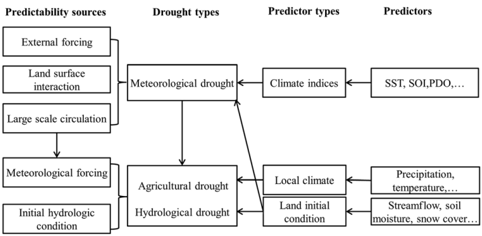
“These forcing factors provide certain degree of meteorological drought predictability (shown in Figure 3) (Heim & Brewer, 2012; Kingston et al., 2015; Mueller & Seneviratne, 2012; Rodríguez-Fonseca et al., 2015; Wood et al., 2015).”
BackgroundCorrecting Errors in Streamflow Forecast Ensemble Mean and Spread
Wood, A. W., & Schaake, J. C. (2008) · Journal of Hydrometeorology · doi:10.1175/2007jhm862.1 · Cited by 176 · cited 2×
“…Output Statistics (MOS) technique has been commonly used for the bias correction of weather forecast from numerical weather prediction (NWP) models, which is likely due to the computational intensiveness and the high dimensionality that prohibit model parameter calibrations (Wood & Schaake, 2008).”
MethodNielsen-Gammon, J. W. (2012) · Texas Water Journal · doi:10.21423/twj.v3i1.6463 · Cited by 176 · cited 6×
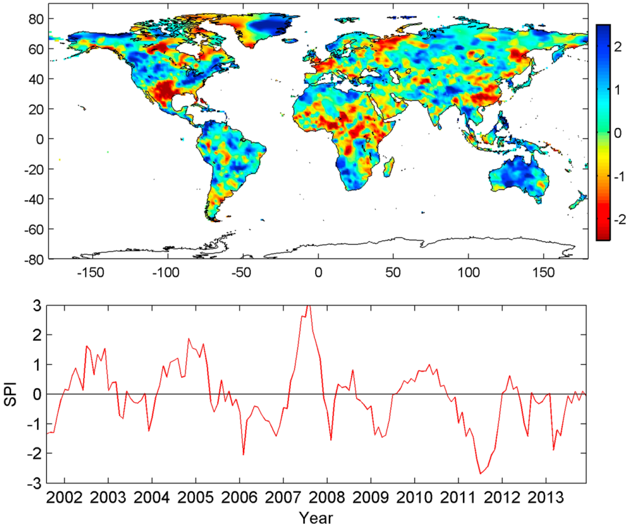
“In addition, the SPI values from 2008 to 2011 for a grid in Texas are shown in Figure 2 (bottom).”
BackgroundInfluentialFilho, F. A. S., & Lall, U. (2003) · Water Resources Research · doi:10.1029/2002wr001373 · Cited by 174 · cited 1×
“For example, streamflow prediction can be achieved by constructing a joint distribution of streamflow of the target period and several predictors, such as precipitation, streamflow, and climate indices in previous time steps (Liu et al., 2015; Souza Filho & Lall, 2003; Sun et al., 2014).”
BackgroundAn Overview of Drought Monitoring and Prediction Systems at Regional and Global Scales
Hao, Z., Yuan, X., Xia, Y., Hao, F., & Singh, V. P. (2017) · Bulletin of the American Meteorological Society · doi:10.1175/bams-d-15-00149.1 · Cited by 172
Self-citationAssessment of Folsom Lake response to historical and potential future climate scenarios
Yao, H., & Georgakakos, A. (2001) · Journal of Hydrology · doi:10.1016/s0022-1694(01)00418-8 · Cited by 172 · cited 1×
“Different methods have been proposed for selecting or weighting different historical records based on climate indices or dynamical forecast from GCMs (Carpenter & Georgakakos, 2001; Hamlet & Lettenmaier, 1999; Wang et al., 2011; Werner et al., 2004; Yao & Georgakakos, 2001).”
MethodPrediction of SPI Drought Class Transitions Using Markov Chains
Paulo, A. A., & Pereira, L. S. (2007) · Water Resources Management · doi:10.1007/s11269-006-9129-9 · Cited by 171 · cited 1×
“The MC model has been commonly used for drought prediction based on drought states of different indicators, including Palmer drought index (Lohani & Loganathan, 1997), SPI (Cancelliere et al., 2007; Paulo & Pereira, 2007, 2008) and Standardized Hydrological Index (SHI) (Sharma & Panu, 2012).”
Methodvan Dijk, A. I. J. M., Peña-Arancibia, J. L., Wood, E. F., Sheffield, J., & Beck, H. E. (2013) · Water Resources Research · doi:10.1002/wrcr.20251 · Cited by 167 · cited 5×
“Apart from enhancing the skill from weather or climate forecast, the increased skill of hydrological forecast likely necessitates improved precipitation estimation and initial hydrological conditions (Shukla et al., 2013; van Dijk et al., 2013).”
BackgroundInfluentialWhat is the current state of scientific knowledge with regard to seasonal and decadal forecasting?
Smith, D. M., Scaife, A. A., & Kirtman, B. P. (2012) · Environmental Research Letters · doi:10.1088/1748-9326/7/1/015602 · Cited by 166 · cited 4×
“ENSO affects seasonal climate over wide areas, including North and South America, east and south Africa, India, Indonesia, southwest Asia and Australia (Schubert et al., 2016; Smith et al., 2012).”
BackgroundMethodInfluentialSchamm, K., Ziese, M., Raykova, K., Becker, A., Finger, P., Meyer-Christoffer, A., & Schneider, U. (2016) · doi:10.5065/d6v69grt · Cited by 166 · cited 1×
“For example, the precipitation deficit over North America is primarily associated with the SST variability in the tropical Pacific with certain contributions from the SST variability in the Atlantic at the annual time scale (Schubert et al., 2009, 2016; Seager et al., 2005).”
BackgroundThe 2010–2011 drought in the Horn of Africa in ECMWF reanalysis and seasonal forecast products
Dutra, E., Magnusson, L., Wetterhall, F., Cloke, H., Balsamo, G., Boussetta, S., & Pappenberger, F. (2012) · International Journal of Climatology · doi:10.1002/joc.3545 · Cited by 166 · cited 2×
“Central Great Plains drought, and 2012–2015 California drought, have caused huge losses to agriculture, society, and ecosystems with profound impacts on crop production and water supply (Dutra et al., 2013; Hoerling et al., 2014; Nielsen-Gammon, 2012; Peterson, Hoerling, et al., 2013; Seager et al., 2015).”
BackgroundYuan, X., Wood, E. F., & Ma, Z. (2015) · Wiley Interdisciplinary Reviews Water · doi:10.1002/wat2.1088 · Cited by 166
Adaptive Neuro-Fuzzy Inference System for drought forecasting
Bacanli, U. G., Firat, M., & Dikbas, F. (2009) · Stochastic Environmental Research and Risk Assessment · doi:10.1007/s00477-008-0288-5 · Cited by 166 · cited 1×
“Other attempts combining advantages of different models have also been explored, such as ARIMA-ANN (Mishra et al., 2007) and ANN-FL (Bacanli et al., 2009).”
MethodMonitoring Drought: An Evaluation of Meteorological Drought Indices
Quiring, S. M. (2009) · Geography Compass · doi:10.1111/j.1749-8198.2008.00207.x · Cited by 166 · cited 1×
“However, there is still inconsistency in determining the threshold of indicators (e.g., SPI < 1) to define a drought (Hao, Hao, Singh, Xia, et al., 2016; Quiring, 2009; Steinemann et al., 2015).”
BackgroundProbabilistic quantitative precipitation forecasting using Ensemble Model Output Statistics
Scheuerer, M. (2014) · Quarterly Journal of the Royal Meteorological Society · doi:10.1002/qj.2183 · Cited by 165 · cited 1×
“…indicators, from which the prediction interval and the probability of exceeding (or below) a certain threshold can be achieved (Behrangi et al., 2015; Hao, Hao, Singh, Sun, et al., 2016; Mendoza et al., 2015; Pan et al., 2013; Scheuerer, 2014), is popular in probabilistic drought prediction.”
BackgroundFahimi, F., Yaseen, Z. M., & El‐Shafie, A. (2016) · Theoretical and Applied Climatology · doi:10.1007/s00704-016-1735-8 · Cited by 165 · cited 1×
“…(GA) or Genetic Programming (GP), and wavelet transformation, can be used to model complex interactions of hydroclimatic variables for a variety of applications (Bourdin et al., 2012; Fahimi et al., 2016; Nourani et al., 2014; Rhee & Im, 2017; Wang, Chau, et al., 2009; Yaseen et al., 2015).”
Tang, Q., Gao, H., Lu, H., & Lettenmaier, D. P. (2009) · Progress in Physical Geography: Earth and Environment · doi:10.1177/0309133309346650 · Cited by 165 · cited 1×
“Remote sensing products provide consistent temporal and spatial measurements of multiple hydroclimatic variables, including precipitation, soil moisture, snow, and vegetation conditions, at regional and global scales (AghaKouchak et al., 2015; Tang et al., 2009; Wardlow et al., 2012, 2016).”
BackgroundDocumenting Drought-Related Disasters: A Global Reassessment
Below, R., Grover-Kopec, E., & Dilley, M. (2007) · The Journal of Environment & Development · doi:10.1177/1070496507306222 · Cited by 164 · cited 1×
“Extensive impacts of drought in past decades at regional and global scales call for improved capability to cope with drought (Below et al., 2007; Sheffield & Wood, 2012; Smith & Katz, 2013).”
BackgroundMultimodel Ensemble Reconstruction of Drought over the Continental United States
Wang, A., Bohn, T. J., Mahanama, S. P., Koster, R. D., & Lettenmaier, D. P. (2009) · Journal of Climate · doi:10.1175/2008jcli2586.1 · Cited by 163
Drought Research in Canada: A Review
Bonsal, B. R., Wheaton, E. E., Chipanshi, A. C., Lin, C. A., Sauchyn, D., & Wen, L. (2011) · ATMOSPHERE-OCEAN · doi:10.1080/07055900.2011.555103 · Cited by 161 · cited 1×
“Substantial efforts have been devoted to the understanding of drought-causing mechanisms and predictability, while there are still challenges in explaining drought formulation, maintenance, and termination (Bonsal et al., 2011).”
BackgroundIntensification of hydrological drought in California by human water management
He, X., Wada, Y., Wanders, N., & Sheffield, J. (2017) · Geophysical Research Letters · doi:10.1002/2016gl071665 · Cited by 161 · cited 1×
“For example, the hydrological drought (or streamflow) is not only affected by the climate and catchment characteristics but also human activities, such as irrigation or operation of dams and reservoirs (Di Baldassarre et al., 2017; He et al., 2017; Seibert et al., 2016).”
BackgroundTime Scales of Layered Soil Moisture Memory in the Context ofLand–Atmosphere Interaction
Wu, W., & Dickinson, R. E. (2004) · Journal of Climate · doi:10.1175/1520-0442(2004)017<2752:tsolsm>2.0.co;2 · Cited by 161 · cited 1×
“A salient property of soil moisture is its high persistence ranging from a few weeks to months (Entin et al., 2000; Koster, Mahanama, Livneh, et al., 2010; Seneviratne, Koster, et al., 2006; Wu & Dickinson, 2004).”
BackgroundPerspectives on the causes of exceptionally low 2015 snowpack in the western United States
Mote, P. W., Rupp, D. E., Li, S., Sharp, D., Otto, F. E. L., Uhe, P. F., Xiao, M., Lettenmaier, D. P., Cullen, H. M., & Allen, M. R. (2016) · Geophysical Research Letters · doi:10.1002/2016gl069965 · Cited by 160 · cited 1×
“Human activities, such as extracting groundwater or water transfer over long distances, may also induce drought and are thus required to be incorporated in drought modeling and diagnosis (Mote et al., 2016; Pielke et al., 2011; Van Loon, Stahl, et al., 2016).”
BackgroundMultimodel seasonal forecasting of global drought onset
Yuan, X., & Wood, E. F. (2013) · Geophysical Research Letters · doi:10.1002/grl.50949 · Cited by 160 · cited 4×
“Meanwhile, regional land surface characteristics (e.g., soil moisture, vegetation, snow cover) have also been shown to strengthen or weaken drought severity and affect drought development (Koster et al., 2017; Schubert et al., 2007; Su & Dickinson, 2017; Yuan & Wood, 2013).”
BackgroundInfluentialShukla, S., & Lettenmaier, D. P. (2011) · Hydrology and Earth System Sciences · doi:10.5194/hess-15-3529-2011 · Cited by 159 · cited 1×
“…conditions control the forecast skill up to 1 month, while the climate forecast plays a dominant role for longer lead time, as is confirmed by studies in other regions (Mo & Lettenmaier, 2014b; Shukla & Lettenmaier, 2011; Sinha & Sankarasubramanian, 2013; Thober et al., 2015; Yuan et al., 2013).”
ResultUnderstanding and seasonal forecasting of hydrological drought in the Anthropocene
Yuan, X., Zhang, M., Wang, L., & Zhou, T. (2017) · Hydrology and Earth System Sciences · doi:10.5194/hess-21-5477-2017 · Cited by 158 · cited 2×
“126 Current drought prediction efforts mostly focus on natural aspects of climate or hydrology, while studies on the integration of human aspects in drought prediction are rare but growing (Van Loon, 2015; Wada et al., 2017; Yuan et al., 2017).”
BackgroundMethodContribution of temperature and precipitation anomalies to the California drought during 2012–2015
Luo, L., Apps, D., Arcand, S. E., Xu, H., Pan, M., & Hoerling, M. P. (2017) · Geophysical Research Letters · doi:10.1002/2016gl072027 · Cited by 158 · cited 1×
“Drought mostly originates from precipitation deficit, while in certain cases it may result from the anomaly of other variables, such as temperature or evapotranspiration (Cook et al., 2014; Livneh & Hoerling, 2016; Luo et al., 2017).”
BackgroundGroundwater level response in U.S. principal aquifers to ENSO, NAO, PDO, and AMO
Kuss, A. J., & Gurdak, J. J. (2014) · Journal of Hydrology · doi:10.1016/j.jhydrol.2014.09.069 · Cited by 156 · cited 1×
“…& Mcmahon, 2002; Wanders & Wada, 2015) and have been used for predicting hydrological drought and agricultural drought (or streamflow and soil moisture) in different regions (Kingston et al., 2013; Kuss & Gurdak, 2014; Nicolai-Shaw et al., 2016; Ryu et al., 2010; Trambauer et al., 2013, 2015).”
MethodMonitoring and predicting the 2007 U.S. drought
Luo, L., & Wood, E. F. (2007) · Geophysical Research Letters · doi:10.1029/2007gl031673 · Cited by 155 · cited 1×
“…from CFSv2, ECMWF, or NMME have been used as inputs to drive hydrologic models to predict agricultural and hydrological drought (Fundel et al., 2013; Li et al., 2008; Luo & Wood, 2007; Samaniego et al., 2013; Sheffield et al., 2014; Shukla et al., 2014; Trambauer et al., 2013; Zhang et al., 2016).”
MethodFunk, C. C., Hoell, A., Shukla, S., Bladé, I., Liebmann, B., Roberts, J. B., Robertson, F. R., & Husak, G. J. (2014) · Hydrology and earth system sciences · doi:10.5194/hess-18-4965-2014 · Cited by 154 · cited 2×
“…predictors (e.g., fields of SST) (Brown & Ward, 2013), the PCA is commonly used to reduce the dimension (or compressing data) to avoid overfitting and multicollinearity, which may be combined with a multiple linear regression model for climate prediction (Funk et al., 2014; Mortensen et al., 2017).”
MethodThe Response of Soil Moisture to Long-Term Variability of Precipitation
Wu, W., Geller, M. A., & Dickinson, R. E. (2002) · Journal of Hydrometeorology · doi:10.1175/1525-7541(2002)003<0604:trosmt>2.0.co;2 · Cited by 154
A seasonal agricultural drought forecast system for food-insecure regions of East Africa
Shukla, S., McNally, A., Husak, G., & Funk, C. (2014) · Hydrology and Earth System Sciences · doi:10.5194/hess-18-3907-2014 · Cited by 153 · cited 4×
“With the progress in climate forecasts from state-of-the-art models, the advancement of seasonal hydrologic forecast has been witnessed by driving hydrological models with climate forecast as forcing variables (Shukla et al., 2014; Wood et al., 2002, 2004).”
MethodInfluentialSoil moisture effects on seasonal temperature and precipitation forecast scores in Europe
van den Hurk, B., Doblas-Reyes, F. J., Balsamo, G., Koster, R. D., Seneviratne, S. I., & Camargo, H. (2010) · Climate Dynamics · doi:10.1007/s00382-010-0956-2 · Cited by 152 · cited 1×
“…zones between wet and dry climates) and may provide useful information for improving climate prediction on a seasonal basis through land-atmosphere interactions (shown in Figure 1) (Dirmeyer et al., 2009; Koster et al., 2000; NRC, 2010; Seneviratne, Lüthi, et al., 2006; van den Hurk et al., 2012).”
BackgroundIntra-seasonal NDVI change projections in semi-arid Africa
Funk, C. C., & Brown, M. E. (2006) · Remote Sensing of Environment · doi:10.1016/j.rse.2005.12.014 · Cited by 151 · cited 1×
“…the statistical prediction, drought indices from remote sensing products (e.g., NDVI) have been commonly used as the predictand for drought prediction mostly achieved with regression models (Asoka & Mishra, 2015; De Linage et al., 2014; Funk & Brown, 2006; Liu & Juárez, 2001; Tadesse et al., 2014).”
MethodHow Essential is Hydrologic Model Calibration to Seasonal Streamflow Forecasting?
Shi, X., Wood, A. W., & Lettenmaier, D. P. (2008) · Journal of Hydrometeorology · doi:10.1175/2008jhm1001.1 · Cited by 150 · cited 1×
“122 postprocessing of hydrological forecast has also been conducted to increase the forecast skill and reliability (Shi et al., 2008; Wood & Schaake, 2008; Yuan, Wood, et al., 2015).”
MethodReview of dependence modeling in hydrology and water resources
Hao, Z., & Singh, V. P. (2016) · Progress in Physical Geography Earth and Environment · doi:10.1177/0309133316632460 · Cited by 149 · cited 2×
“There are a variety of choices for the function F (e.g., parametric distributions, copula models, entropy models, and nonparametric models), which can be used to construct the joint distribution of the predictand Y and predictor X (Hao & Singh, 2016).”
BackgroundMethodSelf-citationDurre, I., Wallace, J. M., & Lettenmaier, D. P. (2000) · Journal of Climate · doi:10.1175/1520-0442(2000)013<2641:doedmt>2.0.co;2 · Cited by 147 · cited 1×
“…reduced local evapotranspiration may lead to increased sensible heat flux contributing to a positive feedback between high temperature and drought (Durre et al., 2000; Fischer et al., 2007; Hao, Hao, Singh & Ouyang, 2017; Koster et al., 2009; Lyon & Dole, 1995; Mueller & Seneviratne, 2012;…”
BackgroundStreamflow Modelling: A Primer on Applications, Approaches and Challenges
Bourdin, D. R., Fleming, S. W., & Stull, R. B. (2012) · ATMOSPHERE-OCEAN · doi:10.1080/07055900.2012.734276 · Cited by 146 · cited 2×
“…(GA) or Genetic Programming (GP), and wavelet transformation, can be used to model complex interactions of hydroclimatic variables for a variety of applications (Bourdin et al., 2012; Fahimi et al., 2016; Nourani et al., 2014; Rhee & Im, 2017; Wang, Chau, et al., 2009; Yaseen et al., 2015).”
BackgroundPredicting above normal wildfire activity in southern Europe as a function of meteorological drought
Gudmundsson, L., Rego, F. C., Rocha, M., & Seneviratne, S. I. (2014) · Environmental Research Letters · doi:10.1088/1748-9326/9/8/084008 · Cited by 144 · cited 2×
“Thus, the improved prediction of drought may contribute to the wildfire prediction (Gudmundsson et al., 2014; Stagge et al., 2015).”
BackgroundSoil Moisture, Snow, and Seasonal Streamflow Forecasts in the United States
Mahanama, S., Livneh, B., Koster, R. D., Lettenmaier, D. P., & Reichle, R. H. (2012) · Journal of Hydrometeorology · doi:10.1175/jhm-d-11-046.1 · Cited by 144 · cited 1×
“The initial catchment condition, including the water stored in snow, soil, or groundwater, controls the streamflow generation and may contribute to the prediction skill (Mahanama et al., 2012; Staudinger & Seibert, 2014; Yuan et al., 2016).”
BackgroundWu, L., Seo, D., Demargne, J., Brown, J. D., Cong, S., & Schaake, J. C. (2011) · Journal of Hydrology · doi:10.1016/j.jhydrol.2011.01.013 · Cited by 143 · cited 1×
“A variety of studies have been conducted for the prediction of hydroclimatic variables based on the joint distribution (Khedun et al., 2014; Liu et al., 2015; Wang, Robertson, & Chiew, 2009; Wu et al., 2011; Yan et al., 2012).”
BackgroundA Bayesian Framework for Probabilistic Seasonal Drought Forecasting
Madadgar, S., & Moradkhani, H. (2013) · Journal of Hydrometeorology · doi:10.1175/jhm-d-13-010.1 · Cited by 143 · cited 1×
“…distribution function can be used for statistical drought prediction by establishing the conditional distribution of the variable of interest with other predictors that may provide predictive information (Cancelliere et al., 2007; Hao, Hao, Singh, Sun, et al., 2016; Madadgar & Moradkhani, 2013).”
BackgroundAssessment of Folsom Lake response to historical and potential future climate scenarios
Yao, H., & Georgakakos, A. P. (2000) · Antarctica A Keystone in a Changing World · doi:10.3133/ofr00336 · Cited by 142
Dutta, D., Kundu, A., & Patel, N. R. (2012) · Geocarto International · doi:10.1080/10106049.2012.679975 · Cited by 142
Learning from experience: a systematic review of assessments of vulnerability to drought
Tánago, I. G., Reguera, J. U., Blauhut, V., Villarroya, F., & Stefano, L. D. (2015) · Natural Hazards · doi:10.1007/s11069-015-2006-1 · Cited by 142
Probabilistic analysis of hydrological drought characteristics using meteorological drought
Wong, G., Lanen, H. A. J. V., & Torfs, P. J. J. F. (2013) · Hydrological Sciences Journal · doi:10.1080/02626667.2012.753147 · Cited by 140 · cited 3×
“For example, the propagation of drought signal from precipitation deficit to other types of drought implies that meteorological drought indicators may be used as the predictors (or precursors) for agricultural and hydrological drought prediction (Hao, Hao, Singh, Sun, et al., 2016; Wong et al., 2013).”
BackgroundRelative contributions of land and ocean processes to precipitation variability
Koster, R. D., & Suarez, M. J. (1995) · Journal of Geophysical Research: Atmospheres · doi:10.1029/95jd00176 · Cited by 139 · cited 1×
“Other factors, such as land surface interactions or feedbacks (e.g., reduced soil moisture and increased temperature) may also contribute to the atmospheric anomaly or occurrence of meteorological drought (Dai, 2011; Fernando et al., 2016; Kam, Sheffield, & Wood, 2014b; Koster & Suarez, 1995).”
BackgroundEnsemble prediction of regional droughts using climate inputs and the SVM–copula approach
Ganguli, P., & Reddy, M. J. (2014) · Hydrological Processes · doi:10.1002/hyp.9966 · Cited by 136 · cited 5×
“The Artificial Intelligence (AI) (or machine learning, soft computing) models, including Artificial Neural Network (ANN), Fuzzy Logic (FL), Support Vector Regression (SVR) or Support Vector Machine (SVM), Genetic Algorithm (GA) or Genetic Programming (GP), and wavelet transformation, can be used to model complex inter…”
MethodInfluentialENSO drought onset prediction in northeast Brazil using NDVI
Liu, W. T., & Juárez, R. I. N. (2001) · International Journal of Remote Sensing · doi:10.1080/01431160010006430 · Cited by 134 · cited 2×
“…the statistical prediction, drought indices from remote sensing products (e.g., NDVI) have been commonly used as the predictand for drought prediction mostly achieved with regression models (Asoka & Mishra, 2015; De Linage et al., 2014; Funk & Brown, 2006; Liu & Juárez, 2001; Tadesse et al., 2014).”
MethodBayesian merging of multiple climate model forecasts for seasonal hydrological predictions
Luo, L., Wood, E. F., & Pan, M. (2007) · Journal of Geophysical Research: Atmospheres · doi:10.1029/2006jd007655 · Cited by 132 · cited 2×
“120 analogue approach (Maurer & Hidalgo, 2008), and Bayesian methods (Luo et al., 2007), among others.”
MethodWardlow, B. D., Anderson, M. C., & Verdin, J. P. (2012) · CRC Press eBooks · doi:10.1201/b11863 · Cited by 132 · cited 1×
“Remote sensing products provide consistent temporal and spatial measurements of multiple hydroclimatic variables, including precipitation, soil moisture, snow, and vegetation conditions, at regional and global scales (AghaKouchak et al., 2015; Tang et al., 2009; Wardlow et al., 2012, 2016).”
BackgroundCFSv2-Based Seasonal Hydroclimatic Forecasts over the Conterminous United States
Yuan, X., Wood, E. F., Roundy, J. K., & Pan, M. (2013) · Journal of Climate · doi:10.1175/jcli-d-12-00683.1 · Cited by 128 · cited 3×
“There are large uncertainties in the precipitation forecast, and skillful climate forecast beyond the 1month lead is still a prevailing challenge (Mcevoy et al., 2015; Saha et al., 2014; Weisheimer et al., 2009; Wood et al., 2015; Yuan et al., 2013).”
BackgroundResultDurdu, Ö. F. (2010) · Stochastic Environmental Research and Risk Assessment · doi:10.1007/s00477-010-0366-3 · Cited by 128 · cited 15×
“However, there is still inconsistency in determining the threshold of indicators (e.g., SPI < 1) to define a drought (Hao, Hao, Singh, Xia, et al., 2016; Quiring, 2009; Steinemann et al., 2015).”
MethodInfluential
Research works printed but not linked: 12
- 10.1175/1520-0442(2004)017 · doi:10.1175/1520-0442(2004)017
- 10.1175/1520-0442(2002)015 · doi:10.1175/1520-0442(2002)015
- 10.1175/1520-0442(2001)014 · doi:10.1175/1520-0442(2001)014
- 10.1175/1525-7541(2000)001 · doi:10.1175/1525-7541(2000)001
- 10.1175/1520-0442(1995)008 · doi:10.1175/1520-0442(1995)008
- Milly, P., Julio, B., Malin, F., Robert, M., Zbigniew, W., Dennis, P., & Ronald, J. (2007). Stationarity is dead. Ground Water News & Views, 4, 6-8.
- 10.1175/1520-0442(2004)017 · doi:10.1175/1520-0442(2004)017
- Sheffield, J., Wood, E., Lettenmaier, D., & Lipponen, A. (2008). Experimental drought monitoring for Africa. GEWEX News, 8(3), 4-6.
- 10.1175/1525-7541(2003)004 · doi:10.1175/1525-7541(2003)004 · Paper page
- WCRP (2015). Workshop on understanding, modeling and predicting weather and climate extremes, WCRP Report. No.10/2016.
- 10.1175/1520-0442(2004)017 · doi:10.1175/1520-0442(2004)017
- 10.1175/1525-7541(2002)003 · doi:10.1175/1525-7541(2002)003
Cited by
Tirivarombo, S., Osupile, D., & Eliasson, P. (2018) · Physics and Chemistry of the Earth, Parts A/B/C · doi:10.1016/j.pce.2018.07.001 · Cited by 535
Challenges in modeling and predicting floods and droughts: A review
Brunner, M. I., Slater, L., Tallaksen, L. M., & Clark, M. (2021) · WIREs Water · doi:10.1002/wat2.1520 · Cited by 467
“, internal climate variability), the limitations of prediction capabilities (Hao et al., 2018), sampling uncertainties (Hu et al.”
BackgroundAnthropogenic Drought: Definition, Challenges, and Opportunities
AghaKouchak, A., Mirchi, A., Madani, K., Di Baldassarre, G., Nazemi, A., Alborzi, A., Anjileli, H., Azarderakhsh, M., Chiang, F., Hassanzadeh, E., et al. (2021) · Reviews of Geophysics · doi:10.1029/2019rg000683 · Cited by 387
Extreme Drought Events over Brazil from 2011 to 2019
Cunha, A. P. M. A., Zeri, M., Deusdará Leal, K., Costa, L., Cuartas, L. A., Marengo, J. A., Tomasella, J., Vieira, R. M., Barbosa, A. A., Cunningham, C., et al. (2019) · Atmosphere · doi:10.3390/atmos10110642 · Cited by 387
Slater, L. J., Anderson, B., Buechel, M., Dadson, S., Han, S., Harrigan, S., Kelder, T., Kowal, K., Lees, T., Matthews, T., et al. (2021) · Hydrology and Earth System Sciences · doi:10.5194/hess-25-3897-2021 · Cited by 357
Metadata
- Authors
- Hao, Z., Singh, V. P., & Xia, Y.
- Affiliations
- Beijing Normal University (CN)
- Texas A&M University (US)
- NOAA National Centers for Environmental Prediction (US)
- Corresponding author
- Hao, Zengchao
- Venue
- Reviews of Geophysics
- Publisher
- American Geophysical Union (AGU)
- Published
- 2018-01-27
- Volume
- 56
- Issue
- 1
- Pages
- 108-141
- ISSN
- 0096-1043 (ISSN-L)
- 8755-1209
- 1944-9208
- OpenAlex
- W2784184607
- Semantic Scholar
- e7b1812d8fae2df8f1600e9086c7696ff060c3a8
- Cited by
- 607
- References
- 384
- Citations by year
- 2026: 68 · 2025: 99 · 2024: 97 · 2023: 80 · 2022: 89 · 2021: 81 · 2020: 52 · 2019: 28 · 2018: 12
- FWCI
- 25.31
- Type
- journal article
- Language
- en
- Open access
- hybrid
- doi.org
- Licence
- Locations
- Reviews of Geophysics (publishedVersion, cc-by-nc-nd)
- NOAA Institutional Repository (submittedVersion)
- Funders
- National Natural Science Foundation of China (41601014)
- Topics
- Physical Sciences › Environmental Science › Global and Planetary Change › Hydrology and Drought Analysis
- Physical Sciences › Environmental Science › Global and Planetary Change › Climate variability and models
- Physical Sciences › Environmental Science › Water Science and Technology › Hydrology and Watershed Management Studies
- Keywords
- drought forecasting, drought indices, global climate models, hydrological drought, agricultural drought, climate indices, data assimilation, ensemble forecasting, drought early warning, climate change impacts on drought
About these checks
Registry, retraction, Cites and statistics results are computed, not judged, with one exception: a printed reference that no index lists is read once by a model before it counts as a citation error. Claims are extracted by a model and kept only when their quote appears verbatim in the text; each cited source is then checked, with a model’s help, for whether it says what the claim relies on. Those verdicts can be wrong — read the claim’s quote and the cited source before relying on one.
Statistics and arithmetic are recomputed, not judged.
Confidence bands are shown only for fields calibrated on our annotated test set. None is calibrated yet, so no band is shown.
What counts as a claim ›How we measure confidence ›How we check this ›
Are you an author, or do you see a problem with this page? Request a review
Data sources
Bibliographic data: Semantic Scholar, OpenAlex, Crossref.
Contains information from the Semantic Scholar Academic Graph Datasets, made available under the ODC Attribution License (ODC-BY 1.0).
Semantic Scholar’s data is described in: Kinney, R., et al. (2023). The Semantic Scholar Open Data Platform. arXiv:2301.10140.
