

Abi3 S212F Alzheimer's disease variant alters plaque structure and disrupts microglia
Open accessThe DOI matches its Crossref record; 70 of the 70 references it cites were found in a registry or an index; none of the 85 sources its claims cite is checked for support yet.
Abstract
BACKGROUND: Genetic variants affecting microglial function can influence Alzheimer's disease (AD) risk, yet the underlying mechanisms remain unclear. The AD‐associated ABI3 S209F ( Abi3 S212F in mouse) variant regulates cytoskeletal dynamics, but its in vivo impact on pathology is unknown. METHODS: An Abi3 S212F mouse was developed and crossed with two humanized amyloid beta (Aβ) models. Amyloid pathology, microglial survival, and remodeling were analyzed using confocal imaging, biochemical assays, spatial transcriptomics, and single‐cell analyses across the lifespan. RESULTS: Abi3 S212F produced a dysfunctional microglial state that reduced dense‐core plaque compaction, selectively lowering dense‐core burden without affecting diffuse or total Aβ. The variant also caused microglial loss via apoptosis and pyroptosis, requiring aging and human Aβ but occurring even without plaques, indicating plaque‐independent vulnerability. Spatial transcriptomics revealed an age‐dependent shift toward an Abi3‐ high state that predisposes microglia to degeneration. DISCUSSION: Abi3 S212F produces microglial dysfunction and vulnerability, highlighting cytoskeletal and cell death pathways as therapeutic targets.
Overview
CoChat Summary
TL;DR
The AD-associated Abi3^S212F variant causes an age- and human Aβ-dependent dysfunctional microglial state, reducing dense-core plaque compaction and microglial survival without changing total Aβ. It links ABI3 cytoskeletal and cell-death pathways to late-stage microglial vulnerability.
Key findings
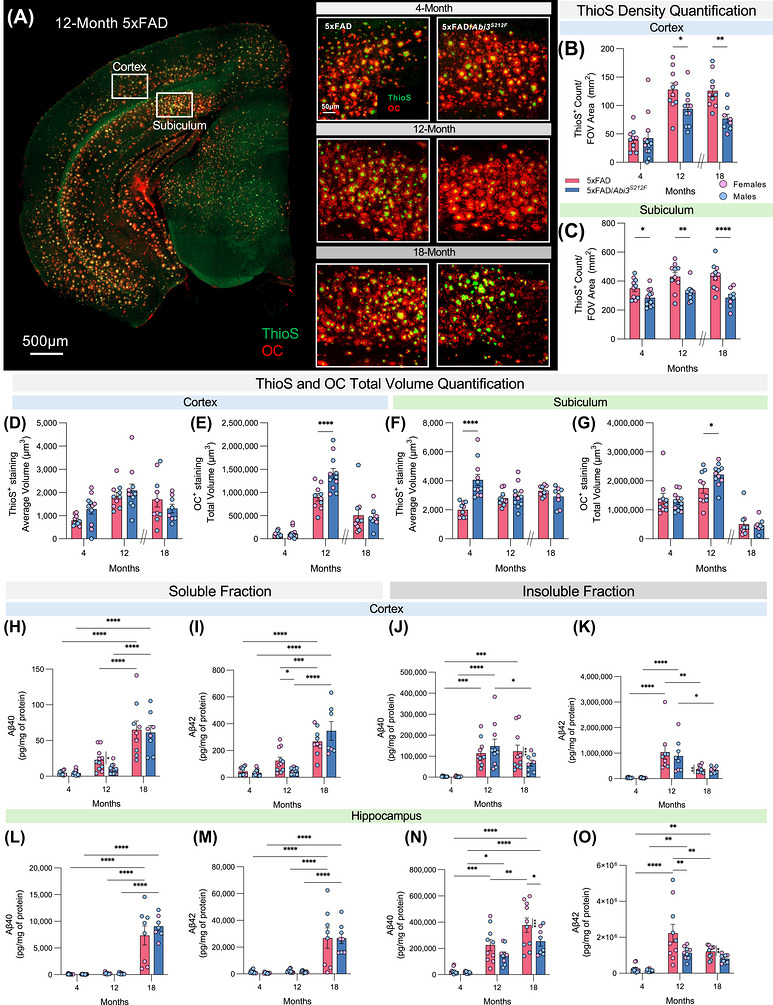
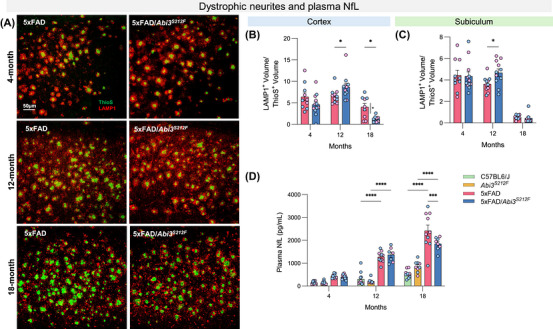
- In 5xFAD mice, homozygous Abi3^S212F reduced Thio-S+ dense-core plaques in cortex (12 and 18 months) and subiculum (all time points), while total fibrillar Aβ (OC) was unchanged or trended upward and soluble/insoluble Aβ showed minimal differences; at 18 months there was a robust reduction in dense-core plaque volume in cortex and subiculum.
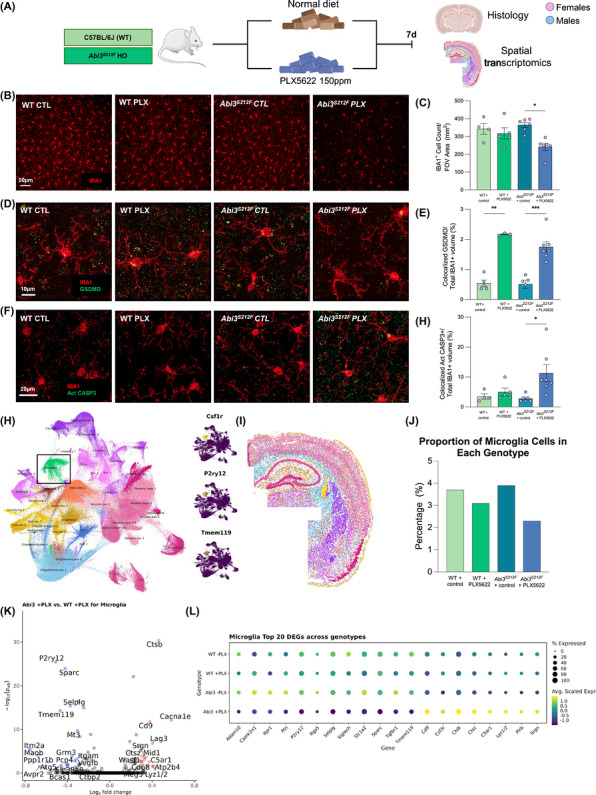
- Low-dose CSF1R inhibitor PLX5622 (150 ppm, 7 days) depleted cortical IBA1+ microglia by ≈10% in WT but 25%–30% in Abi3^S212F homozygotes; spatial transcriptomics (309,541 cells, 42 clusters) confirmed greater microglial loss and downregulation of P2ry12, Siglech, Tmem119 with upregulation of Cd9, Ctsb, Ctsz.
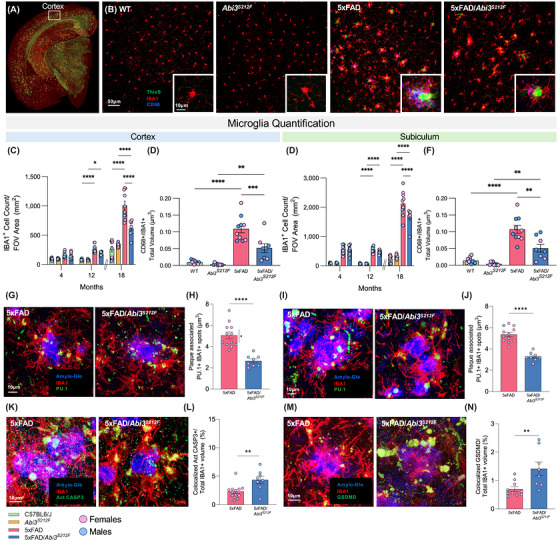
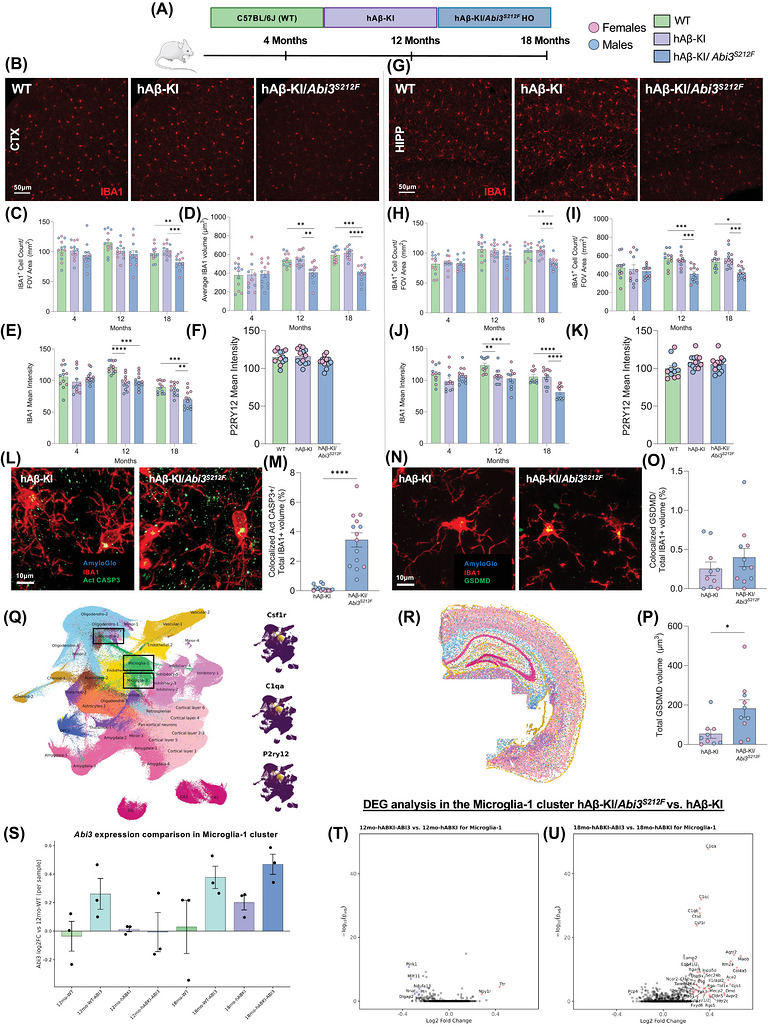
- In 18-month 5xFAD/Abi3^S212F and plaque-free hAβ-KI/Abi3^S212F mice, microglial density/volume fell and cell-death markers increased (Act CASP3 and GSDMD in 5xFAD; primarily Act CASP3 in hAβ-KI), indicating apoptosis/pyroptosis and plaque-independent vulnerability requiring aging and human Aβ.
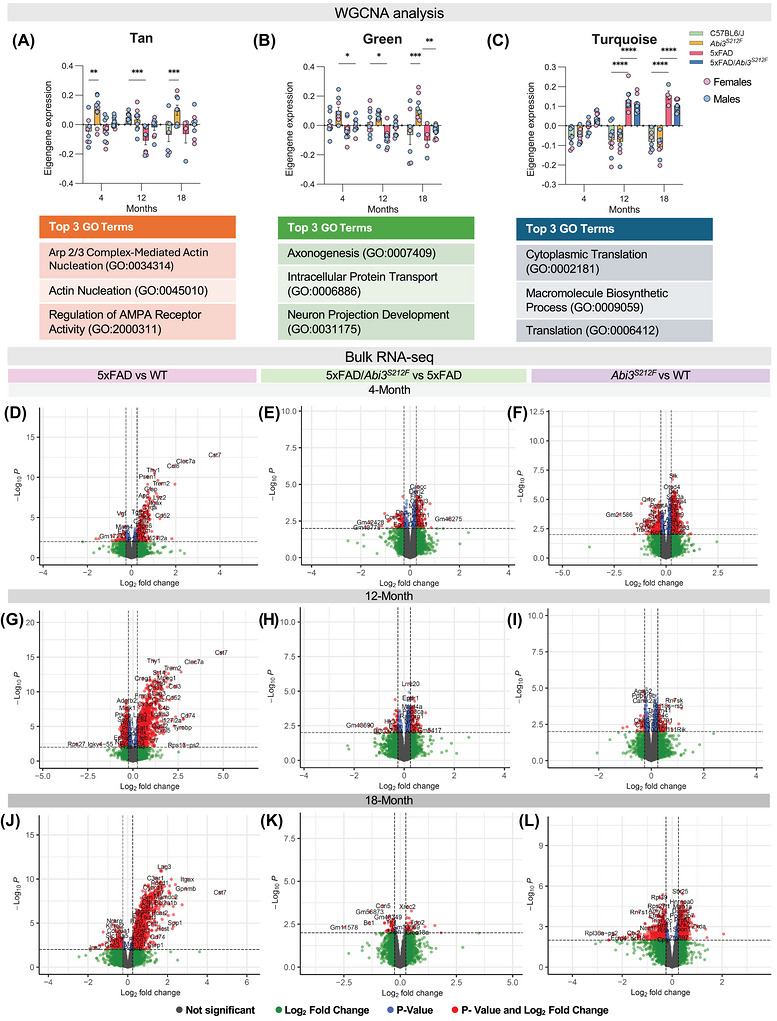
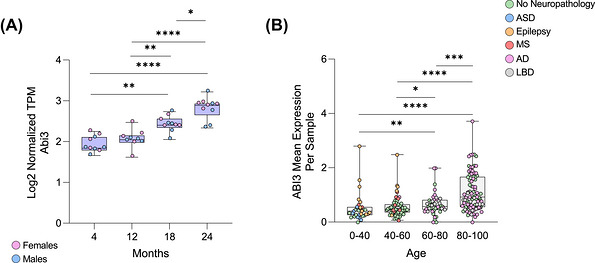
- Spatial/bulk transcriptomics showed age-dependent increases in Abi3/ABI3 in mouse and human microglia, with an 18-month expansion of an Abi3-high microglial subcluster and upregulated phagocytic/lysosomal genes (C1qa, C1qb, Lamp2, Inpp5d, Csf1r, Ctsd).
Methods
- Generated an Abi3^S212F knock-in via CRISPR/Cas9 on C57BL/6J and crossed it with 5xFAD hemizygous or hAβ-(loxP)-KI homozygous mice; cohorts were aged to 4, 12, and 18 months (bulk RNA-seq in hAβ-KI to 24 months), both sexes, with N = 4–6 per sex/genotype/age for most histology and biochemistry.
- Used confocal/Imaris imaging, Thio-S/Amylo-Glo/OC/IBA1/PU.1/CD68/LAMP1/Act CASP3/GSDMD/FTL/P2RY12/phalloidin staining, MSD Aβ and NfL assays, western blot, ABI3 immunoprecipitation plus LC-MS proteomics, bulk RNA-seq, CosMx spatial transcriptomics (≈1000-plex Mouse Neuro panel; 309,541 cells in PLX5622 dataset; 1,021,223 cells in hAβ-KI dataset), and human microglia atlas analysis.
- Statistics included t-tests, two-way ANOVA with Tukey post hoc tests, MAST, WGCNA, and Kruskal-Wallis/Wilcoxon tests for human data; significance was set at p ≤ 0.05.
Limitations
- Stated: homozygous Abi3^S212F mice model a variant heterozygous in humans, likely exaggerating phenotypes such as microglial loss; dose-dependent effects in the heterozygous state remain to be studied.
- Stated: conclusions rely on imperfect AD mouse models—5xFAD uses aggressive amyloid overexpression and both models lack tau pathology—and analyses are static snapshots at discrete ages that cannot fully capture dynamic glial responses; spatial transcriptomics has probe-detection limits and bulk RNA-seq reflects mixed cellular signals.
- Stated/evident: the mechanism linking Abi3^S212F to cell-death pathways/PANoptosome and whether pharmacological inhibition prevents microglial depletion remain unresolved; a direct effect on Aβ endocytosis was not robustly confirmed.
Model-written summary. Check it against the paper before relying on it.
Integrity signals
Registry
Cites
Statistics
Figures
Verification
Claims the paper makes
0 Valid · 3 Not valid · 39 Not checked · 173 Own results and interpretations
A result the paper reports from its own data — it cites no other source for it, so there is none to check. The quote shows it is in the paper.
In the paper
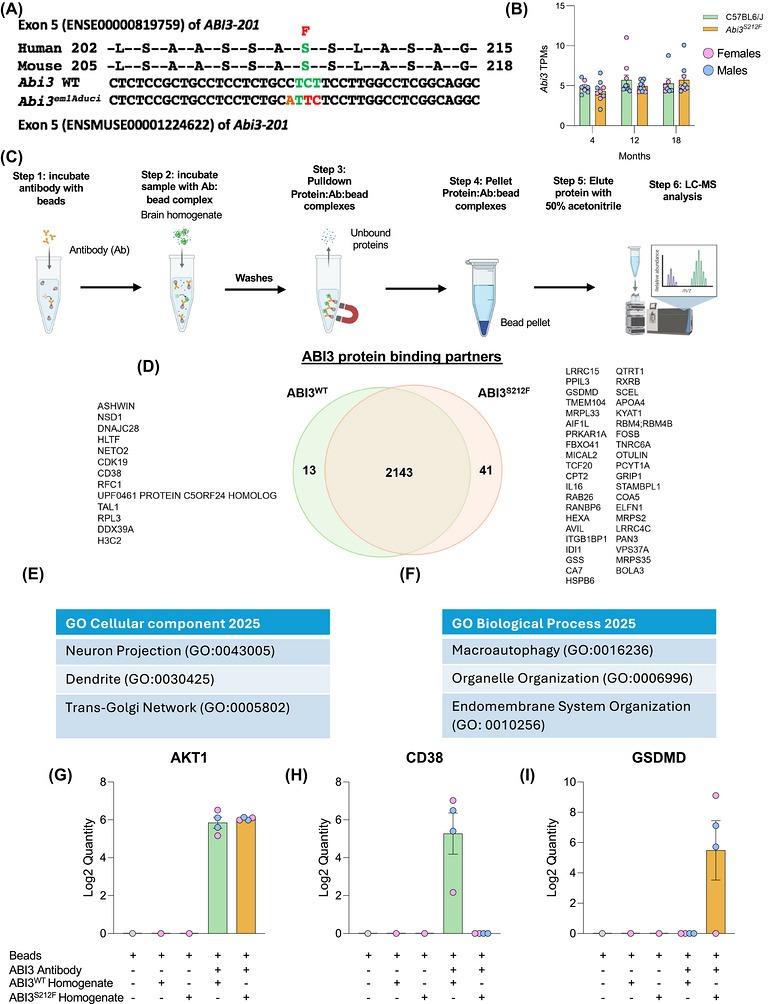
“None of the remaining 10 potential off‐target sites analyzed showed a difference in sequence between WT and homozygous Abi3S212F mice (Figure S1).”
§ Abi3S212F Alzheimer's disease variant alters plaque structure and disrupts microglia > RESULTS > Mouse Abi3S212F allele models human ABI3S209F variant with no off‐target effects
plainn = 2- Asserted: passes — The authors put it forward as true.
- Checkable: passes — It can be checked against evidence.
- Load-bearing: passes — The paper’s conclusions depend on it.
- Based: passes — The paper gives a reason why it holds.
A result the paper reports from its own data — it cites no other source for it, so there is none to check. The quote shows it is in the paper.
In the paper
“Spatial transcriptomics revealed an age‐dependent shift toward an Abi3‐high state that predisposes microglia to degeneration.”
§ Abi3S212F Alzheimer's disease variant alters plaque structure and disrupts microglia > Abstract > RESULTS:
plainstates an association- Asserted: passes — The authors put it forward as true.
- Checkable: passes — It can be checked against evidence.
- Load-bearing: passes — The paper’s conclusions depend on it.
- Based: passes — The paper gives a reason why it holds.
A result the paper reports from its own data — it cites no other source for it, so there is none to check. The quote shows it is in the paper.
In the paper
“Furthermore, introduction of this missense variant does not change expression of Abi3S212F at the RNA or protein level”
§ Abi3S212F Alzheimer's disease variant alters plaque structure and disrupts microglia > RESULTS > Mouse Abi3S212F allele models human ABI3S209F variant with no off‐target effects
plain- Asserted: passes — The authors put it forward as true.
- Checkable: passes — It can be checked against evidence.
- Load-bearing: passes — The paper’s conclusions depend on it.
- Based: passes — The paper gives a reason why it holds.
A result the paper reports from its own data — it cites no other source for it, so there is none to check. The quote shows it is in the paper.
In the paper
“Abi3S212F microglia also showed increased vulnerability to colony‐stimulating factor‐1 receptor (CSF1R) inhibition, with elevated cell death and activated caspase‐3 (Act CASP3) and Gasdermin D (GSDMD) following exposure to human Aβ or CSF1R blockade.”
§ Abi3S212F Alzheimer's disease variant alters plaque structure and disrupts microglia > BACKGROUND
plainstates a cause- Asserted: passes — The authors put it forward as true.
- Checkable: passes — It can be checked against evidence.
- Load-bearing: passes — The paper’s conclusions depend on it.
- Based: passes — The paper gives a reason why it holds.
101 more claims
Create a free account to see all 215 claims and to verify the 85 references still open.
- It may state two separate claims as one. 65
- Probably not a substantial claim. 61
Self-check
Percentages, sums and reported differences re-computed from the paper’s own numbers.
Each contradiction between two passages listed here was confirmed by an independent check.
Rated minor: it would not touch a result — a value no result rests on, a p-value that stays on the same side of the significance level, or a conflict that is clerical, resolved elsewhere in the paper, or outside its own findings.
In the paper
§ Abi3S212F Alzheimer's disease variant alters plaque structure and disrupts microglia > METHODS > Single‐cell spatial transcriptomics
“For the PLX5622 dataset unsupervised clustering at 1.0 resolution yielded 48 clusters.”
§ Abi3S212F Alzheimer's disease variant alters plaque structure and disrupts microglia > RESULTS > Abi3S212F Microglia are more susceptible to colony‐stimulating factor 1 receptor (CSF1R) inhibition‐induced cell death
“Clustering at 1.0 resolution yielded 42 original clusters.”
Rated minor: it would not touch a result — a value no result rests on, a p-value that stays on the same side of the significance level, or a conflict that is clerical, resolved elsewhere in the paper, or outside its own findings.
In the paper
§ Abi3S212F Alzheimer's disease variant alters plaque structure and disrupts microglia > RESULTS > The Abi3S212F variant drives plaque‐independent microglial loss with age
“We confirmed the absence of Aβ plaque deposition at all timepoints assessed”
§ Abi3S212F Alzheimer's disease variant alters plaque structure and disrupts microglia > RESULTS > The Abi3S212F variant drives plaque‐independent microglial loss with age
“(L) Representative 63x confocal images of dense core plaques (Amylo‐Glo) and Act CASP3+/IBA1+ microglia in hAβ‐KI and hAβ‐KI/Abi3S212F hippocampus at 18 months.”
Rated minor: it would not touch a result — a value no result rests on, a p-value that stays on the same side of the significance level, or a conflict that is clerical, resolved elsewhere in the paper, or outside its own findings.
In the paper
§ Abi3S212F Alzheimer's disease variant alters plaque structure and disrupts microglia > RESULTS > The Abi3S212F variant drives plaque‐independent microglial loss with age
“Microglial number and volume were quantified by staining coronal sections with ionized calcium‐binding adapter molecule 1 (IBA1) at 4, 12, and 18 months and purinergic receptor P2Y12 (P2RY12) at 18 months”
§ Abi3S212F Alzheimer's disease variant alters plaque structure and disrupts microglia > RESULTS > The Abi3S212F variant drives plaque‐independent microglial loss with age
“(F) P2RY12 intensity in cortex at all time points.”
Rated minor: it would not touch a result — a value no result rests on, a p-value that stays on the same side of the significance level, or a conflict that is clerical, resolved elsewhere in the paper, or outside its own findings.
In the paper
§ Abi3S212F Alzheimer's disease variant alters plaque structure and disrupts microglia > METHODS > Unbiased proteomics
“only proteins present in >3 of 4 samples per genotype with no signal in any of the negative controls were used.”
§ Abi3S212F Alzheimer's disease variant alters plaque structure and disrupts microglia > RESULTS > Homozygous Abi3S212F mice exhibit distinct ABI3 protein‐protein interactions
“We identified 2,384 proteins that directly or indirectly bound to ABI3, based on their presence in at least three of four samples per genotype.”
Citations
Cites
Wickham, H. (2016) · Use R! · doi:10.1007/978-3-319-24277-4 · Cited by 33,115
Dictionary learning for integrative, multimodal and scalable single-cell analysis
Hao, Y., Stuart, T., Kowalski, M. H., Choudhary, S., Hoffman, P., Hartman, A., Srivastava, A., Molla, G., Madad, S., Fernandez-Granda, C., et al. (2024) · Nature Biotechnology · doi:10.1038/s41587-023-01767-y · Cited by 5,631
Meta-Analysis of 74,046 Individuals Identifies 11 New Susceptibility Loci for Alzheimer’s Disease
(EADI), E. A. D. I., Lambert, J.-C., (GERAD), G. A. E. R. I. A. D., Alzheimer's Disease Genetic Consortium (ADGC), (CHARGE), C. F. H. A. A. R. I. G. E., Ibrahim-Verbaas, C. A., Harold, D., Naj, A. C., Sims, R., Bellenguez, C., et al. (2013) · Nature Genetics · doi:10.1038/ng.2802 · Cited by 4,336
Harold, D., Abraham, R., Hollingworth, P., Sims, R., Gerrish, A., Hamshere, M. L., Pahwa, J. S., Moskvina, V., Dowzell, K., Williams, A., et al. (2009) · Nature Genetics · doi:10.1038/ng.440 · Cited by 3,326
Finak, G., McDavid, A., Yajima, M., Deng, J., Gersuk, V., Shalek, A. K., Slichter, C. K., Miller, H. W., McElrath, M. J., Prlic, M., et al. (2015) · Genome Biology · doi:10.1186/s13059-015-0844-5 · Cited by 3,159
TREM2 Variants in Alzheimer's Disease
Guerreiro, R., Wojtas, A., Bras, J., Carrasquillo, M., Rogaeva, E., Majounie, E., Cruchaga, C., Sassi, C., Kauwe, J. S. K., Younkin, S., et al. (2013) · New England Journal of Medicine · doi:10.1056/nejmoa1211851 · Cited by 3,020
NLRP3 is activated in Alzheimer’s disease and contributes to pathology in APP/PS1 mice
Heneka, M. T., Kummer, M. P., Stutz, A., Delekate, A., Schwartz, S., Vieira-Saecker, A., Griep, A., Axt, D., Remus, A., Tzeng, T.-C., et al. (2013) · Nature · doi:10.1038/nature11729 · Cited by 2,898
Initiative, T. A. D. N., Hollingworth, P., CHARGE consortium, EADI1 consortium, Harold, D., Sims, R., Gerrish, A., Lambert, J.-C., Carrasquillo, M. M., Abraham, R., et al. (2011) · Nature Genetics · doi:10.1038/ng.803 · Cited by 1,997
Microglia in Alzheimer’s disease
Hansen, D. V., Hanson, J. E., & Sheng, M. (2018) · Journal of Cell Biology · doi:10.1083/jcb.201709069 · Cited by 1,935
Naj, A. C., Jun, G., Beecham, G. W., Wang, L.-S., Vardarajan, B. N., Buros, J., Gallins, P. J., Buxbaum, J. D., Jarvik, G. P., Crane, P. K., et al. (2011) · Nature Genetics · doi:10.1038/ng.801 · Cited by 1,901
Cited by
Li, S., Lu, J., Zeng, K., Lu, X., Zhang, J., Feng, S., Liang, C., Cai, Y., Yao, S., Huang, Q., et al. (2026) · Alzheimer's & Dementia · doi:10.1002/alz.71812
“52 Post-translational modifications (PTMs) are key regulators of LLPS, and phosphorylation, in particular, has been widely reported to affect the phase separation of various neurodegenerative disease-related proteins.”
Guan, J., Li, X., & Huang, L. (2026) · Biomolecules · doi:10.3390/biom16111562
Metadata
- Authors
- Butler, C. A., Gee, M. S., O'Gara, K., Milinkeviciute, G., Da Cunha, C., Kawauchi, S., Lu, Y., Kwang, N., Tsourmas, K. I., Prekopa, C., Shi, Z., Liang, H. Y., Collins, S. D., Pashkutz, Z. A., Sanchez, J. A., Shi, K., Walker, A. D., Wang, S., Wong, M. L. A., Genaro, K., Neumann, J., Gomez‐Arboledas, A., Duong, D. M., Seyfried, N. T., Tenner, A. J., LaFerla, F. M., Mortazavi, A., Swarup, V., MacGregor, G. R., & Green, K. N.
- Affiliations
- University of California, Irvine (US)
- Institute for Memory Impairments and Neurological Disorders University of California Irvine California USA
- ARCProteomics Atlanta Georgia USA
- Emory University (US)
- Corresponding author
- MacGregor, Grant R.
- Green, Kim N.
- ORCID
- Venue
- Alzheimer's & Dementia
- Publisher
- Wiley
- Published
- 2026-05
- Volume
- 22
- Issue
- 5
- Pages
- e71452-e71452
- ISSN
- 1552-5260 (ISSN-L)
- 1552-5279
- PMC
- PMC13149227
- OpenAlex
- W7160543624
- Semantic Scholar
- 95e08a0c2d5215c881a3270010b36ef85b9a0c8d
- Cited by
- 2
- References
- 70
- Citations by year
- 2026: 2
- FWCI
- 2.45
- Type
- journal article
- Language
- en
- Open access
- hybrid
- doi.org
- Licence
- cc-by-nc
- creativecommons.org/licenses/by-nc/4.0/ (vor, 5 d)
- doi.wiley.com/10.1002/tdm_license_1.1 (tdm)
- Locations
- Alzheimer s & Dementia (publishedVersion, cc-by-nc)
- PubMed Central (publishedVersion, cc-by-nc)
- PubMed (publishedVersion)
- Funders
- National Institute on Aging (U54 AG054349)
- Chao Family Comprehensive Cancer Center (P30CA62203)
- Topics
- Life Sciences › Neuroscience › Cellular and Molecular Neuroscience › Alzheimer's disease research and treatments
- Life Sciences › Neuroscience › Neurology › Neuroinflammation and Neurodegeneration Mechanisms
- Health Sciences › Medicine › Psychiatry and Mental health › Dementia and Cognitive Impairment Research
- Keywords
- Alzheimer's disease
- MeSH terms
- Alzheimer Disease, Animals, Cytoskeletal Proteins, Disease Models, Animal, Humans, Mice, Transgenic, Amyloid beta-Peptides, Microglia, Adaptor Proteins, Signal Transducing, Mice, Plaque, Amyloid
About these checks
Registry, retraction, Cites and statistics results are computed, not judged, with one exception: a printed reference that no index lists is read once by a model before it counts as a citation error. Claims are extracted by a model and kept only when their quote appears verbatim in the text; each cited source is then checked, with a model’s help, for whether it says what the claim relies on. Those verdicts can be wrong — read the claim’s quote and the cited source before relying on one.
A language model drew the claims from the paper on 2026-11-26, under version 3 of the claim definition (model deepseek-v4.1-flash, prompt extract-v3).
A second model labelled each claim on 2026-11-26 (model jev-1.13-20260917, definition revision gold-guideline-v0.2).
Statistics and arithmetic are recomputed, not judged.
Confidence bands are shown only for fields calibrated on our annotated test set. None is calibrated yet, so no band is shown.
What counts as a claim ›How we measure confidence ›How we check this ›
Are you an author, or do you see a problem with this page? Request a review
Data sources
Bibliographic data: Semantic Scholar, OpenAlex, Crossref.
Contains information from the Semantic Scholar Academic Graph Datasets, made available under the ODC Attribution License (ODC-BY 1.0).
Semantic Scholar’s data is described in: Kinney, R., et al. (2023). The Semantic Scholar Open Data Platform. arXiv:2301.10140.
