

The DOI matches its Crossref record; 49 of the 49 references it cites were found in a registry or an index.
Lipid lowering and Alzheimer disease risk: A mendelian randomization study
Open accessAbstract
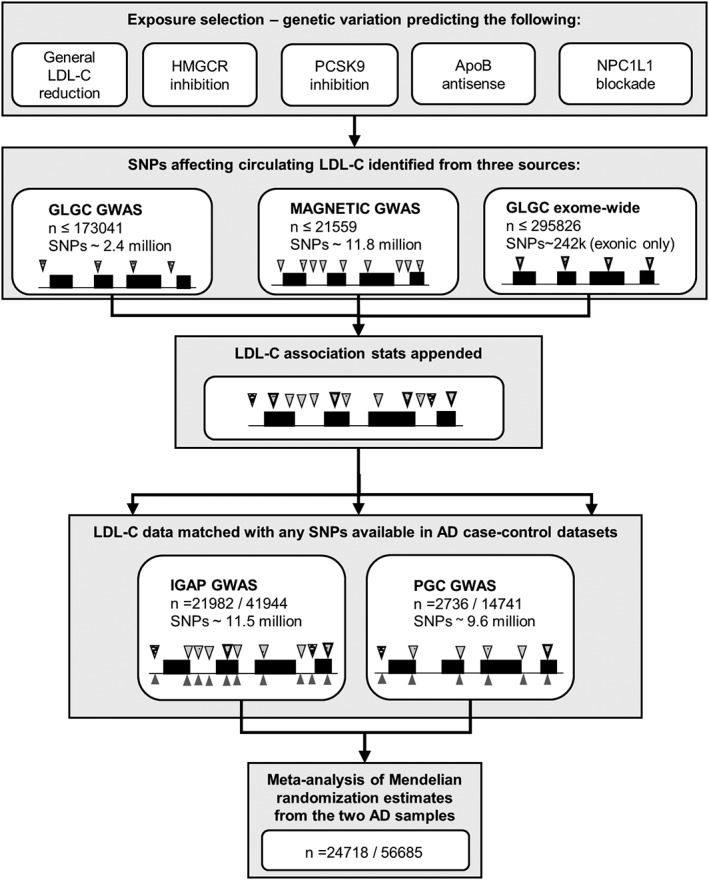
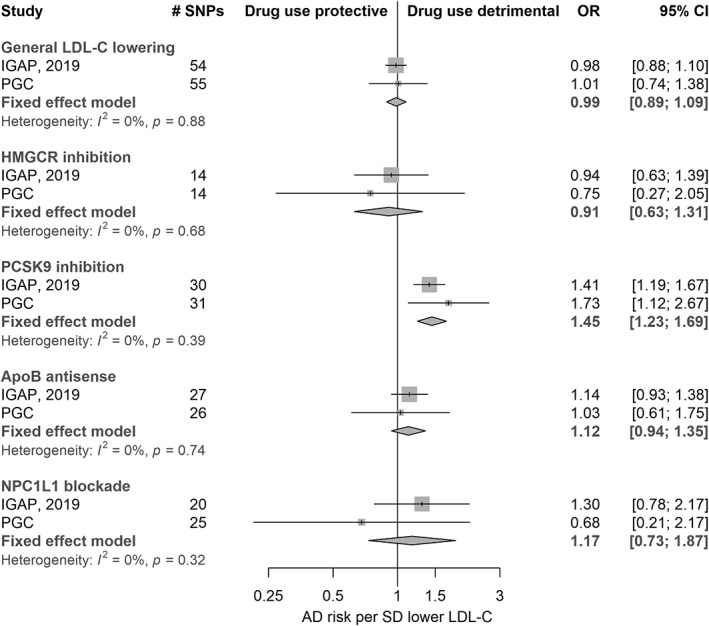
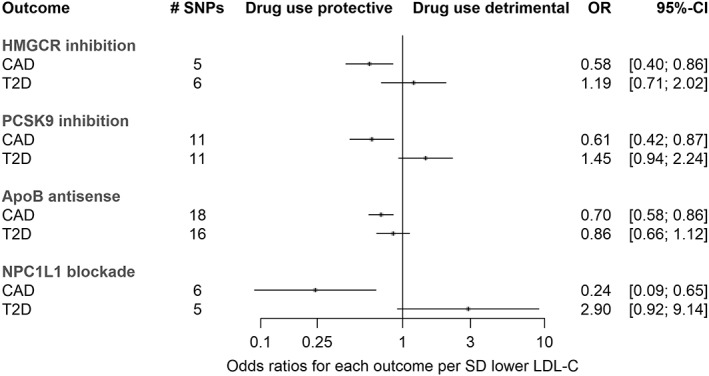
Objective: To examine whether genetic variation affecting the expression or function of lipid‐lowering drug targets is associated with Alzheimer disease (AD) risk, to evaluate the potential impact of long‐term exposure to corresponding therapeutics. Methods: We conducted Mendelian randomization analyses using variants in genes that encode the protein targets of several approved lipid‐lowering drug classes: HMGCR (encoding the target for statins), PCSK9 (encoding the target for PCSK9 inhibitors, eg, evolocumab and alirocumab), NPC1L1 (encoding the target for ezetimibe), and APOB (encoding the target of mipomersen). Variants were weighted by associations with low‐density lipoprotein cholesterol (LDL‐C) using data from lipid genetics consortia (n up to 295,826). We meta‐analyzed Mendelian randomization estimates for regional variants weighted by LDL‐C on AD risk from 2 large samples (total n = 24,718 cases, 56,685 controls). Results: Models for HMGCR, APOB , and NPC1L1 did not suggest that the use of related lipid‐lowering drug classes would affect AD risk. In contrast, genetically instrumented exposure to PCSK9 inhibitors was predicted to increase AD risk in both of the AD samples (combined odds ratio per standard deviation lower LDL‐C inducible by the drug target = 1.45, 95% confidence interval = 1.23–1.69). This risk increase was opposite to, although more modest than, the degree of protection from coronary artery disease predicted by these same methods for PCSK9 inhibition. Interpretation: We did not identify genetic support for the repurposing of statins, ezetimibe, or mipomersen for AD prevention. Notwithstanding caveats to this genetic evidence, pharmacovigilance for AD risk among users of PCSK9 inhibitors may be warranted. ANN NEUROL 2020;87:30–39
Overview
The claims and statistics of this paper haven’t been checked yet.
Run the check — free, no account needed. It reads the open-access text and checks the sources it cites.
Integrity signals
Registry
Cites
Statistics
Figures
Verification
Claims the paper makes
The claims and statistics of this paper haven’t been checked yet.
Run the check — free, no account needed. It reads the open-access text and checks the sources it cites.
Claims other papers make about this one
Each is checked against this paper’s own text: does it say what the citing paper says it does?
The source backs part of the claim, not all of it — or backs it for a different population, condition or comparison.
In the citing paper
“Only one of the reviewed studies reported evidence of increased AD risk associated with drug use, specifically for the PCSK9 inhibitors evolocumab and alirocumab (Williams et al., 2020).”
From Drug repurposing for Alzheimer’s disease from 2012–2022—a 10-year literature review (2023) · cites this paper as Williams et al., 2020
Experimental — accuracy not yet measuredThe source backs part of the claim, not all of it — or backs it for a different population, condition or comparison.
In the citing paper
“Genetic studies show that many of the genes which have risk alleles for AD involve cholesterol/lipid systems16,17.”
From GRAMD1B is a regulator of lipid homeostasis, autophagic flux and phosphorylated tau (2025) · cites this paper as [16]
Experimental — accuracy not yet measuredThe cited source says what the claim attributes to it.
In the citing paper
“As an extension of MR, drug target MR has emerged as efficient way to estimate therapeutic potential by using genetic variants in genes encoding drug targets (referred to as cis variants) to mimic the actions of drugs.”
From Genetic insights into causal effects of lipids and lipid-modifying targets on calcific aortic valve stenosis: a Mendelian randomized study (2025) · cites this paper as [14]
The cited source says what the claim attributes to it.
In the citing paper
“Indeed, the occurrence of undesirable side effects has been questioned in terms of cognitive function [196,197] and negative impact on the immune system regulation that could lead to different inflammatory diseases [104].”
From The Emerging Role of PCSK9 in the Pathogenesis of Alzheimer’s Disease: A Possible Target for the Disease Treatment (2024) · cites this paper as [197]
The cited source says what the claim attributes to it.
In the citing paper
“These drugs included lipid-lowering agents (ezetimibe, mipomersen, and statins) (Williams et al., 2020), antihypertensives (Walker et al., 2020), dimethyl fumarate (approved for the treatment of multiple sclerosis) (Möhle et al., 2021), and drugs commonly used in treatment of rheumatoid arthritis (tofacitinib, tocilizumab, and TNF inhibitors) (Desai et al., 2022).”
From Drug repurposing for Alzheimer’s disease from 2012–2022—a 10-year literature review (2023) · cites this paper as Williams et al., 2020
Self-check
Percentages, sums and reported differences re-computed from the paper’s own numbers.
The self-check needs the paper’s full text.
Citations
Cites
A global reference for human genetic variation
The 1000 Genomes Project Consortium, authors, C., Auton, A., Abecasis, G. R., Steering committee, Altshuler, D. M., Durbin, R. M., Abecasis, G. R., Bentley, D. R., Chakravarti, A., et al. (2015) · Nature · doi:10.1038/nature15393 · Cited by 18,247 · cited 1×
“This method relies on the use of reference data to estimate the correlations between variants in summary GWAS datasets, for which we used correlation matrices derived from 503 participants of European ancestry in the 1000 Genomes project, phase 3.(27) We tested the robustness of using these reference data by inputting…”
MethodAmyloid oligomers exacerbate tau pathology in a mouse model of tauopathy
Selenica, M.-L. B., Brownlow, M., Jimenez, J. P., Lee, D. C., Pena, G., Dickey, C. A., Gordon, M. N., & Morgan, D. (2013) · Neurodegenerative Diseases · doi:10.1159/000337230 · Cited by 10,359
Bowden, J., Davey Smith, G., & Burgess, S. (2015) · International Journal of Epidemiology · doi:10.1093/ije/dyv080 · Cited by 9,816 · cited 1×
“We repeated analyses using alternative methods—weighted median and MR Egger estimators—which provide different degrees of robustness to bias from genetic pleiotropy.(24,25) For the primary gene (drug target)-specific models, data on all successfully harmonized SNPs within the gene regions ( 1 kilobase flank) were elig…”
MethodSelf-citationBowden, J., Davey Smith, G., Haycock, P. C., & Burgess, S. (2016) · Genetic Epidemiology · doi:10.1002/gepi.21965 · Cited by 8,922 · cited 1×
“We repeated analyses using alternative methods—weighted median and MR Egger estimators—which provide different degrees of robustness to bias from genetic pleiotropy.(24,25) For the primary gene (drug target)-specific models, data on all successfully harmonized SNPs within the gene regions ( 1 kilobase flank) were elig…”
MethodSelf-citationThe MR-Base platform supports systematic causal inference across the human phenome
Hemani, G., Zheng, J., Elsworth, B., Wade, K. H., Haberland, V., Baird, D., Laurin, C., Burgess, S., Bowden, J., Langdon, R., et al. (2018) · eLife · doi:10.7554/elife.34408 · Cited by 7,959
Self-citationMendelian Randomization Analysis With Multiple Genetic Variants Using Summarized Data
Burgess, S., Butterworth, A., & Thompson, S. G. (2013) · Genetic Epidemiology · doi:10.1002/gepi.21758 · Cited by 6,050 · cited 6×
“32 Volume 87, No. 1 ANNALS of Neurology To assess a potential effect of LDL-C lowering on AD, regardless of drug target, we used the fixed-effects inverse variance weighted (IVW) meta-analysis method, which combines ratios of coefficients (Wald estimators) for the association estimates of each eligible SNP with LDL-C…”
MethodInfluentialSelf-citationMendelian randomization: Using genes as instruments for making causal inferences in epidemiology
Lawlor, D. A., Harbord, R. M., Sterne, J. A. C., Timpson, N., & Davey Smith, G. (2008) · Statistics in Medicine · doi:10.1002/sim.3034 · Cited by 4,618 · cited 1×
“Because genotypes are inherited randomly at conception in an analogous manner to treatment allocation in clinical trials, associations of variants with biomarkers and disease outcomes are not expected to be subject to biases from confounding and reverse causation seen in other types of observational epidemiology—a pri…”
BackgroundCognitive reserve in ageing and Alzheimer's disease
Stern, Y. (2012) · The Lancet Neurology · doi:10.1016/s1474-4422(12)70191-6 · Cited by 3,557
Willer (2013) · doi:10.1038/ng.2797 · Cited by 2,983
Alzheimer Disease Genetics Consortium (ADGC), Kunkle, B. W., The European Alzheimer’s Disease Initiative (EADI), Cohorts for Heart and Aging Research in Genomic Epidemiology Consortium (CHARGE), Genetic and Environmental Risk in AD/Defining Genetic, P. A. E. R. F. A. D. C. (., Grenier-Boley, B., Sims, R., Bis, J. C., Damotte, V., Naj, A. C., et al. (2019) · Nature Genetics · doi:10.1038/s41588-019-0358-2 · Cited by 2,946 · cited 2×
“Full information on genetic quality control procedures and association modeling are provided in the study references.(19,20)”
Method
Research works printed but not linked: 2
- McGuinness B, 2016, Statins for the prevention of dementia, Cochrane Database Syst Rev, 1, CD003160
- 10.1136/bmj.j1648 · DOI · Paper page
Cited by
Sorted by citations
Zuber, V., Grinberg, N. F., Gill, D., Manipur, I., Slob, E. A. W., Patel, A., Wallace, C., & Burgess, S. (2022) · The American Journal of Human Genetics · doi:10.1016/j.ajhg.2022.04.001 · Cited by 532
“79 We next perform colocalization analyses with these traits.”
Self-citationOlmastroni, E., Molari, G., De Beni, N., Colpani, O., Galimberti, F., Gazzotti, M., Zambon, A., Catapano, A. L., & Casula, M. (2022) · European Journal of Preventive Cardiology · doi:10.1093/eurjpc/zwab208 · Cited by 197
Fang, J., Zhang, P., Zhou, Y., Chiang, C.-W., Tan, J., Hou, Y., Stauffer, S., Li, L., Pieper, A. A., Cummings, J., et al. (2021) · Nature Aging · doi:10.1038/s43587-021-00138-z · Cited by 206
Association of lipid-lowering drugs with COVID-19 outcomes from a Mendelian randomization study
Huang, W., Xiao, J., Ji, J., & Chen, L.-W. (2021) · eLife · doi:10.7554/elife.73873 · Cited by 163
“Proprotein convertase subtilisin/kexin type 9 (PCSK9) and Niemann–Pick C1-Like 1 (NPC1L1) are proteins playing a crucial role for the circulating level of low-density lipoprotein cholesterol (LDL-C) ( Sabatine, 2019 ; Williams et al., 2020 ).”
Cholesteryl ester transfer protein (CETP) as a drug target for cardiovascular disease
Schmidt, A. F., Hunt, N. B., Gordillo‐Marañón, M., Charoen, P., Drenos, F., Casas, J. P., Mika Kivimaki, B., Lawlor, D. A., Giambartolomei, C., Papacosta, O., et al. (2021) · Nature Communications · doi:10.1038/s41467-021-25703-3 · Cited by 142
Self-citationLi, Z., Zhang, B., Liu, Q., Tao, Z., Ding, L., Guo, B., Zhang, E., Zhang, H., Meng, Z., Guo, S., et al. (2023) · EBioMedicine · doi:10.1016/j.ebiom.2023.104543 · Cited by 136
Mendelian Randomization Study of PCSK9 and HMG-CoA Reductase Inhibition and Cognitive Function
Rosoff, D. B., Bell, A. S., Jung, J., Wagner, J., Mavromatis, L. A., & Lohoff, F. W. (2022) · Journal of the American College of Cardiology · doi:10.1016/j.jacc.2022.05.041 · Cited by 126
Proprotein Convertase Subtilisin/Kexin Type 9
Macchi, C., Ferri, N., Sirtori, C. R., Corsini, A., Banach, M., & Ruscica, M. (2021) · American Journal Of Pathology · doi:10.1016/j.ajpath.2021.04.016 · Cited by 103
Cholesterol as a key player in amyloid β-mediated toxicity in Alzheimer’s disease
Rudajev, V., & Novotny, J. (2022) · Frontiers in Molecular Neuroscience · doi:10.3389/fnmol.2022.937056 · Cited by 94
“Although some results do not confirm the beneficial effects of statins in terms of AD development (Ott et al., 2015; de Oliveira et al., 2017; Schultz et al., 2018; Williams et al., 2020), numerous data suggest improvement in cognitive and memory functions and reduction in the risk of developing dementia (Jick et al.”
ResultGoldstein, L. B., Toth, P. P., Dearborn, J. L., Giugliano, R. P., Hirsh, B. J., Peña, J. M., Selim, M. H., & Woo, D. (2023) · Arteriosclerosis Thrombosis and Vascular Biology · doi:10.1161/atv.0000000000000164 · Cited by 99
Using human genetics to improve safety assessment of therapeutics
Carss, K., Deaton, A. M., Río-Espínola, A. D., Diogo, D., Fielden, M. R., Kulkarni, D. A., Moggs, J. G., Newham, P., Nelson, M. R., Sistare, F. D., et al. (2022) · Nature Reviews Drug Discovery · doi:10.1038/s41573-022-00561-w · Cited by 90
Statin therapy and risk of Alzheimer's and age‐related neurodegenerative diseases
Torrandell‐Haro, G., Branigan, G. L., Vitali, F., Geifman, N., Zissimopoulos, J., & Brinton, R. D. (2020) · Alzheimer s & Dementia Translational Research & Clinical Interventions · doi:10.1002/trc2.12108 · Cited by 79
Cholesterol Metabolism in Aging and Age-Related Disorders
Saher, G. (2023) · Annual Review of Neuroscience · doi:10.1146/annurev-neuro-091922-034237 · Cited by 88
“In a meta-analysis, lipid-lowering medication either did not affect AD risk or suggested an increased risk of developing AD (Williams et al. 2020).”
BackgroundLipids and peripheral neuropathy
Iqbal, Z., Bashir, B., Ferdousi, M., Kalteniece, A., Alam, U., Malik, R. A., & Soran, H. (2021) · Current Opinion in Lipidology · doi:10.1097/mol.0000000000000770 · Cited by 76
Novel insights into causal effects of serum lipids and lipid-modifying targets on cholelithiasis
Chen, L., Qiu, W., Sun, X., Gao, M., Zhao, Y., Li, M., Fan, Z., & Lv, G. (2023) · Gut · doi:10.1136/gutjnl-2023-330784 · Cited by 65
“48 Thus, it is hard to compare the magnitude of MR estimates with that of clinical trials.”
BackgroundStatins and cognition: Modifying factors and possible underlying mechanisms
Jamshidnejad-Tosaramandani, T., Kashanian, S., Al-Sabri, M. H., Kročianová, D., Clemensson, L. E., Gentreau, M., & Schiöth, H. B. (2022) · Frontiers in Aging Neuroscience · doi:10.3389/fnagi.2022.968039 · Cited by 60
“However, Mendelian randomization analyses led on HMGCR did not suggest that the use of statins could alter AD risk (Williams et al., 2020).”
BackgroundLipids, Apolipoproteins, Statins, and Intracerebral Hemorrhage: A Mendelian Randomization Study
Zhou, Y., Zhang, L., Zhang, G., Xia, K., Yang, Q., Huang, T., & Fan, D. (2022) · Annals of Neurology · doi:10.1002/ana.26426 · Cited by 55
“Therefore, peripheral administration of antiApoC3 antibodies may not lead to cerebral exposure, which means that the genetically instrumented risk might not be relevant in therapeutic practice.(37) The advantages of the present study include the following aspects.”
BackgroundDrug repurposing for Alzheimer’s disease from 2012–2022—a 10-year literature review
Grabowska, M. E., Huang, A., Wen, Z., Li, B., & Wei, W.-Q. (2023) · Frontiers in Pharmacology · doi:10.3389/fphar.2023.1257700 · Cited by 55
“These drugs included lipid-lowering agents (ezetimibe, mipomersen, and statins) (Williams et al., 2020), antihypertensives (Walker et al., 2020), dimethyl fumarate (approved for the treatment of multiple sclerosis) (Möhle et al., 2021), and drugs commonly used in treatment of rheumatoid arthritis…”
BackgroundSu, C., Hou, Y., Xu, J., Xu, Z., Zhou, M., Ke, A., Li, H., Xu, J., Brendel, M., Maasch, J. R. M. A., et al. (2024) · npj Digital Medicine · doi:10.1038/s41746-024-01175-9 · Cited by 56
“Causalmethods,suchasMendelianrandomizationstudies 79,80 , should be utilized in the future.”
The translational potential of cholesterol-based therapies for neurological disease
Valenza, M., Birolini, G., & Cattaneo, E. F. (2023) · Nature Reviews Neurology · doi:10.1038/s41582-023-00864-5 · Cited by 48
Lipids, lipid-modifying drug target genes and migraine: a Mendelian randomization study
Bi, Y., Zhu, Y., Tang, S., & Huang, Y. (2023) · The Journal of Headache and Pain · doi:10.1186/s10194-023-01633-x · Cited by 41
“To mimic the lipid-modifying effect of the drug targets, we selected SNPs within a 100 kb window region of each gene associated with relevant lipid traits at a genome-wide significance level, following the approach employed in previous studies [21, 22].”
MethodInsight into the Evolving Role of PCSK9
Maligłówka, M., Kosowski, M., Hachuła, M., Cyrnek, M., Bułdak, Ł., Basiak, M., Bołdys, A., Machnik, G., Bułdak, R. J., & Okopień, B. (2022) · Metabolites · doi:10.3390/metabo12030256 · Cited by 41
“Although theoretical models suggest that exposure to PCSK9 inhibitors may increase the risk of AD [160], it has not been confirmed by the experimental data so far.”
BackgroundHuman Genomics and Drug DevelopmentPreprint
Schmidt, A. F., Hingorani, A. D., & Finan, C. (2021) · Cold Spring Harbor Perspectives in Medicine · doi:10.1101/cshperspect.a039230 · Cited by 40
Self-citationProprotein convertase subtilisin/kexin type 9 (PCSK9) in the central nervous system
Bell, A. S., Wagner, J., Rosoff, D. B., & Lohoff, F. W. (2023) · Neuroscience & Biobehavioral Reviews · doi:10.1016/j.neubiorev.2023.105155 · Cited by 36
Zhang, X., Geng, T., Li, N., Wu, L., Wang, Y., Zheng, D., Guo, B., & Wang, B. (2022) · Nutrients · doi:10.3390/nu15010069 · Cited by 35
“Ezetimibe appears to act by targeting Niemann-Pick C1-like protein (NPC1L1), which is involved in cholesterol cellular uptake [17].”
BackgroundShared signaling pathways in Alzheimer’s and metabolic disease may point to new treatment approaches
Suresh, J., Khor, I. W., Kaur, P., Heng, H. L., Torta, F. T., Dawe, G. S., Tai, E. S., & Tolwinski, N. S. (2020) · FEBS Journal · doi:10.1111/febs.15540 · Cited by 34
Coming Back to Physiology: Extra Hepatic Functions of Proprotein Convertase Subtilisin/Kexin Type 9
Schlüter, K., Wolf, A., & Schreckenberg, R. (2020) · Frontiers in Physiology · doi:10.3389/fphys.2020.598649 · Cited by 35
Ou, Y., Yang, Y., Shen, X., Ma, Y., Chen, S.-D., Dong, Q., Tan, L., & Yu, J. (2021) · Alzheimer s Research & Therapy · doi:10.1186/s13195-021-00782-y · Cited by 33
The landscape of the methodology in drug repurposing using human genomic data: a systematic review
Wang, L., Lü, Y., Li, D., Zhou, Y., Yu, L., Mesa‐Eguiagaray, I., Campbell, H. J., Li, X., & Τheodoratou, E. (2024) · Briefings in Bioinformatics · doi:10.1093/bib/bbad527 · Cited by 32
Liu, H., Li, J., Liu, F., Huang, K., Cao, J., Chen, S., Li, H., Shen, C., Hu, D., Huang, J., et al. (2023) · European Journal of Preventive Cardiology · doi:10.1093/eurjpc/zwad111 · Cited by 26
McCarty, M. F., DiNicolantonio, J. J., & Lerner, A. (2021) · International Journal of Molecular Sciences · doi:10.3390/ijms22042140 · Cited by 27
Martin, L., Boutwell, B. B., Messerlian, C., & Adams, C. D. (2024) · Communications Biology · doi:10.1038/s42003-024-05887-2 · Cited by 26
“This fi nding for APOB in relation to AD con fl icts with that by Williams et al. (2020) 33 , who sought to identify genetic support for the repurposing of mipomersen (an antisense oligonucleotide inhibitor of APOB 34 ) for AD prevention.”
BackgroundHypercholesterolemia and the Increased Risk of Vascular Dementia: a Cholesterol Perspective
Shang, G., Shao, Q., Lv, K., Xu, W., Ji, J., Fan, S., Kang, X., Cheng, F., Wang, X., & Wang, Q. (2024) · Current Atherosclerosis Reports · doi:10.1007/s11883-024-01217-3 · Cited by 24
“Nevertheless, the MR study did not find evidence to support the repurposing of statins to postpone or avoid the onset of AD [121].”
The Interface of Therapeutics and Genomics in Cardiovascular Medicine
Magavern, E. F., Kaski, J. C., Turner, R. M., Janmohamed, A., Borry, P., & Pirmohamed, M. (2021) · Cardiovascular Drugs and Therapy · doi:10.1007/s10557-021-07149-3 · Cited by 22
Bell, A. S., Rosoff, D. B., Mavromatis, L. A., Jung, J., Wagner, J., & Lohoff, F. W. (2022) · Journal of the American Heart Association · doi:10.1161/jaha.122.026122 · Cited by 19
Exploring the Role of Plasma Lipids and Statin Interventions on Multiple Sclerosis Risk and Severity
Almramhi, M. M., Finan, C., Storm, C. S., Schmidt, A. F., Kia, D. A., Coneys, R., Chopade, S., Hingorani, A. D., & Wood, N. W. (2023) · Neurology · doi:10.1212/wnl.0000000000207777 · Cited by 16
“14”
Self-citationRosoff, D. B., Bell, A. S., Wagner, J., Mavromatis, L. A., Hamandi, A. M., Park, L. Y., Jung, J., & Lohoff, F. W. (2023) · Cellular and Molecular Gastroenterology and Hepatology · doi:10.1016/j.jcmgh.2023.09.001 · Cited by 16
“18 In addition, because the 2021 GLGC meta-analysis incorporated LDL-C data from UK Biobank participants, there exists some potential for bias due to sample overlap in our analyses 68,69 ; however, it has been recently shown that 2-sample MR may be used in single samples when the data are derived…”
MethodTesta, G., Giannelli, S., Staurenghi, E., Cecci, R., Floro, L., Gamba, P., Sottero, B., & Leonarduzzi, G. (2024) · International Journal of Molecular Sciences · doi:10.3390/ijms252413637 · Cited by 14
“…some meta-analyses reported that, though these inhibitors significantly decreased LDL levels, they increased the incidence of neurocognitive impairments, thus suggesting that any impact of PCSK9 activity on the brain was independent from its regulation of peripheral cholesterol [196,197].”
Gouverneur, A., Sanchez-Peña, P., Veyrac, G., Salem, J., Bégaud, B., & Bezin, J. (2021) · Cardiovascular Drugs and Therapy · doi:10.1007/s10557-021-07242-7 · Cited by 14
“Moreover, a recent Mendelian randomization study showed that among genes that encode the protein targets of lipid-lowering drug classes, only those coding for PCSK9 inhibitors could increase risk of Alzheimer disease [7].”
BackgroundGRAMD1B is a regulator of lipid homeostasis, autophagic flux and phosphorylated tau
Acosta Ingram, D., Turkes, E., Kim, T. Y., Vo, S., Sweeney, N., Bonte, M.-A., Rutherford, R., Julian, D. L., Pan, M., Marsh, J., et al. (2025) · Nature Communications · doi:10.1038/s41467-025-58585-w · Cited by 12
“Geneticstudiesshowthatmanyof the genes which have risk alleles for AD involve cholesterol/lipid systems 16,17 .”
Kang, T., Zhou, Y., Fan, C., Zhang, Y., Yu, Y., & Jiang, J. C. (2024) · The EPMA Journal · doi:10.1007/s13167-024-00373-5 · Cited by 11
“Recently, MR analyses have been widely used to predict the potential effects of drug targets on cardiovascular diseases [32], neurological diseases [33], and neoplasms [34].”
Lee, M., Lee, K. J., Kim, J., Lee, D. Y., Park, R. W., Rhee, S. Y., Cha, J. M., Yang, H., Jang, J., Jung, S., et al. (2025) · Journal of Neurology Neurosurgery & Psychiatry · doi:10.1136/jnnp-2024-334708 · Cited by 11
Feng, X., Zhang, L., Hou, Y., Ma, W., Ma, J., Chang, X., & Yang, L. (2024) · The Journal of Prevention of Alzheimer s Disease · doi:10.14283/jpad.2024.30 · Cited by 10
Unraveling the role of proteins in dementia: insights from two UK cohorts with causal evidence
Gong, J., Williams, D. M., Scholes, S., Assaad, S., Bu, F., Hayat, S. A., Zaninotto, P., & Steptoe, A. (2025) · Brain Communications · doi:10.1093/braincomms/fcaf097 · Cited by 17
Self-citationThe safety and efficacy of Ezetimibe Plus Statins on ASVD and Related Diseases
Wan, S., Ding, Y., Ji, X., & Meng, R. (2021) · Aging and Disease · doi:10.14336/ad.2021.0412 · Cited by 9
“Then they performed a meta-analysis of Mendelian randomization estimates for LDL-C-weighted regional variants on Alzheimer’s disease (AD) risk from 2 large samples and found that the HMGCR and NPC1L1 models did not indicate that the use of related lipidlowering drug classes would affect the risk for AD [78].”
MethodGenetically Determined Low‐Density Lipoprotein Cholesterol and Risk of Subarachnoid Hemorrhage
Acosta, J., Both, C. P., Szejko, N., Leasure, A. C., Abdelhakim, S., Torres‐Lopez, V., Brown, S. C., Matouk, C. C., Günel, M., Sheth, K. N., et al. (2021) · Annals of Neurology · doi:10.1002/ana.26250 · Cited by 9
“target genes (HMGCR, PCSK9, and NPC1L1) to conduct separate MR analyses.(13) Instruments for primary and secondary ana-”
BackgroundPham, K., Mulugeta, A., Lumsden, A. L., & Hyppönen, E. (2023) · British Journal of Clinical Pharmacology · doi:10.1111/bcp.15793 · Cited by 9
“Previous genetic studies of LDL-C lowering via PCSK9 reported detrimental effects on risk of Alzheimer's disease and depression.(68,69) Given that in the UK Biobank the neuroimaging biomarkers have been collected from a significantly smaller sample size (n ≤ 27 117) than the serum, urine and clinical markers, we may s…”
BackgroundVascular and Alzheimer Disease in Dementia
Strandberg, T. E., Tienari, P. J., & Mika Kivimaki, B. (2020) · Annals of Neurology · doi:10.1002/ana.25715 · Cited by 9
Gong, J., Williams, D. M., Scholes, S., Assaad, S., Bu, F., Hayat, S. A., Zaninotto, P., & Steptoe, A. (2024) · medRxiv · doi:10.1101/2024.06.04.24308415 · Cited by 8
Self-citationA review on the efficacy and safety of lipid-lowering drugs in neurodegenerative disease
Rajabian, A., McCloskey, A. P., Jamialahmadi, T., Moallem, S. A., & Sahebkar, A. (2023) · Reviews in the Neurosciences · doi:10.1515/revneuro-2023-0005 · Cited by 7
Ding, M., Wennberg, A. M. V., Engström, G., & Modig, K. (2024) · Alzheimer s & Dementia · doi:10.1002/alz.14389 · Cited by 8
Zhao, J., Chen, R., Luo, M., Gong, H., Li, K., & Zhao, Q. (2024) · Diabetology & Metabolic Syndrome · doi:10.1186/s13098-023-01252-1 · Cited by 7
“In this study, by targeting specific pathways involved in lipid metabolism, such as the drug-target MR analysis of lipid-related genes [24], we aimed to uncover the potential association between lipid-lowering drugs and incidence of IBD [25–27].”
BackgroundZhang, Y., Jiang, Z., Chen, L., Lei, T., & Zheng, X. (2024) · Journal of Translational Medicine · doi:10.1186/s12967-024-05359-5 · Cited by 7
“Previous studies have suggested that statins may have therapeutic effects on diseases beyond their lipid-lowering function, such as Alzheimer’s disease [25].”
BackgroundCai, G., Liu, J., Cai, M., & Shao, L. (2024) · Lipids in Health and Disease · doi:10.1186/s12944-024-02218-6 · Cited by 7
“A larger F statistic (> 10) suggests a little chance of weak instrumental variable bias [21, 22]; (2) Independence assumption: The IVs should be uncon-founded, meaning they are unrelated to factors that could affect both exposure and outcome, ensuring that the observed associations are uniquely due…”
BackgroundZhao, J., Wang, R., Song, L., Han, H., Wang, P., Zhao, Y., Zhang, Y., & Zhang, H. (2023) · Frontiers in Endocrinology · doi:10.3389/fendo.2023.1295412 · Cited by 7
“The level of evidence provided by MR analysis is considered to be second only to randomized controlled studies (19, 25, 27, 28).”
Huang, J., Lin, Z., Lin, J., Xie, S., Xia, S., Chen, G., Zheng, Z., Xu, Z., Liu, F., Wu, H., et al. (2023) · Thorax · doi:10.1136/thorax-2023-220789 · Cited by 6
“15 16 In this study, we aimed to elucidate the causal effect of lipid profiles on PAP using a large observational patient cohort and MR analysis and to identify potential mediating factors and drug targets.”
BackgroundSparse Variable Selection on High Dimensional Heterogeneous Data With Tree Structured Responses
Liu, H., Liu, X., Diao, J., Ye, W., Liu, X., & Wei, D. (2024) · IEEE Access · doi:10.1109/access.2024.3384309 · Cited by 6
“…(also called GRAF2 ), which is an important paralogon of ARHGAP26 that closely related to the Alzheimer’s disease [55] and affects the developmentally regulated expression of the GRAF proteins that promote lipid droplet clustering and growth, and is enriched at lipid droplet junctions [54], [56].”
BackgroundUnlocking the Medicinal Mysteries: Preventing Lacunar Stroke with Drug Repurposing
Zhang, L., Fan, W., Xia, K., Zhou, Y., Fu, Y., Huang, T., & Fan, D. (2023) · Biomedicines · doi:10.3390/biomedicines12010017 · Cited by 6
“Drug-target MR can demonstrate the effect of modifying biomarkers through specific therapeutic targets on long-term health outcomes [36].”
BackgroundLife course plasma metabolomic signatures of genetic liability to Alzheimer’s disease
Compton, H., Smith, M. L., Bull, C. J., Korologou‐Linden, R., Ben‐Shlomo, Y., Bell, J. A., Williams, D. M., & Anderson, E. L. (2024) · Scientific Reports · doi:10.1038/s41598-024-54569-w · Cited by 7
“That said, other MR studies have found little evidence of an effect of lipid-related traits on AD risk 34 .”
BackgroundSelf-citationNiu, Q., Zhang, T., Mao, R., Zhao, N., & Deng, S. (2024) · Scientific Reports · doi:10.1038/s41598-024-69180-2 · Cited by 5
Baik, K., Kang, M., Park, Y. J., Chung, S. J., Oh, K., Koh, S., & Kang, S. H. (2025) · Scientific Reports · doi:10.1038/s41598-025-16620-2 · Cited by 6
“Higher LDL was related to an increased Aβ burden 53,54 ; however, DAT risk may be lower in patients treated with statin 54,55 .”
Meng, X., Li, X., Cao, M., Dong, J., Wang, H., Cao, W., Liu, D., & Wang, Y. (2025) · Systematic Reviews · doi:10.1186/s13643-025-02792-5 · Cited by 6
“MR studies indicated that the use of lipid-lowering drugs (PCSK9 inhibitors) was associated with an increased risk of AD [34], whereas the overall use of antihypertensive medications and reduction in SBP through variants in genes encoding targets of calcium channel blockers were associated with a…”
Li, W., Li, H., Zha, C., Che, B., Yu, Y. Q., Yang, J., & Li, T. (2024) · Frontiers in Endocrinology · doi:10.3389/fendo.2024.1392533 · Cited by 5
“Furthermore, to simulate the lipid modi fi cation effect of these targets, we followed the methods used in previous studies (31, 32), utilized summary-level data from GWAS of lipid traits (LDL-C, HDL-C, and TG) to determine the genetic instrument variables of these drugs.”
MethodPrecision health in Alzheimer disease: Risk assessment‐based strategies
Azar, J., Salama, M., Chidambaram, S. B., Al‐Balushi, B., Essa, M. M., & Qoronfleh, M. W. (2021) · Precision Medical Sciences · doi:10.1002/prm2.12036 · Cited by 7
“Some studies suggest that PCSK9 inhibitors might be more useful in the prevention of AD compared to statins.(142)”
Zhu, X., Xu, Y., Li, L., Sun, J., Wang, Y., Chen, J., Wang, C., Zhang, S., & Jin, L. (2024) · Drug Development Research · doi:10.1002/ddr.22131 · Cited by 5
“…emerging clinical data have revealed that low PCSK9 level (PCSK9 deficiency or PCSK9 inhibitors) may play a significant role in destroying neurocognition and increasing the risk of depression, as well as Alzheimer's disease (AD) (Bell et al., 2022; Gouverneur et al., 2023; Williams et al., 2020).”
BackgroundResultInfluentialAre lipid-lowering drugs harmful to cognitive performance?: A Mendelian randomization study
Han, L., Su, C., Lian, R., Han, J., Fan, X., & Gao, L. (2025) · Medicine · doi:10.1097/md.0000000000044260 · Cited by 4
“[3,17] For ezetimibe, fibrates, and other lipid-lowering drugs, there are no related clinical studies regarding their impact on cognitive performance.”
Selecting invalid instruments to improve Mendelian randomization with two-sample summary data
Patel, A., DiTraglia, F. J., Zuber, V., & Burgess, S. (2024) · The Annals of Applied Statistics · doi:10.1214/23-aoas1856 · Cited by 6
“We also find genetic evidence that PCSK9 inhibition may adversely affect the risk of developing Alzheimer’s disease, which supports the findings of Williams et al. (2020) and Schmidt et al. (2021).”
Self-citationIs the Relationship Between Cardiovascular Disease and Alzheimer’s Disease Genetic? A Scoping Review
Moore, A. K., & Ritchie, M. D. (2024) · Genes · doi:10.3390/genes15121509 · Cited by 5
Fu, L., Liu, Q., Cheng, H., Zhao, X., Xiong, J., & Mi, J. (2025) · Journal of the American Heart Association · doi:10.1161/jaha.124.038857 · Cited by 4
“16,17 The previous studies 18–22 have some shortcomings: (1) most of the mentioned studies are focused on ischemic heart diseases, CHD, and type 2 diabetes, and it is not known what impacts lipids and lipid-targeting drugs have on other cardiometabolic conditions; (2) lipid-drug targets influence…”
Zhao, Y., Du, D., Wei, L., & Chen, Z. (2023) · Heliyon · doi:10.1016/j.heliyon.2023.e20230 · Cited by 4
“Several studies have successfully utilized the MR method to establish causal links between blood lipids and cardiovascular disease [14,15], Alzheimer ’ s disease [16], and various cancers [17].”
MethodHuang, S., Liu, Y., Zhang, Y., Wang, Y., Gao, Y., Li, R., Yu, L., Hu, X., & Fang, Q. (2024) · Frontiers in Neurology · doi:10.3389/fneur.2024.1331537 · Cited by 4
“Additionally, the proteins Niemann-Pick C1-like 1 (NPC1L1) and proprotein convertase subtilisin/kexin type 9 (PCSK9) play critical roles in controlling levels of circulating low-density lipoprotein cholesterol (LDL-C) (17, 18).”
BackgroundSu, C., Hou, Y., Xu, J., Xu, Z., Xu, J., Brendel, M., Maasch, J. R. M. A., Bai, Z., Zhang, H., Zhu, Y., et al. (2021) · medRxiv · doi:10.1101/2021.07.18.21260731 · Cited by 4
Wu, C., Pu, Q., Zou, Y., Jin, J., Lei, Y., Hu, Y., Chen, Z., & Yu, L. (2025) · Scientific Reports · doi:10.1038/s41598-025-15525-4 · Cited by 3
“This approach has also been widely applied to predict likely beneficial effects of drug targets on cardiovascular diseases 13 , neurological diseases 14 and cancers 15 .”
Petek, B., Mo, M., Xu, H., Norgren, J., Hoang, M. T., Villa‐Lopez, M., Häbel, H., Kele, J., Naia, L., Maioli, S., et al. (2025) · Journal of Alzheimer s Disease Reports · doi:10.1177/25424823251385903 · Cited by 3
“85 A Mendelian randomization study by Williams 86 In line with our results, this suggests that the rationale for repurposing statins in the cognitive fi eld may be based on mechanisms other than LDL-C lowering.”
Correia, J. P. S., Campos, A. L. B., Correia, S. S., & Nascimento, C. S. (2021) · Research Society and Development · doi:10.33448/rsd-v10i4.14391 · Cited by 3
Zhou, K., Yang, H., Xie, Z., Wang, W., & Qu, Z. (2024) · BMC Pharmacology and Toxicology · doi:10.1186/s40360-023-00718-2 · Cited by 3
“…the potential connections between various drug treatments and certain diseases, such as antihypertensive drugs and psychiatric disorders [17], antihyper-glycemic drugs and Parkinson’s disease [18] and the risk of lipid-lowering drugs, antihyperglycemic drugs and Alzheimer’s disease [19, 20].”
BackgroundLu, J., Liu, Y., Wang, Z., Zhou, K., Pan, Y., Zhong, S., & Jiang, G. (2024) · JACC Asia · doi:10.1016/j.jacasi.2024.07.011 · Cited by 3
Ma, K., Wang, H., Du, Y., Chen, T., Yang, D., Li, Y., & Li, D. (2025) · Food Science & Nutrition · doi:10.1002/fsn3.70293 · Cited by 2
“…subtilisin/kexin type 9 (PCSK9) and Niemann–Pick C1-Like 1 (NPC1L1) are novel targets for lipid-lowering drugs, playing a crucial role in regulating circulating low-density lipoprotein levels, and both have received Food and Drug Administration approval (Sabatine 2019; Williams et al. 2020).”
Palmer, J. C., Hart, E. C., Anderson, E. L., Love, S., & Lawlor, D. A. (2025) · BMC Medicine · doi:10.1186/s12916-025-04295-5 · Cited by 3
“Genetic instrumental variable analyses have been previously used to explore risk factors for Alzheimer’s disease, including effects of disrupted sleep, BP, and lipid-lowering drug targets [20–28, 59, 60].”
Zhang, L., Zhang, L., Zhao, J., Zhang, W. Y., & Zhang, H. (2025) · Molecular Neurobiology · doi:10.1007/s12035-025-05424-0 · Cited by 3
“This contrasts with findings in other populations: while one study reported that genotypic suppression of PCSK9 correlates with increased AD risk [105], others found no such association.”
Ma, Y., Xu, L., Lin, Y., Zhu, J., Liu, J., Wang, L., & Chen, L. (2025) · Kidney Diseases · doi:10.1159/000548430 · Cited by 2
Liu, X., Liu, X., Diao, J., Zheng, M., Li, J., Xie, Y., Lai, K., Geng, X., Song, Y., & Jiang, L. (2024) · IEEE International Conference on Bioinformatics and Biomedicine (BIBM) · doi:10.1109/bibm62325.2024.10822861 · Cited by 2
Liu, M., Yin, N., Zhu, Y., Du, A., Cai, C.-Y., & Leng, P. (2025) · Frontiers in Endocrinology · doi:10.3389/fendo.2024.1398023 · Cited by 2
MosGraphFlow: a novel integrative graph AI model mining signaling targets from multi-omic data
Zhang, H., Cao, D., Xu, T., Chen, E., Li, G., Chen, Y., Payne, P., Province, M. A., & Li, F. (2025) · BMC Methods · doi:10.1186/s44330-025-00041-8 · Cited by 3
“Lipid and Atherosclerosis pathway is critically involved in AD progression due to its impact on vascular health and hemostatic balance [60].”
Skutki hamowania funkcji PCSK9 w obrębie wybranych tkanek *
Maligłówka, M., Bułdak, Ł., Okopień, B., & Bołdys, A. (2021) · Postępy Higieny i Medycyny Doświadczalnej · doi:10.5604/01.3001.0014.9127 · Cited by 2
Zhao, T., Li, H., Zhang, M., Xu, Y. Y., Zhang, M., & Chen, L. (2024) · eLife · doi:10.7554/elife.96224.3 · Cited by 3
PCSK9 in extrahepatic tissues: What can we expect from its inhibition?
Pirillo, A., Tokgözoğlu, L. S., & Catapano, A. L. (2023) · European Atherosclerosis Journal · doi:10.56095/eaj.v2i2.47 · Cited by 1
“The results of a Mendelian randomisation study have raised the possibility that exposure to PCSK9 inhibitors may predispose individuals to AD (36).”
Wen, S., Li, Z., Qiu, B., Zhang, Q., Zeng, Y., Zheng, S., Chen, N., Zou, J., Huang, G., & Zeng, Q. (2025) · Nutrition Metabolism and Cardiovascular Diseases · doi:10.1016/j.numecd.2025.104198 · Cited by 1
Diawara, A., Traore, M., Diabaté, O., Kintu, C., Saeed, A. A., Abiola, J. O., Cissé, C., Traore, K., Wélé, M., Nash, O., et al. (2024) · Research Square · doi:10.21203/rs.3.rs-3956597/v1 · Cited by 1
Zhao, T., Li, H., Zhang, M., Xu, Y. Y., Zhang, M., & Chen, L. (2024) · eLife · doi:10.7554/elife.96224.2 · Cited by 1
McGuinness, L. A., Higgins, J. P. T., Walker, V. M., Davies, N. M., Martin, R. M., Coulthard, E. J., Smith, G. D., Kehoe, P. G., & Ben‐Shlomo, Y. (2021) · medRxiv · doi:10.1101/2021.10.21.21265131
“31) but was consistent with our results.(33) Our additional analyses stratified by statin properties found little evidence of differences in associations of lipophilic and hydrophilic statins and incidence of Alzheimer’s disease, consistent with a recent meta-analysis of observational studies.”
ResultEk espacio de trabajo como factor estratégico: Nuevas tendencias
Saldaña, J. L. L. (2000) · Forum calidad
Zhou, K., Wu, S., Yang, H., Xie, Z., Wang, W., & Qu, Z. (2023) · Research Square · doi:10.21203/rs.3.rs-2456472/v1
Huan, S., Gao, J., & Guoping, Y. I. N. (2023) · Research Square · doi:10.21203/rs.3.rs-2822676/v1
Huda, N. N. (2023) · Thesis Commons (OSF Preprints) · doi:10.31237/osf.io/2tjwz
Qiao, L., Lv, S., Meng, K., & Yang, J. (2024) · Clinical Rheumatology · doi:10.1007/s10067-023-06837-9
“Cis-eQTLs Cis-eQTLs, defined as eQTLs within 1 Mb on either side of the encoded gene, were used to create genetic instruments [17–19].”
Lipid-lowering drug targets and lung related diseases: a Mendelian randomization study
Yu, H., Zhang, X., Wen, B., Hu, S., & Ni, B. (2024) · All Life · doi:10.1080/26895293.2024.2329440
Bi, Y., Zhu, Y., Tang, S., & Huang, Y. (2023) · Figshare · doi:10.6084/m9.figshare.23993407
Wang, H., Liu, Z., Yang, Z., Lu, Y., & Zou, C. (2024) · Research Square · doi:10.21203/rs.3.rs-4537908/v1
Metadata
- Authors
- Williams, D. M., Finan, C., Schmidt, A. F., Burgess, S., & Hingorani, A. D.
- Affiliations
- University of London (GB)
- British Heart Foundation (GB)
- University Medical Center Utrecht (NL)
- University of Cambridge (GB)
- Corresponding author
- Williams, Dylan M.
- Venue
- Annals of Neurology
- Publisher
- Wiley
- Published
- 2019-12-13
- Volume
- 87
- Issue
- 1
- Pages
- 30-39
- ISSN
- 0364-5134 (ISSN-L)
- 1531-8249
- PMC
- PMC6944510
- OpenAlex
- W2987364071
- Cited by
- 157
- References
- 49
- Citations by year
- 2026: 7 · 2025: 18 · 2024: 51 · 2023: 40 · 2022: 9 · 2021: 27 · 2020: 4
- FWCI
- 2.06
- Type
- journal article
- Language
- en
- Open access
- hybrid
- doi.org
- Licence
- Locations
- Annals of Neurology (publishedVersion, cc-by)
- Europe PMC (PubMed Central) (publishedVersion, cc-by)
- PubMed Central (publishedVersion, cc-by)
- PubMed (publishedVersion)
- Utrecht University Repository (Utrecht University) (submittedVersion, other-oa)
- Apollo (University of Cambridge) (submittedVersion, cc-by)
- Apollo (cc-by)
- Funders
- British Heart Foundation (PG/18/5033837)
- Topics
- Health Sciences › Medicine › Cardiology and Cardiovascular Medicine › Lipoproteins and Cardiovascular Health
- Life Sciences › Neuroscience › Cellular and Molecular Neuroscience › Alzheimer's disease research and treatments
- Life Sciences › Biochemistry, Genetics and Molecular Biology › Genetics › Genetic Associations and Epidemiology
- Keywords
- Alzheimer's disease risk, lipid-lowering drugs, PCSK9 inhibitors, statins, ezetimibe, mipomersen, HMGCR, NPC1L1, apolipoprotein B, LDL cholesterol, drug repurposing, pharmacovigilance, genetic variants
- MeSH terms
- Proprotein Convertase 9, Aged, Alzheimer Disease, Female, Humans, Hydroxymethylglutaryl CoA Reductases, Male, Middle Aged, Models, Genetic, Genetic Predisposition to Disease, Polymorphism, Single Nucleotide, Membrane Transport Proteins, Apolipoprotein B-100, Mendelian Randomization Analysis
About these checks
Registry, retraction, Cites and statistics results are computed, not judged, with one exception: a printed reference that no index lists is read once by a model before it counts as a citation error. Claims are extracted by a model and kept only when their quote appears verbatim in the text; each cited source is then checked, with a model’s help, for whether it says what the claim relies on. Those verdicts can be wrong — read the claim’s quote and the cited source before relying on one.
Statistics and arithmetic are recomputed, not judged.
Confidence bands are shown only for fields calibrated on our annotated test set. None is calibrated yet, so no band is shown.
What counts as a claim ›How we measure confidence ›How we check this ›
Are you an author, or do you see a problem with this page? Request a review
