

The DOI matches its Crossref record; 49 of the 49 references it cites were found in a registry or an index.
Lipid lowering and Alzheimer disease risk: A mendelian randomization study
Open accessAbstract
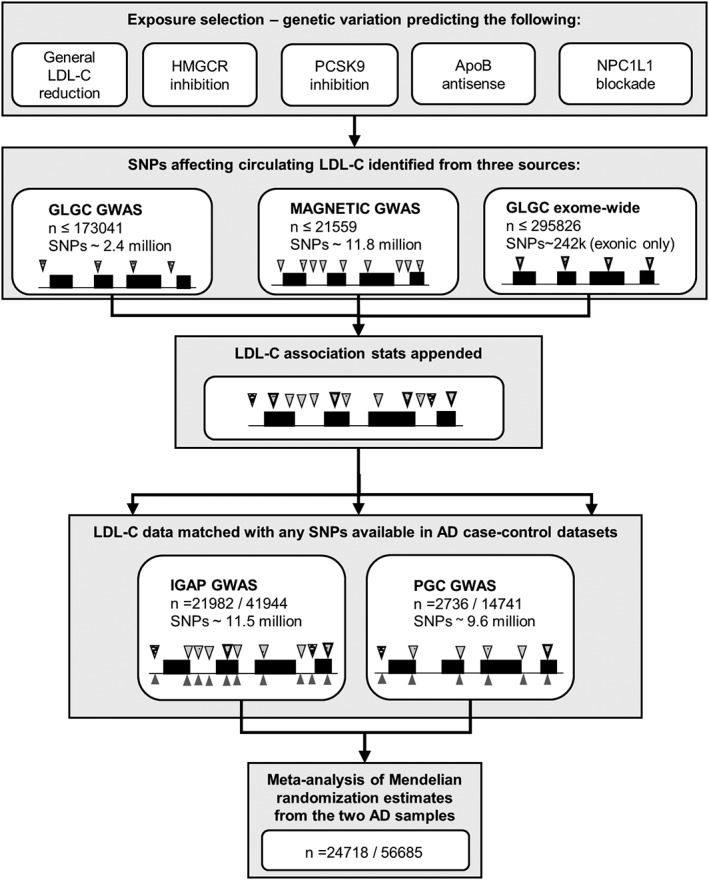
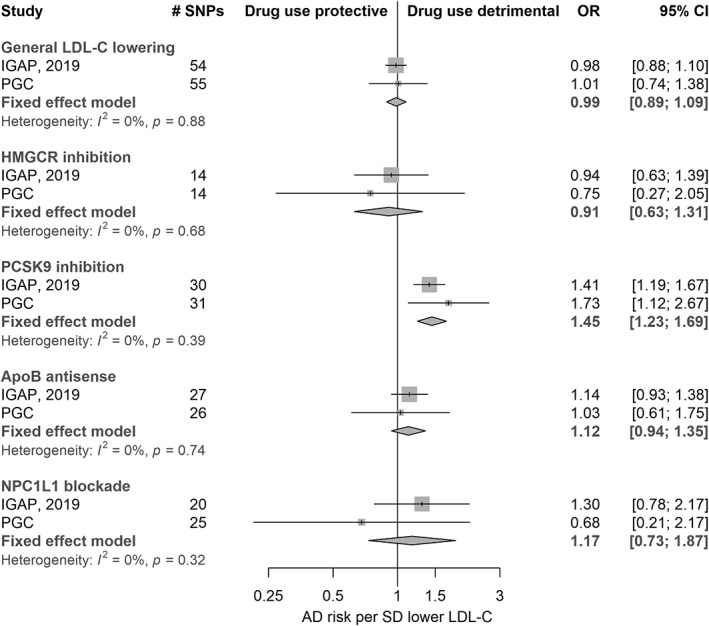
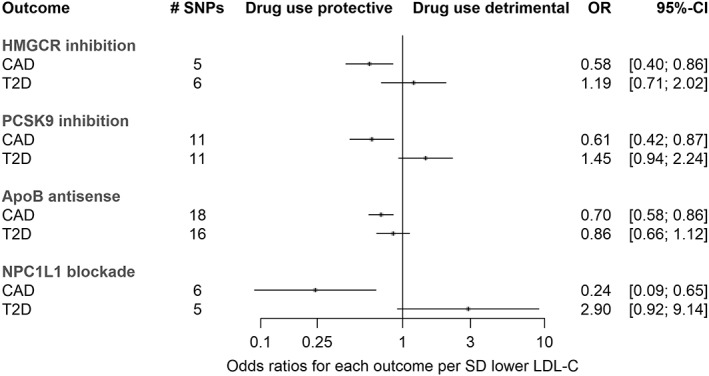
Objective: To examine whether genetic variation affecting the expression or function of lipid‐lowering drug targets is associated with Alzheimer disease (AD) risk, to evaluate the potential impact of long‐term exposure to corresponding therapeutics. Methods: We conducted Mendelian randomization analyses using variants in genes that encode the protein targets of several approved lipid‐lowering drug classes: HMGCR (encoding the target for statins), PCSK9 (encoding the target for PCSK9 inhibitors, eg, evolocumab and alirocumab), NPC1L1 (encoding the target for ezetimibe), and APOB (encoding the target of mipomersen). Variants were weighted by associations with low‐density lipoprotein cholesterol (LDL‐C) using data from lipid genetics consortia (n up to 295,826). We meta‐analyzed Mendelian randomization estimates for regional variants weighted by LDL‐C on AD risk from 2 large samples (total n = 24,718 cases, 56,685 controls). Results: Models for HMGCR, APOB , and NPC1L1 did not suggest that the use of related lipid‐lowering drug classes would affect AD risk. In contrast, genetically instrumented exposure to PCSK9 inhibitors was predicted to increase AD risk in both of the AD samples (combined odds ratio per standard deviation lower LDL‐C inducible by the drug target = 1.45, 95% confidence interval = 1.23–1.69). This risk increase was opposite to, although more modest than, the degree of protection from coronary artery disease predicted by these same methods for PCSK9 inhibition. Interpretation: We did not identify genetic support for the repurposing of statins, ezetimibe, or mipomersen for AD prevention. Notwithstanding caveats to this genetic evidence, pharmacovigilance for AD risk among users of PCSK9 inhibitors may be warranted. ANN NEUROL 2020;87:30–39
Overview
The claims and statistics of this paper haven’t been checked yet.
Run the check — free, no account needed. It reads the open-access text and checks the sources it cites.
Integrity signals
Registry
Cites
Statistics
Figures
Verification
Claims the paper makes
The claims and statistics of this paper haven’t been checked yet.
Run the check — free, no account needed. It reads the open-access text and checks the sources it cites.
Claims other papers make about this one
Each is checked against this paper’s own text: does it say what the citing paper says it does?
The source backs part of the claim, not all of it — or backs it for a different population, condition or comparison.
In the citing paper
“Only one of the reviewed studies reported evidence of increased AD risk associated with drug use, specifically for the PCSK9 inhibitors evolocumab and alirocumab (Williams et al., 2020).”
From Drug repurposing for Alzheimer’s disease from 2012–2022—a 10-year literature review (2023) · cites this paper as Williams et al., 2020
Experimental — accuracy not yet measuredThe cited source says what the claim attributes to it.
In the citing paper
“As an extension of MR, drug target MR has emerged as efficient way to estimate therapeutic potential by using genetic variants in genes encoding drug targets (referred to as cis variants) to mimic the actions of drugs.”
From Genetic insights into causal effects of lipids and lipid-modifying targets on calcific aortic valve stenosis: a Mendelian randomized study (2025) · cites this paper as [14]
The cited source says what the claim attributes to it.
In the citing paper
“Indeed, the occurrence of undesirable side effects has been questioned in terms of cognitive function [196,197] and negative impact on the immune system regulation that could lead to different inflammatory diseases [104].”
From The Emerging Role of PCSK9 in the Pathogenesis of Alzheimer’s Disease: A Possible Target for the Disease Treatment (2024) · cites this paper as [197]
The cited source says what the claim attributes to it.
In the citing paper
“These drugs included lipid-lowering agents (ezetimibe, mipomersen, and statins) (Williams et al., 2020), antihypertensives (Walker et al., 2020), dimethyl fumarate (approved for the treatment of multiple sclerosis) (Möhle et al., 2021), and drugs commonly used in treatment of rheumatoid arthritis (tofacitinib, tocilizumab, and TNF inhibitors) (Desai et al., 2022).”
From Drug repurposing for Alzheimer’s disease from 2012–2022—a 10-year literature review (2023) · cites this paper as Williams et al., 2020
In the citing paper
“Genetic studies show that many of the genes which have risk alleles for AD involve cholesterol/lipid systems16,17.”
From GRAMD1B is a regulator of lipid homeostasis, autophagic flux and phosphorylated tau (2025) · cites this paper as [16]
Self-check
Percentages, sums and reported differences re-computed from the paper’s own numbers.
The self-check needs the paper’s full text.
Citations
Cites
A global reference for human genetic variation
The 1000 Genomes Project Consortium, authors, C., Auton, A., Abecasis, G. R., Steering committee, Altshuler, D. M., Durbin, R. M., Abecasis, G. R., Bentley, D. R., Chakravarti, A., et al. (2015) · Nature · doi:10.1038/nature15393 · Cited by 18,247 · cited 1×
“This method relies on the use of reference data to estimate the correlations between variants in summary GWAS datasets, for which we used correlation matrices derived from 503 participants of European ancestry in the 1000 Genomes project, phase 3.(27) We tested the robustness of using these reference data by inputting…”
MethodAmyloid oligomers exacerbate tau pathology in a mouse model of tauopathy
Selenica, M.-L. B., Brownlow, M., Jimenez, J. P., Lee, D. C., Pena, G., Dickey, C. A., Gordon, M. N., & Morgan, D. (2013) · Neurodegenerative Diseases · doi:10.1159/000337230 · Cited by 10,359
Bowden, J., Davey Smith, G., & Burgess, S. (2015) · International Journal of Epidemiology · doi:10.1093/ije/dyv080 · Cited by 9,816 · cited 1×
“We repeated analyses using alternative methods—weighted median and MR Egger estimators—which provide different degrees of robustness to bias from genetic pleiotropy.(24,25) For the primary gene (drug target)-specific models, data on all successfully harmonized SNPs within the gene regions ( 1 kilobase flank) were elig…”
MethodSelf-citationBowden, J., Davey Smith, G., Haycock, P. C., & Burgess, S. (2016) · Genetic Epidemiology · doi:10.1002/gepi.21965 · Cited by 8,922 · cited 1×
“We repeated analyses using alternative methods—weighted median and MR Egger estimators—which provide different degrees of robustness to bias from genetic pleiotropy.(24,25) For the primary gene (drug target)-specific models, data on all successfully harmonized SNPs within the gene regions ( 1 kilobase flank) were elig…”
MethodSelf-citationThe MR-Base platform supports systematic causal inference across the human phenome
Hemani, G., Zheng, J., Elsworth, B., Wade, K. H., Haberland, V., Baird, D., Laurin, C., Burgess, S., Bowden, J., Langdon, R., et al. (2018) · eLife · doi:10.7554/elife.34408 · Cited by 7,959
Self-citationMendelian Randomization Analysis With Multiple Genetic Variants Using Summarized Data
Burgess, S., Butterworth, A., & Thompson, S. G. (2013) · Genetic Epidemiology · doi:10.1002/gepi.21758 · Cited by 6,050 · cited 6×
“32 Volume 87, No. 1 ANNALS of Neurology To assess a potential effect of LDL-C lowering on AD, regardless of drug target, we used the fixed-effects inverse variance weighted (IVW) meta-analysis method, which combines ratios of coefficients (Wald estimators) for the association estimates of each eligible SNP with LDL-C…”
MethodInfluentialSelf-citationMendelian randomization: Using genes as instruments for making causal inferences in epidemiology
Lawlor, D. A., Harbord, R. M., Sterne, J. A. C., Timpson, N., & Davey Smith, G. (2008) · Statistics in Medicine · doi:10.1002/sim.3034 · Cited by 4,618 · cited 1×
“Because genotypes are inherited randomly at conception in an analogous manner to treatment allocation in clinical trials, associations of variants with biomarkers and disease outcomes are not expected to be subject to biases from confounding and reverse causation seen in other types of observational epidemiology—a pri…”
BackgroundCognitive reserve in ageing and Alzheimer's disease
Stern, Y. (2012) · The Lancet Neurology · doi:10.1016/s1474-4422(12)70191-6 · Cited by 3,557
Willer (2013) · doi:10.1038/ng.2797 · Cited by 2,983
Alzheimer Disease Genetics Consortium (ADGC), Kunkle, B. W., The European Alzheimer’s Disease Initiative (EADI), Cohorts for Heart and Aging Research in Genomic Epidemiology Consortium (CHARGE), Genetic and Environmental Risk in AD/Defining Genetic, P. A. E. R. F. A. D. C. (., Grenier-Boley, B., Sims, R., Bis, J. C., Damotte, V., Naj, A. C., et al. (2019) · Nature Genetics · doi:10.1038/s41588-019-0358-2 · Cited by 2,946 · cited 2×
“Full information on genetic quality control procedures and association modeling are provided in the study references.(19,20)”
MethodJansen, I. E., Savage, J. E., Watanabe, K., Bryois, J., Williams, D. M., Steinberg, S., Sealock, J., Karlsson, I. K., Hägg, S., Athanasiu, L., et al. (2019) · Nature Genetics · doi:10.1038/s41588-018-0311-9 · Cited by 2,277
Self-citationStages of the Pathologic Process in Alzheimer Disease: Age Categories From 1 to 100 Years
Braak, H., Thal, D. R., Ghebremedhin, E., & Del Tredici, K. (2011) · Journal of Neuropathology & Experimental Neurology · doi:10.1097/nen.0b013e318232a379 · Cited by 2,194
Yavorska, O. O., & Burgess, S. (2017) · International Journal of Epidemiology · doi:10.1093/ije/dyx034 · Cited by 2,029 · cited 2×
“1, with the aid of the packages MR Base and MendelianRandomization.(29,30)”
MethodInfluentialSelf-citationBurgess, S., Bowden, J., Fall, T., Ingelsson, E., & Thompson, S. G. (2017) · Epidemiology · doi:10.1097/ede.0000000000000559 · Cited by 2,017
Self-citationDrug Transport across the Blood–Brain Barrier
Pardridge, W. M. (2012) · Journal of Cerebral Blood Flow & Metabolism · doi:10.1038/jcbfm.2012.126 · Cited by 1,994 · cited 1×
“barrier (at least while the barrier’s impermeability to large molecules is intact).(47) Hence, peripherally administered PCSK9 inhibitors may not lead to cerebral exposure, which means the genetically-instrumented risk might not be relevant in therapeutic practice.”
Backgroundthe DIAbetes Genetics Replication And Meta-analysis (DIAGRAM) Consortium, Morris, A. P., Voight, B. F., Teslovich, T. M., Ferreira, T., Segrè, A. V., Steinthorsdottir, V., Strawbridge, R. J., Khan, H., Grallert, H., et al. (2012) · Nature Genetics · doi:10.1038/ng.2383 · Cited by 1,912
Large-scale association analysis identifies 13 new susceptibility loci for coronary artery disease
Cardiogenics, Schunkert, H., the CARDIoGRAM Consortium, König, I. R., Kathiresan, S., Reilly, M. P., Assimes, T. L., Holm, H., Preuss, M., Stewart, A. F. R., et al. (2011) · Nature Genetics · doi:10.1038/ng.784 · Cited by 1,866
EPIC- InterAct Consortium, Burgess, S., Scott, R. A., Timpson, N. J., Davey Smith, G., & Thompson, S. G. (2015) · European Journal of Epidemiology · doi:10.1007/s10654-015-0011-z · Cited by 1,803
Self-citationDetection and interpretation of shared genetic influences on 42 human traits
Pickrell, J. K., Berisa, T., Liu, J. Z., Ségurel, L., Tung, J. Y., & Hinds, D. A. (2016) · Nature Genetics · doi:10.1038/ng.3570 · Cited by 1,151
Collins, R., Armitage, J., Parish, S., Sleight, P., & Peto, R. (2004) · The Lancet · doi:10.1016/s0140-6736(04)15690-0 · Cited by 1,060
Toledo, J. B., Arnold, S. E., Raible, K., Brettschneider, J., Xie, S. X., Grossman, M., Monsell, S. E., Kukull, W. A., & Trojanowski, J. Q. (2013) · Brain · doi:10.1093/brain/awt188 · Cited by 849
Kettunen, J., Demirkan, A., Würtz, P., Draisma, H. H. M., Haller, T., Rawal, R., Vaarhorst, A., Kangas, A. J., Lyytikäinen, L.-P., Pirinen, M., et al. (2016) · Nature Communications · doi:10.1038/ncomms11122 · Cited by 738 · cited 1×
“Deriving SNP Associations with LDL-C SNP–LDL-C association statistics were extracted from 3 GWASs of circulating LDL-C concentrations—2 from the Global Lipid Genetics Consortium(15,16) and 1 from the MAGNETIC consortium.(17) These contained different sets of genotyped and imputed SNP data and varying sample sizes, and…”
MethodExome-wide association study of plasma lipids in >300,000 individuals
Charge Diabetes Working Group, Liu, D. J., The EPIC-InterAct Consortium, EPIC-CVD Consortium, GOLD Consortium, Program, V. M. V., Peloso, G. M., Yu, H., Butterworth, A. S., Wang, X., et al. (2017) · Nature Genetics · doi:10.1038/ng.3977 · Cited by 540
Statins for the prevention of dementia
McGuinness, B., Craig, D., Bullock, R., & Passmore, P. (2016) · Cochrane Database of Systematic Reviews · doi:10.1002/14651858.cd003160.pub3 · Cited by 490
Lotta, L. A., Sharp, S. J., Burgess, S., Perry, J. R. B., Stewart, I. D., Willems, S. M., Luan, J., Ardanaz, E., Arriola, L., Balkau, B., et al. (2016) · JAMA · doi:10.1001/jama.2016.14568 · Cited by 394
Self-citationSelecting instruments for Mendelian randomization in the wake of genome-wide association studies.
Swerdlow, D. I., Kuchenbaecker, K. B., Shah, S., Sofat, R., Holmes, M. V., White, J., Mindell, J. S., Kivimaki, M., Brunner, E. J., Whittaker, J. C., et al. (2016) · International Journal of Epidemiology · doi:10.1093/ije/dyw088 · Cited by 387 · cited 2×
“Hence, MR studies can help to guide drug target validation by predicting the consequences of long-term therapeutic exposure.(13) In this study, we examined whether AD risk is influenced by variation in the genes encoding the targets of a range of medications that are currently licensed and recommended for the treatmen…”
BackgroundMethodSelf-citationModifiable pathways in Alzheimer’s disease: Mendelian randomisation analysis
Larsson, S. C., Traylor, M., Malik, R., Dichgans, M., Burgess, S., & Markus, H. S. (2017) · BMJ · doi:10.1136/bmj.j5375 · Cited by 382
Self-citationPCSK9 genetic variants and risk of type 2 diabetes: a mendelian randomisation study
Schmidt, A. F., Swerdlow, D. I., Holmes, M. V., Patel, R. S., Fairhurst-Hunter, Z., Lyall, D. M., Hartwig, F. P., Horta, B. L., Hyppönen, E., Power, C., et al. (2017) · The Lancet Diabetes & Endocrinology · doi:10.1016/s2213-8587(16)30396-5 · Cited by 380
Self-citationJack, C. R., Wiste, H. J., Weigand, S. D., Therneau, T. M., Knopman, D. S., Lowe, V., Vemuri, P., Mielke, M. M., Roberts, R. O., Machulda, M. M., et al. (2017) · The Lancet Neurology · doi:10.1016/s1474-4422(17)30077-7 · Cited by 333
Drug repositioning for Alzheimer's disease
Corbett, A., Pickett, J., Burns, A. S., Corcoran, J. P. T., Dunnett, S. B., Edison, P., Hagan, J. J., Holmes, C., Jones, E., Katona, C., et al. (2012) · Nature Reviews Drug Discovery · doi:10.1038/nrd3869 · Cited by 307 · cited 6×
“32 Volume 87, No. 1 ANNALS of Neurology To assess a potential effect of LDL-C lowering on AD, regardless of drug target, we used the fixed-effects inverse variance weighted (IVW) meta-analysis method, which combines ratios of coefficients (Wald estimators) for the association estimates of each eligible SNP with LDL-C…”
BackgroundInfluentialHingorani, A. D., & Humphries, S. E. (2005) · The Lancet · doi:10.1016/s0140-6736(05)67767-7 · Cited by 277 · cited 1×
“The expression or function of protein drug targets can be influenced by variants within or near the genes that encode them, and the genetic effects can be used to anticipate the effects of drug action.(11) Because genotypes are inherited randomly at conception in an analogous manner to treatment allocation in clinical…”
BackgroundSelf-citationAssociations Between Serum Cholesterol Levels and Cerebral Amyloidosis
Reed, B., Villeneuve, S., Mack, W., DeCarli, C., Chui, H. C., & Jagust, W. (2014) · JAMA Neurology · doi:10.1001/jamaneurol.2013.5390 · Cited by 267 · cited 1×
“midlife is a risk factor for late onset AD in prospective epidemiological studies,(4) and associations of higher LDL-C with increased cerebral β-amyloid load have also been observed in autopsy and in vivo imaging studies.(5,6) Simi-”
BackgroundLipinski, M. J., Benedetto, U., Escarcega, R. O., Biondi-Zoccai, G., Lhermusier, T., Baker, N. C., Torguson, R., Brewer, H. B., & Waksman, R. (2016) · European Heart Journal · doi:10.1093/eurheartj/ehv563 · Cited by 256
Improving the odds of drug development success through human genomics: modelling study
Hingorani, A. D., Kuan, V., Finan, C., Krüger, F. A., Gaulton, A., Chopade, S., Sofat, R., MacAllister, R. J., Overington, J. P., Hemingway, H., et al. (2019) · Scientific Reports · doi:10.1038/s41598-019-54849-w · Cited by 252
Self-citationDa Dalt, L., Ruscica, M., Bonacina, F., Balzarotti, G., Dhyani, A., Di Cairano, E., Baragetti, A., Arnaboldi, L., De Metrio, S., Pellegatta, F., et al. (2019) · European Heart Journal · doi:10.1093/eurheartj/ehy357 · Cited by 209
Østergaard, S. D., Mukherjee, S., Sharp, S. J., Proitsi, P., Lotta, L. A., Day, F., Perry, J. R. B., Boehme, K. L., Walter, S., Kauwe, J. S., et al. (2015) · PLOS Medicine · doi:10.1371/journal.pmed.1001841 · Cited by 203
Burgess, S., Zuber, V., Valdés‐Márquez, E., Sun, B. B., & Hopewell, J. C. (2017) · Genetic Epidemiology · doi:10.1002/gepi.22077 · Cited by 196 · cited 2×
“Remaining SNPs were modeled together using a principal components (PC)-based approach to handle estimates from correlated variants.(26) This method relies on the use of reference data to estimate the correlations between variants in summary GWAS datasets, for which we used correlation matrices derived from 503 partici…”
MethodSelf-citationBenn, M., Nordestgaard, B. G., Frikke-Schmidt, R., & Tybjærg-Hansen, A. (2017) · BMJ · doi:10.1136/bmj.j1648 · Cited by 178
Meng, X.-F., Yu, J.-T., Wang, H.-F., Tan, M.-S., Wang, C., Tan, C.-C., & Tan, L. (2014) · Journal of Alzheimer s Disease · doi:10.3233/jad-140954 · Cited by 150
Detection of Dementia Cases in Two Swedish Health Registers: A Validation Study
Rizzuto, D., Feldman, A. L., Karlsson, I., Aslan, A. K. D., Gatz, M., & Pedersen, N. L. (2018) · Journal of Alzheimer s Disease · doi:10.3233/jad-170572 · Cited by 132 · cited 6×
“32 Volume 87, No. 1 ANNALS of Neurology To assess a potential effect of LDL-C lowering on AD, regardless of drug target, we used the fixed-effects inverse variance weighted (IVW) meta-analysis method, which combines ratios of coefficients (Wald estimators) for the association estimates of each eligible SNP with LDL-C…”
BackgroundInfluentialImplication of the proprotein convertase NARC-1/PCSK9 in the development of the nervous system
Poirier, S., Prat, A., Marcinkiewicz, E., Paquin, J., Chitramuthu, B. P., Baranowski, D., Cadieux, B., Bennett, H. P. J., & Seidah, N. G. (2006) · Journal of Neurochemistry · doi:10.1111/j.1471-4159.2006.03928.x · Cited by 121
de Carvalho, L. S. F., Campos, A. M., & Sposito, A. C. (2018) · Diabetes Care · doi:10.2337/dc17-1464 · Cited by 121
Jonas, M. C., Costantini, C., & Puglielli, L. (2008) · The EMBO Reports · doi:10.1038/embor.2008.132 · Cited by 119 · cited 6×
“32 Volume 87, No. 1 ANNALS of Neurology To assess a potential effect of LDL-C lowering on AD, regardless of drug target, we used the fixed-effects inverse variance weighted (IVW) meta-analysis method, which combines ratios of coefficients (Wald estimators) for the association estimates of each eligible SNP with LDL-C…”
BackgroundInfluentialAssociation of Alzheimer disease pathology with abnormal lipid metabolism
Matsuzaki, T., Sasaki, K., Hata, J., Hirakawa, Y., Fujimi, K., Ninomiya, T., Suzuki, S. O., Kanba, S., Kiyohara, Y., & Iwaki, T. (2011) · Neurology · doi:10.1212/wnl.0b013e31822e145d · Cited by 114 · cited 1×
“midlife is a risk factor for late onset AD in prospective epidemiological studies,(4) and associations of higher LDL-C with increased cerebral β-amyloid load have also been observed in autopsy and in vivo imaging studies.(5,6) Simi-”
BackgroundLarsson, S. C., & Markus, H. S. (2018) · Journal of Alzheimer s Disease · doi:10.3233/jad-180288 · Cited by 100 · cited 2×
“corresponding observational data on other lipid-lowering drug classes are scant and inconclusive.(7) Large randomized”
BackgroundRao, A. S., Lindholm, D., Rivas, M. A., Knowles, J. W., Montgomery, S. B., & Ingelsson, E. (2018) · Circulation: Genomic and Precision Medicine · doi:10.1161/circgen.118.002162 · Cited by 60
Pott, J., Schlegel, V., Teren, A., Horn, K., Kirsten, H., Blücher, C., Kratzsch, J., Loeffler, M., Thiery, J., Burkhardt, R., et al. (2018) · Circulation Genomic and Precision Medicine · doi:10.1161/circgen.117.001992 · Cited by 47 · cited 1×
“Analyses to assess the effect of modifying circulating PCSK9 on AD risk were based on SNP–PCSK9 association statistics for 6 variants identified in a GWAS of circulating PCSK9 in suspected or confirmed coronary artery disease (CAD) patients of European ancestry.(18) We used SNP–PCSK9 association statistics from a subg…”
MethodMilionis, H. J., Barkas, F., Ntaios, G., Papavasileiou, V., Vemmos, K. N., Michel, P., & Elisaf, M. (2016) · European Journal of Internal Medicine · doi:10.1016/j.ejim.2016.06.023 · Cited by 26
Lyall, D. M., Ward, J., Banach, M., Smith, G. D., Gill, J. M. R., Pell, J. P., Holmes, M. V., & Sattar, N. A. (2018) · bioRxiv (Cold Spring Harbor Laboratory) · doi:10.1101/335877 · Cited by 4 · cited 1×
“Another MR analysis has also suggested potentially detrimental effects of lower PCSK9 function on cognitive ability in a cohort of participants aged 38 to 73 years.(43) A further consideration is whether PCSK9 inhibition might harm the cerebral vasculature (independently of effects on atherosclerosis).”
Background
Research works printed but not linked: 2
- McGuinness B, 2016, Statins for the prevention of dementia, Cochrane Database Syst Rev, 1, CD003160
- 10.1136/bmj.j1648 · DOI · Paper page
Cited by
Sorted by citations
Zuber, V., Grinberg, N. F., Gill, D., Manipur, I., Slob, E. A. W., Patel, A., Wallace, C., & Burgess, S. (2022) · The American Journal of Human Genetics · doi:10.1016/j.ajhg.2022.04.001 · Cited by 532
“79 We next perform colocalization analyses with these traits.”
Self-citationOlmastroni, E., Molari, G., De Beni, N., Colpani, O., Galimberti, F., Gazzotti, M., Zambon, A., Catapano, A. L., & Casula, M. (2022) · European Journal of Preventive Cardiology · doi:10.1093/eurjpc/zwab208 · Cited by 197
Fang, J., Zhang, P., Zhou, Y., Chiang, C.-W., Tan, J., Hou, Y., Stauffer, S., Li, L., Pieper, A. A., Cummings, J., et al. (2021) · Nature Aging · doi:10.1038/s43587-021-00138-z · Cited by 206
Association of lipid-lowering drugs with COVID-19 outcomes from a Mendelian randomization study
Huang, W., Xiao, J., Ji, J., & Chen, L.-W. (2021) · eLife · doi:10.7554/elife.73873 · Cited by 163
“Proprotein convertase subtilisin/kexin type 9 (PCSK9) and Niemann–Pick C1-Like 1 (NPC1L1) are proteins playing a crucial role for the circulating level of low-density lipoprotein cholesterol (LDL-C) ( Sabatine, 2019 ; Williams et al., 2020 ).”
Cholesteryl ester transfer protein (CETP) as a drug target for cardiovascular disease
Schmidt, A. F., Hunt, N. B., Gordillo‐Marañón, M., Charoen, P., Drenos, F., Casas, J. P., Mika Kivimaki, B., Lawlor, D. A., Giambartolomei, C., Papacosta, O., et al. (2021) · Nature Communications · doi:10.1038/s41467-021-25703-3 · Cited by 142
Self-citation
Metadata
- Authors
- Williams, D. M., Finan, C., Schmidt, A. F., Burgess, S., & Hingorani, A. D.
- Affiliations
- University of London (GB)
- British Heart Foundation (GB)
- University Medical Center Utrecht (NL)
- University of Cambridge (GB)
- Corresponding author
- Williams, Dylan M.
- Venue
- Annals of Neurology
- Publisher
- Wiley
- Published
- 2019-12-13
- Volume
- 87
- Issue
- 1
- Pages
- 30-39
- ISSN
- 0364-5134 (ISSN-L)
- 1531-8249
- PMC
- PMC6944510
- OpenAlex
- W2987364071
- Cited by
- 157
- References
- 49
- Citations by year
- 2026: 7 · 2025: 18 · 2024: 51 · 2023: 40 · 2022: 9 · 2021: 27 · 2020: 4
- FWCI
- 2.06
- Type
- journal article
- Language
- en
- Open access
- hybrid
- doi.org
- Licence
- Locations
- Annals of Neurology (publishedVersion, cc-by)
- Europe PMC (PubMed Central) (publishedVersion, cc-by)
- PubMed Central (publishedVersion, cc-by)
- PubMed (publishedVersion)
- Utrecht University Repository (Utrecht University) (submittedVersion, other-oa)
- Apollo (University of Cambridge) (submittedVersion, cc-by)
- Apollo (cc-by)
- Funders
- British Heart Foundation (PG/18/5033837)
- Topics
- Health Sciences › Medicine › Cardiology and Cardiovascular Medicine › Lipoproteins and Cardiovascular Health
- Life Sciences › Neuroscience › Cellular and Molecular Neuroscience › Alzheimer's disease research and treatments
- Life Sciences › Biochemistry, Genetics and Molecular Biology › Genetics › Genetic Associations and Epidemiology
- Keywords
- Alzheimer's disease risk, lipid-lowering drugs, PCSK9 inhibitors, statins, ezetimibe, mipomersen, HMGCR, NPC1L1, apolipoprotein B, LDL cholesterol, drug repurposing, pharmacovigilance, genetic variants
- MeSH terms
- Proprotein Convertase 9, Aged, Alzheimer Disease, Female, Humans, Hydroxymethylglutaryl CoA Reductases, Male, Middle Aged, Models, Genetic, Genetic Predisposition to Disease, Polymorphism, Single Nucleotide, Membrane Transport Proteins, Apolipoprotein B-100, Mendelian Randomization Analysis
About these checks
Registry, retraction, Cites and statistics results are computed, not judged, with one exception: a printed reference that no index lists is read once by a model before it counts as a citation error. Claims are extracted by a model and kept only when their quote appears verbatim in the text; each cited source is then checked, with a model’s help, for whether it says what the claim relies on. Those verdicts can be wrong — read the claim’s quote and the cited source before relying on one.
Statistics and arithmetic are recomputed, not judged.
Confidence bands are shown only for fields calibrated on our annotated test set. None is calibrated yet, so no band is shown.
What counts as a claim ›How we measure confidence ›How we check this ›
Are you an author, or do you see a problem with this page? Request a review
