

The DOI matches its Crossref record; 115 of the 116 references it cites were found in a registry or an index.
Understanding the gut microbiota and sarcopenia: a systematic review
Open accessAbstract
Background: Gut microbiota dysbiosis and sarcopenia commonly occur in the elderly. Although the concept of the gut–muscle axis has been raised, the casual relationship is still unclear. This systematic review analyses the current evidence of gut microbiota effects on muscle/sarcopenia. Methods: A systematic review was performed in PubMed, Embase, Web of Science, and The Cochrane Library databases using the keywords (microbiota* OR microbiome*) AND (sarcopen* OR muscle). Studies reporting the alterations of gut microbiota and muscle/physical performance were analysed. Results: A total of 26 pre‐clinical and 10 clinical studies were included. For animal studies, three revealed age‐related changes and relationships between gut microbiota and muscle. Three studies focused on muscle characteristics of germ‐free mice. Seventy‐five per cent of eight faecal microbiota transplantation studies showed that the recipient mice successfully replicated the muscle phenotype of donors. There were positive effects on muscle from seven probiotics, two prebiotics, and short‐chain fatty acids (SCFAs). Ten studies investigated on other dietary supplements, antibiotics, exercise, and food withdrawal that affected both muscle and gut microbiota. Twelve studies explored the potential mechanisms of the gut–muscle axis. For clinical studies, 6 studies recruited 676 elderly people (72.8 ± 5.6 years, 57.8% female), while 4 studies focused on 244 young adults (29.7 ± 7.8 years, 55.4% female). The associations of gut microbiota and muscle had been shown in four observational studies. Probiotics, prebiotics, synbiotics, fermented milk, caloric restriction, and exercise in six studies displayed inconsistent effects on muscle mass, function, and gut microbiota. Conclusions: Altering the gut microbiota through bacteria depletion, faecal transplantation, and various supplements was shown to directly affect muscle phenotypes. Probiotics, prebiotics, SCFAs, and bacterial products are potential novel therapies to enhance muscle mass and physical performance. Lactobacillus and Bifidobacterium strains restored age‐related muscle loss. Potential mechanisms of microbiome modulating muscle mainly include protein, energy, lipid, and glucose metabolism, inflammation level, neuromuscular junction, and mitochondrial function. The role of the gut microbiota in the development of muscle loss during aging is a crucial area that requires further studies for translation to patients.
Overview
The claims and statistics of this paper haven’t been checked yet.
Run the check — free, no account needed. It reads the open-access text and checks the sources it cites.
Integrity signals
Registry
Cites
Statistics
Figures
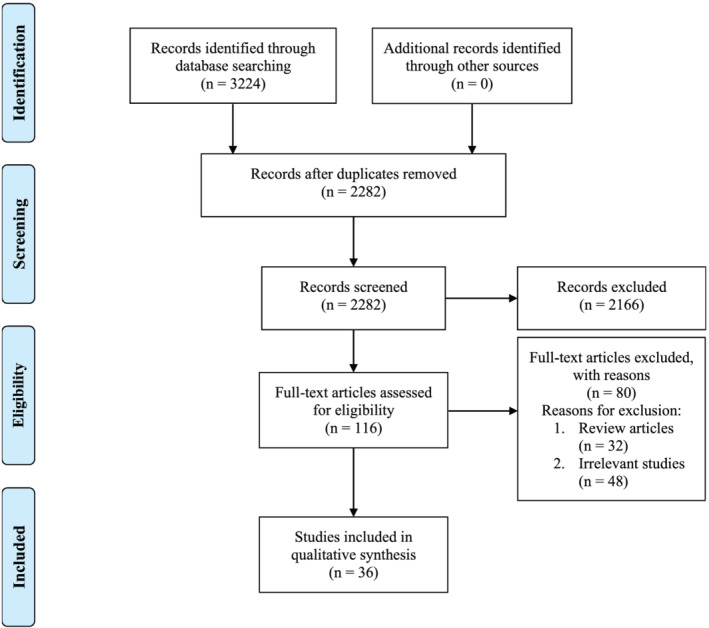
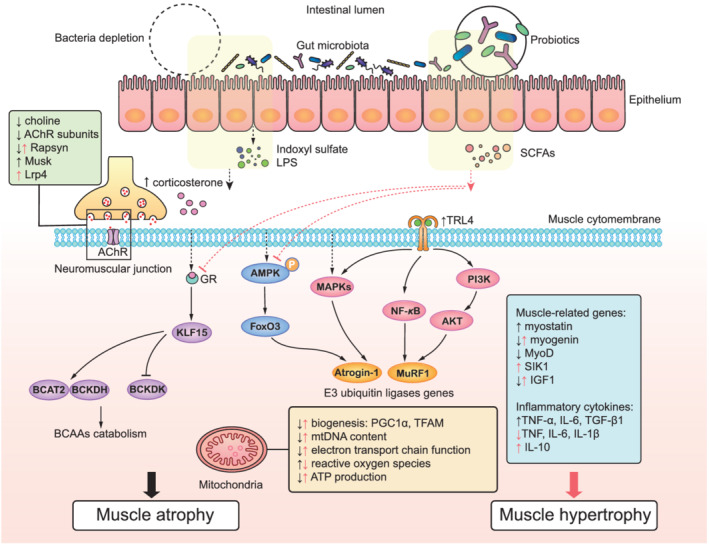
Verification
Claims the paper makes
The claims and statistics of this paper haven’t been checked yet.
Run the check — free, no account needed. It reads the open-access text and checks the sources it cites.
Claims other papers make about this one
Each is checked against this paper’s own text: does it say what the citing paper says it does?
The source backs part of the claim, not all of it — or backs it for a different population, condition or comparison.
In the citing paper
“In fact, in older adults, correlations have been observed between microbial diversity and composition and parameters of muscle mass, strength, and physical performance, with some intervention studies showing functional improvements after microbiota modulation [88].”
From The Seven Methods for the Evaluation of Nutritional Status—ABCDEFG: Narrative Review (2026) · cites this paper as [88]
Experimental — accuracy not yet measured
Self-check
Percentages, sums and reported differences re-computed from the paper’s own numbers.
The self-check needs the paper’s full text.
Citations
Cites
Preferred Reporting Items for Systematic Reviews and Meta-Analyses: the PRISMA statement
Moher, D., Liberati, A., Tetzlaff, J., Altman, D. G., & for the PRISMA Group (2009) · BMJ · doi:10.1136/bmj.b2535 · Cited by 83,823
Preferred Reporting Items for Systematic Reviews and Meta-Analyses: The PRISMA Statement
Moher, D., Liberati, A., Tetzlaff, J., Altman, D. G., & The PRISMA Group (2009) · PLoS Medicine · doi:10.1371/journal.pmed.1000097 · Cited by 64,042
Wang, G., Ma, R., Qiao, G., Wada, K., Aizawa, Y., & Satoh, T. (2015) · Integrative Medicine International · doi:10.1159/000368408 · Cited by 18,762
Sarcopenia: revised European consensus on definition and diagnosis
Cruz-Jentoft, A. J., Bahat, G., Bauer, J., Boirie, Y., Bruyère, O., Cederholm, T., Cooper, C., Landi, F., Rolland, Y., Sayer, A. A., et al. (2019) · Age and Ageing · doi:10.1093/ageing/afy169 · Cited by 13,818
Initial sequencing and comparative analysis of the mouse genome
Mouse Genome Sequencing Consortium (2002) · Nature · doi:10.1038/nature01262 · Cited by 7,187
Asian Working Group for Sarcopenia: 2019 Consensus Update on Sarcopenia Diagnosis and Treatment
Chen, L.-K., Woo, J., Assantachai, P., Auyeung, T.-W., Chou, M.-Y., Iijima, K., Jang, H. C., Kang, L., Kim, M., Kim, S., et al. (2020) · Journal of the American Medical Directors Association · doi:10.1016/j.jamda.2019.12.012 · Cited by 7,070
Gut microbiota in human metabolic health and disease
Fan, Y., & Pedersen, O. (2021) · Nature Reviews Microbiology · doi:10.1038/s41579-020-0433-9 · Cited by 4,724
Cruz-Jentoft, A. J., & Sayer, A. A. (2019) · The Lancet · doi:10.1016/s0140-6736(19)31138-9 · Cited by 3,905
Mechanisms underlying the resistance to diet-induced obesity in germ-free mice
Bäckhed, F., Manchester, J. K., Semenkovich, C. F., & Gordon, J. I. (2007) · Proceedings of the National Academy of Sciences · doi:10.1073/pnas.0605374104 · Cited by 2,615
Studenski, S. A., Peters, K. W., Alley, D. E., Cawthon, P. M., McLean, R. R., Harris, T. B., Ferrucci, L., Guralnik, J. M., Fragala, M. S., Kenny, A. M., et al. (2014) · The Journals of Gerontology: Series A · doi:10.1093/gerona/glu010 · Cited by 2,545
Research works printed but not linked: 1
- Das Neves RX, 2017, Germ free mice accelerate cachexia‐associated cancer, Cancer Res, 77
Cited by
Sorted by citations
Epidemiology of sarcopenia: Prevalence, risk factors, and consequences
Yuan, S., & Larsson, S. C. (2023) · Metabolism · doi:10.1016/j.metabol.2023.155533 · Cited by 1,114
Chen, M., Wang, Y., Deng, S., Lian, Z., & Yu, K. (2022) · Frontiers in Cell and Developmental Biology · doi:10.3389/fcell.2022.964130 · Cited by 187
Gut microbiota–bile acid–skeletal muscle axis
Mancin, L., Wu, G. D., & Paoli, A. (2022) · Trends in Microbiology · doi:10.1016/j.tim.2022.10.003 · Cited by 183
Jung, H. N., Jung, C. H., & Hwang, Y. (2023) · Metabolism · doi:10.1016/j.metabol.2023.155557 · Cited by 163
Fat infiltration in skeletal muscle: Influential triggers and regulatory mechanism
Wang, L., Valencak, T. G., & Shan, T. (2024) · iScience · doi:10.1016/j.isci.2024.109221 · Cited by 149
Metadata
- Authors
- Liu, C., Cheung, W., Li, J., Chow, S. K., Yu, J., Wong, S. H., Ip, M., Sung, J. J. Y., & Wong, R. M. Y.
- Affiliations
- Chinese University of Hong Kong (HK)
- Corresponding author
- Wong, Ronald Man Yeung
- ORCID
- Venue
- Journal of Cachexia, Sarcopenia and Muscle
- Publisher
- Wiley
- Published
- 2021-09-14
- Volume
- 12
- Issue
- 6
- Pages
- 1393-1407
- ISSN
- 2190-5991 (ISSN-L)
- 2190-6009
- PMC
- PMC8718038
- OpenAlex
- W3201032809
- Cited by
- 363
- References
- 116
- Citations by year
- 2026: 75 · 2025: 96 · 2024: 82 · 2023: 75 · 2022: 31 · 2021: 4
- FWCI
- 5.04
- Type
- journal article
- Language
- en
- Open access
- gold
- doi.org
- Licence
- Locations
- Journal of Cachexia Sarcopenia and Muscle (publishedVersion, cc-by-nc-nd)
- PubMed Central (publishedVersion, cc-by-nc-nd)
- PubMed (publishedVersion)
- DOAJ (DOAJ: Directory of Open Access Journals) (submittedVersion, cc-by-sa)
- Topics
- Life Sciences › Biochemistry, Genetics and Molecular Biology › Molecular Biology › Gut microbiota and health
- Health Sciences › Medicine › Physiology (medical) › Nutrition and Health in Aging
- Life Sciences › Biochemistry, Genetics and Molecular Biology › Molecular Biology › Muscle Physiology and Disorders
- Keywords
- gut microbiota, sarcopenia, gut-muscle axis, muscle mass, muscle function, aging, probiotics, prebiotics, short-chain fatty acids, fecal microbiota transplantation, germ-free mice, Lactobacillus, Bifidobacterium, caloric restriction, physical activity, physical performance, inflammation, mitochondrial function, neuromuscular junction
- MeSH terms
- Gastrointestinal Microbiome, Fecal Microbiota Transplantation, Aged, Animals, Female, Humans, Male, Mice, Sarcopenia, Prebiotics, Synbiotics
About these checks
Registry, retraction, Cites and statistics results are computed, not judged, with one exception: a printed reference that no index lists is read once by a model before it counts as a citation error. Claims are extracted by a model and kept only when their quote appears verbatim in the text; each cited source is then checked, with a model’s help, for whether it says what the claim relies on. Those verdicts can be wrong — read the claim’s quote and the cited source before relying on one.
Statistics and arithmetic are recomputed, not judged.
Confidence bands are shown only for fields calibrated on our annotated test set. None is calibrated yet, so no band is shown.
What counts as a claim ›How we measure confidence ›How we check this ›
Are you an author, or do you see a problem with this page? Request a review
