

A disease causing ATLASTIN 3 mutation affects multiple endoplasmic reticulum-related pathways
Open accessThe DOI matches its Crossref record; 57 of the 57 references it cites were found in a registry or an index.
Abstract
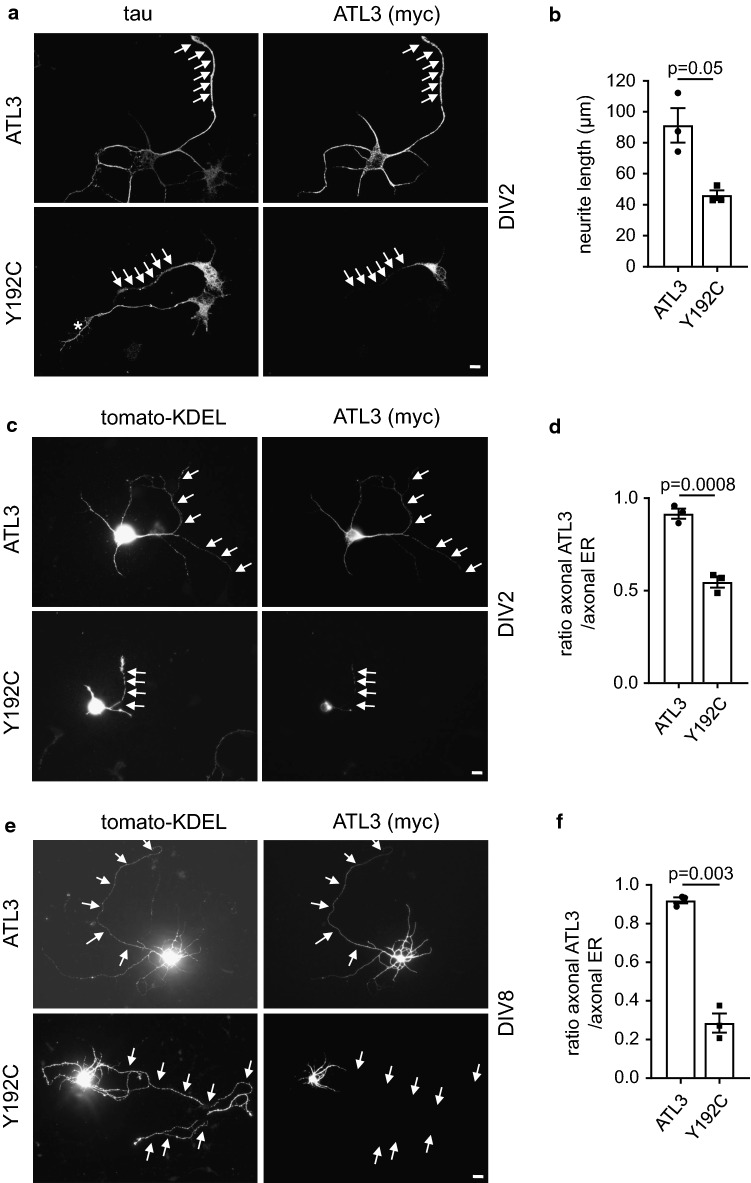
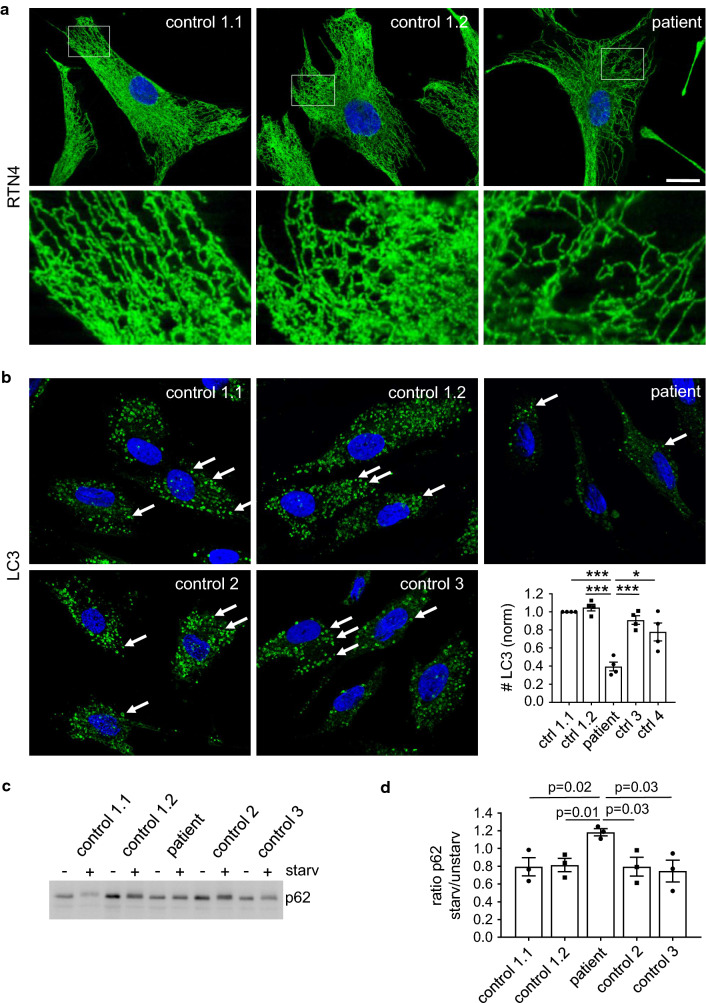
Atlastins (ATLs) are membrane-bound GTPases involved in shaping of the endoplasmic reticulum (ER). Mutations in ATL1 and ATL3 cause spastic paraplegia and hereditary sensory neuropathy. We here show that the sensory neuropathy causing ATL3 Y192C mutation reduces the complexity of the tubular ER-network. ATL3 Y192C delays ER-export by reducing the number of ER exit sites, reduces autophagy, fragments the Golgi and causes malformation of the nucleus. In cultured primary neurons, ATL3 Y192C does not localize to the growing axon, resulting in axon growth deficits. Patient-derived fibroblasts possess a tubular ER with reduced complexity and have a reduced number of autophagosomes. The data suggest that the disease-causing ATL3 Y192C mutation affects multiple ER-related pathways, possibly as a consequence of the distorted ER morphology.
Overview
The claims and statistics of this paper haven’t been checked yet.
Free: it reads the open-access text and checks the first 5 claims that cite a source we can check. Create a free account to check every claim.
Integrity signals
Registry
Cites
Statistics
Figures
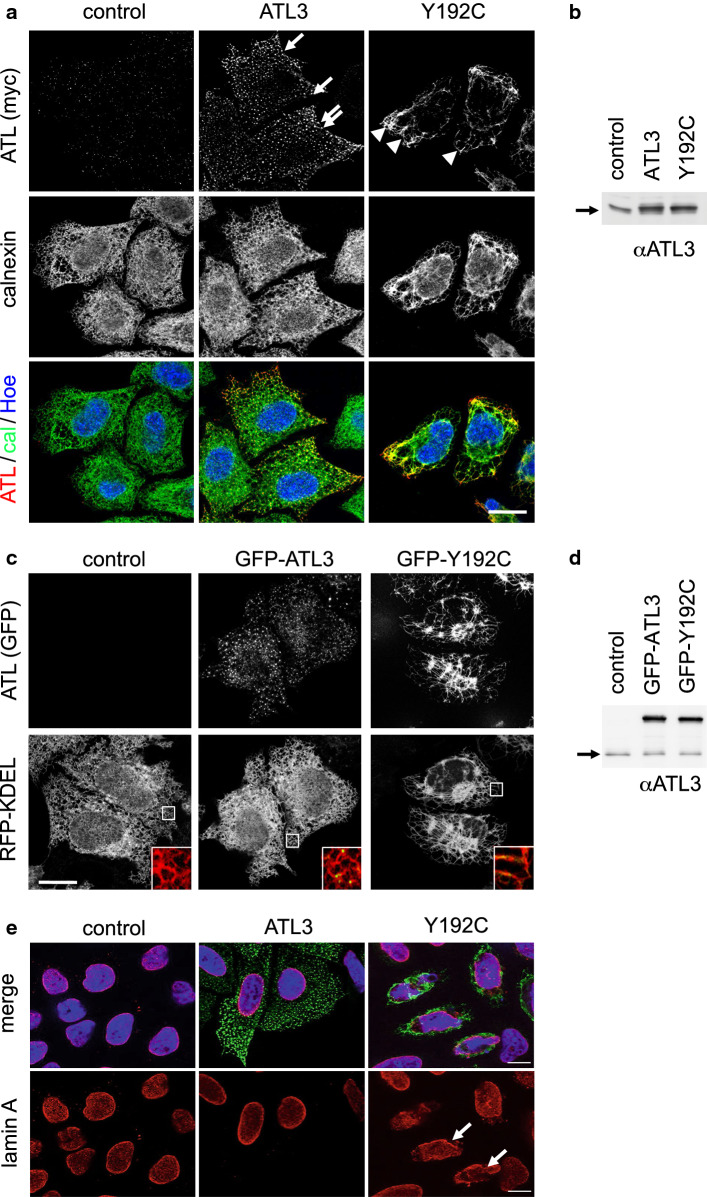
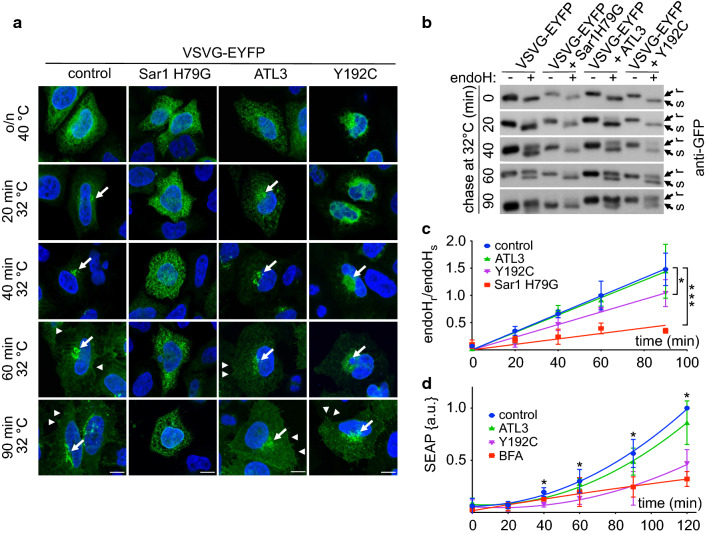
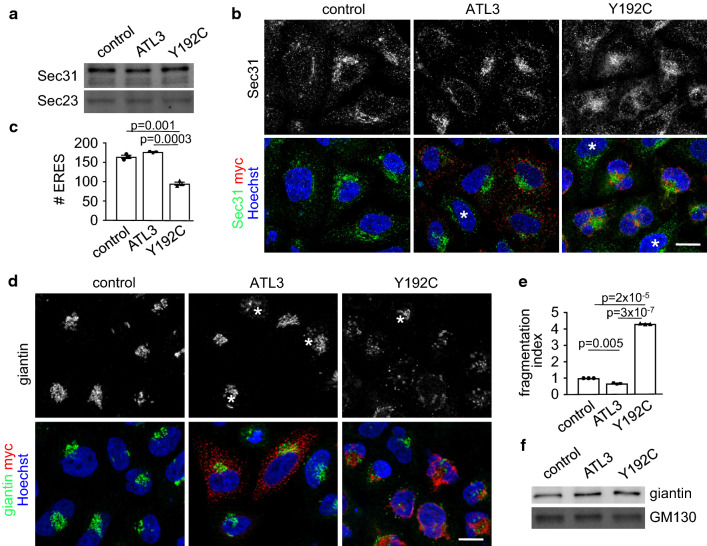
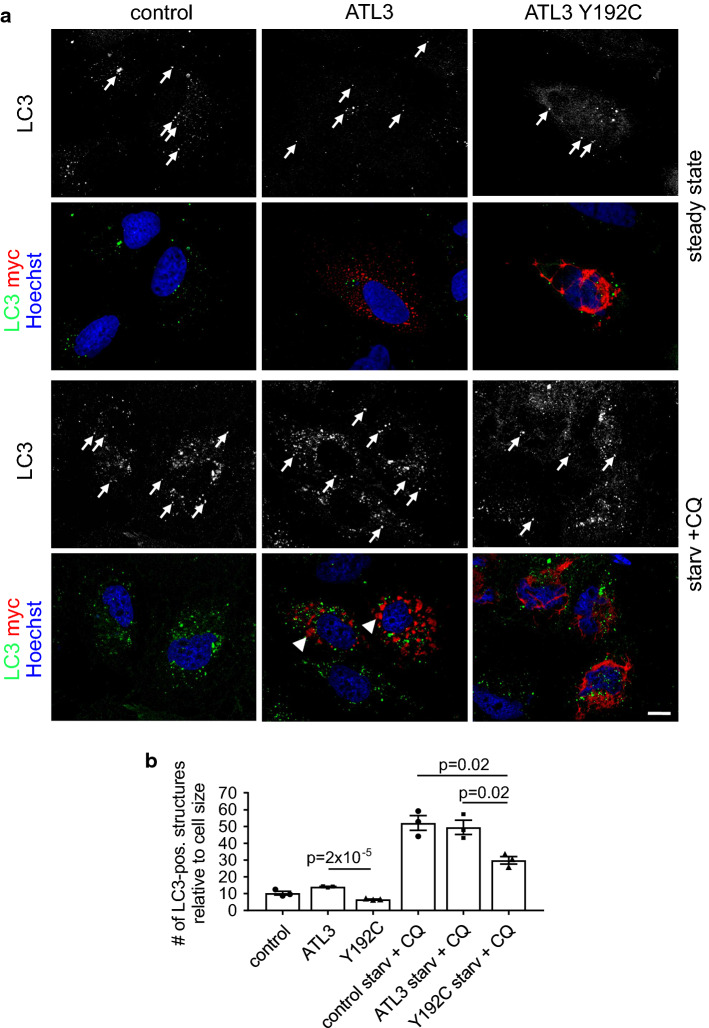
Verification
Claims the paper makes
The claims and statistics of this paper haven’t been checked yet.
Free: it reads the open-access text and checks the first 5 claims that cite a source we can check. Create a free account to check every claim.
Claims other papers make about this one
Each is checked against this paper’s own text: does it say what the citing paper says it does?
In the citing paper
“The HSAN‐related ATL3 (atlastin GTPase 3) Y192C mutation has been connected to reduced complexity of the endoplasmic reticulon network, disturbed connections between ER and mitochondria, and impaired mitochondrial function (Kornak et al, 2014; Behrendt et al, 2019; Krols et al, 2019; Xu et al, 2019a).”
From Autophagy in major human diseases (2021) · cites this paper as Behrendt et al, 2019
Self-check
Percentages, sums and reported differences re-computed from the paper’s own numbers.
The self-check needs the paper’s full text.
Citations
Cites
LC3, a mammalian homologue of yeast Apg8p, is localized in autophagosome membranes after processing.
Kabeya, Y., Mizushima, N., Ueno, T., Yamamoto, A., Kirisako, T., Noda, T., Kominami, E., Ohsumi, Y., & Yoshimori, T. (2000) · The EMBO Journal · doi:10.1093/emboj/19.21.5720 · Cited by 6,605
Cui, C., Cui, J., Jin, F., Cui, Y., Li, R., Jiang, X., Tian, Y., Wang, K., Jiang, P., & Gao, J. (2017) · Cellular Physiology and Biochemistry · doi:10.1159/000479571 · Cited by 5,203
Guidelines for the use and interpretation of assays for monitoring autophagy
Klionsky, D. J., Abdalla, F. C., Abeliovich, H., Abraham, R. T., Acevedo-Arozena, A., Adeli, K., Agholme, L., Agnello, M., Agostinis, P., Aguirre-Ghiso, J. A., et al. (2012) · Autophagy · doi:10.4161/auto.19496 · Cited by 4,330
ER-to-Golgi transport visualized in living cells
Presley, J. F., Cole, N. B., Schroer, T. A., Hirschberg, K., Zaal, K. J. M., & Lippincott-Schwartz, J. (1997) · Nature · doi:10.1038/38001 · Cited by 1,174
Misumi, Y., Misumi, Y., Miki, K., Takatsuki, A., Tamura, G., & Ikehara, Y. (1986) · Journal of Biological Chemistry · doi:10.1016/s0021-9258(18)67398-3 · Cited by 847
Berger, J., Hauber, J., Hauber, R., Geiger, R., & Cullen, B. R. (1988) · Gene · doi:10.1016/0378-1119(88)90219-3 · Cited by 667
A Class of Dynamin-like GTPases Involved in the Generation of the Tubular ER Network
Hu, J., Shibata, Y., Zhu, P.-P., Voss, C., Rismanchi, N., Prinz, W. A., Rapoport, T. A., & Blackstone, C. (2009) · Cell · doi:10.1016/j.cell.2009.05.025 · Cited by 538
Scales, S. J., Pepperkok, R., & Kreis, T. E. (1997) · Cell · doi:10.1016/s0092-8674(00)80379-7 · Cited by 502
Homotypic fusion of ER membranes requires the dynamin-like GTPase Atlastin
Orso, G., Pendin, D., Liu, S., Tosetto, J., Moss, T. J., Faust, J. E., Micaroni, M., Egorova, A., Martinuzzi, A., McNew, J. A., et al. (2009) · Nature · doi:10.1038/nature08280 · Cited by 471
Nixon-Abell, J., Obara, C. J., Weigel, A. V., Li, D., Legant, W. R., Xu, C. S., Pasolli, H. A., Harvey, K., Hess, H. F., Betzig, E., et al. (2016) · Science · doi:10.1126/science.aaf3928 · Cited by 455
Cited by
Autophagy in major human diseases
Klionsky, D. J., Petroni, G., Amaravadi, R. K., Baehrecke, E. H., Ballabio, A., Boya, P., Bravo‐San Pedro, J. M., Cadwell, K., Cecconi, F., Choi, A. M. K., et al. (2021) · The EMBO Journal · doi:10.15252/embj.2021108863 · Cited by 1,585
Axonal Endoplasmic Reticulum Dynamics and Its Roles in Neurodegeneration
Öztürk, Z., O’Kane, C. J., & Pérez-Moreno, J. J. (2020) · Frontiers in Neuroscience · doi:10.3389/fnins.2020.00048 · Cited by 128
“ATL3 Turnover of ER tubules via autophagy by interacting with the ATG8 family protein GABARAP (Chen et al., 2019) Yes (Behrendt et al., 2019; Krols et al., 2019) RTN3 Turnover of ER tubules via autophagy by interacting with ATG8 family proteins LC3s/GABARAPs (Grumati et al., 2017) Yes (Kumamaru et al., 2004; Deng et a…”
BackgroundInfluentialHübner, C. A., & Đikić, I. (2019) · Cell Death and Differentiation · doi:10.1038/s41418-019-0444-0 · Cited by 142
Emerging Principles of Selective ER Autophagy
Wilkinson, S. (2020) · Journal of Molecular Biology · doi:10.1016/j.jmb.2019.05.012 · Cited by 116
“However, a note of caution comes from the fact that these mutation(s) inhibit both the dimerization of ATL3, independently of GABARAP/LC3-binding, and other functions of ATL3 in ER organisation that are not necessarily intertwined with ER-phagy, such as regulation of ER export site abundance [98,101].”
BackgroundQuality Control in Neurons: Mitophagy and Other Selective Autophagy Mechanisms
Evans, C. S., & Holzbaur, E. L. F. (2019) · Journal of Molecular Biology · doi:10.1016/j.jmb.2019.06.031 · Cited by 111
“Further, ATL3 has been shown to affect ER-mitochondrial contacts, while disease-linked mutations affect mitochondrial distribution [202] and axon outgrowth [203] in primary cortical neurons.”
BackgroundNeufeldt, C. J., Cortese, M., Scaturro, P., Cerikan, B., Wideman, J. G., Tabata, K., Moraes, T. D. F. S., Oleksiuk, O., Pichlmair, A., & Bartenschlager, R. F. W. (2019) · Nature Microbiology · doi:10.1038/s41564-019-0586-3 · Cited by 104
Autophagy and Protein Secretion
Cavalli, G., & Cenci, S. (2020) · Journal of Molecular Biology · doi:10.1016/j.jmb.2020.01.015 · Cited by 97
Lischka, A., Laššuthová, P., Çakar, A., Record, C. J., Lent, J. V., Baets, J., Dohrn, M. F., Senderek, J., Lampert, A., Bennett, D., et al. (2022) · Nature Reviews Disease Primers · doi:10.1038/s41572-022-00365-7 · Cited by 66
Self-citationRole of SNAREs in Unconventional Secretion—Focus on the VAMP7-Dependent Secretion
Vats, S., & Galli, T. (2022) · Frontiers in Cell and Developmental Biology · doi:10.3389/fcell.2022.884020 · Cited by 58
“Frontiers in Cell and Developmental Biology | www.frontiersin.org June 2022 | Volume 10 | Article 8840204 growth and regeneration, and neurodegeneration (Yan et al., 2006; Behrendt et al., 2019).”
BackgroundAtlastin 2/3 regulate ER targeting of the ULK1 complex to initiate autophagy
Liu, N., Zhao, H., Zhao, Y. G., Hu, J., & Zhang, H. (2021) · The Journal of Cell Biology · doi:10.1083/jcb.202012091 · Cited by 44
A role for endoplasmic reticulum dynamics in the cellular distribution of microtubules
Tikhomirova, M. S., Kadosh, A., Saukko‐Paavola, A. J., Shemesh, T., & Klemm, R. W. (2022) · Proceedings of the National Academy of Sciences · doi:10.1073/pnas.2104309119 · Cited by 40
“While these are highly complex diseases, accumulating evidence suggests that impaired ER tethering and fusion result in profound changes in both neuronal ER shape and MT biology (22, 40, 44, 47).”
BackgroundAdvances in ER-Phagy and Its Diseases Relevance
He, L., Qian, X., & Cui, Y. (2021) · Cells · doi:10.3390/cells10092328 · Cited by 38
“also showed that Y192C mutation of ATL3 results in impaired autophagy, abnormal ER morphology, and neuronal axon growth defects [93].”
BackgroundSree, S., Parkkinen, I., Their, A., Airavaara, M., & Jokitalo, E. (2021) · Cells · doi:10.3390/cells10050970 · Cited by 34
“Of these, ATL1, also known as the Hereditary Spastic Paraplegia (HSP) 3A (SPG3A) protein is abundantly expressed in cerebral cortex of brain and shows a general distribution in ER, while ATL2 and ATL3 mainly localize at three-way junctions [64].”
BackgroundA novel progress of drug delivery system for organelle targeting in tumour cells
He, Z., Zhang, Y., Khan, A. R., Ji, J., Yu, A., & Zhai, G. (2020) · Journal of drug targeting · doi:10.1080/1061186x.2020.1797051 · Cited by 34
Lipid Droplets in the Pathogenesis of Hereditary Spastic Paraplegia
Tadepalle, N., & Rugarli, E. I. (2021) · Frontiers in Molecular Biosciences · doi:10.3389/fmolb.2021.673977 · Cited by 30
“Cells lacking or expressing dominant negative forms of atlastins show fragmented and unbranched ER tubules (Rismanchi et al., 2008; Hu et al., 2009; Wang et al., 2016b; Zhao et al., 2016; Behrendt et al., 2019).”
BackgroundRegulation and function of endoplasmic reticulum autophagy in neurodegenerative diseases
Zhao, X., Xu, D.-E., Wu, M.-L., Liu, J.-C., Shi, Z.-L., & Ma, Q. (2024) · Neural Regeneration Research · doi:10.4103/nrr.nrr-d-23-00995 · Cited by 24
“…mutations (Y192C and P338R) found in HSAN II patients weaken the interaction between ATL3 and GABARAP, thus blocking ATL3-mediated ER-phagy, and leading to morphological changes in the ER and defects in neuronal axonal development (Fischer et al., 2014; Kornak et al., 2014; Behrendt et al., 2019).”
BackgroundLi, X., Zhong, Y., Yue, R., Xie, J., Zhang, Y., Lin, Y., Li, H., Xu, Y., & Zheng, D. (2023) · Journal of Cellular and Molecular Medicine · doi:10.1111/jcmm.17848 · Cited by 22
Fowler, P. C., Byrne, D. J., Blackstone, C. D., & O’Sullivan, N. C. (2020) · Brain Sciences · doi:10.3390/brainsci10090646 · Cited by 22
“Impaired autophagy has been reported in several subtypes of HSP [42–44] and individuals with mutations in the ER-shaping protein Atlastin 3 (associated with the related disorder hereditary sensory and autonomic neuropathy (HSAN)) have compromised autophagy [45].”
BackgroundRamírez, O. A., Córdova, A., Cerda, M., Lobos, P., Härtel, S., Couve, A., & Hidalgo, C. (2021) · Cell Calcium · doi:10.1016/j.ceca.2021.102399 · Cited by 20
ER Morphology in the Pathogenesis of Hereditary Spastic Paraplegia
Sonda, S., Pendin, D., & Daga, A. (2021) · Cells · doi:10.3390/cells10112870 · Cited by 19
Upregulation of neuronal ER-phagy improves organismal fitness and alleviates APP toxicity
Mou, W., Tang, Y., Huang, Y., Wu, Z., & Cui, Y. (2024) · Cell Reports · doi:10.1016/j.celrep.2024.114255 · Cited by 20
Perumal, N., Herfurth, A., Pfeiffer, N., & Manicam, C. (2022) · Cells · doi:10.3390/cells11213494 · Cited by 15
“The Atl3 protein belongs to a conserved family of large, dynamin-related GTPases involved in the formation and maintenance of the endoplasmic reticulum (ER) [49,50].”
BackgroundINPP5K and Atlastin-1 maintain the nonuniform distribution of ER–plasma membrane contacts in neurons
Sun, J., Harion, R., Naito, T., & Saheki, Y. (2021) · Life Science Alliance · doi:10.26508/lsa.202101092 · Cited by 14
“Interestingly, cells carrying a disease-causing ATL3 mutation show pleiotropic defects in ER-related functions, including defects in vesicular transport and autophagosome formation (Krols et al, 2018, 2019; Behrendt et al, 2019).”
BackgroundControl of TurboID-dependent biotinylation intensity in proximity ligation screens
Garloff, V., Krüger, T., Brakhage, A. A., & Rubio, I. (2023) · Journal of Proteomics · doi:10.1016/j.jprot.2023.104886 · Cited by 13
In vivo Analysis of CRISPR/Cas9 Induced Atlastin Pathological Mutations in Drosophila
Montagna, A., Vajente, N., Pendin, D., & Daga, A. (2020) · Frontiers in Neuroscience · doi:10.3389/fnins.2020.547746 · Cited by 13
Cintra, V. P., Dohrn, M. F., Tomaselli, P. J., Figueiredo, F. B., Marques, S. E., Camargos, S., Barbosa, L. S. M., Rebelo, A. P., Abreu, L., Danzi, M. C., et al. (2021) · Journal of the Neurological Sciences · doi:10.1016/j.jns.2021.117498 · Cited by 11
Disease-causing mutated ATLASTIN 3 is excluded from distal axons and reduces axonal autophagy
Behrendt, L., Hoischen, C., & Kaether, C. (2021) · Neurobiology of Disease · doi:10.1016/j.nbd.2021.105400 · Cited by 11
Self-citation“At last in” the physiological roles of the tubular ER network
Lü, L., Niu, L., & Hu, J. (2020) · Biophysics Reports · doi:10.1007/s41048-020-00113-y · Cited by 11
Selective autophagy: a therapeutic target for healthy aging?
Manastireanu, D. M., Salazar, N. A., Bejarano, E., & Nieto-Torres, J. L. (2024) · Aging advances. · doi:10.4103/agingadv.agingadv-d-24-00002 · Cited by 10
Novel autophagic vacuolar myopathies: Phenotype and genotype features
Napolitano, F., Terracciano, C., Bruno, G., Blasiis, P. D., Lombardi, L., Gialluisi, A., Gianfrancesco, F., Giovanni, D. D., Tummolo, A., Iorio, G. D., et al. (2021) · Neuropathology and Applied Neurobiology · doi:10.1111/nan.12690 · Cited by 7
“316_317) in ATL3 responsible for HSN1F [14,54].”
Mohammadi, S., Khamirani, H. J., Baneshi, M., Kamal, N., Manoocheri, J., Saffar, M., Dianatpour, M., Tabei, K., & Dastgheib, S. A. (2023) · Annals of Human Genetics · doi:10.1111/ahg.12501 · Cited by 9
“Following that, hydrolysis of the next GTP causes substantial deformation; therefore, it pulls ATL in different membranes together to facilitate membrane fusion (Behrendt et al., 2019).”
BackgroundTREX1 Deficiency Induces ER Stress-Mediated Neuronal Cell Death by Disrupting Ca2+ Homeostasis
Halder, D., Jeon, S.-J., Yoon, J., Lee, J.-J., Jun, S. Y., Choi, M.-H., Jeong, B., Sung, D. H., Lee, D. Y., Kim, B. J., et al. (2022) · Molecular Neurobiology · doi:10.1007/s12035-021-02631-3 · Cited by 8
Jiang, M., Zhang, K., Li, M., Tian, Y., Wang, T., Rodríguez, R. A., Lin, Z., Meng, J., Li, C., Wang, Z., et al. (2026) · Molecular Cancer · doi:10.1186/s12943-026-02615-8 · Cited by 5
“Dysfunction in ATL3 has been linked to several pathologies, primarily due to its role in maintaining ER integrity [346].”
Reynisdóttir, I., Arason, A., Freysteinsdóttir, E. S., Kristjánsdóttir, S., Hilmarsdóttir, B., Traustadóttir, G. Á., Johannsson, O. T., Agnarsson, B. A., & Barkardottir, R. B. (2023) · Genes · doi:10.3390/genes14081559 · Cited by 5
“There are known mutations in ATL1 and ATL3 that result in hereditary spastic paraplegia [19,20], and a role for the ATLs in Alzheimer’s disease (AD) has been suggested as well.”
BackgroundThe First Large Deletion of ATL3 Identified in a Patient Presenting with a Sensory Polyneuropathy
Pyromali, I., Richard, L., Derouault, P., Vallat, J., Ghorab, K., Magdelaine, C., Sturtz, F. G., Favreau, F. D., & Lia, A. (2023) · Biomedicines · doi:10.3390/biomedicines11061565 · Cited by 4
“This mislocalization resulted in axon growth deficits in primary neuron cultures [31].”
BackgroundFAM134B-mediated ER-phagy degrades APP and suppresses Alzheimer’s disease pathology
Zhang, Y., Sun, J., Cai, Y., Xu, Z., Li, X., Wei, W., Liu, P., Sun, Q., Wang, Z.-H., & Cui, Y. (2026) · The EMBO Journal · doi:10.1038/s44318-026-00818-9 · Cited by 3
“Mutations in ATL3, an ER-shaping GTPase functioning as an ER-phagy receptor, have been linked to HSAN type I (Behrendt et al, 2019; Chen et al, 2019; Fischer et al, 2014; Kornak et al, 2014), while RTN3L, a receptor enriched in neuronal tissues, has been implicated in Alzheimer ’ s disease (AD)…”
Vu, T. D., & Sung, H. (2025) · Neurobiology of Disease · doi:10.1016/j.nbd.2025.107152 · Cited by 2
Tubular ER dysfunction in neurodegenerative diseases
Sharoar, M. G., & Yan, R. (2025) · Neurobiology of Disease · doi:10.1016/j.nbd.2025.107144 · Cited by 1
“While ATL1 in commonly involved in HSP, the ATL3 mutation is also associated with the SPG variants (Behrendt et al., 2019).”
Kim, T. H., Park, J. Y., Lee, H. J., Choi, B. Y., Kim, H. J., Lee, L. P., & Hong, J. W. (2026) · Journal of Nanobiotechnology · doi:10.1186/s12951-026-04277-6 · Cited by 1
“It plays a significant role in ER network formation and membrane fusion [61].”
ATL2 Recruits TRAK1 to Promote Mitochondrial Transport at ER–Mitochondria Contact Sites
Cheng, Y., Chai, P., Pei, X., Chen, Y., Huang, X., Liu, B., Wu, Y., Teng, J., Zheng, P., & Chen, J. (2026) · Advanced Science · doi:10.1002/advs.76972 · Cited by 1
ER fusogens maintain membrane reservoir to ensure brain functionPreprint
Miao, H., Wang, Y., Huang, Y., Zhang, H., Zheng, L., Xin Min, Z. H. O. U., Wang, X., Xie, Q., Xue, L., & Hu, J. (2025) · bioRxiv (Cold Spring Harbor Laboratory) · doi:10.1101/2025.04.12.648519 · Cited by 1
Autophagy in the regulation of protein secretion in immune cells
Cavalli, G., & Cenci, S. (2020) · Elsevier eBooks · doi:10.1016/b978-0-12-819609-0.00009-2
Atlastine — wie defekte Netzwerke Neuropathien verursachen
Behrendt, L., & Kaether, C. (2020) · BIOspektrum · doi:10.1007/s12268-020-1428-9
Self-citation(2022) · Nature Reviews Disease Primers · doi:10.1038/s41572-022-00375-5
Genetics of autonomic disorders
Vernetti, P. M., & Vernino, S. A. (2024) · Elsevier eBooks · doi:10.1016/b978-0-443-19041-4.00002-9
Ramarao-Milne, P., Kaphle, A., Reguant, R., Klein, A. H., Kuiper, M. J., Hosking, B., Wenzel, J., Al-Mamun, H. A., Elazab, L., Zhong, Q., et al. (2025) · bioRxiv (Cold Spring Harbor Laboratory) · doi:10.1101/2025.11.05.686871
ATL2 Gene Knockout in Estrogen-Receptor Positive Breast Cancer Cell Line T47D
Jóhannsdóttir, S. S. (2024) · Skemman
Wang, W., & Zheng, H. (2026) · Open Biology · doi:10.1098/rsob.250331
Yang, D., Zhao, F., He, Y., Zhu, H., Liu, X., & Chen, X. (2026) · PubMed · doi:10.12122/j.issn.1673-4254.2026.06.016
Sideri, C., Henry, M., Ryan, D., & Meleady, P. (2026) · Biotechnology Letters · doi:10.1007/s10529-026-03784-8
“…contributes to the maintenance of ER membrane architecture and has been implicated in ER stress and intracellular trafficking, while TMED2 functions as a cargo receptor in ER-to-Golgi transport and helps maintain secretory pathway function (Behrendt et al. 2019; Roberts and Satpute-Krishnan 2022).”
Malhotra, S., & Sandhir, R. (2026) · Ageing Research Reviews · doi:10.1016/j.arr.2026.103426
Peripheral Axons Form Endoplasmic Reticulum-Rich Conduits With Breast Cancer CellsPreprint
Ayşit, N., Bilir, Ş., Altintas, E., Toy, M. F., Aydın, M. Ş., Körkaya, H., & Öztürk, G. (2026) · bioRxiv (Cold Spring Harbor Laboratory) · doi:10.64898/2026.11.02.763595
Metadata
- Authors
- Behrendt, L., Kurth, I., & Kaether, C.
- Affiliations
- Leibniz Institute on Aging - Fritz Lipmann Institute (FLI) (DE)
- RWTH Aachen University (DE)
- Corresponding author
- Kaether, Christoph
- Venue
- Cellular and Molecular Life Sciences
- Published
- 2019-01-21
- Volume
- 76
- Issue
- 7
- Pages
- 1433-1445
- ISSN
- 1420-682X (ISSN-L)
- 1420-9071
- PMC
- PMC6420906
- OpenAlex
- W2913602489
- Cited by
- 48
- References
- 57
- Citations by year
- 2026: 6 · 2025: 4 · 2024: 4 · 2023: 5 · 2022: 6 · 2021: 11 · 2020: 8 · 2019: 4
- FWCI
- 3.46
- Type
- journal article
- Language
- en
- Open access
- hybrid
- doi.org
- Licence
- cc-by
- creativecommons.org/licenses/by/4.0 (tdm)
- Locations
- Cellular and Molecular Life Sciences (publishedVersion, cc-by)
- Europe PMC (PubMed Central) (publishedVersion, other-oa)
- PubMed Central (publishedVersion, cc-by)
- PubMed (publishedVersion)
- Informationszentrum Lebenswissenschaften (ZB MED) (submittedVersion, cc-by)
- RWTH Publications (RWTH Aachen) (submittedVersion, other-oa)
- RWTH Publications (RWTH Aachen)
- Topics
- Life Sciences › Neuroscience › Cellular and Molecular Neuroscience › Hereditary Neurological Disorders
- Life Sciences › Biochemistry, Genetics and Molecular Biology › Cell Biology › Cellular transport and secretion
- Life Sciences › Biochemistry, Genetics and Molecular Biology › Cell Biology › Endoplasmic Reticulum Stress and Disease
- Keywords
- endoplasmic reticulum morphology, ER exit sites, ER export, autophagy, Golgi fragmentation, axon growth, hereditary sensory neuropathy, spastic paraplegia, patient-derived fibroblasts
- MeSH terms
- Autophagosomes, Animals, Autophagy, Axons, Cells, Cultured, Endoplasmic Reticulum, Golgi Apparatus, HeLa Cells, Humans, Membrane Proteins, Neurons, Mutagenesis, Site-Directed, GTP-Binding Proteins, GTP Phosphohydrolases, Mice
About these checks
Registry, retraction, Cites and statistics results are computed, not judged, with one exception: a printed reference that no index lists is read once by a model before it counts as a citation error. Claims are extracted by a model and kept only when their quote appears verbatim in the text; each cited source is then checked, with a model’s help, for whether it says what the claim relies on. Those verdicts can be wrong — read the claim’s quote and the cited source before relying on one.
Statistics and arithmetic are recomputed, not judged.
Confidence bands are shown only for fields calibrated on our annotated test set. None is calibrated yet, so no band is shown.
What counts as a claim ›How we measure confidence ›How we check this ›
Are you an author, or do you see a problem with this page? Request a review
Data sources
Bibliographic data: Semantic Scholar, OpenAlex, Crossref.
Contains information from the Semantic Scholar Academic Graph Datasets, made available under the ODC Attribution License (ODC-BY 1.0).
Semantic Scholar’s data is described in: Kinney, R., et al. (2023). The Semantic Scholar Open Data Platform. arXiv:2301.10140.
