

A disease causing ATLASTIN 3 mutation affects multiple endoplasmic reticulum-related pathways
Open accessThe DOI matches its Crossref record; 57 of the 57 references it cites were found in a registry or an index.
Abstract
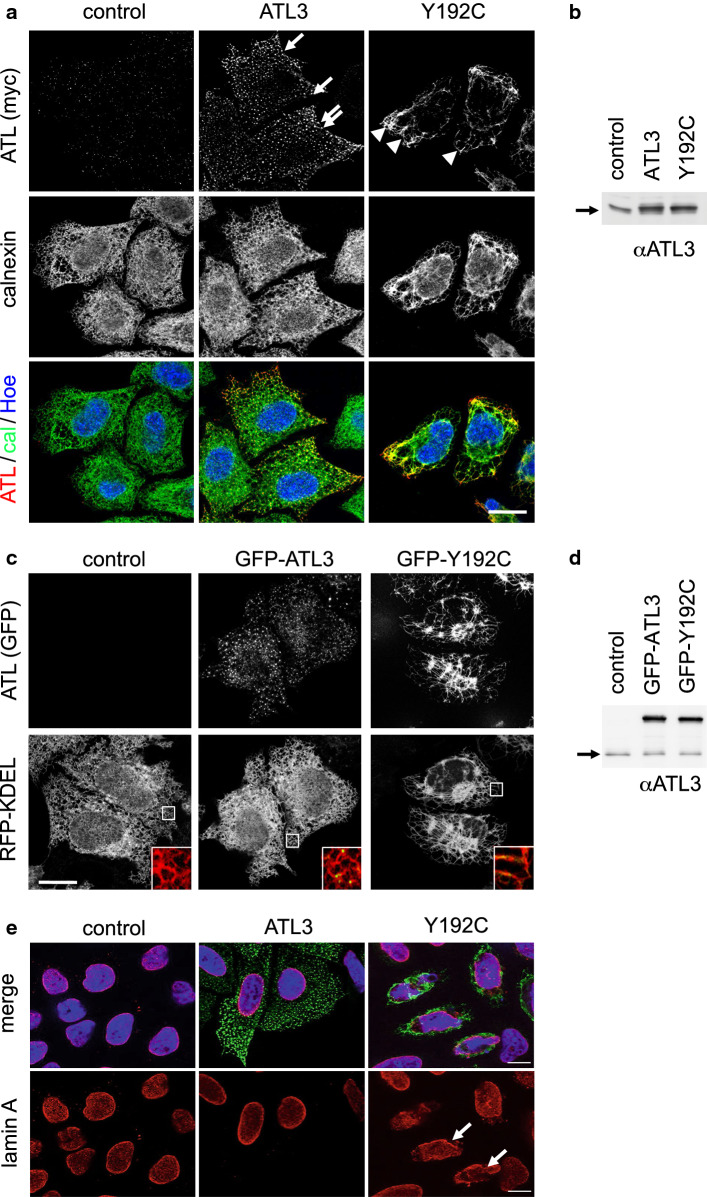
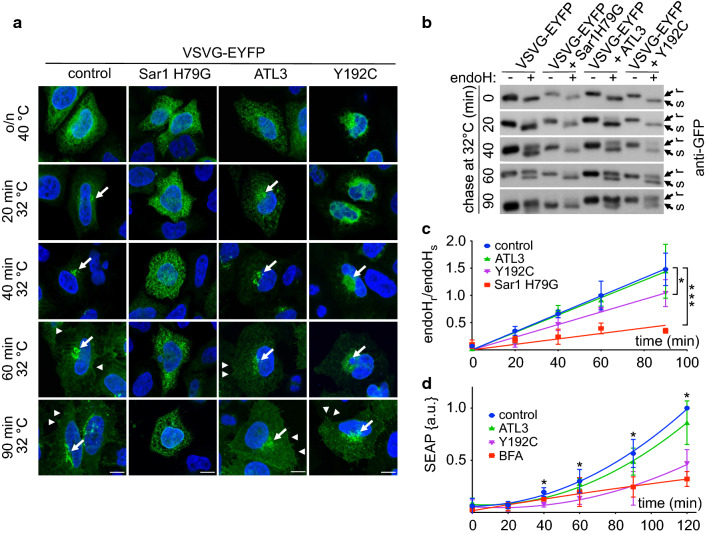
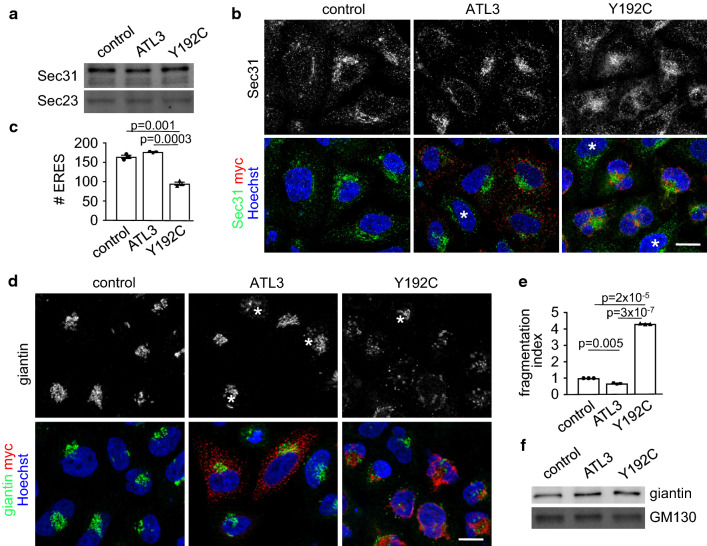
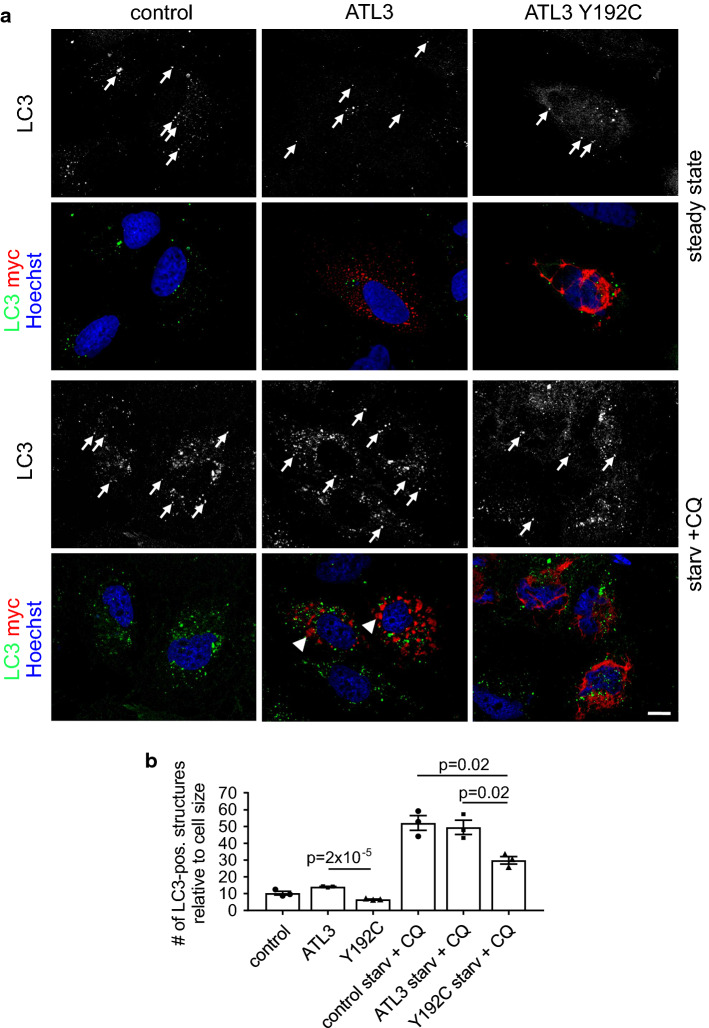
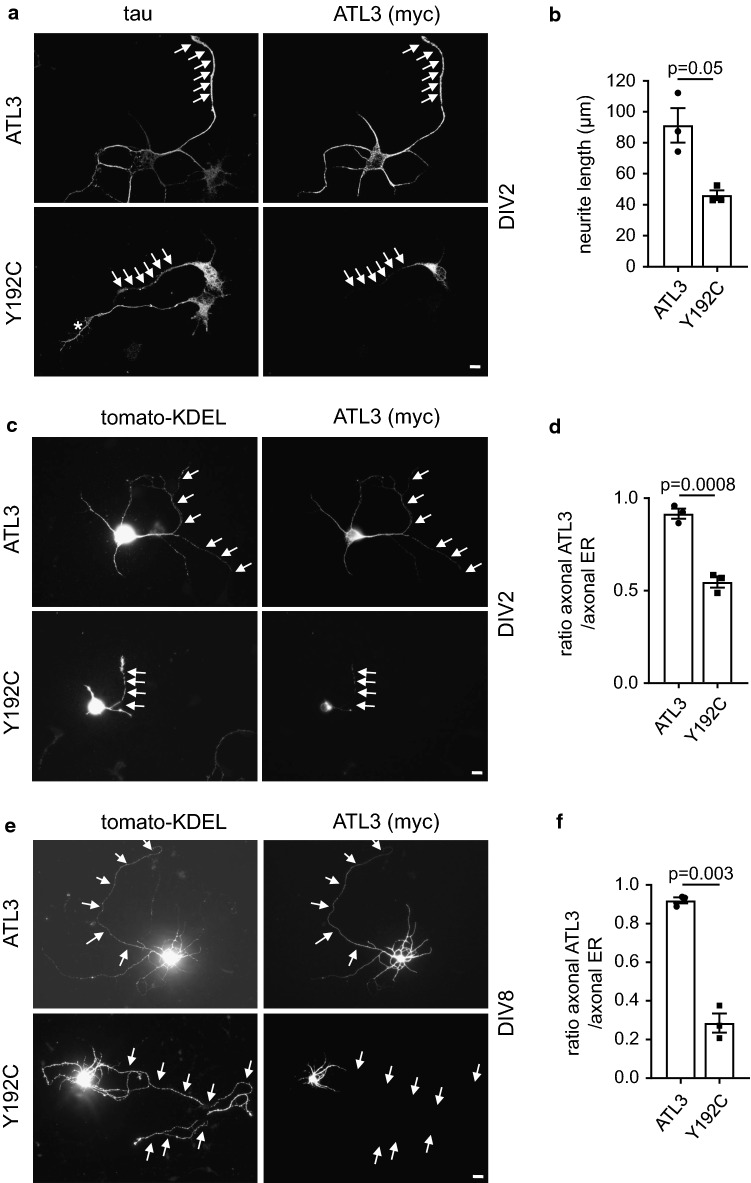
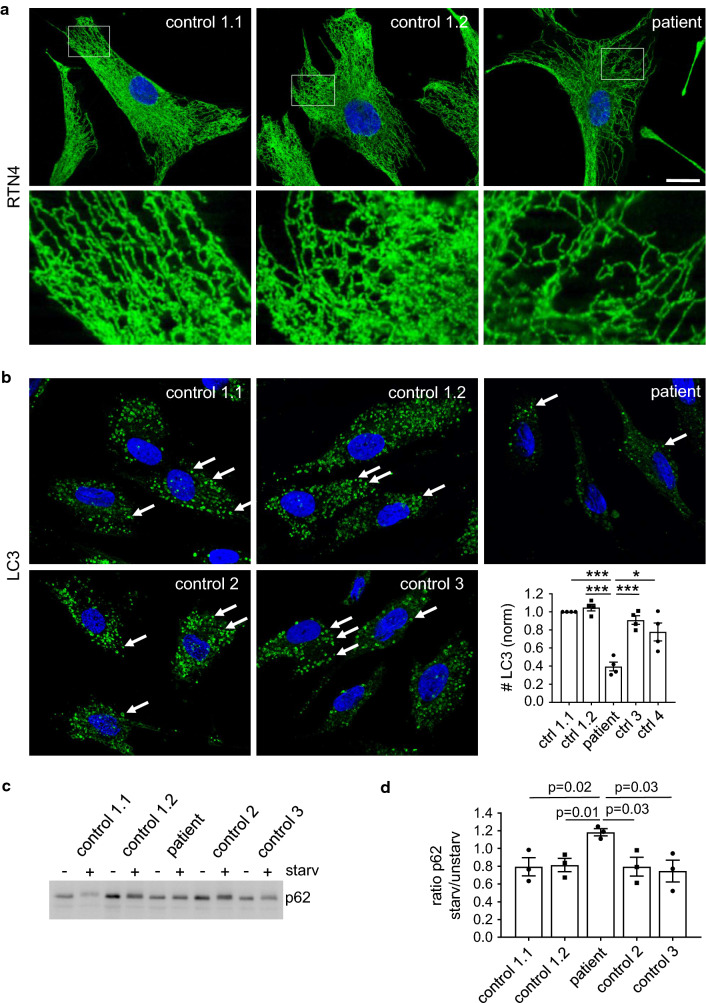
Atlastins (ATLs) are membrane-bound GTPases involved in shaping of the endoplasmic reticulum (ER). Mutations in ATL1 and ATL3 cause spastic paraplegia and hereditary sensory neuropathy. We here show that the sensory neuropathy causing ATL3 Y192C mutation reduces the complexity of the tubular ER-network. ATL3 Y192C delays ER-export by reducing the number of ER exit sites, reduces autophagy, fragments the Golgi and causes malformation of the nucleus. In cultured primary neurons, ATL3 Y192C does not localize to the growing axon, resulting in axon growth deficits. Patient-derived fibroblasts possess a tubular ER with reduced complexity and have a reduced number of autophagosomes. The data suggest that the disease-causing ATL3 Y192C mutation affects multiple ER-related pathways, possibly as a consequence of the distorted ER morphology.
Overview
The claims and statistics of this paper haven’t been checked yet.
Free: it reads the open-access text and checks the first 5 claims that cite a source we can check. Create a free account to check every claim.
Integrity signals
Registry
Cites
Statistics
Figures
Verification
Claims the paper makes
The claims and statistics of this paper haven’t been checked yet.
Free: it reads the open-access text and checks the first 5 claims that cite a source we can check. Create a free account to check every claim.
Claims other papers make about this one
Each is checked against this paper’s own text: does it say what the citing paper says it does?
In the citing paper
“The HSAN‐related ATL3 (atlastin GTPase 3) Y192C mutation has been connected to reduced complexity of the endoplasmic reticulon network, disturbed connections between ER and mitochondria, and impaired mitochondrial function (Kornak et al, 2014; Behrendt et al, 2019; Krols et al, 2019; Xu et al, 2019a).”
From Autophagy in major human diseases (2021) · cites this paper as Behrendt et al, 2019
Self-check
Percentages, sums and reported differences re-computed from the paper’s own numbers.
The self-check needs the paper’s full text.
Citations
Cites
LC3, a mammalian homologue of yeast Apg8p, is localized in autophagosome membranes after processing.
Kabeya, Y., Mizushima, N., Ueno, T., Yamamoto, A., Kirisako, T., Noda, T., Kominami, E., Ohsumi, Y., & Yoshimori, T. (2000) · The EMBO Journal · doi:10.1093/emboj/19.21.5720 · Cited by 6,605
Cui, C., Cui, J., Jin, F., Cui, Y., Li, R., Jiang, X., Tian, Y., Wang, K., Jiang, P., & Gao, J. (2017) · Cellular Physiology and Biochemistry · doi:10.1159/000479571 · Cited by 5,203
Guidelines for the use and interpretation of assays for monitoring autophagy
Klionsky, D. J., Abdalla, F. C., Abeliovich, H., Abraham, R. T., Acevedo-Arozena, A., Adeli, K., Agholme, L., Agnello, M., Agostinis, P., Aguirre-Ghiso, J. A., et al. (2012) · Autophagy · doi:10.4161/auto.19496 · Cited by 4,330
ER-to-Golgi transport visualized in living cells
Presley, J. F., Cole, N. B., Schroer, T. A., Hirschberg, K., Zaal, K. J. M., & Lippincott-Schwartz, J. (1997) · Nature · doi:10.1038/38001 · Cited by 1,174
Misumi, Y., Misumi, Y., Miki, K., Takatsuki, A., Tamura, G., & Ikehara, Y. (1986) · Journal of Biological Chemistry · doi:10.1016/s0021-9258(18)67398-3 · Cited by 847
Berger, J., Hauber, J., Hauber, R., Geiger, R., & Cullen, B. R. (1988) · Gene · doi:10.1016/0378-1119(88)90219-3 · Cited by 667
A Class of Dynamin-like GTPases Involved in the Generation of the Tubular ER Network
Hu, J., Shibata, Y., Zhu, P.-P., Voss, C., Rismanchi, N., Prinz, W. A., Rapoport, T. A., & Blackstone, C. (2009) · Cell · doi:10.1016/j.cell.2009.05.025 · Cited by 538
Scales, S. J., Pepperkok, R., & Kreis, T. E. (1997) · Cell · doi:10.1016/s0092-8674(00)80379-7 · Cited by 502
Homotypic fusion of ER membranes requires the dynamin-like GTPase Atlastin
Orso, G., Pendin, D., Liu, S., Tosetto, J., Moss, T. J., Faust, J. E., Micaroni, M., Egorova, A., Martinuzzi, A., McNew, J. A., et al. (2009) · Nature · doi:10.1038/nature08280 · Cited by 471
Nixon-Abell, J., Obara, C. J., Weigel, A. V., Li, D., Legant, W. R., Xu, C. S., Pasolli, H. A., Harvey, K., Hess, H. F., Betzig, E., et al. (2016) · Science · doi:10.1126/science.aaf3928 · Cited by 455
Aridor, M., Bannykh, S. I., Rowe, T., & Balch, W. E. (1995) · The Journal of cell biology · doi:10.1083/jcb.131.4.875 · Cited by 413
ER exit sites are physical and functional core autophagosome biogenesis components
Graef, M., Friedman, J. R., Graham, C., Babu, M., & Nunnari, J. (2013) · Molecular Biology of the Cell · doi:10.1091/mbc.e13-07-0381 · Cited by 379
COPII and the regulation of protein sorting in mammals
Zanetti, G., Pahuja, K. B., Studer, S., Shim, S., & Schekman, R. (2012) · Nature Cell Biology · doi:10.1038/ncb2390 · Cited by 378
Mutations in a newly identified GTPase gene cause autosomal dominant hereditary spastic paraplegia
Zhao, X., Alvarado, D., Rainier, S., Lemons, R., Hedera, P., Weber, C. H., Tukel, T., Apak, M., Heiman-Patterson, T., Ming, L., et al. (2001) · Nature Genetics · doi:10.1038/ng758 · Cited by 357
ERGIC-53 and traffic in the secretory pathway
Hauri, H.-P., Kappeler, F., Andersson, H., & Appenzeller, C. (2000) · Journal of Cell Science · doi:10.1242/jcs.113.4.587 · Cited by 321
Glyoxal as an alternative fixative to formaldehyde in immunostaining and super‐resolution microscopy
Richter, K. N., Revelo, N. H., Seitz, K. J., Helm, M. S., Sarkar, D., Saleeb, R. S., D'Este, E., Eberle, J., Wagner, E., Vogl, C., et al. (2018) · The EMBO Journal · doi:10.15252/embj.201695709 · Cited by 314
High Ca2+-phosphate transfection efficiency in low-density neuronal cultures
Jiang, M., & Chen, G. (2006) · Nature Protocols · doi:10.1038/nprot.2006.86 · Cited by 304 · cited 1×
“For transfection, the calcium-phosphate method was used as described [24] with the following changes:”
MethodCellular Pathways of Hereditary Spastic Paraplegia
Blackstone, C. (2012) · Annual Review of Neuroscience · doi:10.1146/annurev-neuro-062111-150400 · Cited by 282
Visible fluorescent detection of proteins in polyacrylamide gels without staining
Ladner, C. L., Yang, J., Turner, R. J., & Edwards, R. A. (2004) · Analytical Biochemistry · doi:10.1016/j.ab.2003.10.047 · Cited by 281
Autophagosome Formation Depends on the Small GTPase Rab1 and Functional ER Exit Sites
Carlos Martín Zoppino, F., Damián Militello, R., Slavin, I., Álvarez, C., & Colombo, M. I. (2010) · Traffic · doi:10.1111/j.1600-0854.2010.01086.x · Cited by 263
Toomre, D., Keller, P., Olivo, J. W., & Simons, K. (1999) · Journal of Cell Science · doi:10.1242/jcs.112.1.21 · Cited by 258
Wacker, I., Kaether, C., Krömer, A., Migala, A., Almers, W., & Gerdes, H.-H. (1997) · Journal of Cell Science · doi:10.1242/jcs.110.13.1453 · Cited by 206
Self-citationAtlastin GTPases are required for Golgi apparatus and ER morphogenesis
Rismanchi, N., Soderblom, C., Stadler, J., Zhu, P.-P., & Blackstone, C. (2008) · Human Molecular Genetics · doi:10.1093/hmg/ddn046 · Cited by 202
The recycling pathway of protein ERGIC-53 and dynamics of the ER-Golgi intermediate compartment
Klumperman, J., Schweizer, A., Clausen, H., Tang, B. L., Hong, W., Oorschot, V., & Hauri, H.-P. (1998) · Journal of Cell Science · doi:10.1242/jcs.111.22.3411 · Cited by 196
Wang, S., Tukachinsky, H., Romano, F. B., & Rapoport, T. A. (2016) · eLife · doi:10.7554/elife.18605 · Cited by 196
Rivero-Gutiérrez, B., Anzola, A., Martínez-Augustin, O., & de Medina, F. S. (2014) · Analytical Biochemistry · doi:10.1016/j.ab.2014.08.027 · Cited by 186
Mechanisms of disease in hereditary sensory and autonomic neuropathies
Rotthier, A., Baets, J., Timmerman, V., & Janssens, K. (2012) · Nature Reviews Neurology · doi:10.1038/nrneurol.2011.227 · Cited by 168
Gallione, C. J., & Rose, J. K. (1985) · Journal of Virology · doi:10.1128/jvi.54.2.374-382.1985 · Cited by 159
A Conserved Role for Atlastin GTPases in Regulating Lipid Droplet Size
Klemm, R. W., Norton, J. P., Cole, R. A., Li, C. S., Park, S. H., Crane, M. M., Li, L., Jin, D., Boye-Doe, A., Liu, T. Y., et al. (2013) · Cell Reports · doi:10.1016/j.celrep.2013.04.015 · Cited by 159
Dynamic association of the ULK1 complex with omegasomes during autophagy induction
Karanasios, E., Stapleton, E., Manifava, M., Kaizuka, T., Mizushima, N., Walker, S. A., & Ktistakis, N. T. (2013) · Journal of Cell Science · doi:10.1242/jcs.132415 · Cited by 158
Atlastins remodel the endoplasmic reticulum for selective autophagy
Liang, J. R., Lingeman, E., Ahmed, S., & Corn, J. E. (2018) · Journal of Cell Biology · doi:10.1083/jcb.201804185 · Cited by 158
Zhu, P.-P., Patterson, A., Lavoie, B., Stadler, J., Shoeb, M., Patel, R., & Blackstone, C. (2003) · Journal of Biological Chemistry · doi:10.1074/jbc.m306702200 · Cited by 152
Guelly, C., Zhu, P.-P., Leonardis, L., Papić, L., Zidar, J., Schabhüttl, M., Strohmaier, H., Weis, J., Strom, T. M., Baets, J., et al. (2011) · The American Journal of Human Genetics · doi:10.1016/j.ajhg.2010.12.003 · Cited by 143
Monitoring chaperone engagement of substrates in the endoplasmic reticulum of live cells
Snapp, E. L., Sharma, A., Lippincott-Schwartz, J., & Hegde, R. S. (2006) · Proceedings of the National Academy of Sciences · doi:10.1073/pnas.0510657103 · Cited by 125
Atlastin1 Mutations Are Frequent in Young-Onset Autosomal Dominant Spastic Paraplegia
Dürr, A., Camuzat, A., Colin, E., Tallaksen, C., Hannequin, D., Coutinho, P., Fontaine, B., Rossi, A., Gil, R., Rousselle, C., et al. (2004) · Archives of Neurology · doi:10.1001/archneur.61.12.1867 · Cited by 110
Sensory neuropathy with bone destruction due to a mutation in the membrane-shaping atlastin GTPase 3
Kornak, U., Mademan, I., Schinke, M., Voigt, M., Krawitz, P., Hecht, J., Barvencik, F., Schinke, T., Gießelmann, S., Beil, F. T., et al. (2014) · Brain · doi:10.1093/brain/awt357 · Cited by 109
Self-citationGolgi apparatus and neurodegenerative diseases
Fan, J., Hu, Z., Zeng, L., Lu, W., Tang, X., Zhang, J., & Li, T. (2008) · International Journal of Developmental Neuroscience · doi:10.1016/j.ijdevneu.2008.05.006 · Cited by 103
Timmerman, V., Clowes, V. E., & Reid, E. (2012) · Experimental Neurology · doi:10.1016/j.expneurol.2012.01.010 · Cited by 93
Okamoto, M., Kurokawa, K., Matsuura, K., Saito, C., Hirata, R., & Nakano, A. (2012) · Journal of Cell Science · doi:10.1242/jcs.100065 · Cited by 86 · cited 1×
“It is conceivable that for proper assembly and function ERES need an exactly defined ER structure with the right degree of curvature and sheet/tubule ratio [51].”
BackgroundNamekawa, M., Muriel, M., Janer, A., Latouche, M., Dauphin, A., Debeir, T., Martin, E., Duyckaerts, C. J., Prigent, A., Depienne, C., et al. (2007) · Molecular and Cellular Neuroscience · doi:10.1016/j.mcn.2007.01.012 · Cited by 85
Fusion of the endoplasmic reticulum by membrane-bound GTPases
Hu, J., & Rapoport, T. A. (2016) · Seminars in Cell and Developmental Biology · doi:10.1016/j.semcdb.2016.06.001 · Cited by 82
Haase, G., & Rabouille, C. (2015) · Frontiers in Neuroscience · doi:10.3389/fnins.2015.00448 · Cited by 75
ERES: sites for autophagosome biogenesis and maturation?
Sanchez-Wandelmer, J., Ktistakis, N. T., & Reggiori, F. (2015) · Journal of Cell Science · doi:10.1242/jcs.158758 · Cited by 70
A novel missense mutation confirms ATL3 as a gene for hereditary sensory neuropathy type 1
Fischer, D., Schabhüttl, M., Wieland, T., Windhager, R., Strom, T. M., & Auer‐Grumbach, M. (2014) · Brain · doi:10.1093/brain/awu091 · Cited by 66
Structures of the yeast dynamin-like GTPase Sey1p provide insight into homotypic ER fusion
Yan, L., Sun, S., Wang, W., Shi, J., Hu, X., Wang, S., Su, D., Rao, Z., Hu, J., & Lou, Z. (2015) · The Journal of Cell Biology · doi:10.1083/jcb.201502078 · Cited by 65
Membrane-shaping disorders: a common pathway in axon degeneration
Hübner, C. A., & Kurth, I. (2014) · Brain · doi:10.1093/brain/awu287 · Cited by 62
Self-citationMammalian knock out cells reveal prominent roles for atlastin GTPases in ER network morphology
Zhao, G., Zhu, P., Renvoisé, B., Maldonado‐Báez, L., Park, S. H., & Blackstone, C. D. (2016) · Experimental Cell Research · doi:10.1016/j.yexcr.2016.09.015 · Cited by 52
Entry and Exit Mechanisms at the cis-Face of the Golgi Complex
Lorente-Rodriguez, A., & Barlowe, C. (2011) · Cold Spring Harbor Perspectives in Biology · doi:10.1101/cshperspect.a005207 · Cited by 48
Pawar, S., Ungricht, R., Tiefenboeck, P., Leroux, J., & Kutay, U. (2017) · eLife · doi:10.7554/elife.28202 · Cited by 45
Krols, M., Asselbergh, B., De Rycke, R., De Winter, V., Seyer, A., Müller, F.-J., Kurth, I., Bultynck, G., Timmerman, V., & Janssens, S. (2019) · Human Molecular Genetics · doi:10.1093/hmg/ddy352 · Cited by 40
Self-citationHereditary spastic paraplegia-causing mutations in atlastin-1 interfere with BMPRII trafficking
Zhao, J., & Hedera, P. (2012) · Molecular and Cellular Neuroscience · doi:10.1016/j.mcn.2012.10.005 · Cited by 38
Sensory-Neuropathy-Causing Mutations in ATL3 Cause Aberrant ER Membrane Tethering
Krols, M., Detry, S., Asselbergh, B., Almeida-Souza, L., Kremer, A., Lippens, S., Rycke, R. M. D., Winter, V. D., Müller, F.-J., Kurth, I., et al. (2018) · Cell Reports · doi:10.1016/j.celrep.2018.04.071 · Cited by 38
Self-citationER network formation and membrane fusion by atlastin1/SPG3A disease variants
Ulengin-Talkish, I., Park, J. J., & Lee, T. H. (2015) · Molecular Biology of the Cell · doi:10.1091/mbc.e14-10-1447 · Cited by 30
Faßler, M., Li, X., & Kaether, C. (2011) · Journal of Biological Chemistry · doi:10.1074/jbc.m111.252429 · Cited by 17 · cited 2×
“Deglycosylation of VSVG-EYFP was performed basically as described [29] but using direct cell lysates instead of immunoprecipitates.”
MethodSelf-citationYonemura, Y., Li, X., Müller, K., Krämer, A., Atigbire, P., Mentrup, T., Feuerhake, T., Kroll, T. C., Shomron, O., Nohl, R., et al. (2016) · Journal of Cell Science · doi:10.1242/jcs.186163 · Cited by 17
Self-citationKim, K. T., Moon, Y., Jang, Y., Lee, K. T., Lee, C., Jun, Y., & Lee, S.-H. (2017) · Scientific Reports · doi:10.1038/s41598-017-09162-9 · Cited by 17
The Ubiquitin Ligase CBLC Maintains the Network Organization of the Golgi Apparatus
Lee, W. Y., Goh, G. Y. L., Chia, J., Boey, A., Gounko, N. V., & Bard, F. (2015) · PLoS ONE · doi:10.1371/journal.pone.0138789 · Cited by 11
Cited by
Autophagy in major human diseases
Klionsky, D. J., Petroni, G., Amaravadi, R. K., Baehrecke, E. H., Ballabio, A., Boya, P., Bravo‐San Pedro, J. M., Cadwell, K., Cecconi, F., Choi, A. M. K., et al. (2021) · The EMBO Journal · doi:10.15252/embj.2021108863 · Cited by 1,585
Axonal Endoplasmic Reticulum Dynamics and Its Roles in Neurodegeneration
Öztürk, Z., O’Kane, C. J., & Pérez-Moreno, J. J. (2020) · Frontiers in Neuroscience · doi:10.3389/fnins.2020.00048 · Cited by 128
“ATL3 Turnover of ER tubules via autophagy by interacting with the ATG8 family protein GABARAP (Chen et al., 2019) Yes (Behrendt et al., 2019; Krols et al., 2019) RTN3 Turnover of ER tubules via autophagy by interacting with ATG8 family proteins LC3s/GABARAPs (Grumati et al., 2017) Yes (Kumamaru et al., 2004; Deng et a…”
BackgroundInfluentialHübner, C. A., & Đikić, I. (2019) · Cell Death and Differentiation · doi:10.1038/s41418-019-0444-0 · Cited by 142
Emerging Principles of Selective ER Autophagy
Wilkinson, S. (2020) · Journal of Molecular Biology · doi:10.1016/j.jmb.2019.05.012 · Cited by 116
“However, a note of caution comes from the fact that these mutation(s) inhibit both the dimerization of ATL3, independently of GABARAP/LC3-binding, and other functions of ATL3 in ER organisation that are not necessarily intertwined with ER-phagy, such as regulation of ER export site abundance [98,101].”
BackgroundQuality Control in Neurons: Mitophagy and Other Selective Autophagy Mechanisms
Evans, C. S., & Holzbaur, E. L. F. (2019) · Journal of Molecular Biology · doi:10.1016/j.jmb.2019.06.031 · Cited by 111
“Further, ATL3 has been shown to affect ER-mitochondrial contacts, while disease-linked mutations affect mitochondrial distribution [202] and axon outgrowth [203] in primary cortical neurons.”
Background
Metadata
- Authors
- Behrendt, L., Kurth, I., & Kaether, C.
- Affiliations
- Leibniz Institute on Aging - Fritz Lipmann Institute (FLI) (DE)
- RWTH Aachen University (DE)
- Corresponding author
- Kaether, Christoph
- Venue
- Cellular and Molecular Life Sciences
- Published
- 2019-01-21
- Volume
- 76
- Issue
- 7
- Pages
- 1433-1445
- ISSN
- 1420-682X (ISSN-L)
- 1420-9071
- PMC
- PMC6420906
- OpenAlex
- W2913602489
- Cited by
- 48
- References
- 57
- Citations by year
- 2026: 6 · 2025: 4 · 2024: 4 · 2023: 5 · 2022: 6 · 2021: 11 · 2020: 8 · 2019: 4
- FWCI
- 3.46
- Type
- journal article
- Language
- en
- Open access
- hybrid
- doi.org
- Licence
- cc-by
- creativecommons.org/licenses/by/4.0 (tdm)
- Locations
- Cellular and Molecular Life Sciences (publishedVersion, cc-by)
- Europe PMC (PubMed Central) (publishedVersion, other-oa)
- PubMed Central (publishedVersion, cc-by)
- PubMed (publishedVersion)
- Informationszentrum Lebenswissenschaften (ZB MED) (submittedVersion, cc-by)
- RWTH Publications (RWTH Aachen) (submittedVersion, other-oa)
- RWTH Publications (RWTH Aachen)
- Topics
- Life Sciences › Neuroscience › Cellular and Molecular Neuroscience › Hereditary Neurological Disorders
- Life Sciences › Biochemistry, Genetics and Molecular Biology › Cell Biology › Cellular transport and secretion
- Life Sciences › Biochemistry, Genetics and Molecular Biology › Cell Biology › Endoplasmic Reticulum Stress and Disease
- Keywords
- endoplasmic reticulum morphology, ER exit sites, ER export, autophagy, Golgi fragmentation, axon growth, hereditary sensory neuropathy, spastic paraplegia, patient-derived fibroblasts
- MeSH terms
- Autophagosomes, Animals, Autophagy, Axons, Cells, Cultured, Endoplasmic Reticulum, Golgi Apparatus, HeLa Cells, Humans, Membrane Proteins, Neurons, Mutagenesis, Site-Directed, GTP-Binding Proteins, GTP Phosphohydrolases, Mice
About these checks
Registry, retraction, Cites and statistics results are computed, not judged, with one exception: a printed reference that no index lists is read once by a model before it counts as a citation error. Claims are extracted by a model and kept only when their quote appears verbatim in the text; each cited source is then checked, with a model’s help, for whether it says what the claim relies on. Those verdicts can be wrong — read the claim’s quote and the cited source before relying on one.
Statistics and arithmetic are recomputed, not judged.
Confidence bands are shown only for fields calibrated on our annotated test set. None is calibrated yet, so no band is shown.
What counts as a claim ›How we measure confidence ›How we check this ›
Are you an author, or do you see a problem with this page? Request a review
Data sources
Bibliographic data: Semantic Scholar, OpenAlex, Crossref.
Contains information from the Semantic Scholar Academic Graph Datasets, made available under the ODC Attribution License (ODC-BY 1.0).
Semantic Scholar’s data is described in: Kinney, R., et al. (2023). The Semantic Scholar Open Data Platform. arXiv:2301.10140.
