

Aβ/tau oligomer interplay at human synapses supports shifting therapeutic targets for Alzheimer’s disease
Open accessPublished version of a preprint
The DOI matches its Crossref record; 65 of the 66 references it cites were found in a registry or an index.
Abstract
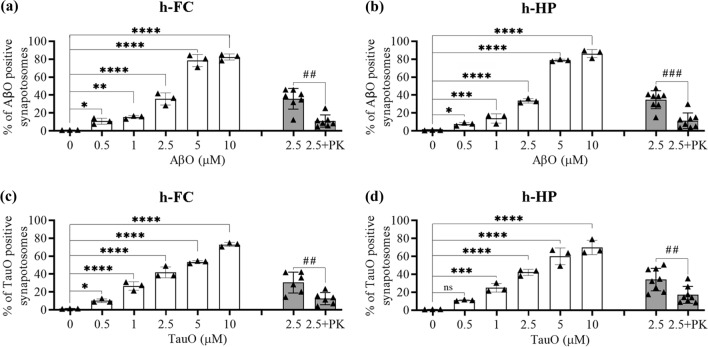
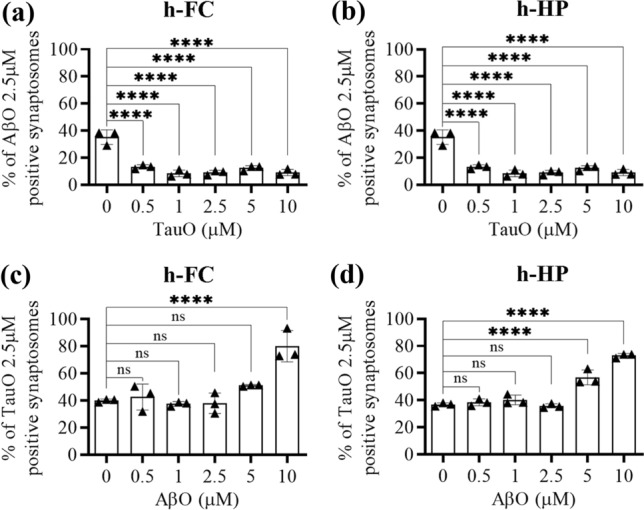
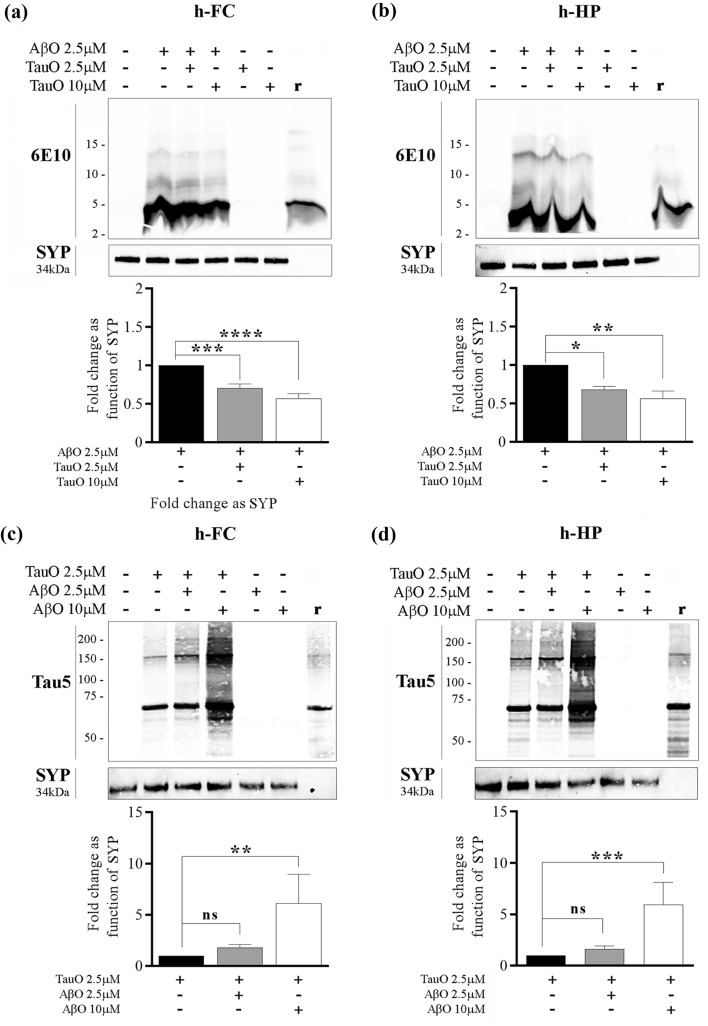
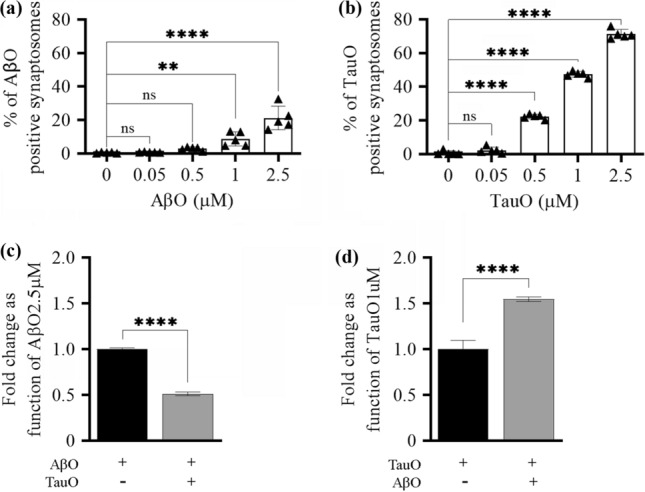
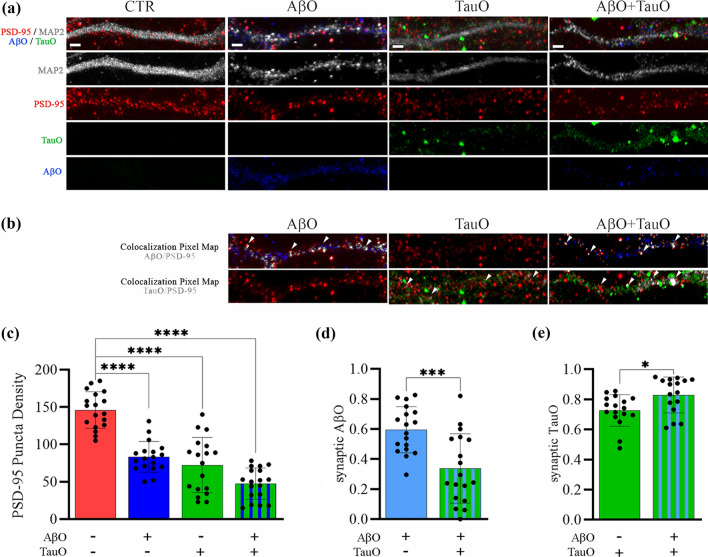
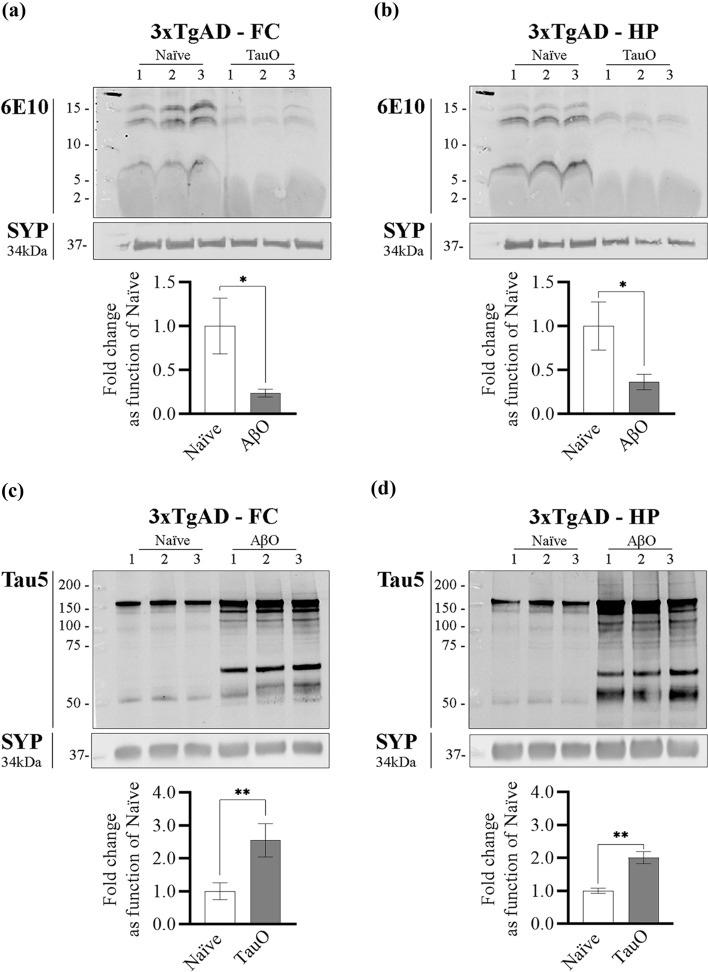
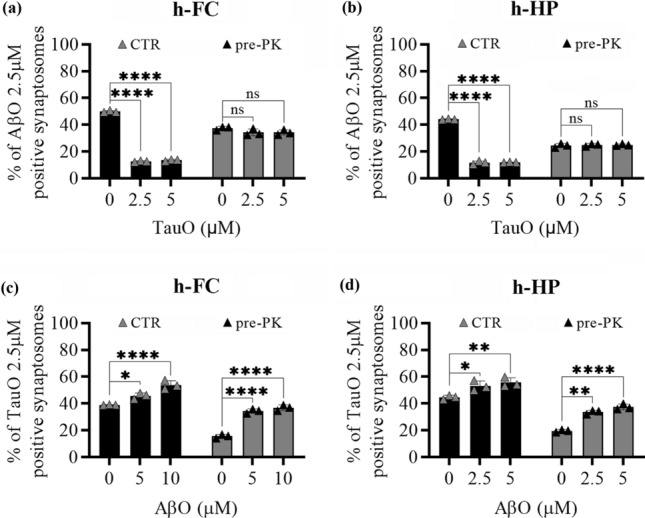
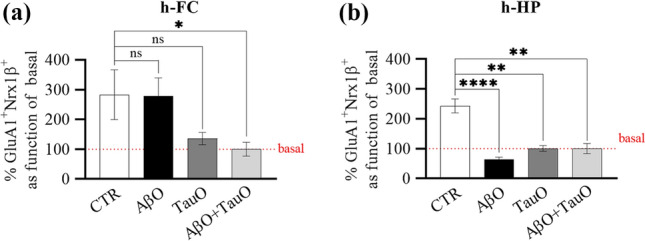
Background: Alzheimer’s disease (AD) is characterized by progressive cognitive decline due to accumulating synaptic insults by toxic oligomers of amyloid beta (AβO) and tau (TauO). There is growing consensus that preventing these oligomers from interacting with synapses might be an effective approach to treat AD. However, recent clinical trial failures suggest low effectiveness of targeting Aβ in late-stage AD. Researchers have redirected their attention toward TauO as the levels of this species increase later in disease pathogenesis. Here we show that AβO and TauO differentially target synapses and affect each other's binding dynamics. Methods: Binding of labeled, pre-formed Aβ and tau oligomers onto synaptosomes isolated from the hippocampus and frontal cortex of mouse and postmortem cognitively intact elderly human brains was evaluated using flow-cytometry and western blot analyses. Binding of labeled, pre-formed Aβ and tau oligomers onto mouse primary neurons was assessed using immunofluorescence assay. The synaptic dysfunction was measured by fluorescence analysis of single-synapse long-term potentiation (FASS-LTP) assay. Results: We demonstrated that higher TauO concentrations effectively outcompete AβO and become the prevailing synaptic-associated species. Conversely, high concentrations of AβO facilitate synaptic TauO recruitment. Immunofluorescence analyses of mouse primary cortical neurons confirmed differential synaptic binding dynamics of AβO and TauO. Moreover, in vivo experiments using old 3xTgAD mice ICV injected with either AβO or TauO fully supported these findings. Consistent with these observations, FASS-LTP analyses demonstrated that TauO-induced suppression of chemical LTP was exacerbated by AβO. Finally, predigestion with proteinase K abolished the ability of TauO to compete off AβO without affecting the ability of high AβO levels to increase synaptic TauO recruitment. Thus, unlike AβO, TauO effects on synaptosomes are hampered by the absence of protein substrate in the membrane. Conclusions: These results introduce the concept that TauO become the main synaptotoxic species at late AD, thus supporting the hypothesis that TauO may be the most effective therapeutic target for clinically manifest AD.
Overview
The claims and statistics of this paper haven’t been checked yet.
Free: it reads the open-access text and checks the first 5 claims that cite a source we can check. Create a free account to check every claim.
Integrity signals
Registry
Cites
Statistics
Figures
Verification
Claims the paper makes
The claims and statistics of this paper haven’t been checked yet.
Free: it reads the open-access text and checks the first 5 claims that cite a source we can check. Create a free account to check every claim.
Claims other papers make about this one
Each is checked against this paper’s own text: does it say what the citing paper says it does?
The source backs part of the claim, not all of it — or backs it for a different population, condition or comparison.
In the citing paper
“Aβ aggregates and hyperphosphorylated tau protein exert synergistic effect on impairing synapse function.91–93”
From Amyloid β-based therapy for Alzheimer’s disease: Challenges, successes and future (2023) · cites this paper as [93]
Experimental — accuracy not yet measured
Self-check
Percentages, sums and reported differences re-computed from the paper’s own numbers.
The self-check needs the paper’s full text.
Citations
Cites
Folstein, M. F., Folstein, S. E., & McHugh, P. R. (1975) · Journal of Psychiatric Research · doi:10.1016/0022-3956(75)90026-6 · Cited by 88,282 · cited 1×
“The tissues used in this study were from subjects classified as controls, because they had normal cognitive examination results (Mini-Mental State Examination scores 0–30) [23].”
MethodHirono, N., Mori, E., Ikejiri, Y., Imamura, T., Shimomura, T., Hashimoto, M., Yamashita, H., & Ikeda, M. (1997) · Brain and nerve · Cited by 21,039
Kok, J. S., Berg, I. J., & Scherder, E. J. A. (2013) · Dementia and Geriatric Cognitive Disorders Extra · doi:10.1159/000353441 · Cited by 20,589
Older Adults' Reasons for Using Technology while Aging in Place
Peek, S. T. M., Luijkx, K. G., Rijnaard, M. D., Nieboer, M. E., van der Voort, C. S., Aarts, S., van Hoof, J., Vrijhoef, H. J. M., & Wouters, E. J. M. (2016) · Gerontology · doi:10.1159/000430949 · Cited by 19,690
Sensitivity and False Alarm Rate of a Fall Sensor in Long-Term Fall Detection in the Elderly
Kangas, M., Korpelainen, R., Vikman, I., Nyberg, L., & Jämsä, T. (2015) · Gerontology · doi:10.1159/000362720 · Cited by 18,909
Neuropathological stageing of Alzheimer-related changes.
Braak, H., & Braak, E. (1991) · Acta Neuropathologica · doi:10.1007/bf00308809 · Cited by 16,123 · cited 1×
“A neuropathologist scored autopsy brain tissue for Aβ plaques and neurofibrillary tangles according to standardized CERAD (Consortium to Establish a Registry for AD) criteria and Braak staging [22].”
MethodAmyloid oligomers exacerbate tau pathology in a mouse model of tauopathy
Selenica, M.-L. B., Brownlow, M., Jimenez, J. P., Lee, D. C., Pena, G., Dickey, C. A., Gordon, M. N., & Morgan, D. (2013) · Neurodegenerative Diseases · doi:10.1159/000337230 · Cited by 10,359
Shankar, G. M., Li, S., Mehta, T. H., Garcia-Munoz, A., Shepardson, N. E., Smith, I., Brett, F. M., Farrell, M. A., Rowan, M. J., Lemere, C. A., et al. (2008) · Nature Medicine · doi:10.1038/nm1782 · Cited by 3,685
Reducing Endogenous Tau Ameliorates Amyloid ß-Induced Deficits in an Alzheimer's Disease Mouse Model
Roberson, E. D., Scearce-Levie, K., Palop, J. J., Yan, F., Cheng, I. H., Wu, T., Gerstein, H., Yu, G.-Q., & Mucke, L. (2007) · Science · doi:10.1126/science.1141736 · Cited by 1,892
Dendritic Function of Tau Mediates Amyloid-β Toxicity in Alzheimer's Disease Mouse Models
Ittner, L. M., Ke, Y. D., Delerue, F., Bi, M., Gladbach, A., van Eersel, J., Wölfing, H., Chieng, B. C., Christie, M. J., Napier, I. A., et al. (2010) · Cell · doi:10.1016/j.cell.2010.06.036 · Cited by 1,821 · cited 1×
“Some studies reported that AβO and TauO individually contribute to the characteristic AD impairment of synaptic plasticity and subsequent memory dysfunction [17, 18, 47, 48], while others showed that prior AβO accumulation is necessary for TauO-induced neuronal alterations [3, 8, 16, 19].”
Background
Cited by
Amyloid β-based therapy for Alzheimer’s disease: Challenges, successes and future
Zhang, Y., Chen, H., Li, R., Sterling, K., & Song, W. (2023) · Signal Transduction and Targeted Therapy · doi:10.1038/s41392-023-01484-7 · Cited by 988
Gaikwad, S., Senapati, S., Haque, M. A., & Kayed, R. (2024) · Alzheimer's & Dementia · doi:10.1002/alz.13490 · Cited by 117
Self-citationFracassi, A., Marcatti, M., Tumurbaatar, B., Woltjer, R., Moreno, S., & Taglialatela, G. (2023) · Brain Pathology · doi:10.1111/bpa.13108 · Cited by 92
“Synaptosomes were isolated using a standardized method developed in our laboratory and routinely used to assess synaptic dysfunction in our studies [42, 43].”
MethodSelf-citationSynapse vulnerability and resilience underlying Alzheimer’s disease
Taddei, R. N., & Duff, K. (2025) · EBioMedicine · doi:10.1016/j.ebiom.2025.105557 · Cited by 52
“58 Importantly, synaptic amyloid-β and tau oligomers can also induce the release of cytokines and promote aberrant astroglial activation, 59,60 which may, among others, drive the targeted elimination of oligomer-containing synapses by glial cells.”
Tapia-Arellano, A., Cabrera, P., Cortés-Adasme, E., Riveros, A. L., Hassan, N., & Kogan, M. J. (2024) · Journal of Nanobiotechnology · doi:10.1186/s12951-024-02526-0 · Cited by 46
Belloso-Iguerategui, A., Zamarbide, M., Merino-Galán, L., Rodríguez-Chinchilla, T., Gago, B., Santamaría, E., Fernández‐Irigoyen, J., Cotman, C. W., Prieto, G. A., Quiroga‐Varela, A., et al. (2023) · Brain · doi:10.1093/brain/awad227 · Cited by 34
“51,54,55,66 The changes in excitatory postsynaptic potentials evident through electrophysiological recording of LTP depend directly on changes in the density of postsynaptic AMPARs.”
BackgroundPreserved autophagy in cognitively intact non‐demented individuals with Alzheimer's neuropathology
Tumurbaatar, B., Fracassi, A., Scaduto, P., Guptarak, J., Woltjer, R., Jupiter, D., & Taglialatela, G. (2023) · Alzheimer's & Dementia · doi:10.1002/alz.13074 · Cited by 32
Self-citationAmyloid-β oligomers increase the binding and internalization of tau oligomers in human synapses
Kadamangudi, S., Marcatti, M., Zhang, W.-R., Fracassi, A., Kayed, R., Limon, A., & Taglialatela, G. (2024) · Acta Neuropathologica · doi:10.1007/s00401-024-02839-2 · Cited by 25
Self-citationProtein aggregation and neurodegenerative disease: Structural outlook for the novel therapeutics
Arar, S. H., Haque, M. A., & Kayed, R. (2023) · Proteins Structure Function and Bioinformatics · doi:10.1002/prot.26561 · Cited by 23
Self-citationCD2AP deficiency aggravates Alzheimer’s disease phenotypes and pathology through p38 MAPK activation
Xue, Y., Zhang, Z.-S., Lin, R.-R., Huang, H.-F., Zhu, K., Chen, D.-F., Wu, Z., & Tao, Q. (2024) · Translational Neurodegeneration · doi:10.1186/s40035-024-00454-5 · Cited by 22
“Marcatti et al. showed that tau oligomers are capable of binding to human synapses and suppressing chemical LTP, which can be exacerbated by Aβ oligomers [54].”
Puliatti, G., Puma, D. D. L., Aceto, G., Lazzarino, G., Acquarone, E., Mangione, R., D'adamio, L., Ripoli, C., Arancio, O., Piacentini, R., et al. (2023) · Progress in Neurobiology · doi:10.1016/j.pneurobio.2023.102482 · Cited by 19
Marcatti, M., Tumurbaatar, B., Borghi, M., Guptarak, J., Zhang, W.-R., Krishnan, B., Kayed, R., Fracassi, A., & Taglialatela, G. (2024) · International Journal of Molecular Sciences · doi:10.3390/ijms25169092 · Cited by 15
Self-citationNeocortical tau propagation is a mediator of clinical heterogeneity in Alzheimer’s disease
Chongtham, A., Ramakrishnan, A., Farinas, M., Broekaart, D. W. M., Seo, J. H., Zhu, C. W., Sano, M., Shen, L., & Pereira, A. C. (2025) · Molecular Psychiatry · doi:10.1038/s41380-025-02998-y · Cited by 13
Huang, J., Xu, Z., Chen, H., Lin, Y., Wei, J., Wang, S., Yu, H., Huang, S., Zhang, Y., Li, C., et al. (2022) · Brain Sciences · doi:10.3390/brainsci12060758 · Cited by 13
Aguado, C., Badesso, S., Hernández, J. M., Martín‐Belmonte, A., Alfaro‐Ruiz, R., Fernández, M., Moreno‐Martínez, A. E., Cuadrado‐Tejedor, M., García‐Osta, A., & Luján, R. (2023) · Neural Regeneration Research · doi:10.4103/1673-5374.390963 · Cited by 13
Synaptosomes: A Functional Tool for Studying Neuroinflammation
Trebesova, H., & Grilli, M. (2023) · Encyclopedia · doi:10.3390/encyclopedia3020027 · Cited by 11
“AβO and TauO were observed in cortical synaptosomes of elderly patients [45], while plaque-contacted membrane surfaces appeared to lack GABAergic perisomatic synapses, possibly leading to hyperactivity of plaque-contacted neurons [52].”
BackgroundArcos-Encarnación, B., Cortes-Flores, E., Barón-Mendoza, I., Almazán, J. L., Valle‐García, D., de León‐Guerrero, S. D., Hovan, L., Meza‐Sosa, K. F., Camacho‐Concha, N., Gil, J., et al. (2025) · Journal of Neuroinflammation · doi:10.1186/s12974-025-03426-2 · Cited by 9
“Dendrites are crucial elements to integrate information within neuronal circuits and morphologic changes of dendritic spines are associated with the efficacy of synaptic transmission (e.g., LTP, the activity-dependent synaptic plasticity process underlying learning and memory) [59, 60].”
Guo, D., Huang, H.-Y., Liu, H.-E., Liu, K., & Luo, X. (2023) · Pain Research and Management · doi:10.1155/2023/8893932 · Cited by 9
Marcatti, M., Jamison, D., Fracassi, A., Zhang, W.-R., Limón, A., & Taglialatela, G. (2023) · Journal of Neuroscience Methods · doi:10.1016/j.jneumeth.2023.109920 · Cited by 8
Self-citationLi, C., Wu, X., & Li, W. (2022) · Peptides · doi:10.1016/j.peptides.2022.170860 · Cited by 7
Almazán, J. L., Cortes-Flores, E., Ramírez-Olvera, A., Palomero‐Rivero, M., Camacho‐Concha, N., Guerra‐Crespo, M., Prieto, G. A., Pérez‐Martínez, L., & Pedraza‐Alva, G. (2025) · Brain Behavior and Immunity · doi:10.1016/j.bbi.2025.06.019 · Cited by 6
Marcatti, M., Tumurbaatar, B., Zhang, W. R., Scaduto, P., Guptarak, J., Kadamangudi, S., Schuetze, R., Fracassi, A., Kayed, R., & Taglialatela, G. (2025) · Alzheimer s & Dementia · doi:10.1002/alz.70550 · Cited by 6
Self-citationJamison, D., Kadamangudi, S., Tumurbaatar, B., Zhang, W.-R., Palmer, L. K., Kunkel, S., Kayed, R., Limón, A., & Taglialatela, G. (2025) · Journal of Alzheimer s Disease · doi:10.1177/13872877251352382 · Cited by 5
Self-citationUsing FASS-LTP in postmortem mice brain tissues to assess pathological synaptic function
Currie, J., Budhwani, S. M., Garza, K. H., Mallipudi, M., Natarajan, C., Sreenivasamurthy, S. G. S., & Krishnan, B. (2024) · Journal of Neuroscience Methods · doi:10.1016/j.jneumeth.2024.110219 · Cited by 5
Self-citationDistinguishing Curable from Progressive Dementias for Defining Cancer Care Options
Schein, C. H. (2023) · Cancers · doi:10.3390/cancers15041055 · Cited by 5
Kl, J., Grant, A. C., Kadamangudi, S., Arizpe, A., Kl, J., Esenaliev, R. O., Taglialatela, G., & Micci, M. (2026) · Journal of Alzheimer s Disease · doi:10.1177/13872877261416086 · Cited by 3
Self-citationYang, T., Ay, Y. A., Kaur, S., Butler, R. R., Tran, K. C., Liu, H., Langness, V. F., Massa, S. M., & Longo, F. M. (2026) · Acta Neuropathologica Communications · doi:10.1186/s40478-026-02263-5 · Cited by 3
Hippocampal Neural Stem Cell Exosomes Promote Brain Resilience against the Impact of Tau Oligomers
Krishnan, B., Marcatti, M., Fracassi, A., Zhang, W.-R., Guptarak, J., Johnson, K. M., Grant, A. C., Kayed, R., Taglialatela, G., & Micci, M. (2025) · Journal of Neuroscience · doi:10.1523/jneurosci.1664-24.2025 · Cited by 4
Self-citationAPOE isoform‐associated tau oligomer polymorphs differ in synaptotoxicity and seeding activity
Moreno, N., Shchankin, N., Fung, L., Puangmalai, N., Bhatt, N. N., Haque, M. A., Zhao, Y., Keene, C. D., Limón, A., & Kayed, R. (2025) · Alzheimer s & Dementia · doi:10.1002/alz.70965 · Cited by 2
Self-citationSelective vulnerability of human synapses to soluble tau oligomers
Kadamangudi, S., Sánchez-Sánchez, L., Kayed, R., Limón, A., & Taglialatela, G. (2026) · Journal of Alzheimer s Disease · doi:10.1177/13872877261416539 · Cited by 2
Self-citationHu, J., Chen, X., Xu, J., & Wang, X. (2023) · Journal of The Electrochemical Society · doi:10.1149/1945-7111/acb5c5 · Cited by 2
Saieva, S., Scaduto, P., Fracassi, A., Guptarak, J., Zhang, W.-R., Johnson, K. M., Jupiter, D. C., Marcatti, M., Zolochevska, O., Taglialatela, G., et al. (2025) · Neural Regeneration Research · doi:10.4103/nrr.nrr-d-25-00195 · Cited by 1
Self-citationvan Hinsbergh, V. W. M., Meijer, R. I., & Eringa, E. C. (2026) · Springer eBooks · doi:10.1007/978-3-031-96019-2_31 · Cited by 1
Regional correlates of tau pathology and synaptic function in primary age-related tauopathy
Kadamangudi, S., Sánchez-Sánchez, L., Limón, A., & Taglialatela, G. (2026) · Journal of Alzheimer s Disease · doi:10.1177/13872877261416524 · Cited by 1
Self-citationSchein, C. H. (2023) · CRC Press eBooks · doi:10.1201/9781003333319 · Cited by 1
Kuznetsov, A. V. (2026) · arXiv (Cornell University) · doi:10.48550/arxiv.2609.38708 · Cited by 1
Imaging of Tau and Microtubules to Study Mechanisms of Tau Pathologies and Neurodegeneration
Conze, C. (2023) · osnaDocs (Osnabrück University) · doi:10.48693/268
Ikonomović, M. D., & DeKosky, S. T. (2026) · Springer eBooks · doi:10.1007/978-3-031-96019-2_6
Exploring the PLD1-tau interaction in Frontotemporal DementiaPreprint
Natarajan, C., Budhwani, S. M., Sreenivasamurthy, S. G. S., Katamoni, L. D., Thomson, B., Marcatti, M., Cuong, P. P., Taglialatela, G., & Krishnan, B. (2026) · bioRxiv (Cold Spring Harbor Laboratory) · doi:10.64898/2026.02.12.705569
Self-citationMoharana, B., Nemat, P., Pullen, R. M., GRADL, A., Schipper, M., Savage, J. E., Klaassen, R. V., van der Loo, R. J., Chadick, C. H., Koopmans, F., et al. (2026) · Science Advances · doi:10.1126/sciadv.adv3557
“To prevent clumping and aggregation of synaptosomes, 0.5 % PluronicR F-68 surfactant (Thermo Fisher Scientific, The Netherlands) was added to the samples ( 75 , 76 ).”
InfluentialThe drug discovery landscape of Alzheimer’s disease
Chinnathambi, S., & Prakash, L. E. (2026) · Advances in protein chemistry and structural biology · doi:10.1016/bs.apcsb.2026.07.005
Engram cell vulnerability in neurodegeneration: from mechanistic insights to therapeutic horizons
Bai, Q., Yan, Y., Zeng, C., Li, X., Zeng, G., Saidova, A., Li, H., & Qing, H. (2026) · Frontiers in Aging Neuroscience · doi:10.3389/fnagi.2026.1873893
“…episodic memory loss in AD is closely linked to early hippocampus-dependent dysfunction and synaptic disconnection, and is primarily associated with two core pathological processes: A β pathology and tau pathology (Lazarov et al., 2024; Wu et al., 2018; Marcatti et al., 2022; Busche et al., 2019).”
Li, L. J., Dai, F., Liu, H., He, S., Zhang, X., & Tao, Q. (2026) · Clinical Interventions in Aging · doi:10.2147/cia.s626483
“37 Regional Aβ–tau interactions have also been associated with the onset and acceleration of tau spreading.”
Metadata
- Authors
- Marcatti, M., Fracassi, A., Montalbano, M., Natarajan, C., Krishnan, B., Kayed, R., & Taglialatela, G.
- Affiliations
- The University of Texas Medical Branch at Galveston (US)
- Corresponding author
- Taglialatela, Giulio
- ORCID
- Venue
- Cellular and Molecular Life Sciences
- Published
- 2022-04
- Volume
- 79
- Issue
- 4
- Pages
- 222-222
- ISSN
- 1420-682X (ISSN-L)
- 1420-9071
- PMC
- PMC8979934
- OpenAlex
- W4224310603
- Cited by
- 38
- References
- 66
- Citations by year
- 2026: 9 · 2025: 8 · 2024: 6 · 2023: 12 · 2022: 3
- FWCI
- 4.48
- Type
- journal article
- Language
- en
- Open access
- hybrid
- doi.org
- Licence
- cc-by
- creativecommons.org/licenses/by/4.0 (tdm)
- creativecommons.org/licenses/by/4.0 (vor, 3 d)
- Locations
- Cellular and Molecular Life Sciences (publishedVersion, cc-by)
- Research Square (acceptedVersion, cc-by)
- PubMed Central (publishedVersion, cc-by)
- PubMed (publishedVersion)
- Funders
- National Institutes of Health (R01AG069433, R01AG060718, R56063405)
- Topics
- Life Sciences › Neuroscience › Cellular and Molecular Neuroscience › Alzheimer's disease research and treatments
- Health Sciences › Medicine › Psychiatry and Mental health › Dementia and Cognitive Impairment Research
- Life Sciences › Neuroscience › Neurology › Neuroinflammation and Neurodegeneration Mechanisms
- Keywords
- Alzheimer's disease, amyloid-beta oligomers, tau oligomers, synaptotoxicity, synaptic dysfunction, synaptosomes, long-term potentiation, 3xTg-AD mice, therapeutic target, hippocampus, frontal cortex
- MeSH terms
- Aged, Alzheimer Disease, Hippocampus, Humans, Synapses, Synaptosomes, Amyloid beta-Peptides
About these checks
Registry, retraction, Cites and statistics results are computed, not judged, with one exception: a printed reference that no index lists is read once by a model before it counts as a citation error. Claims are extracted by a model and kept only when their quote appears verbatim in the text; each cited source is then checked, with a model’s help, for whether it says what the claim relies on. Those verdicts can be wrong — read the claim’s quote and the cited source before relying on one.
Statistics and arithmetic are recomputed, not judged.
Confidence bands are shown only for fields calibrated on our annotated test set. None is calibrated yet, so no band is shown.
What counts as a claim ›How we measure confidence ›How we check this ›
Are you an author, or do you see a problem with this page? Request a review
Data sources
Bibliographic data: Semantic Scholar, OpenAlex, Crossref.
Contains information from the Semantic Scholar Academic Graph Datasets, made available under the ODC Attribution License (ODC-BY 1.0).
Semantic Scholar’s data is described in: Kinney, R., et al. (2023). The Semantic Scholar Open Data Platform. arXiv:2301.10140.
