

Aβ/tau oligomer interplay at human synapses supports shifting therapeutic targets for Alzheimer’s disease
Open accessPublished version of a preprint
The DOI matches its Crossref record; 65 of the 66 references it cites were found in a registry or an index.
Abstract
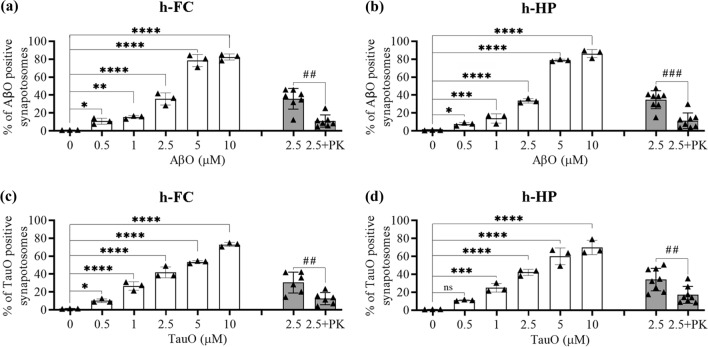
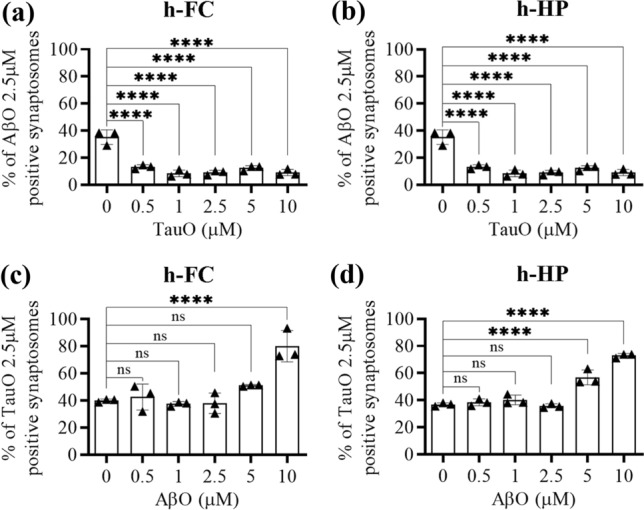
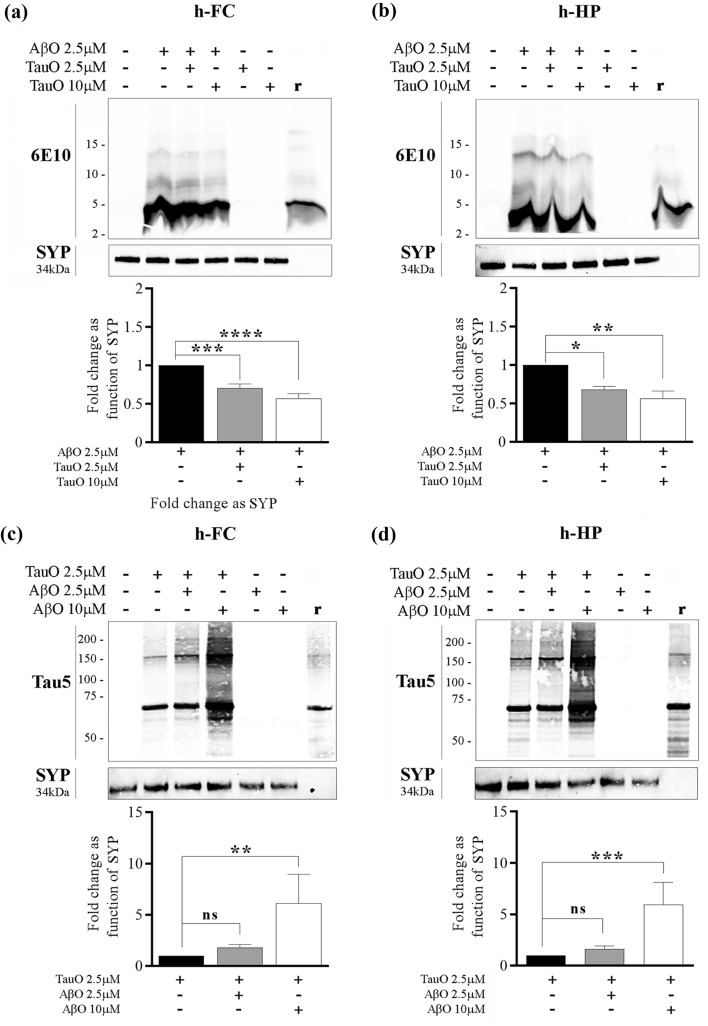
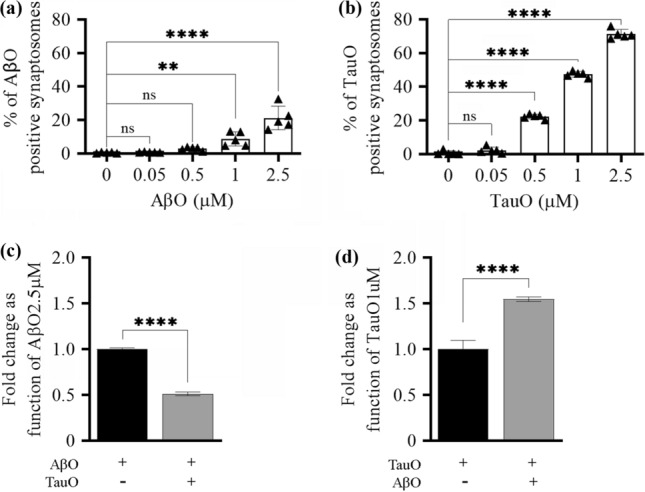
Background: Alzheimer’s disease (AD) is characterized by progressive cognitive decline due to accumulating synaptic insults by toxic oligomers of amyloid beta (AβO) and tau (TauO). There is growing consensus that preventing these oligomers from interacting with synapses might be an effective approach to treat AD. However, recent clinical trial failures suggest low effectiveness of targeting Aβ in late-stage AD. Researchers have redirected their attention toward TauO as the levels of this species increase later in disease pathogenesis. Here we show that AβO and TauO differentially target synapses and affect each other's binding dynamics. Methods: Binding of labeled, pre-formed Aβ and tau oligomers onto synaptosomes isolated from the hippocampus and frontal cortex of mouse and postmortem cognitively intact elderly human brains was evaluated using flow-cytometry and western blot analyses. Binding of labeled, pre-formed Aβ and tau oligomers onto mouse primary neurons was assessed using immunofluorescence assay. The synaptic dysfunction was measured by fluorescence analysis of single-synapse long-term potentiation (FASS-LTP) assay. Results: We demonstrated that higher TauO concentrations effectively outcompete AβO and become the prevailing synaptic-associated species. Conversely, high concentrations of AβO facilitate synaptic TauO recruitment. Immunofluorescence analyses of mouse primary cortical neurons confirmed differential synaptic binding dynamics of AβO and TauO. Moreover, in vivo experiments using old 3xTgAD mice ICV injected with either AβO or TauO fully supported these findings. Consistent with these observations, FASS-LTP analyses demonstrated that TauO-induced suppression of chemical LTP was exacerbated by AβO. Finally, predigestion with proteinase K abolished the ability of TauO to compete off AβO without affecting the ability of high AβO levels to increase synaptic TauO recruitment. Thus, unlike AβO, TauO effects on synaptosomes are hampered by the absence of protein substrate in the membrane. Conclusions: These results introduce the concept that TauO become the main synaptotoxic species at late AD, thus supporting the hypothesis that TauO may be the most effective therapeutic target for clinically manifest AD.
Overview
The claims and statistics of this paper haven’t been checked yet.
Free: it reads the open-access text and checks the first 5 claims that cite a source we can check. Create a free account to check every claim.
Integrity signals
Registry
Cites
Statistics
Figures
Verification
Claims the paper makes
The claims and statistics of this paper haven’t been checked yet.
Free: it reads the open-access text and checks the first 5 claims that cite a source we can check. Create a free account to check every claim.
Claims other papers make about this one
Each is checked against this paper’s own text: does it say what the citing paper says it does?
The source backs part of the claim, not all of it — or backs it for a different population, condition or comparison.
In the citing paper
“Aβ aggregates and hyperphosphorylated tau protein exert synergistic effect on impairing synapse function.91–93”
From Amyloid β-based therapy for Alzheimer’s disease: Challenges, successes and future (2023) · cites this paper as [93]
Experimental — accuracy not yet measured
Self-check
Percentages, sums and reported differences re-computed from the paper’s own numbers.
The self-check needs the paper’s full text.
Citations
Cites
Folstein, M. F., Folstein, S. E., & McHugh, P. R. (1975) · Journal of Psychiatric Research · doi:10.1016/0022-3956(75)90026-6 · Cited by 88,282 · cited 1×
“The tissues used in this study were from subjects classified as controls, because they had normal cognitive examination results (Mini-Mental State Examination scores 0–30) [23].”
MethodHirono, N., Mori, E., Ikejiri, Y., Imamura, T., Shimomura, T., Hashimoto, M., Yamashita, H., & Ikeda, M. (1997) · Brain and nerve · Cited by 21,030
Kok, J. S., Berg, I. J., & Scherder, E. J. A. (2013) · Dementia and Geriatric Cognitive Disorders Extra · doi:10.1159/000353441 · Cited by 20,589
Older Adults' Reasons for Using Technology while Aging in Place
Peek, S. T. M., Luijkx, K. G., Rijnaard, M. D., Nieboer, M. E., van der Voort, C. S., Aarts, S., van Hoof, J., Vrijhoef, H. J. M., & Wouters, E. J. M. (2016) · Gerontology · doi:10.1159/000430949 · Cited by 19,690
Sensitivity and False Alarm Rate of a Fall Sensor in Long-Term Fall Detection in the Elderly
Kangas, M., Korpelainen, R., Vikman, I., Nyberg, L., & Jämsä, T. (2015) · Gerontology · doi:10.1159/000362720 · Cited by 18,909
Neuropathological stageing of Alzheimer-related changes.
Braak, H., & Braak, E. (1991) · Acta Neuropathologica · doi:10.1007/bf00308809 · Cited by 16,123 · cited 1×
“A neuropathologist scored autopsy brain tissue for Aβ plaques and neurofibrillary tangles according to standardized CERAD (Consortium to Establish a Registry for AD) criteria and Braak staging [22].”
MethodAmyloid oligomers exacerbate tau pathology in a mouse model of tauopathy
Selenica, M.-L. B., Brownlow, M., Jimenez, J. P., Lee, D. C., Pena, G., Dickey, C. A., Gordon, M. N., & Morgan, D. (2013) · Neurodegenerative Diseases · doi:10.1159/000337230 · Cited by 10,359
Shankar, G. M., Li, S., Mehta, T. H., Garcia-Munoz, A., Shepardson, N. E., Smith, I., Brett, F. M., Farrell, M. A., Rowan, M. J., Lemere, C. A., et al. (2008) · Nature Medicine · doi:10.1038/nm1782 · Cited by 3,685
Reducing Endogenous Tau Ameliorates Amyloid ß-Induced Deficits in an Alzheimer's Disease Mouse Model
Roberson, E. D., Scearce-Levie, K., Palop, J. J., Yan, F., Cheng, I. H., Wu, T., Gerstein, H., Yu, G.-Q., & Mucke, L. (2007) · Science · doi:10.1126/science.1141736 · Cited by 1,892
Dendritic Function of Tau Mediates Amyloid-β Toxicity in Alzheimer's Disease Mouse Models
Ittner, L. M., Ke, Y. D., Delerue, F., Bi, M., Gladbach, A., van Eersel, J., Wölfing, H., Chieng, B. C., Christie, M. J., Napier, I. A., et al. (2010) · Cell · doi:10.1016/j.cell.2010.06.036 · Cited by 1,821 · cited 1×
“Some studies reported that AβO and TauO individually contribute to the characteristic AD impairment of synaptic plasticity and subsequent memory dysfunction [17, 18, 47, 48], while others showed that prior AβO accumulation is necessary for TauO-induced neuronal alterations [3, 8, 16, 19].”
BackgroundAlzheimer’s disease: pathogenesis, diagnostics, and therapeutics
Tiwari, S., Atluri, V., Kaushik, A., Yndart, A., & Nair, M. (2019) · International Journal of Nanomedicine · doi:10.2147/ijn.s200490 · Cited by 1,308
Amyloid-β and tau--a toxic pas de deux in Alzheimer’s disease
Ittner, L. M., & Götz, J. (2011) · Nature Reviews Neuroscience · doi:10.1038/nrn2967 · Cited by 1,269 · cited 1×
“Synaptic dysfunction, neuronal death, and subsequent memory loss are likely due to cross talk between AβO and TauO [3, 7, 45, 46].”
BackgroundThe Intersection of Amyloid Beta and Tau at Synapses in Alzheimer’s Disease
Spires-Jones, T. L., & Hyman, B. T. (2014) · Neuron · doi:10.1016/j.neuron.2014.05.004 · Cited by 1,201
Synaptic Targeting by Alzheimer's-Related Amyloid β Oligomers
Lacor, P. N., Buniel, M. C., Chang, L., Fernandez, S. J., Gong, Y., Viola, K. L., Lambert, M. P., Velasco, P. T., Bigio, E. H., Finch, C. E., et al. (2004) · The Journal of Neuroscience · doi:10.1523/jneurosci.3432-04.2004 · Cited by 954 · cited 1×
“Compelling evidence supports the hypothesis that soluble oligomers of both AβO and tau (TauO) can target synapses and induce their dysfunction to cause the clinical onset and progression of AD [3, 5, 6].”
BackgroundJin, M., Shepardson, N., Yang, T., Chen, G., Walsh, D., & Selkoe, D. J. (2011) · Proceedings of the National Academy of Sciences · doi:10.1073/pnas.1017033108 · Cited by 876 · cited 2×
“Some studies reported that AβO and TauO individually contribute to the characteristic AD impairment of synaptic plasticity and subsequent memory dysfunction [17, 18, 47, 48], while others showed that prior AβO accumulation is necessary for TauO-induced neuronal alterations [3, 8, 16, 19].”
BackgroundThe Amyloid-β Oligomer Hypothesis: Beginning of the Third Decade
Cline, E. N., Bicca, M. A., Viola, K. L., & Klein, W. L. (2018) · Journal of Alzheimer's Disease · doi:10.3233/jad-179941 · Cited by 870 · cited 1×
“AβO are unique to AD and have not been described in other tauopathies [51].”
BackgroundRoberson, E. D., Halabisky, B., Yoo, J. W., Yao, J., Chin, J., Yan, F., Wu, T., Hamto, P., Devidze, N., Yu, G.-Q., et al. (2011) · The Journal of Neuroscience · doi:10.1523/jneurosci.4152-10.2011 · Cited by 654 · cited 1×
“Some studies reported that AβO and TauO individually contribute to the characteristic AD impairment of synaptic plasticity and subsequent memory dysfunction [17, 18, 47, 48], while others showed that prior AβO accumulation is necessary for TauO-induced neuronal alterations [3, 8, 16, 19].”
BackgroundTau oligomers impair memory and induce synaptic and mitochondrial dysfunction in wild-type mice
Lasagna-Reeves, C. A., Castillo-Carranza, D. L., Sengupta, U., Clos, A. L., Jackson, G. R., & Kayed, R. (2011) · Molecular Neurodegeneration · doi:10.1186/1750-1326-6-39 · Cited by 633
Self-citationLRP1 is a master regulator of tau uptake and spread
Rauch, J. N., Luna, G., Guzman, E., Audouard, M., Challis, C., Sibih, Y. E., Leshuk, C., Hernandez, I., Wegmann, S., Hyman, B. T., et al. (2020) · Nature · doi:10.1038/s41586-020-2156-5 · Cited by 541
Spread of pathological tau proteins through communicating neurons in human Alzheimer’s disease
Vogel, J. W., Iturria-Medina, Y., Strandberg, O. T., Smith, R., Levitis, E., Evans, A. C., Hansson, O., Initiative, A. D. N., Weiner, M., Aisen, P., et al. (2020) · Nature Communications · doi:10.1038/s41467-020-15701-2 · Cited by 516 · cited 1×
“trans-synaptic spreading of TauO [53, 54], this effect of AβO on TauO binding dynamics may explain the progressive prevalence of TauO during later stages of AD.”
BackgroundAccumulation of Pathological Tau Species and Memory Loss in a Conditional Model of Tauopathy
Berger, Z., Roder, H., Hanna, A., Carlson, A., Rangachari, V., Yue, M., Wszolek, Z., Ashe, K., Knight, J., Dickson, D., et al. (2007) · The Journal of Neuroscience · doi:10.1523/jneurosci.0587-07.2007 · Cited by 485
Alcohol use and dementia: a systematic scoping review
Rehm, J., Hasan, O. S. M., Black, S. E., Shield, K. D., & Schwarzinger, M. (2019) · Alzheimer's Research & Therapy · doi:10.1186/s13195-018-0453-0 · Cited by 450
Tau impairs neural circuits, dominating amyloid-β effects, in Alzheimer models in vivo
Busche, M. A., Wegmann, S., Dujardin, S., Commins, C., Schiantarelli, J., Klickstein, N., Kamath, T. V., Carlson, G. A., Nelken, I., & Hyman, B. T. (2019) · Nature Neuroscience · doi:10.1038/s41593-018-0289-8 · Cited by 413
Preparation and Characterization of Neurotoxic Tau Oligomers
Lasagna-Reeves, C. A., Castillo-Carranza, D. L., Guerrero-Muñoz, M. J., Jackson, G. R., & Kayed, R. (2010) · Biochemistry · doi:10.1021/bi1016233 · Cited by 359 · cited 1×
“They were produced and characterized following established and published protocols [38, 39].”
MethodSelf-citationSynaptic basis of Alzheimer’s disease: Focus on synaptic amyloid beta, P-tau and mitochondria
John, A., & Reddy, P. H. (2021) · Ageing Research Reviews · doi:10.1016/j.arr.2020.101208 · Cited by 359 · cited 2×
“Compelling evidence supports the hypothesis that soluble oligomers of both AβO and tau (TauO) can target synapses and induce their dysfunction to cause the clinical onset and progression of AD [3, 5, 6].”
BackgroundResultRole of Amyloid-β and Tau Proteins in Alzheimer’s Disease: Confuting the Amyloid Cascade
Gulisano, W., Maugeri, D., Baltrons, M. A., Fà, M., Amato, A., Palmeri, A., D’Adamio, L., Grassi, C., Devanand, D. P., Honig, L. S., et al. (2018) · Journal of Alzheimer's Disease · doi:10.3233/jad-179935 · Cited by 313
Shinohara, M., Tachibana, M., Kanekiyo, T., & Bu, G. (2017) · Journal of Lipid Research · doi:10.1194/jlr.r075796 · Cited by 297 · cited 1×
“Two compelling studies described LRP1’s involvement in key AD pathologic events including Aβ clearance, amyloid precursor protein metabolism, matrix metalloproteinase 9 function, the pathogenic role of apolipoprotein E, modulation of glutamate receptor function, calcium homeostasis, and cellular TauO uptake and trans-…”
BackgroundZempel, H., Luedtke, J., Kumar, Y., Biernat, J., Dawson, H., Mandelkow, E., & Mandelkow, E. (2013) · The EMBO Journal · doi:10.1038/emboj.2013.207 · Cited by 283 · cited 1×
“Moreover, one study supports the hypothesis that tau is an important mediator of AβO-induced neurodegeneration in AD [49].”
Extracellular Tau Oligomers Produce An Immediate Impairment of LTP and Memory
Fá, M., Puzzo, D., Piacentini, R., Staniszewski, A., Zhang, H., Baltrons, M. A., Li Puma, D. D., Chatterjee, I., Li, J., Saeed, F., et al. (2016) · Scientific Reports · doi:10.1038/srep19393 · Cited by 272 · cited 2×
“concluded that simultaneous suppression of hippocampal Schaffer collateral high-frequency stimulation LTP and memory impairment could be induced by low concentrations of AβO and TauO that do not normally perturb synaptic function, suggesting that the two species synergistically exert their effects [13].”
BackgroundProtein misfolding and aggregation in Alzheimer’s disease and type 2 diabetes mellitus
Ashraf, G., Greig, N., Khan, T., Hassan, I., Tabrez, S., Shakil, S., Sheikh, I., Zaidi, S., Akram, M., Jabir, N., et al. (2014) · CNS & Neurological Disorders - Drug Targets · doi:10.2174/1871527313666140917095514 · Cited by 236 · cited 1×
“These large aggregates are formed through a process of protein misfolding, aggregation, and deposition that begins with the formation of small soluble oligomers, now thought to be the most toxic species of both Aβ and tau [3, 4].”
BackgroundTargeting the Synapse in Alzheimer’s Disease
Jackson, J., Jambrina, E., Li, J., Marston, H., Menzies, F., Phillips, K., & Gilmour, G. (2019) · Frontiers in Neuroscience · doi:10.3389/fnins.2019.00735 · Cited by 215 · cited 1×
“These findings spurred the concept of AD as a synaptic disease [9, 10].”
BackgroundCo-Localization of Amyloid Beta and Tau Pathology in Alzheimer's Disease Synaptosomes
Fein, J. A., Sokolow, S., Miller, C. A., Vinters, H. V., Yang, F., Cole, G. M., & Gylys, K. H. (2008) · The American Journal of Pathology · doi:10.2353/ajpath.2008.070829 · Cited by 204 · cited 3×
“Both AβO and TauO have been found in synaptic terminals (synaptosomes) isolated from AD brains [7, 8].”
BackgroundLocal apoptotic-like mechanisms underlie complement-mediated synaptic pruning
Györffy, B. A., Kun, J., Török, G., Bulyáki, É., Borhegyi, Z., Gulyássy, P., Kis, V., Szocsics, P., Micsonai, A., Matkó, J., et al. (2018) · Proceedings of the National Academy of Sciences · doi:10.1073/pnas.1722613115 · Cited by 187 · cited 1×
“5% of Pluronic F-68 non-ionic surfactant (cat# 24040-032, lot# 2275337; Thermo Fisher Scientific) was added to prevent synaptosome aggregation as previously described [27].”
MethodPathological Interface Between Oligomeric Alpha-Synuclein and Tau in Synucleinopathies
Sengupta, U., Guerrero-Muñoz, M. J., Castillo-Carranza, D. L., Lasagna-Reeves, C. A., Gerson, J. E., Paulucci-Holthauzen, A. A., Krishnamurthy, S., Farhed, M., Jackson, G. R., & Kayed, R. (2015) · Biological Psychiatry · doi:10.1016/j.biopsych.2014.12.019 · Cited by 181 · cited 1×
“They were produced and characterized following established and published protocols [38, 39].”
MethodSelf-citationMechanisms of Pathogenic Tau and Aβ Protein Spreading in Alzheimer’s Disease
d‘Errico, P., & Meyer-Luehmann, M. (2020) · Frontiers in Aging Neuroscience · doi:10.3389/fnagi.2020.00265 · Cited by 175 · cited 1×
“trans-synaptic spreading of TauO [53, 54], this effect of AβO on TauO binding dynamics may explain the progressive prevalence of TauO during later stages of AD.”
BackgroundCrimins, J. L., Pooler, A., Polydoro, M., Luebke, J. I., & Spires-Jones, T. L. (2013) · Ageing Research Reviews · doi:10.1016/j.arr.2013.03.002 · Cited by 163 · cited 1×
“Synaptic dysfunction, neuronal death, and subsequent memory loss are likely due to cross talk between AβO and TauO [3, 7, 45, 46].”
BackgroundFabiani, C., & Antollini, S. S. (2019) · Frontiers in Cellular Neuroscience · doi:10.3389/fncel.2019.00309 · Cited by 154 · cited 1×
“Alzheimer’s disease (AD) is the most common age-related neurodegenerative disorder, clinically characterized by progressive cognitive decline and memory dysfunction [1].”
BackgroundNew Insights Into Drug Discovery Targeting Tau Protein
Soeda, Y., & Takashima, A. (2020) · Frontiers in Molecular Neuroscience · doi:10.3389/fnmol.2020.590896 · Cited by 134
Prieto, G. A., Snigdha, S., Baglietto-Vargas, D., Smith, E. D., Berchtold, N. C., Tong, L., Ajami, D., LaFerla, F. M., Rebek, J., & Cotman, C. W. (2015) · Proceedings of the National Academy of Sciences · doi:10.1073/pnas.1514486112 · Cited by 126 · cited 1×
“Here, we analyzed cLTP in synaptosomes isolated from human samples using FASS-LTP, a novel approach proposed by the Cotman group [42, 43] and optimized by the Krishnan group [44].”
MethodSynaptic Amyloid-β Oligomers Precede p-Tau and Differentiate High Pathology Control Cases
Bilousova, T., Miller, C. A., Poon, W. W., Vinters, H. V., Corrada, M., Kawas, C., Hayden, E. Y., Teplow, D. B., Glabe, C., Albay, R., et al. (2016) · The American Journal of Pathology · doi:10.1016/j.ajpath.2015.09.018 · Cited by 115 · cited 3×
“Some studies reported that AβO and TauO individually contribute to the characteristic AD impairment of synaptic plasticity and subsequent memory dysfunction [17, 18, 47, 48], while others showed that prior AβO accumulation is necessary for TauO-induced neuronal alterations [3, 8, 16, 19].”
BackgroundPuangmalai, N., Bhatt, N., Montalbano, M., Sengupta, U., Gaikwad, S., Ventura, F., McAllen, S., Ellsworth, A., Garcia, S., & Kayed, R. (2020) · Cell Death & Disease · doi:10.1038/s41419-020-2503-3 · Cited by 112
Self-citationBinding Sites for Amyloid-β Oligomers and Synaptic Toxicity
Smith, L. M., & Strittmatter, S. M. (2017) · Cold Spring Harbor Perspectives in Medicine · doi:10.1101/cshperspect.a024075 · Cited by 109 · cited 1×
“Several cell-surface proteins have been identified as binding sites for AβO and TauO [55, 56].”
BackgroundAmyloid‐β oligomers impair fear conditioned memory in a calcineurin‐dependent fashion in mice
Dineley, K. T., Kayed, R., Neugebauer, V., Fu, Y., Zhang, W., Reese, L. C., & Taglialatela, G. (2010) · Journal of Neuroscience Research · doi:10.1002/jnr.22445 · Cited by 106 · cited 1×
“injection method previously described [40, 41].”
Self-citationSelective induction of calcineurin activity and signaling by oligomeric amyloid beta
Reese, L. C., Zhang, W., Dineley, K. T., Kayed, R., & Taglialatela, G. (2008) · Aging Cell · doi:10.1111/j.1474-9726.2008.00434.x · Cited by 103 · cited 1×
“Human Aβ1–42 peptide was purchased from Department of Biophysics and Biochemistry, Harvard University (Cambridge, MA, USA), and AβO were prepared from lyophilized synthetic Aβ aliquots as previously described [28].”
MethodSelf-citationGerson, J., Castillo-Carranza, D. L., Sengupta, U., Bodani, R., Prough, D. S., DeWitt, D. S., Hawkins, B. E., & Kayed, R. (2016) · Journal of Neurotrauma · doi:10.1089/neu.2015.4262 · Cited by 94
Self-citationShin, W. S., Di, J., Cao, Q., Li, B., Seidler, P. M., Murray, K. A., Bitan, G., & Jiang, L. (2019) · Alzheimer's Research & Therapy · doi:10.1186/s13195-019-0541-9 · Cited by 92 · cited 1×
“A recent investigation of how AβO uniquely seeds TauO assembly found that 100–200 nM of AβO facilitated TauO seeding [52].”
BackgroundTargeting tau: clinical trials and novel therapeutic approaches
VandeVrede, L., Boxer, A. L., & Polydoro, M. (2020) · Neuroscience Letters · doi:10.1016/j.neulet.2020.134919 · Cited by 90 · cited 2×
“Attention is currently focused on the development of tau-directed therapies for clinical AD [3, 20, 21], but the mechanisms by which tau may drive synaptic dysfunction at later disease stages remain unclear.”
BackgroundMicci, M.-A., Krishnan, B., Bishop, E., Zhang, W.-R., Guptarak, J., Grant, A., Zolochevska, O., Tumurbaatar, B., Franklin, W., Marino, C., et al. (2019) · Molecular Neurodegeneration · doi:10.1186/s13024-019-0322-8 · Cited by 86 · cited 1×
“These findings spurred the concept of AD as a synaptic disease [9, 10].”
BackgroundSelf-citationFracassi, A., Marcatti, M., Zolochevska, O., Tabor, N., Woltjer, R., Moreno, S., & Taglialatela, G. (2021) · The Journal of Neuroscience · doi:10.1523/jneurosci.0295-20.2020 · Cited by 81
Self-citationPharmacological Rescue of Long-Term Potentiation in Alzheimer Diseased Synapses
Prieto, G. A., Trieu, B. H., Dang, C. T., Bilousova, T., Gylys, K. H., Berchtold, N. C., Lynch, G., & Cotman, C. W. (2017) · The Journal of Neuroscience · doi:10.1523/jneurosci.2774-16.2016 · Cited by 78 · cited 2×
“Conventional long-term potentiation (LTP) is a current electrophysiological approach widely used for studying molecular mechanisms of hippocampal synaptic plasticity in intact neural circuitries [43].”
BackgroundMethodToxic Tau Oligomers Modulated by Novel Curcumin Derivatives
Lo Cascio, F., Puangmalai, N., Ellsworth, A., Bucchieri, F., Pace, A., Palumbo Piccionello, A., & Kayed, R. (2019) · Scientific Reports · doi:10.1038/s41598-019-55419-w · Cited by 69
Self-citationSpread of pathological tau proteins through communicating neurons in human Alzheimer’s disease
Vogel, J. W., Iturria-Medina, Y., Strandberg, O. T., Smith, R., Evans, A. C., Hansson, O., & for the Alzheimer’s Disease Neuroimaging Initiative, A. T. S. B. S. (2019) · bioRxiv (Cold Spring Harbor Laboratory) · doi:10.1101/555821 · Cited by 60
Stabilization of dynamic microtubules by mDia1 drives Tau-dependent Aβ1–42 synaptotoxicity
Qu, X., Yuan, F. N., Corona, C., Pasini, S., Pero, M. E., Gundersen, G. G., Shelanski, M. L., & Bartolini, F. (2017) · Journal of Cell Biology · doi:10.1083/jcb.201701045 · Cited by 59
Singh, A., Allen, D., Fracassi, A., Tumurbaatar, B., Natarajan, C., Scaduto, P., Woltjer, R., Kayed, R., Limon, A., Krishnan, B., et al. (2020) · Journal of Alzheimer's Disease · doi:10.3233/jad-200716 · Cited by 56 · cited 2×
“in a unique group of individuals who maintain cognitive ability despite the presence of all the neuropathological features of AD [44].”
BackgroundMethodSelf-citationNear infrared light decreases synaptic vulnerability to amyloid beta oligomers
Comerota, M. M., Krishnan, B., & Taglialatela, G. (2017) · Scientific Reports · doi:10.1038/s41598-017-15357-x · Cited by 49
Self-citationMontalbano, M., McAllen, S., Sengupta, U., Puangmalai, N., Bhatt, N., Ellsworth, A., & Kayed, R. (2019) · Aging Cell · doi:10.1111/acel.13035 · Cited by 46
Self-citationTau Oligomers as Pathogenic Seeds: Preparation and Propagation In Vitro and In Vivo
Gerson, J. E., Sengupta, U., & Kayed, R. (2016) · Methods in molecular biology · doi:10.1007/978-1-4939-6598-4_9 · Cited by 45 · cited 1×
“They were produced and characterized following established and published protocols [33, 34] and labeled (TauO488) as previously described [35–37].”
MethodSelf-citationFormation of Toxic Oligomeric Assemblies of RNA-binding Protein: Musashi in Alzheimer’s disease
Sengupta, U., Montalbano, M., McAllen, S., Minuesa, G., Kharas, M., & Kayed, R. (2018) · Acta Neuropathologica Communications · doi:10.1186/s40478-018-0615-0 · Cited by 44 · cited 1×
“They were produced and characterized following established and published protocols [33, 34] and labeled (TauO488) as previously described [35–37].”
MethodSelf-citationKrishnan, B., Kayed, R., & Taglialatela, G. (2018) · Alzheimer's & Dementia: Translational Research & Clinical Interventions · doi:10.1016/j.trci.2018.01.002 · Cited by 40 · cited 1×
“injection method previously described [40, 41].”
Self-citationComerota, M. M., Tumurbaatar, B., Krishnan, B., Kayed, R., & Taglialatela, G. (2019) · Molecular Neurobiology · doi:10.1007/s12035-018-1248-9 · Cited by 37 · cited 1×
“analyses on the synaptosomal protein extracts as previously described [29].”
MethodSelf-citationFranklin, W., Krishnan, B., & Taglialatela, G. (2019) · Scientific Reports · doi:10.1038/s41598-019-44635-z · Cited by 35
Self-citationA method to determine insulin responsiveness in synaptosomes isolated from frozen brain tissue
Franklin, W., & Taglialatela, G. (2016) · Journal of Neuroscience Methods · doi:10.1016/j.jneumeth.2016.01.006 · Cited by 33
Self-citationMariño, C., Krishnan, B., Cappello, F., & Taglialatela, G. (2019) · ACS Chemical Neuroscience · doi:10.1021/acschemneuro.9b00086 · Cited by 30
Self-citationZolochevska, O., & Taglialatela, G. (2020) · Molecular Neurobiology · doi:10.1007/s12035-020-01868-8 · Cited by 30
Self-citationTzakis, N., & Holahan, M. R. (2020) · IBRO Reports · doi:10.1016/j.ibror.2020.03.003 · Cited by 14 · cited 1×
“These differences between FC and HP could be related to a different sensitivity of the receptors, based on levels [58].”
Background
Cited by
Amyloid β-based therapy for Alzheimer’s disease: Challenges, successes and future
Zhang, Y., Chen, H., Li, R., Sterling, K., & Song, W. (2023) · Signal Transduction and Targeted Therapy · doi:10.1038/s41392-023-01484-7 · Cited by 988
Gaikwad, S., Senapati, S., Haque, M. A., & Kayed, R. (2024) · Alzheimer's & Dementia · doi:10.1002/alz.13490 · Cited by 117
Self-citationFracassi, A., Marcatti, M., Tumurbaatar, B., Woltjer, R., Moreno, S., & Taglialatela, G. (2023) · Brain Pathology · doi:10.1111/bpa.13108 · Cited by 92
“Synaptosomes were isolated using a standardized method developed in our laboratory and routinely used to assess synaptic dysfunction in our studies [42, 43].”
MethodSelf-citationSynapse vulnerability and resilience underlying Alzheimer’s disease
Taddei, R. N., & Duff, K. (2025) · EBioMedicine · doi:10.1016/j.ebiom.2025.105557 · Cited by 52
“58 Importantly, synaptic amyloid-β and tau oligomers can also induce the release of cytokines and promote aberrant astroglial activation, 59,60 which may, among others, drive the targeted elimination of oligomer-containing synapses by glial cells.”
Tapia-Arellano, A., Cabrera, P., Cortés-Adasme, E., Riveros, A. L., Hassan, N., & Kogan, M. J. (2024) · Journal of Nanobiotechnology · doi:10.1186/s12951-024-02526-0 · Cited by 46
Metadata
- Authors
- Marcatti, M., Fracassi, A., Montalbano, M., Natarajan, C., Krishnan, B., Kayed, R., & Taglialatela, G.
- Affiliations
- The University of Texas Medical Branch at Galveston (US)
- Corresponding author
- Taglialatela, Giulio
- ORCID
- Venue
- Cellular and Molecular Life Sciences
- Published
- 2022-04
- Volume
- 79
- Issue
- 4
- Pages
- 222-222
- ISSN
- 1420-682X (ISSN-L)
- 1420-9071
- PMC
- PMC8979934
- OpenAlex
- W4224310603
- Cited by
- 38
- References
- 66
- Citations by year
- 2026: 9 · 2025: 8 · 2024: 6 · 2023: 12 · 2022: 3
- FWCI
- 4.48
- Type
- journal article
- Language
- en
- Open access
- hybrid
- doi.org
- Licence
- cc-by
- creativecommons.org/licenses/by/4.0 (tdm)
- creativecommons.org/licenses/by/4.0 (vor, 3 d)
- Locations
- Cellular and Molecular Life Sciences (publishedVersion, cc-by)
- Research Square (acceptedVersion, cc-by)
- PubMed Central (publishedVersion, cc-by)
- PubMed (publishedVersion)
- Funders
- National Institutes of Health (R01AG069433, R01AG060718, R56063405)
- Topics
- Life Sciences › Neuroscience › Cellular and Molecular Neuroscience › Alzheimer's disease research and treatments
- Health Sciences › Medicine › Psychiatry and Mental health › Dementia and Cognitive Impairment Research
- Life Sciences › Neuroscience › Neurology › Neuroinflammation and Neurodegeneration Mechanisms
- Keywords
- Alzheimer's disease, amyloid-beta oligomers, tau oligomers, synaptotoxicity, synaptic dysfunction, synaptosomes, long-term potentiation, 3xTg-AD mice, therapeutic target, hippocampus, frontal cortex
- MeSH terms
- Aged, Alzheimer Disease, Hippocampus, Humans, Synapses, Synaptosomes, Amyloid beta-Peptides
About these checks
Registry, retraction, Cites and statistics results are computed, not judged, with one exception: a printed reference that no index lists is read once by a model before it counts as a citation error. Claims are extracted by a model and kept only when their quote appears verbatim in the text; each cited source is then checked, with a model’s help, for whether it says what the claim relies on. Those verdicts can be wrong — read the claim’s quote and the cited source before relying on one.
Statistics and arithmetic are recomputed, not judged.
Confidence bands are shown only for fields calibrated on our annotated test set. None is calibrated yet, so no band is shown.
What counts as a claim ›How we measure confidence ›How we check this ›
Are you an author, or do you see a problem with this page? Request a review
Data sources
Bibliographic data: Semantic Scholar, OpenAlex, Crossref.
Contains information from the Semantic Scholar Academic Graph Datasets, made available under the ODC Attribution License (ODC-BY 1.0).
Semantic Scholar’s data is described in: Kinney, R., et al. (2023). The Semantic Scholar Open Data Platform. arXiv:2301.10140.
