

Contributing roles of mitochondrial dysfunction and hepatocyte apoptosis in liver diseases through oxidative stress, post-translational modifications, inflammation, and intestinal barrier dysfunction
Open accessThe DOI matches its Crossref record; 399 of the 399 references it cites were found in a registry or an index.
Abstract
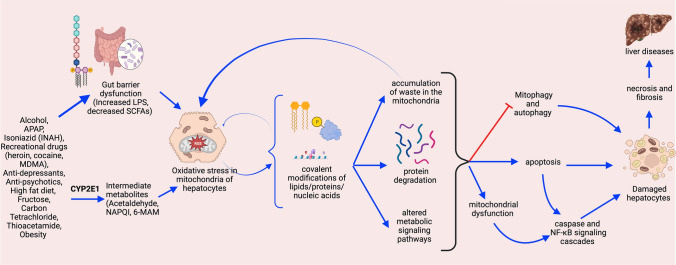
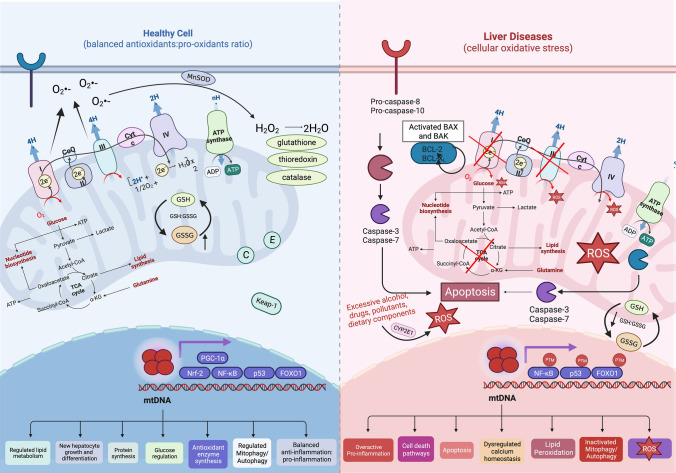
This review provides an update on recent findings from basic, translational, and clinical studies on the molecular mechanisms of mitochondrial dysfunction and apoptosis of hepatocytes in multiple liver diseases, including but not limited to alcohol-associated liver disease (ALD), metabolic dysfunction-associated steatotic liver disease (MASLD), and drug-induced liver injury (DILI). While the ethanol-inducible cytochrome P450-2E1 (CYP2E1) is mainly responsible for oxidizing binge alcohol via the microsomal ethanol oxidizing system, it is also responsible for metabolizing many xenobiotics, including pollutants, chemicals, drugs, and specific diets abundant in n-6 fatty acids, into toxic metabolites in many organs, including the liver, causing pathological insults through organelles such as mitochondria and endoplasmic reticula. Oxidative imbalances (oxidative stress) in mitochondria promote the covalent modifications of lipids, proteins, and nucleic acids through enzymatic and non-enzymatic mechanisms. Excessive changes stimulate various post-translational modifications (PTMs) of mitochondrial proteins, transcription factors, and histones. Increased PTMs of mitochondrial proteins inactivate many enzymes involved in the reduction of oxidative species, fatty acid metabolism, and mitophagy pathways, leading to mitochondrial dysfunction, energy depletion, and apoptosis. Unique from other organelles, mitochondria control many signaling cascades involved in bioenergetics (fat metabolism), inflammation, and apoptosis/necrosis of hepatocytes. When mitochondrial homeostasis is shifted, these pathways become altered or shut down, likely contributing to the death of hepatocytes with activation of inflammation and hepatic stellate cells, causing liver fibrosis and cirrhosis. This review will encapsulate how mitochondrial dysfunction contributes to hepatocyte apoptosis in several types of liver diseases in order to provide recommendations for targeted therapeutics.
Overview
The claims and statistics of this paper haven’t been checked yet.
Free: it reads the open-access text and checks the first 5 claims that cite a source we can check. Create a free account to check every claim.
Integrity signals
Registry
Cites
Statistics
Figures
Verification
Claims the paper makes
The claims and statistics of this paper haven’t been checked yet.
Free: it reads the open-access text and checks the first 5 claims that cite a source we can check. Create a free account to check every claim.
Claims other papers make about this one
Each is checked against this paper’s own text: does it say what the citing paper says it does?
In the citing paper
“MASLD is a progressively worsening liver condition characterized by pathological processes including fat accumulation, cell death, inflammation, and fibrosis within liver cells [68–70].”
From Constructing biomimetic microenvironments for liver regeneration (2025) · doi:10.1186/s12951-025-03729-9 · cites this paper as [70]
Self-check
Percentages, sums and reported differences re-computed from the paper’s own numbers.
The self-check needs the paper’s full text.
Citations
Cites
Structure, function and diversity of the healthy human microbiome
The Human Microbiome Project Consortium (2012) · Nature · doi:10.1038/nature11234 · Cited by 11,726
Younossi, Z. M., Koenig, A. B., Abdelatif, D., Fazel, Y., Henry, L., & Wymer, M. (2016) · Hepatology · doi:10.1002/hep.28431 · Cited by 10,781 · cited 2×
“MASLD is closely affiliated with obesity [221, 222], type-2 diabetes mellitus (T2DM) [221, 222], hypertension [221], and metabolic syndrome [221].”
BackgroundInfluentialChanges of Intestinal Functions in Liver Cirrhosis
Fukui, H., & Wiest, R. (2016) · Inflammatory Intestinal Diseases · doi:10.1159/000444436 · Cited by 6,808
Steatohepatitis: A tale of two “hits”?
Day, C. P., & James, O. F. W. (1998) · Gastroenterology · doi:10.1016/s0016-5085(98)70599-2 · Cited by 4,285 · cited 2×
“According to Day and James, oxidative stress follows steatosis as the “second hit” [230].”
BackgroundNonalcoholic fatty liver disease: a spectrum of clinical and pathological severity.
MATTEONI, C., YOUNOSSI, Z., GRAMLICH, T., BOPARAI, N., LIU, Y., & MCCULLOUGH, A. (1999) · Gastroenterology · doi:10.1016/s0016-5085(99)70506-8 · Cited by 3,345 · cited 1×
“However, their histological features and pathological mechanisms are very similar [341]; this is because many metabolic risk factors for MASLD/MASH overlap with those of ALD [342] (and significantly increase the risk of severe liver disease [343]) and patients need to be treated for both types of…”
BackgroundThe multiple-hit pathogenesis of non-alcoholic fatty liver disease (NAFLD)
Buzzetti, E., Pinzani, M., & Tsochatzis, E. A. (2016) · Metabolism · doi:10.1016/j.metabol.2015.12.012 · Cited by 3,119 · cited 1×
“…of MASLD detail the role of lipid and sugar metabolism, gut barrier dysfunction, and systemic inflammation as common factors in metabolic syndrome [233] MASLD/MASH, caused by non-alcohol substances, such as fructose/sucrose and Western-style high-fat diets (HFDs) (containing high ratios of…”
BackgroundLudwig, J., Viggiano, T. R., McGill, D. B., & Ott, B. J. (1980) · Mayo Clinic Proceedings · doi:10.1016/s0025-6196(24)00530-5 · Cited by 2,903
The role of antioxidants in the chemistry of oxidative stress: A review
Pisoschi, A. M., & Pop, A. (2015) · European Journal of Medicinal Chemistry · doi:10.1016/j.ejmech.2015.04.040 · Cited by 2,806 · cited 1×
“Excessive oxidative stress may cause DNA oxidation [25], lipid peroxidation, oxidative protein modifications [26], impaired fat metabolism [6, 20, 26–28], systemic inflammation [26, 29, 30], and tissue damage [31–33], all of which contribute to the progression of liver diseases [17, 34, 35].”
BackgroundGlobal burden of liver disease: 2023 update
Devarbhavi, H., Asrani, S. K., Arab, J. P., Nartey, Y. A., Pose, E., & Kamath, P. S. (2023) · Journal of Hepatology · doi:10.1016/j.jhep.2023.03.017 · Cited by 2,267
Transcriptional Regulation by Nrf2
Tonelli, C., Chio, I. I. C., & Tuveson, D. A. (2018) · Antioxidants & Redox Signaling · doi:10.1089/ars.2017.7342 · Cited by 2,192 · cited 1×
“The transcription of many of these antioxidants is either regulated by per-oxisome proliferator-activated receptor-γ coactivator-1α (PGC-1α) [98] or by nuclear factor erythroid 2-related factor (Nrf2) separating from its regulatory binding protein Kelch-like ECH-associated protein (Keap1) [99, 100].”
Background
Cited by
Items 101–200 of 202
Salih, R. H. A., Oriquat, G. A., Aladwan, S., Ghazal, N. A., Alsenousy, A. H. A., Assem, N. M., Ghareeb, A. Z., Kamel, M. A. E.-N., & El-Tahan, R. A. (2025) · Gene · doi:10.1016/j.gene.2025.149608 · Cited by 1
Zhang, W., Wang, Y.-N., & Sun, H. (2025) · Computational Biology and Chemistry · doi:10.1016/j.compbiolchem.2025.108566 · Cited by 1
Shen, Y., & Liu, J. (2025) · Medicine · doi:10.1097/md.0000000000044078 · Cited by 1
“[25,26] Consequently, the administration of drugs such as INH, which generate intracellular oxidants during metabolism, renders individuals with metabolic disorders more vulnerable to liver injury compared to those without such disorders.”
Mitochondria under fire: toxicological mechanisms of brominated flame retardants
Miranda, R. G., Machado, I. F., Rolo, A. P., Dorta, D. J., & Palmeira, C. M. (2025) · Toxicology Mechanisms and Methods · doi:10.1080/15376516.2025.2568145 · Cited by 2
“…and non-physiological RoS production, such as Alzheimer’s disease, (Butterfield and Halliwell 2019), type 2 diabetes mellitus (T2DM), drug induced liver injury (DILI) and liver disorders (Hassan 2018; Andrade et al. 2019; LeFort et al. 2024), and cancer (Glorieux et al. 2024; Iqbal et al. 2024).”
Novel prolyl endopeptidase inhibitor from Myricaria germanica alleviates steatohepatitis
Ullah, K., Azam, T. A. T., Sammad, A., Ahmed, T., Wadood, A., Ali, M. F., Mushraf, G. M., Siddiqui, B. S., & Li, Y.-X. (2025) · RSC Advances · doi:10.1039/d5ra03146j · Cited by 2
Rao, C., Zuo, Y., Gao, T., Xiang, D., Chu, F., Xiang, X., Deng, X., Tang, W. H., Bao, S., & Fang, T. (2025) · Journal of Environmental Management · doi:10.1016/j.jenvman.2025.127611 · Cited by 1
Shibata, M., Uchida, N., Ooka, A., Shizu, R., & Yoshinari, K. (2025) · Drug Metabolism and Pharmacokinetics · doi:10.1016/j.dmpk.2025.101505 · Cited by 1
Huang, J., Wang, J., Wang, X., Yang, W., Zhou, H., Cui, R., Zeng, S., Shao, R., Jin, R., Zhang, Y., et al. (2025) · International Immunopharmacology · doi:10.1016/j.intimp.2025.116040 · Cited by 1
Bisphenol F and Steatotic Liver Disease: Resolving the PXR Paradox Through Stress Pathway Mechanisms
AbdalHussin, E. A., Hamid, Z. A., Idris, M. H. M., Omar, M. H., & Taib, I. S. (2025) · Biomedicines · doi:10.3390/biomedicines14010030 · Cited by 2
“…signalling enhances mitochondrial calcium uptake, promoting mitochondrial ROS generation and establishing a critical mechanistic link between ER dysfunction, oxidative injury, and mitochondrial impairment, which in turn feeds forward into inflammatory activation and steatotic progression [62].”
Ma, X., Jiang, X., Song, M., Bai, B., Hou, X., & Wu, Q. (2026) · International Journal of Molecular Sciences · doi:10.3390/ijms27020972 · Cited by 1
Emerging importance of ALDH2 in liver diseases and its potential therapeutic role
Wang, S., Xu, S., Xia, G., Wang, X., & Lv, X. (2026) · Biochemical Pharmacology · doi:10.1016/j.bcp.2026.117732 · Cited by 3
Zhu, B., Sun, C., Luo, D., Zhang, Z., Cao, L., Bi, T., Jiang, A., Liang, Y., Jiang, Z., Luo, H., et al. (2026) · Chemical Engineering Journal · doi:10.1016/j.cej.2026.173330 · Cited by 2
Huang, N.-F., Ling, P., Xu, Y.-J., Feng, X., Zheng, Y., & Sun, T. (2026) · World Journal of Gastroenterology · doi:10.3748/wjg.v32.i8.115077 · Cited by 1
“ROS also activates Kupffer cells to release inflammatory factors, which further amplify oxidative damage and drive hepatocyte apoptosis[11].”
InfluentialUnveiling the cellular and molecular mechanisms of traditional Chinese medicine in hepatic fibrosis
Li, X., Yang, X., Xu, Y., Zhao, Q., Xu, Y., Geng, J., Yin, D., Wang, J., & Song, X. (2026) · Journal of Ethnopharmacology · doi:10.1016/j.jep.2026.121571 · Cited by 2
PINK1-Parkin-Mediated mitophagy alleviates hepatocyte injury induced by α-amanitin
Zhao, Y., Zou, Z., Wu, P., Li, Z., Liu, Z., Yi, Z., Wang, J., Wu, Y., Qu, W., Tengjaroensakul, B., et al. (2026) · Ecotoxicology and Environmental Safety · doi:10.1016/j.ecoenv.2026.120117 · Cited by 1
Klisic, A. N., Tomašević, R., Đjurašković, S., Mercantepe, F., & Ninić, A. (2026) · Archives of Medical Science · doi:10.5114/aoms/219846 · Cited by 7
“Elevated serum CYP2E1 levels correlate with disease severity, and genetic polymorphisms such as the CYP2E1 c2 allele are associated with increased susceptibility to MASLD progression [107–109].”
Alshehri, F. S. (2026) · Drug Design Development and Therapy · doi:10.2147/dddt.s609555 · Cited by 1
Qi, X., Zhang, X., Wang, J., Shi, X., Yang, S., Hao, X., Xu, W., Yao, W., & Zhang, X. (2026) · Plant Science · doi:10.1016/j.plantsci.2026.113300 · Cited by 1
Zhu, S., Ruan, F., Zhang, Y., Leng, Y., Wu, Y., Sun, Y., Yang, C., Zuo, Z., & Chen, S. (2026) · Particle and Fibre Toxicology · doi:10.1186/s12989-026-00695-4 · Cited by 1
“Concurrently, this impairment promotes greater electron leakage, which combines with oxygen molecules to generate additional superoxide anions and other ROS species [42].”
Liu, J., Sun, R., Huang, J., & Wang, C. (2026) · Frontiers in Pharmacology · doi:10.3389/fphar.2026.1919617 · Cited by 1
Kazmi, A., & Sultana, T. (2024) · Pharmacological Research - Reports · doi:10.1016/j.prerep.2024.100016 · Cited by 2
Zhang, P., Tang, G., Gao, H., Zhang, T.-S., Yang, S., Cheng, T., & Yao, R. (2024) · Frontiers in Medicine · doi:10.3389/fmed.2024.1451133 · Cited by 1
Combined hepatoprotective therapy for experimental alcoholic liver damage
Алексеевна, Е. Г., Popov, K. V., Быков, И. М., Tsymbalyuk, I., Zavgorodnyaya, A. G., Bykov, M., & Shevchenko, A. S. (2024) · Medical news of the North Caucasus · doi:10.14300/mnnc.2024.19036
Jurek, J. M., Rusu, E. E., Camaron, J., Clavero-Mestres, H., Aguilar, C., Riesco, D., Xifré, B., Chicote, J. U., Martínez, S., Vives, M., et al. (2024) · SSRN Electronic Journal · doi:10.2139/ssrn.5037466
Animal models of acute liver failure
Kaur, S., & Tripathi, D. M. (2025) · Elsevier eBooks · doi:10.1016/b978-0-323-99478-1.00003-1
Pandey, S., Sharma, N., Sharma, N., Bhat, S. H., Sharma, V., Kushwaha, M., Kumar, A., Magar, Y., Gupta, A., Mathew, B., et al. (2025) · bioRxiv (Cold Spring Harbor Laboratory) · doi:10.1101/2025.06.11.659225
Divers, T. J. (2025) · Equine Veterinary Education · doi:10.1111/eve.14215 · Cited by 1
Hao, Y.-F., Wang, Y., Hao, K., Li, Y., Geng, L., Zhu, L., & Jiang, J. (2025) · Foods · doi:10.3390/foods14203499
“Mitochondria are essential organelles that supply energy for cellular activities, and the mitochondrial membrane potential serves as the driving force for ATP production [36].”
Liu, S., Wang, K., Huang, W., Zhang, J., Han, C., Li, Q., & Gong, J. R. (2025) · Journal of Environmental Sciences · doi:10.1016/j.jes.2025.10.048 · Cited by 1
Takoukam, C. T., Tchamadeu, M. C., Ateba, S. B., Nana, W. Y., Nzekuie, Q. S., Fotso, A.-K. P., Hassimatou, A., Bogning, C. Z., Owona, P. E., Wankeu‐Nya, M., et al. (2025) · PLoS ONE · doi:10.1371/journal.pone.0334166
Mitochondrial Macular Dystrophy—A Case Report and Mini Review of Retinal Dystrophies
Rotuski, G., Paczwa, K., Mędrzycka, J., Różycki, R., & Gołębiewska, J. (2025) · Journal of Clinical Medicine · doi:10.3390/jcm14228236
“Additionally, in MIDD and other mitochondrial disorders, there is a higher risk of acute hepatic failure due to reduced tolerance of drug metabolism resulting from impaired hepatocytes [28].”
Proteomics-based mechanism of HIIT regulation of hepatic metabolism in aging female rats
He, J., Wang, Z., Qiao, Y., Zhang, C., Yu, Z., Ni, P., Zhao, Z., Jianmei, C., & Li, F. (2025) · Biogerontology · doi:10.1007/s10522-025-10351-7
“Indeed, mitochondria con-trol pathways related to hepatocyte bioenergetics, inflammation and apoptosis, and when mitochondrial homeostasis is altered, changes in these pathways may activate inflammation and hepatic stellate cells, causing hepatic fibrosis and cirrhosis (LeFort et al. 2024).”
The Research of Proteomics in Neurodegenerative Diseases Based on Bibliometric Analysis
An, X., He, J., Yu, W., & Ren, Z. (2025) · Brain and Behavior · doi:10.1002/brb3.70964
Gallegos, E. M., Couvillion, K. E., & Simon, L. (2025) · Elsevier eBooks · doi:10.1016/b978-0-443-34258-5.00004-9
Liu, B., He, Y., Ma, X., Zhao, C., Chen, Q., Li, Y.-X., Heng, J., Zhang, Y., Jin, J., & Wang, F. (2025) · Food Science and Human Wellness · doi:10.26599/fshw.2025.9250842 · Cited by 1
Xu, Y., Gao, B., Bao, R., Shi, Y., Li, W., & Xiao, P. (2025) · Comparative Biochemistry and Physiology Part C Toxicology & Pharmacology · doi:10.1016/j.cbpc.2025.110437
Targeted regulation of mitophagy as a potential target for liver fibrosis therapy
Yang, X., Zhiguo, M. A. O., Lin, X., Liu, Y., Miao, M. S., & Bai, M. (2025) · Discover Medicine · doi:10.1007/s44337-025-00554-9
“Studies have shown that increased mitophagy can effectively reduce the release of inflammatory mediators in hepatocytes and can indirectly inhibit the activation of hepatic stellate cells, which is a critical step in the progression of liver fibrosis [15].”
MITOCHONDRIAL DYSFUNCTION IN DISEASE: PATHOGENIC MECHANISMS AND NOVEL THERAPIES
Wycik, M., Chmielewski, H., Komar, J., Wądołowski, A., Kondratiuk, G., Kondrat, A., Szczupak, M., Mierzejewski, P., Werno, J., & Twarowska, Z. (2025) · International Journal of Innovative Technologies in Social Science · doi:10.31435/ijitss.4(48).2025.4424
Kim, Y.-W., Joung, H., Jang, H., Lee, J., Lee, J.-W., Kwon, Y. J., Shin, C. H., Lee, J., & Ha, J. (2026) · Research Square · doi:10.21203/rs.3.rs-8716793/v1
Işıldar, B., & Koyutürk, M. (2025) · DergiPark (Istanbul University)
Oyeyemi, I. T., Asowata-Ayodele, A. M., Adetula, A. O., Sulaiman, K. A., Omape, D. E., & Fageyinbo, M. S. (2026) · Scientific Reports · doi:10.1038/s41598-026-39090-6
“It plays an important role in the toxicity of CCl 4 by metabolising it to its toxic free radicals.”
AMPK Deficiency Induces Corneal Epithelial Barrier Dysfunction by Modulating Energy Homeostasis
Yang, Y., Yan, K., Tang, Y., Liu, Z., Zhu, L., Wei, M., Huang, C., Liu, Z., Zhao, D., & Ren, S. (2026) · Investigative Ophthalmology & Visual Science · doi:10.1167/iovs.67.2.47
“45,46 Taken together, these results provide compelling evidence that AMPK α plays a critical role in maintaining corneal barrier function by regulating cell-cell junctions.”
Lee, Y. S., Jeong, Y. R., Choi, J. M., Lee, H. S., Kim, J. H., & Kim, H. Y. (2026) · Journal of Applied Biological Chemistry · doi:10.3839/jabc.2026.006
Wang, Y., Du, Z., Yang, L., Hou, J., Li, X., Fan, M., Yu, C., Sun, J., Zhou, L., Li, L., et al. (2026) · Frontiers in Genetics · doi:10.3389/fgene.2026.1723592
“This impairment in motility is considered a contributing factor to the mitochondrial dysfunction and apoptosis seen in preeclampsia (LeFort et al., 2024; El-Hattab and Scaglia, 2016).”
Yu, D., Lai, Z., Xia, J., Huang, Q., Zhang, J., & He, S. (2026) · Journal of Leukocyte Biology · doi:10.1093/jleuko/qiag044
Kaur, S., & Aran, K. R. (2026) · Gene · doi:10.1016/j.gene.2026.150150
Jiang, Y., Han, G., Zhang, Z., Hu, S., & Mu, M. (2026) · Comprehensive physiology · doi:10.1002/cph4.70144 · Cited by 1
Methotrexate-induced hepatotoxicity-mechanism, clinical cases and treatment approaches
Shah, A. K., Banerjee, S., Singh, S., Subramaniyan, V., & Singh, T. G. (2026) · Toxicological Research · doi:10.1007/s43188-026-00345-z
“Beyond direct oxidative and inflammatory insults, MTX alters chromatin structure, transcriptional control and protein stability, leading to persistent metabolic and inflammatory reprogramming of hepatocytes [99].”
Shi, X., Ge, S., Wang, H., Chen, X., Pan, X., Liu, C., Qiu, Z., Zou, W., Cao, H., Liu, Y., et al. (2026) · Veterinary Sciences · doi:10.3390/vetsci13040365
“Weaning stress disrupts antioxidant capacity and intestinal stability, thereby accelerating epithelial apoptosis and contributing to barrier dysfunction [55,56].”
Ruan, D., Que, Y., Hu, J., Xu, M., Nie, Y., He, H., Zhao, H., & Yang, Y. (2026) · Journal of Ethnopharmacology · doi:10.1016/j.jep.2026.121778
Pálóczi, J., Byerley, L. O., & Primeaux, S. D. (2026) · Pharmacology & Therapeutics · doi:10.1016/j.pharmthera.2026.109038
Kim, D. K., Rajan, P., Cuong, D. M., Yoon, T. H., Yang, S. H., Oyinloye, K. R., Go, G. M., & Cho, S. K. (2026) · Journal of Functional Foods · doi:10.1016/j.jff.2026.107311
Myeloperoxidase regulates hypoxia-induced inflammation and oxidative stress in liver-spleen axis
Li, Y., Liu, X., Zhang, L., Li, X., Zuo, Z., Gao, Q., & Zhu, Q. (2026) · Journal of Inflammation · doi:10.1186/s12950-026-00503-y · Cited by 1
Simultaneous TFAM and TJP2 Variants in a Child With Cirrhosis and Hepatocellular Carcinoma
Yu, J., Zhao, H., Lou, Y., Fang, Y., Gu, W., Chen, J., & Lou, J. (2026) · PEDIATRICS · doi:10.1542/peds.2025-071481
Shen, X., Li, Z., Hui-lin, Z., Chen, Y.-Y., Wang, S.-Y., Gao, M.-J., Lin, L., & Yang, T. (2026) · Microbial Pathogenesis · doi:10.1016/j.micpath.2026.108572
Luo, J., Wei, Y., Chai, Y., Fan, Z., Li, B., Xiaoqian, C., Xing, Z., Qiu, Y., Pei, Z., Lu, W., et al. (2026) · Research Square · doi:10.21203/rs.3.rs-9147716/v1
Mweene, B. C., Masenga, S. K., Katti, P., Venkhatesh, P., Neikirk, K., Marshall, A., Vetha, B. S. S., McMillian, R., Kirabo, A., Gamble‐George, J., et al. (2026) · Aging advances. · doi:10.4103/agingadv.agingadv-d-25-00046
Ren, L., Gao, W., Ma, X., Zhang, H., Xiao, Y., Jiang, S., Liu, G., & Sun, A. (2026) · Molecular Nutrition & Food Research · doi:10.1002/mnfr.70511
“Chronic alcohol consumption results in inflammation and damage to hepatocytes, leading to hepatocyte swelling and enlargement, which in turn causes an increase in liver weight [ 21 ].”
Deng, F., Chen, R., Luo, W., Liu, J.-G., Yang, G., Ma, L., & Zhang, T. (2026) · Toxicology Mechanisms and Methods · doi:10.1080/15376516.2026.2679608
“…the Pi3K/akt/NF-κB signaling axis has been widely confirmed to participate in regulating key physiological processes such as inflammation, cell apoptosis, and oxidative stress in various liver diseases (e.g. drug-induced liver injury, viral hepatitis, etc.) (hunt 2010; leFort et al. 2024).”
Wu, H., Zhu, T., Guo, F., Zhang, L., wang, B., & Liu, G. (2026) · Frontiers in Veterinary Science · doi:10.3389/fvets.2026.1827816
“The mechanisms of AFLD involve multiple factors, including oxidative stress (3), hepatocyte apoptosis (4), and immune response (5).”
Zhao, Y., Li, Z. L., Yu, T., Yang, Y., & Du, T. (2026) · BMJ Open Diabetes Research & Care · doi:10.1136/bmjdrc-2025-005841
“TD is the guarantor of this work.”
Salman, I. N., Jabbar, R. K., Emad, I., Hassan, Z. A. A., Harbi, A. M., Khudhair, A. Y., Hussein, M. A. M., Hamid, A. M., Amir, M. A. A., Ali, M. W., et al. (2026) · Journal of Applied Toxicology · doi:10.1002/jat.70268
Pandey, S., Sharma, N., Sharma, N., Bhat, S. H., Sharma, V., Kushwaha, M., Kumar, A. T. R., Magar, Y., Gupta, A., Mathew, B., et al. (2026) · Research Square · doi:10.21203/rs.3.rs-9856451/v1
Zhao, D., Li, J., Li, C., He, H., & Deng, L. (2026) · Journal of Applied Toxicology · doi:10.1002/jat.70297
Wang, X., Song, W., Zhang, X., Li, Y., Sun, R., & Sun, Z. X. (2026) · Journal of Clinical and Experimental Hepatology · doi:10.1016/j.jceh.2026.103603
Yang, W., Li, L., Ye, Y., Lin, C., Zhang, C., & Tu, H. (2026) · Canadian Journal of Gastroenterology and Hepatology · doi:10.1155/cjgh/9254321
“MT3 is a metal-binding stress-response protein that may refect oxidative stress adaptation in chronically injured hepatocytes and activated HSCs [13].”
Zexie Decoction improves hyperlipidemic acute pancreatitis by ameliorating mitochondrial dysfunction
Tang, T., Wang, Y., Tang, Q., Zhang, R., Xia, M., Huang, F., Zhao, Y., Xu, L., & Zhou, J. (2026) · Chinese Herbal Medicines · doi:10.1016/j.chmed.2026.07.002
Su, Y. C., Li, P., Zhou, K., Chang, Y., Luan, Z., Han, B., Li, H., Ren, J., Zhang, H., & Wei, Y. (2026) · Food and Chemical Toxicology · doi:10.1016/j.fct.2026.116270
Selvam, K., Chinnaswamy, S. M., Jawahar, S., & Gunasekaran, V. (2026) · Egyptian Liver Journal · doi:10.1186/s43066-026-00526-3
Zhang, F. C., & Gao, Y. (2026) · Frontiers in Physiology · doi:10.3389/fphys.2026.1873663
Wu, H., 王天宝, Yang, F., Yue, M., Li, A., & Si, C. (2026) · Journal of Bioenergetics and Biomembranes · doi:10.1007/s10863-026-10120-2
“This mitochondrial impairment sustains inflammatory responses and contributes to the activation of hepatic stellate cells (HSCs), the primary fibrogenic cell type in the liver (LeFort et al. 2024).”
Krutsenko, Y., Matour, B. A., Jiang, L., Liu, J., Walker, L., Taborski, S., Merchant, M. L., Liu, S., Hussey, G. S., Badylak, S. F., et al. (2026) · American Journal Of Pathology · doi:10.1016/j.ajpath.2026.06.009
Li, J., Li, Y., Li, Z., Wang, X., Bao, W., Tan, M., & Su, W. (2026) · Food & Function · doi:10.1039/d6fo02503j
Opposing Roles of CYP2E1 and ALDH2 in Binge Alcohol-Mediated Cerebellar Damage
Ruiter-Lopez, L., Rungratanawanich, W., & Song, B. (2026) · International Journal of Molecular Sciences · doi:10.3390/ijms27156825 · Cited by 1
Self-citationZhu, G., Duan, Q., Wang, J., Li, G., Jiao, W., Zhao, M., Zuo, Q., Lv, X., Pan, H., & Zhang, Y. (2026) · Journal of Agricultural and Food Chemistry · doi:10.1021/acs.jafc.6c01214
Wu, Y., Zhao, Y., Yao, W., Yang, Y., Bai, H., Bao, S., Li, X., & Song, Y. (2026) · Nutrients · doi:10.3390/nu18152549
“…ethanol-challenged epithelial systems, oxidative stress models, and zinc-deficient or zinc-replete designs can be used to examine TEER, FITC-dextran flux, oxidative stress markers, AMPK/HIF-1 α -related signaling, zinc status, metallothionein expression, and epithelial repair [13,48,73,74].”
Kuang, Y., Li, Y., Xu, C., Chen, J., Li, H., Cao, C., Zhang, P., Li, Z., Wang, R., Xu, J., et al. (2026) · Drug Delivery and Translational Research · doi:10.1007/s13346-026-02201-x · Cited by 2
Zhou, Y., Sun, X., & Chang, D. (2026) · Journal of Ethnopharmacology · doi:10.1016/j.jep.2026.122308
Zheng, X., Xiang, M., & Wu, H. (2026) · International Journal of Gynecology & Obstetrics · doi:10.1002/ijgo.71290
Bizerea, T. O., Pitulice, L., Moga, T. V., & Balica, N. C. (2026) · IntechOpen eBooks · doi:10.5772/intechopen.1017200
Plant-Derived Exosome-like Nanovesicles for Metabolic Dysfunction-Associated Steatotic Liver Disease
Kuang, T., Wang, L., Shi, Y., Cheng, J., & Pan, S. (2026) · Veterinary Sciences · doi:10.3390/vetsci13090851 · Cited by 1
“…Nrf2 undergoes dissociation from Keap1 prior to its translocation into the nucleus, inducing the expression of various antioxidant enzymes such as heme oxygenase-1 (HO-1), superoxide dismutase (SOD), and glutathione peroxidase (GPx), thereby eliminating ROS and alleviating oxidative damage [45].”
InfluentialMitochondrial dysfunction in sepsis: nutritional strategies for restoring bioenergetic homeostasis
Zheng, L., Yin, X., Zhang, R., Su, H., Jia, T., & Shan, N. (2026) · Frontiers in Cellular and Infection Microbiology · doi:10.3389/fcimb.2026.1878518
Environmental factors related to pathogenesis of hepatocellular carcinoma
Jing, L.-B., & Li, Y. (2026) · Hepatobiliary & pancreatic diseases international · doi:10.1016/j.hbpd.2026.08.010 · Cited by 1
Zhao, Y., Liu, K., Xie, L., Luo, J., Gu, H., & Li, X. (2026) · International Journal of Biological Macromolecules · doi:10.1016/j.ijbiomac.2026.154337
Tao, Y., Zhou, J., Wang, Y., Mao, Y., Lei, X., & Chen, E. (2026) · Frontiers in Pharmacology · doi:10.3389/fphar.2026.1871275
“…bile acid homeostasis; they covalently bind proteins and DNA to induce hepatocellular damage and death, while also causing time-dependent inhibition of cytochrome P450 enzymes (LeFort et al., 2024; Paludetto et al., 2019; Rodríguez-Hernández et al., 2020; Saran et al., 2022; Zhao et al., 2022).”
Algae-derived bioactive components ameliorate alcoholic liver injury and underlying mechanisms
Chen, Y., Ryu, B., Su, H., & Wang, L. (2026) · Food Research International · doi:10.1016/j.foodres.2026.120692
Yang, X., Ning, J., Wang, L., Wang, X., Yang, H., Ma, Z., Ji, C., Chang, Q., Zhao, Y., & Xia, Y. (2026) · Metabolism and Diseases · doi:10.1016/j.metdis.2026.100026
Radosavljević, T. S., Djuretić, J., Branković, M., Samardžić, J., Ćuruvija, I., & Danijela, V. (2026) · Antioxidants · doi:10.3390/antiox15091209
Hui, H., Huang, W., Song, T., Song, Y., Zhang, X., Wang, R., Yang, J., Wu, S., Li, X., & Peng, J. (2026) · Phytomedicine · doi:10.1016/j.phymed.2026.158817
MetALD: Terminology, Implications, and Therapeutic Considerations
Kaya, E., Nashtar, M. A., Kreimeyer, H., & Canbay, A. E. (2026) · Zeitschrift für Gastroenterologie · doi:10.1055/a-2922-7499
“However, in MetALD, these measures should be accompanied by structured counseling on alcohol reduction or, preferably, complete abstinence, given the additional blood pressure, and promoting weight reduction when appropriate appropriate are essential components of comprehensive MetALD care.”
Duca, L., Castelli, C., Garbuglia, A. R., & Falasca, L. (2026) · Pathogens · doi:10.3390/pathogens15101009
“This intense metabolic activity is tightly coupled with a robust antioxidant defense system to neutralize the high levels of physiological reactive oxygen species (ROS) produced by the hepatic respiratory chain, ensuring cellular survival and systemic metabolic stability [11].”
Javaheri, F. S. H., Rouini, M., Nematy, M., & Falahi, E. (2026) · Research Square · doi:10.21203/rs.3.rs-10243768/v1
Rybalka, D. F., & Brygadyrenko, V. V. (2026) · Biology · doi:10.3390/biology15191700
“Hydrazine causes mitochondrial dysfunction and oxidative damage that leads to hepatotoxicity [17].”
Severtsev, V. V., Kesler, E. P., Tikhonova, Y. G., Kanevskii, N. I., Kamalieva, E. R., Pevunova, A. R., Finko, E. V., Sklyar, E. Y., Galeeva, M. S., Silachev, D. N., et al. (2026) · Neuroglia · doi:10.3390/neuroglia7040035
“On the other hand, this leads to the accumulation of reactive oxygen species, to disturbances of fatty acid metabolism, to energy depletion and, as a consequence, to apoptosis [127].”
Ye, J., Gu, J., Cheng, J., Liu, Y., Dong, M., & Pan, Z. (2026) · European Journal of Pharmacology · doi:10.1016/j.ejphar.2026.179385
Wang, K., Zhang, G., 李长虹, & Zhao, Y. (2026) · Environmental Pollution · doi:10.1016/j.envpol.2026.129303
Çiçek, S., Kılıç, J., Özercan, A. M., Hohluoglu, A., Kırsoy, F., Çetin, S., Oral, A. Ç., Özercan, İ. H., Yalnız, M., & Bahçecioğlu, İ. H. (2026) · Medicine · doi:10.1097/md.0000000000051074
“[13,14] Beyond direct hepatic fat accumulation, systemic and metabolic factors may contribute to heterogeneity in HBV-related outcomes.”
Salhab, A., Amer, J., & Safadi, R. (2026) · International Journal of Molecular Sciences · doi:10.3390/ijms27208948
“Measuring apoptotic cell death directly assesses the extent of hepatocellular damage [31,32].”
Yang, D., Shin, J., Huh, J. Y., & Shin, S. (2026) · Toxicology · doi:10.1016/j.tox.2026.154615
韩少聪, Li, Q., Ding, Z., Yang, H., Du, D., Zhou, Q., Yu, J., & Yang, X. (2026) · Frontiers in Cell and Developmental Biology · doi:10.3389/fcell.2026.1993264
Metadata
- Authors
- LeFort, K. R., Rungratanawanich, W., & Song, B.-J.
- Affiliations
- National Institutes of Health (US)
- National Institute on Alcohol Abuse and Alcoholism (US)
- Corresponding author
- LeFort, Karli R.
- Song, Byoung-Joon
- Venue
- Cellular and Molecular Life Sciences
- Published
- 2024-01-12
- Volume
- 81
- Issue
- 1
- Pages
- 34-34
- ISSN
- 1420-682X (ISSN-L)
- 1420-9071
- PMC
- PMC10786752
- OpenAlex
- W4390790439
- Semantic Scholar
- 418f995bce30f4a296f47aa057deda8308569d92
- Cited by
- 202
- References
- 399
- Citations by year
- 2026: 88 · 2025: 90 · 2024: 24
- FWCI
- 8.26
- Type
- journal article
- Language
- en
- Open access
- gold
- doi.org
- Licence
- cc-by
- creativecommons.org/licenses/by/4.0 (tdm)
- creativecommons.org/licenses/by/4.0 (vor)
- Locations
- Cellular and Molecular Life Sciences (publishedVersion, cc-by)
- PubMed Central (publishedVersion, cc-by)
- PubMed (publishedVersion)
- Funders
- National Institute on Alcohol Abuse and Alcoholism (1 ZIAAA000036)
- Topics
- Life Sciences › Biochemistry, Genetics and Molecular Biology › Molecular Biology › Mitochondrial Function and Pathology
- Life Sciences › Pharmacology, Toxicology and Pharmaceutics › Pharmacology › Drug-Induced Hepatotoxicity and Protection
- Health Sciences › Medicine › Hepatology › Liver physiology and pathology
- Keywords
- mitochondrial dysfunction, hepatocyte apoptosis, liver disease, oxidative stress, post-translational modification, CYP2E1, alcoholic liver disease, non-alcoholic fatty liver disease, drug-induced liver injury, intestinal barrier dysfunction, inflammation, liver fibrosis, liver cirrhosis, hepatic stellate cells, mitophagy, bioenergetics, omega-6 fatty acids
- MeSH terms
- Ethanol, Gastrointestinal Diseases, Humans, Inflammation, Liver, Liver Diseases, Alcoholic, Protein Processing, Post-Translational, Apoptosis, Oxidative Stress, Hepatocytes, Mitochondrial Proteins, Mitochondrial Diseases
About these checks
Registry, retraction, Cites and statistics results are computed, not judged, with one exception: a printed reference that no index lists is read once by a model before it counts as a citation error. Claims are extracted by a model and kept only when their quote appears verbatim in the text; each cited source is then checked, with a model’s help, for whether it says what the claim relies on. Those verdicts can be wrong — read the claim’s quote and the cited source before relying on one.
Statistics and arithmetic are recomputed, not judged.
Confidence bands are shown only for fields calibrated on our annotated test set. None is calibrated yet, so no band is shown.
What counts as a claim ›How we measure confidence ›How we check this ›
Are you an author, or do you see a problem with this page? Request a review
Data sources
Bibliographic data: Semantic Scholar, OpenAlex, Crossref.
Contains information from the Semantic Scholar Academic Graph Datasets, made available under the ODC Attribution License (ODC-BY 1.0).
Semantic Scholar’s data is described in: Kinney, R., et al. (2023). The Semantic Scholar Open Data Platform. arXiv:2301.10140.
